Hayden Panettiere’s mother, Lesley Vogel, said in a TV interview that aired Monday, November 16, that she holds the late actress’ ex-boyfriend Brian Hickerson responsible for her death, even though police ruled it an accident.
Vogel, 70, was asked directly whether she believed Hickerson was to blame for her daughter’s passing, and she didn’t hesitate (via The Blast).
“Absolutely, there’s no doubt in my mind,” she said.
Hayden Panettiere attends amfAR Gala Los Angeles 2022 at Pacific Design Center on November 03, 2022 in West Hollywood, California. (Photo by Jon Kopaloff/Getty Images)
She went on to explain why, claiming that her daughter had been turning things around before Hickerson came back into the picture.
Vogel said she “had done everything to try to clean up her life” and believed it was working. “I thought we were making amazing progress. It was going very well,” she said. “And then, sadly, she allowed Brian to reel her back in.”
Hickerson has never been charged in connection with Panettiere’s death, and police found no signs of foul play.
Vogel also revealed that she was invited to her daughter’s celebration of life but chose not to go.
“I just didn’t want to rock the boat,” she explained. “It was probably for the best.”
The September memorial was held in Malibu, where several of Panettiere’s former Nashville co-stars gathered to celebrate her life.
Vogel’s decision to stay away drew a wave of criticism online. One commenter accused her of refusing to “take some accountability” for putting Panettiere in the entertainment industry as a baby.
In the same interview, Vogel described her relationship with her daughter as “a roller coaster ride, for sure,” and said things shifted once Panettiere became famous.
“She was very happy, and we did spend a tremendous amount of time together up until the age of about 16,” she said. “And then, once she became the face of this major hit TV series Heroes, that’s when things started to change.”
She named Hickerson as another turning point in their relationship.
This isn’t the first time Vogel has pointed the finger at him. Just days after the actress died, Hayden’s mother saidHickerson was ‘culpable’ in her death, questioning his account of the moments before emergency responders arrived.
“I don’t know how you can take a nap near someone who’s dying and not realize something’s wrong,” she said at the time.
In another interview in August, Vogel described trying to help Panettiere through a period when her health had deteriorated.
“She was in pain,” Vogel said. “She was afraid. She couldn’t physically function properly.”
She said she took the actress to doctors and arranged massage and acupuncture for a pins-and-needles sensation in her lower extremities. Vogel also claimed she was alarmed to learn Hickerson had pawned some of Panettiere’s belongings, including a vintage guitar, and that other possessions were being kept in his storage unit.
Official findings tell a different story than the one Vogel is telling. Panettiere was found unresponsive in Greenville, South Carolina, on August 16. She was 36.
Hickerson and his brother, Zach Hickerson, were reportedly at the apartment. Narcan was administered before paramedics arrived, but they were unable to revive her.
“The cause of death has been ruled as toxic effects of fentanyl, 4-ANPP, Alprazolam, Methocarbamol and Quetiapine,” the coroner’s statement read. “The manner of death has been ruled accident.”
The coroner’s office found no signs of trauma. The coroner’s report also showed that Hayden Panettiere checked into rehab just weeks before her death.
In October, the Greenville Police Department confirmed that its investigation had concluded and that Panettiere’s death was officially ruled accidental.
We will have further updates on this developing story as new information becomes available.
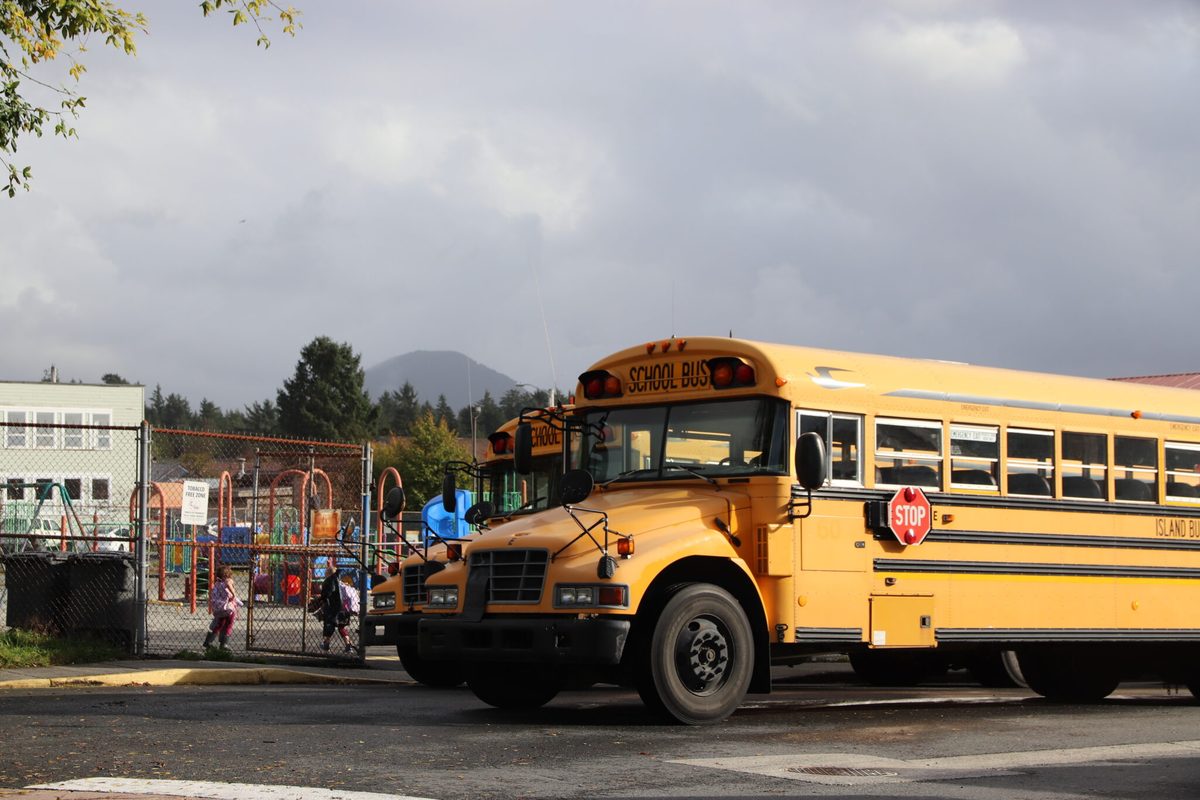
School buses park outside the playground of Xóots Elementary School in Sitka on Oct. 6, 2025 (Photo by Corinne Smith/Alaska Beacon)
Alaskans from across the state weighed in on lawmaker proposals to boost K-12 schools during nearly 10 hours of public comment on Thursday. They addressed an initial draft of recommendations from a joint legislative task force on education funding.
The task force released its draft report this week where it recommended increasing state education funding with inflation, funding school facilities and instruction separately, addressing a massive backlog in maintenance and contracting an adequacy study to evaluate the state’s spending levels.
Written public comments to the task force on education funding are due by December 8 and can be emailed to TFEF@akleg.gov or edfundtaskforce@akleg.gov
Over the next two months, the draft report will be further refined, designed, and finalized prior to being officially submitted by the first day of the 2027 legislative session.
Anchorage Democratic Sen. Löki Tobin, co-chair of the task force, opened the all-day hearing by saying the study will alleviate the political battles over state spending per student, known as the base student allocation.
“We need this information to ensure that we put the right resources into the right components for our school system,” she said. “But we do not have that independent analysis that is absolutely critical to funding our education system.”
In the meantime, the task force members asked for public input on a state definition for “adequate education.” They also introduced short, mid and long-term recommendations related to school maintenance, the legislative budgeting process, teacher recruitment and retention, transportation and others. Public comment is open until Dec. 8.
Tobin said that it will be her focus as she was reappointed to chair the Senate Education Committee for the next two years.
Dozens of Alaska parents, students, teachers, principals, superintendents and education advocates testified in person in Anchorage, Fairbanks, Juneau and Kenai — as well as over the phone — urging support for state investment in education.
Susan Nedza, superintendent of the Hoonah City School District, testifies before the task force on education funding in Juneau on Nov. 12, 2026. (Photo by Corinne Smith/Alaska Beacon)
Susan Nedza, superintendent of the Hoonah City School District in Southeast Alaska, spoke in person in Juneau.
“If the recommendations in this report reach reality, school staff will be able to focus efforts on our true purpose: students,” she said. “The focus now is on the stress and constant priority of stretching and finding funds to cover the bare basics instead of the well-being of students in our care.”
Many testifiers expressed support for investment in teachers and staff — to reduce vacancies, high turnover and growing class sizes — and much-needed school building repairs. They also pointed to the need for further investment in school nutrition programs, special education services, Alaska Native languages, the Alaska Reads Act, extracurricular opportunities and pathways to careers.
Some expressed concern that families’ choice to enroll in homeschool programs should be protected, and that the state should not enact any changes to homeschool programs or current standards.
School officials spoke to skyrocketing costs for heating buildings and keeping facilities operational, and said repairs go years without attention. They expressed support for the task force’s recommendation of a separate funding stream for school facilities costs aside from instructional dollars.
“Facility funding, rising energy costs and improving conditions for our classrooms, keeping a roof intact or heating the building during the Alaskan winter should never require cutting teachers, class offerings or student support or student activities,” said Jason Weber, superintendent of Valdez City Schools. Many districts across the state have had to make such cuts in recent years.
“Roughly 70% of our school’s budget is related to maintenance,” said Rhonda Pitka, vice president of the Tanana Chiefs Conference and chief of the Village of Beaver in the Yukon Flats. She said they struggle to hire and keep maintenance workers to complete repairs. “This is a critical issue, and it affects the safety and usability of school facilities,” she said.
Pitka and several officials testified that the rising operational costs also hurt school districts’ ability to offer competitive wages to hire and retain teachers.
“Overcrowded kindergarten classrooms with high needs — this is tough to have a classroom full of young learners with limited support and lack of teacher aides,” she said. “We face difficulty hiring and retaining teachers in our areas, especially our special education aides, because of the low wages and the benefit issues with the state.”
Grant Guy, principal of Wood River Elementary School in Fairbanks, spoke to how the teacher shortage is burning out teachers in his district. He said that’s particularly acute for special education teachers and paraprofessionals.
“The amount of time, energy, and cost to train those individuals are immense, and oftentimes by the time they start learning what they need to do to help students de-escalate from situations, they are so burnt out that they go and find positions that pay them more for much less stress,” he said.
Christine Johnson, a Juneau resident and mother of four, testifies to the task force on education funding on the importance of supporting special education services on Nov. 12, 2026. (Photo by Corinne Smith/Alaska Beacon)
Christine Johnson, a mother of four in Juneau, spoke to the struggle to receive special education support for her child, when the district lacked staff and funding.
“Special education is not an optional program. It is an essential part of providing an adequate public education,” she said. “When a student needs speech therapy, occupational therapy, behavioral support, assistive technology, specialized instruction, or additional support, those needs do not disappear because a district can’t afford the staff or resources to provide them.”
Many testifiers expressed support for an increase to the state’s per student funding formula and said it would create more stability for districts if the Legislature approved education funding earlier in the year — one of the task force’s top recommendations.
“Make funding stable, timely, and consistent,” said Jason Hlasney, superintendent of the Lower Kuskokwim School District, which serves 22 rural schools across 22,000 miles. He said students need opportunities that foster hope.
“This fall, I asked our students and communities what they hope for. Students asked for welding, carpentry, mechanics, aviation, among other careers. They want to be college and career ready, and they dream of becoming nurses, dentists, hunting guides, and all the various things,” he said. “They ask for more Alaska Native teachers. Our students need learning that connects to real work close to home, from teachers who stay long enough to know every child.”
Four wheelers and bicycles sit outside the Anna Tobeluk Memorial School on a frosty morning in Nunapitchuk. October 12, 2023. (Photo by Claire Stremple/Alaska Beacon)
Nedza, the superintendent in Hoonah, was among those who expressed concern that budget cuts for school nutrition programs are hurting students, and she said they should be part of what is considered adequate funding.
“Some schools have stopped providing meals, provide only some meals, charge students or rely on an increasingly limited general fund to cover this cost,” she said, and added Hoonah’s costs have increased so that the district spends roughly $100,000 on the lunch program each year.
“Nutritious school meals and universal free meal programs are directly linked to better student attendance, improved focus and higher academic achievement,” she said. “At least nine states already have universal free meals at school, and Alaska needs to follow suit.”
Concerns raised around potential changes to homeschool programs
Several parents, students and advocates testified in support of homeschooling options, called correspondence programs, which vary across the state. Several parents told lawmakers homeschooling is a better fit for their educational and family needs.
Kendal Kruse, a mother of five in Palmer and a member of the Matanuska-Susitna School Board, gave personal testimony opposing any changes to homeschool policies that she said would force students into neighborhood schools.
“One in five kids is using a correspondence school in Alaska. That is a huge percentage of our student population, for us to be highly concerned about repealing or reducing the access to these programs for students that need them, and I think that’s a huge mistake,” she said.
Kruse and others expressed concern about language in the task force’s draft report recommending districts investigate ways to incorporate homeschool students into neighborhood schools, which cited research that said “in-person learning significantly outperforms online and distance learning.”
Several parents also took issue with the task force recommendation to review statutes to ensure homeschool students are being provided an adequate education, noting that current law allows broad exemptions from “statewide content standards, proficiency assessments, and fiscal audits.”
But Wasilla elementary school teacher Kathleen Yerbich spoke in favor of state testing for all homeschooled students, as she sees students in her classroom who have fallen behind after years of homeschooling. “This is the part no one talks about,” she said.
“Some parents readily admit that the job was harder than they anticipated. Their kid didn’t want to do the assignment. They were too busy with sports to do all that was required, and so on. We are placing the parents’ right to choose above educating our children. I believe that all children should be tested yearly to see how they are doing,” Yerbich said.
“All kids deserve an excellent education. They deserve a chance to learn to the best of their abilities and to be challenged to the next level. The elementary years go by quickly. It is unfair to children for the state of Alaska not to be diligent in making sure they are learning,” she said.
Following the hearing Thursday, task force member and Juneau Democratic Sen. Jesse Kiehl said the task force will likely revise some of the language in the recommendations to address homeschool families’ concerns.
“We’re looking at opening more opportunities for school districts to offer those families more choices, not fewer,” he said. “And at the same time to make sure that parents have the tools to know if their kids are making progress, and so I think that we can reword that and hopefully put some of those fears to bed.”
Raising the BSA with inflation
School officials and advocates are urging an increase to per student funding next year. They say the BSA should increase at least $1,011 per student — a roughly 15% bump that would cost the state $254.6 million.
Lisa Parady, executive director of the Alaska Council of School Administrators, testifies before the legislative task force on education funding in Juneau on Nov. 12, 2026. (Photo by Corinne Smith/Alaska Beacon)
Lisa Parady, executive director of the Alaska Council of School Administrators, testified Thursday that the figure was calculated with the state legislative finance division to account for inflation since 2017. The organization is also calling for investment in school facilities, and to restore a defined-benefit pension system for public service employees, including teachers.
While the large majority of testifiers urged more state spending on schools, some — like Josh Church of Fairbanks, who recently ran for lieutenant governor as Republican Dave Bronson’s running mate — urged legislators to look at educational requirements and outcomes instead of more state spending.
“We need to look at, not how do we protect the education system in the state, but how do we produce the best results for the kids of this state. So the answer to this is not always more money, more money,” he said. “The solution for more money, additional pensions, whatever it might be — we’ve been chasing that rabbit for years and years, and more money does not solve a problem if you don’t get to the underlying causes.”
Kiehl said the incoming Legislature will be working with presumptive Gov.-elect Jonathan Kreiss-Tomkins on the budget, the task force recommendations and first priorities for funding education.
Kiehl, who also co-chairs the Senate Finance Committee, said his first priority would be addressing the BSA so that districts have predictable funding. “If we can take that off the table before the rest of the budget process, school boards around the state will have a chance to focus on education policy instead of rewriting the budget eight times,” he said.
Alaska is seeing high state oil revenues due to the surge in oil prices driven by the U.S. war on Iran, and Kiehl said schools are a top priority.
“The business of the Legislature is the business of “no” and figuring out which things to say no to, and where we have to say yes for Alaska’s future, we’re going to say yes in schools,” he said. “Exactly how much? Exactly when? That’s the hard work that starts in January.”
Robert Pattinson, you better hold on tight, spider monkey.
Because after being selected as the new James Bond following a yearslong search, his super stardom is about to reach new heights. But his… E! Online (US) – Top Stories
Jonathan Kreiss-Tomkins speaks with a reporter before voting on Election Day, Tuesday, Nov. 3, 2026 at the University of Alaska Anchorage. (Photo by Loren Holmes/Alaska Beacon)
By: James Brooks, Alaska Beacon
Jonathan Kreiss-Tomkins speaks with a reporter before voting on Election Day, Tuesday, Nov. 3, 2026 at the University of Alaska Anchorage. (Photo by Loren Holmes/Alaska Beacon)
This article has been updated.
Jonathan Kreiss-Tomkins is projected to win election as Alaska’s 13th governor, becoming the first Democrat to win the office since Tony Knowles was re-elected in 1998.
In results posted Friday night by the Alaska Division of Elections, Kreiss-Tomkins had 50.8% of the first-choice votes for governor in this year’s election, putting him above the threshold for a ranked choice runoff and giving him a mathematically insurmountable lead.
CNN declared him the winner against three Republican challengers on Thursday night. The Associated Press followed suit Friday night. The Alaska Division of Elections is not scheduled to certify the result until Nov. 25. Preliminary final results are expected Nov. 18.
“It was a team effort every step of the way, and we always believed we could (win),” Kreiss-Tomkins said on Friday. “So it’s really really gratifying to have that official race call, or whatever CNN calls it, to kind of put some punctuation on the sentence.”
Kreiss-Tomkins was the lone Democrat in a field of four candidates seeking to replace Republican Gov. Mike Dunleavy, who is term-limited and was unable to run for re-election this year. Dunleavy could run again in four years.
How Alaska elections work
In Alaska, all candidates for an office run together in an August primary election, and voters pick their favorite candidate. The top four vote-getters advance to the November general election.
If there are four or fewer candidates, all advance to November.
In November, voters rank the four candidates in order of preference. If one candidate has more than 50% of the first-choice votes, they win. If none have 50%, the person with the fewest first-choice votes is eliminated, and their votes are redistributed to their voters’ second choices.
Eliminations and redistributions continue until two candidates are left. The person with the most votes wins.
Even before Thursday, preliminary results indicated Kreiss-Tomkins would win the race if it went to a ranked choice runoff. Now, with more than 50% of the first-choice votes, no runoff is needed.
Kreiss-Tomkins’ closest opponent in the election was Republican Bernadette Wilson, who had 28.1% of the 279,127 first-choice votes counted by the end of the day Friday.
Republican candidate Dave Bronson was third, with 13.6%, and Republican candidate Treg Taylor was fourth with 7.2%.
“Congratulations to Governor-elect Kreiss-Tomkins on winning the Alaska governor’s race with a majority of the vote,” Bronson said in a statement posted on his campaign Facebook page Friday. “Alaskans have made their choice, and I respect their decision. It was a pleasure campaigning against him. I wish him all the success.”
By phone on Friday morning, Wilson said that while she was disappointed in the result and hoped for a different outcome as more ballots were counted, the trajectory since Election Day wasn’t a surprise.
“JKT was on top on election night, on top in the first round. He’s gonna be your governor,” she said.
Wilson and Kreiss-Tomkins were both born in Alaska, and Wilson said that while they disagree on policy, she is happy that someone from the state will be leading it.
“I know that he genuinely cares about the state. We disagree very strongly on what (caring for the state) looks like and how we get there, but I don’t look at him and think, ‘Oh my gosh, you’re some outsider guy who just moved here 10 years ago and now thinks you should be the governor.’ And so he’ll be just the third governor that was born here,” Wilson said.
Kreiss-Tomkins, 37, also will be the youngest governor in state history and the first Democrat since 2002, when Tony Knowles left office after an eight-year term.
Jonathan Kreiss-Tomkins gets a hug from his mother, Connie Kreiss, at an election night party Tuesday, Nov. 3, 2026 at the Broken Blender in downtown Anchorage. (Photo by Loren Holmes/Alaska Beacon)
No announcements on transition plan yet
Kreiss-Tomkins said he expects to announce the members of his transition team — the people who will help organize Alaska’s new government — early next week.
“Next week there will start to be a pretty steady cadence of updates and announcements from us,” he said.
Alaska’s constitution requires the new governor to be sworn into office at noon Dec. 7. Kreiss-Tomkins said he hasn’t yet decided a location for that event. He declined to say whether he’s thinking of Anchorage, Juneau, or Sitka, his hometown.
“There’s a lot to do, and we’re excited to get to work with an obsessive, problem-solving energy,” Kreiss-Tomkins said on Friday.
“We’re thinking about the budget next year, we’re thinking about building an administration and we’re thinking about a governing agenda, and each of those three things are big things, and taking them all apace now that there’s a little bit more clarity,” he said.
Kreiss-Tomkins will work with predominantly Democratic coalitions in the state House and Senate. The House coalition will have at least 24 members and could have as many as 27, depending on the result of close races where ballot counting is continuing.
The Senate coalition is expected to have a bare-minimum 11 members, including 8 Democrats, 2 Republicans and 1 independent.
Bernadette Wilson, Republican candidate for governor, waves signs on Election Day, Tuesday, Nov. 3, 2026 in Midtown Anchorage. (Photo by Loren Holmes/Alaska Beacon)
Wilson explains her thoughts on why Republicans lost the election
Seventeen candidates registered for the primary election, including two Democrats, three independents and 12 Republicans.
In the primary, Kreiss-Tomkins finished with the most votes, followed by fellow Democrat Tom Begich, Wilson and Bronson.
Begich withdrew from the race in order to consolidate support behind Kreiss-Tomkins, which promoted fifth-place finisher Treg Taylor into the top four.
Lt. Gov. Nancy Dahlstrom disqualified Taylor, citing his failure to properly complete a financial disclosure form on time, but she reversed her decision days later.
The brief disqualification saw Taylor’s wife replace him on the ballot; she was removed once his candidacy was restored.
Wilson had the highest vote total among Republicans in the primary election. Before the primary, she had said that in order to consolidate support, she would quit the race if she wasn’t the top vote-getter.
Other Republicans made similar pledges, but Bronson and Taylor stayed in the race, pointing out that even if they withdrew, they would have simply been replaced by other Republicans who finished lower in the primary result.
With three Republicans on the ballot, the Alaska Republican Party and top Republican officials — including Dunleavy — generally declined to endorse one candidate or another and instead urged Republican candidates to “rank the red” by choosing Wilson, Taylor and Bronson in any order.
Wilson, by phone on Friday, said that wasn’t an effective strategy.
“The reality is, the Republican Party, the donors, you know, all of the conservative groups, they had the ability to suck the oxygen out of the room, even if other candidates do not want to withdraw,” Wilson said.
With three options to choose from, Republican donors stayed away or limited their financial help, Wilson said. Independent expenditure groups didn’t participate in the election to the degree that they did in 2022 or 2018, either.
While Kreiss-Tomkins is on track to win a majority of the first-choice votes for governor, Wilson believes that could have been different with more financial support and organization from Republicans.
“That’s why I say, even if JKT takes it on the first round, there’s no doubt in my mind that this is a very direct result of not being able to consolidate and collaborate, and that’s something that on the conservative side — we really got to look at ourselves in the mirror and figure out what we’re going to do here,” she said.
Wilson said she intends to stay active in Alaska politics — she has campaigned for conservative causes for almost two decades — but isn’t yet sure about her next steps.
At a statewide level, she urged Alaska conservatives to start immediately thinking about 2028, when incumbent Sen. Lisa Murkowski, R-Alaska, faces re-election.
According to historic primary election results, most registered Alaska Republicans oppose Murkowski and prefer a more conservative Republican, but Murkowski has been able to stay in office with the support of Democrats, moderate Republicans and independents.
Wilson, who opposes Murkowski, said that unless Republican organizations — including the state party — organize and back a single candidate in 2028, they risk a repeat of the vote dilution that happened this year.
(The Center Square) – Do No Harm and the American College of Pediatricians sent a letter to the Accreditation Council for Graduate Medical Education, urging the group to revise its program requirements and allow those with conscientious objections to “gender-affirming”…
Gio Benitez is opening up about a turning point in his health.
The Good Morning America host shared he’s been recently diagnosed with coronary artery disease at the age of 41.
“It shocked me… E! Online (US) – Top Stories
“He didn’t respond for like, a day. I was like, ‘Ah, dang it. Alright, man, I was joking,'” Zach Top remembers to Taste of Country. Continue reading…Country Music News – Taste of Country
“He didn’t respond for like, a day. I was like, ‘Ah, dang it. Alright, man, I was joking,'” Zach Top remembers to Taste of Country. Continue reading…The Boot – Country Music News, Music Videos and Songs











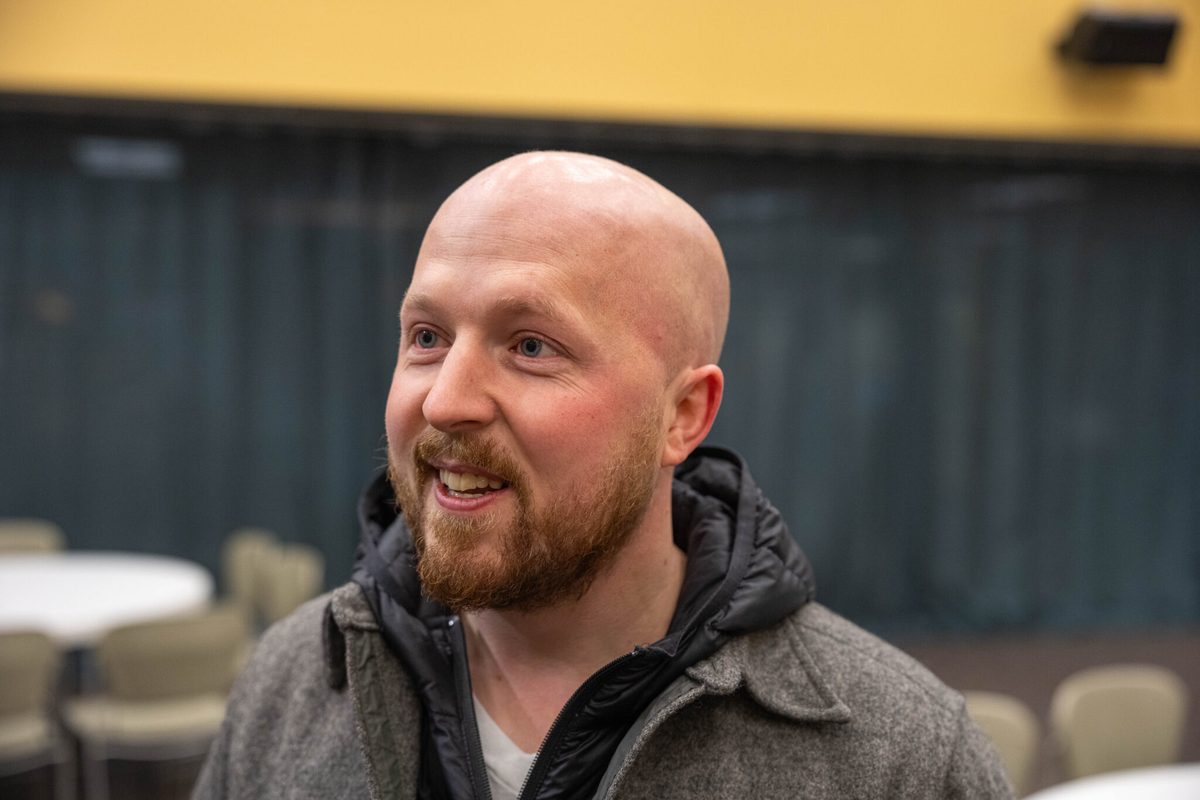
 Robert Pattinson, you better hold on tight, spider monkey.




 Gio Benitez is opening up about a turning point in his health.