Categories
Alaska News Featured Juneau News juneau Juneau Local Juneau Local Ketchikan Local News Feeds Sitka Local

At Alaska rally, Trump endorses Wilson and seeks to boost Sullivan and Begich

By: James Brooks, Alaska Beacon
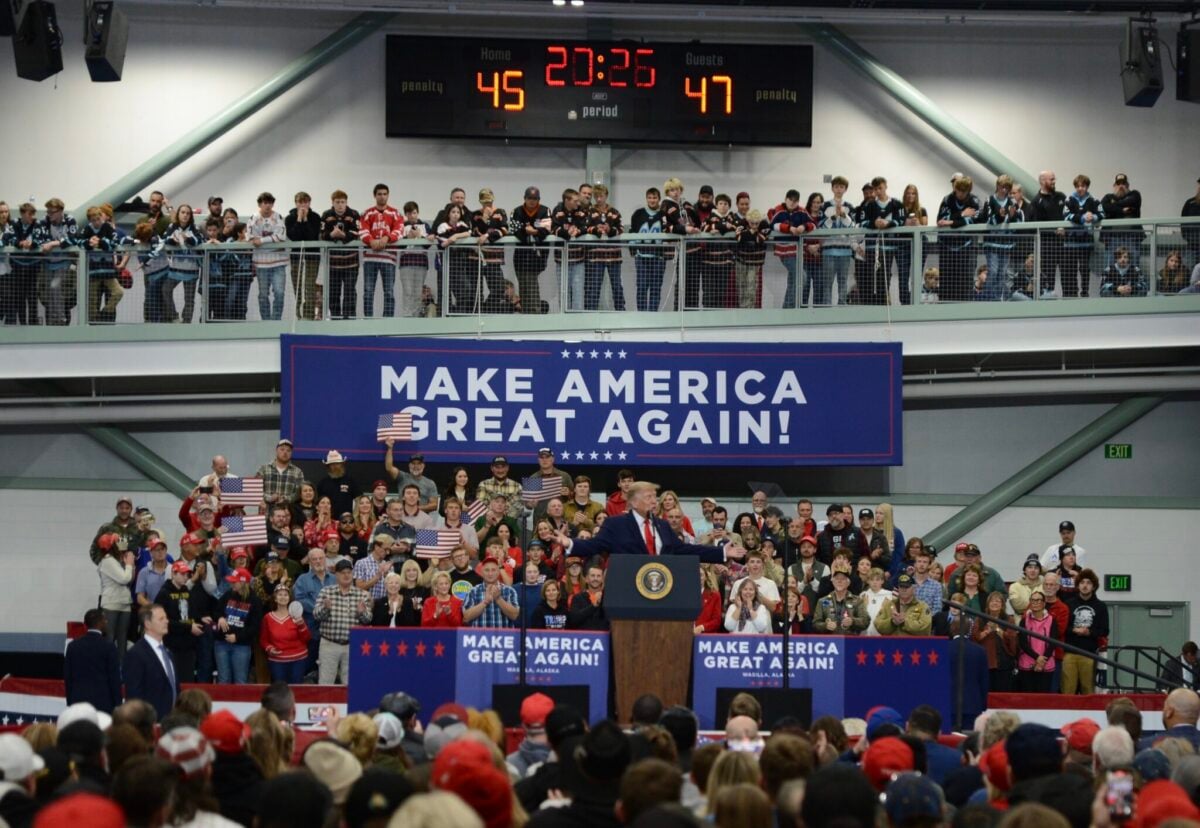
President Donald Trump speaks at a rally Tuesday, Oct. 13, 2026, at the Menard Center in Wasilla. (James Brooks photo/Alaska Beacon)

In a surprise announcement Tuesday, President Donald Trump said he is endorsing Republican Alaska gubernatorial candidate Bernadette Wilson in the four-way race to replace term-limited Republican Gov. Mike Dunleavy.

Polls indicate Wilson and two other Republicans — Dave Bronson and Treg Taylor — are trailing the lone Democratic candidate, Jonathan Kreiss-Tomkins.

In a rally at Wasilla’s Curtis D. Menard Memorial Sports Center, Trump offered his support for Wilson, urged Alaskans to vote for a ballot measure repealing Alaska’s current elections system and encouraged votes for incumbent Republicans U.S. Sen. Dan Sullivan and U.S. Rep. Nick Begich III.

Tuesday’s rally made Trump just the third American president to visit the Matanuska-Susitna region and was part of a nationwide campaign by the President, who was in Ohio on Monday. He’s expected to be in Nevada and Arizona on Wednesday, with other stops in Montana and Georgia this week. 

In 90 minutes of rambling remarks, the President made his goal clear: He wants to motivate Republicans to turn out at the midterms and vote.

“Pretend that I’m on the ballot because here’s what happens. Every time I’ve been on the ballot, we win,” he said.

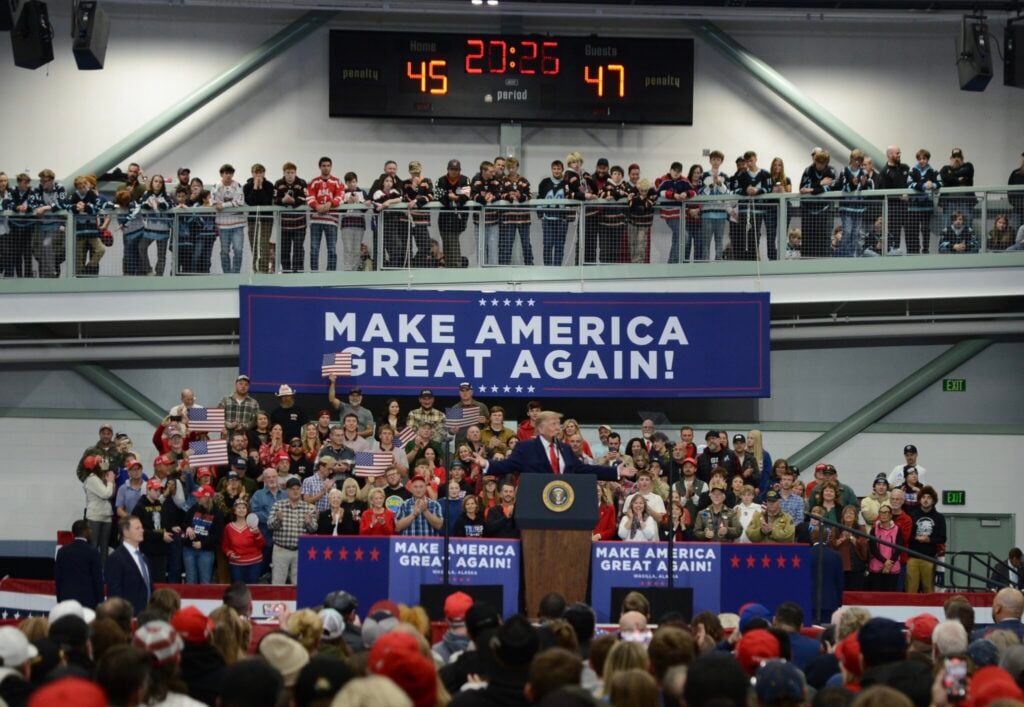
Attendees of President Donald Trump's rally on Tuesday, Oct. 16, 2026, fill the stands of the Menard Center in Wasilla. (James Brooks photo/Alaska Beacon)
Attendees of President Donald Trump’s rally on Tuesday, Oct. 16, 2026, fill the stands of the Menard Center in Wasilla. (James Brooks photo/Alaska Beacon)

Nationally, polling indicates that Republicans are trailing in key elections that may determine whether Republicans or Democrats control the U.S. House and U.S. Senate. 

Polls indicate Begich is ahead of Democratic Party-backed independent Bill Hill in a four-way race that also includes imprisoned Democrat Eric Hafner and Libertarian Jim McDermott.

Sullivan, meanwhile, is in a tight race against Democratic challenger Mary Peltola in a four-way election that also includes Dan J. Sullivan of Petersburg and Republican candidate Gerald Heikes. Polling indicates Peltola holds a small lead.

It isn’t clear how much Trump’s visit will affect those races. 

In a representative statewide survey of registered voters conducted Oct. 1-3, Alaska Survey Research found 58% of respondents had a negative view of Trump.

“We’ve asked this exact question maybe 50 times on surveys dating back to 2015. This is the worst rating we’ve ever recorded,” said company director Ivan Moore on social media. “58% is an all-time high negative.”GET THE MORNING HEADLINES.SUBSCRIBE

But among voters in the Matanuska-Susitna Borough, the site of Tuesday’s rally, Trump had a positive rating, with 44% of voters approving and 43% disapproving. 

“You are here in the heart of Republican Alaska,” Sullivan told the President. 

Trump landed at Joint Base Elmendorf-Richardson Tuesday afternoon before taking a helicopter to Wasilla’s airport and a car to the nearby Menard Center. He was met by a cheering crowd that filled the Menard Center’s seats before returning to his helicopter and an eventual flight to Las Vegas. 

The Menard Center has a capacity of about 3,500 people, and the Mat-Su Sentinel reported that some potential attendees were turned away at the door for lack of space.

Trump was interrupted about 10 minutes into his remarks by a protester who was rapidly rushed out of the rally by security.

Away from the Menard Center, Trump opponents held protests and Democrats organized counterprogramming away from the Republican-focused event inside. Other events took place Tuesday morning in Anchorage.

Alaska Republican governor candidate Treg Taylor talks with reporters on Tuesday, Oct. 13, 2026, at the Menard Center in Wasilla. (James Brooks photo/Alaska Beacon)

Trump backs Wilson in crowded gubernatorial race

Of Alaska’s four candidates for governor, three were present in Wasilla on Tuesday. 

Democratic candidate Jonathan Kreiss-Tomkins was in Fairbanks, attending a forum hosted by the local chamber of commerce. 

Before the rally, Republican gubernatorial candidates Dave Bronson and Treg Taylor each said they didn’t expect Trump to make an endorsement.

But about one hour before he took the stage, Trump took to social media and endorsed the leading Republican in the primary election, Bernadette Wilson.

Trump called Bronson and Taylor “lesser candidates” and said Bronson begged Trump for an endorsement. 

“I wouldn’t do it because he didn’t win the Primary and, therefore, wasn’t deserving of it. I then asked him to get out of the Race, and he agreed! … He agreed to get out, but three days later, without notification, quickly jumped back in, along with a third ‘Republican’ Candidate, who I never heard of, named Treg Taylor,” Trump wrote in a post on Truth Social.

Afterward, Bronson said, “My recollection is different than the president’s of that meeting.”

Bronson said that when he spoke to Trump, he agreed to leave the governor race if Treg Taylor did so but warned Trump that if both left the race, they would simply be replaced by other Republicans.

Taylor never withdrew, “so there was no deal,” Bronson said.2026 Voter Guide

The candidates, the ballot measures, and the tools you need to cast your vote.

Read More

On stage in Wasilla, Trump said that “now is the time for all Republicans to unite behind Bernadette” and wished her luck.

“It ain’t gonna be easy, Bernadette,” he said. 

Trump’s endorsement came hours after the Cook Political Report, one of the nation’s top election prognosticators, said Alaska’s race for governor now leans Democratic, in large part because the Republican vote is being split among three candidates.

Alaska uses ranked choice voting in general elections, which could eliminate vote-splitting, but election results since 2022 have shown that Republican voters are much less likely to rank multiple candidates than independents and Democrats are.

Incumbent Gov. Mike Dunleavy, a Republican who is term-limited and cannot run again this year, spoke at the rally about three hours before Trump took the stage.

“The only way we’re going to win is if we all vote for the Republican candidates for governor, and that’s very important,” Dunleavy said. 

Bronson and Taylor have urged Republicans to rank all three candidates, but Trump spoke against that appeal, calling ranked choice voting a “scam.”

In a text message, Kreiss-Tomkins’ campaign said the President is in Alaska “because national Republicans know that we’re neck-and-neck in this race, and electing a Democratic governor for the first time in a generation would send shockwaves across the country.”

Alaska hasn’t elected a Democratic governor since Tony Knowles, in 1994 and 1998.

As she left the Menard Center, Wilson said she was thrilled by the endorsement. 

“I think it signals, you know, a lot of excitement on our side, a lot of momentum on our side. You’re seeing everyone come together. They’re unifying behind us. We could not be more excited,” she said.

U.S. Sen. Dan Sullivan talks with reporters on Tuesday, Oct. 13, 2026, at the Menard Center in Wasilla. (James Brooks photo/Alaska Beacon)

Trump offers warnings about a Democratic Congress

Speaking in support of Sullivan and Begich, Trump insulted their leading opponents and the Democratic Party, and he predicted dire consequences for Alaska if Democrats win control of the U.S. House and U.S. Senate.

“Alaska is a special place to be, a very important place to be. And nobody’s done more for Alaska than Donald J. Trump,” he said. “With your support, just 21 days from now, Alaska is going to defeat the radical left Democrats.”

Later in his remarks, Trump said, “If the Democrats win, we will have a 1929-style economic depression. And I don’t like saying it, but they don’t know what the hell they’re doing.”

A relative handful of the seats in the U.S. House and Senate are considered competitive, and Alaska’s two federal races fall into that category, even though Republican presidents have won Alaska each election since 1964. 

Senate Minority Leader Chuck Schumer, D-New York, recruited Peltola to run against Sullivan and has said that her victory would be a step toward becoming Majority Leader and thus in control of the Senate agenda.

At Tuesday’s rally, Sullivan said he thinks that would be a disaster for the state because a Democratic Senate would seek to block oil and gas drilling.

“This would be horrible for Alaska,” Sullivan said of Schumer becoming Majority Leader. “The D.C. Democrats don’t have a positive agenda for Alaska. They have a target on Alaska. But this would also be horrible for the country we love, for the great United States of America. So, ladies and gentlemen, especially here in the Mat-Su Valley, you need to understand Alaska is the firewall for freedom for the entire country.”

An attendee of President Donald Trump’s rally on Tuesday, Oct. 13, 2026, in Wasilla, holds up a sign urging a yes vote on Ballot Measure 2. (James Brooks photo/Alaska Beacon)

President urges Alaska to repeal top-four primary, ranked choice general

In addition to boosting Republican candidates, Trump urged attendees of the rally to vote yes on this year’s Ballot Measure 2 and eliminate the state’s top-four primary election system and ranked choice general election.

That system was installed in a 2020 ballot measure and retained after a 2022 repeal effort narrowly failed.

Trump has repeatedly called ranked choice voting a “scam” and has urged states to not adopt it.

Under Alaska’s system, all candidates for an office run together, and the top four vote-getters, regardless of party, advance to the general election.

In the general election, voters rank the four remaining candidates in order of preference. If one candidate gets the majority of the first-choice votes, they win.

If no candidate has a majority, the candidate with the fewest first choices is eliminated and that candidate’s votes are redistributed to the voters’ second choice candidates. 

The process continues until only two candidates are left, and the person with the most votes wins.

“Vote against the ranked choice. Vote yes for the elimination of ranked choice,” Trump said.

Pardons signed for two diesel mechanics

During the rally, Trump signed presidential pardons for two local diesel mechanics who pleaded guilty to Clean Air Act violations during the Biden administration. 

Zachary Czubak and Patrick Fleming were convicted in 2022 of removing anti-pollution equipment from dozens of vehicles.

Sullivan had championed the pardons, saying the removals were justified because the anti-pollution equipment can cause poor performance at low temperatures.

Trump previously pardoned Mackenzie Spurlock, co-owner of Matanuska Diesel, in a related case.

Trump repeats ‘$5,000 dividend’ promise, but with new conditions

Speaking in Wasilla, Trump repeated a pledge he first made in September in Texas — a $5,000 payment to every adult American citizen if Republicans win the House and Senate during the midterms.

“The Trump dividend that you get, you’ll get it very quickly after the election,” he said.

That payment would cost $1.2 trillion, significantly increase the national debt and likely would increase the national rate of inflation, an independent analysis concluded last month.

At the Menard Center, Trump said he would restrict the dividend so that it could only be spent in the United States. He did not say how he would track Americans’ use of the money.

“I don’t want you to go to Japan. I don’t want you to go to China. You’ve got to spend it in the United States of America,” he said.

Visit makes local history

Trump became just the third President to visit the Matanuska-Susitna region. The first, Warren Harding, died on his return home after ceremonially opening the Alaska Railroad in 1923. The second was Jimmy Carter, who restricted his visit to a remote mountain lake for fishing.

Trump has repeatedly visited Alaska aboard Air Force One, which frequently stops in Anchorage to refuel during trans-Pacific flights.

His last notable venture away from Air Force One was one year ago, when he met Russian President Vladimir Putin briefly at JBER. 

Trump visited Alaska for a campaign rally in 2022 to endorse Dunleavy, U.S. Senate candidate Kelly Tshibaka and U.S. House candidate Sarah Palin. Of the three candidates, only Dunleavy won that year’s election.

President Donald Trump speaks at a rally Tuesday, Oct. 13, 2026, at the Menard Center in Wasilla. (James Brooks photo/Alaska Beacon)
Categories
Music

Evan James and Luke Curran Leave Adam Levine Torn After Tucker Wetmore Duet on ‘The Voice’

Country music has clearly taken over The Voice for Season 30, with contestants proving week after week that they have what it takes to make their mark on the genre. On Tuesday night (October 13), we saw that happen once again when Evan James and Luke Curran became the latest members of Adam Levine’s team to face off in the Battle Rounds.

The pair of hopefuls got both the coaches and the live audience swaying along to their take on a track that has been making waves among the new generation of country music fans, Tucker Wetmore’s “Wind Up Missin’ You.”

Although the original song isn’t a duet, Evan and Luke effortlessly transformed it into a collaborative performance to remember. They took turns singing the verses and giving each other an opportunity to showcase their individual vocal style and when they joined forces for the chorus, their smooth harmonies added a softer, more tender feel to the mid-tempo hit.

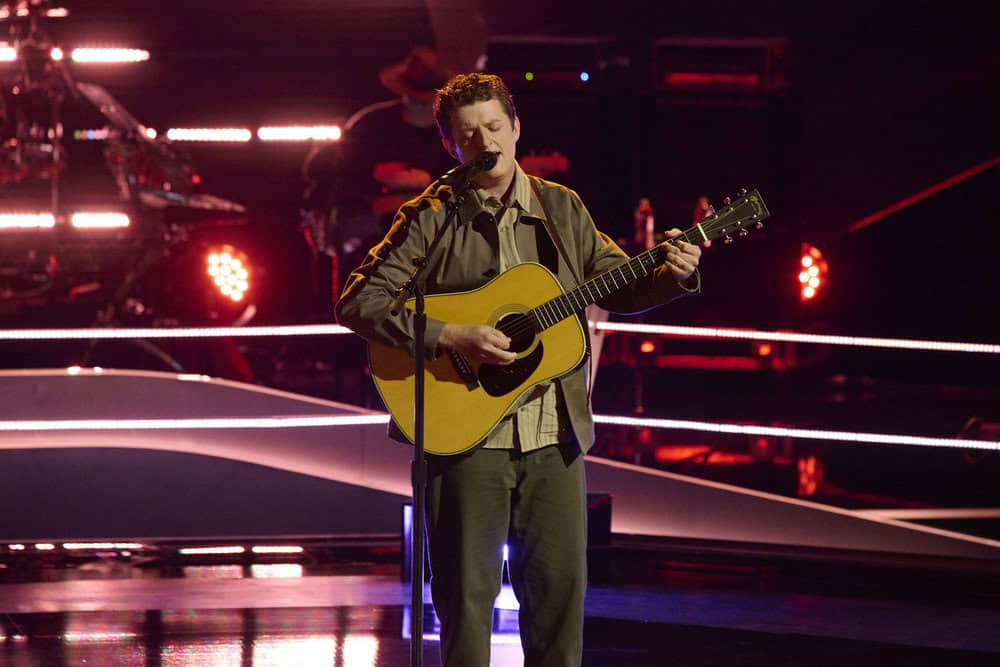
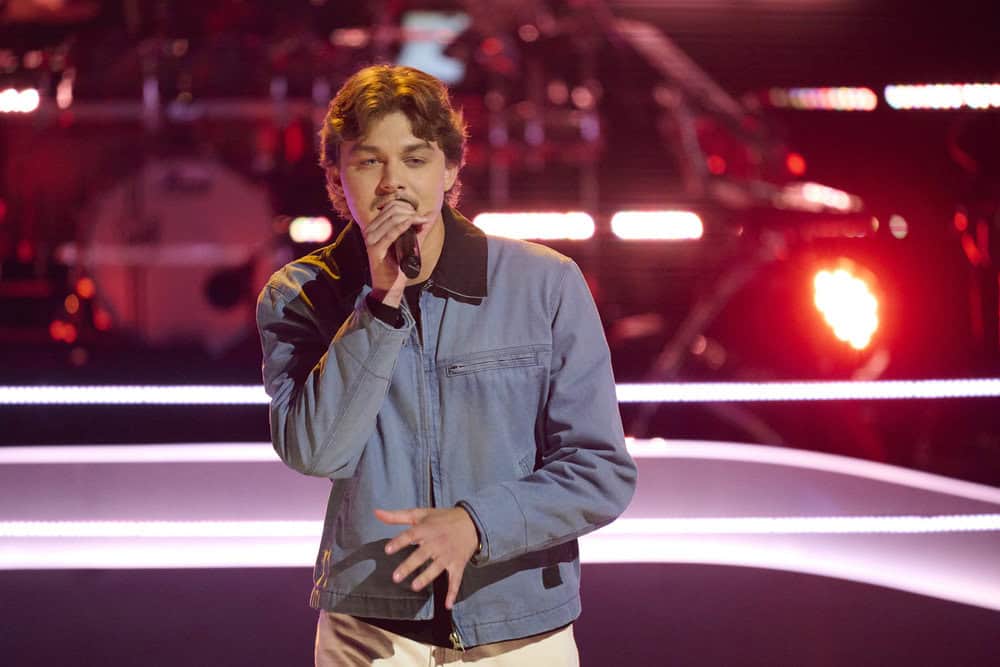
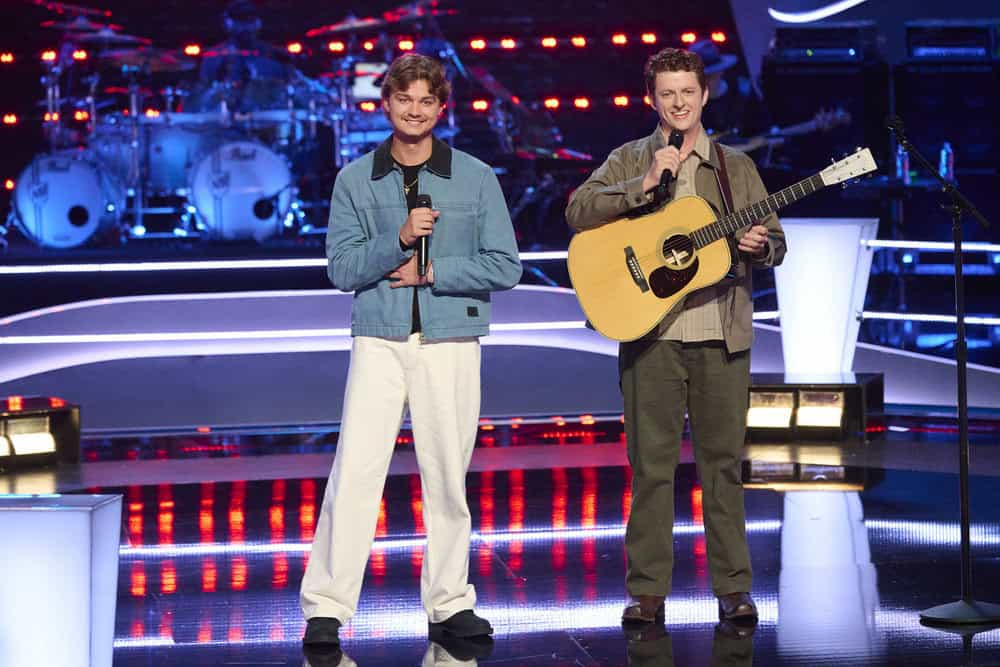
Evan James, Luke Curran; Photo by: Griffin Nagel/NBC

Riley Green made sure to call attention to the arrangement that they chose in the end, stating “I think it was great.” He felt that they both offered plenty of “individuality,” but also impressed him with the parts of the song that they sang together.  

“Evan, it felt like you’ve sang this song a hundred times. So you felt really comfortable from the very beginning and love your stage presence, how you handle yourself. It was great,” Green stated. “Luke, probably stylistically not something that I would have pictured you doing, but that’s part of the battles and that’s the tough part of it. But man, you really made it your own. I turned for you in the blinds as well because I can see you being able to do that with about anything that’s thrown at you. So you did a great job today.”

Green added that if he had to choose a winner of this battle, he would likely lean more towards Evan, claiming he felt “more suited” for this particular song.

Coach Queen Latifah also had nothing but good things to say about the delivery.

“Wow. Y’all got into that. Y’all sound great together,” she began. “I mean, y’all felt locked in from the very beginning. This is going to be a tricky one right here. Evan just ran all around the world real quick. Luke just gave it to that microphone like, ‘how dare you? Don’t be disrespectful.’ I feel extremely encouraged by both of you in your performances that you can keep going in this competition. So congratulations. Good on you both.”

Next to comment was Kelly Clarkson, who highlighted how well they sounded together considering the fact that they have “such different tones.”

“I actually find this a really cool odd pairing. Evan, you have this presence and you just fill up the space easily, just within a verse. And Luke, you have this rasp and soulfulness and storyteller vibe, which I really dig too.”

When it was time for the leader of Team Adam to give his thoughts, he admitted while watching the performance he found himself going back and forth on who he felt was doing the best overall because they each brought something different to the table.

“At multiple points in this performance today, I was like, ‘Oh, Evan.’ And then I’m like, ‘Well, no, Luke.’ And then I was like, ‘Oh no, no, no, Evan.’ So this is a tough decision because you guys were neck and neck.”

Luke Curran; Photo by: Griffin Nagel/NBC

He went on to say that there were some issues with pitch for both singers, but as Clarkson pointed out, “we’re human and not AI, so it’s okay.”

“We all have different challenges we’re going to face on this show. You both deserve to be rewarded for this, which is why this sucks,” Levine added.

Evan ended up being named the champion of this battle round, putting him straight through to “Cut Week,” which replaces the portion of the show that would usually include Knockouts and Playoffs before the Live Shows.

Evan James; Photo by: Griffin Nagel/NBC

Explaining the reason behind his pick, the Maroon 5 member stated, “Evan just edged him out a little bit. He’s got a big, powerful voice that fills the room. And whenever that happens, it’s incredibly hard not to stay with someone like that. He could surprise us all and just absolutely smash for cut week.”

He added, “My decisions actually have been difficult. Their job is to make my job hard and they’ve really been successful and caused me a lot of stress.”

Evan noted that his goal is to continue to try and make Adam proud as the only country singer on his team and hopefully, lead him straight to the finale.

Now that the Battles have come to an end, each of the four coaches are left with seven artists each. During Cut Week, two artists will be chosen to advance into the Live shows while the remaining five compete for the final spots in the Top 12. America will also vote one additional Artist into the Top 13.

Viewers can tune into the two-hour episode of The Voice airing on Monday, November 2 at 9 p.m. ET on NBC, with streaming available the next day on Peacock. 

The post Evan James and Luke Curran Leave Adam Levine Torn After Tucker Wetmore Duet on ‘The Voice’ appeared first on Country Now.

​Country Now

Categories
Music

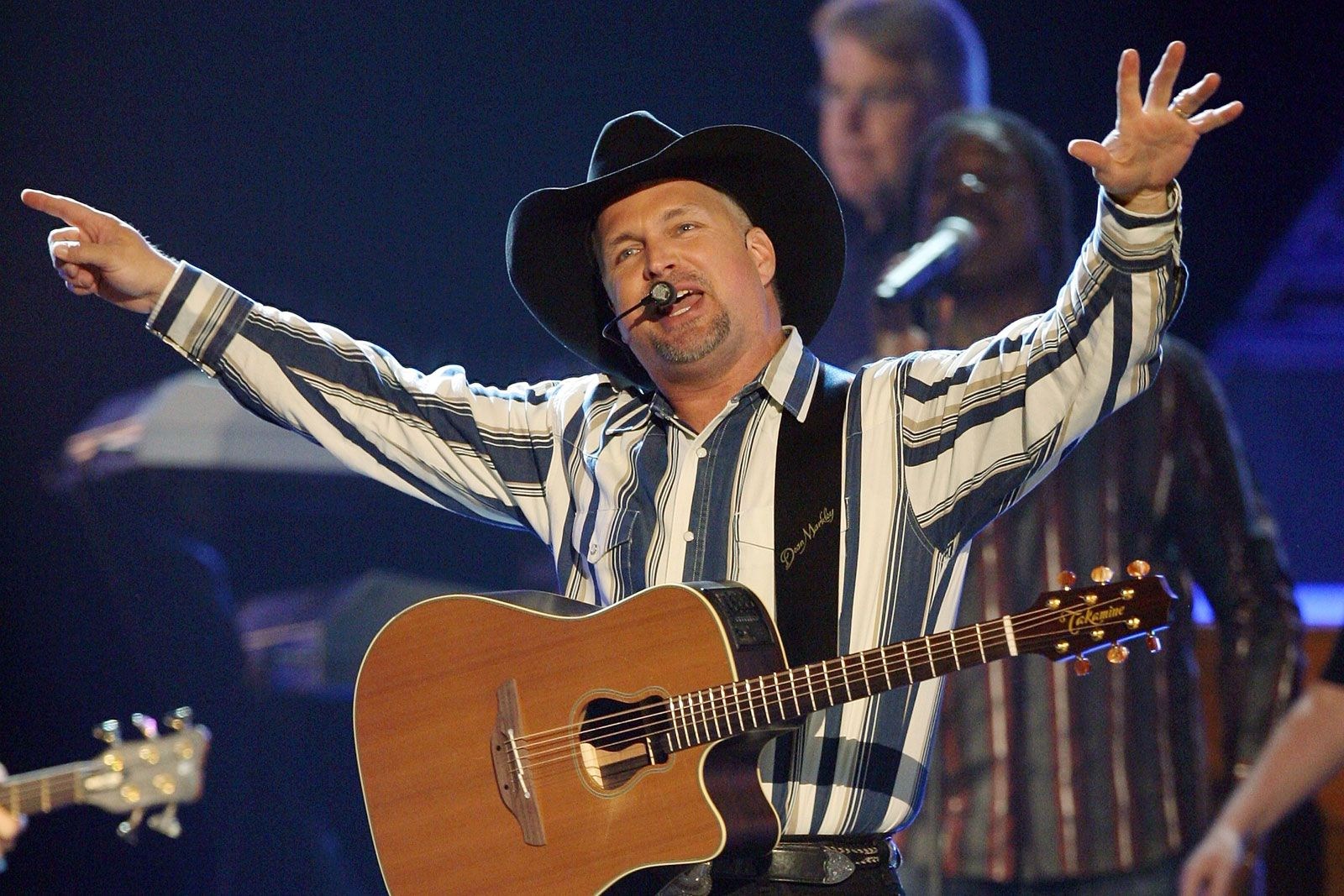
Garth Brooks Adds More November Dates to 2026 Arena Tour

It’s already one of the biggest tours of the year. Continue reading…​The Boot – Country Music News, Music Videos and Songs

Categories
Entertainment

Ella Langley Responds After Riley Green Implies He Caused Her Success

Ella Langley and Riley Green perform on the main stage during CMA Fest 2025 at Nissan Stadium on June 05, 2025 in Nashville, Tennessee.Ella Langley is choosin’ to address Riley Green’s comments about her career. 
After The Voice judge suggested Langley’s success skyrocketed after she toured with him during a recent episode of the…
​E! Online (US) – Top Stories

Categories
Entertainment

Travis Kelce Signals Support for Shane Gillis After Misogynistic ‘SNL’ …

Reading Time: 3 minutes

Sometimes, the men in Taylor Swift’s life are not great. It’s no secret. She has whole songs about it.

Over the weekend, controversial comedian Shane Gillis made some disgusting remarks about women while hosting SNL.

Travis Kelce left a public “like” on the video, even as it is getting eviscerated by normal people left and right.

A report says that this was no accident. What kind of message was Kelce trying to send?

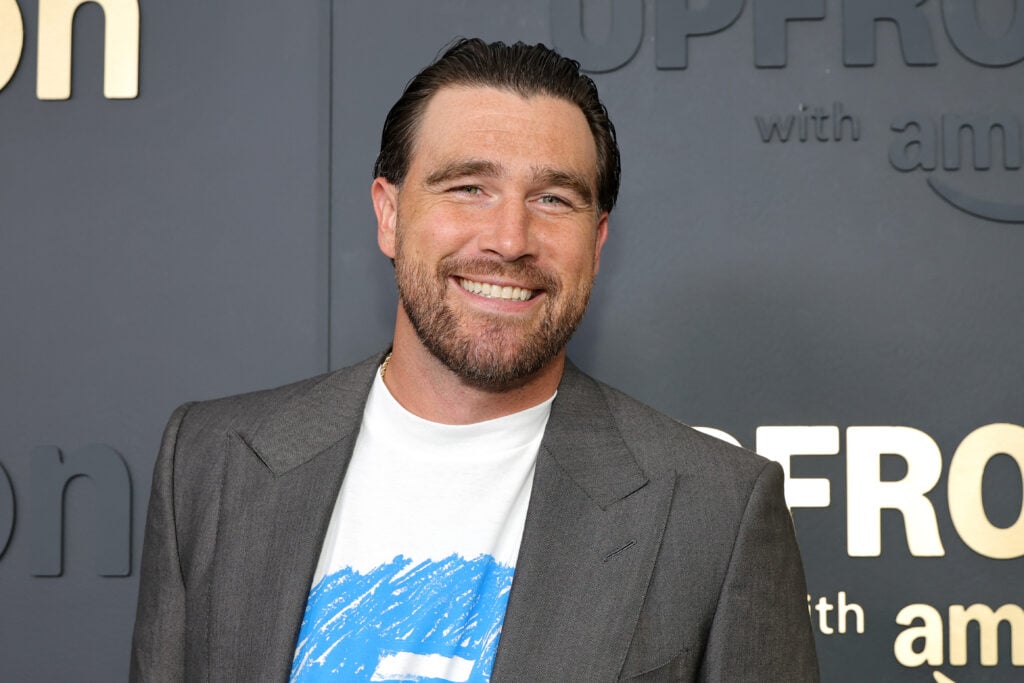
Travis Kelce in 2025.
Travis Kelce attends the Amazon 2025 Upfront on May 12, 2025. (Photo Credit: Dia Dipasupil/Getty Images)

Taylor Swift fans are crushed (and they’re not alone)

On Saturday, October 10, Shane Gillis once again hosted Saturday Night Live despite having been fired from the cast in 2019.

(This seems to be a deliberate choice — firing him over his rampant use of racial slurs but also bringing him on to look “balanced” to misogynistic chuds.)

To start things off on the wrong foot, Gillis ranted about women wearing athletic gear to the gym during his six-minute monologue.

“I haven’t been to the gym in so long, I didn’t know women just dress like w—es now … there’s no other way to describe it,” he complained.

Gillis then griped about how men are not “allowed” to “look” at women while they work out. It does seem likely that Gillis, specifically, would be an unwelcome voyeur when a woman is just trying to exercise.

NBC’s official Instagram page shared the clip of Gillis’ SNL monologue.

And, plain for everyone to see, Kelce gave the video a “like.”

Likes are public. And, though they can be accidental, any experienced public figure likely knows that they are seen as endorsements by fans.

An inside source close to Kelce explained that “he’s always been a massive fan of the show and he was supporting a friend.”

That’s pretty damning. Unless the “friend” whom Kelce was “supporting” was someone else, somehow?

This is part of a much larger societal problem

So, Kelce and Gillis are friends? When did that happen?

Back in June, Gillis was a surprise guest at the annual Tight End University (TEU) summit in Nashville.

That might sound like the name of an adult media series, but is actually something that Kelce hosts with fellow NFL players George Kittle and Greg Olsen.

As a guest, Gillis joined the three on stage while celebrating after Swift performed.

Swift casts a long shadow, and many didn’t notice or generously overlooked Gillis’ fetid presence at the time.

We need more men like Dan Levy and fewer men like Shane Gillis. Stop being complacent. Stand up and call this shit out when it happens.
www.instagram.com/p/DeYSYNXMcbH/

[image or embed]

— Dan Chibnall (@bookowl.bsky.social) October 12, 2026 at 12:27 PM

We have to remind ourselves that we do not believe in guilt by association.

Kelce did not stand on the SNL stage and make disgusting derogatory remarks about women at a time when one of the top stories in the news is about a gang rape or when there is a conservative push to strip women of their right to vote and abolish no-fault divorce.

However, Kelce did mash that like button — reportedly on purpose. And whether he meant it to be or not, that looks like an endorsement of Gillis and all of the loathsome vitriol that he spews.

Awful men like Gillis are only one part of the problem. The other part is the other men in their lives who ignore it, nod along with it, or laugh and rancid cruelty.

It would be nice of Kelce were a better person. He’s likely been famous long enough (and ultra-famous for a couple of years) that he tunes out all criticism as “haters” because of so many actual haters. So he’s not likely to get better any time soon.

Travis Kelce Signals Support for Shane Gillis After Misogynistic ‘SNL’ … was originally published on The Hollywood Gossip.

​The Hollywood Gossip

Categories
Sports Fox

The Most Important 25 Seconds In Football: Inside Coach-To-QB Communication

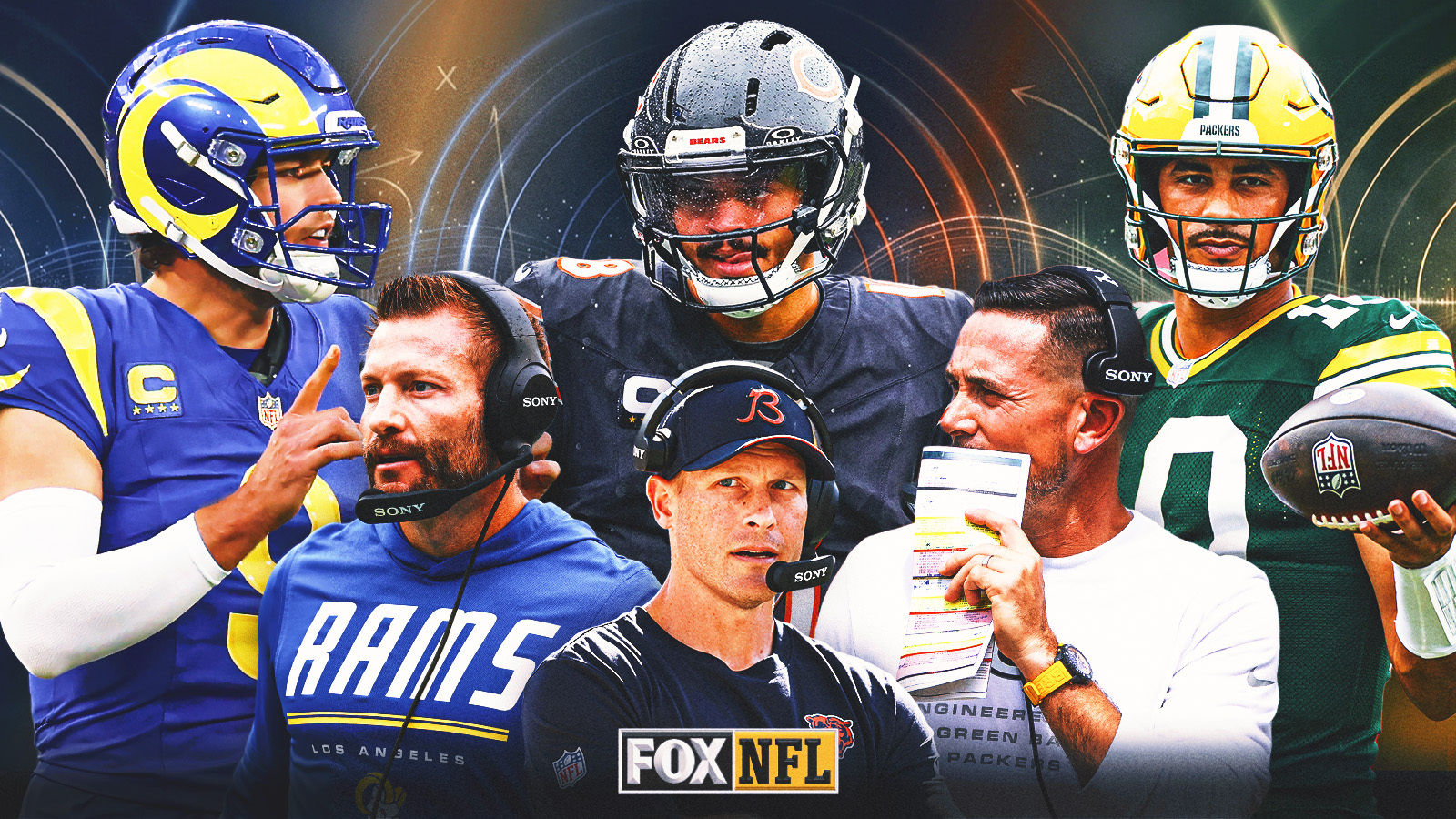
Twenty-five seconds might seem like nothing. But it’s literally everything to a quarterback and his playcaller, because that’s all the time they have to communicate between plays from headset to helmet. Yes, the NFL play clock allows 40 seconds from when one play ends and when the center snaps the ball for the next. That’s hard enough to manage. But the link between the playcaller and the QB is even shorter. It’s a one-way line of chatter from the playcaller to the quarterback. And after 25 seconds, the headset shuts off. Those 25 seconds contain weeks, months and sometimes even years of work. It’s the distillation of football’s intricate language boiled down to a concentrated residue. The ultimate test of communication purity? Well, that’s wins. That’s championships. So it’s a good thing that Packers QB Jordan Love already knows what Green Bay head coach Matt LaFleur is going to call on a third-and-6. It’s gotten to that point where the QB anticipates his playcaller. That’s because they prepare so thoroughly every week. It’s also because they’ve worked together since 2020. Their playbook has become their shared language. “The more reps I’ve got, the more years I’ve played, you already kind of know what he’s calling,” Love told me of his rapport with LaFleur. “You know why he’s calling the play. You know what the situation is, and so … you’re kind of visualizing the play as he’s calling it.” It’s what every playcaller aspires to establish with his quarterback. Not everyone is there yet. “I do think that’s where the best ones end up,” Chicago Bears coach Ben Johnson told me during a press conference. “So [Caleb Williams and I are] on a quest to get there.” Sometimes — at the very end of the play call — a coach will give the tiniest tip. Three yards to field-goal range. Remember, they like a free safety blitz here. Don’t be afraid to kill to our second play if they’re in zone. That’s just the cherry on top. Often a coach doesn’t get that far. Because in 25 seconds, the playcaller must: Meanwhile, the quarterback has to: If all goes well, that leaves the quarterback with 15 seconds at the line to make the necessary adjustments. It’s … a lot. “The really good offenses I’ve been on,” Detroit Lions QB Jared Goff told me, “I know why they’re calling the play. I know their intent. So I’m hopefully not missing the intent and needing a reminder to do what they want. “There’s so much that goes on throughout the week where it’s like, OK, he calls [the play]. He’s looking for this coverage. I know the alert versus that coverage. I already know all the stuff.” This is the plan. Plans go right. They also go wrong. No matter what, as the play clock ticks down to zero, the center snaps the ball. Or else. The Art Of Communicating … And Overcommunicating Given how little time there is between NFL plays, it’s natural for the process to feel rushed and chaotic. It’s natural for tempers to flare, too. We saw as much in Week 4 between Pittsburgh Steelers QB Aaron Rodgers and head coach Mike McCarthy, who previously worked together for 13 seasons in Green Bay, from 2006 to 2018. Rodgers has a well-established reputation for liking things his way. And you could see, with 25 seconds left on the play clock (and therefore 10 seconds left of headset time), Rodgers yelled at McCarthy: “What the f—? Call it.” They were running out of time. And while McCarthy responded — “What an a–hole” — I think most quarterbacks would side with Rodgers on this one. That’s a tighter turnaround for the play call than is typical. When the play comes in late, it can have a cascading effect. The QB might have to cancel a motion, which changes where a player lines up pre-snap. The QB might not be able to set protection, which allows a blitz to get through. Every lost second comes with stakes and sacrifices. “It’s just a matter of how quickly I can get [Williams] the personnel and the play call so that he can go out there and cut it loose,” Bears coach Johnson said. “I’m not one of those guys that’s in their ear all the way down to that 15-second cutoff time. I’ve been around guys. They’ve been around that, and they’re like, ‘Just shut up. I got it. I got this.’ So they put in the work through the week and we trust them on it.” This is maybe the most controversial stylistic choice for a playcaller. And I’m not sure all the playcallers are telling the truth. Because every single one I spoke to claims to be a minimalist, barely providing any situational coaching points or details. The fear is that saying too much will slow down the QB’s process. Rams coach Sean McVay, however, is famous for squeezing every last drop of juice out of the 25-second lemon. “My favorite part about the headset is that [QB Matthew Stafford] can’t talk back to me, so I just talk to him. I know he’s always glad when that 15 seconds clicks in, so then I have to shut the hell up,” McVay said during a press conference on Tuesday. “I’m talking to him consistently. … I’m in his ear the whole time and he loves it.” McVay once said he’s not the only playcaller who takes a maximalist approach. “To my knowledge, a lot of guys operate that way,” he said back in 2017, when there was controversy around him micromanaging Goff over the headset. “The experiences that I’ve had, that’s kind of been standard operating procedure.” It wasn’t just for Goff. McVay went viral last year for overcommunicating with Stafford. McVay did what every playcaller told me they don’t do. Stafford knew what play McVay was calling before the coach finished. Despite Stafford’s pleas for McVay to stop, the coach entered the “tips and coaching points” phase. And that was when Stafford had enough. “Please stop. Yes! Oh my god, he’s still going. He’s still going,” Stafford said. “This is unbelievable what I’m getting right now.” McVay was detailing the exact yardage split that he wanted from receiver Demarcus Robinson on the pre-snap alignment. That’s the detail you get when you work with McVay. Because of moments like that one, Stafford and McVay agreed to a compromise — sort of — when the QB feels he doesn’t need any more information from his coach. “I usually give him [a hand signal]. And every once in a while, it turns over to something else. To, ’Please, be quiet!’” Stafford said on “The Inner Circle Podcast.” “He is the man. I love it. And now he just messes with me. After that clip came out, he’s like, ‘This is the part I love where you … can’t talk back, and I’m just going to keep talking to you right now.’ … But it’s a lot of fun.” Sometimes, coaches will relay these tips in clear-as-day English: “We don’t have timeouts. Complete the pass to someone going out of bounds or clock it.” Sometimes coaches will relay a code, “Situation Alpha,” that is shorthand for what they want done. Interestingly enough, LaFleur came from the McVay coaching tree. And so, when LaFleur first arrived in Green Bay in 2019, he thought that he could emulate McVay and share situational thoughts with Rodgers. And you can guess how that went. “I’d give coaching points and reminders to Aaron,” LaFleur said, “and he didn’t like that.” Love, who initially backed up Rodgers for two seasons, learned from that experience. The current Packers QB would prefer to hear himself think rather than listen to LaFleur jabber away about every little thing. “That’s the worst,” Love told me with a smile. “Yeah, it’s like, ‘Shut up.’” There’s good reason — at least from the quarterbacks’ point of view — why less is more. “Just imagine getting hit right in the sternum,” former NFL head coach and offensive coordinator Marc Trestman told me. “Your head is spinning, and you got to get back up, and you’ve got all these checklists, boxes to check of an analysis before the next play is run. That’s only 40 seconds, and that’s what I think is understated in the game.” Yard line. Down. Distance. Quarter. Time in the quarter. Red zone? Personnel. Play. Snap count. Defensive alignment. Pre-snap motion. Kill? Protection? I’m dizzy. Are you dizzy? Set hut. “The amount of information the quarterback has to process even before he gets to the line of scrimmage is absolutely enormous,” Trestman said. “So to get him to the line of scrimmage with a quiet mind, I think, is important.” Josh McDaniels is in his third stint as the New England Patriots’ offensive coordinator, working with QBs from Tom Brady to Matt Cassel to Jimmy Garoppolo to Jacoby Brissett to Cam Newton to Mac Jones to Drake Maye. McDaniels has learned when and why — and in what games — to offer more information over the headset. “Some games you talk more, some games you talk less,” McDaniels told me. “I would say part of that is determined by the opponent and the complexity of what they do or don’t do. … And depending on what your quarterback needs from you, sometimes more information is good. Sometimes less information is better. It just depends on who you’re dealing with and what phase of their development they’re in.” Ultimately, whatever the playcaller says needs to be clear and helpful. And the delivery should be as calm and poised as the QB should be in the pocket. Goff said his favorite playcallers keep it positive — even when that playcaller might be getting inundated by 10 different people over the headset, all of whom feel they have pertinent information for the next play. “He has to filter. And then it needs to shut off really quickly and come through to me very cleanly,” Goff said. “Ben [Johnson] was great at that. [Current Lions OC] Drew [Petzing] is great. Sean [McVay] was great at that. “They’re talking to the O-line coach. ‘Hey, blah blah blah blah. Shut the f— up,’” Goff said, speaking rapidly and chaotically. Then he took a short breath. Slowed down his speech. “‘All right, we’ve got trips right.’ You know? That separation is so important. Yeah, and the good ones do it. … You feel like you’re going to score on every play because of the way [the play call] comes in with excitement and energy.” Of course, that excitement and energy can lead to excessive chatter. Given his Super Bowl pedigree, McVay has earned the right to share as much intel as he wants. And some quarterbacks want all the intel they can get. Just ask Josh McCown, who was a longtime NFL backup QB and is now the Minnesota Vikings’ quarterbacks coach. “You just never know in the heat of a game what thought may escape your brain,” he told me. “You’re like, ‘Oh, if somebody just reminded me.’ I do think it’s critical to utilize it that way.” When It Goes Really Wrong Did you catch the Commanders’ tie with the Giants in Week 5? It was the ultimate example of how failed communication — and poor usage of the headset — can lead to game-ruining confusion. In the matchup between NFC East rivals, Washington quarterback Jayden Daniels dropped back to pass with 12 seconds left in the overtime period and the score tied 27-27. The Commanders, out of timeouts, were on the Giants’ 24-yard line — in position for an easy-enough 42-yard field goal attempt. They didn’t even need to drain the clock, because by scoring at that point, they would automatically win the game. So it didn’t really make sense that Daniels was dropping back. But he did anyway. Because the Commanders had no timeouts remaining, the play was designed for Daniels to either throw the ball into the ground to stop the clock — or hit tight end Ben Sinnott on his way out of bounds, per coach Dan Quinn. Sinnott wasn’t open, so the play called for Daniels to turf the ball. Instead, he ran forward and dropped to the ground, taking a sack. The offense — clearly confused — was slow to get to the line for a spike to stop the clock. And time ran out. Game over. It seemed like Daniels didn’t know he had no timeouts. “We’ve gotta stop the clock,” he said after the game. “We’ve gotta relay that as an offense. It starts with everybody — top down. But ultimately it’s on me.” Murky territory. Over the headset, first-year Commanders offensive coordinator David Blough could have been crystal clear about what Daniels needed to do on that play. Apparently, that was what Daniels expected. (At least, that’s what he was saying after the game.) But the situation was also so obvious that most high school quarterbacks would understand how to handle it. Which is perhaps why Blough didn’t spell it out for Daniels. Or maybe Blough did — but he used a shorthand, “This is Alpha,” which Daniels missed or misunderstood. It’s like Josh McCown said: You never know what basic football knowledge will escape you at any point during a game. That’s one reason why, this past preseason, Love served as the Packers’ playcaller during one of their games. Giving quarterbacks that experience helps to create a smoother playcalling process, and gives them a sense of what it’s like on the other end of the line. Love called plays for Kyle McCord, a sixth-round pick by the Eagles in 2025 who has yet to take a snap in a regular-season game. Getting in and out of the huddle on time is the first hurdle that a young quarterback has to clear before a team feels comfortable playing him. It’s that important — and it can be that difficult for some QBs. And that’s on the best of days when everything is working properly. Then there are the other days, when the headset has a habit of shutting off earlier than expected. “The panic sets in when you have a long run, a long pass,” former NFL QB Matt Cassel told me. “You’re trying to get your linemen and everybody down there. Well, the play clock is ticking, and the coordinator is yelling in your ear, or they’re indecisive on personnel groups. … He’s starting the formation, and that 15-second clock shuts off, and you’re like, ‘Oh s—! I didn’t get the play.’ “Believe me, it happens more often than people think.” The easiest solution is to call a timeout. But of course, that’s only if you have one to burn, and you never want to waste one. Sometimes the quarterback just takes control. After all, he spent the entire week game-planning with the playcaller and mapping out the specific situations for each play. In some cases, teams simulate not having the headset in practice — forcing the QB to know what plays the playcaller likes in different situations. “If [the headset goes out], then you could still operate and not feel completely handicapped by anything going on,” Cassel told me. It can get even worse, too. Sometimes the comms go out completely — which happens randomly in games. Sometimes the outage lasts for a whole quarter. That happened to Cassel in one of the first starts of his career, when he was thrust into the QB1 role for the injured Brady in 2008. “I’m waiting for the play, and you can’t hear anything. I’m looking over [to the sideline]. So we take a timeout. Then, for the next few plays, I’m running over to the sideline,” Cassel said. He had to put on a wristband to help simplify communication, with his playcaller yelling out a number that corresponded to a certain play. When it was clear that comms were not coming back, the Patriots decided simply to write the play number on a whiteboard, so Cassel could see it from the field without all the running back and forth. “I’m going, ‘This is a f—ing zoo’ because you have no communication going on. You’re just trying to find a whiteboard with a number on it on the sideline,” Cassel said. “It looks like a scene out of college where they’re holding up all those stupid signs.” The Five Most Important Seconds During those precious 25 seconds, how does a playcaller decide which play to call? “It’s hard to simplify that answer,” McDaniels told me. “You could probably do a really cool two-and-a-half, maybe two-hour presentation on what goes into the thought process of a call. If somebody was going to take you through it, [you’d] actually go through the call itself and what happened the previous play and what all went into making this call the right call. I mean, it’s a process.” The crazy thing is, McDaniels also told me that he gives himself no more than five seconds to decide on his play. The ball is down. The decision that could change the game, or even change the playcaller’s employment status, comes down to five seconds. There are ways to stay within that schedule. Some playcallers create a list before the game of exact plays they would call on certain downs and distances. The coach does much of his thinking ahead of time, predetermining which play he’ll choose. McDaniels doesn’t do that. He prefers to feel the flow of the game. Which means that, as soon as he makes one call, he’s already narrowing down the possible plays for his next call. “The minute you make a call, you are immediately now searching for the multiple options that could come next, and there’s never just one,” McDaniels said. “And so, after you make the call and you’re done talking, and now this is before the ball has been snapped, you’re always thinking about what the potential avenues you’re going to go down are.” There’s an infinite possibility — with a finite (and minute) timeline. It’s about getting it right. But there’s no right or wrong way to do it. Football is a game of precision in chaos. Football is a game of personality. And football is as much a fight against time as it is against the opponent. Nothing captures all of this better than the 25-second window of coach-to-QB communication.​Latest Sports News from FOX Sports

Categories
Food

Forget Pricey Salmon: The Budget-Friendly Fish Alternative With Fewer Calories

Salmon may be high in good fats, but it’s often rather expensive and higher in calories than other options, like this budget-friendly white fish.

​Food Republic – Restaurants, Reviews, Recipes, Cooking Tips

Categories
Sports Fox

QB Notebook: What’s Going On With Sam Darnold; Inside Justin Herbert’s Worst Season

Welcome to the Quarterback Notebook, where I’ll cover the past week in NFL quarterbacking – from the most interesting passers, plays and storylines to some other stuff that caught my eye while watching film this week. This week, we’ll ask if the Seahawks have a Sam Darnold problem, dig into Justin Herbert’s season from hell, and defend the concept of an arm punt. Let’s talk quarterbacks. The simple answer is “no,” but it’s a bit more complicated than that. Sam Darnold’s numbers are down from 2025 across the board, but the tape shows the same quarterback who led the Seahawks to a Super Bowl just last season. It’s Seattle’s offense that looks a lot different. In video game terms, Darnold is playing on a harder difficulty this year. Playing quarterback in the NFL is never easy, but doing it when the defense knows a pass is coming raises the difficulty considerably. And Darnold is finding himself in those situations more often for reasons largely outside his control. The Seahawks weren’t down on the scoreboard often in 2025, and Darnold found himself in obvious passing situations at a league-low rate. He took just 73 dropbacks while trailing in the second half last season. In just three full games this year, he’s already taken 22. Darnold’s already logged 19 third-and-long dropbacks this season; he logged just 74 in all of 2025. Darnold’s clean playoff run skewed the perception of his 2025 season. Seeing him lift the Lombardi Trophy made it easy to forget he led the NFL in turnovers. Even with Seattle’s offense suppressing his degree of difficulty, you could still make out the flaws in his game. In this environment, they’ve become glaring. The loss to San Francisco put those flaws on full display. Both of his interceptions came on tight-window throws that were left inside his receiver, allowing the defensive back to undercut the route. And both came in passing situations. The first came on third-and-10 with Seattle backed up in its own territory. Darnold blindly trusted Jaxson Smith-Njigba to beat his man on an out-breaking route. That’s typically a bet that works out for Darnold, but not this time. His second interception was the product of a bad throw – not a bad decision. On second-and-8, Darnold sees tight end Elijah Arroyo with a step on his defender as he runs across the field. That’s the route the play is designed for, and if Darnold can just lead Arroyo towards his upfield shoulder, there’s enough of a window to justify the throw. But Darnold throws it flat and across the field, allowing Renardo Green to undercut Arroyo for the pick. These two mistakes didn’t tell us (or the Seahawks) anything we didn’t already know about Darnold. He’s a talented thrower who will take chances that many other quarterbacks don’t have the arm to take. When he’s rushed into those decisions, which often happens when the defense goes into pass-rush or blitz mode, mistakes are bound to happen. Even during Darnold’s career year in 2025, we saw plenty of examples. If the Seahawks get their running back room healthy and their ground game back on track – which will keep Darnold out of obvious passing situations – his play should return to the level we saw last year, which was good enough to get Seattle the top seed in the NFC. If the offensive issues around Darnold persist, these mistakes will, too. Darnold’s Super Bowl triumph may have raised expectations for his play, but the Seahawks are getting what they paid for. He’s not making the kind of money top-tier quarterbacks get. He’s making “good enough to win with” money.  On the bright side for Seattle, if Darnold’s production doesn’t improve over the next three months, the inevitable offseason contract discussions will be much easier to navigate – and cost the new ownership far less money. Justin Herbert is making mistakes we’ve never seen him make before. The fourth-quarter interception he threw directly to a Broncos cornerback may be the worst interception I’ve ever seen him throw. That was Herbert’s league-leading 13th turnover-worthy play of the season, per Pro Football Focus. If you just counted his fourth-quarter turnover-worthy plays, he’d still rank seventh. The Chargers quarterback has had several ugly crunch-time moments that are impossible to defend, and those plays have played a clear role in the team’s 0-5 start. Herbert is playing the worst football of his career, but any talk of the Chargers moving in a different direction is outrageously premature, for two reasons: (1) the team has never considered trading the 28-year-old – not even for three first-rounders, per ESPN’s Adam Schefter – and (2) he’s really the only thing the Chargers have going for them at the moment. Other than Herbert, the best players on the roster are two offensive tackles who are never healthy, and a 30-year-old safety who’s off to the worst start of his career. I mean, take a look at the offense L.A. was trotting out on the field in Sunday’s game: I don’t know if that lineup makes the playoffs in the UFL; it’s definitely not viable in the NFL. A crappy roster doesn’t excuse Herbert’s poor play or the unsightly errors he’s made in the fourth quarter, but it can help to explain them. Before this season, the 2020 first-round pick was one of the best at avoiding turnovers – and not just in this era. We’re talking about all-time. Even including this season, Herbert’s 1.8% interception rate ranks fourth all-time. He’s tied with Patrick Mahomes and Tom Brady in that metric. Herbert didn’t transform into Jameis Winston overnight. Even during this season from hell, he’s been safe with the football outside of the fourth quarter. But as he gets deeper into the game, and the reality of the Chargers offensive environment sets in and the pressure to make plays mounts, you can see the desperation grow. His feet get happier, he rushes his decisions, he takes reckless chances. Herbert’s fourth-quarter fumble against the Broncos is a prime example. The Broncos have him dead to rights in the pocket. Instead of just taking the third-down sack, Herbert fights to get a pass off, and his offensive lineman kicks the ball out of his hand. It’s an indefensible mistake that swung the game’s momentum, but it was just one of two bad plays Herbert made all game. The interception being the other one. Here are all seven of Herbert’s negatively graded plays on Sunday, according to PFF. The two turnovers are squarely on him; the rest are plays where none of his receivers get open, and his protection breaks down. Sunday’s loss to Denver played out much like the other four losses, with Herbert scratching and crawling to make enough plays to put points on the board, before he finally broke down and made the mistake(s) that put the game away. With 37 seconds remaining in the first half of Buffalo’s win in Los Angeles, Josh Allen broke the pocket and chucked the ball 40 yards downfield. It was intercepted. Or as some might put it, Allen threw an “arm punt.” If you wandered into the replies to that post – I strongly suggest you stay away – you’ll find that many people take umbrage at the term. Some see it as the media coddling our golden boy, Josh. After all, when other quarterbacks throw interceptions, people roundly criticize them. When it’s Allen, it’s called an “arm punt.” That’s the prevailing idea, at least. Allen has made enough mistakes to warrant criticism – like his game-ending interception in Week 4 in the Patriots loss – but this wasn’t one of them. The interception was no different from your run-of-the-mill third-down incompletion. In fact, Allen threw two other third-down incompletions against the Rams. Here’s how they stacked up based on win probability loss, via Next Gen Stats: Of the three third-down failures, the interception was the least consequential! Throwing an interception is never “good,” but sometimes it’s “less bad.” This is a clear example of the latter. Here’s another Allen arm punt, which pins the Patriots at their own 1-yard line: Allen gets the “arm punt” defense more often than other quarterbacks because he’s one of the few who throws them regularly. If we define an “arm punt” as any interception that is (a) thrown from outside of field goal range and (b) travels at least 40 yards through the air, here’s the “arm punt” leaderboard since Allen was drafted in 2018: 1. Josh Allen: 62. Patrick Mahomes: 63. Tua Tagovailoa: 44. Aaron Rodgers: 45. 10 players tied with 3 If you can ignore Tagovailoa, that’s not a bad list to be on, is it? The other three quarterbacks have won MVP in five of the last eight seasons. Instead of chastising quarterbacks for being aggressive when it’s situationally appropriate – like on third down at the end of the half – we should encourage other quarterbacks to throw more arm punts. The great quarterbacks (and Tua) are all doing it. Caleb Williams is on track to return in Week 6, so we can all rejoice. As cool as it was to see Ben Johnson cook the Eagles’ defense with a 38-year-old Case Keenum, Chicago’s loss to Green Bay was a harsh reminder that a good play-caller can only take you so far. Defensive coaches in this league are too good and too attentive to keep pushing the same buttons and pulling the same levers to mask your quarterback’s limitations. The past few weeks have shown us how much of a boost Williams’ playmaking provides the Bears offense. Drake Maye, Jordan Love, and C.J. Stroud all put on a show this week, so instead of picking just one, I put together a super-cut of their best throws. Sit back and enjoy the dimes. Tyler Shough failed the Brian Flores Stress Test. I could have picked either of his two interceptions for this honor. Both were thrown directly at Byron Murphy and would have been his most accurate passes of the day if the Vikings cornerback had been his intended target.​Latest Sports News from FOX Sports

Categories
Entertainment

RJ Mitte Seemed ‘Tired and Sad’ In Final Days, ‘Breaking Bad’ …

Reading Time: 2 minutes

As we previously reported, Breaking Bad star RJ Mitte died by suicide on Monday.

He was just 34 years old.

Mitte’s costars have paid tribute to the young actor, and now, one of them is sharing his memories of RJ’s final days.

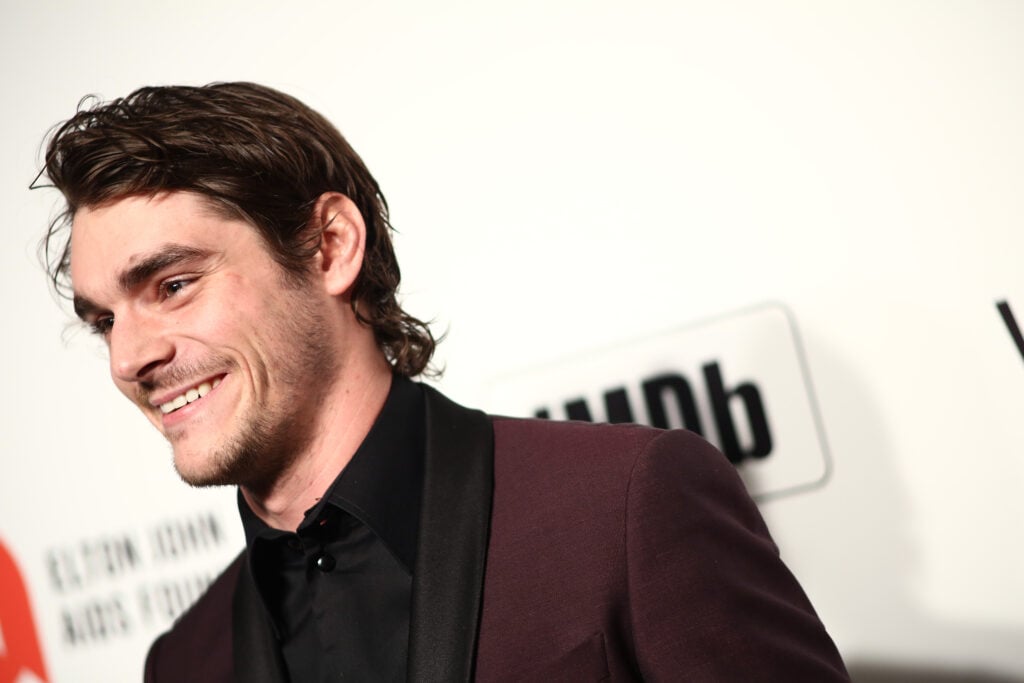
RJ Mitte walks the red carpet at the Elton John AIDS Foundation Academy Awards Viewing Party on February 09, 2020 in Los Angeles, California.
RJ Mitte walks the red carpet at the Elton John AIDS Foundation Academy Awards Viewing Party on February 09, 2020 in Los Angeles, California. (Photo by Tommaso Boddi/Getty Images for IMDb)

Luis Moncada, who played Hector Salamanca on Breaking Bad, spoke with TMZ this week and revealed that Mitte appeared “tired and sad” during their final meeting.

“He was being pulled in all kinds of directions,” Moncada said of Mitte.

He declined to reveal what specifically was bothering Mitte, but he added that the troubled young star “was very conflicted about” the issue in question.

He added, “He was just struggling with that.”

Moncada added that Mitte was “in his head” about the “stress of life,” and he offered the actor a place to stay, but Mitte declined.

Previous reports have indicated that Mitte was experiencing financial pressure.

He noted in one interview that his role on Breaking Bad had not made him “a millionaire,” and while he had several projects in post-production at the time of his death, he explained that he had “paid” to keep his career going.

It’s unclear what he may have meant by that remark, but it’s possible that Mitte spent a disproportionate percentage of his income on representation so that he could continue to work.

Moncado said that despite his recent struggles, Mitte was “an amazing friend” until the end.

“RJ is just the sweetest person I’ve ever met in my entire life,” he recalled.

“Rest in Peace RJ – I Love you Lil Brother,” Moncado wrote in an Instagram tribute to his late colleague.

His words echoed earlier tributes from Mitte’s co-stars, including series lead Bryan Cranston.

“Born with Cerebral Palsy, he never – ever – allowed that challenge to be an excuse for anything. He met the demanding shooting schedule head on with great determination,” Cranston wrote, adding:

“It is especially devastating to hear that he took his own life. Why? We were texting each other just a few weeks ago – figuring out when we could meet for lunch. I don’t know if that lunch would have changed his future… But I do know that I loved him, and thoroughly enjoyed being with him throughout the years on the series, and after the spotlight on Breaking Bad dimmed… I’ll miss you, son.”

“I am heartbroken over this news. RJ, I love you my friend,” Aaron Paul, who played Jesse Pinkman on BB, added. “You will be missed. And to whoever happens to be reading this, please know you are loved, and you are not alone. Always remember that.”

Clearly, Mitte made a tremendous impact during his tragically short time on earth. He will be missed by many.

RJ Mitte Seemed ‘Tired and Sad’ In Final Days, ‘Breaking Bad’ … was originally published on The Hollywood Gossip.

​The Hollywood Gossip

Categories
Entertainment

How Jimmy Kimmel Reacted to Guillermo Rodriguez’s DWTS Elimination

Jimmy Kimmel, Guillermo Rodriguez, Big PicJimmy Kimmel is making Guillermo Rodriguez take a bow.
After the longtime Jimmy Kimmel Live! sidekick was eliminated from Dancing With the Stars season 35 in its Oct. 13 episode, the late night…
​E! Online (US) – Top Stories