Member’s Mark has a street food-inspired dip that you can use in a host of ways. You could pair it with sandwiches, pasta, potatoes, eggs, and more.

Mashed – Fast Food, Celebrity Chefs, Grocery, Reviews









Member’s Mark has a street food-inspired dip that you can use in a host of ways. You could pair it with sandwiches, pasta, potatoes, eggs, and more.
Mashed – Fast Food, Celebrity Chefs, Grocery, Reviews

 Anne Hathaway knows sometimes you just have to breakaway.
After her Princess Diaries costar Julie Andrews, 90, shared she wouldn’t be returning for the film’s third installment, Hathaway reflected…
E! Online (US) – Top Stories

An update on Open Channels News, new fall series (including “AI for the Rest of Us”), and a preview of the Open Channels FM 5.0 release coming in September.
The average lifespan of a dishwasher is 10 years, but how does LG fare? Professional reports and customers are divided on the actual lifespan.
Mashed – Fast Food, Celebrity Chefs, Grocery, Reviews
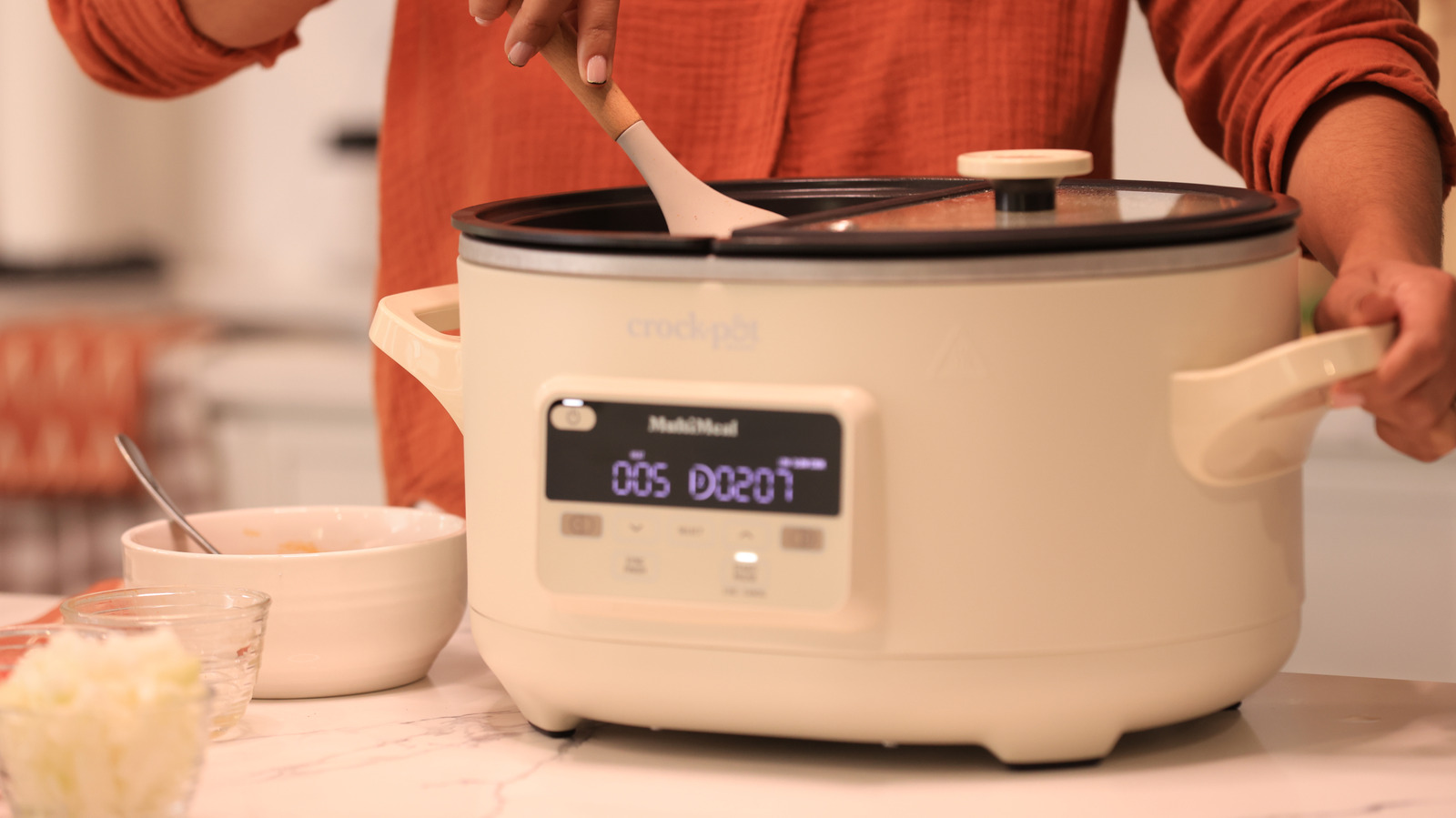
Slow cookers are perfect for quit it and forget it meals. Follow these simple tips and a tasty, no-hassle meal is just a few hours away.
Mashed – Fast Food, Celebrity Chefs, Grocery, Reviews

While ketchup is a classic accompaniment to grilled cheese, swapping it for another condiment adds instant depth and flavor to the sandwich.

Food Republic – Restaurants, Reviews, Recipes, Cooking Tips

When you picture a stunning bottle, its shape, color, or other exterior details may come to mind. With snake whiskey, it’s what’s inside that really stuns.

Mashed – Fast Food, Celebrity Chefs, Grocery, Reviews
During President Donald Trump’s first term, they were resistance stars. During his second term, they couldn’t survive primaries.
Alexander Vindman’s Senate primary loss in Florida on Tuesday is the latest stumble for Democrats who rose to prominence during the impeachment trials and accountability protests of Trump’s first term. Vindman, a former National Security Council aide who testified during the 2019 House impeachment inquiry, made standing up to Trump and other forms of corruption a centerpiece of his campaign.
His national profile helped haul in big money, but that wasn’t enough to stave off an upset loss to democratic socialist Angie Nixon, whose win showed the shifting politics of the Democratic base.
“Vindman is a hero, but memories fade and the focus of most folks is on the cost of living,” said longtime Democratic strategist David Axelrod. “She made those issues her focus.”
Democratic voters clearly want fighters who will stand up to the president and the GOP. But the string of losses for resistance candidates from the first Trump term illustrates a new era for the restive Democratic base, where vocal opposition to the president through official channels and public remonstrations no longer guarantees success.
The political graveyard of Trump-resistance-fighter campaigns is growing by the week.
Two of the 2021 House impeachment managers, Reps. Diana DeGette (D-Colo.) and Eric Swalwell (D-Calif.), are among them: DeGette lost her reelection bid to a democratic socialist this summer, while Swalwell dropped out of the California gubernatorial primary after a string of sexual assault allegations. Rep. Dan Goldman (D-N.Y.), the lead majority counsel in the first Trump impeachment inquiry, was ousted in his primary. Harry Dunn, a Capitol Police officer honored for his heroics on Jan. 6, 2021, lost a House bid in Maryland — his second unsuccessful run.
Other Democrats who built their profiles on Trump resistance flopped as well.
Tom Steyer, a prominent financier of the Trump resistance movement, failed to advance in the California gubernatorial primary. Rep. Raja Krishnamoorthi (D-Ill.), a member of the Oversight and Intelligence committees during the 2021 impeachment, fell short in his Senate bid. Reps. Shri Thanedar (D-Mich.) and Al Green (D-Texas), both of whom led impeachment pushes against Trump, were ousted by younger challengers. And George Conway, a longtime Trump critic and Lincoln Project co-founder, won just six percent of the vote in a House primary in New York City.
“‘#Resistance’ was a very Trump 1.0 mood, and now we are in a different moment of anger,” said Lanae Erickson, senior vice president at center-left think tank Third Way. “They’re mad about the war. They’re mad about costs. They’re mad about the establishment not having delivered anything for them.”
Not all the races were defined by Trump accountability politics. Swalwell dropped his bid after multiple sexual assault allegations, several incumbents lost to DSA challengers in closed primaries, and in Goldman’s case, the debate over Israel was a major factor.
A Democratic operative who worked on one of the resistance races, granted anonymity to speak candidly, said the throughline is that those candidates are “institutionalists” who argued the justice system was going to hold Trump accountable. But voters have lost faith in those institutions after he returned to office, and were sold by other candidates’ messaging that relied more on railing against those very systems.
“The prescription isn’t what they were looking for anymore,” the operative said.
If Democrats retake control of the House, they will have to confront their base’s appetite for holding Trump accountable. Republicans have long warned that Democrats will immediately move to impeach Trump should they regain a House majority in 2027, which Rep. Robert Garcia (D-Calif.) — the top Democrat on the House Oversight Committee — has signaled openness to.
But some Democrats are more careful. “There are certain sections of people that definitely want Democrats to prioritize impeachment of the president. There are also other segments of people that want Democrats to prioritize bringing down the cost of living,” said Rep. Julie Johnson (D-Texas), who lost a runoff in a newly gerrymandered district. “You can’t just focus on one thing at the exclusion of the other.”
These electoral results, along with a growing list of Trump-endorsed candidates who have lost their primaries, suggest Americans are ready to move past Trump, argued Mike Madrid, who co-founded (and later disaffiliated with) the anti-Trump GOP group Lincoln Project.
“People are just tired of him, broadly. They don’t want to deal with him and the fights and the exhaustion and the never-Trump model, but also the sycophantic MAGA support model either,” Madrid said, pointing to the string of Trump-endorsed candidates who lost primaries on Tuesday, from Florida to Wyoming. “It’s Trump fatigue.’”
Some candidates are taking note — and adjusting accordingly.
David Jolly, the Democratic gubernatorial nominee in Florida and a former GOP House member, left the Republican Party in 2018 over disagreements with Trump. He was an independent after that and a regular MSNBC talking-head criticizing the president. He registered as a Democrat more than a year ago, before launching his bid for governor.
Despite Trump’s role in his political evolution, Jolly hasn’t made Trump central to his race for governor. “I’m not running the race about Trump. I rarely talk about him. But I am going to tie Byron to Trump’s economy,” Jolly told POLITICO after winning the nomination on Tuesday night, referring to his Trump-endorsed opponent, GOP Rep. Byron Donalds.
Former Rep. Elaine Luria (D-Va.), who served on the House Jan. 6th Committee, is running for her old seat against Rep. Jen Kiggans (R-Va.). She said in a statement that she was “proud of the work I did in Congress to hold Donald Trump and his Administration accountable,” but quickly pivoted into an attack focused more on pocketbook issues.
Some of the candidates who lost primaries say their resistance bona fides did help — just not enough.
Dunn, the Capitol Police officer, earned the Presidential Citizens Medal from former President Joe Biden for his heroism on Jan. 6, 2021 and became well-known for his outspokenness about that day. He said that had little to do with his primary loss — although he acknowledged that Democratic voters’ top priority this cycle has shifted to affordability concerns.
“While name recognition got me to be a formidable challenger, it didn’t put me across the finish line,” said Dunn, who finished third in a crowded primary in Maryland’s 5th District. “I just think it’s too nuanced to just drill it down to ‘people just don’t care anymore.’” The Democratic nominee, Adrian Boafo, is “strongly about holding Donald Trump accountable,” Dunn added.
Goldman, similarly, lost to former New York City Comptroller Brad Lander, who often highlighted how he put his “body on the line” to push back against the administration’s immigration policies.
Steyer, the billionaire who ran for California governor, lost to Xavier Becerra — who campaigned hard on his court fights with the Trump administration as California’s attorney general, but also leaned into unrelated sections of his resume like his time as Biden’s health secretary.
Months before entering the race, Steyer reminded voters of the Need to Impeach campaign he once funded in an ad supporting last year’s Democratic gerrymander in California. But those credentials — which he later stressed on the campaign trail — were too dated and too intangible to push him over the top, according to his former campaign spokesperson Kevin Liao.
“Tom Steyer led an impeachment movement almost 10 years ago now, and I think it’s hard to expect the electorate to hold that long of a memory on anything that happened almost a decade ago,” he said.
Adam Wren, Kimberly Leonard, Riley Rogerson, Blake Jones and Madison Fernandez contributed reporting.
Politics


WordCamp US (WCUS) 2026 just wrapped up after 4 days at the Phoenix Convention Center in Phoenix, Arizona. Over 1,100 people from around the world registered to attend, and thousands more watched online through livestreams. Contributor Day and Showcase Day opened the week before two main conference days, featuring over 50 speaker-led sessions across 4 tracks, including multiple workshops.
The temperature reached 111°F (44°C), but golf carts ferried travelers between the Sheraton Phoenix Downtown and the convention center. Inside, attendees moved between session rooms, the Sponsor Hall, and the Happiness Bar.
It’s hot, but it’s not Florida hot.
– Loyal Pyczynski

Sessions covered artificial intelligence (AI), accessibility, publishing, business, site ownership, and the open web. Speakers in different rooms often found common ground, noting the importance of good judgment and trust-building in the age of AI.


Contributor Day followed the motto “Real artists ship,” and a new format to match. The 425 participants, including 29 first-time contributors, formed 26 teams around goals they could complete that day. Experienced contributors moved between groups and helped newer participants shape goals. Then, goal owners gave 30-second pitches, and contributors could move between teams when that work caught their interest.


By day’s end, contributors had closed tickets, opened and shipped pull requests, and reviewed themes for accessibility. One team created description-list blocks for glossaries and product details, and another added email settings, a test tool, and checks for account, password-reset, and recovery messages.
Other teams built a Photo Directory importer and updated Notes in the WordPress dashboard and Multisite documentation. More work covered PHP, PHPUnit testing, and guidelines for AI work within the project. New contribution pathways became a course on Learn WordPress, open to people who could not be in Phoenix.
Every team ended the day with a 30-second presentation of what it had made, tested, fixed, or moved closer to release.

If Contributor Day was about shipping in a day, Monday’s Showcase Day was about what happens after the shipping. Sites have to keep working smoothly for the people who publish, maintain, and depend on them. The case studies came from public services, independent publishers, community platforms, training systems, and large content operations.
Manny Costa covered the first of those: civic websites where residents find services, apply for programs, read emergency information, and report problems. In that work, accessibility, governance, and editor workflows are part of the service rather than a final check box.
Two of the case studies were about publishers taking back ownership of their content. Both sites now appear in the WordPress Showcase.

Nicola Catton’s session described how The Ankler moved 15 newsletters to WordPress and took direct control of its content, subscriber data, revenue rules, and reader experience. Nicola detailed the massive migration, the thousands of rebuilt paywall boundaries, and the site’s brand-new block theme.

The Daily Kos migration was a similarly large-scale move. Ben Greeley and Allison McHenry centered their session on a community that writes as well as reads: 1.5 million posts, 88 million comments, and 2.7 million users, with a public beta that involved more than 500 community members.
Other sessions dealt with the people who do the publishing once a site is live. In Aviral Mittal’s session, an AI agent built a page from a Google Doc using patterns the team had already defined. Andrew Adam described a library of about 100 written and video guides, with accessibility guidance included. Shared foundations covered repeat questions, while project-specific help and tips inside the editor handled the rest.
Early on, Bo English-Wiczling had opened Showcase Day by addressing the gap between rapid AI adoption and trust. Her keynote covered the move in developer work toward setting intent and supplying context.
AI doesn’t remove your work. It moves it.
– Bo English-Wiczling
A first draft can now arrive in seconds, but an almost-right block of code may still miss keyboard navigation, use the wrong theme styles, or bring an unsafe dependency into a project.
The importance of good judgment is familiar to the WordPress community. Bo tied it to habits WordPress contributors already have: reading other people’s code, submitting small changes, reviewing pull requests, and accepting critique in the open.


The next morning, Loyal Pyczynski drew on his work at Disney and Meta for a keynote about tests, time, and creative confidence. His talk returned to a phrase from an Imagineering colleague.
We need to make sure that we make better mistakes tomorrow. Success is an iterative endeavor, and time is our most precious resource.
– Loyal Pyczynski
Loyal described Disney teams that paired creative and technical leads early, then brought in experts for work another team could do better or faster. The goal was not to know everything but to know what the team should own.
Design and publishing sessions drew similar conclusions as the keynotes. Michelle Hunt framed design systems as living feedback systems that need to preserve intent as production gets faster.
K Adam White’s session centered on moving large stores of content into block patterns, with editors staying involved where automatic conversion still needed judgment. Nik McLaughlin’s Abilities API session looked beyond AI integrations to the broader structure the API gives WordPress developers. Brian Coords made a related case through block themes: approved patterns, templates, and real content offer a starting point, and design tokens add guidance that a blank-page prompt cannot provide.
Machine translation got the same treatment. In a multilingual WordPress multisite case study of AI translation for technical content, native-speaking colleagues found output that was correct word by word and could still miss the intended meaning. Human review covered the gap between translating language and translating intent.
The judgment question even reached hiring. The Making of a WordPress Certification introduced a standards-based certification and covered how the credential was created, checked, governed, and delivered.
Wednesday morning took the trust question outside the WordPress world. The day opened with a fireside chat between Amanda Ventura of Waymo and David Levine on what it takes for people to trust technology that moves through their streets.


Ventura described trust as repeated work. Teams can publish safety data and listen before arriving in a new city, and they need a path for product teams to act on feedback. Her example came from accessibility testing. Screen-reader support helped blind and low-vision riders use the Waymo app, but it did not solve the physical problem of finding the right car. Feedback led to step-by-step directions and a horn control with a distinct musical tone that was easier to identify on busy city streets.
Other sessions applied that standard to WordPress sites. WordPress Core committer Jonathan Desrosiers focused on supply-chain safety while Robert Abela’s session explored login security. AI tools can find security flaws faster than ever. That speed raises the need for careful checks.
The rest of Wednesday’s schedule included sessions on security, accessibility, design, AI tools, and work for site owners.
WordPress beginner workshops ran throughout the event for first-time builders, with no hosting account or prior WordPress experience required. Participants made pages, posts, logos, and menus, and each person left with a WordPress site, a year of hosting, and a domain. These sessions laid groundwork to work with plugins, styles, and additional features. The beginner program, office hours, and Happiness Bar gave people several places to ask questions and get hands-on experience.


More advanced technical workshops offered even experts the chance to hone their skills.
Like all WordCamps, these sessions gave attendees skills and tools to bring home to their own projects.
The closing session started with city business. Michael Hammett, Phoenix’s first Chief Innovation Officer, read a proclamation from Mayor Kate Gallego declaring August 19 Phoenix WordPress Day, and then presented the signed document to WordPress Cofounder, Matt Mullenweg. The proclamation credited WordPress with supporting the small businesses, developers, designers, educators, and creators in the city’s growing digital and creative economy.


What followed was a dynamic presentation and conversation between Mullenweg and Robert Jacobi, ending with a traditional Q&A. Matt’s thesis was simple: Tech needs to be simpler.
I want WordPress to be known for simplicity, not just complexity.
– Matt Mullenweg
After a detour through why AI models now prefer simple, self-contained HTML files, the argument became tangible with WordPress Piplets, a 2007 idea built around a single self-modifying PHP file that stores its own data, with no database and no third-party packages. One file can hold up to 25 megabytes, about four million words, and load in about 50 milliseconds. For Mullenweg, it extends the experiments that took WordPress from MySQL to SQLite to Playground, and he floated the idea of a WordPress.org directory where people could publish, fork, and remix.
Speaking of WordPress.org, it was announced that profile links are getting shorter, with w.org/username redirects like w.org/@matt already live, with full support just a few days away.

Midway through, release leads were called up to press the button on the WordPress 7.1 release, and were awarded with applause as “Mary Lou” received hundreds of thousands of downloads.
On contribution, Mullenweg expressed his desire to reward impact instead of pledges. The Five for the Future directory shows two million self-sponsored hours pledged each week from 150,000 contributors, and he questioned whether that reflects reality. The project already records what actually happened (commits, posts, tickets closed, WordCamps organized), and he wants recognition built on that record. He asked the same of the plugin directory, suggesting a focus on fewer better-working things.
Audience questions covered AI licensing, data centers, and why open source communities compete more than they collaborate. On that last one, Mullenweg invited other open source leaders to speak at WordCamp, and encouraged working together. Copying good code between projects, he said, is the entire point of open source.


Jacobi closed by asking who was at their first WordCamp; he had met more first-timers here, he said, than in the past ten years. One of them found the event by asking an AI chatbot for the coolest thing happening in Phoenix, came to Contributor Day, and left with one of its awards.
So much happens outside the session rooms. At the WCUS Happiness Bar, volunteers sat with attendees and worked through plugin questions, CSS problems, ecommerce setup, and new-site questions. An AFK (Away From Keyboard) room offered a quiet place away from the crowds. In the Sponsor Hall, people painted Wapuus with a local Phoenix artist, watched screen-printing, and talked between product demonstrations.


The Connect art installation used photographs from the WordPress Photo Directory. Forty postcards paired images by contributors who may never have met. Color, composition, or subject linked each pair. Attendees could take several cards and a blank one, then add a connection of their own.
Lunch did something simpler. People changed tables, picked up open seats, and started conversations with one question: “What do you do with WordPress?”

Organizers and volunteers kept four days of rooms, shuttles, meals, and livestreams moving. Thank you to them, and to the speakers, sponsors, contributors, attendees in Phoenix, and everyone watching online.
If you missed this year’s WordCamp US, you can find recordings of sessions on us.WordCamp.org/2026/. Be sure to sign up for email notifications, so you don’t miss out next year. Next stop, State of the Word, followed by WordCamp Asia 2027 in Penang, Malaysia, and WordCamp Europe 2027 in Málaga, Spain.

Photo credits: Jaron Quach, Emily Chan, Wini Lao, Kendra Stowe, and
Jennifer Swisher

WordPress Playground runs a full WordPress site right in your browser. Here are 5 practical ways to use it, plus the honest limitations to know first!
The post WordPress Playground Explained: Full WordPress in Your Browser (Zero Install) appeared first on Themeisle Blog.