Post Content








Post Content

Mariah Carey is celebrating the 25th anniversary of her fan favorite 2001 LP Glitter.
Order the 25th anniversary editions of Mariah Carey’s Glitter here.
Glitter is set to return to vinyl for the first time since it was first released. Other editions of the reissue include an expanded Digital Deluxe Edition featuring 15 additional tracks, including rare and previously unreleased recordings. Glitter (25th Anniversary Edition) will arrive on October 30 via Def Jam Records/UMe.
Carey’s eighth studio album and the soundtrack to the film of the same name, Glitter includes singles like “Loverboy,” “Never Too Far,” and “Don’t Stop (Funkin’ 4 Jamaica).” Other artists featured on the LP include Eric Benét, Ludacris, Da Brat, Busta Rhymes, Fabolous, and Ja Rule.
Among the bonus material, there’s a newly reimagined version of “Didn’t Mean To Turn You On” featuring acclaimed British-Canadian singer/songwriter Rochelle Jordan and produced by KLSH.

Regarding the reissue, Carey shared: “If someone had told me back in 2001 that I’d one day be unironically celebrating Glitter‘s 25th anniversary, I never would have believed them. I made this album with so much love and care, so it was devastating to watch it become a punchline. I’m endlessly grateful to my fans who kept championing it all these years, and I hope even more people can finally hear it for what it is. We found a few recordings buried in the vault that I am really looking forward to sharing with you in October!”
Earlier this year, Carey joined Andrea Bocelli in a performance at the Opening Ceremonies of the Milan Cortina Olympic Games. Carey offered up a stunning performance of the Italian staple “Volare” and her 2025 hit “Nothing Is Impossible.”
Order the 25th anniversary editions of Mariah Carey’s Glitter here.
Discover more about the world’s greatest R&B artists | uDiscover Music

 This article contains spoilers for Outer Banks season five.
The Pogues may have a bond for life, but Outer Banks has officially come to an end.
After five seasons, the sun has officially set on…
E! Online (US) – Top Stories

Route 66 turns 100 this year, and the towns along it are making sure the whole country hears about it. Somewhere between Chicago and Santa … Read moreThe post Route 66’s 100th birthday is turning sleepy small towns into world…
Both major U.S. political parties regularly tout their commitment to working-class Americans and claim to be the party of the working class. However, neither the Democrats nor the Republicans nominate many candidates who spent substantial time in working-class jobs.
This near-absence of people from working-class jobs in the halls of power matters. According to research in the U.S. and in other democracies, safety net programs are stingier, business regulations are flimsier and protections for workers are weaker than they would be if people from working-class jobs went on to hold office at higher rates. Working-class people can sometimes influence policy in other ways, but the fact that so few former workers hold elected office means that working-class interests often fall by the wayside in the world’s political institutions.
We research the causes and effects of the shortage of politicians from working-class jobs. We define working-class jobs as manual labor jobs, like construction worker, service industry jobs like restaurant server, and clerical jobs like receptionist.
We don’t include small-business owners or people who work in jobs that require extensive formal education. Instead, we focus on people in jobs that offer employees little stability or security.
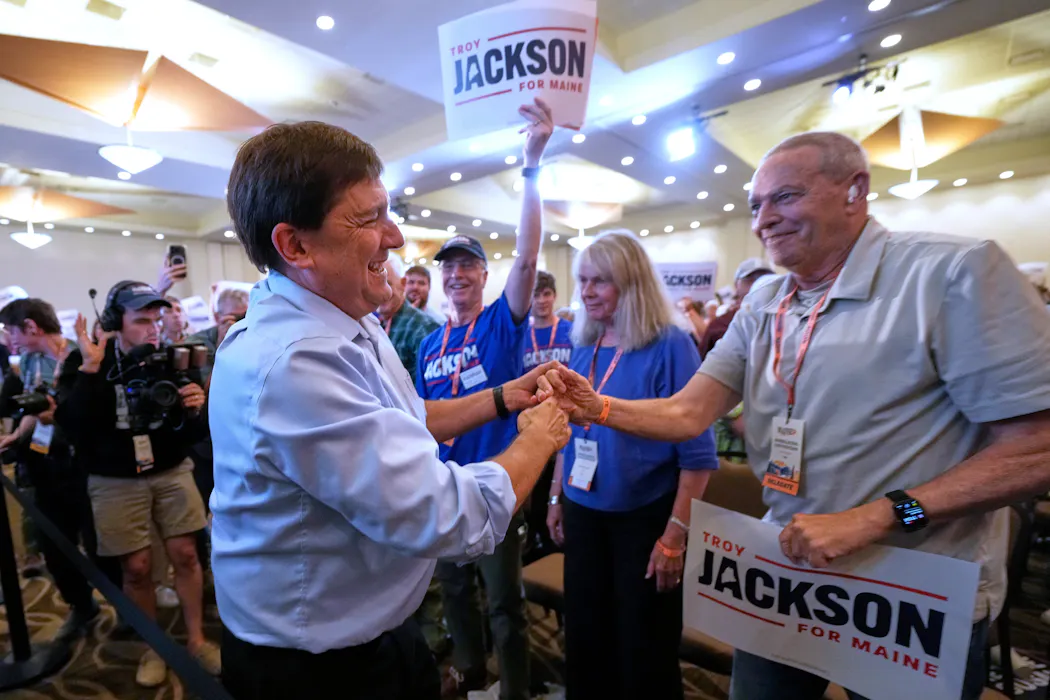
There are, of course, a small number of notable politicians from these kinds of occupations. U.S. Rep. Alexandria Ocasio-Cortez, a New York Democrat, was a bartender before she became a lawmaker. Troy Jackson, Maine’s Democratic Senate candidate, worked as a logger before entering state politics. Indiana state Sen. Jim Tomes, a Republican, worked as a truck driver and union steward.
There are also examples outside the U.S., such as Stefan Löfven, the former prime minister of Sweden, and Luiz Inácio Lula da Silva, the president of Brazil.
Politicians like these often attract outsized media attention, but overall, people from working-class jobs are sharply underrepresented in political institutions.
By our count, about half of all Americans in the labor force have working-class jobs. However, people who last had working-class jobs when they got into politics make up only about 1% of the average state legislature, regardless of their party affiliation. The same goes for Congress.
And the U.S. isn’t alone. Starting in 2016, we partnered with a team of researchers to collect data on 97 of the 103 democracies with more than 300,000 citizens. Like the U.S., the average global democracy draws just 2% of the members of its national legislature from people who last had working-class jobs.
People sometimes blame the shortage of working-class people in office on features of American elections, such as soaring campaign spending or the decline of labor unions.
But even in Germany and Belgium, which offer public financing to candidates, or Finland, where the vast majority of the labor force is unionized, people from working-class jobs make up around 5% or less of the national legislature.
There doesn’t seem to be any shortcoming on the part of working-class Americans that would explain why they so rarely go on to hold office.
Working-class candidates tend to be about as qualified in the ways we can measure as white-collar professionals, about as interested in running for office and about as likely to win when they run.
Our new book, “Keeping Workers Off the Ballot,” shows that what keeps working-class Americans – and their counterparts around the world – out of elected office is that they so rarely run. And that’s because campaigning anywhere for any office at any level of government is personally burdensome, as we show in our book. It takes time and energy, it entails personal risks ranging from embarrassment to physical violence, and the outcome is always uncertain.
In surveys in the U.S. and other democracies, working-class people are significantly more likely than equally qualified professionals to say that they cannot run for office because of concerns about taking time off work and being unable to pay their bills during months spent on the campaign trail.
This inequality is magnified by a second process: In elections everywhere, parties and interest groups play key roles in recruiting and supporting candidates. These gatekeepers understand that working-class people have a harder time running for office.
As a result, party leaders – even those who care deeply about the working class – pass over qualified workers and instead favor the white-collar professionals they think will have an easier time on the campaign trail.

We believe there are ways to overcome the obstacles that keep working-class people out of office.
In a report we wrote for the American Academy of Arts and Sciences, we outline a range of options. Some of the reforms we’re proposing would help in the short term, such as creating candidate training programs or political scholarships that target working-class people. Some examples already exist, such as the New Jersey AFL-CIO’s Labor Candidates School.
Other options, which admittedly might be less likely to happen in the current political environment, would create long-lasting paths to office for working-class people, such as the creation of party or institutional quotas for people from working-class jobs, or randomly selected citizen juries that advise policymakers.
But without serious reform efforts that target the factors that keep workers off the ballot, our research suggests that working-class people will never make up more than tiny fractions of elected officials in the U.S. and in democracies around the world.

Nicholas Carnes receives funding from the National Science Foundation under Grant No. 2139557. Any opinions, findings, and conclusions or recommendations expressed in this material are those of the author(s) and do not necessarily reflect the views of the National Science Foundation.
Noam Lupu does not work for, consult, own shares in or receive funding from any company or organization that would benefit from this article, and has disclosed no relevant affiliations beyond their academic appointment.
Politics + Society – The Conversation
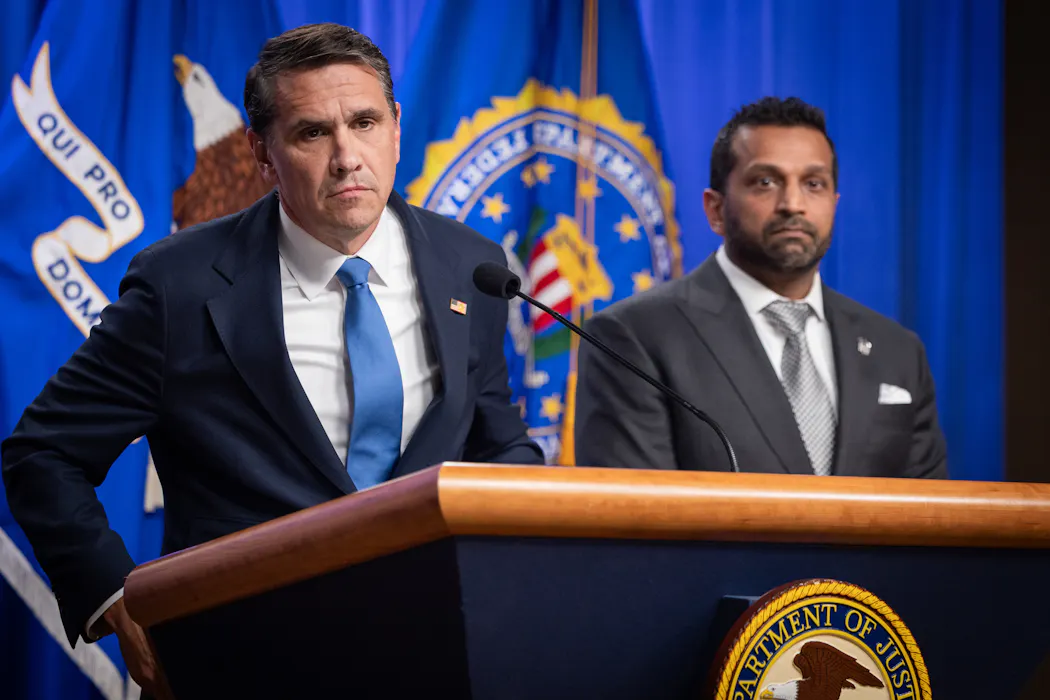
In April 2026, a federal grand jury returned indictments charging the Southern Poverty Law Center with wire fraud, bank fraud and conspiracy to commit money laundering.
The indictment alleges the SPLC, a nonprofit legal advocacy group, secretly funneled more than US$3 million in donated funds to people associated with violent extremist groups, including the Ku Klux Klan and Aryan Nations.
Prosecutors allege that the SPLC secretly paid members of those groups to act as confidential informants without telling donors. Eight informants received the money between 2014 and 2023, according to U.S. Attorney General Todd Blanche.
The SPLC has denied the charges and seeks their dismissal, with lawyers for the group adding that the charges constitute “vindictive prosecution.” The SPLC’s interim president, Bryan Fair, has stated that the informant program “saved lives” and reflected decades of dangerous civil rights work.
Critics of the prosecution at Lawfare, a media site focused on the U.S. legal system, argued that the indictment is among “the most cynical criminal cases ever brought by the Department of Justice.” They noted that the SPLC had no legal duty to disclose the confidential nature of its informant program to donors.
Within hours of the Justice Department’s indictment, I found that white supremacist influencers on Telegram, Gab and other social platforms were celebrating the arraignment. They portrayed the charges as proof that journalists and civil rights groups documenting extremist movements could no longer be trusted.
The indictment became a rallying point to discredit not only the SPLC but the wider body of research on hate groups and political extremism. I believe that these narratives will be used to help justify increasingly radical and, in some cases, violent responses.
Some conservative advocacy groups and right-wing media outlets – including Moms for Liberty and the Daily Signal – immediately stripped the indictment of its legal context. In online posts, they recast it as established proof that the SPLC had been deliberately creating extremist activity rather than investigating it.

A Telegram search I conducted on May 6 identified 22 posts mentioning the SPLC across at least six white nationalist channels. Most appeared within 72 hours of the indictment. The posts did not engage in sustained discussion. They repeated a small set of claims.
The Super Sincere Alpha GOONMAXXING Aryan Sigma Patriot channel wrote: “The SPLC is a hate group.”
Other channels cited the indictment as proof that the SPLC had been paying sources to manufacture the very extremism it claimed to fight. In the White Lives Matter Official Telegram channel, users were urged to “become an activist for your race” while referencing the SPLC as an opposing force.
The similarity across channels and social media is notable. The same framing appeared repeatedly within a short time window. This suggests rapid circulation of a shared narrative across networks rather than independent commentary.
Comments on the Southern Poverty Law Center indictment by members of the Commander George Lincoln Rockwell channel – named for the founder of the American Nazi Party – demonstrate how antisemitic conspiracy theories work, not as explicit rhetoric but as a broader narrative.

Internet discussions portrayed the SPLC as a politically motivated or illegitimate actor. Posts in Patriot Front Updates, for example, circulated allegations of fraud and money laundering while criticizing the SPLC and its efforts to identify and challenge white nationalist activity.
I found that this criticism of the SPLC also became connected to a broader antisemitic conspiracy narrative – one that portrays the organization as operating on behalf of purported Jewish interests rather than simply as an advocacy organization with political and ideological commitments.
These narratives circulated alongside the “great replacement theory,” which falsely claims that shadowy elites are encouraging immigration and demographic change to replace the white population and diminish its political and cultural influence. It’s a conspiracy theory that the SPLC and others have documented as central to contemporary white nationalism.
In this logic, the indictment is not an isolated fraud case – it is evidence that a coordinated network of institutions has been systematically suppressing white identity.
Scholars of white nationalism have long identified victimhood narratives as central to that movement’s appeal. By portraying white people as under attack or unfairly displaced, these narratives transform social change into a story of persecution and provide a powerful justification for political mobilization.
My research on white nationalism shows how contemporary extremist movements rely less on formal membership and more on decentralized digital spaces. It is there that narratives, grievances and identities are continuously reinforced.
In these environments, major news events like the SPLC indictment become opportunities.
Extremist movements have long used mainstream controversies as recruitment opportunities.
Participants often interpret external events through narratives of threat, injustice and persecution. In doing so, they transform moments of controversy into evidence that their worldview is correct.
In the 1990s, for instance, the deadly standoffs between federal officers and the Branch Davidians religious sect near Waco, Texas, and survivalist Randy Weaver in Ruby Ridge, Idaho, became foundational persecution narratives for militia and Christian Identity movements. These groups saw the sieges as proof that the federal government was hunting gun owners and religious dissenters.
In online extremist communities, these events can become powerful tools for reinforcing group identity and attracting individuals who are searching for explanations or belonging.
With a real-world legal event like the SPLC indictment, extremists can point to government action as evidence that their worldview is being validated. The result is a narrative that appears responsive to current events, even when the connection is shallow or distorted.
Legal scholars have noted that the Justice Department indictment fits within the Trump administration’s broader pattern of redirecting domestic terrorism policy away from white supremacist groups.
The Trump White House’s 2026 Counterterrorism Strategy does not mention violent far-right groups as a domestic terrorism threat at all.
That context matters for understanding how the SPLC case landed in extremist spaces: not as an isolated fraud allegation but as institutional permission. The indictment has become a symbol before the evidence has been weighed.
In today’s fragmented digital media environment, symbols travel faster than facts, especially when they confirm what a radicalized audience already wants to believe. I believe the real danger is not that white supremacists believe the SPLC is guilty. It is that the controversy, whatever its legal outcome, has already done its work.

Art Jipson does not work for, consult, own shares in or receive funding from any company or organization that would benefit from this article, and has disclosed no relevant affiliations beyond their academic appointment.
Politics + Society – The Conversation

Reading Time: 3 minutes
Early this year, the world heard that Jenelle Evans and David Eason were back together after their bitter divorce.
It was alarming news, but sadly not surprising.
Now, Teen Mom fans can breathe a small sigh of relief.
They’ve broken up. Apparently, David hasn’t changed, to the surprise of exactly one person.
Inside sources spoke to The Ashley to confirm that Jenelle and David had broken up.
This latest round of making a terrible mistake lasted for 8 months.
It was Jenelle who ended things — earlier this week, even.
“They got into a huge fight and Jenelle kicked him out of her house,” the insider specified.
Weird that it took so long. It would be really nice if this turns out to be the last time that she lets him into her children’s lives, but we wouldn’t bet on it.
Jenelle and David finalized their divorce on Friday, July 11 in 2025.
They had a nasty court battle.
And, naturally, Jenelle had a protective order against David for reasons that we likely do not need to explain to anyone who has followed the horrific details of their story.
However, early this year, David was allowed to fly to Vegas to visit Ensley in the hospital.
Unfortunately, David and Jenelle rekindled their sick entanglement. David even moved in with Jenelle.
As Teen Mom fans may recall, Jenelle insisted that she and David were merely “coparenting” while sharing a home.
(Just for the record, considering the charges that David is facing and everything else that we’ve heard about him, coparenting with the guy isn’t good, either.)
Even so, she referred to him more than once as her “man.”
During this time, David seemed to worm his way back into her life at every level. He even accompanied Jenelle to Florida when she moved last May.
For most people, you might ask gee, didn’t David’s job miss him during this time? That does not seem to be one of his concerns. Especially not when Jenelle is paying for everything.
PHOTO THREE
The fight that broke out earlier this week was, it seems, the culmination of weeks or months of frustration.
Apparently, Jenelle’s primary gripe about her serious awful ex-husband is that he would constantly ask her to buy things for him. If and when she refused, he would of course pitch a fit.
“It was just like before [when they were married],” the source described. “Jenelle finally realized that he hasn’t changed and will never change.”
The insider listed: “He doesn’t work. He gets mad about small things. Just like before.” Well, yeah. That’s who he is.
“Jenelle told him that she will have him arrested if he comes back to her house, because of the no-contact order,” the source added. “She never dropped it and it’s always been active this whole time they’ve been together.”
By the way, when Jace got out of the mental health facility, he couldn’t move in with her — because David was living with her. But then, that’s hardly the first time that Jenelle has chosen an irredeemable man over her own children.
Jenelle Evans Dumps Ex-Husband David Eason Again After Repeating Past Mistakes for 8 … was originally published on The Hollywood Gossip.
The Hollywood Gossip

Colorado is in the midst of an affordable housing crisis. Well over half of low-income Colorado residents are cost-burdened, according to the National Low Income Housing Coalition. That means they spend more than 30% of their pretax income on rent or mortgage payments.
In fact, some 87% of extremely low-income Coloradans, or those who support a family of four on less than US$43,200 per year, are considered cost-burdened.
These high costs are explained, in part, by a significant housing shortage of over 106,000 homes in the state, according to a recent study by the Colorado Department of Local Affairs. This crisis is particularly pronounced in the for-sale market in Denver, where the median home price tops $600,000, which is about 54% above the national median.
Legislators and advocates have proposed different solutions, but it’s not clear which will work.
Some housing experts recommend finding ways to slash regulations, developer fees and overall compliance costs. For example, experts have recommended streamlining permits or fast-tracking approvals for new housing projects.
Other advocates are pushing for rent control or rent regulation to protect current renters and keep privately owned housing affordable. Although rent control legislation failed in 2023, Democrats in the state Legislature are still pushing the idea.
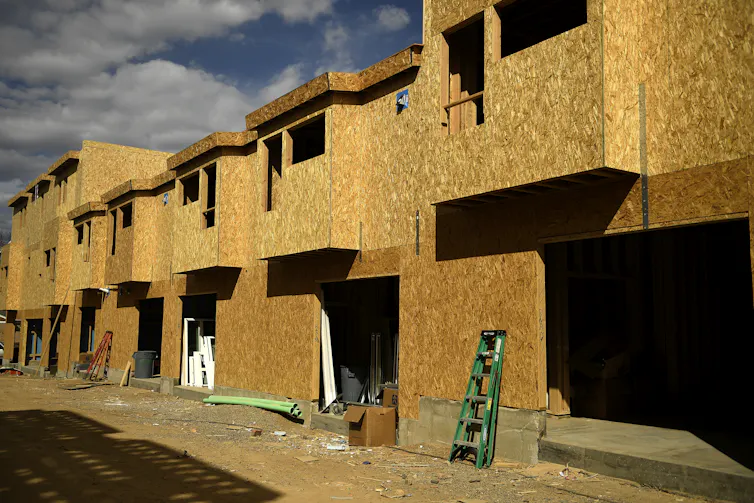
Which public policies will have the greatest success at producing more housing and lowering the cost of housing? We set out to examine these policies and others to understand their potential effects on housing production and affordability in Denver.
We are a law professor and urban planning scholar passionate about policy solutions that promote more affordable housing in Colorado.
We study affordable housing policy at the University of Denver’s Center for Housing Research and Innovative Solutions, which launched in February 2026.
To model how various housing policies may influence housing supply in Denver, we partnered with Terner Labs, a housing research center at the University of California, Berkeley, which developed a Housing Policy Simulator that provides crucial information about the possible impact of new policies. The simulator considers project costs, the underlying economic environment and past housing market data.
We fed the simulator 10 different public policies. Each one was a simplified version of a policy that could be implemented in Denver. The simulator then considered economic conditions, such as interest rates, city zoning regulations, recent historical development trends and the economic viability of projects.
The simulator uses this data to generate a probability model, which is a mathematical model that accounts for uncertainties about the future. For example, the model can estimate the likelihood of a developer building market-rate housing that is multifamily. This includes duplexes, apartment buildings or anything other than a single-family home.
The simulator runs thousands of these probability models and ultimately provides a numerical estimate of the number of new units that could be built. It also predicts the average total cost to build those units.
In 1976, statistician George Box wrote, “All models are wrong, but some are useful.” It is notoriously difficult to predict the future. Rather than believing any one of the simulator’s outputs implicitly, we argue that it’s best to consider the outputs relative to one another, or to compare a single public policy across different economic and demographic characteristics.
With these simulator limitations in mind, we focused specifically on market-rate, multifamily housing policies in Denver.
Among the policies we considered was “missing middle” rezoning allowed without public hearings or approvals.
Missing middle housing is everything excluding single-family detached homes and large apartment buildings. Duplexes, triplexes, quad-plexes, cottage courts and townhomes often fall in the missing middle category.
Housing policy scholars also define missing middle housing as housing serving middle-income people. This refers to people earning between 80% and 120% of the area median income, or the middle household income for a given metropolitan region. Middle density housing offers the possibility of homeownership for this group of people because the housing type is typically more affordable.
Too often, these people are sandwiched between affordable-housing and market-rate housing options. They can’t afford market rate, but they make too much for subsidized housing.
We also examined staff capacity limits in the Denver Permitting Office. Other examples of tested policies include a rent freeze and a new policy allowing denser development in Denver.
The simulator predicted that some of the public policies, like cutting staff at the Denver Permitting Office, would greatly limit housing production. This means that only higher-end housing would likely be built. Scholars have found that with fewer city staff members available to issue permits for projects, timelines increase. This leads to greater uncertainty and higher overall costs for builders and developers.
Missing middle upzoning emerged as a policy winner. Although Denver is currently experimenting with allowing missing middle housing in specific areas of the city through its Unlocking Housing Choices policy, the upzoning policy we modeled would allow landowners to build more densely on all parcels.
The simulator predicted that this policy had the potential to increase the supply of multifamily market-rate housing in Denver by 46%. It would also reduce the total costs to build a project. Based on cost assumptions used in the simulator, a typical middle density multifamily project would cost about $597,000 citywide. In contrast, a status quo model project for a new multifamily development would cost, on average, around $826,000 per unit to build. We believe the lower costs are due to a larger number of sites available for middle-density housing in Denver.
Our simulator model also found that the opposite public policy – downzoning to decrease density by decreasing the number of units of housing allowed on any given lot – would both limit housing supply and increase average total costs.
In our simulator model, single-family residential zones, which make up nearly 70% of residential land in Denver, are rezoned to allow more density without lengthy approval processes or permissions from the city. This policy encourages slightly denser development. Specifically, the model requires all parcels to allow at least four units. Parcels that already allow more density than that, such as those that allow apartment buildings, are unchanged.

Another important benefit of missing middle zoning policy is that zoning is typically the purview of local governments and does not require extensive involvement from the state or federal government. In Denver, city planners and mayoral staff are committed to increasing housing affordability and density, as seen through policies like Unlocking Housing Choices.
The simulator can rate the relative efficacy of public policies. However, it cannot assess the practical task of policy implementation. It also cannot account for dynamics like neighborhood opposition or resistance that may slow or halt the passage of a policy. It was not programmed or designed to do this.
As urban planning scholars have found, local communities participate extensively in neighborhood politics. These efforts can stop or slow policy changes.
In some cases, opposition might amount to parochial not in my backyard — or NIMBY — concerns. But in other cases, residents may have legitimate concerns about rezonings. These include infrastructure capacity, traffic congestion, pollution and tree canopy concerns, or issues around historical preservation.
While the missing middle policy holds theoretical promise, public attitudes may be moving in the opposite direction. For example, in April 2026, voters in Lakewood, Colorado, struck down a missing-middle style zoning reform. Advocates were concerned about changes to the suburban character of the midsize city just 8 miles west of Denver, according to The Colorado Sun.
Additionally, missing middle and other reforms do not function as a panacea. Multiple housing-policy reforms implemented together, like transit-oriented development, eliminating mandatory parking rules or fee waivers for qualifying sustainable multifamily projects near transit, would greatly increase housing supply.
Read more of our stories about Colorado.

Stefan Chavez-Norgaard has received funding from The Aspen Institute and the Lincoln Institute of Land Policy, and both organizations consider issues of urban development and planning. He is affiliated with the University of Denver Center for Housing Research and Innovative Solutions (CHRIS).
Susan D. Daggett has received research funding from the Lincoln Institute for Land Policy and is affiliated with the University of Denver’s Center for Housing Research and Innovative Solutions. Both organizations are engaged in research and policy development related to housing and land use. She has received a teaching stipend from the University of Denver’s Executive Certificate in Affordable Housing Program, which is partially funded by a donation from the Colorado Housing Finance Authority and the Simpson Family. She serves on the Board of Smart Growth America and Transportation Solutions. She is married to Senator Michael Bennet, a Democrat from Colorado.
Politics + Society – The Conversation

In the past decade, study after study has come to a troubling conclusion: Trust in news and journalism has declined dramatically.
The public’s loss of trust corresponds with the explosive development of our information ecosystem. The more options audiences have to find news elsewhere, the less trust the public has placed in traditional forms of journalism.
However, trust in journalism was displaced long before the rise of digital and social media.
That’s especially true for Black communities that have been harmfully misrepresented by mainstream outlets. Research, for example, has consistently shown how the news media has contributed to overrepresentation of Black people in crime coverage, which contributes to a litany of negative outcomes and perceptions.
Scholars, including me, have detailed how mainstream journalism continues to marginalize and misrepresent Black people. That especially happens in protest, crime and health coverage. It’s no surprise that Black communities have a long history of turning away from mainstream journalism.
As such, a closer look at these communities can also give us insights into how to win some of that trust back.
Despite past harmful coverage, some Black people trust media anyway.
In a recent study I conducted with colleagues, we identified places where people do still trust media and focused on the next essential question: Why?
To answer this, we turned to Minneapolis and Saint Paul, Minnesota, to learn from journalists trusted by Black communities. In 2022, two years after the murder of George Floyd, our research team began surveying over 100 Black community members and residents to ask them about whom they trusted to tell them the news.
Although news organizations weren’t the No. 1 answer, community members named many journalists, including those working at mainstream outlets and community papers. So we connected with 17 trusted journalists who reported in the area after the murder – or during the police officer trials – to learn more about how they built trust.
We learned that the trusted journalists in this community embraced an ethic of love, a set of principles proposed by Black feminist scholar bell hooks that weave together the dimensions of care, commitment, responsibility, knowledge and respect.
We also found that building trust takes the engagement of two parties. No one practice from journalists can fix the trust crisis; it takes communities to engage, forgive and voice concern.

We found that the most overlooked piece to building media trust is the willingness of a community to engage with journalists. Instead of saying “no comment” or avoiding the camera, community members offered their perspectives and knowledge openly. Sometimes these discussions served as essential background knowledge. Other times, it led to being quoted directly in news coverage.
Journalists also perceived communities’ willingness to provide feedback as an opportunity to build and retain trust. Sometimes the feedback was critical. When a reader was upset about how a story was framed, they pushed back. Other times the feedback provided affirming support.
From these journalists’ perspectives, their trusted status was a product of the community’s willingness to share both knowledge and feedback.
There are some key practices that helped journalists gain trust with audiences: active listening, being accurate and demonstrating care. But we also found two distinct practices that were helpful for building meaningful community relationships: diligence and deference.
For trusted journalists, diligence meant spending more time with the community. Some attended hourslong events from beginning to end. Others waited until the end of an event to connect with sources, waiting and observing as time passed. Diligence also often demanded a continuous presence in the community – beyond what the job required.
In one instance, a journalist described staying at a community protest long after the event they were covering ended. For another journalist, it meant reporting on the same public safety beat for years, so long that everyone in the community he covered knew his name. Whatever the case, diligence always equated to time.
Diligent journalists couldn’t just connect with the community over a tragedy; they had to connect well beyond the event that made the news. For some, this meant riding on public transportation and being a regular at the local shops. For others, it meant showing up at events and community spaces during their time off. This showed communities that journalists cared about people, not just the headline.
Deference was a conscious task that involved honoring the boundaries, rules and expectations of community members. If someone said no pictures, a camera was pointed elsewhere – even if everyone was in a public space. If a community member asked for silence, those boundaries were respected.
The cultural boundaries that bind many Black communities, such as the respect for elders and aunties alike, were honored and respected in informal communication – and sometimes in coverage.
Importantly, deference required that journalists drop the assumption that they had all the answers. For many, this required a practice of intentional humility. Instead of assuming they already knew the narrative, trusted journalists deferred to the lived experiences of the community and allowed people the autonomy to tell their own stories in their own words.
I believe what we learned from these trusting relationships can serve as a blueprint for a more inclusive understanding of how trust is built and sustained.
For journalists and Black communities in Minnesota, this approach helped reduce harm and build personal connection. Most journalists we spoke to thought it was essential work to fulfill the democratic promise to serve and inform the public.
But these lessons aren’t a one-size-fits-all formula for the entire media industry or for all communities. The journalists in our study acknowledged this, too, noting that they are trusted by some community members, not all.
Building trust is highly contextual. For journalists, practicing deference and yielding authority are necessary steps when repairing relationships in communities that have experienced historical harm. But those same practices might not work with all groups.
For example, yielding authority to individuals or communities intentionally trying to spread misinformation could lead to complicity and diverge from the goals of journalism.
People often treat trust as a universal good, but whom journalists and communities choose to trust matters just as much as how they build it.

Danielle K. Brown received funding from the John S. and James L. Knight Foundation from 2022-2023 for the LIFT Project in Minneapolis & St. Paul, Minnesota.
Politics + Society – The Conversation

There are numerous instances of pregnant celebrities being subjected to casually callous comments about having baby bumps that were either too small or too big.

Health Digest – Health News, Wellness, Expert Insights