Categories
Alaska News

In Alaska’s U.S. House race, a Libertarian and a federal inmate advance after late withdrawals

Independent candidate Bill Hill, a former teacher and school superintendent from Bristol Bya, speaks at a U.S. House candidate forum held Aug. 27, 2026, by the Alaska Oil and Gas Association. (Photo by Yereth Rosen/Alaska Beacon)

Independent candidate Bill Hill, a former teacher and school superintendent from Bristol Bay, speaks at a U.S. House candidate forum held Aug. 27, 2026, by the Alaska Oil and Gas Association. (Photo by Yereth Rosen/Alaska Beacon)

This article has been updated as of 6 p.m. to include the withdrawal of another candidate.

Weeks after suspending his campaign, the leading Democrat in Alaska’s U.S. House race officially withdrew ahead of Monday’s 5 p.m. deadline.

That withdrawal triggered a sequence of events that put the eighth-place finisher, Libertarian candidate Jim McDermott, on the ballot in November.

Democrat Matt Schultz received 8.1% of the vote in the August primary, good enough for third, behind incumbent Republican U.S. Rep. Nick Begich III and independent challenger Bill Hill.

Begich had 44.6% of the vote, and Hill had 32.5%, according to official results published Monday. 

Hill, a fisherman and former superintendent from Bristol Bay, is a first-time candidate for federal office. 

Under Alaska’s unique elections system, all candidates for an office run against each other in the primary election. The top four candidates, regardless of political party, advance to the general election in November. There, voters rank the candidates in order of preference.

The candidate with the fewest top rankings is eliminated, and any votes for them are redistributed to their voters’ second choices.

The process continues until only two candidates are left, and the person with the most votes wins.

If a top-four finisher withdraws, their spot is taken by the fifth-place finisher. If two top-four candidates withdraw, the sixth-place finisher also advances. 

Schultz suspended his campaign on July 17 in order to consolidate opposition fundraising and voter support. His withdrawal was followed by that of other trailing candidates.

With Schultz’s withdrawal, fourth-place finisher Eric Hafner — a registered Democrat in federal prison who received 3.8% of the vote — moves to the third spot on November’s election ballot. 

Two years ago, a state judge ruled that Hafner could remain a candidate even if he would be unable to serve his term due to his federal imprisonment.

Fifth-place finisher John Williams, a Democrat from Fairbanks who received 2.7% of the vote, withdrew from the race on Monday morning, he said by phone. 

The sixth-place finisher, Republican candidate Clay Strickland, withdrew from the race before Monday, the Division of Elections said.

That left seventh-place finisher Yaquelin Reynoso, who received 1.8% of the vote in August’s primary. 

Reynoso, who ran as a Democrat, does not appear on Alaska’s list of registered voters, didn’t answer a candidate survey and didn’t supply a phone number to the Alaska Division of Elections. 

They also didn’t immediately respond to their listed email on Monday afternoon.

But sometime before 5 p.m. Alaska time on Monday, Reynoso also withdrew from the race, the Division of Elections said Monday evening.

That left the eighth-place primary finisher, Libertarian candidate Jim McDermott of Fairbanks, to advance to the November election as the fourth of four candidates despite earning just 1.2% of the primary vote among 15 candidates overall. A call to McDermott’s listed phone went directly to voicemail at 5:50 p.m. Monday.

Ranked choice voting reduces the chances that candidates from the same party will split available voters and improve the odds for a candidate from a different party, but the system does not eliminate that chance entirely.

Since 2022, when Alaska began using the current system, a significant number of voters have continued to rank just one candidate.

As a result, political parties have pressured lower-finishing primary candidates to withdraw ahead of the general election in order to consolidate support. 

Williams, by phone from Fairbanks, said he talked with “a lot” of people from the Alaska Democratic Party and with Hill before making his decision.

“I’m going to step away because that’s the best thing for Alaska,” he said, not because of any particular request that he quit. 

Williams said he supports Alaska’s ranked choice election system, and he said he was discouraged by the number of Democratic Party officials who appeared to be acting against democratic values — the idea that voters, not political parties, decide candidates.

“I almost put my heels in the sand but ultimately decided not to,” he said. 

“If (Hill) wins, he wins. If he loses, it’s not going to be because of me,” Williams said.

Editor’s note: This story has been updated with the withdrawal of Yaquelin Reynoso, which advances Jim McDermott to the final four candidates. 

Categories
Alaska News

Feds suspend permit for road construction through Alaska wildlife refuge, amid legal questions

Green eelgrass appears at low tide in the vast wetlands of Izembek Lagoon, at the edge of Izembek Refuge on April 17, 2021. (Photo by Kristine Sowl/U.S. Fish and Wildlife Service)

Green eelgrass appears at low tide in the vast wetlands of Izembek Lagoon, at the edge of Izembek Refuge on April 17, 2021. The refuge has one of hte world’s biggest eelgrass beds, making the area a globally site for migratory birds. (Photo by Kristine Sowl/U.S. Fish and Wildlife Service)

Federal regulators have suspended a wetlands-fill permit allowing construction of a controversial road through an Alaska national wildlife refuge, but the on-the-ground result of that action is a subject of legal contention.

State officials say they still intend to start the work in coming weeks on the first part of the road that is planned to cross through the Izembek National Wildlife Refuge. But environmental groups and Native tribal governments who oppose the road argue that the U.S. Army Corps of Engineers’ Aug. 26 suspension of the wetlands-fill permit for the road project precludes work on any part of it.

At issue is an 18.9-mile road that would link the isolated Alaska Peninsula community of King Cove to the military legacy, all-weather airport at Cold Bay. The road, as planned, would cut through an area of designated wilderness within the wildlife refuge.

The Corps in July issued a wetlands-fill permit to the state, a key permit needed for road construction. But on Aug. 18, U.S. District Court Judge Sharon Gleason overturned a land trade that was necessary to allow construction of the road project. The state said it plans to appeal the decision. 

“You are directed to stop any activities that were previously authorized by the suspended permit. . . . Any further work in these areas shall be considered a knowing, repeat, and flagrant violation of Federal law,” the Corps said in its letter following the ruling to the Alaska Department of Transportation and Public Facilities.

The permit suspension will give the Corps time to evaluate the full implications of Gleason’s decision on the land trade, the letter said.

There is disagreement about what the now-suspended permit covers, however.

The Department of Transportation and Public Facilities holds the position that the suspension should not interfere with this fall’s plans, and that it still has the right to build the first 2.8-mile section of the road, according to a department spokesperson

That portion of road is not subject to the wetlands-fill permit because it would not require disposal of fill into waters, state officials argue. And the area involved is outside of the disputed land trade, on land already owned by the King Cove Corporation, the community’s village Native corporation, state officials said.

“The State still plans to begin construction in September. The 2026 construction does not rely upon this permit, as it will not discharge fill into Waters of the U.S., including wetlands,” Justin Shelby, the Department of Transportation and Public Facility’s Central Region administrative operations manager, said by email. 

Areas considered “Waters of the United States,” a legal term, are subject to certain Clean Water Act requirements.

Shelby pointed out that the state itself asked for the permit suspension. In the department’s request letter, the state argued suspension of the permit would reduce possible confusion in the ongoing litigation and allow the federal court “to consider all arguments raised by the plaintiffs without the perception of pressure from the State of Alaska’s need to rely on the permit authorizations.” 

The environmental and Yukon-Kuskokwim tribal plaintiffs who have challenged both the land trade and the wetlands-fill permit, in contrast, argue that the entire road is covered by both authorizations, and that any construction now would be illegal.

Emperor geese forage at Izembek National Wildlife Refuge on Oct. 5, 2016. (Photo by Kristine Sowl/U.S. Fish and Wildlife Se
Emperor geese forage at Izembek National Wildlife Refuge on Oct. 5, 2016. More than half of the world’s emperor geese use the refuge, according to federal biologists. (Photo by Kristine Sowl/U.S. Fish and Wildlife Service)

Suspension of the permit was good news for road opponents, one of the plaintiff attorneys said.

“What a huge relief to see this permit pulled, because it was clear that Trump officials were ignoring the law with these destructive plans. A road would completely ravage Izembek’s globally important wetlands,” said Rebecca Noblin, Alaska legal director at the Center for Biological Diversity. “The refuge is vital for ​migratory birds that Y-K Delta Tribes like Hooper Bay, Paimiut, and Chevak depend on for food. No administration should be allowed to ignore federal public land protections to push construction projects through crucial wildlife habitat.”

Tribes in those three villages have sued to block the land trade and overturn the Corps permit.

The Corps on Monday declined to comment on the opposing legal interpretations, citing policies on pending litigation. The Corps’ public affairs officer referred questions about the subject to the U.S. Department of Justice.

The Department of Transportation and Public Facilities has mobilized equipment and materials to start building the initial 2.8-mile section. That portion of the road includes a bridge that is “the most complex and expensive feature of the entire road construction project,” according to a state Department of Law status report filed in federal court on Aug. 20.

The state expects an allocation of $18 million for the project during the current fiscal year, with nearly $16.4 million of that coming from federal funds and the remainder from a state match, according to the statewide transportation plan.

The Izembek road proposal has been debated for decades.

State officials argue that it is needed as a lifesaving access for the approximately 750 residents of King Cove. Environmentalists argue that it would harm globally important wetlands and would set a bad precedent for protected lands elsewhere in the nation.

The debate has also divided Native groups.

King Cove residents, largely Aleut and shareholders in the Aleut-owned corporation involved in the disputed land trade, have advocated for it. They say that flying in and out of the  King Cove airport is dangerous in bad weather, while the nearby Cold Bay airport, with a runway extending over 10,000 feet, can accommodate jets providing safe air travel in most conditions.

Members of some Yup’ik tribal organizations on Western Alaska’s Yukon-Kuskokwim Delta, however, argue that the road would do substantial damage to wetlands habitat for migratory birds that are important to traditional subsistence hunting.

The refuge’s lagoons support hundreds of thousands of migratory birds each year, including nearly the entire global population of Pacific black brant and more than half the world’s population of emperor geese.

SUPPORT: YOU MAKE OUR WORK POSSIBLE

Categories
Alaska News Featured Juneau News juneau Juneau Local Juneau Local Ketchikan Local News Feeds Sitka Local

Missing teens found dead from suspected gunshot wounds

Leotis Phillips and Zoey Clark, Photo courtesy of Juneau Police Department

NOTN-News of the North would like to extend condolences to the families of the deceased.

On August 31, 2026, at approximately 2:25 p.m., missing juveniles Leotis Phillips, 16, and Zoey Clark, 16, were located deceased in a wooded area above the 6800 block of Glacier Highway.

Preliminary information indicates that both juveniles died from gunshot wounds. A firearm was located at the scene. Their bodies will be sent to the Alaska State Medical Examiner’s Office in Anchorage for autopsy.

Next of kin has been notified. The investigation remains ongoing, and no additional information is available at this time.

The Juneau School District plans to make support and counseling services available to students and staff affected by this tragedy.

The Juneau Police Department extends its condolences to the families, friends, classmates, and others affected by this loss.

Categories
Music

Dolly Parton’s 5 Billboard Hot 100 Songs After Her Death: LIST

Five Dolly Parton songs landed on the Billboard Hot 100 after her death, including “Jolene,” “9 to 5” and “I Will Always Love You.” Continue reading…​Country Music News – Taste of Country

Categories
Music

Dolly Parton’s 5 Billboard Hot 100 Songs After Her Death: LIST

Five Dolly Parton songs landed on the Billboard Hot 100 after her death, including “Jolene,” “9 to 5” and “I Will Always Love You.” Continue reading…​The Boot – Country Music News, Music Videos and Songs

Categories
Food

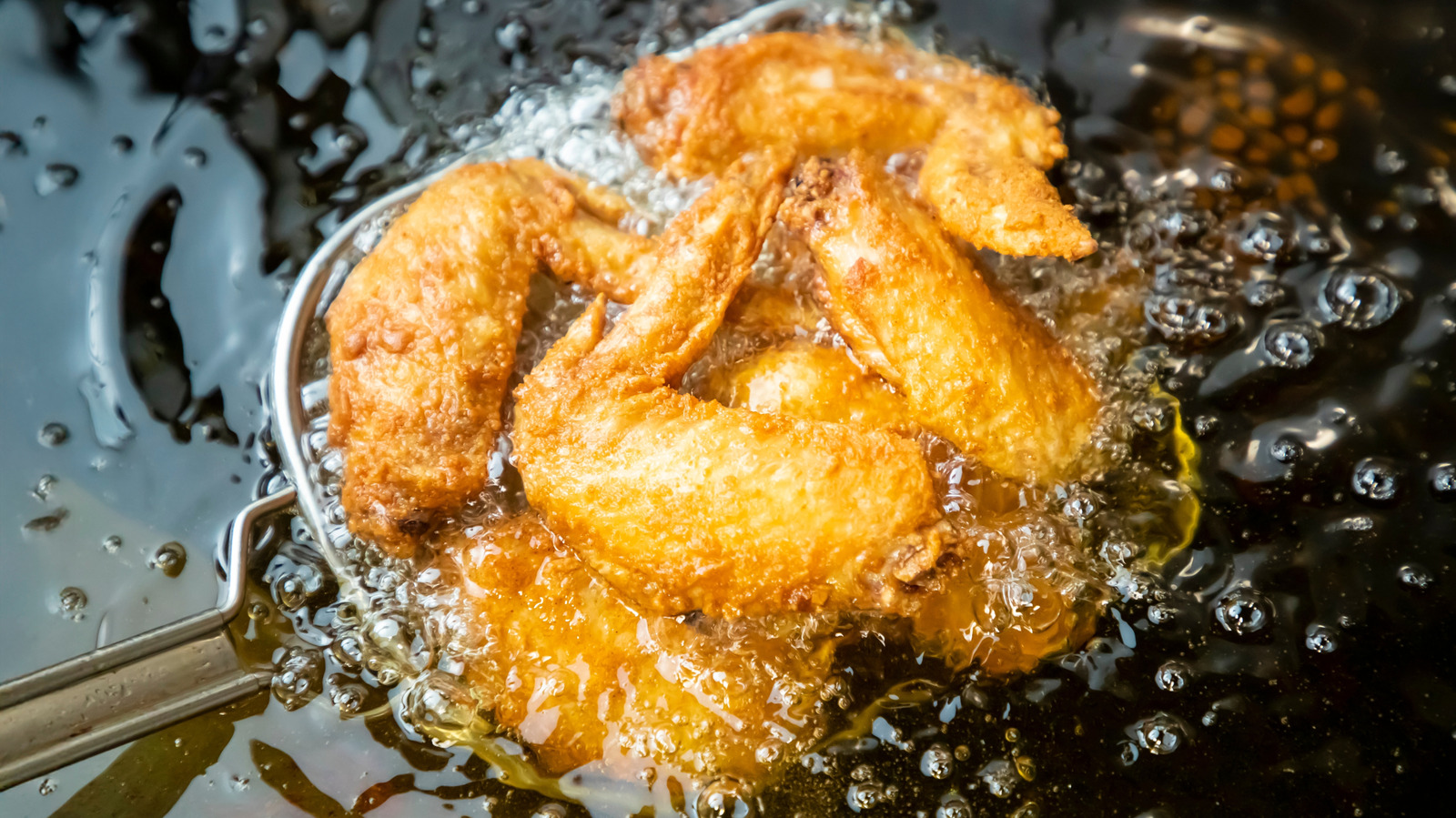
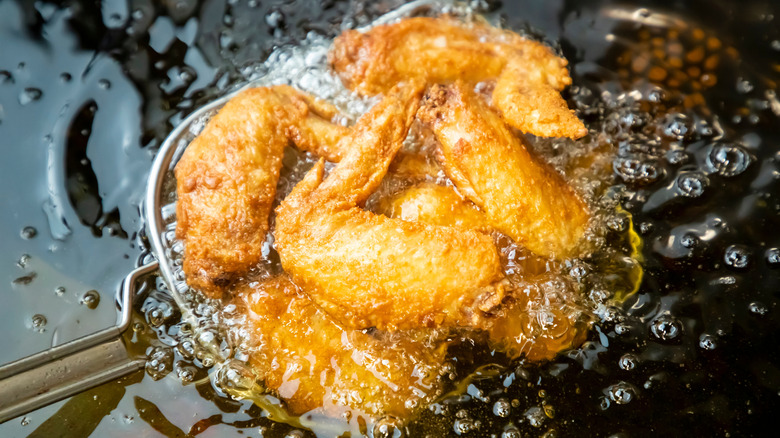
The Breakfast Staple You Should Be Coating Fried Chicken With For A Crunchy Finish

The last thing you want to do when making fried chicken is carefully measure dry ingredients for the perfect crust – so reach for this shortcut instead.

​Food Republic – Restaurants, Reviews, Recipes, Cooking Tips

Categories
Alaska News

Haines bear attack victim identified, family establishes fundraiser

Haines resident Toni Smith is receiving treatment in a Juneau hospital after she was attacked by a bear early Saturday morning. 

Smith had been walking her dog when she encountered the bear on Mt. Riley Road, between the intersection with FAA Road and the steep incline commonly known as the sledding hill. 

After the attack, Smith was able to walk back to her home, and from there called 911 at 6:23 a.m.

The Haines Volunteer Fire Department responded and took her by ambulance to the Haines SEARHC clinic. A medevac service attempted to fly Smith to Juneau Saturday but was unable to land in Haines due to weather, said Haines fire chief Zak Overmyer.

Weather cleared on Sunday and Smith was flown to a Juneau hospital Sunday afternoon.

Family member Sherri Maust said Smith underwent surgery to clean and stitch wounds, and would likely be staying in the hospital “for some time” for more treatment. 

Maust posted an online fundraiser to cover Smith’s medical bills and work missed during her ongoing hospital stay. As of Monday afternoon, more than $14,000 had been raised. 

Maust said she and the rest of her family have been “grateful and awed by the love and support pouring in” from the community. 

The post Haines bear attack victim identified, family establishes fundraiser appeared first on Chilkat Valley News.

Categories
Sports Fox

Shedeur Sanders On Trade Block? What Execs, Scouts Think About Browns QB Situation

One of the teams projected to finish with one of the worst records in the NFL this season was at the center of the most drama during the preseason. Now, as the Cleveland Browns look to make the most of an underwhelming quarterback situation, what’s next for them ahead of the regular season? We asked several people around the league what they thought of first-year head coach Todd Monken’s decision to name Deshaun Watson the starting quarterback and what might be next for Shedeur Sanders as he heads to the bench. One scout floated the possibility that one of the quarterbacks could be on the trade block, while an exec diagnosed what’s wrong in Cleveland. Here’s what we learned from our conversations with people around the league. Eric D. Williams: While Watson and Sanders have battled it out for the starting job, the odd man out has been the quarterback selected two rounds earlier than Sanders last season: Dillon Gabriel. The Oregon product finished 1-5 as a starter during his rookie season and has played sparingly during the preseason this year. However, Gabriel got the start in Cleveland’s preseason finale and shined. He completed 12 of 15 passes for 186 yards and three touchdowns in the victory over the New England Patriots. A longtime NFL scout I spoke to said Gabriel’s outing could be an audition for the rest of the league. The Browns traded Joe Flacco and Kenny Pickett last year and could be looking to get some draft compensation in return for Gabriel. Or they could be looking at Gabriel as a potential candidate for the No. 2 job and looking to flip Sanders for future draft picks. “It will be interesting how it unfolds,” the NFL talent evaluator told me. “From the outside, you’d want to go with experience and leadership at QB over everything else at this point. But I think Gabriel has a chance to be a good backup and liked him coming out. “All eyes are on Sanders, but he’s gotta show he can be a solid, strong leader and settle down as well to grind, learn and develop. He’s going to find out that as a player, you can only get so many opportunities to do that, and you better take advantage of every single one of them.” The scout went on to say he believed Cleveland started Gabriel in the final preseason game to show him off for a potential trade, but there’s a real chance his start was an audition for the No. 2 job when he’s eventually healthy and Sanders is the one on the trade block. Gabriel was named to the 53-man roster on Sunday, although he’ll begin the year on injured reserve with the designation to return later in the season. Another scout I spoke with noted that chance to quiet the quarterback room by moving on from either Watson or Sanders, who have commanded a lot of attention because of things off the field. “Both are PR nightmares by the way they handle the media and the fans by what they say,” the scout told me when asked about the Watson-Sanders dynamic. “Humility is a tough lesson to learn at this stage of their lives.” Ralph Vacchiano: Going with a veteran quarterback, especially with a young team and a road-heavy early schedule, probably makes some sense. It may even give Todd Monken and the Cleveland Browns the best chance at short-term success. But it definitely isn’t in the long-term interest of the Browns. “It’s a Band-Aid on a pretty deep cut,” one NFL executive told me. “Maybe it helps a little, but it does nothing for their bigger problem. They need a long-term solution at quarterback, and obviously Deshaun Watson is not it.” Even if Watson played well this season, there is no way the Browns would re-sign him after finally getting out from under the disastrous, five-year, $230 million, fully guaranteed contract they gave him. Watson is reviled by the Browns fanbase as it is, both for his awful, injury-prone career in Cleveland and for all the sexual assault allegations levied against him before they traded for him. “He has no future there,” the executive told me. “I get what Monken is doing. He wants a few wins and he wants to help stabilize things for his young team. But Watson isn’t the guy to do that. If they wanted to do that they could’ve gone and signed Joe Flacco or someone like that. “What they need to do is find out if Shedeur Sanders is an NFL quarterback. And they’re going to do that at some point during this season. So why not do it from the start?” Vacchiano: Deshaun Watson had one decent performance in the preseason, followed by a terrible one. And while it’s still a very small sample size for a player who hasn’t played in two years, one NFL scout told me he saw more than enough to question the Cleveland Browns’ choice. “He looked shaky. That’s the best way I could describe it,” the scout told me. “What I loved about him back in the day was how strong and confident he always looked. He stood really tall in the pocket and he looked very much in control when he threw on the run. “That’s all gone now. It makes sense. He’s played like [19] games in the last five years. And it shows. He looks rusty, like he’s learning how to play all over again and just isn’t sure about anything at all.” Williams: Matt Hasselbeck knows what it takes to go from being a backup quarterback to a successful starter. Hasselbeck, a sixth-round pick by the Green Bay Packers in the 1998 draft, began his career backing up Brett Favre in Green Bay traded and even backed up Trent Dilfer with the Seattle Seahawks before taking over as the starting quarterback for 10 seasons in the Pacific Northwest, which included a Super Bowl appearance. And like Sanders, Hasselbeck’s father, Don Hasselbeck, was an accomplished player in the NFL, so he understands the pressures the Colorado product is attempting to navigate in the early portion of his NFL career. “He can learn from the mistake Deshaun Watson made this week,” Hasselbeck told me. “Watson is obviously still deeply hurt from when Browns’ fans cheered when he got hurt, and he let his emotions get the best of him in the postgame presser because he got booed this preseason. Obviously, he played poorly, but I think he got booed in part because there’s some excitement about Shedeur. But he handled the press conference completely the wrong way, and he ended up apologizing for it. “So much about being with a veteran quarterback is you can learn what to do, but you can learn from their mistakes — whether that happens in front of you or you can also learn from stories they tell you about when they were younger. These are all lessons as a young quarterback where you can learn from the guy in the room, without having to make the mistakes yourself.” As far as his play on the field, Hasselbeck believes Sanders has improved since his rookie season, successfully handling the transition in offenses from Kevin Stefanski his rookie year to Todd Monken this season. However, like most young quarterbacks, Hasselbeck believes Sanders needs more time and more reps to get better command of the intricacies of the offense. For Hasselbeck, that means Sanders sitting and watching Watson play during the first half of the season, which should benefit his growth once he gets an opportunity to play this season. “It’s a really tough situation,” Hasselbeck told me. “Nobody has played at a level that screams starting quarterback. But the reality is you’ve got to choose one of the guys in the room. I’m not at all surprised they picked Deshaun Watson to start the season. It’s pretty clear why they did it. I know Sanders outplayed Watson in the last preseason game, but Todd Monken has said consistently it’s going to be the full body of work. And I think their minds were made up before that last preseason game started.” That said, Hasselbeck believes Sanders’ best opportunity to succeed in the NFL is with the Browns. “Shedeur’s best chance for a good future is in Cleveland,” he told me. “The fanbase is really excited about him. The continuity of just being in the building, even though there’s changes around him offensively and defensively, is probably the best thing. I think he’s got a future there. He’s played pretty well. Even in the last preseason game he played, there’s some good stuff there. You can see the playmaking ability. There’s upside, but like a lot of young players he’s got to eliminate critical errors that cost you game. But when you’re turning the keys to the offense over to someone, you must trust them wholeheartedly in everything. “Everything matters. I think reckless driving matters. Having to apologize to reporters matters. Those types of things to me are just as important than all the other stuff. Do I think Shedeur Sanders will be the starting quarterback of the Cleveland Browns by the end of the season? Yes, I absolutely do. From my vantage point far away, it seems like he’s really improved in everything. I feel like he’s improved on the field and is maturing off the field. Like if this is a stock, I’m buying the stock. But I don’t think it’s at its peak yet. So, I’m holding onto the stock as long as possible.”​Latest Sports News from FOX Sports

Categories
Politics

Paxton allies launch $15 million ad campaign

Allies of Texas GOP Senate hopeful Ken Paxton are planning a $15 million ad campaign starting Tuesday, the first major ad buy on behalf of Paxton in his battleground matchup with Democrat James Talarico.

Two new ads from Lone Star Liberty PAC, the pro-Paxton super PAC, will air across 18 markets across Texas over the ensuing two weeks. They mark Paxton’s first significant foray on to the airwaves, jolting a campaign that has been clouded by concerns over Talarico’s massive cash advantage and Paxton’s electability.

One of the new ads will lean into Paxton’s record as attorney general, highlighting Texas’ recent agreement with Kellogg’s to remove certain food dyes from cereals and the state’s billion-dollar settlements with Meta and Google over privacy and safety concerns.

“When they come after Texans, he comes after them,” a voiceover says in the ad.

The other new advertisement accuses Talarico of aiding China’s growth at the expense of Texas residents, pointing to the Democrat’s vote against restrictions on Chinese investments, and argues that a Chinese billionaire’s ownership of land near Laughlin Air Force Base presents national security concerns.

“China’s got Talarico. Texas needs Ken Paxton,” the ad says.

“[James Talarico] voted to sell Texas land to China, pushed a Texas Green New Deal that would gut our oil and gas jobs, and stood with criminals over cops as the most pro-criminal member of the Texas House,” Lone Star Liberty spokesperson Sam Cooper said. “That record is too extreme for Texas. Between now and Election Day, voters are going to hear it.”

In a statement, Talarico’s campaign refuted Paxton’s claims and accused him of being weak on China.

“Paxton is the only candidate in this race that has cozied up to the Chinese Communist Party, going on a lavish all expenses paid trip to China and meeting with CCP officials while he was supposed to be serving us,” Talarico campaign spokesperson JT Ennis said in a statement. “James has voted to support Texans’ security, privacy, and first amendment protections from foreign government influence.”

The multimillion-dollar campaign comes as Republicans look for ways to negate Talarico’s war chest. The latest Federal Election Commission filings from July show Talarico with $21.5 million in the bank, dwarfing Paxton’s $1.8 million in reserves.

That advantage, along with Paxton’s drawn-out primary runoff that forced him to focus on beating Sen. John Cornyn, has allowed Talarico to dominate the general election messaging battle on television. He’s spent $39 million on TV since the March primary, according to data tracking firm AdImpact.

On Saturday, Talarico launched his first negative ad against Paxton, spotlighting his impeachment and labeling him “the most corrupt politician in Texas.”

Although Republicans have traditionally been favored in Texas statewide elections, Democrats are optimistic Talarico can defeat Paxton. A Texas Public Opinion Research poll released Thursday found Talarico leading Paxton — 48 percent to 42 percent.

Concerns about a potential Paxton defeat have prompted some Republicans to implore President Donald Trump to invest some of the gargantuan MAGA Inc. war chest in the Texas race. MAGA Inc. has over $400 million in cash on hand, and Trump publicly pledged to support Paxton financially.

​Politics

Categories
Entertainment

Hunter Biden Reveals Joe Visited Him In Crack House With Secret Service Motorcade

Reading Time: 2 minutes

Anyone who’s ever watched a loved one battle substance abuse knows how that struggle can impact an entire family.

And it seems that that’s true even in the world’s most powerful families.

Hunter Biden opened up this week about one of the strangest chapters of his battle with addiction — and it involves his father showing up at his drug-filled Washington, D.C., home.

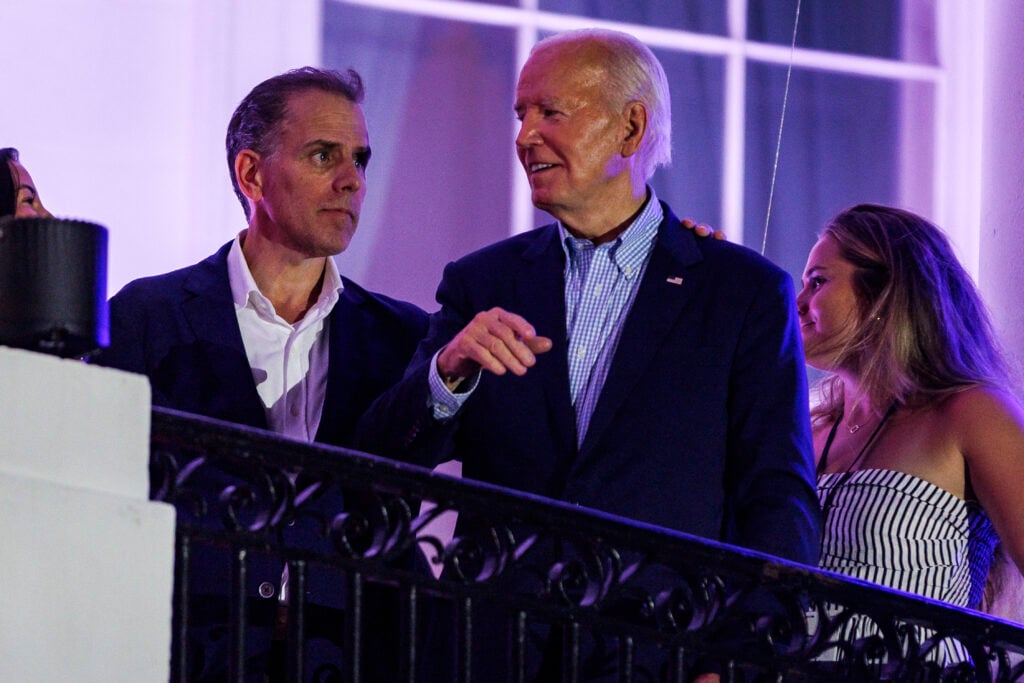
President Joe Biden talks to his son, Hunter Biden, following the fireworks on the National Mall with First Lady Jill Biden and Second Gentleman Doug Emhoff from the White House balcony during a 4th of July event on the South Lawn of the White House on July 4, 2024 in Washington, DC.
President Joe Biden talks to his son, Hunter Biden, following the fireworks on the National Mall with First Lady Jill Biden and Second Gentleman Doug Emhoff from the White House balcony during a 4th of July event on the South Lawn of the White House on July 4, 2024 in Washington, DC. (Photo by Samuel Corum/Getty Images)

During a recent appearance on the “Dopey” podcast, Hunter recalled two occasions when Joe Biden, who was serving as vice president at the time, personally visited him while he was deep in the throes of addiction.

Needless to say, these weren’t exactly low-key father-son pop-ins.

Hunter said he would notice several SUVs arriving outside his home before realizing that his father had come to check on him. The Secret Service presence was difficult to miss, even with a reduced motorcade.

“My dad showed up. He literally showed up at the house twice,” Hunter recalled.

According to Hunter, Joe would then walk up to the door and knock.

Hunter said his father was trying to figure out what was going on with his son and what, exactly, he planned to do next.

“Please, like, what are we gonna do tomorrow? What’s the plan?” Hunter recalled his father asking.

Hunter apparently had an answer — or at least something that sounded like one at the time.

He said he would assure Joe that he had a plan.

The problem, of course, was that Hunter’s addiction wasn’t exactly interested in sticking to the plan.

The former first son has been remarkably candid in recent years about his struggles with drugs and alcohol, including periods when his life became increasingly chaotic.

He has since embraced sobriety and spoken openly about the people who helped him survive what he has described as some of the darkest periods of his life.

His latest story, however, offers a particularly unusual glimpse into what Joe Biden was dealing with behind closed doors while simultaneously serving as Barack Obama’s vice president.

Hunter wasn’t describing a polished political family photo-op. He was describing his father showing up at his home, knocking on the door, and attempting to figure out how to help his struggling son.

And while Hunter may have had plenty of complicated feelings about his father over the years, these particular memories appear to underscore one thing: Joe Biden kept showing up.

Even when the circumstances were anything but normal.

Hunter’s addiction has been the subject of relentless political scrutiny, but his more recent willingness to discuss his recovery has provided a much more personal look at what was happening behind the headlines.

This time, the headline is pretty wild all by itself: The vice president once showed up at his son’s drug den to ask what the plan was.

Thankfully, the plan eventually involved getting sober.

Hunter Biden Reveals Joe Visited Him In Crack House With Secret Service Motorcade was originally published on The Hollywood Gossip.

​The Hollywood Gossip