Garth Brooks is adding another city to his highly anticipated return to the arena stage. The “Blame It All On My Roots” Arena Tour set to launch next month in Indianapolis and then the country music icon will head to Denver, Colorado, for the tour’s second stop.
After seeing an overwhelming demand for the tour’s opening four-night run in Indianapolis, Brooks is expanding the “Blame It All On My Roots” Arena Tour with a newly announced stop in Denver.
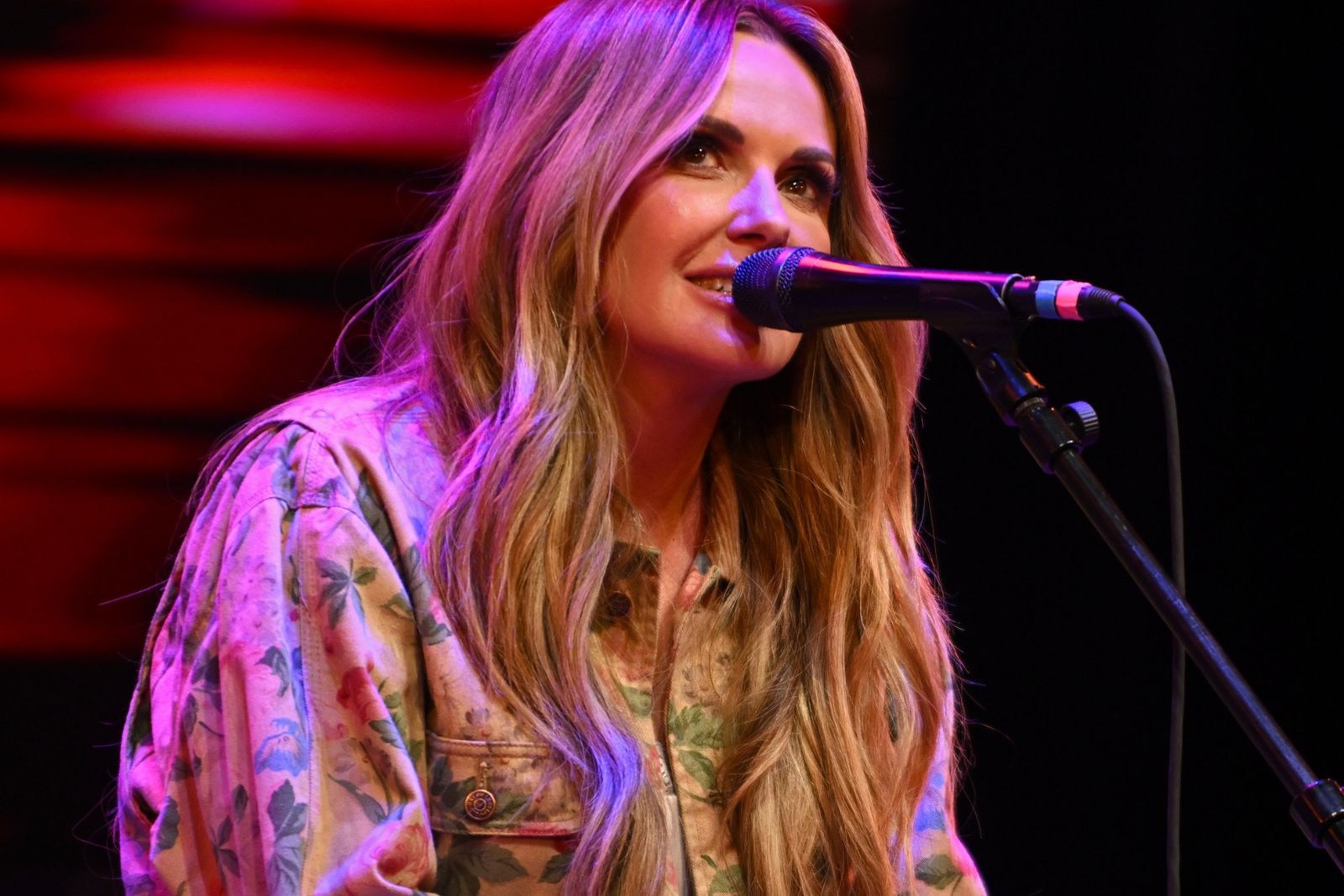
Photo Courtesy of Garth Brooks
Fans will first get to experience the show at Indiana’s Gainbridge Fieldhouse from August 20-23, followed by two nights at Denver’s Ball Arena on Friday, September 4, and Saturday, September 5.
The show will feature both end-stage and in-the-round seating, with all seats reserved. It’s important to note that in order to maintain Brooks’ mission of keeping ticket sales fair at a set price, there will be no presales or early box office opportunities. Instead, all tickets will become available at the same time.
Brooks has made the decision to oversee ticket prices himself, ensuring that every one of his supporters, regardless of their financial situation, will have the option to come see his show at an affordable price.
“We have always chosen to do the one overall ticket price simply based on this thought: Where you sit in the arena shouldn’t depend on how much you can afford,” he says. “It should be all just luck of the draw.”
Purchases will be limited to eight tickets per transaction, and fans are encouraged to log into their Ticketmaster accounts ahead of time to ensure they are ready when tickets go on sale.
General on sale begins Friday, July 31 at 10:00 AM/MT HERE or through the Ticketmaster App. Every seat in the house will be priced at $155.25 ($140 ticket price + $5.25 Facility Fee + $10.00 Service Charge).
The “Blame It All On My Roots” Arena Tour will bring Garth Brooks’ biggest hits back to the rooms where it all started. These highly anticipated shows will also introduce Killer Live, a groundbreaking new approach to live recording that continues Brooks’ tradition of capturing major moments in real time.
“BLAME IT ALL ON MY ROOTS” ARENA TOUR DATES:
Thursday, August 20 – Indianapolis, IN – Gainbridge Fieldhouse
Friday, August 21 – Indianapolis, IN – Gainbridge Fieldhouse
Saturday, August 22 – Indianapolis, IN – Gainbridge Fieldhouse
Sunday, August 23 – Indianapolis, IN – Gainbridge Fieldhouse (Matinee)
Friday, September 4 – Denver, CO – Ball Arena [JUST ANNOUNCED]
Saturday, September 5 – Denver, CO – Ball Arena [JUST ANNOUNCED]
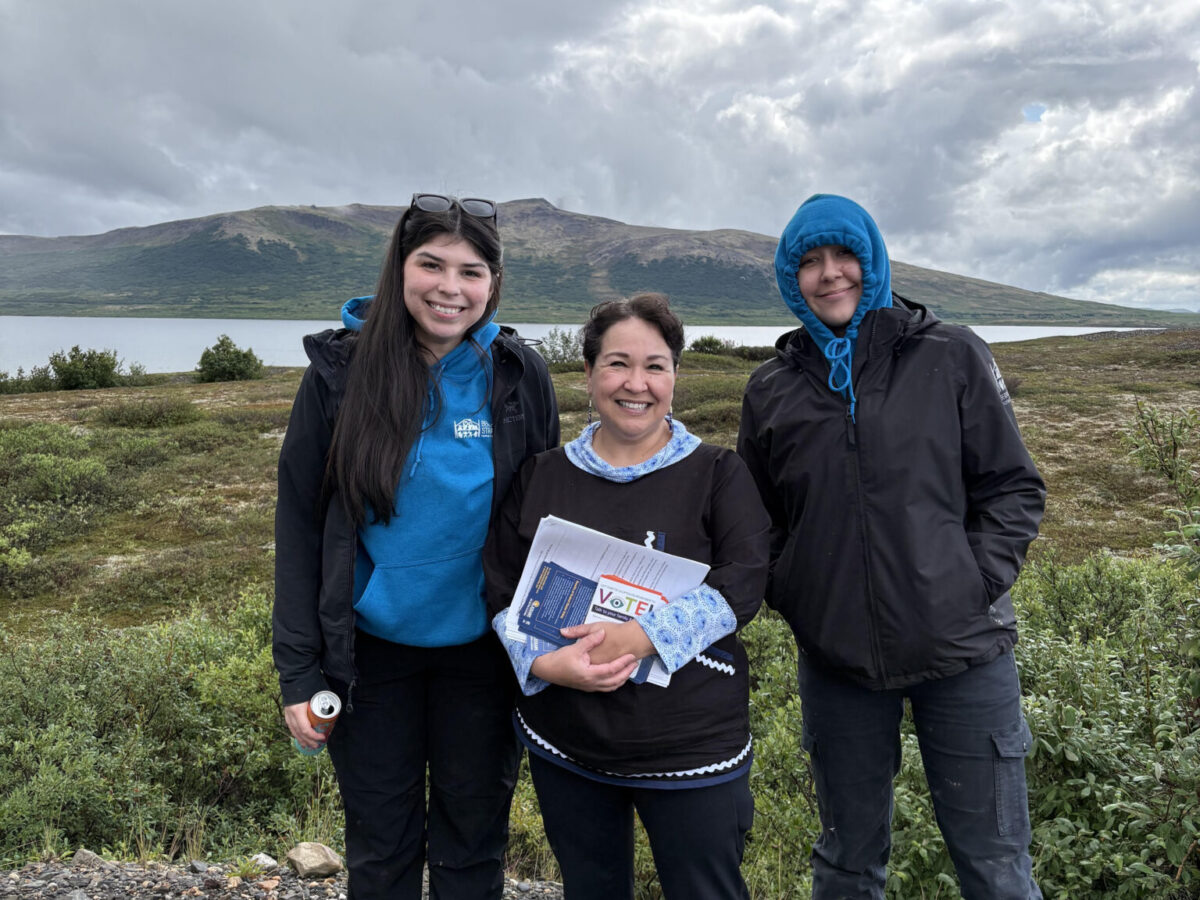
Michelle Sparck (center) poses for a photo with Bering Straits Native Corporation summer interns in Nome on July 20, 2026 during a voter outreach trip. (Photo courtesy of Michelle Sparck)
A Native-led voter mobilization group is working to boost Alaska Native voter education and turnout this election season.
Get Out the Native Vote is a non-partisan effort now underway to reach voters across the state’s vast and varied geography and get them to cast ballots in the primary elections on August 18 and the midterm elections on November 3.
Alaska Native voters make up roughly one in four Alaskan voters, said Michelle Sparck, director of the initiative, who is Cup’ik from the Southwest village of Chevak. She said part of voter education is raising awareness of when Alaska Native voters came out in force and reached a peak voter turnout of 66% in 1982. Some regions had nearly 80% voter turnout, Sparck said. That’s when decisions on subsistence policy, abortion and moving the Alaska State Capitol from Juneau were on the ballot.
“I call it the birth of the Alaska Native super voter. That generation made it a cultural value,” she said. “With that political capital that the 1980s generation built, they were able to own their sovereignty and self-determination tools.”
An Alaska voter drops their ballot into a ballot box on Nov. 1, 2024, in Anchorage City Hall. (Photo by Andrew Kitchenman/Alaska Beacon)
But voter turnout has declined significantly in the decades since. In the last election in 2024, 30% of Alaska Native voters cast their ballots. That meant Alaska Native voters made up 11% of state voters, according to data compiled by Sparck.
The mission of the campaign is to turn that decline around and reach historic highs again.
“This is what we’re capable of, and this is what this is our potential, and and I’m so excited to hold the mirror up to the communities because a lot of them really just had no idea what their performance is over the last, you know, 40-some years,” Sparck said.
“The challenge to the community is to say: own our power. We need to get out and vote,” she said. “Not should we go out and vote, we should make informed decisions.”
Get Out the Native Vote is supported by a partnership between the Alaska Federation of Natives, First Nations Institute and Cook Inlet Tribal Council with some funding from private foundations and the Carter Center, which was founded by former President Jimmy Carter. The campaign is collaborating with local, state and Tribal governments; regional Native corporations, organizations and service providers; schools; prisons and community groups to host voter education and outreach events around the state. Sparck spoke on a video call on Tuesday after returning from a voter outreach visit in Nome, and before heading to visit Utqiagvik, then the coastal community of Wainwright.
The August 18 primary falls within the summer subsistence fishing season, which is challenging for many people to find time to vote, Sparck said, but she’s found a helpful analogy.
“We’ve realized that if we describe primaries like basketball regionals, light bulbs go off their heads,” she said, smiling. “You have to win at regionals in order to make it to state. So a lot of people now know what primaries mean.”
Spark said 131 voting precincts in the state, more than a quarter, rely entirely on the U.S. Postal Service and air carriers to receive and mail their ballots.
Get Out the Native Vote working to make sure post offices are staffed, and helping the Alaska Division of Elections to recruit staff and volunteers so that each precinct has elections workers, bilingual poll workers and outreach workers to help with Native language translations. Sparck is also finding youth volunteers for a “Youth at the Booth” program, whose goal is to have two 17 and 18 year old volunteers assist at polling places and learn about elections in the process.
Particularly in the Arctic, the initiative is partnering with the North Slope Borough and local community leaders to make sure all precincts are staffed and open, in hopes of avoiding repeats of past election years where rural residents could not vote due to issues with staffing poll workers. In 2024, polling stations in rural villages of Wales and Kaktovik never opened. In Northwest and Western Alaska, voting hours were reduced in Marshall, Shaktoolik,Diomede and Kobuk. Primary ballots arrived late in at least 14 other Native villages.
“I get a lot of (precinct) chairs calling me before an election saying, ‘I don’t think I can do this.’ And we’re like, ‘You can do this. Your community can’t vote without you,’” she said. The organization’s goal is to have a well-staffed polling station in each village.
Alaska Native communities have also had the highest rates of rejected ballots, according to the Alaska Federation of Natives. One of the main issues is an incomplete witness signature on the ballot. In 2022, one in eight rural mail-in ballots were rejected, totalling more than 7,500 ballots rejected from rural Alaska.
A bipartisan elections bill that would have removed the witness signature requirement, among many other measures aimed at improving voting access, passed the Alaska State Legislature this year, but Gov. Mike Dunleavy vetoed it.
An 18 year old Ahtna shareholder registers to vote at a Get Out the Native Vote event at their Convention in June 2026 in Glennallen. (Photo courtesy of Michelle Sparck)
Between now and November, the campaign is working to distribute voter information, with guides on how to register, cast a ballot and find more information on state and federal candidates.
“So we’re trying to make things easier, but we’re building the plane as we’re flying it,” Sparck said. “You know, it’s still a work in progress, and we’re glad to have the alliances we have.”
This year, the annual Alaska Federation of Natives convention, where thousands of people from across the state convene in Anchorage, will be held one week later than usual to accommodate early voting at City Hall across the street. “So we’re excited that we’re going to have an ability to send people across the street to go vote or drop off their absentee ballots,” Sparck said.
The campaign is planning to hold voter outreach events in Alaska Department of Corrections facilities where roughly 40% of incarcerated people awaiting trial and sentencing are eligible to vote. Organizers are also working with service provider organizations to reach people who are unhoused or housing insecure, as well as foster youth who are turning 18, and inform them about their voting rights.
“We try to recognize every avenue to access voters, and especially those that are low propensity or disenfranchised. We try to meet their needs in every way, so it doesn’t mean we’re doing it 24/7, but it means we are trying to dedicate time and create the allyship and coordination with organizations that are more intimate with those groups to to best deliver that,” she said.
Get Out The Native Vote shares outreach events and regional voting updates on their Facebook page, and website at aknativevote.com.
Michelle Sparck (left) and Get Out the Native Vote volunteers smile at a tabling event in Bethel. (Photo courtesy of Michelle Sparck)
Now, Amy says that she’s open to a dialogue with some of her cousins. But there are conditions.
Amy Duggar attends WE tv celebrates the return of “Love After Lockup” with panel, “Real Love: Relationship Reality TV’s Past, Present & Future,” at The Paley Center for Media on December 11, 2018 in Beverly Hills, California. (Photo by Alberto E. Rodriguez/Getty Images for WE tv)
‘There is no contact’
During an interview with Oxygen, the infamous Duggar cousin revealed that she is not in touch with Jim Bob, with Michelle, or with most of her cousins.
“I have heard nothing from them,” she confirmed.
“Absolutely, there is no contact,” Amy emphasized.
There are many reasons to go no contact with family who were once important to you. How the Duggars have responded to Josh and now Joseph’s arrests and related scandals is only one of them.
She added: “That is just something that I have put boundaries in place.”
Amy Duggar King exclusively told Oxygen she recently reached out to Joseph Duggar’s alleged victim to offer support. Joseph Duggar plead not guilty to all charges. https://t.co/kvRVyZ4xafpic.twitter.com/fRlJANVxk8
“I don’t know what they’re thinking,” Amy admitted with a bit of resignation.
“I don’t know really what’s going on on that side of the family,” she added.
“From what I see in the news that I’ve gathered, it’s heavy,” Amy assessed. “It’s really heavy.”
Beliefs among the Duggars likely range from denial to horror to, as we have mentioned in the past, the belief that sinister supernatural forces are attacking their family.
With that in mind, Amy remains in close contact with her cousin, Jill. Not so with Jill’s parents or most of her siblings.
She’s open to contact again, but only under certain conditions
“I would be open to a conversation with any of my cousins that are free and good people,” Amy clarified.
“I would love to connect with maybe some of the girls,” she expressed.
Amy set the condition: “However, they have to be able to have an open and honest conversation with me.”
“If you wanna get to know the real me, the door is open,” Amy reiterated. “but I’m gonna protect my son no matter what, from anyone and everyone I possibly can that I think might have some issues.”
She admitted: “So far, no one has really walked through it except for Jill. Jill and I are so extremely close.”
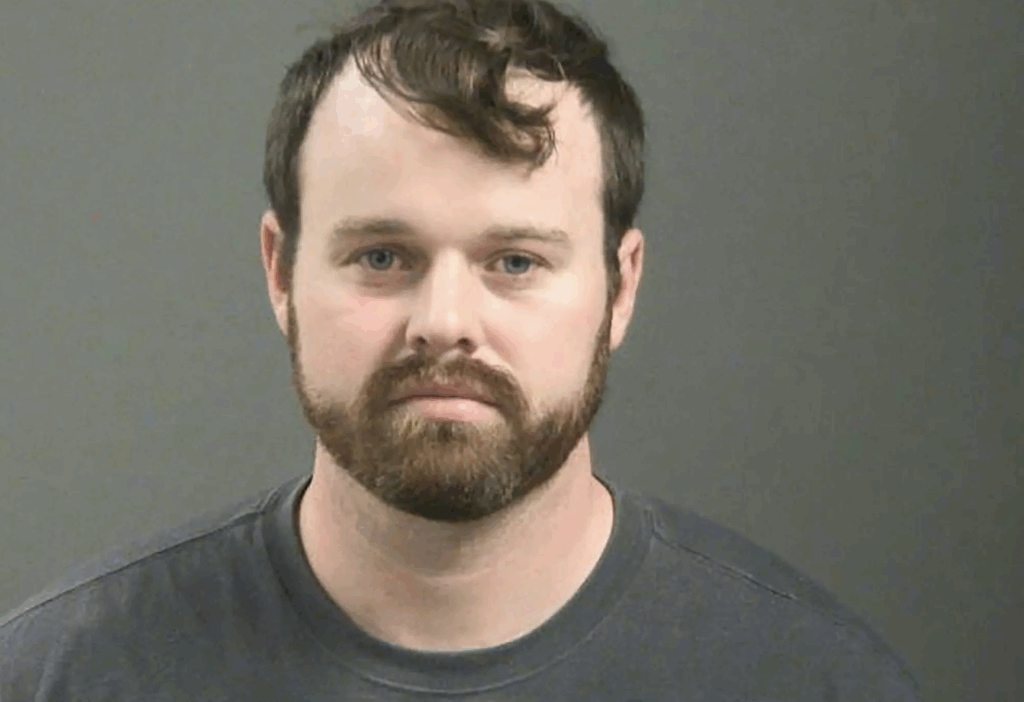
Joseph Duggar has been arrested for the alleged molestation of a 9-year-old girl. (Washington County Sheriff’s Office)
“Jill and I were in communication the second we found out,” Amy said of Joseph’s arrest for child sexual abuse of a 9-year-old girl.
“I can’t describe the amount of pain that she has felt through all of the different scandals and all the different horrible things that have happened in our family,” she expressed.
Amy added: “My heart just goes out to her.”
She did clarify that she does not feel hatred towards her extended family. She wishes that they were healthy and good, but knows that they are not.
“I feel like the truth has always been so hard to find in my family,” Amy lamented. It seems unlikely that that cycle will break with most of her cousins any time soon.
When dining at a restaurant, it can be tempting to ask a server what their favorite meal is or what’s popular, but there is a better question you can ask.
‘I think that we should normalize people that truly know they don’t wanna have kids,’ Pearce reflects. Continue reading…Country Music News – Taste of Country
‘I think that we should normalize people that truly know they don’t wanna have kids,’ Pearce reflects. Continue reading…The Boot – Country Music News, Music Videos and Songs
Migrating summer chum and chinook salmon swim on July 7, 2007, below the U.S. Bureau of Land Managment’s fish weir on the Tozitna River, Alaska. The Tozitna is a tributory of the Yukon River. (Photo by Jason Post/U.S. Bureau of Land Management)
When 26-year-old Tirzah Bryant was a kid, she knew how to watch the cottonwood trees along the Yukon River for the sign that it was time to fish for salmon.
“We know that the fish are coming when the cotton’s flying from the cottonwood,” she said.
But run collapses and successive fishing closures along the river have rendered the cottonwood signal meaningless.
“I remember that first summer that we couldn’t fish, watching the cotton flying and being like …what it felt like, I was drifting. I’m like, ‘What am I doing?’” she said. That drifting feeling includes interactions with members of her extended family who had moved to cities but used to gather in Galena during fishing season. “They don’t have a reason to come home now,” she said.
Bryant described that odd feeling during a presentation in March at an Anchorage tribal environmental conference. A 2025 graduate of the University of Alaska Fairbanks’ Center for One Health Research master’s degree program, which focuses on the human-animal-environmental health connections in Alaska and the Arctic, she described the One Health concept as fitting perfectly with her family’s traditions.
“Everything is related. So a healthy environment equals healthy animals, which equals healthy humans,” said Bryant, who also holds a biology degree from UAF and is now the environmental and education coordinator for the Louden Tribe, the Galena-based tribal government.
That makes the collapse of runs in the Yukon River — where Indigenous residents’ culture is tied to communal salmon harvesting, preparation and eating — “very detrimental to our people,” she said.
On the Yukon River, salmon runs that used to support a thriving and lucrative commercial harvest have collapsed. The runs of Chinook, also called king salmon, that have been in steady decline since the early 2000s, took a nosedive in recent years; by 2022, Chinook abundance was down 81% below its long-term average, according to fishery biologists. Harvest closures that began in 2020 were extended, and in 2024 an Alaska-Canada agreement established a seven-year moratorium on Chinook salmon fishing in the river to preserve Canadian-origin stocks.
Runs of chum salmon, a species that is generally more abundant in the river, suffered a similar but more sudden crash. A series of chum-harvest closures, even for subsistence purposes, started in 2020, and by 2022 abundance had fallen 92% below the long-term average.
Several factors, working in combination, are blamed for the declines. Scientists cite multiple climate change effects in both the ocean and freshwater bodies used by salmon. Those changes have not only affected the raw numbers of fish but also contributed to the shrinking size of salmon, resulting in smaller egg loads carried to spawning grounds by females.
Tirzah Bryant of Galena and elder Betty Huntington after giving a presetnation on One Health issues on March 25, 2026, at the Alaska Tribal Conference on Environmental Managmeent in Anchorage. Bryant is the environmental and education coordinator for the Louden Tribe, the Tribal govenrment in Galena, a community on the middle Yukon River. Huntington is also from Galena. (Photo by Yereth Rosen/Alaska Beacon)
Other factors cited are interceptions at sea by trawlers targeting groundfish species like pollock, changes forced by increasing loads of Asian hatchery fish in the ocean, past fishery management practices and the parasite Icthyophonus, which thrives in warmer conditions and has a more detrimental effect on Yukon Chinook than on any other type of salmon.
Salmon-protection activists say there is not much that can be done in the short term in Alaska to address those factors, other than to adjust fishery management to cut down on at-sea interception, also known as bycatch.
‘We are truly fish people’
Tribal representatives have made that argument repeatedly to fishery managers. Among them was Brian Ridley, chairman of the Tanana Chiefs Conference, a consortium of Interior Alaska tribal governments.
Ridley, in testimony to the North Pacific Fishery Management Council at its February meeting in Anchorage, spoke about salmon-related health issues in terms similar to those Bryant used. He discussed Athabascan salmon traditions that go back millennia — as far back as 10,500 years ago, according to archaeologists’ discoveries of Yukon River fish camps.
“So we are truly fish people,” he said. The approximately 20,000 people who live in the Texas-sized area covered by the Tanana Chiefs Conference need more protections to repair the Yukon River’s weak salmon runs, he said. “I’ve got to do the best I can for them, and that’s why we’re fighting so hard to try to get our fish back,” he told the council.
A dietary staple, salmon had — until recently — been the main source of protein for Indigenous people who live along the Interior Alaska river systems. Traditionally, salmon has made up about a third of the wild food that rural Alaskans eat, according to the state Department of Fish and Game, and along the Yukon River basin, the percentage was much higher, at least in the past.
Store-bought substitutes, in addition to being expensive and of limited availability in rural Alaska villages that lack any outside road access, do not provide the same quality proteins and vitamins, minerals and omega-3 fatty acids, tribal organizations say.
The Tanana Chiefs Conference says effects of salmon shortages are seen in medical records. In October 2024, it said there had been a 24.6% increase in diabetes and a staggering 70% increase in prediabetes among tribal members since 2019.
Concerns in Alaska about adverse health impacts from reduced salmon consumption fit into a larger pattern of problems around the circumpolar North as wild and nutrient-rich foods traditional in Indigenous diets have been gradually replaced by less-healthful store-bought foods.
In Western Siberia, for example, climate change has shortened the seasons in which the Indigenous Nenets people harvest fish and reindeer, resulting in less overall consumption of those dietary staples and higher rates of hypertension, according to a 2021 study by researchers from Russian and Chinese institutions.
In Arctic Canada, a long-term transition away from what in local vernacular is called “country food” — wild foods such as fish, marine mammal meat and berries — has coincided in Inuit populations with rising obesity and related chronic conditions like cardiovascular disease, high cholesterol, high blood pressure and diabetes, according to a Canadian report published online in 2020 that summarized the findings of 162 studies.
Subsistence fishing on the Yukon River (Photo provided by the Alaska Department of Fish and Game)
A 2024 Canadian study calculated the expected increases in heart attack risks over the coming decades for First Nations members in British Columbia.
A traditional foods comeback
Despite challenges around the Arctic, there have been successes in resurrecting traditional diets, which experts say are important for both physical and mental health.
At the Alaska Native Medical Center in Anchorage, for example, traditional Native foods are served regularly, with supplies donated by community members. Traditional foods are “healing, nourishing medicine for our people,” says the hospital’s website. Donated traditional foods are served at other tribal health care facilities, too, such as the Maniilaq long-term care center in Kotzebue.
Count last summer’s culture camp organized by Eva Burk and other tribal leaders in the Interior Alaska community of Nenana as part of the healing process. Burk is a scientist, local food activist and Indigenous representative on the North Pacific Fishery Management Council’s advisory panel. Nenana is located on the Tanana River, a Yukon River tributary.
Burk and other members of the Nenana Native Association gathered local kids to teach them how to harvest and prepare salmon in the traditional Tanana Athabascan ways, along with other Indigenous skills.
For their activities, they used a smattering of locally caught chum salmon, also known as dog salmon because it was traditionally fed to sled dogs, that was available through a very limited harvest opened last summer specifically for cultural camp purposes. In all, they used 25 locally caught chum and 25 locally caught coho salmon for the camp, Burk said.
Camp activities relied mostly on sockeye salmon sent from the Bristol Bay region, where runs remain abundant. The Bristol Bay fish are not as much to Burk’s liking as the fish that used to be plentiful in the Nenana River and other Yukon tributaries. Bristol Bay salmon tastes a bit different, and the traditional smoking techniques she learned from her family don’t work quite as well, she said.
While they were grateful for the donations, they were especially grateful for the ability to harvest salmon from their own river, Burk said.
As she described it, catching, preparing and eating the local salmon was something of a healing process. Special care was taken to serve some of it to appreciative elders, she added.
“We scored them and smoked them for a day and cooked them over a fire and served them at a potlatch,” she said. “Fish that we would have normally cut for dog fish we were treating with the utmost care and respect, and savoring every last bit.”
The Nenana Native Association has scheduled another culture camp this summer to start in late July, and there is another special allowance for culture camp harvesting this year, Burk said.
Eva Burk cuts salmon during a culture camp held by the Nenana Native Association in August of 2025, (Photo provided by Eva Burk)
And Kelly Osbourne marked the occasion with a lengthy Instagram post about what she’s learned from her 12 months of grief.
But while most commenters were sympathetic, some folks accused Kelly of using Ozzy’s death to draw attention to herself.
Kelly Osbourne attends The BRIT Awards 2026 at Co-op Live on February 28, 2026 in Manchester, England. (Photo by Gareth Cattermole/Getty Images)
“I don’t just mourn the father I lost. I mourn the soul I was before death taught my heart its own name,” Kelly wrote, adding:
“There is a grief that steals more than the person you love. It quietly takes the light from your laughter, the innocence from your hope, and the stranger you become is someone you’ll spend a lifetime trying to recognize.
“People think grief is missing someone who is gone, but the deepest sorrow is waking each day longing for the version of yourself who died with them.
“Grief is a language no one truly speaks until life forces it upon them.”
She went on to describe Ozzy as her “best friend,” “protector,” and “greatest teacher,” writing that she still feels his presence in everyday life despite the pain of no longer being able to speak with or hug him.
She also said she sees pieces of her father living on through her young son, Sidney, and thanked him for the love and guidance he gave her throughout her life.
Unfortunately, the touching tribute attracted plenty of harsh criticism.
Some social media users accused Kelly of focusing too much on her own grief instead of celebrating Ozzy’s extraordinary legacy.
According to Radar Online, critics claimed the post centered more on Kelly’s emotions than on the legendary musician’s accomplishments, with several commenters suggesting she was “making it all about herself.”
Others defended her, pointing out that grieving the loss of a parent is deeply personal and that everyone processes loss differently.
“Man if this isn’t one of the most relatable, accurate descriptions of the grief journey. I’m so so sorry. Big hugs from someone who also lost her dad. He’s with you always,” wrote one user.
In recent months, she has repeatedly addressed cruel comments about her appearance and weight while continuing to mourn her father’s death. She has previously called the criticism “disgusting” and pushed back against speculation surrounding her health.
Sources close to the situation tell Radar that Kelly is taking the criticism in stride:
“Most people understand Kelly is sharing her own experience, but some online critics believe every anniversary post becomes centered on her emotions rather than Ozzy’s extraordinary legacy. That’s where the trolling is coming from,” says one insider.
“Supporters see a daughter processing unimaginable loss, while detractors accuse her of making herself the focus. It’s become an unfortunate pattern every time she speaks publicly about her father,” another added.
Everyone grieves differently, and our thoughts go out to the entire Osbourne clan as they continue to try and process their enormous loss.