Categories
Music

What We Know About Jon Pardi And Summer Pardi’s Divorce

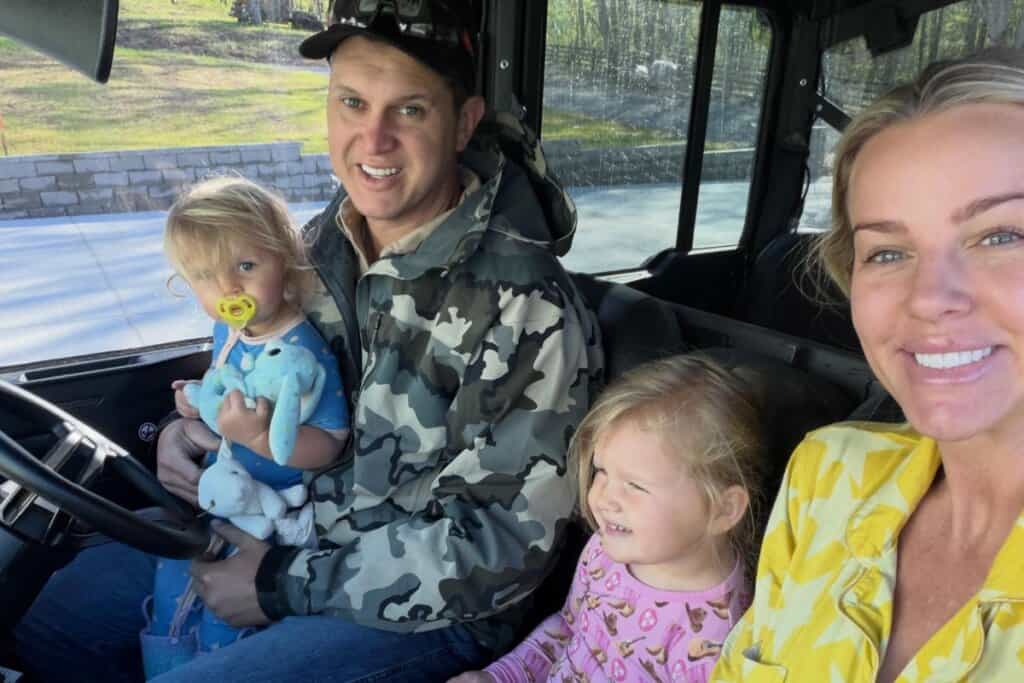
Jon Pardi and his wife Summer Fawn Duncan were just a few months away from celebrating their sixth-year wedding anniversary when they announced their divorce. They shared their decision to end their marriage in a joint statement posted on social media Friday, July 3 and since then, both Pardi and Summer have offered individual reflections on this new chapter.

Their initial post made it clear that even though their love story did not have the ending they expected it to, they will be moving forward as co-parents to their daughters Presley Fawn, 3, and Sienna Grace, 2.

Photo Courtesy of Jon Pardi

The message read, “After much thought, we have made the difficult decision to end our marriage. Our daughters will always remain our highest priority and we are committed to moving forward with love and respect as co-parents.”

They added, “Thank you for understanding, support, and respect as we navigate these changes as a family.”

Shortly after this news went public, the country star took to his own Instagram page to reveal his plans to take a break from social media as he works through this difficult transition period with his family.

“While I navigate this next chapter, I’m going to take some time away from social media to focus on myself and my family. Thanks to you all for the love and support. My team will handle posting for the time being. I’ll see you at the shows,” he wrote.

Photo Courtesy of Jon Pardi

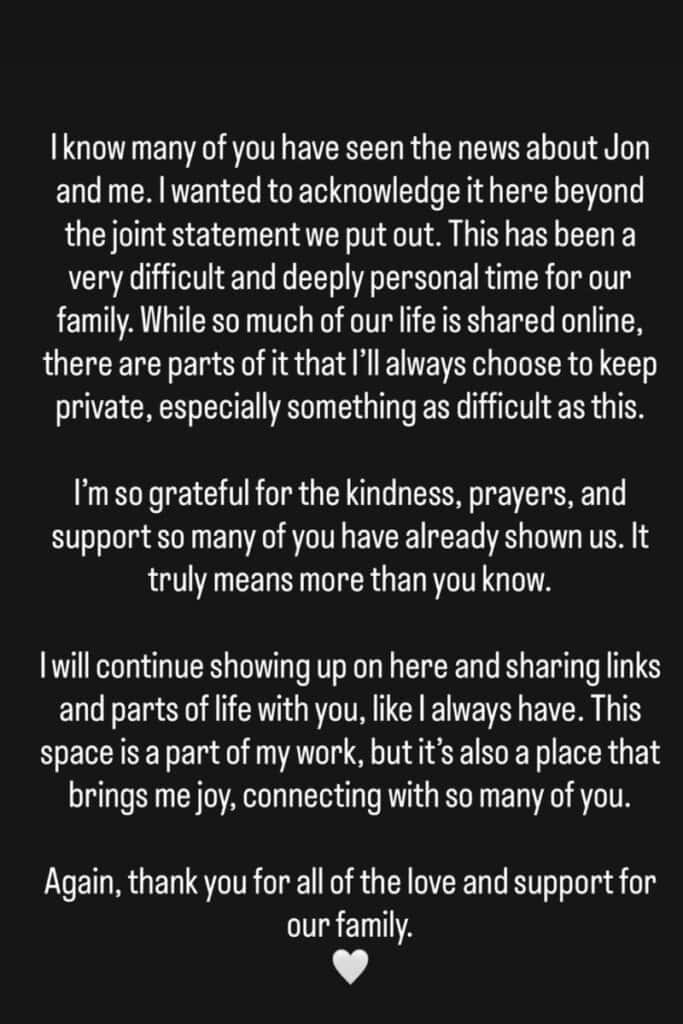
Summer took a few days before returning to the platform to share a few words of her own.  She explained that even though the majority of their life is in the spotlight, this moment in their personal journey will be kept as private as possible.

“I know many of you have seen the news about Jon and me. I wanted to acknowledge it here beyond the joint statement we put out. This has been a very difficult and deeply personal time for our family. While so much of our life is shared online, there are parts of it that I’ll always choose to keep private, especially something as difficult as this.”

She went on to express her gratitude for all the “kindness, prayers, and support” that she has received from so many of her online followers, noting “It truly means more than you know.”

Photo Courtesy of Summer Fawn

Unlike Pardi, Summer plans to remain online, continuing to post her normal content including links to clothing and various products as a way to stay connected to the community she has built along the way.

“I will continue showing up on here and sharing links and parts of life with you, like I always have. This space is a part of my work, but it’s also a place that brings me joy, connecting with so many of you. Again, thank you for all of the love and support for our family 🤍” she added in conclusion.

According to court documents obtained by PEOPLE, Summer filed for divorce on May 12 in Tennessee and listed May 11 as the date of their separation due to “irreconcilable differences.” The records also show that she requested spousal support on top of being their daughters’ primary residential parent.

The former lovebirds first met back in May of 2017 after going on a blind date set up by a client of Summer’s and a friend of Jon’s mom. They fell in love and got engaged in 2019 on the stage of Nashville’s historic Ryman Auditorium, during a stop on his Heartache Medication Tour.

Jon Pardi and Summer Fawn; Photos via Instagram

They tied the knot the following year on November 21 at Saddle Woods Farm in Murfreesboro, Tennessee. The couple had originally planned to say “I do” in Montana in May, however, due to the pandemic, they were forced to change their date, location and downsize their guest list.

“Originally we were getting married in Montana in May, which was going to be unreal,” Summer told PEOPLE at the time. “We had an entire lodge rented out for three days for a wedding weekend extravaganza with events daily, a spa, chefs … But then COVID hit, and that all went away. With the sudden postponement — and Jon still having a full tour schedule — we were very limited with available dates.”

Pardi and Duncan took extra safety precautions due to COVID, including testing all guests on-site and offering everyone custom “Parditime” masks to wear.

Photo Courtesy of Jon Pardi

They went on to expand their family, welcoming their first child, a baby girl named Presley Fawn Pardi on February 18, 2023 and a second daughter, Sienna Grace Pardi on July 16, 2024.

Despite the news of his divorce, Jon Pardi has not implied that he will be taking any time off the road. Instead, he will continue on with his packed schedule with his next show taking place on Wednesday July 8 in Cincinnati, OH before heading to Calgary for the Cowboys Music Festival on July 11.

The post What We Know About Jon Pardi And Summer Pardi’s Divorce appeared first on Country Now.

​Country Now

Categories
Food

Cowboys Always Ate These 12 Foods On The Trail

Overall, the cowboy diet was heavy on carbs, fat, and calories, all important sources of energy they needed to work all day under harsh conditions.

​Food Republic – Restaurants, Reviews, Recipes, Cooking Tips

Categories
Entertainment

How Many Kirkland Signature Bourbons Does Costco Sell?

The warehouse club’s private label bourbons are popular. However, they sell out fast, so you’d better be on the lookout to whet your whistle.

​Mashed – Fast Food, Celebrity Chefs, Grocery, Reviews

Categories
Entertainment

The Best Items New To Costco To Buy In July 2026

Beat the crowds to Costco to score new items for July that includes two different drinks, caffeinated and noncaffeinated, and something for your kitchen.

​Mashed – Fast Food, Celebrity Chefs, Grocery, Reviews

Categories
Sports Fox

Sports World Reacts To Argentina Comeback In Atlanta: Tom Brady Makes 28-3 Comparison

The Atlanta Falcons might finally be off the hook as the holders of arguably the greatest single-game collapse in sports history, and Tom Brady might agree with that sentiment. Argentina appeared dead to rights in its World Cup round-of-16 match against Egypt on Tuesday, going down 2-0 in the 67th minute, putting its hopes of repeating as World Cup champs in jeopardy. But then, in the 79th minute, Argentina flipped the script. Argentina scored three unanswered goals, including one from Lionel Messi and one in stoppage time, to win 3-2. As Argentina put the finishing touches on its win, Brady couldn’t help but tip his cap to Messi’s squad. “Yeah so that might top 28-3,” Brady wrote with a mind-blown emoji in a post on X. If Argentina’s win did top the New England Patriots’ 28-3 comeback victory over the Falcons in Super Bowl LI, then the setting might not have been any more appropriate. Messi and Argentina pulled off the comeback at Atlanta Stadium, which is the home of the Falcons. As for the debate of whether Argentina’s comeback was greater than the comeback the Patriots had in Super Bowl LI, there are many ways you can slice it. However, the Patriots were able to cut into the Falcons’ 28-3 lead prior to the start of the fourth quarter of Super Bowl LI. Argentina, on the other hand, didn’t score until after the second hydration break, which is now considered by some as the start of the fourth quarter of soccer matches. And another thing that could help Argentina’s case for being the holders of the superior comeback was that it didn’t need any extra time to seal its victory. Enzo Fernández scored two minutes into stoppage time, ensuring that Tuesday’s match wouldn’t go into extra time. The Patriots, meanwhile, didn’t tie the game against the Falcons in Super Bowl LI until the final minute before winning in overtime. Brady wasn’t the only sports star who reacted to Argentina’s epic comeback. Patrick Mahomes, Jalen Brunson and others were among those who shared their amazement with what happened on Tuesday afternoon in Atlanta.​Latest Sports News from FOX Sports

Categories
Sports Fox

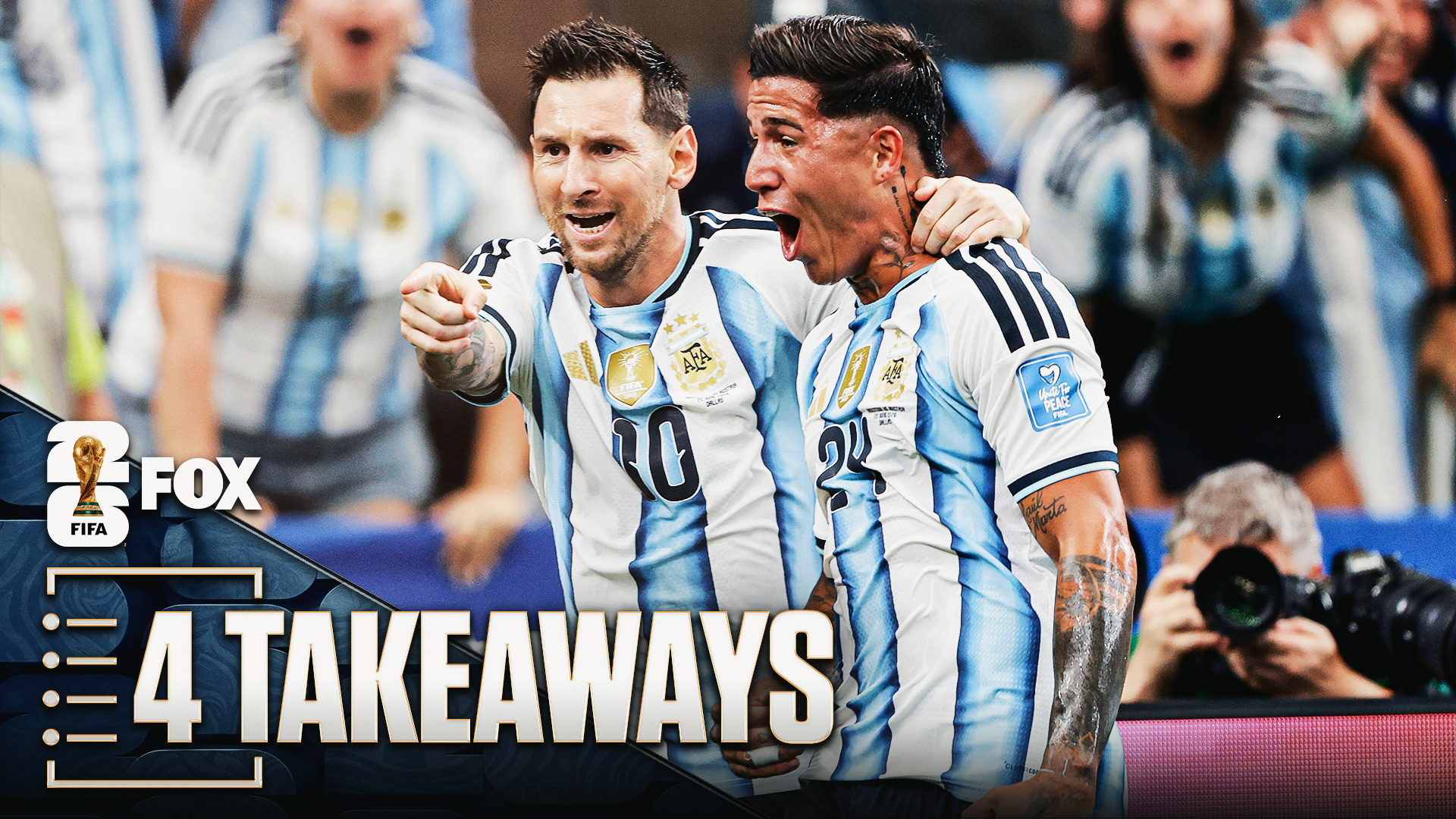
The Great Escape: 4 Takeaways From Argentina’s Frantic Comeback Win vs. Egypt

For 79 minutes, the champions were dead. Argentina trailed Egypt, 2-0, in Atlanta, Lionel Messi had a penalty saved, and the Pharaohs were countering like a team with zero interest in a moral victory. They just had to hang on in the 2026 World Cup round of 16 matchup and keep the defending champs at bay. Then came three goals in 14 minutes, resulting in a 3-2 final and rescuing an Argentina quarterfinal berth from the jaws of defeat. Here are my four takeaways from a game that took years off Argentine lives: 1. Argentina Can Win Ugly. That’s What Champions Do. Let’s not sugarcoat it: Argentina has been suffering. It needed 120 minutes and an own goal to survive Cape Verde. Against Egypt, it was down by two, heavily favored in both games and staring at the exit. It also caught a break — Mostafa Zico had an earlier goal chalked off when VAR found a Marawan Attia foul on Lisandro Martínez a full pitch away from the finish. Even the FOX broadcast squirmed at that one. But here’s the thing about serial winners: They don’t need to be brilliant, they need to be alive at the final whistle. Cristian Romero headed in a Messi cross. Messi equalized. Enzo Fernández buried the winner off a Lautaro Martínez cross, from a counter that started after Mohamed Salah was dispossessed at the edge of Argentina’s penalty box. From 2-0 down to 3-2 up in a flash. Pretty? No. The mark of a champion? Absolutely. 2. Messi Missed A Penalty. Then He Reminded Everyone Who He Is. The penalty miss should have been the story. Mostafa Shobeir dove to his right and stuffed Messi’s spot kick before the first hydration break — his second failed penalty of the tournament (the first player to ever miss two penalties in a single World Cup) after the miss against Austria. A 39-year-old carrying a nation, denied again. You’d forgive him for shrinking. Instead, he curled the cross that Romero converted, then arrived in the 83rd minute to score the equalizer himself — his eighth goal of the World Cup, now all alone at the top of the Golden Boot race ahead of Kylian Mbappé and Erling Haaland. He has scored in every single game Argentina has played this tournament. He broke the all-time World Cup assists record. The man rewrites the record books on nights when everything works and on nights when nothing does. That second kind might be more impressive. 3. The Pharoahs Leave With Their Heads High — And New Heroes. What a ride this was for Egypt. Unbeaten in a group that included Belgium, topped Australia on penalties with a Mohamed Salah panenka, and mere minutes from eliminating the world champions. And they did it in the least expected way: with an aging Salah as facilitator and Omar Marmoush — goalless, assist-less and benched Tuesday after a miserable tournament — reduced to a late cameo. The unheralded names delivered instead. Yasser Ibrahim’s 15th-minute header stunned Atlanta. Haissem Hassan ran the right flank on the counter, setting up Zico’s goal after a Salah surge. And Shobeir was magnificent — the penalty save, plus stops on Rodrigo De Paul, Alexis Mac Allister and Julián Álvarez. Egypt were brilliant on the break. They just ran into the defending champions. It happens. 4. Now, The Uncomfortable Question: What’s Wrong With Argentina? Because something is wrong. The legs looked heavy — understandable after 120 minutes in the Miami furnace against Cape Verde, where Lionel Scaloni described his cramping team as “defending like a cornered cat.” The defense is shakier still. Four goals conceded in two knockout games, Ibrahim rising unmarked, and Argentina caught up-field on transition over and over. Egypt’s disallowed goal and Zico’s finish came from nearly identical counters. Good teams notice patterns like that. Spain-level teams will make them pay. And the dependency problem persists: Messi has eight goals; no teammate has been consistently dangerous. Álvarez keeps flickering without igniting. Romero and Fernández stepped up Tuesday — Argentina needs that weekly, not annually. Champions can win ugly. They can’t keep needing miracles.​Latest Sports News from FOX Sports

Categories
Sports Fox

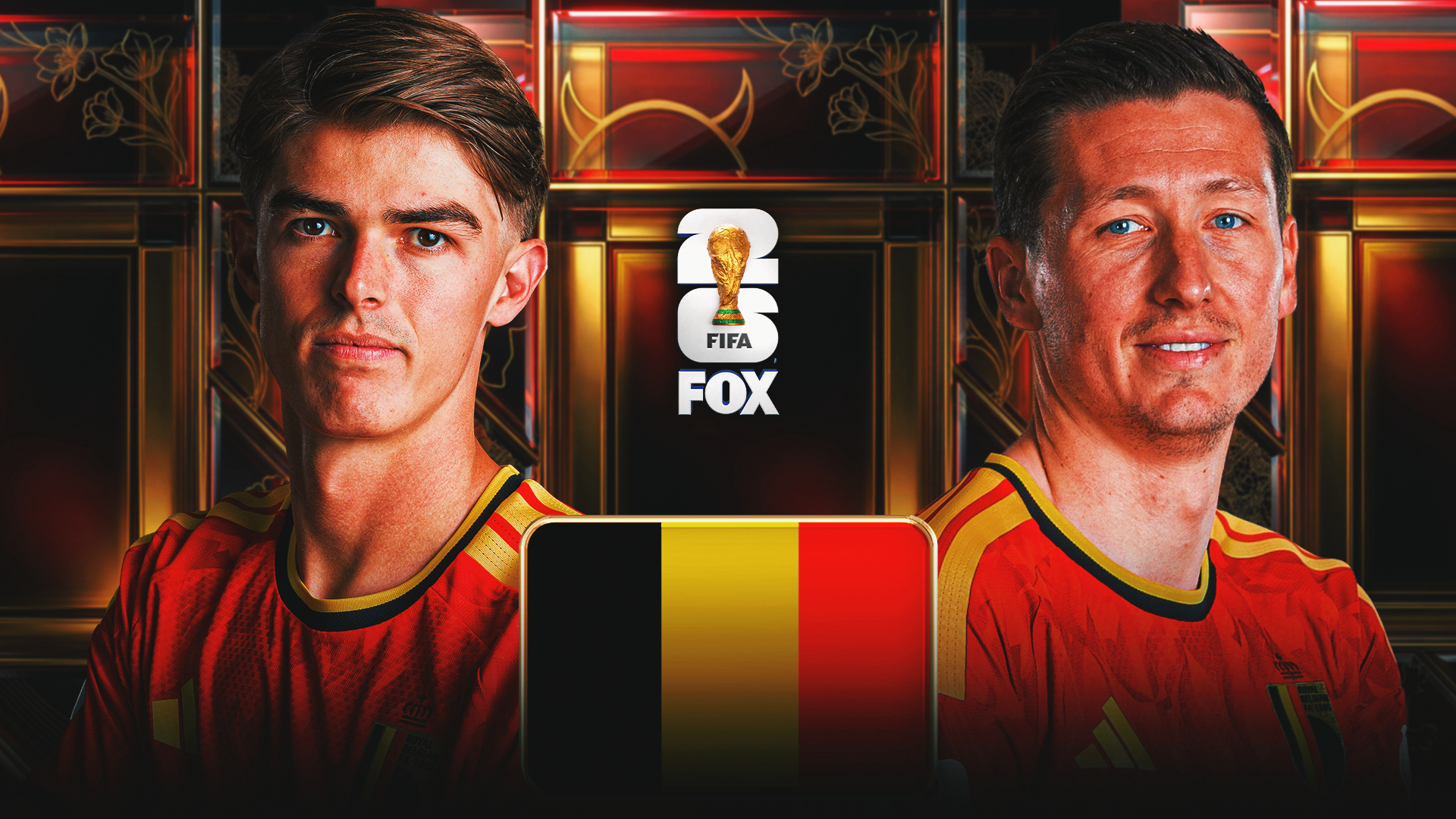
Belgium’s Surgical Dismantling Of The USA Proves Its Ready For The Moment

The good vibes lasted eight minutes for the United States. That’s how long it took Charles De Ketelaere to silence the Seattle crowd on Monday night, and Belgium never gave the noise back. A 4-1 dismantling of the USA wasn’t just a round of 16 exit — it also was one of the worst collective performances by a U.S. men’s national team in recent memory, delivered at the exact moment the program could least afford it. For a month, this team had unified a country. Sold-out stadiums, “Country Roads” echoing throughout the crowd, a group won with a game to spare, a first knockout victory since 2002. Then FIFA’s disciplinary committee overturned Folarin Balogun’s suspension, and the mood around the world curdled overnight. Suddenly the darlings were the villains. Belgium noticed. The Red Devils spent the buildup insisting they weren’t scared of the crowd, the hosts or the circumstances. Then they went out and proved it. Let’s be honest about what happened here: While the U.S. committed self-inflicted wounds, Belgium caused many of them with its perfect game plan. Manager Rudi Garcia’s side played its most complete game in years — and did it after losing Amadou Onana to a serious knee injury in the 21st minute. Most teams wobble when their midfield anchor leaves on a stretcher’s timeline. Belgium simply plugged in Hans Vanaken, who went on to score the third goal. That’s not luck. That’s a team that knew exactly what it was. The way Belgium cut through the American press was surgical. Every time the U.S. stepped up, the ball zipped through the lines like the press wasn’t there. Leandro Trossard tormented the left side all night, and both De Ketelaere goals came from crosses the U.S. defended like strangers introduced at kickoff. The second was the killer: 61 seconds after Malik Tillman’s free kick had leveled the game, De Ketelaere posterized Tim Ream and headed Belgium back in front. Beaten in the air, slow to react, frozen in the moment. The first half told the whole story when Belgium outshot the U.S., 11-2. And remember, nobody was talking about this Belgium team pre-tournament. The golden generation is either gone or in their twilight. It couldn’t beat Egypt in the group. It couldn’t beat Iran. It trailed Senegal 2-0 late in the round of 32 and needed a frantic comeback just to survive. There were rumors of infighting. The No. 9 FIFA ranking felt like a relic. Then Garcia’s team produced this — ruthless, cohesive, cold-blooded — and suddenly a quarterfinal against Spain doesn’t look like a complete mismatch. For the U.S., the occasion was simply too big. You could see it in the nervous first touches, the panicked clearances, the decision-making of a team playing the only top-10 opponent it faced all tournament. And then came the moment that will live in infamy: Matt Freese wandered out of his area, trapped a long ball, hesitated, accidentally kicked the grass and coughed it up to Vanaken, who calmly finished from 30 yards into a net the last defender, Tim Ream, couldn’t reach. It’s the kind of mistake you barely even see on a JV soccer pitch, let alone in a World Cup knockout game on home soil. Romelu Lukaku’s stoppage-time fourth, off yet another giveaway, was just cruelty for the highlight reel. Mauricio Pochettino spent the weekend reminding everyone he’s only “a small part” of this operation. Convenient timing. His most talented American squad ever went out in the round of 16, same as everybody else this century. The U.S. will spend four years having nightmares about this one. But Belgium? It’ll spend Friday in Los Angeles, facing Spain, playing with house money as a written-off team that walked into the loudest building in America and turned the volume all the way down. Overturn that.​Latest Sports News from FOX Sports

Categories
Alaska News

Rare whale carcass is a scientific treasure trove

Carcasses of two rare Ziphius cavirostris, or goose-beaked whales, were discovered June 5 on two Southeast Alaska beaches, one near Yakutat and the other near Sitka at Fred’s Creek cabin on Kruzof Island.

The remains of the whale found near Yakutat were gone before researchers could reach the site. The one found by campers at Fred’s Creek was a pregnant female, and its discovery launched a scientific study.

Under the guidance of the National Oceanic and Atmospheric Administration’s National Stranding Network, Sitka citizen-scientists performed a partial necropsy, and brought tissue samples and the fetus back to Sitka. Volunteer researchers returned to the Kruzof site two days later and retrieved the skull, a fin, and more tissue samples.

The samples and the fetus now lay frozen in back rooms of the University of Alaska Southeast, Sitka campus, on Japonski Island.

Over the past two weeks, volunteer researchers including Dr. Lauren Wild of UAS-Sitka, and Sitka High biology teacher Stacey Golden boiled parts of the adult whale, hoping to clean the bones enough to use them for educational purposes. 

Last Thursday, they took the frozen fetus to the SEARHC health care facility in the former Mt. Edgecumbe Medical Center for a CT scan. Researchers said so little is known about  Ziphius cavirostris, and beaked whales in general, that this fetus could contribute greatly to scientific knowledge. 

Ziphius cavirostris, commonly known as Cuvier’s whales or  goose-beaked whales, are part of a family of 24 deep-diving beaked whale species. Goose-beaked whales hold the record for the longest and deepest recorded mammal dives in the world. 

Data from NOAA documents 77 beaked whale strandings and 24 Cuvier’s whale strandings in Alaska since 2000. There have been 13 documented strandings in Southeast, nine of them since 2000.

Most of the strandings are documented in summer, when many more people are out on the beaches. Often, the species cannot be reached and identified by scientists. According to NOAA, many beaked whales sink rather than strand when they die, making their deaths difficult to track.

 NOAA data show that five similar stranding events have occurred in Alaska since 2000, where two or more Cuvier’s whales have been stranded within a few hundred miles. This includes four Cuvier’s whales found around Kodiak Island in June and July 2004.  

A Necropsy on the Fly 

The five campers who discovered the large, pale body of a whale on the dark sand beach next to Fred’s Creek Cabin on June 5 were Ellie Schmidt, Annika Ord, Anna Sun, Derek Chung, and Jim Bleil. They said it was massive, strange and pungent. 

Ord, who works with the Alaska Climate Adaptation Science Center, connected with NOAA’s National Stranding Network, which monitors and manages stranded marine mammals all over the country. Scientists at the stranding network, which relies heavily on volunteers, could not send anyone out that day, and instead gave necropsy instructions to the campers.

“Honestly  – what were they thinking? We’re a bunch of chumps,” Sun said. “Even though it was gross, it was a really cool opportunity.”

The campers took a folding knife, some towels and a few large sticks, and started poking at the whale carcass.  “We were really concerned that it was bloated.” Sun explained. Decomposing whales have been known to explode, and “that was kind of the underlying fear… Every time we did anything, we said ‘stand back! ” he said.

After a while, the campers got spooked by the circling birds.

“At the end of the day, we’re cutting open a dead body,” Sun said. “Some primal fear was hitting. We got out of there as quickly as we could.”

They called it for the day, planning to bring home the collected tissue sample and leave the rest of the carcass. Fearful of bears, two members of the party tried to use their boats to drag the carcass out to sea at high tide, but did not succeed.

The next morning, two of the campers went on a “whale patrol.” Examining the carcass again, they discovered the fetus. Chung yelled, “It’s a baby – there’s a baby whale in here!”

At the direction of Stranding Network scientists, Bleil and Chung cut the fetus out. The campers carried it to their boat and delivered it to Dr. Wild at UAS – Sitka. “There was an ice chest with a bloody towel over it and some baby whale protruding out,” Sun described. “The weather wasn’t that good, and the baby whale was getting tossed around.” 

Chung struggled to explain how the experience  affected him. “The eagles flying around, the blood, the sounds of the ocean – it’s burned in my mind. I still don’t know, frankly.”

“I felt better that the scientists were excited about it – it gave some type of purpose to the death and the dissection,” Sun said. 

Longest and Deepest Divers in the World 

 Ziphius cavirostris hunts in the complete blackness of the “Midnight Zone.” To get there, the whales release most of the air in their lungs. Then they drop, sinking into the depths of the open ocean. They construct the world around them using echolocation, hunting swarms of squid and deep-sea fish with almost no air in their lungs. 

The deepest known dive for Ziphius cavirostris was 9,816 feet (nearly 2 miles) and the longest known dive lasted 222 minutes. This is deeper and longer than any other mammal on Earth. 

As they age, Ziphius cavirostris heads turn white and their bodies accumulate a patchwork of scars from encounters with sharks and other whales. The whales have a life-span comparable to a human’s (60-65 years) and brains that weigh six pounds (twice as big as a human brain.) Ziphius cavirostris is “cosmopolitan,” meaning they are found all over the world, except the poles. 

Beyond this, little is known about Ziphius cavirostris

CT Scan at Old SEARHC Campus

On June 9 Ord and Schmidt returned to the whale carcass at Fred’s Creek with Dr. Lauren Wild and National Stranding Network volunteers.

They found the carcass in a decomposed state, with signs a bear had visited. The team retrieved skin samples, the stomach and stomach contents (squid beaks), liver, kidney, muscle tissue, intestines, feces from intestinal track, the entire whale head, and a pectoral fin. 

Wild said many of these samples will be sent to Kathy Burek at the Alaska Veterinary Pathology Service, a nonprofit organization that runs toxicology and other tests on marine mammals for the National Stranding Network in Alaska. The organization manages a tissue repository for research use. 

Researchers held whale boilings in the UAS parking lot. They used a crane to place the whale head in a large metal bin on top of a fire. A smaller pot held the pectoral fin. Clad in gloves, scientists and community volunteers boiled the flesh off of the bones in a standard taxonomic practice. These bones will be utilized for educational purposes. 

The next day, the researchers opened up a horizontal freezer in the UAS biology wing. Inside was a white body bag which held the fetus that had been brought back by the campers. The whale fetus was about six feet long and almost two hundred pounds – massive and yet too small and skinny to be a full-term fetus. 

They put the fetus in the back of a truck, and drove it up the road to the old SEARHC Mt. Edgecumbe Medical Center, now closed. There, a group of ten or so scientists, students, and curious nurses waited next to the frozen whale for an ER patient to leave the CT room. Technicians ushered the whale in and put it through the machine. “We don’t have a frozen whale protocol,” one of the technicians said. 

Wild explained that beaked whales are “very poorly understood in terms of anatomy and physiology.” Whales in general are often too large for CT scans. “The opportunity to conduct one on a small fetus is one that got many people in the marine mammal community very excited.” 

In 2018, researchers at San Diego State University waited two years for the opportunity to scan a mink whale in a CT machine usually utilized for solid-fuel rocket engines. This data has been utilized in a number of studies. The CT scan of the fetus will provide cross sectional images of bones, blood vessels, and soft tissues to be utilized by researchers around the country. 

The scanning process took about ten minutes. Then technicians cleaned  the machine and the researchers returned the fetus to the freezer. It will remain frozen until November, when scientists will conduct a necropsy during Whale Fest. 

All of this work was done by volunteers. Team members, including Dr. Lauren Wild, Dr. Ellen Chenoweth, Willa Johnson, University of Alaska researchers, and Stacey Golden, the Sitka High School biology teacher, have conducted many  similar projects.  

 Cause of Death Unknown

The whales have been dead nearly a month, and nobody knows how they died. There was no visible strangling from fish nets, apparent injuries from collisions with fishing vessels, bullet wounds or signs of old age.

Wild said that the brain of the female whale was far too decomposed to check for barotrauma (the bends). She said that evidence of barotrauma “would be a very kind of a smoking gun in terms of cause of death.” It would indicate that something spooked that animal when it was in the middle of a dive and that it came up to the surface too quickly. As of now, the researchers, “don’t have any reason to believe that’s what happened with this animal,” but it is “often a cause of death for beaked whales,” Wild said.

NOAA states that, “Globally, strandings and mass stranding of deep-diving whale species, such as beaked whales, have been causally linked to mid-frequency active sonar (MFAS) use by military operations.”

These mass stranding events often aren’t investigated, but after eight Stejneger’s beaked whales were stranded simultaneously in Adak Island in August 2018 researchers investigated their deaths in a paper published in Marine Mammal Science. They found a possible connection between the deaths and confirmed seismic activity in the region, commonly caused by, among other things, seismic surveys and oil and gas exploration. 

The Daily Sitka Sentinel is awaiting responses from NOAA and the U.S. Navy for the release of any Incidental Harassment Authorization (IHA), Letter of Authorization (LOA), or Final Rule issued to the U.S. Navy or other commercial organizations authorizing the incidental taking of marine mammals in the Gulf of Alaska and/or Inside Passage region of Southeast Alaska that was in effect at any point between April 1, 2026 and June 30, 2026.

The post Rare whale carcass is a scientific treasure trove appeared first on Chilkat Valley News.


Categories
Sports Fox

The Best Matches Of The 2026 World Cup: The Top 5 After Argentina vs. Egypt

With 95 of the record 104 matches at the 2026 FIFA World Cup now complete, there has been no shortage of memorable matches at the tournament – and the best is still yet to come in the final eight matches. But before the tournament turns into a showdown of the world’s soccer giants in the quarterfinals, let’s take a look back at the five best matches of the tournament so far, from the group stage to the round of 16: There was high drama in Toronto, where one of two legends was going to see his World Cup career end. Former Real Madrid teammates Cristiano Ronaldo and Luka Modrić faced off in a tense matchup that had a thrilling second half. Croatia opened the scoring through veteran Ivan Perišić, and it looked like the small nation was going to pull off another upset. Fifteen minutes later, though, Ronaldo stepped up to score his first-ever goal in the World Cup knockout stage with a penalty kick. Ronaldo was taken out in the 81st minute, and then his replacement Gonçalo Ramos stepped forward. The Portugal striker beat three Croatian defenders to head home a stoppage-time winner, and then Croatia had a potential equalizer ruled out after a lengthy VAR review. A draw from this game meant both teams would advance from Group J. It was the final window of group-stage games, and it sure delivered. The match was already 2-2 with Algerian winger Riyad Mahrez finding himself through on goal in the 93rd minute. The former Manchester City star called the situation “awkward,” but he did what his instincts told him to, which was to score. Both teams’ benches went back and forth before Sasa Kalajdzic tied the game again in the 96th minute. It was a situation that could only be seen at the World Cup. Ultimately, both teams were through and happy, but they made sure it was as difficult and dramatic as possible. The first of two Argentina matches on the list (spoiler), the reigning champions were in trouble late before getting going against Egypt in the round of 16. For the first 75 minutes of this matchup, Egypt looked like the better team. Center back Yasser Ibrahim scored off a set piece in the 15th minute before Lionel Messi missed a penalty six minutes later. Mostafa Ziko had a goal chalked off after a VAR review in the 58th minute, but he scored again nine minutes later to double the Pharaohs’ lead. Then, Argentina got going. Messi became the all-time leader in assists at the World Cup when his cross was headed home by center back Cristian Romero. Four minutes later, the star man himself made it 2-2 with a thunderous strike. The match-winner came in the 92nd minute, when midfielder Enzo Fernández met Lautaro Martinez’s cross brilliantly. The Chelsea man had momentum going away from the goal but got enough power on a header that was put perfectly in the far corner. England vs. Mexico in Mexico City is a matchup and venue that only the World Cup could give us – and boy, did it deliver. The atmosphere was electric before the match, with songs from England being roundly booed by the Mexican fans at the Azteca. You could tell supporters of El Tri were ready for an epic evening. Playing at higher than 7,000 feet of altitude for the first time, England was not intimidated. Jude Bellingham opened the scoring with a header and then added a second two minutes later. Julián Quiñones got one back for Mexico before halftime. In the second half, England defender Jarell Quansah was sent off for a high tackle. Six minutes later, though, Harry Kane buried a penalty kick to double England’s lead. Raúl Jiménez scored a penalty of his own in the 69th minute, and then the pressure was on. England, down to 10 men, defended like heroes for the final 20 minutes plus stoppage time, clearing every cross that Mexico sent in the box and doing all it could to maintain its lead. Ultimately, an incredible night in the Mexican capital for England supporters ended with the Three Lions serenading them with the Oasis hit, “Wonderwall.” A match no one will ever forget. Cape Verde was a fun story in the group stage, starting its tournament with a 0-0 draw against Spain before drawing two more games against Uruguay and Saudi Arabia. That was enough for second place in Group H, which set up a matchup with the reigning world champions. Few gave Cape Verde much of a chance. It would have been the biggest upset in the World Cup knockout stages according to FIFA’s World Rankings, which were introduced before the 1994 tournament. Early on, it did not look like an upset was on the cards. Lionel Messi scored his seventh goal in four games in the 29th minute, and there was a sense of inevitability to the game. Cape Verde midfielder Deroy Duarte stunned the stadium, though, when he equalized in the 59th minute. From there, the African island nation held strong to force extra time, but Argentine defender Lisandro Martínez struck in just the second minute of extra time. From there, we witnessed the best moment of the tournament. In the 103rd minute, Cape Verde winger Sidny Lopes Cabral picked up the ball on the left wing, cut inside on his right foot and delivered a stunning strike that went right in the top corner. Miami Stadium, and the world watching, could not believe what had just happened. Argentina defender Cristian Romero delivered a header that ultimately deflected off Cape Verde defender Diney Borges for an own goal in the 111th minute that gave Argentina the win.​Latest Sports News from FOX Sports

Categories
Alaska News

State closes summer Dungeness fishery early amid weak harvest

Southeast Alaska’s summer commercial Dungeness crab season will close three weeks early, after Alaska Department of Fish and Game’s harvest estimate came in the lowest in at least 25 years.

The department announced June 29 that the summer season will close at 11:59 p.m. Saturday, July 25, after allowing a total of 40 days of fishing.

Crab gear must be removed from the water entirely by 11:59 p.m. Aug. 1, though pots may be stored in closed waters for up to seven days if all doors are secured fully open and bait is removed.

Whether there will be a fall season — and how long it will run — is undetermined. Department shellfish biologist Joe Stratman, in Petersburg, said that decision will come after department staff finish reviewing port sampling and fish ticket data, likely by the end of July.

This year’s harvest estimate looks to land just above 1.5 million pounds, near the bottom of a 1.5-million to 2.25-million-pound range laid out in regulation.

Coming within that range means the summer season can be closed after 28 days. The department opted for 40 days, the same call the department made the last time an estimate landed in a similar spot, in 2017.

A projection below 1.5 million pounds would have required an even earlier close, as few as 21 days, and no fall season at all. That threshold has never been crossed, though this year came the closest yet.

The numbers behind the estimate reflect a slow start to the season. Fishermen landed 388,000 pounds in the fishery’s first seven days — the lowest first-week total the department has recorded since 1994, and well below the previous 10-year average of about 860,000 pounds.

Stratman said the number of permit holders who fished this summer’s opening week, 120, also came in below the 10-year average of 161.

He said fishing was reported as particularly poor around Petersburg and Wrangell. He cautioned that pinpointing a single cause is difficult in a fishery managed without independent abundance surveys.

Molt timing, which varies year to year and place to place, could be a factor, he said. So could below-average recruitment of legal-size crab into the fishery.

He also acknowledged a longer-running trend: The spread of sea otters into inside waters. Areas such as Duncan Canal and the Kake area, he said, now see very little crabbing reflected on fish tickets — a change he attributes in large part to sea otters occupying those formerly abundant crab areas.

Since the management plan took effect in the early 2000s, the department has had to invoke its harvest-reduction measures five times: 2013, 2017, 2022, last year and this year. For the first time, the trigger has come in back-to-back seasons.

Last year’s harvest landed near the opposite end of the range, close to 2.21 million pounds — near enough to the 2.25-million-pound ceiling that the department ran a full-length fall season.

“I think people are really hoping things get better,” Stratman said. He added that the department has, in past years, pointed to sea otters as a factor reshaping where the fleet can fish, while stopping short of linking otters directly to region-wide harvest declines — a position he said is becoming harder to hold as the fishery continues operating on shrinking grounds.

As with past early closures, Stratman said the department is giving more than three weeks’ notice ahead of the closure, in part because many crab permit holders also fish salmon and need time to pull gear. Closing the fishery on a Saturday is timed to avoid overlapping with gillnet fishery openings, which typically run Sunday through midweek.

The post State closes summer Dungeness fishery early amid weak harvest appeared first on Chilkat Valley News.