The next time you take a cruise to Juneau, Alaska, you’ll have plenty of restaurants, cafés, and distilleries to choose from. Here are some recommendations.

Mashed – Fast Food, Celebrity Chefs, Grocery, Reviews








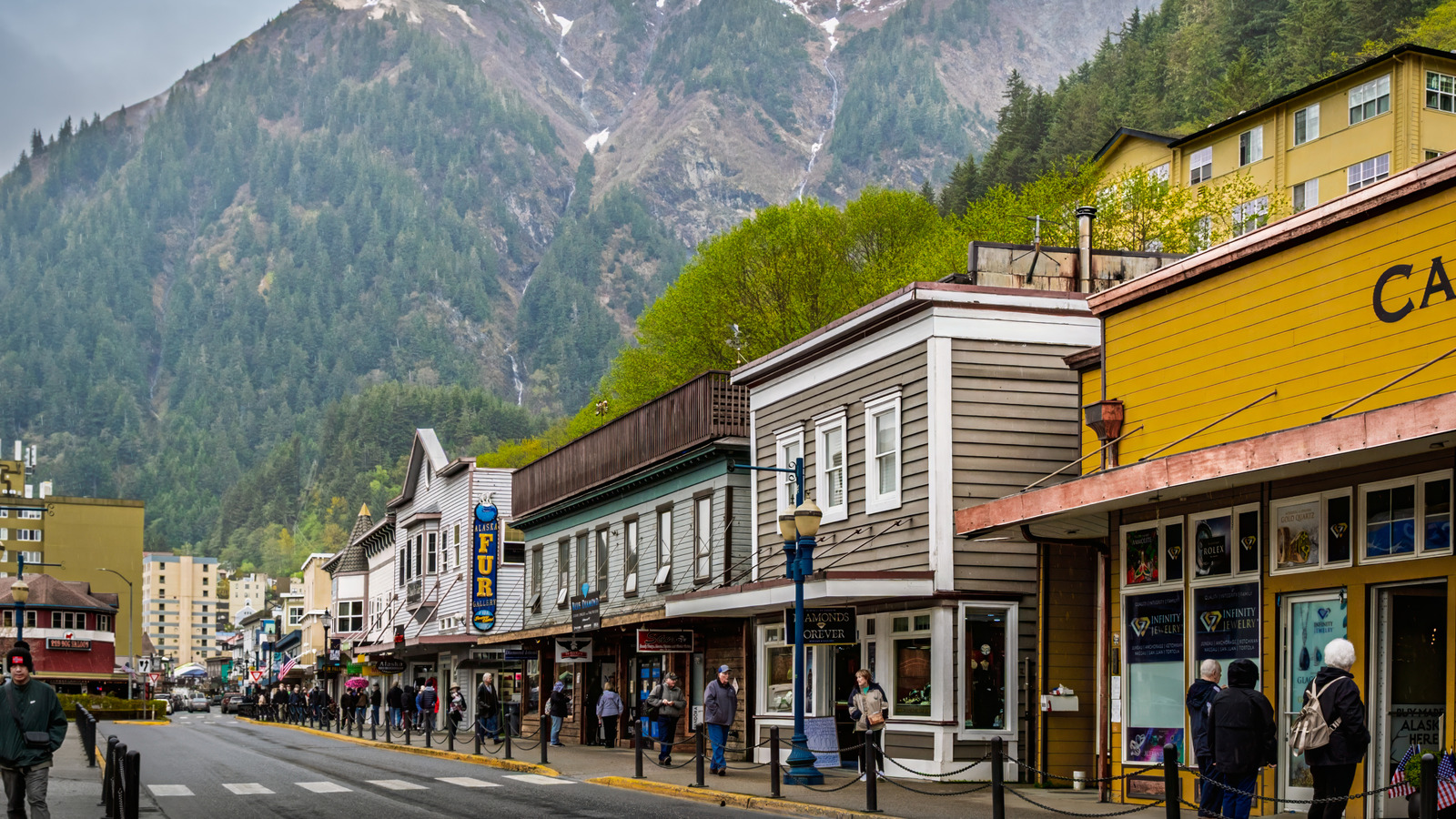
The next time you take a cruise to Juneau, Alaska, you’ll have plenty of restaurants, cafés, and distilleries to choose from. Here are some recommendations.
Mashed – Fast Food, Celebrity Chefs, Grocery, Reviews

Buds of marijuana on display inside Mother Earth Wellness in Pawtucket, Rhode Island. (Photo by Christopher Shea/Rhode Island Current)
Alaskans who have been convicted for low-level marijuana possession will be able to apply to keep their records confidential so they do not appear in background checks, under a new law that takes effect in 2027.
The change is part of a wide-ranging omnibus crime package that was approved by the Alaska Legislature and allowed to pass into law without Gov. Mike Dunleavy’s signature in June.
Alaskans are eligible if they have been convicted of possessing less than an ounce of marijuana, were 21 years or older at the time of the arrest, and were not convicted of any other criminal charges in the case.
Individuals must make a request to the Alaska Department of Public Safety that those records be kept confidential on background checks.
Marijuana is legal in Alaska after voters approved its cultivation, sale and recreational use in 2014. Alaskans are permitted to possess up to one ounce of marijuana for personal use in public, and up to four ounces in a private residence. Larger amounts, intent to distribute or large unlicensed cultivation carry a variety of criminal penalties, fines and possible jail time.
While personal use is currently legal, the bill’s sponsor, Rep. David Nelson, R-Anchorage, said those criminal records can still carry stigma and create barriers to opportunities.
“Hardworking Alaskans are still facing barriers to employment, housing, licensing, and volunteer opportunities, leaving them less able to contribute fully to their community,” Nelson told lawmakers at a February hearing. He noted that under the bill Alaskans can keep those records confidential while still allowing government agencies access for background and statistical information.
In 2023, the Alaska Supreme Court ordered low level marijuana convictions to be removed from the public CourtView system, while still being available in courthouse searches and criminal background checks. The move was similarly prompted to help people avoid negative consequences from convictions that took place before marijuana was legalized in Alaska.
Officials with the Department of Public Safety said in a fiscal note the number of requests to keep low level marijuana conviction records confidential “is anticipated to be high.” They said change will require creating a new criminal justice technician position to search thousands of criminal conviction records and restrict their release. They estimated the cost to implement the bill at over $144,000 in the first year, and over $126,000 in the second year of implementation.
SUBSCRIBE: GET THE MORNING HEADLINES DELIVERED TO YOUR INBOX.

Inevitable is such a special word. It is the definition of the unavoidable, the inescapable, something where, no matter what you try and do, you simply cannot prevent the outcome. It is the wall of fate crushing against you, without hope or desire. But the word inevitable is also about the eternal because it is the ultimate act of strength that lives forever in the psyche of the recipient, knowing that what’s about to happen, will indeed occur and not only can you not stop it, you will never forget it. That’s Lionel Messi. Eternal. Inevitable. The Argentina captain led his team to a remarkable, almost unbelievable comeback as the defending champion was 2-0 down against a heroic Egypt and achieved the ultimate remontada. It was the performance of a man who, at 39 years old, does not know how to end a chapter. But I will also say that, Messi aside, this was also about his teammates and how their intoxicating efforts to unite and overcome adversity shined through. Messi was their hero, but this victory took an army to support him. More on that in a moment. On Tuesday in Atlanta, Egypt and Mohamed Salah — a legend in his land and beyond — fought like warriors and had this been a fairer story, perhaps we would have seen them as victors. Hossam Hassan’s side deserved something out of this grueling battle. And there is an argument to be made about its disallowed goal and how it should have stood based on the run of play. But regardless, Egypt did score again and created a 2-0 lead, thanks to some mesmerizing counter-attacking work from the aforementioned Salah and Haissem Hassan, who quite literally gave it his all. Then there’s the talking point of the actual performance. Argentina, once again — just like Cape Verde poetically highlighted and exploited — was not good. It lacked so much fluidity, and Messi was also struggling against a resilient defensive line and missed a penalty attempt, making him the first player in World Cup history to miss two penalties in a single tournament (outside of shootouts). Egypt, leading 2-0, was staring at only 10 minutes remaining until it could reach its greatest ever victory and a historic spot in the quarterfinal stage. It could almost open the doors to the promised land. It was there for the taking, and had it ended in such a manner, no one would have criticized the win. We would have accepted the outcome, even Argentinians. In fact, it was already accepted as towards the latter stages of the match, before Argentina scored the first goal, you could practically hear a pin drop from the Argentina faithful. They had almost understood the outcome. They had welcomed the ending. Argentina was about to lose its right to defend its World Cup. But that’s not how Messi operates. He doesn’t accept a script he doesn’t author, and once again, as consistent as the sunrise or the sounds of an ocean, the inevitable happened. He rose. After dazzling inside the box over and over again in the second half, albeit with no outcome, the first uppercut finally came through in the 79th minute, as his assist for Cristian “Cuti” Romero’s goal became the first sign of life. The crowd stood again, screaming and chanting, knowing life had returned. The inevitable was slowly creeping behind the door. Four minutes later, the ball pinged around inside the box, and Gonzalo Montiel rescued it to find Leo, who smashed it in after bouncing off the crossbar. This is when the stadium actually vibrated and shook with a pulsating heart as Argentina was level. The narrative of the story is also about the heroes we don’t remember, and that includes Leandro Paredes, who made a crucial stop from an Egyptian counter. Moments later, Lautaro Martínez found Enzo Fernández for the winner, and just like that, Argentina had climbed the mountain and planted its flag. The whistle blew. An emotional Messi began to cry. His teammates rallied around each other, consoling his emotions and celebrating his accomplishments. Messi’s tears were not just about the physical and mental extremities that were necessary in order to create this incredulous evening of pure magic. The tears also represented the fact that he was still alive, both at this World Cup and in the arms of his beloved Argentina. The emotion represented the exhaustion as we all witnessed, once again, an unforgettable match. A tale for the ages. A story that will continue as Lionel Scaloni’s side continues to defend its title. By the end, the sentiment was so beautifully vivid for every Argentinian and most notably, Lionel Messi. By the end, they tossed him in the air to celebrate a victory that will live with them forever. If you ask me, I think that the tears, the emotions, the sacrifice, the undying raw display of tired catharsis — all of it is just the proverbial residue of something much stronger at play: the inevitability of Lionel Messi.Latest Sports News from FOX Sports

A vehicle drives past the trans-Alaska pipeline near Galbraith Lake on the Dalton Highway, Alaska. Pump Station 4 is visible in the background. (BLM Alaska photo by Craig McCaa)
During the current discussion about the public-private Alaska liquefied natural gas project, known as Alaska LNG, lawmakers and the public have focused on the many unknowns surrounding the financing and cost of the project. But a more important question may be who ultimately controls whether the project gets built.
The three major North Slope oil and gas producers – ExxonMobil, ConocoPhillips and Hilcorp Alaska – still hold all the cards, as they have for decades. They control the gas and have the financial resources, technical expertise and marketing capacity needed to build a project of this scale. The bottom line is clear: the companies that control the gas can also control the project if it is in their interest to do so.
For now, the producers have agreed to supply gas to the Alaska LNG project through confidential gas sales precedent agreements — sale terms and any conditions for reaching a final shipping contract are unknown. Historically, the gas producers have declined to supply gas for a project in which they did not have an ownership stake and that did not meet the terms they requested from the state.
In 2009, ExxonMobil conditionally partnered with a private developer on a different North Slope natural gas pipeline proposal. In a Petroleum News article at the time, an ExxonMobil representative said full producer participation depended on the state providing “predictable and durable fiscal terms.” As the failed 2006 Stranded Gas Fiscal Contract and the 2014 Alaska LNG Heads of Agreement between the state and producers show, “predictable and durable fiscal terms” have meant fiscal certainty, tax reductions, regulatory certainty and other conditions the producers believe are in their interest. For example, the property tax reduction legislation now before the legislature is one of the conditions producers have previously sought before committing to a gas project.
The Alaska LNG public-private project structure does not preclude the producers from joining the project in the future and assuming control over its development . According to an April 2025 Alaska Gasline Development Corporation fact sheet, ExxonMobil, along with Goldman Sachs, introduced AGDC to the private developer Glenfarne. ExxonMobil may have an incentive to control a gas project because it holds the majority of rights to the gas-rich Point Thomson field. If Alaska LNG cannot move forward without greater producer involvement, ExxonMobil, ConocoPhillips and Hilcorp Alaska will be in a position to decide whether, when and on what terms they step in.
Unless Glenfarne and AGDC have found a solution that has eluded other gas project proponents over the years, it is doubtful the Alaska LNG project can succeed without the producers taking on a larger role beyond supplying gas. Before advancing legislation that could shape Alaska’s finances and energy future for years to come, lawmakers should require full disclosure of the North Slope producers’ expected role in Alaska LNG, the terms they seek from the state and the risks the state could be asked to assume. Many Alaskans want a successful gas project, but it should not come at the cost of giving away much needed public revenue or making concessions to the detriment of Alaskans’ interests.
SUBSCRIBE: GET THE MORNING HEADLINES DELIVERED TO YOUR INBOX.

We’ve compiled a list of fast food chain sandwiches that all cost under $5, including burgers and anything else served between two pieces of bread.

Food Republic – Restaurants, Reviews, Recipes, Cooking Tips

Dining out is becoming. more and more of a luxury nowadays. Between rising costs and reduced food quality, customers are taking notice.

Mashed – Fast Food, Celebrity Chefs, Grocery, Reviews

If you decide to buy a gas grill, you will also need a propane tank to fuel it for your summer cookouts – but how long can you expect it to last?

Food Republic – Restaurants, Reviews, Recipes, Cooking Tips

Folks in the 1900s loved this popular egg sandwich. One of its key ingredients is largely frowned upon today, but it used to be a household staple.

Mashed – Fast Food, Celebrity Chefs, Grocery, Reviews

In June, Jelly Roll and Bunnie Xo shocked fans when they announced they were divorcing. Days later, Bunnie Xo made headlines again after releasing a lengthy episode of her Dumb Blonde Podcast titled “The Divorce,” in which she offered an unfiltered look at what led to the split.
Throughout the episode, she opened up about the reasons behind their divorce, shared details of their divorce agreement and discussed what life after marriage might look like. She even revealed some of the direct messages she’d received from potential suitors and candidly addressed how she felt about Jelly Roll re-entering the dating scene.
Perhaps the biggest revelation, however, was that despite ending their marriage, the former couple still planned to have a baby together and co-parent their future child.
“I love him and you guys are going to be shocked to hear this, but we’re still having a baby,” she shared.
“We’re still having a baby together.”
Now, less than a month after the episode was released on YouTube and across Bunnie Xo’s social media platforms, “The Divorce” has mysteriously disappeared without explanation, leaving fans wondering why it was removed.
Jelly Roll initially appeared to support the podcast’s release, even encouraging fans on social media to listen to the episode if they wanted to learn more about the couple’s split.

At this time, neither Bunnie Xo nor Jelly Roll has addressed why the episode was removed, and no reason has been given for its disappearance.
Court documents obtained in Williamson County, Tennessee, reveal that Jelly Roll filed for divorce on May 18, with the couple’s official date of separation listed as May 9. The filing cites “irreconcilable differences” as the grounds for the divorce.
According to Bunnie Xo, the legal process has moved very quickly. During the since-deleted podcast, she shared that the two were working through the divorce amicably.

“My husband and I are ending this marriage on the best possible terms that you could ever have a divorce,” she said. “We’re literally settling our divorce and we’ve done it in like what, three weeks, two weeks?”
The pair first crossed paths in 2015 at one of Jelly Roll’s concerts on Fremont Street in Las Vegas, where they quickly formed a strong connection. Less than a year later, they tied the knot on August 31, 2016.
The post Bunnie Xo’s Candid Divorce Podcast About Jelly Roll Has Mysteriously Disappeared From The Internet appeared first on Country Now.
Country Now

Blazing summer temperatures should come with hot commodities at the store. Judging from customer reactions, Sam’s Club is doing its part with these items.

Mashed – Fast Food, Celebrity Chefs, Grocery, Reviews