If you’ve heard of this Memphis burger joint, one that uses the same grease it did as the day it first opened, you’ll know it’s an institution.

Food Republic – Restaurants, Reviews, Recipes, Cooking Tips









If you’ve heard of this Memphis burger joint, one that uses the same grease it did as the day it first opened, you’ll know it’s an institution.
Food Republic – Restaurants, Reviews, Recipes, Cooking Tips

OTTAWA — Mark Carney may be Canada’s loudest booster at the World Cup, but some of his countrymen fear he may be hurting more than helping — because he always does when it comes to sports.
In March 2025, the new prime minister joined the Edmonton Oilers for a pre-game skate. That night the Oilers fell to the Winnipeg Jets, followed by a wave of injuries on the team. Former Oiler and “Spittin’ Chiclets” podcast host Ryan Whitney took to X: “The Carney Curse is real for Edmonton. What the hell just happened. Guy is on the ice with the Oil this morning and now everyone is injured.”
Now some Canadians are worried that their prime minister has brought the “Carney Curse” to the World Cup, blaming him for Canada’s defeat against Switzerland on Wednesday. His country’s only only goal coincided with a moment that Carney left his box seat at Vancouver’s BC Place.
For a brief, glorious moment last week, the Ottawa fishbowl wondered if the curse had been broken. Carney skipped Canada’s World Cup opener against Bosnia-Herzegovina. But then, after days of anxious whispers over whether he’d jinx the squad, the prime minister witnessed Canada thrash Qatar. If Canada had beaten or tied the Swiss, the team could’ve played as many as two elimination games in Vancouver. With the loss, they fell to runner-up — and a knockout-round game in Los Angeles against South Africa on Sunday.
Canada’s men’s soccer team joins an ever-growing list of inadvertent “victims” of prime-ministerial fanhood, including: the Toronto Blue Jays, who lost the World Series after Carney visited the team; the Canadian women’s rugby team, for whom he traveled to the United Kingdom to cheer on at the World Cup last summer; and the Montreal Canadiens, whom he dubbed “Canada’s team” during the Stanley Cup playoffs.
Politics

 Nina Dobrev and Paul Wesley are bringing their onscreen chemistry back from the dead.
The former Vampire Diaries costars confirmed they are set to team back up for an upcoming TV series based on…
E! Online (US) – Top Stories

(The Center Square) – Justice Colleen Melody says voters should consider her appellate experience as they weigh their options for the Washington Supreme Court this August after she joined the bench last January following her appointment by Gov. Bob Ferguson.
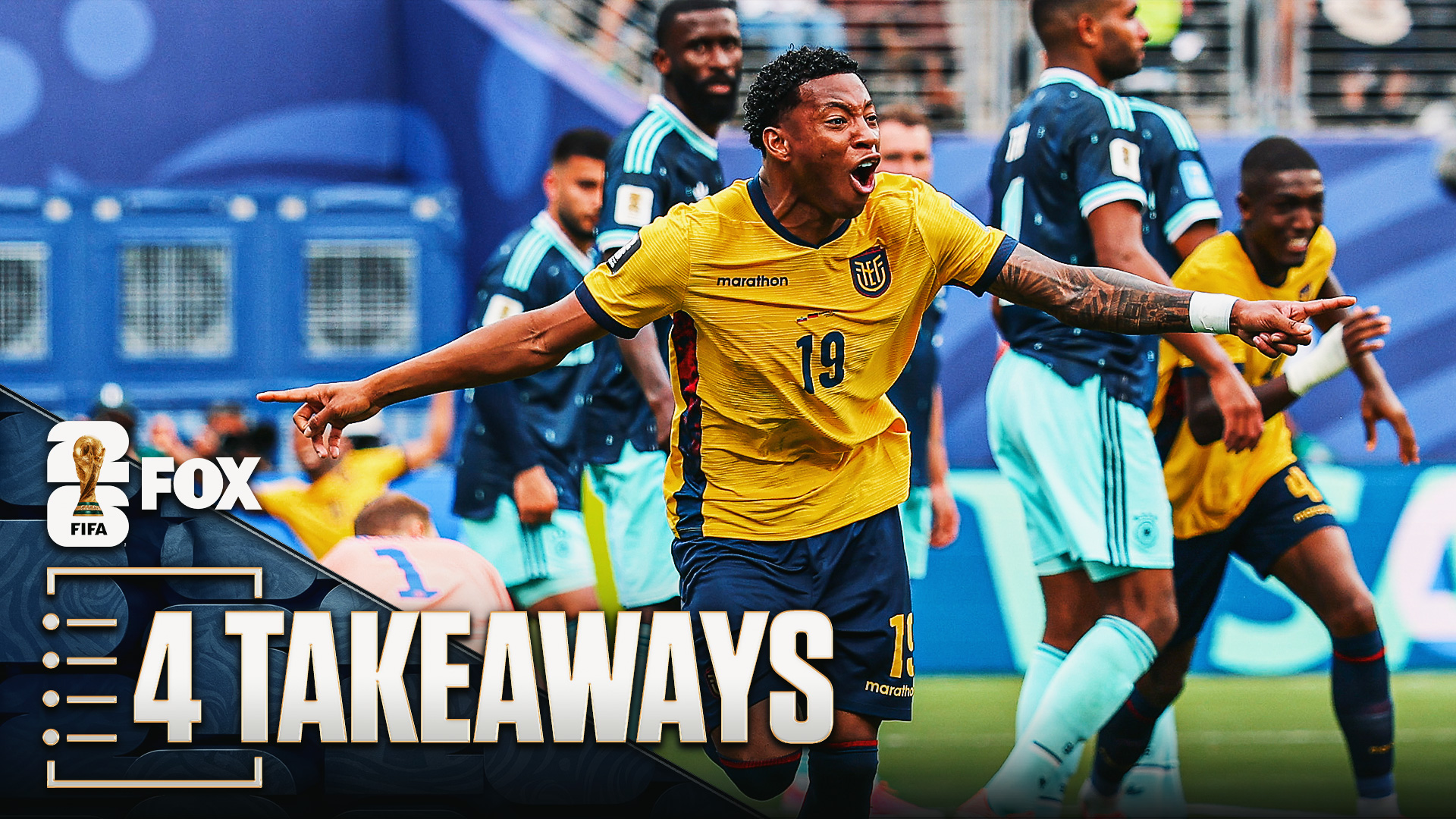
Germany still tops the group. Ecuador finally found its finishing touch. Germany lost, and it cost the team nothing. Ecuador won, rescuing its World Cup dreams. On a hot Thursday afternoon at the New York New Jersey Stadium, Ecuador came from behind to stun a strong Germany side, 2-1 — a result that means wildly different things to the two teams trudging off the same field. Julian Nagelsmann’s side top Group E regardless. Sebastián Beccacece’s side leaves with its first goals of the tournament and is currently the best third-place team. Here are my takeaways: 1. Germany Top The Group — And Can Afford A Night Like This Here’s the perk of sealing your group early: you can lose like this and barely feel it. Top spot was secure before kickoff, so Thursday was a free hit, and Julian Nagelsmann’s side played like a team that knew it. It struck inside two minutes, then eased off. The press loosened. Ecuador pounced. The positives remain real, though. Seven goals past Curaçao. A grown-up win over Ivory Coast. Tons of attacking midfield talent. The back line wobbled, the finishing vanished and the complacency will gnaw at Nagelsmann all the way to the round of 32. But nobody lifts the trophy in June. You qualify, you learn, you move on. Germany has the first part down. 2. ¡Sí Se Puede! Ecuador Found Its Goals At The Perfect Time Two games, zero goals. Then the group winners rolled into town, and Ecuador remembered where the net was. That’s its whole tournament. A 1-0 loss to Ivory Coast, which it was incredibly wasteful against. A toothless 0-0 draw with Curaçao. An attack allergic to the final third. And then, against Germany of all teams, Nilson Angulo leveled inside 10 minutes, and Gonzalo Plata smashed in the winner with 13 to play, nodded down by substitute Kevin Rodríguez. Sebastián Beccacece always had the spine. Moisés Caicedo and Pedro Vite ran the middle. Vite set an Ecuadorian record for tackles in a World Cup match. The missing piece was a punch up top, as the living fossil Enner Valencia feels like a relic from the past. But in the most important game of the group, the squad collectively stepped up. Third place, four points, and — pending the other groups — a ticket to the knockouts. Sí se puede, indeed. 3. Florian Wirtz, Jamal Musiala, And A Reunion Worth Watching Remember when Florian Wirtz picked Liverpool over Bayern Munich partly to avoid sharing the No. 10 role with Jamal Musiala? Now they share it with Germany — the most tantalizing thing Nagelsmann owns. Thursday was a tease. Wirtz slid one gorgeous ball through to Musiala that Joel Ordóñez blocked superbly, then coughed up possession in the exact spots that made his Liverpool autumn such a slog. That’s the subplot. His £116 million move began miserably — no goal until after Christmas, mockery over the fee, the lot — before he roared back in the spring to look like himself again. The World Cup is the stage to finish that comeback. Pair a rediscovered Wirtz with a fearless Musiala between the lines, and Germany has a duo nobody wants to defend. A glimpse today. Imagine the team at its best for a full 90 in a game that actually matters in the knockouts. 4. Ecuador Didn’t Just Win — It Defended Like It Meant Everything Beating the group winner takes more than two good finishes. It takes a back line willing to throw itself in front of everything — and Ecuador had exactly that. Once Gonzalo Plata’s winner landed, the final stretch turned into a siege. Germany piled forward in waves; Ecuador refused to break. Willian Pacho, Joel Ordóñez and Piero Hincapié — three of the most composed young defenders at this tournament — blocked, headed and cleared everything coming their way. In front of them, Pedro Vite ran himself into the ground for nine tackles, the most by an Ecuadorian in a World Cup match on record and the joint-most by anyone at this one. Sebastián Beccacece spent two games hunting a goal. On Thursday, his side showed the other half of a knockout team: the intestinal fortitude to defend such an important lead against one of the best teams in the world.Latest Sports News from FOX Sports
By: James Brooks, Alaska Beacon
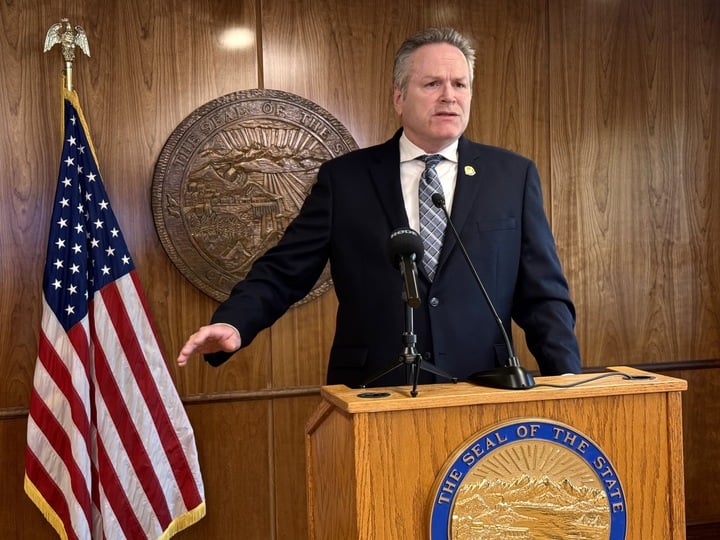
Alaska Gov. Mike Dunleavy canceled funding increases for a variety of state health and education programs on Wednesday, vetoing a combined $57.8 million in general-purpose money from state budget bills passed by the Legislature.
Under the Alaska Constitution, the governor has the ability to eliminate or reduce individual line items from the budget. Dunleavy struck $20 million in extra funding for cities and boroughs, $11.25 million to increase Medicaid payments to health care providers, $6.4 million to help child care centers find workers, $2 million for the state’s seafood marketing program, $3 million for tourism marketing, and more.
The governor did not veto most of a $300 million one-time bonus that lawmakers approved for Alaska’s public schools. He did cancel $3.7 million for Head Start grants, not quite a fifth of the proposed grant budget, and funding for a proposed public education spending adequacy study.
The governor’s vetoes were spread across the state’s operating budget, capital budget and mental health budget, the three bills that determine funding for state services in the fiscal year that starts July 1 and ends June 30, 2027.
It is the lowest amount of vetoes of any year in Dunleavy’s tenure. Last year, the governor initially vetoed a higher amount, but it was reduced after a successful veto override by lawmakers.
Altogether, Alaska will spend about $6.6 billion in general-purpose money during FY27, a figure that’s up by almost $600 million from the budget approved in spring 2025, according to figures published Wednesday by the Office of Management and Budget.
While high oil prices brought in more revenue than anticipated, they also burdened state agencies, local government and school districts with extra costs.
In response, Dunleavy said, the approved budget includes some extra funding for school districts around the state that are coping with high energy costs.
“While the state realized additional revenue, those same price pressures placed a real burden on school districts, particularly in rural Alaska. This budget makes targeted, responsible use of a temporary revenue increase to stabilize school facilities and address energy costs,” he said in a statement.
Earlier this year, legislators and the governor enacted a supplemental budget bill that added hundreds of millions in general-purpose spending to the FY26 budget; the FY27 supplemental will not be decided until next spring.
When federal funding and fee-funded programs are included, the FY27 budget totals about $16.4 billion, including $782 million earmarked for the Permanent Fund dividend. Overall spending is up by about $1.2 billion from last spring.
Entering the year, Dunleavy proposed to spend more than $1.5 billion from state savings accounts in order to pay a Permanent Fund dividend estimated at about $3,800 per recipient.
Legislators turned down that proposal, ultimately deciding on a $1,200 payment that includes a $1,000 dividend and a $200 one-time bonus.
Lawmakers avoided spending from savings altogether because the Iran War increased North Slope oil prices in March.
Those high prices caused Alaskans to pay more individually, but they also generated hundreds of millions of dollars in extra revenue for the state treasury.
Kansas City Mayor Quinton Lucas danced with Netherlands fans to their famous song “Links Rechts” ahead of the Orange Walk in Kansas City’s Power & Light District on Thursday. The Dutch supporters — along with the Scots and the Norwegians — have been some of the most exuberant in backing their team around the U.S. One local told the Kansas City Star that the experience topped a Kansas City Chiefs Super Bowl parade.
Politics

(The Center Square) – As taxpayers continue subsidizing higher education and student loan debt at $1.8 trillion, more American families are planning and saving for college, according to a new Sallie Mae report.
Some of soccer’s biggest names have come to play at the World Cup: Lionel Messi, Kylian Mbappé, Erling Haaland, Vinícius Júnior and now even Cristiano Ronaldo have left their mark on the score sheet.
But one key player who loomed over just about every step of pre-tournament preparations has been notably invisible: Donald Trump.
Pre-tournament fears that the American president would trample on the soccer jamboree have, so far, proved largely unfounded after the first two weeks of competition. Trump has yet to attend a match, and even as the U.S. team mounts its best World Cup performance in decades he has done little to claim the success as his own.
Aside from persistent complications surrounding the Iran squad’s entry and exit to the U.S. for games, and the ban on a Somali referee from entering the country before the tournament started, political incidents involving the Trump administration and soccer — or leaders of other World Cup countries, including the neighboring co-hosts with whom he often spars — have been few and far between.
No ICE arrests around matches. No heavy-handed policing like soccer fans sometimes suffer in Western Europe. No beef between Trump and Democratic leaders of cities and states where some of the tournament’s highest-profile matches have been played.
As one European-based senior sports executive told POLITICO last year about the administration and the World Cup, “Why would they want to f—k it up?”
Secretary of State Marco Rubio attended the USMNT’s opener against Paraguay in Los Angeles, while Health and Human Services Secretary Robert F. Kennedy Jr. — along with other senior Cabinet officials — was at the American match vs. Australia in Seattle. Though Trump himself hasn’t been to a game yet, he did send the U.S. squad a message of support at the start of the tournament.
In an interview last week with POLITICO, Massachusetts Democratic Gov. Maura Healey said her administration had worked with the U.S. government “around transportation funding, security funding. That’s the way it should be. There should be that kind of work and coordination.”
Trump allies are on the same page as the tournament progresses serenely through the group stage, beyond continued griping about high ticket prices and transport to and from some stadiums.
“It’s been really good to see the coordination, certainly from a law enforcement perspective,” said Andrew Giuliani, head of the White House’s World Cup task force, as he praised cooperation with police and security services in blue states like New York, New Jersey and California, where the administration doesn’t “agree eye to eye with the mayors and the governors.”
“It’s fun to see moments where the country can come together as well, and I think this is one of those great moments over our 250th birthday where that can happen,” he added.
This week, FIFA chief Gianni Infantino confirmed what many have expected: Trump plans to attend the final on July 19 and help present the winner’s trophy. Can a president who loves the spotlight stay away till then?
Politics

Governor Mike Dunleavy has signed Alaska’s state budget into law, funding schools, disaster relief, and wildfire suppression while vetoing several spending items. The cuts drew criticism from some lawmakers, while others defended the governor’s approach to limiting spending. Legislators could…