Categories
Alaska News Featured Juneau News juneau Juneau Local Juneau Local Ketchikan Local News Feeds Sitka Local

Alaska Supreme Court rules Dan J. Sullivan eligible to run for US Senate

By: Corinne Smith, Alaska Beacon

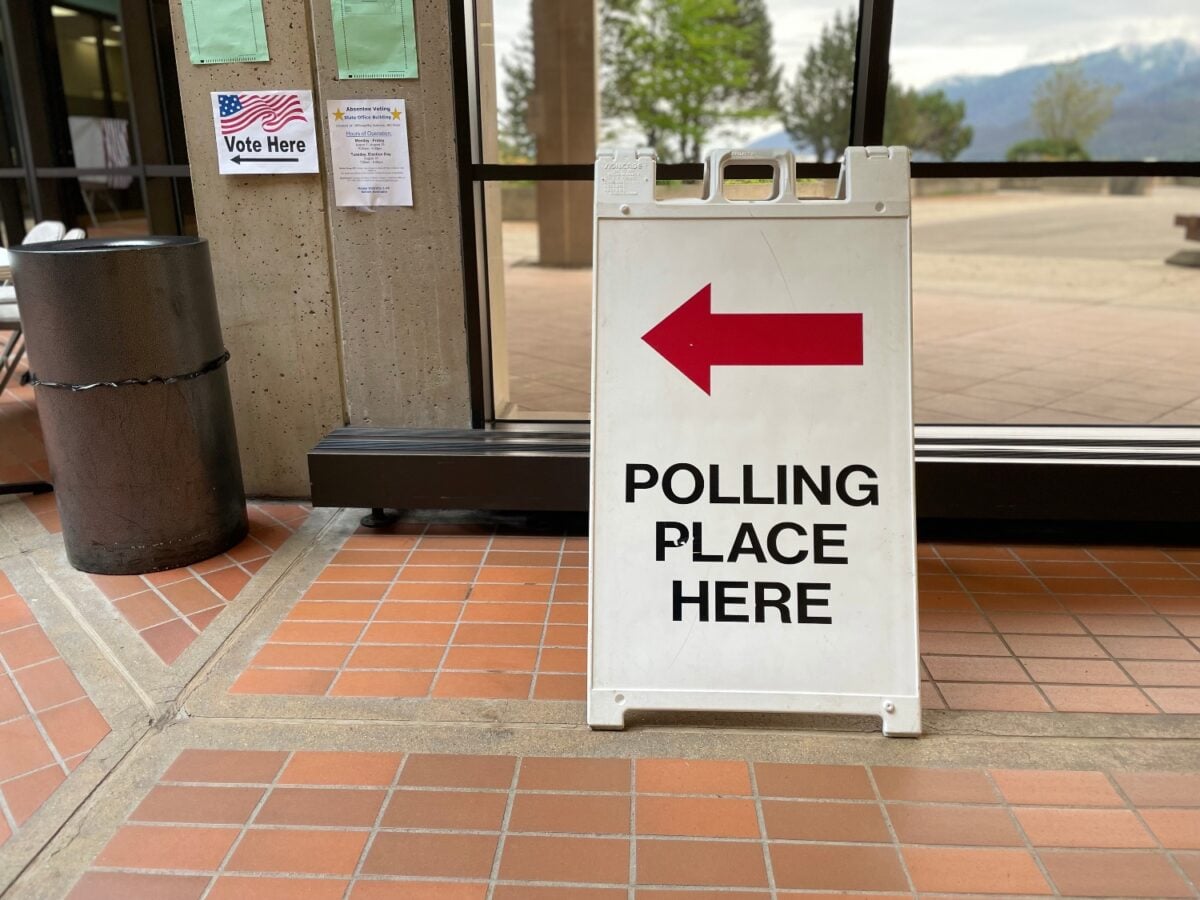
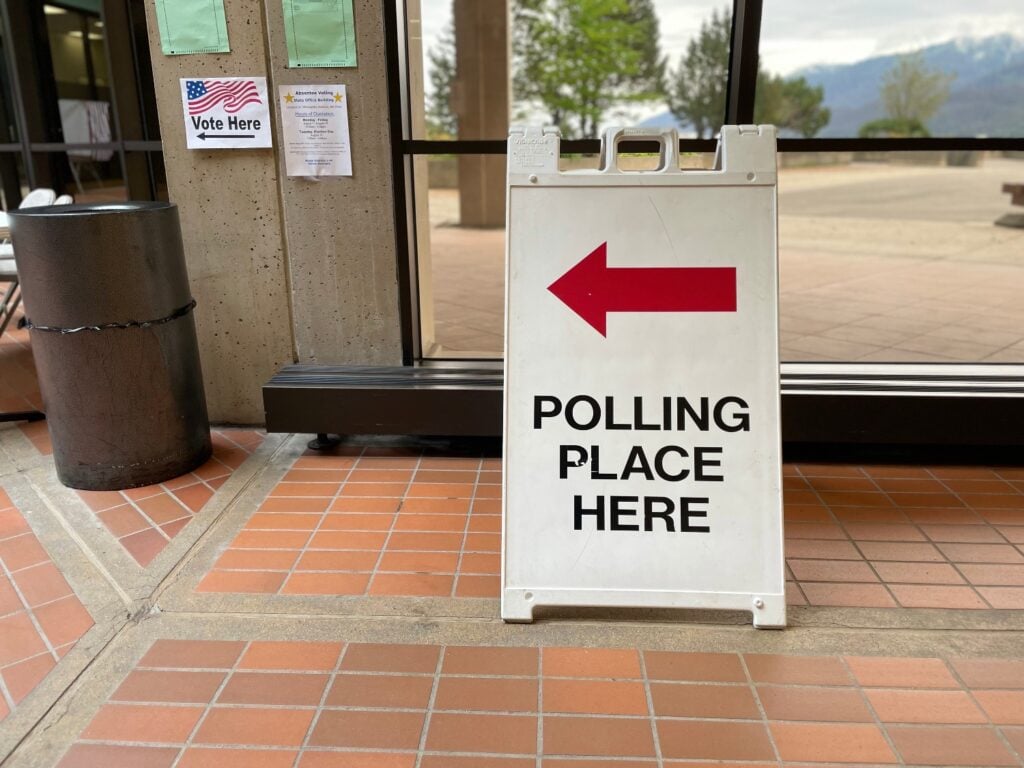
A polling place sign at the State Office Building in Juneau on Aug. 15, 2022. (Photo by Lisa Phu/Alaska Beacon)

The Alaska Supreme Court on Monday ordered the Alaska Division of Elections to include Dan J. Sullivan of Petersburg on the primary ballot as a candidate for U.S. Senate.

The ruling upholding a lower court’s decision came just hours after oral arguments in a fast-tracked case ahead of the division’s deadline to certify and print primary election ballots at noon on Tuesday.

The Alaska Supreme Court considered oral arguments in a fast-tracked case appealing a lower court's ruling Dan J. Sullivan is eligible to run for U.S. Senate on June 29, 2026. (Screenshot of Gavel livestream)
The Alaska Supreme Court considered oral arguments in a fast-tracked case appealing a lower court’s ruling Dan J. Sullivan is eligible to run for U.S. Senate on June 29, 2026. (Screenshot of Gavel livestream)

A full opinion on the case will be issued at a later date, the court said. 

The decision ends a weekslong saga between the state and the challenger with the same name Republican incumbent Sen. Dan Sullivan. The two Sullivans are among 16 primary candidates for the seat, including former Democratic U.S House Rep. Mary Peltola. 

The primary election is Aug. 18. The general election in November determines who will hold the seat for a six-year term.

On Friday, an Anchorage Superior Court ruled that the division’s decision to strike Sullivan from the ballot was unlawful. The judge determined that the division did not have the authority to add additional requirements for candidates beyond what is outlined in the U.S. Constitution. He ruled Sullivan, a retired teacher from Petersburg, is eligible to run for U.S. Senate.

The state appealed that ruling, and the case went before the Alaska Supreme Court on Monday. 

Reached by phone Monday afternoon, Sullivan of Petersburg expressed relief. “I’m glad it’s over. It was pretty stressful. I’ve got to admit that,” he said.

Dan Sullivan of Petersburg announced his campaign for the U.S. Senate on May 29 to challenge incumbent U.S. Sen. Dan Sullivan. (Photo courtesy of Dan Sullivan)

On the criticisms and questions about his campaign, Sullivan said they were “challenging” to hear. 

“It’s all because of my name, and you know, there’s nothing I can do about my name,” he said. “I was frustrated, I felt it’s time for a change, and so I wanted to jump into the race and make my feelings and my thoughts known. So there’s not a whole lot more to it than that. They tried to make it more than that, and you know, that’s their prerogative.”

Sullivan said he would agree to be listed as “Dan J. Sullivan” on the ballot. He said he now plans to regroup and make plans to visit Alaskan communities, hear from voters, and continue the campaign for Senate. 

Nate Adams, a spokesperson for Sen. Sullivan, said they were disappointed in the court ruling but encouraged by the fact that the division director can “use her expertise” to distinguish the candidates on the ballot in an emailed statement on Monday. 

In the decision, the justices wrote the division will determine how the candidates will appear on the ballot. 

“This matter is remanded for the Division of Elections to determine, in the first instance, how appellee Sullivan shall be listed as a candidate within the confines of existing Alaska ballot design law,” they wrote. 

An official with the Alaska Department of Law on behalf of the division did not immediately respond to a question about how the two candidates would appear on the ballot. 

“The State appreciates the court’s quick ruling and will work to implement the order,” said Sam Curtis with the Department of Law. 

Alaska Supreme Court hears oral arguments 

Sullivan from Petersburg appealed the division’s unprecedented June 15 decision to disqualify him from the U.S. Senate ballot. The Alaska Division of Elections cited complaints filed by the incumbent and Republican groups that his similar name, Republican party affiliation and campaign materials were evidence he was running in “bad faith” and mimicking the Republican incumbent, U.S. Sen. Dan S. Sullivan.  

Challenger Dan. J. Sullivan has defended his campaign as authentic and genuine. In court, his attorney argued that he met all the constitutional requirements for candidacy, and the division had unlawfully added a subjective criteria. 

In oral arguments before the Alaska Supreme Court on Monday, attorney Chris Murray argued on behalf of the division and its appeal of the lower court’s decision. He argued that the authority to administer the manner of elections includes disqualifying the challenger, as they deemed his intention in filing was to “frustrate the purpose” of the election and confuse voters.

Justices questioned that authority cited by the state. “A lot of the times people run for office for different reasons, to highlight an issue, to see what the process is like, and maybe start garnering support over time,” said Justice Aimee Oravec. “These are not necessarily candidates that are seeking office so much as attention for other reasons that are not necessarily bad faith, and there’s no limiting principle.”

“It seems amorphous, frankly,” said Justice Jennifer Henderson. “A broad, amorphous concept of what a candidate’s intent needs to be. So it seems like it’s very appropriate for us to worry about what is encompassed by that.”

Murray argued that the division has the authority, under current state regulations, and a duty to protect voters from confusion. “Because again, what’s the division trying to do? Protect the right to vote,” he said. “The division’s job is to make sure that people who want to vote for one candidate actually get to vote for that candidate, and their intent is reflected on the ballot.”

Justice Oravec questioned that position when the division has the authority to administer and design the ballot in a way that reduces confusion. 

“You control the ballot,” she said. “So I think you’re conflating the potential for confusion when you have the authority to mitigate the confusion.”

State statute already prescribes how candidates with identical names should appear on the ballot. Candidate’s middle initials would be included — in this case “Dan J. Sullivan” for the candidate from Petersburg, and “Dan S. Sullivan” for the incumbent senator. 

But in the state’s appeal filed over the weekend, Alaska Acting Attorney General Cori Mills requested that if the court upholds the ruling restoring the Petersburg Sullivan to the ballot, then the division could list him as “nonpartisan” instead of Republican like the incumbent senator.

Justices questioned whether that affiliation would be within the division’s authority. Jeffrey Robinson, arguing on behalf of Sullivan on Monday, objected to that listing. “There’s no authority for the proposition that in order to avoid confusion the director can change the party affiliation,” he said.

Robinson argued that the division adding unwritten, subjective criteria for candidates is unlawful. He again cited the case where the Alaska Democratic Party sought to remove Eric Hafner, a U.S. House candidate imprisoned out of state, and the division did not investigate his motives but found he met the qualifications to run for office.

“When would there be a better time to question the motives of someone’s intent to run for office than a convicted felon living out of state who has no potential to come back, or virtually no potential to come back and serve?” Robinson said. 

The division has argued that there was no complaint filed against Hafner’s candidacy, and so no reason to investigate him.

Justice Oravec asked Robinson whether Sullivan and his legal team also dispute the division’s findings in their decision to disqualify him from the ballot. Robinson said the division’s points were “unconstitutional and frivolous” and they did not have the authority to make those findings. 

In an unusual move, 14 Republican controlled states filed an amicus brief, or “friends of the court” brief, with the state Supreme Court expressing support for the division and its authority to remove Sullivan from the ballot.

Categories
Alaska News Featured Juneau News juneau Juneau Local Juneau Local Ketchikan Local News Feeds Sitka Local

Alaska gasline corp. board member calls lawmakers ‘mosquitoes’ in AKLNG tax cut talks

By: Corinne Smith, Alaska Beacon

The entrance to the Alaska Gasline Development Corp.’s Anchorage office is seen on Aug. 11, 2023. The state-owned AGDC is pushing for a massive project that would ship natural gas south from the North Slope, liquefy it and send it on tankers from Cook Inlet to Asian markets. The AGDC proposal is among many that have been raised since the 1970s to try commercialize the North Slope’s stranded natural gas. (Photo by Yereth Rosen/Alaska Beacon)

A board member with the state-owned Alaska Gasline Development Corporation, which is a part owner of the proposed AKLNG gas line project and pushing for lawmakers to provide a multibillion dollar tax break, likened state legislators to mosquitoes  — “irritating, relentless, and somehow always present” — at a board meeting on Thursday. 

The “tongue-in-cheek” comparison came from Fairbanks-based secretary and treasurer of the board Dennis Michel as the corporation grapples with lawmaker scrutiny after the leak of a confidential document revealing potential state financial liability in the project. 

Some legislators found the comparison to be demeaning as they continue to debate the specifics of a state tax break for the project that is estimated by the developer to cost up to $55 billion, which would include a 807-mile gas line and gas treatment facilities. The comment and some lawmakers’ reaction highlights the tension in the working relationship between the groups.

Lawmakers are now in a second special session called by Gov. Mike Dunleavy. A conference committee of six legislators are negotiating a compromise bill from competing House and Senate proposals.

Lawmakers have been largely supportive of the AKLNG project that would deliver natural gas from the North Slope. But Senate lawmakers and Dunleavy have split on details of the plan. Lawmakers are weighing provisions to provide increased protections for Alaskan gas consumers, a community impact fund, labor-related provisions, disclosure agreements for foreign investors and provisions to protect the state if the project fails to move forward, among others.

The state-owned Alaska Gasline Development Corporation is a 25% owner of the project, while Glenfarne, a private developer, is a 75% owner, after AGDC handed over ownership last year. 

The AGDC board includes seven members, including five members appointed by Dunleavy and two commissioners with the Alaska Department of Transportation and Public Facilities and the Alaska Department of Commerce, Community, and Economic Development. 

The mosquito-themed remarks came one day after the Alaska Beacon reported on a confidential draft analysis of an agreement between AGDC and Glenfarne that shows if the project failed to move forward under some conditions, the state could be required to pay in order to take back the project. 

The document was shared with some lawmakers, but not others or the public, and it informed some Senators in questions to the developer and their push for further protections on the proposed tax break proposal.

At Thursday’s virtual board meeting, officials with AGDC said they had launched an internal investigation into how the confidential document was shared. AGDC President Frank Richards called the disclosure “bad for AGDC” and its relationship with private investors. 

On Thursday, AGDC board members expressed strong support for a state approved multibillion dollar tax break to benefit the project, and heard a detailed update on the current negotiations and proposed provisions being debated in the Legislature. 

At the end of the nearly two-hour meeting, Michel, the Fairbanks-based board member, made the comments in what seemed like prepared remarks. He prefaced the remarks as “tongue in cheek” before he likened lawmakers to mosquitoes seen in the Interior. 

“A mosquito can turn a peaceful evening into a defensive operation. A Legislature can turn a straightforward issue into a long campaign of hearings, amendments, delays and procedural buzzing,” Michel said. “Both are persistent, too. A mosquito can keep circling until it finds bare skin. Lawmakers circle around taxes, amendments, compromises until it finally lands, or at least until someone, everyone in the room, has been bitten by the process.”

Michel said he hoped the legislative conference committee would “stop hovering” and agree to a workable tax cut for the developers. 

“So, yes, mosquitoes in the Legislature are both part of life in Alaska, irritating, relentless, and somehow always present just when people are trying to get something done,” he said. 

“But even mosquitoes can be a sign of something good ahead,” he added. “More mosquitoes often mean more blueberries here in the Interior. And in the same spirit, I hope that the legislators and their sessions produce more than welts and frustrations, but ultimately deliver something of value to the citizens of Alaska.”

No other board members responded to the comments, and the meeting ended shortly after. 

Several lawmakers were on the call, including Sen. Cathy Giessel, R-Anchorage, who chairs the Senate Resources Committee. She has been highly involved in drafting legislation around the AKLNG project and serves as a non-voting senate representative to the board. 

She called the comments “outrageously demeaning.”

Senate President Gary Stevens, R-Kodiak, Sens. Cathy Giessel, R-Anchorage, and Bill Wielechowski, D-Anchorage are seen at a news conference after the Senate adjourned on May 20, 2026. (Photo by Corinne Smith/Alaska Beacon)

“He is an unelected person who has been appointed as a political favor to a board with no oversight by any elected individuals in the Legislature, and he was demeaning representatives of the people who have been elected,” Giessel said in an interview on Friday.

“(The comments) demonstrate to me the cavalier attitude that this board has toward the governing body of the Legislature, the one of the branches of government, and that concerns me a great deal,” she said. “This is a generational change project and we need to be working together.”

Rep. Donna Mears, D-Anchorage, who serves on the House Resources Committee also attended the hearing. She said the comments were “not acceptable.”

“The Legislature has got a duty that is larger than the AGDC board. We have a responsibility to our communities, we have a responsibility to rate payers. Yes, this project can bring a lot of benefit to the state, but we also have to make sure that we’re not running over our communities and our ratepayers in the process,” she said in an interview Friday. 

During a break in the conference committee hearing, AGDC president Richards said in an interview he did not want to speak for Michel. “He was trying to identify that as tongue in cheek,” Richards said. “And really I think maybe expressing some frustration about the lengthy process, and about what’s been happening, the back and forth.”

Frank Richards, president of the Alaska Galine Development Corp., listens to a question at a House Finance hearing held in Anchorage on May 27, 2026.. (Photo by Yereth Rosen/Alaska Beacon)

“There’s this, sounds like tension, you know, that in the arena of the legislature that we want to be able to get through and achieve an economic project,” he added. “And that’s really the goal of what we’re going to do with the property tax, alternative volumetric tax provisions.”

When asked about lawmakers’ reaction, Richards said he did not have a comment, but added: “I certainly can see the perspective of hearing the words that were said and their personal reaction.” 

Both Giessel and Mears noted ongoing concerns about a lack of transparency from AGDC and Glenfarne on the proposed gas line project, amplified by the reporting on the confidential draft agreement this week. 

Lawmakers have been asking Glenfarne and AGDC for more detailed financial information for months. Glenfarne released an updated estimate for the project’s cost earlier this month at up to $55 billion, but state lawmakers say they still don’t have all the financial information they’ve been seeking, including estimates about the project’s profitability.

Giessel said she’s particularly concerned about confidential agreements with foreign investors. She authored provisions approved by the Senate to provide more state oversight of foreign entities and cost overruns.

“I think there’s been such distrust sown in this project that I don’t see how we can proceed forward at this point,” Giessel said. “It almost feels like there needs to be a restart where everybody comes to the table and stops hiding the ball, stops hiding the information, and the disrespect and demeaning language stops, and we start over with mutual respect and mutual collaboration.”

Mears said the legislators with the conference committee currently working on a final bill have an “enormous burden” to hammer out a compromise. She said if lawmakers still need more information, they should get more time to do their work. 

“I think the information coming out this week is exactly why rushing a process is unacceptable,” she said, referring to the information in the confidential draft analysis. 

“Maybe the thought that the Legislature is annoying is true,” Mears said. “Because the truth sure seems to be inconvenient. We would have a much better process starting from what we know now, and those of us that have been asking for more information for months are not wrong.”

Members of the conference committee are scheduled to meet publicly on Friday and Saturday. The Legislature is scheduled to reconvene on Wednesday July 1, but it’s uncertain whether a compromise bill will be finalized by then.

Categories
Alaska News Featured Juneau News juneau Juneau Local Juneau Local Ketchikan Local News Feeds Sitka Local

US Supreme Court deals blow to Trump, ruling states can accept ballots after Election Day

By: Jonathan Shorman, States Newsroom

Greg Lange of Bismarck, North Dakota, drops off his absentee ballot and his wife’s at the Bismarck Burleigh County Office Building on June 8, 2026. (Photo by Michael Achterling/North Dakota Monitor)

The U.S. Supreme Court ruled Monday that states can count mail-in ballots that arrive after Election Day, a blow to the Trump administration and some Republican states that had urged the justices to require all ballots to arrive by the close of polls.

In a 5-4 decision, the court found that federal law does not prevent states from accepting late-arriving ballots. The ruling is a victory for Democrats and voting rights advocates, who had said setting a hard, Election Day deadline for ballot arrival would risk disenfranchising voters amid fears of deteriorating mail service.

The case, RNC vs. Watson, centered on whether federal law overrides a Mississippi law that requires mail-in ballots postmarked on or before Election Day to be counted as long as they arrive within five business days of the election. Thirteen states have similar laws, which extend a “grace period” to ballots that arrive through the mail after polls close.

Justice Amy Coney Barrett, writing for the majority, said that federal law didn’t preempt the state law because elections represent when voters make a decision, which must be done on or before Election Day. Voters who cast their ballot by mail have made a decision by Election Day, Barrett reasoned.

“The electorate’s choice is made when voting is complete, not when ballots are received,” Barrett wrote.

Barrett cautioned that the decision rested on the interpretation of federal law, not the U.S. Constitution. She noted that the court was not considering the scope of Congress’ authority to regulate federal elections — suggesting that if Congress passes a nationwide ballot arrival deadline that the justices might uphold such a law.

Barrett was joined by Chief Justice John Roberts and Justices Sonia Sotomayor, Elena Kagan and Ketanji Brown Jackson. 

Justice Samuel Alito dissented, joined by Justices Clarence Thomas and Neil Gorsuch. Justice Brett Kavanaugh joined part of the dissent.

“If ballots received after election day are added to the set of ballots that dictate the election’s outcome, the electorate’s choice does not occur on election day, and the federal election-day statutes are violated,” Alito wrote.

States with grace periods

In addition to Mississippi, other states with some form of grace period include Alaska, California, Illinois, Maryland, Massachusetts, Nevada, New Jersey, New York, Oregon, Texas, Virginia, Washington and West Virginia.

David Becker, executive director of the nonpartisan Center for Election Innovation & Research, called the Supreme Court decision a win for these states, as well as 30 states that accept military and overseas ballots delivered after Election Day.

“This is a victory for all the states and for all those who respect the will of the Founders, who ensured the security of our elections by giving the power to run those elections to the states — not to one person sitting in Washington, DC,” Becker said in a statement.

Some local election officials had warned that requiring all ballots to be received by the close of polls would burden their offices as they try to quickly warn voters about the change just months before the midterms. More ballot drop boxes that let voters keep their ballots out of the mail could help, they say, but also cost money.

“Ultimately, the voters may be harmed as well,” election officials in California, Massachusetts, Oregon and Washington wrote in a court brief, warning that some ballots may not be received in time, “despite best efforts by careful and proactive administrators and local governments.”

But some Republican secretaries of state had urged the justices to strike down “grace period” laws. Louisiana Secretary of State Nancy Landry and Wyoming Secretary of State Chuck Gray wrote in a court brief that an Election Day deadline “provides the bright-line rule that effective election administration demands.”

At least 725,000 ballots were postmarked by Election Day 2024 and arrived within a legally accepted post-election window, The New York Times has reported, citing election officials in 14 of 22 states and territories where late-arriving ballots were accepted that year. 

Overall, about 30% of voters cast a mail ballot in 2024, according to data gathered by the U.S. Election Assistance Commission.

RNC challenged law

The Republican National Committee challenged the Mississippi law, which was defended by Mississippi Republican Secretary of State Michael Watson. The RNC argued a longstanding federal law that sets the Tuesday after the first Monday in November as Election Day for federal offices preempted state laws that allow ballots cast by Election Day, but received later, to count.

The 5th U.S. Circuit Court of Appeals ruled in October 2024 that federal law requires ballots to be received by Election Day. President Donald Trump last year also unilaterally attempted to require mail ballots to be received by the end of Election Day in a sweeping executive order on elections. Much of that order was blocked in federal court.

The Supreme Court “rejected the RNC’s radical attempt to rewrite election laws in a way that would have resulted in the rejection of hundreds of thousands of ballots and the disenfranchisement of voters nationwide through no fault of their own,” Elisabeth Frost, litigation chair at Elias Law Group, said in a statement. 

Elias Law Group represented two nonprofit voting rights groups, Vet Voice Foundation and the Mississippi Alliance for Retired Americans, that had intervened as defendants in the case.

The Supreme Court issued Monday’s decision against a backdrop of uncertainty surrounding mail ballots. Trump signed an executive order in March that would restrict voting by mail by requiring states to provide lists of possible mail ballot voters to the U.S. Postal Service in advance. A federal judge recently blocked major portions of the order, triggering a near-certain appeal.

Republican National Committee chairman Joe Gruters accused Democrats of inviting chaos by allowing elections to “drag on” for days and weeks after ballots are cast. He said Republicans wouldn’t be deterred by the decision.

“If we want fair and secure elections, Election Day should mean exactly what it says, which is why this decision makes it even more imperative that Congress pass the SAVE America Act,” Gruters said in a statement, referring to restrictive voter legislation pushed by Trump that lacks the votes to pass the U.S. Senate.

Trump said the decision was a “tremendous loss” in a social media post and again urged passage of the SAVE America Act.

Paul Clement, an attorney for the Republican National Committee, said during oral arguments at the Supreme Court in March the prospect that the outcome of an election could change because of ballots arriving after Election Day would be unacceptable to losing candidates. After the 2020 election, President Donald Trump demanded election officials not count ballots that came in after Election Day, but states kept counting ballots.

“If you have an election and the election is going to turn on late-arriving ballots in a way that means what everybody kind of thought was the result on Election Day ends up being the opposite a week later, 21 days later, the losers are not going to accept that result. Full stop,” Clement told the justices.

Attorneys for Watson argued that both legal and historical precedent supported his position. States may decide that voters have made their final choices when ballots are submitted to state officials rather than when they’re received, according to Watson.

Watson didn’t immediately respond to a request for comment.

This is a developing report that will be updated.

Categories
Alaska News Featured Juneau News juneau Juneau Local Juneau Local Ketchikan Local News Feeds Sitka Local

Judge finds Alaska Division of Elections’ removal of Dan J Sullivan from US Senate race unlawful

By: Corinne Smith, Alaska Beacon

Dan Sullivan of Petersburg announced his campaign for the U.S. Senate on May 29 to challenge incumbent U.S. Sen. Dan Sullivan. (Photo courtesy of Dan Sullivan)

An Anchorage judge ruled on Friday the Alaska Division of Elections’ decision to disqualify a U.S. Senate candidate with the same name as the incumbent was unlawful. The state immediately appealed the decision, sending the case to the Alaska Supreme Court on Monday.

In the Friday night ruling, the judge determined Dan J. Sullivan, a retired teacher from Petersburg, is an eligible candidate for U.S. Senate and that the division shall include his name on the August 18 primary ballot. 

The division’s decision to disqualify Sullivan because it determined his candidacy was not filed in “good faith” was unconstitutional, Superior Court Judge Thomas Matthews ruled. “The director’s assertion that Mr. Sullivan seeks to confuse or misguide voters is not supported by a preponderance of evidence,” he wrote.

Matthews wrote that the division accepted “at face value” complaints against the candidate made by the incumbent and the Alaska Republican Party while disregarding Sullivan’s assertions that his campaign was sincere.

The division made the unprecedented decision to remove Sullivan from the ballot on June 15, following allegations from Republican groups that he was a “sham candidate” and cited his similar name, party affiliation and campaign materials as evidence of an intention to confuse voters by running for U.S. Senate. In court on Friday morning, an attorney for the division defended the decision, saying it was within the division’s authority to remove a candidate to prevent voter confusion, and if a candidate is seeking to be placed on the ballot to “compromise the fairness of the ballot.”

Sullivan defended his candidacy as genuine, and appealed the division’s decision in state court. In oral arguments, his attorney argued Sullivan met all the constitutional requirements for candidacy, and the division had unlawfully added a subjective criteria. 

The judge agreed, saying the division does not have the authority to add additional requirements for a candidate. While the director has the authority to prepare the ballot in the interest of “fairness, simplicity and clarity” for voters, the judge said the statute supports “ballot design solutions,” including name formatting and instructions. “It does not authorize the removal of a candidate who satisfies the legal qualifications for office,” Matthews wrote. 

State regulation already prescribes what should happen if two identically named candidates appear on the same ballot. The ballot would include candidates’ middle initials —  Dan J. Sullivan for the candidate from Petersburg, and Dan S. Sullivan for the incumbent senator. 

The judge also denied the Alaska Republican Party’s motion to intervene in the case as a third party, but said the court would consider its position as an amicus brief.

The case is being fast-tracked ahead of the division’s deadline to certify and print primary ballots on Tuesday at noon. The Alaska Supreme Court has scheduled oral arguments in the state’s appeal for 10am on Monday, which will be livestreamed for the public.

Categories
Alaska News Featured Juneau News juneau Juneau Local Juneau Local Ketchikan Local News Feeds Sitka Local

Flood advocates push for faster long-term solutions as threat of GLOF approaches

A drone image shows widespread flooding in the Mendenhall Valley on Tuesday morning. (Image courtesy of Rich Ross)
A drone image shows widespread flooding in the Mendenhall Valley. (Image courtesy of Rich Ross/2024)

NOTN- Residents affected by recurring glacial lake outburst floods in Juneau are calling for a faster path toward a long-term flood mitigation solution, arguing that years of annual preparation, uncertainty and recovery are taking a growing toll on the community.

Members of Juneau Flood Solution Advocates gathered recently at Chapel by the Lake to hear updates from scientists studying Suicide Basin as well as mining industry leaders to discuss potential solutions for reducing the threat posed by floods along the Mendenhall River.

The grassroots group formed in 2024 following major flooding in the Mendenhall Valley. Since then, members have worked to support neighbors, coordinate resources and advocate for permanent flood mitigation measures.

“We can’t do this every year,” said Debbie Penrose Fisher, a member of the group, “Whatever it takes to get this expedited on a fast track, and to include local experts, that’s the path to the finish line. Folks are exhausted, and they’re exhausted from the equipment, the noise, the intrusion on their property, to the anxiety of preparing, and we just want a solution.”

Many residents have expressed frustration with the timeline for a permanent solution. The U.S. Army Corps of Engineers has been studying several long-term mitigation options, including a proposed tunnel that would continuously drain water from Suicide Basin to reduce the likelihood of catastrophic releases.

Fisher said some residents would like to see additional expertise brought into the discussion, including mining industry engineers with experience in large-scale tunneling and earth-moving projects.

“The mining industry can do this. They do this all the time,” Fisher said, “The challenge is that, and the city is working really hard to protect us, The Corp is saying six plus years until a long term solution, and even recently are back to 10 to 15 years. We can’t wait that long. We can’t. Our push is to get the mining industry into a conversation with the Corps, so together they can solve this.”

At the same time, city officials say the challenge remains unprecedented and requires balancing safety, environmental concerns, costs and regulatory requirements.

“There is no playbook for how to address glacial lake outburst flooding in an urban area,” Said Deputy City Manager Robert Barr in an email response to News of the North, “For every decision, we and our counterparts at other agencies are having to balance public safety considerations, cost and fiscal considerations, and the regulatory processes that bound any mitigation actions.”

Officials said they understand residents’ concerns and are continuing to gather public input through community meetings and outreach efforts. Many of the same questions being asked by residents are also being asked by city leaders, including what future floods may look like, what would happen if temporary flood barriers fail and how permanent solutions can be implemented as quickly and safely as possible.

The city has invested heavily in temporary flood protection measures, including the installation and reinforcement of HESCO barriers along vulnerable sections of the river. Officials say those efforts helped reduce damage during a larger flood event last year compared with the devastating flooding experienced in 2024.

“Nature always has the potential to humble us,” Barr said. “No human-created solution to a natural phenomenon is going to be perfect.”

He emphasized that current projects are intended to reduce risk while longer-term solutions are evaluated.

The city also noted that the flood threat is unlike any faced by another urban community worldwide.

“This hazard does not occur in any other urban area in the world,” officials said. “Which is why it is so critical for us all to be working together and pulling in the same direction. The way our community has come together to research and learn about the science and potential solutions is impressive. It wasn’t too long ago where we became a community full of knowledge and understanding about things like antigens and antibodies, PCR tests and vaccines. Today, we’ve learned more than we ever thought we would about glacial dynamics, dams, levees, bank armoring, and tunnels. I’m optimistic, with all of the people and agencies tackling this problem, we’ll get to a solution as quickly as possible.”

While no definitive timeline has been established for a permanent solution, city officials said the situation remains fluid and pledged to keep residents informed as new information becomes available.

Upcoming public engagement opportunities include a Community Flood Preparedness Training event scheduled for July 11 at Dimond Park and a July 20 Committee of the Whole meeting, where U.S. Army Corps of Engineers officials are expected to provide updates on ongoing studies and mitigation efforts. Officials encouraged residents with questions or concerns to contact the city at floodresponse@juneau.gov or reach out to their Assembly representatives

Categories
Entertainment

Soccer Player Lucas Trejo’s Wife, Kids Killed in Venezuela Earthquakes

Lucas Trejo, Yanina Maranella,  Aarón Trejo and Ainhoa TrejoLucas Trejo is facing an unimaginable loss.
The soccer player’s wife Yanina Maranella and their two children Aarón Trejo and Ainhoa Trejo were among the more than 1,400 people killed in the…
​E! Online (US) – Top Stories

Categories
Entertainment

The Must-Try Hole-In-The-Wall Chinese Restaurant In Your State

If you like Asian food, there are many options available. Sometimes the best places are small mom-and-pop establishments in strip malls and grocery stores.

​Mashed – Fast Food, Celebrity Chefs, Grocery, Reviews

Categories
Entertainment

Little House on the Prairie Cast Reveal Book, TV Series Differences

Little House on the Prairie castThe Little House on the Prairie is getting a big renovation. 
Ahead of the Netflix adaptation of the beloved Laura Ingalls Wilder novels—which were originally turned into a TV series in 1974— cast…
​E! Online (US) – Top Stories

Categories
Alaska News

Travelers Are Trading Sightseeing for ‘Skillcations’

Increasingly, travelers are discovering that learning something new may be the most valuable thing they bring home from vacation.

Categories
Alaska News

Carter volunteer keeps food program going for local families

CARTER, Mont. — Carter resident Judy Hertz is recognized this month as NonStop Local’s Good Samaritan for helping lead a food donation program that serves people in her community.