Yes, the Pittsburgh Steelers placed the unrestricted free-agent tender on veteran quarterback Aaron Rodgers, who led the team to an AFC North title at 10-7 last season … but he still hasn’t signed a contract, and we don’t definitively know who the team’s 2026 starting quarterback is. That leads us to second-year quarterback Will Howard and rookie Drew Allar. Who does Steelers legend Ben Roethlisberger — the franchise leader with 64,088 passing yards and 418 passing touchdowns — prefer? “I’m not sure yet if I love it or hate it. I don’t watch a lot of Penn State games. When I did watch, he never jumped off the page to me,” Roethlisberger said about Allar, whom Pittsburgh selected with the No. 76 pick in the 2026 NFL Draft, on his podcast, “Footbahlin with Ben Roethlisberger.” “Is he big? Can he move? Can he throw? Yes. But there was never a time when I was like, ‘Whoa.’ … The jury’s still out for me right now. Again, there was nothing that just jumped off the page for me. Whether that’s good or bad, I don’t know. We’ll see about this one.” As for the other former Big Ten signal-caller? “Will Howard jumped off the tape to me way more than Drew [Allar] did,” Roethlisberger said. The Steelers selected Howard in the sixth round of the 2025 NFL Draft. Howard spent the first four seasons of his collegiate career with the Kansas State Wildcats (2020-23) before transferring to play for the Ohio State Buckeyes in 2024, with whom he won the National Championship. In said championship season (2024), Howard totaled 4,010 passing yards, 35 passing touchdowns, 10 interceptions and a 175.3 passer rating, while completing 73.0% of his passes. Howard led the Big Ten in passing yards, passing touchdowns and completion percentage, while rushing for 226 yards and seven touchdowns. He didn’t appear in a game during his 2025 rookie season. As for Allar, the former five-star recruit’s 2025 campaign at Penn State was cut short after six games due to a broken ankle. Over his two healthy seasons as the Nittany Lions’ starting quarterback (2023-24), the 6-foot-5 Allar averaged 2,979 passing yards, 24.5 passing touchdowns, five interceptions and a 145.2 passer rating per year, while completing 63.2% of his passes. In 2024, Allar helped Penn State reach the College Football Playoff semifinals and led the Big Ten with 25 passing touchdowns in 2023. In all, Pittsburgh’s quarterback room currently includes Allar, Howard and Mason Rudolph, who has made a combined 14 starts over his two stints with the Steelers (2018-23 and 2025-present).Latest Sports News from FOX Sports
Megan Moroney is opening up about the mental side of fame and why she’s learned to stay out of her DMs and comment section.
During a recent appearance on Bobby Bones Presents: The BobbyCast, now streaming on Netflix, Moroney sat down with the show’s host Bobby Bones to discuss how she navigates social media, especially as she gears up for another busy stretch on the road.
When asked about her DMs, the country star admitted, “I don’t go there too often. It’s a scary, dark place.”
Bobby Bones, Megan Moroney; Photo Provided
Avoiding the messages has become a big part of getting ready for her upcoming Cloud 9 Tour because she has learned that her mental health is just as important as all the rehearsals and the physical preparations. In order to stay away from any negativity that may come her way, the Georgia native has set some boundaries with herself.
“It’s been really relevant lately to me. I’m obviously in tour prep, you know, like doing all the things physically. And I had this epiphany the other day where it’s like, I am disciplined about my physical prep, my mental prep has to be just as important,” she explained. “And so stuff like reading the comments, like I actually have to not do it. Like you just can’t. And if I do see something, like I have to tell my brain that can’t affect you today. You can’t dwell on it and let it fester.”
She added that therapy has helped her avoid carrying that negativity and better manage the moments when she does come across hateful messages online.
“It’s more so been like a, that can’t affect me today so I’m gonna move on…but in my head too it’s like 99% of the time, for me, it’s gonna be bad so I’m just like I don’t need to know. Screw y’all.”
At the end of the day, Moroney acknowledges that she is still human and as much as she tries to not let things like that bother her, she still has days where she finds herself agreeing with the hurtful words. So the best solution for her is to stay disciplined and “not look.”
That same discipline has come across in the physical ways she is preparing for tour. With her massive 2026 headline trek kicking off May 26, the “Medicine” singer says she really hits the ground running with her diet and exercise routines around May 1.
For Moroney, getting into tour shape involves doing all her rehearsals in a weighted vest to mimic the showstopping outfits she wears on stage, which can sometimes weigh 10 to 15 lbs.
“When I’ve done the performance I’m like oh like I am not in shape for this…Singing with a weighted vest on a treadmill, doing that.”
Megan Moroney; Photo by Nina Westervelt/CBS
On top of that, she has started doing red light therapy, saunas and cold plunges daily, cuts out alcohol and focuses maintaining a healthy diet. All of this hard work is leading up to what she expects to be “the biggest” and “best” run of her career yet.
“I’ve never taken touring as serious, like as far as like the prep for it as I’m doing right now… I want it to be the best show…so just really locking in,” she admits.
The Cloud 9 Tour launches next month and runs through October 2026 with 43 dates in major arenas across North America, Europe, and the UK.
Additionally, she has received nine nominations going into the 61st ACM Awards, including Entertainer of the Year. Fans can tune into the show on Sunday, May 17 when it streams live exclusively on Prime Video for a global audience across more than 240 countries and territories at 8 p.m. ET / 7 p.m. CT / 5 p.m. PT from the iconic MGM Grand Garden Arena in Las Vegas.
More of Megan Moroney’s conversation with Bobby Bones can be found in the latest episode of Bobby Bones Presents: The BobbyCast, now streaming on Netflix.
Sens. Bert Stedman, R-Sitka, Bill Wielechowski, D-Anchorage, discuss a proposed pension bill, with Sen. President Gary Stevens, R-Kodiak, seen in the background on Apr. 28, 2026. (Photo by Corinne Smith/Alaska Beacon)
Members of the Alaska Senate voted to approve a long-awaited pension bill on Tuesday, amid debate on the cost of the new public retirement benefits system and responsibilities of the state and local community employers.
The Senate passed a revised version of a pension plan approved by the House last year. The vote was 12 to 8. Twenty years after lawmakers eliminated a public pension system, the vote marks the closest lawmakers have come to restoring a defined retirement benefit for thousands of Alaska’s public sector employees.
Sen. Cathy Giessel, R-Anchorage, speaks about Senate Bill 88, the Senate majority’s public employee pension proposal, on Wednesday, March 1, 2023. (Photo by James Brooks/Alaska Beacon)
“It strikes me as a historic day,” said Sen. Cathy Giessel, R-Anchorage, after the vote. She has been working on the issue for several years. “When you figure 33 different offerings to correct this over the years — yeah, we’ve been trying for a long time.”
If enacted, the bill would reinstate a defined benefit retirement system for Alaska state employees, as well as teachers, public safety workers and municipal employees statewide.
Supporters said the retirement benefit is crucial for hiring and retaining a skilled public sector workforce in Alaska for the long-term, while detractors say the uncertainty around the cost to the state and local municipalities isn’t worth the risk.
Sen. Mike Cronk, R-Tok, is seen at a Senate Finance Committee meeting on Apr. 24, 2026. (Photo by Corinne Smith/Alaska Beacon)
Senate Minority Leader Sen. Mike Cronk, R-Tok, said he opposes increasing state spending.
“We look at our federal government, we’re going to be $40 trillion upside down. That’s totally unacceptable,” he added. “And for adding this kind of burden for the future, generated cost is something that I just can’t be a part of. I know we have a problem. I think there are other solutions out there that can help this problem.”
The move was applauded by the state’s largest public employees union, the Alaska State Employees Association, which represents roughly 8,500 public employees.
“The impact is almost difficult to overstate,” said Heidi Drygas, its executive director, by phone on Tuesday. “Our membership overwhelmingly supports a defined benefit pension. And I think this will mean security for them, so that they can feel comfortable staying in their state jobs. It will attract more employees to work for the state.”
The bill passed the House last May, and the revised version now goes back to the House for a concurrence vote, before heading to Gov. Dunleavy’s desk for consideration.
The governor has been critical of previous pension proposals. Dunleavy receives a state pension for his previous employment as an educator and superintendent.
If the bill becomes law, current state employees would be allowed to switch from a defined contribution or a 401(k) style retirement plan to the new system. Retirement for teachers and public employees would be possible at age 60 or any age after 30 years of service. For public safety officers, including police and firefighters, it would be age 50 with 25 years of service, or age 55 with 20 years of service.
“Every other state offers a pension for at least some of the public servants. We do not,” Giessel said on the Senate floor. “And we are seeing the results. We ask our public employees to do difficult work, often in the hardest conditions. The question is whether we will give them a reason to build a career here.”
After several hours of debate, the Senate approved several amendments, including a change to allow cities and boroughs to choose whether to opt out of the new defined benefit retirement plan, instead of opt in.
“It’s better policy for local governments to follow the state’s lead,” said Sen. Matt Claman, D-Anchorage, who sponsored the provision. “If they don’t like our choice, they’re certainly allowed to make their own choice and opt out, but if they don’t take any action, they’re in.”
That means local cities and boroughs can choose whether to opt out of the plan, if enacted, between January and June of 2027, and then the new system would begin July 1 next year.
Under the revised bill, employees would contribute 8% of their pay to the pension plan. Employers would pay up to 22.5% for public sector employees, and up to 12.5% for teachers. Senators debated the cap and arrived at 22.5%, noting municipality officials public testimony and concern about cost.
Employers would also pay into a health reimbursement fund of up to 4% of workers’ salaries to supplement Medicare for those over age 65. Disability and death benefits would be included.
If passed, the bill would revive Alaska’s state pension that was eliminated in 2006, after the state ran into a multi-billion dollar shortfall and unfunded liabilities in the retirement system.
Sen. Bert Stedman, R-Sitka, a co-chair of the Senate Finance Committee, opposed the bill, citing the risk that the state will repeat the mistakes of the early 2000s.
Sen. Bert Stedman, R-Sitka, speaks against a bill to revive the state’s pension system on the Senate floor on Apr. 28, 2026. (Photo by Corinne Smith/Alaska Beacon)
“This proposal in front of us today diminished the benefit to the retired employee when it goes underfunded. Yeah, it won’t go unfunded until people retire. Normally, it takes about 30 years, but we’ve got 20 years already with the current defined contribution. So about 10 years out,” he said.
A recent estimate by the state’s actuary, Gallagher, projected state costs to total $467 million for the first 13 years, until FY 2039.
Stedman said the state is also still on the hook to pay billions to account for the old pension system. But Giessel said the new pension system has built in safeguards to prevent it from going underfunded, according to the actuary’s analysis.
“Even with a never before seen ‘black swan’ event of three consecutive years with zero investment returns, even then this pension holds up,” she said.
Giessel and other lawmakers cited the state’s current ballooning costs paying state employee overtime to cover vacancies and essential public services, called “premium pay.”
“It is costing us over $200 million a year in premium pay,” she said. “Just to keep basic services running — that number has grown nearly 80% in the past five years. We have, in effect, turned Alaska into a training ground, a place where people come, gain experience and then leave.”
Sen. Bill Wielechowski, D-Anchorage, described a crisis of families leaving the state, in part due to a lack of stable retirement. Alaska has seen more than a decade of consistent outmigration, according to state data.
“There has been a quiet, heavy crisis unfolding all across Alaska, in our schools, in our state office buildings, in our courts, in our communities all across Alaska, it’s the sound of a door slamming shut. Another family packs up to leave,” Wielechowski said on the Senate floor.
“We talk a lot about fiscal responsibility in this chamber, but I ask you, what is responsible about watching our most precious resource, our people walk out the door?”
Supporters of the pension plan also pointed to the state’s struggle with high turnover rates, including up to 30% of teachers in urban and rural districts alike each year.
Sen. Löki Tobin, D-Anchorage, and chair of the Senate Education Committee, said the high unseen costs of turnover of educators is magnified throughout the state.
Sen. Löki Tobin, D-Anchorage, speaks in support of a new state pension plan on Apr. 28, 2026. (Photo by Corinne Smith/Alaska Beacon)
“Because of high teacher turnover, we’re already paying $20 to $30 million a year,” she said. “We can either continue to pay that in turnover costs, or we can fund a quality retirement program that retains our quality educators, attracts new quality educators, and ensures that our kids get the best education they deserve.”
Senators in support of the pension plan noted a recent state audit of Alaska state government that reported hundreds of millions lost in federal reimbursements or incorrectly accounted for due to a variety of factors, including “staff turnover,” “competing priorities” or “inadequate supervisory review.”
Wielechowski pointed to one example of the Alaska Department of Military and Veterans Affairs underreported disaster spending for federal reimbursement by $297 million. The error was corrected once identified by auditors, according to the report.
“Dozens of projects incorrectly reported. And that’s just that’s just a fraction of the inaccuracies and the mistakes,” Wielechowski said.
Opponents of the pension bill pointed to other factors contributing to high turnover like work environment, leadership and a need to raise salaries.
That included Cronk who said he receives a pension after teaching for 25 years. “I would say focus should be on our pay,” he said.
Drygas, with the state’s public employees union, said while the pension plan is one important part of Alaska’s workforce issues, she sees it as crucial for stemming the tide of outmigration from the state.
“I cannot tell you how many people, just personal, friends and acquaintances that I know, that are leaving state service in particular because they can’t retire here. They can’t live on the retirement that our state offers,” she said. “So I think a lot of us are hopeful that, you know, five or 10 years in the future, if this legislation should pass and become law, we’ll see a turnaround in our state workforce again.”
Kellie Pickler is returning to the stage in a big way with an appearance on American Idol on Monday, May 4, as part of a special episode celebrating the Class of 2006 reunion.
Danielle Fishel revealed the news on the official American Idol podcast, sharing that Pickler will be joined by fellow Idol alums Taylor Hicks, Paris Bennett, Bucky Covington, and Elliott Yamin. The group is set to return to the show to duet with this season’s Top 5 contestants: Chris Tungseth, Hannah Harper, Braden Rumfelt, Keyla Richardson, and Jordan McCullough.
The upcoming May 4 episode will also feature original judges Paula Abdul and Randy Jackson, appearing as guest judge and guest mentor, respectively.
Kellie Pickler; Photo by
Jason Merritt / Staff
In addition to the Class of 2006 reunion, the episode will include performances with Dancing with the Stars pros, bringing ballroom flair to the celebration, while America votes live to determine the Top 3.
Pickler has largely stayed out of the spotlight in recent years, only stepping back on stage in April 2024 for a performance honoring the late Patsy Cline. The appearance marked her first performance since the passing of her husband, songwriter Kyle Jacobs, who died at the couple’s home on February 17, 2023.
Pickler auditioned for American Idol when she was just 19 years old, impressing the judges with a performance of Kelly Clarkson’s “Since U Been Gone” and Martina McBride’s “A Broken Wing.” She advanced far in the competition and finished in sixth place. She previously returned to American Idol in 2016, where she served as both a mentor and performer during the show’s final season on Fox.
Following her stint on Idol, Pickler rose to fame with her 2006 debut album, Small Town Girl, which was certified Gold by the RIAA and produced three Top 20 hits: “Red High Heels,” “I Wonder,” and “Things That Never Cross a Man’s Mind.” She also scored a major success with her Platinum-certified single, “Best Days of Your Life.”
In May 2013, Pickler and her partner Derek Hough took home the mirrorball trophy, winning Season 16 of Dancing With the Stars. She was later inducted into the North Carolina Music Hall of Fame.
From 2017 to 2019, Pickler served as co-host of Pickler & Ben, a nationally syndicated talk show that earned five Emmy nominations.She has also built a career in acting, appearing in several films and TV shows, including Christmas at Graceland, The Mistletoe Secret, 90210, Billy Lynn’s Long Halftime Walk, Wedding at Graceland, and more.
When we heard that Dunkin’ was releasing a limited-edition fruit punch donut for spring, we wondered why the sweet-tart flavor hadn’t been done before.
Mashed – Fast Food, Celebrity Chefs, Grocery, Reviews
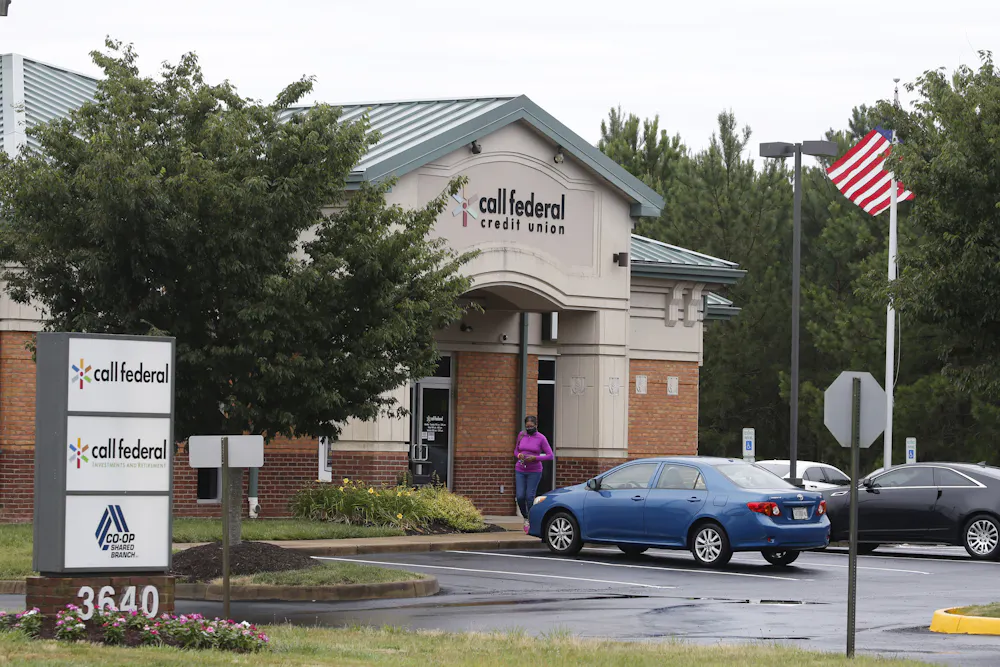
Police got cellphone data for many people who happened to be in this area near the time of a bank robbery.AP Photo/Steve Helber
Google tracks the vast majority of cellphones in the United States, collecting your location, usage and device data through installed software and apps. The tracking occurs by various autonomous processes you cannot see or stop, even when you turn off location history, and Google and other companies keep that data for years. Outside of your control and wherever you go, your cellphone continuously creates a durable and revealing digital trail, and law enforcement agencies can get warrants to obtain it.
But some of those warrants aren’t looking for data about a specific person. Instead, police are compelling tech companies to reveal every cellphone in a particular area during certain time periods. Called geofence warrants, their use is at the heart of a case before the U.S. Supreme Court that will determine what the Fourth Amendment’s protections against unreasonable search and seizure mean in the digital age.
The Supreme Court caseChatrie v. United States involves the hunt for a suspect in an armed bank robbery in busy Midlothian, Virginia, in May 2019, and how police settled on a man named Okello Chatrie as the perpetrator.
Detective Joshua Hylton was granted a geofence warrant that compelled Google to search its database and identify every cellphone in a 17½-acre area around the bank, including private residences and a church, for a period of two hours. Working closely with Google, police ultimately narrowed in on Chatrie. When the trial court denied Chatrie’s motion to suppress the geofence-derived evidence, Chatrie appealed.
The Supreme Court will decide if, when and how law enforcement can use geofences. It matters because all cellphone-carrying people can end up in tomorrow’s geofence, like all those who were unknowingly grabbed in the Chatrie search. And nearly all users are unaware of these fences. No one specifically consents to be included in them, but people have no choice. What happened in the Chatrie case is a feat otherwise impossible but for advances in location tracking technology and advanced AI systems.
As a privacy, electronic surveillance and tech law attorney, author and legal educator, I have spent years researching, writing, educating and advising about these kinds of privacy and legal issues, and my books on electronic surveillance and evidence are routinely cited and relied upon by courts grappling with these issues.
A customer walks out of a credit union in Virginia where a robbery in 2019 set in motion events that led to a Supreme Court case. AP Photo/Steve Helber
How geofences work
Geofences are part of modern life. By carrying your smartphone and other devices, you generate location and other device activity data. That data is collected, stored, analyzed, and bought and sold by multiple companies. The location history data being collected about you is what makes geofences possible, and it is comprehensive and precise.
Location history relies on a variety of sources of data that can include cell tower location, cellphone data such as connections to Wi-Fi networks and Bluetooth sources, and cellular data sent via cell tower. This means the communications you received and sent and the apps you used can be swept up in a geofence.
Advanced AI technologies analyze that data to discern increasing amounts of personal and behavioral data – insights about people, groups and activities – that can be used for a variety of purposes, including targeted advertising. Your rich location history and device data get snatched up regularly in such fences by private companies; your present and past self travels through them constantly.
A geofence can be in real time, for instance to identify and track who is at a protest, or any period in the past decade or so. It can be dynamically generated, like a circle around a specific location, or it could be a predefined set of boundaries, such as a specific address or area defined by streets or other geographical boundaries. One geofence warrant that Google received covered 2.5 square miles of San Francisco for a period of 2½ days.
There has been a significant increase in law enforcement’s use of geofence warrants over the past decade. Google revealed in court that it received a 1,500% percent increase in geofence requests from 2017 to 2018, a 500% percent increase from 2018 to 2019, and by 2020, it had 11,500 geofence warrants in a year. Between 2021 and 2023, geofence warrants made up over 25% of all warrants that Google received from law enforcement agencies in the United States.
If you carry a smartphone around with you, Google and other tech companies keep track of where you are and everywhere you’ve been. Dilara Irem Sancar/Anadolu via Getty Images
Search warrants and the Fourth Amendment
The Fourth Amendment is the foundation on which all U.S. electronic privacy laws rest. When government agents want to search or seize a person, place or thing – absent consent or emergency – the Fourth Amendment requires agents to obtain a court-approved warrant based on probable cause. Agents do this by providing a judge with enough evidence to establish probable cause that the person, place or thing to be searched or seized is associated with a crime.
The resulting warrant must describe with “particularity” the specific person, place or thing to be searched or seized. If these requirements are not met, the search is unreasonable and therefore unlawful, and evidence obtained in that search cannot be used in court, barring a good-faith exception.
The Fourth Amendment’s “particularity” requirement strictly forbids general warrants, historically used by British troops against Colonists to engage in overly broad or all-encompassing searches.
Reverse warrants
The only “particularity” that police can specify in applying for a geofence warrant is that a crime occurred at a particular time and place. Hence, geofence warrants are often called reverse warrants because they literally reverse the traditional process of conducting an investigation to identify a suspect and then obtain a warrant to gather information on that suspect. Geofence warrants gather all devices in a time and place, and then, aided by technology, police sift through for potential suspects.
The execution of a geofence warrant is very different from that of a typical warrant. Litigation records reveal a collaborative effort between law enforcement and Google that follows a three-step process. First, law enforcement officials specify in the warrant a time and place to be searched. The data they’re seeking is not merely a list of cellphone devices in the area; it is usually more detailed. For instance, it could include data about whether a device accessed a particular email account or app or sent a text at the time it was in the area of the geofence.
Second, the company provides the officials with an anonymized list of users or devices matching the warrant’s criteria. At this point, things start to become more fluid, and the officials may seek additional information about specific users outside of the initial search parameters.
Third, law enforcement officials then analyze the information and request that the company “unmask” certain users. In complying, Google may tell police the account holder’s name, their address, their email address, and even whether they were communicating or using certain apps during the relevant time. The officials then decide whether any of the users may be connected to the crime.
This close work between the private entity – usually Google – and law enforcement throughout the geofence warrant process raises significant privacy and civil liberties concerns. It also does not appear that there is any court review or judicial oversight during this give-and-take between law enforcement officers and Google in the geofence warrant process.
A split among appeals courts
In the Chatrie case, the trial court took issue with the geofence warrant police used, finding that it lacked particularized probable cause. But the trial court also determined that the officers in question had relied on the defective warrant in good faith, and thus it ruled the geofence evidence could be used against the defendant.
On appeal to the 4th U.S. Circuit Court of Appeals, a divided panel affirmed the trial court’s decision, and it concluded, over vigorous dissent, that obtaining the geofence data was not a search. The full 4th Circuit affirmed the trial court’s decision.
But the 4th Circuit’s 2024 Chatrie decision stands at odds with the 5th Circuit’s 2024 decision in United States v. Smith. In the Smith case, the 5th Circuit ruled that “geofence warrants are modern-day general warrants and are unconstitutional under the Fourth Amendment.” This split among the federal appeals courts should be resolved by the Supreme Court in its Chatrie decision.
Chatrie and the Supreme Court
For decades, the court has grappled with law enforcement’s use of technologies to track the location of people or things, issuing decisions about cell site location information and GPS. It has ruled that the U.S. Constitution requires law enforcement agents to obtain a warrant to track a person using their cellphone location history data or GPS, barring exigent circumstances.
The government is arguing in the Chatrie case that users voluntarily consented to the collection of location history, so they have no reasonable expectation of privacy in the data, and thus there is no violation of the Fourth Amendment.
Questions from the Supreme Court justices during oral arguments on April 27, 2026, indicate that at least some of them consider geofence warrants to be general warrants and thus unconstitutional. But for now, we wait.
Anne Toomey McKenna serves on the Advisory Board to the Institute for Electrical and Electronics Engineers (IEEE)-USA’s Artificial Intelligence Policy Committee (AIPC) and Chairs multiple AIPC subcommittees. The AIPC work involves subject matter and education-related interaction with U.S. Senate and House congressional staffers and the Congressional AI Caucus. McKenna has received funding from the National Security Agency for the development of legal educational materials about cyberlaw (a course which the government still makes available online for the public) and funding from The National Police Foundation together with the U.S. Department of Justice-COPS division for legal analysis regarding the use of drones in domestic policing.
‘So I had to leave and I was on this call crying, like, ‘If Nana lives, she’s going to hate this video!” Musgraves remembers. Continue reading…The Boot – Country Music News, Music Videos and Songs
‘So I had to leave and I was on this call crying, like, ‘If Nana lives, she’s going to hate this video!” Musgraves remembers. Continue reading…Country Music News – Taste of Country