Green’s injury from the phone-throwing incident was actually pretty serious. Continue reading…Country Music News – Taste of Country









Green’s injury from the phone-throwing incident was actually pretty serious. Continue reading…Country Music News – Taste of Country

Guy Fieri’s popular show “Diners, Drive-Ins, And Dives” has highlighted some real gems over the years, but one Hawaiian spot is going strong a decade later.

Food Republic – Restaurants, Reviews, Recipes, Cooking Tips

Reading Time: 3 minutes
Many people were delighted by the Oscars results.
One source of delight was Timothee Chalamet losing. He really sabotaged himself.
Still, Timmy attended the Academy Awards with girlfriend Kylie Jenner by his side.
That lead to one of the night’s most awkward moments when his sister approached. What do you make of this?
The 2026 Academy Awards took place on Sunday, March 15.
(A belated happy Ides of March to us all!)
In the audience, Timothee and Kylie were getting situated when the actor’s sister approached.
Pauline Chalamet walks over and she and Timmy seem to greet each other in a warm and animated manner.
It seems to take a moment before it even registers to Kylie that this conversation is taking place.
Timothée Chalamet, his sister Pauline Chalamet, and Kylie Jenner share a sweet moment at the #Oscars. 😍 #AwardsSeason pic.twitter.com/yKpBvV1xbj
— E! News (@enews) March 15, 2026
As you can see in E! News‘ video, Kylie appeared to notice the interaction.
She then stood up.
The makeup mogul and the actress then shared what looked like a polite hug.
Soon, Kylie sat back down, chatting with people behind her.
Timmy and Pauline then posed for photos, flashing their smiles for the cameras.

Across social media, the replies are consistently highlighting the vibe and suggesting a likely explanation.
The first is that this was an awkward encounter.
Truly, Kylie and Pauline appear polite — perhaps even cordial — but not exactly warm.
Secondly, it’s not clear if these two actually know each other.
This appears to be how strangers would greet each other if they happen to have a mutual friend.
Kylie and Timmy first met in early 2023, to the best of anyone’s knowledge.
By April of that year, the relationship rumors first began to circulate.
Folks, we’re talking about two people who are nearly three years into their relationship.
That is a long time to not meet someone’s sibling — especially if travel money is no object.
Did Timothee not want Kylie to meet his sister? Did Pauline not want to meet Kylie? What’s going on?

Kylie and Timothee have chosen to keep things mostly very private.
The downside to this is that it gives the public the freedom to speculate.
If you don’t tell your story, others will do it for you.
That said, there’s no way for Timmy to shut this speculation down without amplifying it.
Will they know each other’s families in time? Maybe.
Kylie Jenner & Timothee Chalamet’s Sister Have AWKWARD Oscars Moment, Fans Try … was originally published on The Hollywood Gossip.
The Hollywood Gossip

Surface pools on the edge of West Long Lake in the Teshekpuk Lake Special Use Area of the National Petroleum Reserve in Alaska are seen in this undated photo. The pools are formed by permafrost. Summer melt creates pools of water on the surface, creating thousands of sites that support wildlife. The Teshekpuk Lake area is important to subsistence harvests and had been protected from development for decades, but the Trump admininistration is now trying to sell oil leases there. (Photo by Laura McDuffie/U.S. Geological Survey Alaska Science Center)
Just six days before the Trump administration is set to open bids in the first of several oil and gas lease sales for federal territory in Arctic Alaska, critics were in court on Thursday trying to win injunctions to temporarily block some of the sale.
In one case, a Native organization called Grandmothers Growing Goodness and an environmental organization, The Wilderness Society, are seeking to fully prevent the scheduled March 18 sale in the National Petroleum Reserve in Alaska, a federal land unit stretching across Alaska’s western North Slope. The sale is offering 5.5 million acres, a larger geographic scope than most of the NPR-A lease sales held since 1999.
The Grandmothers Growing Goodness-Wilderness Society lawsuit is also seeking to overturn a new Trump administration management plan that opens 82% of the Indiana-sized reserve to oil development. Previously, only about half of the reserve was available for leasing, and several areas had protective status. Among those areas was Teshekpuk Lake and its adjacent wetlands and tundra, which provide key habitat for a caribou herd, numerous species of migratory birds, fish and other Arctic animals.
For now, those plaintiffs are seeking an injunction to bar the sale of leases in previously protected areas.
The other case, filed by an organization representing residents of Nuiqsut, is narrower.
Nuiqsut is the North Slope Inupiat village closest to existing NPR-A development. The Nuiqsut lawsuit is seeking to reinstate a program that protects an environmentally sensitive portion of the reserve that had been off-limits to oil development until the Trump administration jettisoned those protections.
The Nuiqsut lawsuit concerns a right-of-way agreement struck with the Biden administration and Nuiqsut Trilateral Inc., an organization formed by Nuiqsut’s city and tribal governments and its village for-profit Native corporation. The agreement, made final in 2024, protects about 1 million acres in the area of Teshekpuk Lake by barring leasing and other development not approved by Nuiqsut Trilateral.
In December, the Trump administration abruptly canceled that agreement, citing the potential for oil in the right-of-way area.
That cancellation, which was announced without any consultation or advance warning to the villagers, caused immediate harm, said Travis Annatoyn, an attorney for the Nuiqsut plaintiffs.
“From the moment Interior canceled the right of way, it advertised its intent to grant competing property rights on top of the subject acreage. That is an invitation to administrative and judicial chaos down the road,” Annatoyn told U.S. District Court Judge Sharon Gleason during the day’s second hearing. “This court should foreclose that chaos by issuing a narrow injunction and stay for just the area of the right of way. We are not seeking relief across the reserve. We are not seeking relief sale-wide.”
Gleason stated her intention to issue rulings before bids are unsealed on Wednesday, Mar. 18.
She said Nuiqsut plaintiffs presented a more compelling case for a temporary injunction. That case concerns property rights, not just “more esoteric” environmental and subsistence protections.

“I do see that there are far greater reasons for injunction as to this preliminarily, until the merits can be fully fleshed out,” she told U.S. Justice Department attorney Paul Turcke, who argued on behalf of the Department of the Interior at both hearings.
If the Teshekpuk-area leases are sold and the case is later decided in Nuiqsut Trilateral Inc.’s favor, that could create challenges for numerous parties, Gleason said.
The right-of-way agreement stemmed from environmental and subsistence stipulations in the Biden administration’s 2023 approval of ConocoPhillips’ giant Willow project, and it was a condition of Nuiqsut residents’ endorsement of that project. Willow is set to become the North Slope’s westernmost producing oil field. Conoco Phillips expects production to start in 2029, with an eventual peak of 180,000 barrels per day.
The right-of-way agreement focused on the Teshekpuk Lake area because it is important to Inupiat subsistence food-gatherers.
Under Trump administration terms, Teshekpuk-area protections that had been in place for decades no longer exist. That auction offers some areas at Teshekpuk Lake that have never previously been open to leasing, including parts of the lake itself.
Turcke argued at Thursday’s hearing that the federal government already protects subsistence rights diligently and does not need the right-of-way agreement to do so.
He also argued that Congress has already effectively struck down the restrictions imposed by the right-of-way agreement.
That happened last year, when Congress passed the sweeping budget and tax bill called the “One Big Beautiful Bill Act,” he said. The bill mandated a series of at least five NPR-A lease sales to be conducted over 10 years under terms of management plan proposed by the first Trump administration.
Turcke also disputed the idea that including the Teshekpuk area in the lease sale would cause irreparable harm to the Nuiqsut plaintiffs.
“It sounds concerning when they say that their property rights could be impacted, but again, the whole property right that they’re really talking about is the ability to just leave it the way it is right now. And that’s not going to change whether leases are issued or not,” he said.
But Annatoyn said Nuiqsut residents are already suffering impacts from the administration’s actions.
“They wake up every day. They see and smell and hear the trucks going to Willow,” he said.
Both lawsuits were originally filed in U.S. District Court in the District of Columbia but transferred last month to federal court in Alaska.
Correction: The story has been corrected to reflect that the temporary injunctions sought by plaintiffs in both lawsuits concern only part of the lease sale.
By: Corinne Smith and James Brooks, Alaska Beacon
A potential $500 million windfall is giving the Alaska House of Representatives a headache.
On Friday, the Alaska Department of Revenue released a forecast predicting that the state of Alaska will collect hundreds of millions of dollars more oil revenue by June 30 than previously expected.
That forecast landed in the middle of an ongoing debate over whether or not to spend from savings to cover almost $530 million in extra expenses, largely added by Gov. Mike Dunleavy, to the state budget since last spring.
The Senate approved a proposal to pay for roughly three-quarters of those expenses and it is now in the state House, awaiting a vote that could come as soon as Monday.
Tensions rose on Friday, with no agreement among House lawmakers on how to pay for the proposal.
The House is led by a 21-person multipartisan coalition whose members have been urging fast action on the issue. They say it is particularly important to fund $70 million for the state’s transportation projects to unlock more than $630 million in additional federal funding.
Without sure money, majority lawmakers say projects can’t go out to bid and construction firms can’t make purchasing and hiring decisions.
The construction industry has been lobbying heavily on the issue since before the legislative session began.
The majority wants to use the state’s Constitutional Budget Reserve, a savings account, to provide guaranteed funding.
The majority can pass a bill on its own, but it can’t spend from savings on its own. It takes 30 members of the House and 15 from the Senate to approve spending from the Constitutional Budget Reserve, the state’s principal savings account.
The Senate has already given that approval, but in the House, at least nine members of the 19-person, all-Republican House minority would have to support the majority, and so far, they’re not willing to do that.
Part of that reluctance is because as currently written, the supplemental budget bill allows lawmakers to spend up to $373.6 million from the reserve regardless of whether or not the war-caused bonus becomes real.
If oil prices stay high and the reserve money isn’t needed, the majority could spend it on other things without further input from the minority. That’s because it takes only 21 votes to advance a budget bill.
In a Saturday post to Substack, Rep. Kevin McCabe, R-Big Lake, expressed worries about that prospect.
The money would return to the reserve only if it was unspent at the end of the fiscal year.
If lawmakers don’t spend from savings and the Iran war ends unexpectedly quickly, causing oil prices to fall, the minority could vote to spend from savings later to fill the gap.
The result is an ironic set of circumstances — Trump has said that the war will be short, but minority House Republicans’ action is effectively a bet on a long war.
Minority members say they’re being fiscally responsible. So do members of the majority, who add that there’s an opportunity cost for any delay — Alaska construction companies can’t make plans for the summer until they know what projects they’ll need to build.
Majority members also expressed frustration that the supplemental budget was largely requested by the governor, who they say has been absent in negotiations.
In addition, legislators and Gov. Dunleavy could also find themselves with a problem if oil prices fall after legislators have adjourned for the summer.
Legislators typically write budgets based on forecasts from the Department of Revenue, but this year’s forecast is especially uncertain, the department said.
Rep. Calvin Schrage, D-Anchorage, co-chair of the House Finance Committee and a member of the majority, said he’s skeptical of banking on the forecast.
“I have a lot of concern over budgeting based on that forecast, because that’s all it is. It’s a forecast. It’s not realized money, it’s not money in hand,” he said Friday.
“Even with this optimistic forecast, you are just barely, maybe able to balance the budget — if everything goes perfect. We still don’t have additional supplementals,” he said, referring to more budget amendments that could be requested by the governor.
Schrage said lawmakers will be scrutinizing the forecast in the coming days and weeks, and he said there’s still the possibility the Legislature may need to draw from savings.
But minority Republicans said they considered drawing from savings fiscally irresponsible.
“Taking a draw from our savings account to put into the general fund to fund things that were, by all accounts and purposes, able to be funded without it would have been irresponsible,” said Rep. Justin Ruffridge, R-Soldotna, on Friday.
House Minority Leader DeLena Johnson, R-Anchorage, said she’s confident in the forecast projections. “There’s some actuals there too. So I’m very comfortable with actuals, and I also know, if there’s changes, we can come in and we can come in and make them, and make a different vote. I’m not as worried about that.”
Speaker of the House Bryce Edgmon, I-Dillingham, expressed frustration at the delay.
“This is pure politics. We should have had the supplemental budget funded. A long time ago,” he said. “The House Majority coalition prioritized the funding of the entire package that was proposed by the governor. Every single item came from the governor. And so here we are, you know, in a really precarious state, because we’re at the point where every week that goes by gets us a week closer to that federal match not being achieved for the summer construction season.”
Edgmon and other majority legislators have voiced frustration about “moving goal posts” on the budget bill. While there are more than $530 million in proposed additions, the bill in front of House lawmakers contains only three-quarters of that amount because majority members wanted to attract members of the minority for the savings vote.
The remainder will still have to be addressed later, regardless of what happens in the upcoming vote.
Edgmon said it’s not clear to him what the Republican minority wants in exchange for a budget reserve vote.
“We don’t know what the ask is,” he said. “But it’s all about leverage, and unfortunately, it’s falling on the shoulders of a lot of smaller contractors around the state.”
As of Friday afternoon, it appeared as if the budget bill was on course to pass, but without approval to spend from savings.
If that occurs, the state of Alaska will be in the awkward position of hoping for a war long and difficult enough to keep oil prices high for months.
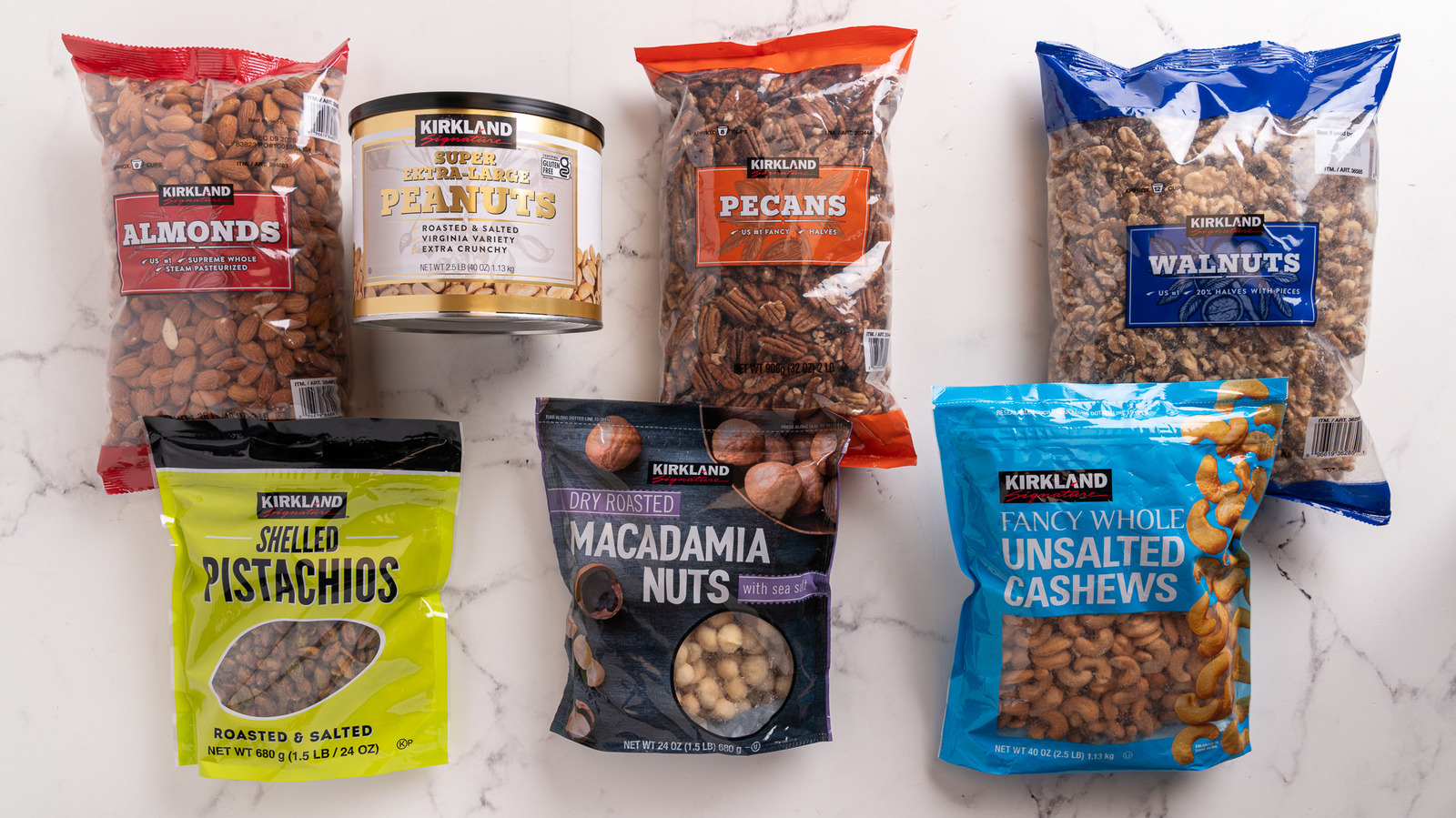
Costco is home to plenty of delicious snacks, and nuts are one of them. The chain carries many types, but the best are a positive steal at less than $20.
Food Republic – Restaurants, Reviews, Recipes, Cooking Tips

Thankfully everyone is OK, but Kreischer says ‘we would have been dead’ if the bus hadn’t blown a tire hours before, forcing them to evacuate. Continue reading…The Boot – Country Music News, Music Videos and Songs

U.S. Rep. Nick Begich III, R-Alaska, speaks to a joint session of the Alaska Legislature on Tuesday, March 10, 2026. (James Brooks photo/Alaska Beacon)
The filing deadline for this year’s Alaska Permanent Fund dividend is March 31, and if Rep. Nick Begich III has his way, this year’s dividend will be tax free.
On March 3, Alaska’s lone member of the U.S. House introduced a bill that would exempt the dividend from federal taxes.
When Begich mentioned it during his address to state lawmakers this week, it garnered a standing ovation in the state Capitol.
Begich said afterward that passing the bill into law “is going to be a lift,” but in his first year as a Representative, Begich has found an unusual amount of success. On the day he introduced the tax-free dividend measure, he had a sixth prime-sponsored bill pass the U.S. Senate and advance to President Donald Trump.
Those six bills include two Congressional Review Act resolutions that repealed regulations adopted by the administration of President Joe Biden.
When members of Alaska’s Congressional delegation speak to the Legislature, it’s usually a platform to talk about their recent accomplishments, and Begich had plenty to talk about this year.
The number of bills he passed through Congress in his first year is a record, his office said.
According to the Center for Effective Lawmaking, when Begich’s sixth bill becomes law, he will tie former Rep. Rick Renzi, R-Arizona, for the most bills that became law in a freshman term.
The 119th Congress still has several months to run, and if Begich manages a seventh, he would set the record.
“No other House freshman in our data (going back to 1973) had six or more,” said Colin Achilles, the center’s associate director, by email.
At least some of Begich’s success is attributable to groundwork laid by his immediate predecessors, Democratic Rep. Mary Peltola and Republican Rep. Don Young.
His first two passed bills were handed over by Peltola after she lost to Begich in the 2024 elections.
He’s also received help from Alaska’s two senators, Republicans Lisa Murkowski and Dan Sullivan, who have been able to guide his legislation through the Senate after passing the House.
Begich’s House-and-Senate passed bills to date include:
While the measures repealing Biden-era actions advanced along party lines, taking advantage of Republican control of the House, Senate and Presidency, Begich’s other bills have gotten unanimous support in the House, from Democrats and Republicans alike.
Speaking to the Alaska Legislature, Begich said that “not every bill is a touchdown pass, but every bill puts (points) on the board. We are getting points on the board for the state of Alaska, and we will continue to look for opportunities to do that.”
After his speech, he acknowledged that the dividend bill is something closer to a deep pass than a short run down the middle, but it helps to be ready for an opportunity.
“You have to have these bills in existence in order for them to have an opportunity to pass. And sometimes a must-pass piece of legislation will show up, and you’ll have an opportunity to attach a priority for your district,” he said. “In our case … we wanted to make sure that we had this in the clip ready to go. When that opportunity arrives, sometimes it happens faster than you think it will. Sometimes it takes a while, but you have to have the legislative text ready to go for the moment that arrives, and that’s what we’re doing on that bill.”
SUBSCRIBE: GET THE MORNING HEADLINES DELIVERED TO YOUR INBOX
Thankfully everyone is OK, but Kreischer says ‘we would have been dead’ if the bus hadn’t blown a tire hours before, forcing them to evacuate. Continue reading…Country Music News – Taste of Country

Does the use of GLP-1 medications like Ozempic and Mounjaro really have hair loss as a side effect? According to research, the answer is a bit more complicated.

Health Digest – Health News, Wellness, Expert Insights