Nope, they weren’t beefin’! Musgraves and Lambert have a duet coming. Continue reading…Country Music News – Taste of Country









Nope, they weren’t beefin’! Musgraves and Lambert have a duet coming. Continue reading…Country Music News – Taste of Country

Reading Time: 3 minutes
A 911 call reported a newborn body that was “cold.”
Three days later, authorities arrested Laken Snelling.
Now, a grand jury has indicted the University of Kentucky cheerleader.
She faces multiple charges, including first-degree manslaughter.
On Tuesday, March 10, a grand jury indicted Snelling on charges of first-degree manslaughter, abuse of a corpse, tampering with physical evidence, and concealing the birth of an infant.
The childbirth and alleged homicide took place in August 2025.
There was initially some uncertainty over which level of homicide charge the former University of Kentucky competitive cheerleader would receive.
However, after the medical examiner determined that Snelling’s newborn was alive at the time that she allegedly stashed the infant in a trash bag in her closet, this information was seemingly enough for the grand jury.
Prosecutor Kimberly Baird explained: “They were given the information about homicide, the four levels of homicide and then deliberated and decided that manslaughter first degree was the charge.”
Snelling is due back in court within the next two-to-three weeks.
As you can see in the video above, she waived ehr right to a preliminary trial in September 2025.
Snelling’s arrest was on August 30 of that year — just three days after someone uncovered a “cold to the touch” infant inside a trash bag within Snelling’s closet.
The ME concluded that the infant’s cause of death was “asphyxia by undetermined means.”
Sometimes, suffocation leaves evidence — fabric debris in the lungs, a pattern or residue over the mouth and nose. Not in this case, it seems.

According to at least one statement that Snelling allegedly made to police, she lost consciousness after giving birth in her room.
She said that she passed out on top of the newborn.
When she awoke, Snelling told police, the infant was “blue and purple.”
She apparently lied down beside the newborn for a time before bundling up everything from the birth — including the baby — and stashing it in the closet.
Snelling allegedly confessed to having heard a “whimper” during the bagging process.

In September 2025, Snelling pleaded not guilty to all of the charges that she is facing.
She was released on a $100,000 bond.
The court required Snelling to live on house arrest.
She is no longer enrolled at the University of Kentucky, where she had been part of the school’s STUNT cheerleading team.
Additionally, she is no longer part of the STUNT team.

Every incident like this is nothing short of a horror.
Infanticide has a long and brutal history. Accidental deaths of infants are also a grim reality — especially for a young woman going through the unthinkable trauma of giving birth alone.
Notably, Kentucky has outlawed nearly all forms of abortion.
If Snelling, who reportedly was unaware that she was pregnant for the majority of her pregnancy, had learned of her pregnancy in time, she would probably have had to travel across state lines — perhaps to Illinois — to exercise her human rights.
Infanticide is not excusable, if that is what happened. But this very much appears to be a no-win situation that society and our nation’s backwards laws forced upon her.
Laken Snelling Indicted on 1st Degree Manslaughter Over Dead Newborn was originally published on The Hollywood Gossip.
The Hollywood Gossip

This deli in Atlanta makes its pierogi from scratch each morning, so you might want to get there early because once they’re gone, they’re gone.

Food Republic – Restaurants, Reviews, Recipes, Cooking Tips

Given its Louisiana roots, it’s no surprise that Popeyes once served a sandwich iconic to the Pelican State, alongside its signature fried chicken.

Mashed – Fast Food, Celebrity Chefs, Grocery, Reviews
The international POLITICO Poll on adults’ ratings of different attributes of the United States.Politics
Reading Time: 3 minutes
This gives new meaning to “Hide Your Love Away”!
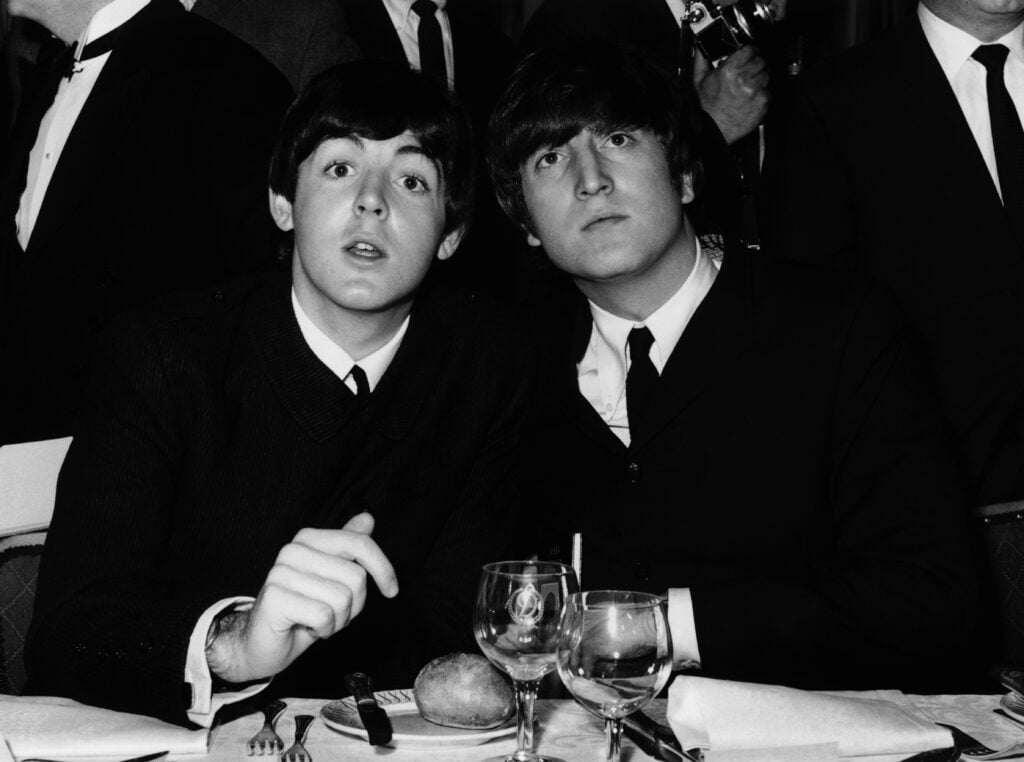
John Lennon and Paul McCartney might be the most beloved and influential songwriting duo in history.
But the relationship between the Beatles’ frontmen was tense at times — and now we know it may have been even more complex than we realized.
In a newly resurfaced interview, McCartney revealed that Lennon’s widow, Yoko Ono, believed he might have been gay.
“I swear [Ono] rang me shortly after John died and said, ‘You know, I think John might have been gay,’” McCartney told Vanity Fair (via Page Six).
“I went, ‘I’m not sure.’ I said, ‘I don’t think so. Certainly not when I knew him’… because we’d been in the ’60s,” McCartney recalled replying.
“We’d been around with loads and loads of girls. And I bumped into seeing him jacking … a lot of girl action.
“There was never a gesture, never an expression. It was nothing. So I had no reason to believe this at all.”
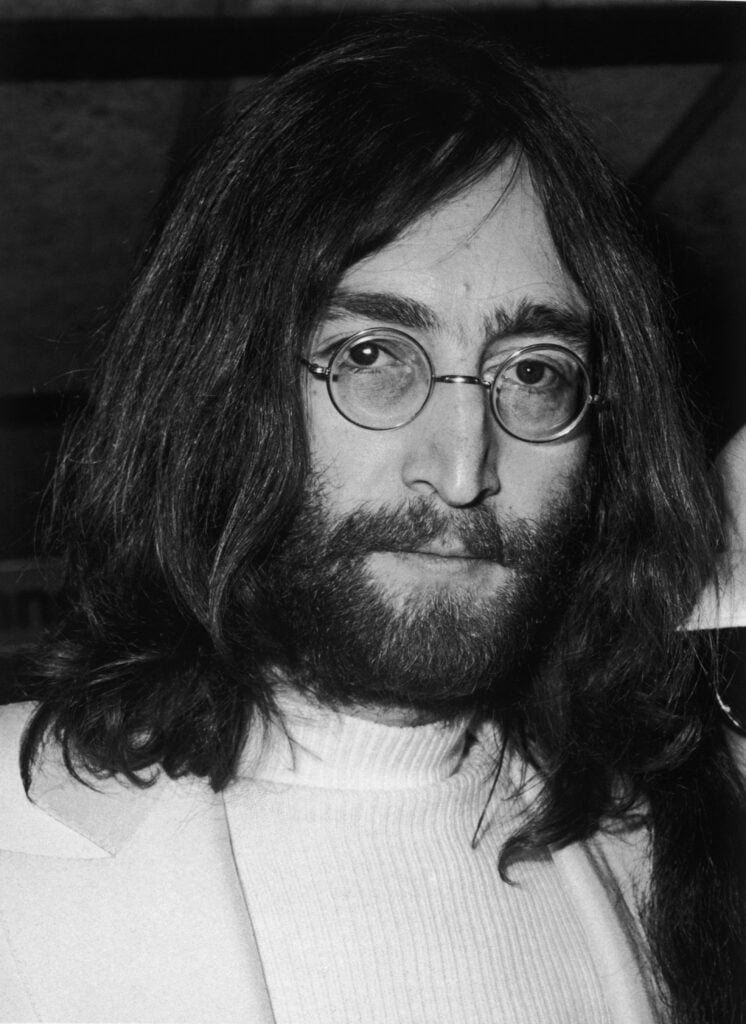
McCartney says that Ono’s suspicions may have arisen from trips that Lennon took with the Beatles’ gay manager, Brian Epstein.
“But I saw that as a power play, which was very John,” McCartney said.
“Brian would ask him as a homosexual thing – a good-looking boy who Brian fancied. They went down to Spain, had a fun time. No doubt John would play into the thing.
“I personally didn’t think anything had happened. Certainly never heard about anything happening. But I saw it as: ‘You want to deal with the Beatles? I’m the leader.’”
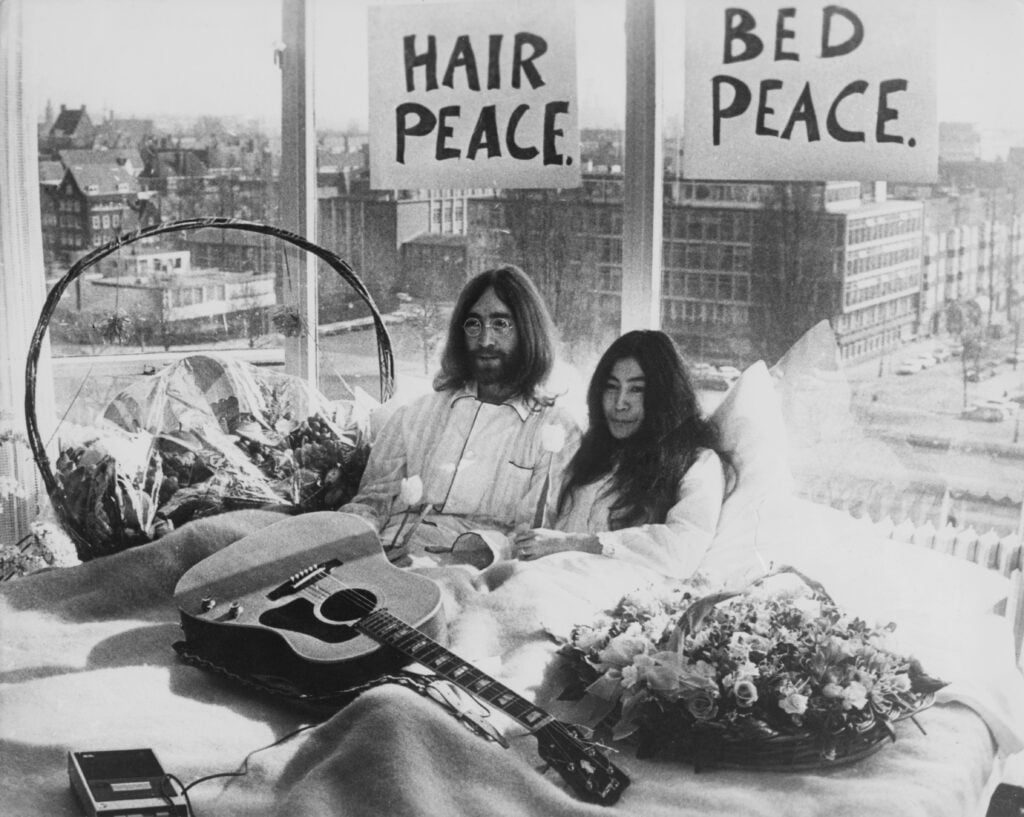
Lennon and Ono’s relationship famously had quite a few ups and downs, including the period between 1973 and 1974, when they separated and Lennon embarked on what he called his “Lost Weekend” in Los Angeles.
Lennon spent the year boozing and carousing with pal Harry Nilsson, and his marriage almost came to an end.
“There was a time when Sir Paul McCartney offered Yoko his willingness to speak to John in Los Angeles about the separation,” the couple’s pal, Elliot Mintz remarked in 2024.
“She seemed grateful for that invitation,” he continued, adding:
“Paul came out here, he had a meeting with John. His advice to him was, ‘You can’t just say that you’ve changed. You have to show it. You have to prove it. It would be like dating her again. You have to bring her flowers, you have to take her out for dinners. You have to show her how important she is to you in your world.’”
Lennon was a famously open-minded and free-spirited man, so it’s not hard to see why his widow believes he might have been open for anything.
But whatever the case, John and Yoko remained married for the rest of his life.
Yoko Ono Believed John Lennon Was Gay, Paul McCartney Claims was originally published on The Hollywood Gossip.
The Hollywood Gossip

Reading Time: 3 minutes
Valerie Bertinelli was shaking and crying uncontrollably in a video that she shared to social media.
In a sense, nothing was wrong. Nothing immediate.
For years, the actor has suffered anxiety attacks that send her body into a state of panic.
This time, she recorded herself shaking — to let followers know that they are not alone.
Bertinelli took to her Instagram page to share a video of her anxiety attack.
The 65-year-old actor, known for One Day At A Time, Touched By An Angel, Hot In Cleveland, and more, wanted to raise mental health awareness. A lot of people do not know what these sorts of attacks can look like.
“I’ve sat on this post for a day because it’s incredibly vulnerable and that’s always scary to share,” she wrote in the caption.
The video itself showed her hand trembling.
“But I’m posting because we’re all out here doing our best having a human experience,” Valerie Bertinelli wrote alongside her shaking hand. “And,” she continued, “none of us want to feel like we’re alone in that.”
She went on to detail that she had suffered a “really bad anxiety attack.”
This, she explained, had not happened in “a very, very long time.”
Bertinelli shared that she had been “shaking” and “weeping uncontrollably” while her heart “felt like it was pounding out of my chest.”

One of the sick twists of this kind of anxiety is that it can seem to go away entirely … until it comes back, catching you by surprise.
“As I’m going through the actual attack […] I almost disassociate and am focused solely on calming down and finding any road to a more relaxed and peaceful body,” Valerie Bertinelli explained. She admitted that she “can’t quite seem to calm all the way yet.”
The actor detailed how her “body goes into overdrive” and her brain is “overthinking and catastrophizing.”

For most, catastrophizing is worrying that your friend is dead when they’re merely running a few minutes late. In this case, it’s her entire body going into panic mode — a response over which she has “no control.”
Bertinelli mused: “Part of me is fascinated by what the human body is capable of when our feelings can get in the way or override any reasonable thought.”
She added: “And another part of me is just curious on how all of this happens.”

At the end of her caption under the video of her shaking, Valerie Bertinelli asked if anyone could relate to her “extreme anxiety attacks.” She also reminded her followers: “You’re not alone.”
She’s right. Many people have these experiences.
As for why … simply put, sometimes people’s bodies go into crisis mode without an emergency context.
Whether someone has cPTSD for childhood trauma or is still processing a car accident, their body might surge with panic.
In Valerie Bertinelli’s case, that means shaking and sobbing until the “false alarm” concludes.
Valerie Bertinelli is Shaking, Crying in Heartbreaking Anxiety Attack Video was originally published on The Hollywood Gossip.
The Hollywood Gossip
Reading Time: 3 minutes
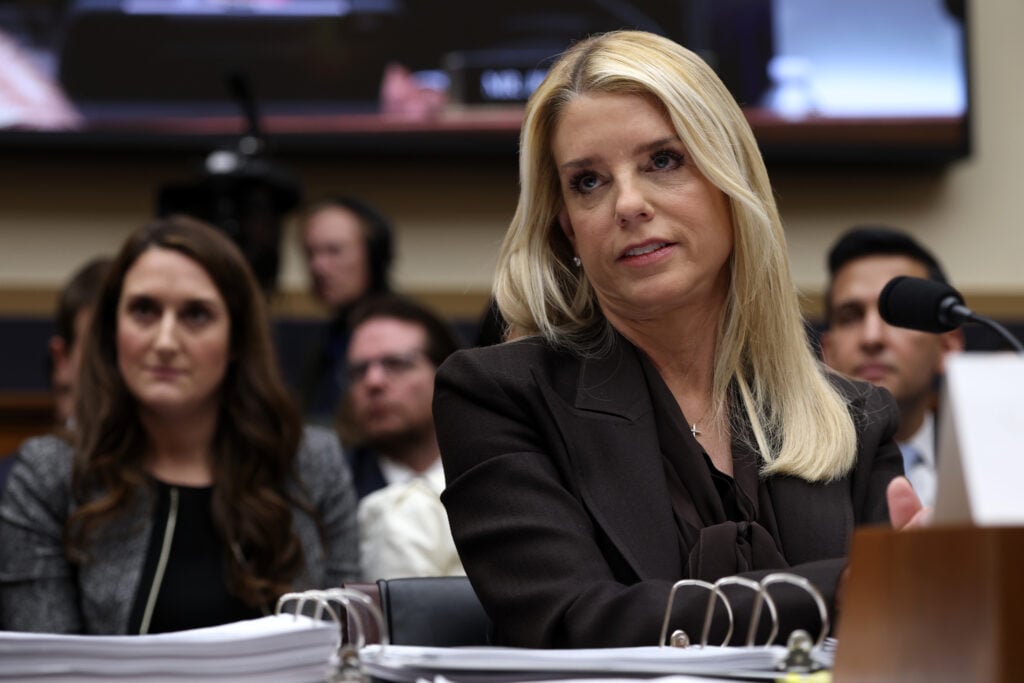
Pam Bondi has the unenviable job of being Donald Trump’s Attorney General.
She is one of the key faces of the Epstein cover-up.
A lot of people are unhappy.
As such, Bondi has been transferred from her residence to a military base, for protection.
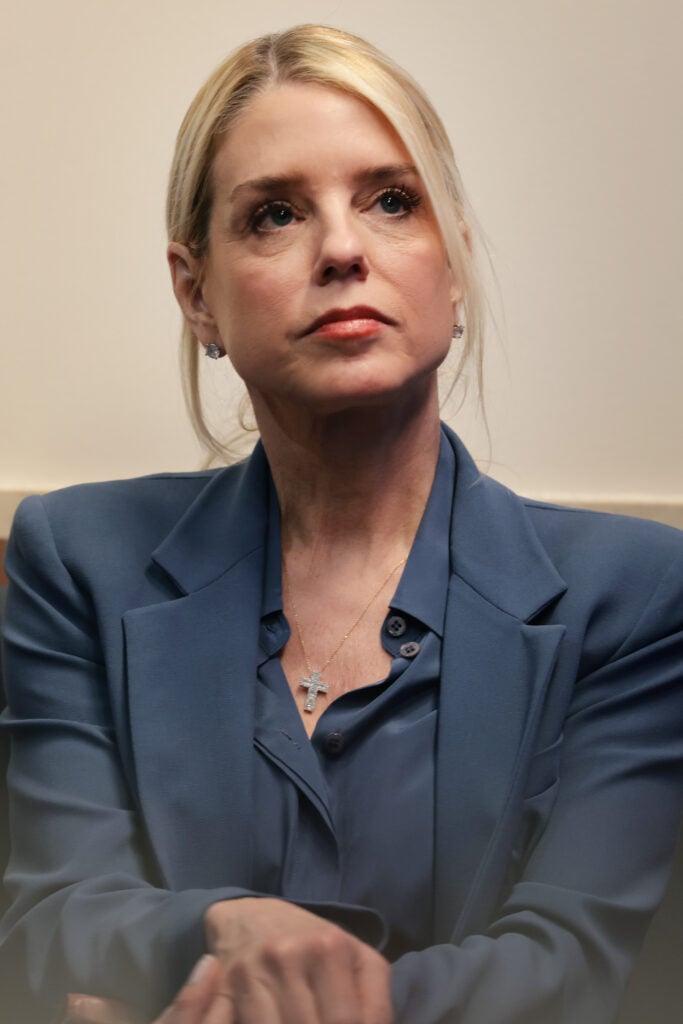
The New York Times reports that Pam Bondi, Trump’s Attorney General, has quietly moved from a civilian residence to a DC military base.
The reason is that there are numerous threats against her life.
Some of the threats allegedly stem from drug cartels. This is fairly par for the course for an AG job.
Other threats are due to the massive attempt to shield Trump and his allies from their involvement with dead pedophile Jeffrey Epstein.
That point of contention is more specific to Bondi.
According to the NYT, Bondi’s relocation took place within the past month.
This came after what remains of federal law enforcement informed her staff about the threats against her.
Public figures of many walks of life can face threats, sometimes for no reason at all.
(We write this mere days after a delusional individual shot up Rihanna’s home, apparently believing the billionaire singer to be the object of her torment.)
However, the mounting fascism within the federal government and other recent decisions by Trump have spurred greater backlash.
In January, Donald Trump had Venezuelan President Nicolas Maduro abducted from his home and transported to the United States, primarily on the grounds that no one could stop him from doing so.
This apparently prompted an uptick in the threats.
Presumably, the escalating ICE violence as they continue to terrorize American neighborhoods is also a factor.
Former Homeland Security Secretary Kristi Noem was in charge of ICE, not Bondi.
But as AG, Bondi is instrumental in shielding ICE goons from justice. She’s caught a lot of heat for that.
And Bondi is not the only one who has been relocated, the NYT reports, due to alleged threats.
Secretary of State Marco Rubio, former Secretary Kristi Noem, and former Fox & Friends weekend host turned Secretary of Defense Pete Hegseth have received the same treatment.
So, too, has white nationalist advisor to Trump, Stephen Miller.
Interestingly, Army secretary Daniel P. Driscoll and Navy secretary John Phelan were also moved to military installations.
In the latter case, his DC home burned last year, prompting his relocation.
We really wish that these folks, no matter their strong — and even justified — feelings, would stop issuing threats against government officials.
Among other things, it’s counter-productive. Governments seldom react well to threats like this. The higher that you go, the more likely that a threat is to backfire.
(Private institutions are another matter. In 2023, domestic terror threats against Target prompted the corporation to betray its LGBTQ+ customers, pulling entire product lines. Their shareholders have been paying the price ever since.)
There are many productive actions that people can take as we wait for the names of those Trump advisors relocated (and many others) to stand trial for their crimes.
Issuing threats isn’t one of them. They’ll just beef up their security and continue terrorizing America and other nations.
Be smart. Protect your neighbors. Vote wisely. Prepare for things to get worse. And look forward to Nuremberg 2.
Pam Bondi Moved to Military Base After Alleged Threats was originally published on The Hollywood Gossip.
The Hollywood Gossip

By: James Brooks, Alaska Beacon
The state of Alaska filed civil lawsuits Tuesday against six crowdfunding websites, accusing them of illegally soliciting donations for thousands of Alaska charities without consent.
In complaints filed at Anchorage Superior Court, the consumer protection unit of the Alaska Department of Law said GoFundMe, PayPal, Charity Navigator, Pledgling Technologies, JustGiving and Network For Good each violated the Alaska Charitable Solicitations Act thousands of times.
That act, in place since 1993, requires state registration for anyone who seeks donations on behalf of a charity.
The suits ask a judge to order the sites shut down the pages devoted to Alaska nonprofits and immediately disburse any donations to those nonprofits. It also asks for “separate civil penalties … of not less than $1,000 and not more than $25,000 per violation.”
According to the complaints, the six crowdfunding sites scraped IRS data to obtain the information of thousands of Alaska nonprofits, then set up donation pages for each of those nonprofits without their consent.
That scraping was part of a nationwide campaign that encompassed almost a million and a half federally registered organizations.
In some cases, the sites charged fees or encouraged “tips” to themselves during the donation process. In many cases, they poured donations into a third-party account and only released donations to charities who stepped forward to claim them, according to the complaints.
Attorney General-designee Stephen Cox said the state became aware of the issue after California reporters and state officials began investigating why GoFundMe created donation pages for 1.4 million nonprofits without their consent or knowledge.
GoFundMe later took down many of those pages, but other crowdfunding websites did not. On Tuesday morning, donation pages were still visible on Charity Navigator, one of the defendants named in the new Alaska lawsuits.
Earlier this week, almost two dozen state attorney generals sent a letter to GoFundMe, demanding answers to questions about its policies.
Alaska did not sign that letter, in part because officials here believed the response was too weak.
In a prepared statement, Cox said, “Alaska law is clear: if you’re going to raise money in a charity’s name, you must first get the charity’s consent. These lawsuits are about protecting donors, protecting nonprofits, and preserving the public trust that makes charitable giving possible.”
Laurie Wolf is President and CEO of the Foraker Group, which advises Alaska nonprofits and provides them with administrative support.
The Foraker Group has been issuing warnings about the issue for months, and Wolf filed an affidavit in support of the lawsuit, as did a representative of the Bethel Community Services Foundation and Bread Line Inc., which operates a food bank in Fairbanks.
By phone on Tuesday, Wolf said the issue is a matter of consent: “They are impersonating 1.2 million nonprofits across this country, they’re impersonating them without their consent or even their knowledge.”
She said the issue became particularly important last fall, when people across the United States and the world became aware of the devastation caused by ex-Typhoon Halong in Western Alaska.
Many people, not knowing local Alaska charities, simply donated via links they found on internet searches. Some of those donations may have never reached their intended recipients.
If a crowdfunding website operates independently of the charity it intends to benefit, it might interfere with the charity’s own fundraising, she explained.
Someone might never be recognized for their gift and become angry, hurting the charity’s long-term relationship with their community.
“They take away the ability for the organization to make choices for itself about how it wants to build trust and relationships with its donors, and how it wants to put its brand and its mission out in the public sphere. They’ve taken away all of our choices about that,” she said.
In addition, donations may be subject to fees or never reach a charity at all, particularly if the charity is unaware that a crowdfunding website is holding money for it to collect.
The Foraker Group went so far as to conduct an experiment and had an employee donate to the group through several of the defendants’ platforms. In multiple cases, it took weeks before the donation reached its intended recipient, and in some cases, the donor’s identity was concealed, making it impossible for the charity to properly thank them.
GoFundMe was the only defendant to respond to emailed inquiries before the Beacon’s reporting deadline on Tuesday.
“GoFundMe’s mission is to help people help each other by making it easier for donors to discover and support the causes they care about. We are committed to helping nonprofits reach new supporters by connecting them with the millions of people on our platform who want to make a difference. Nonprofit Pages were created using publicly available information to help people support nonprofit organizations, with donations going to the intended nonprofit,” said Jeff Platt, communications manager for GoFundMe.
“After hearing feedback from nonprofit leaders in October, we acted quickly to make Nonprofit Pages fully opt-in, removed and de-indexed unclaimed pages, and turned off search engine optimization by default. The immediate changes we made directly addressed the concerns of the nonprofit community, and reflect our continued commitment to transparency, accountability, and partnership with the nonprofit sector,” he said.
This week’s lawsuits in state court rely in large part on the 1993 Alaska Charitable Solicitations Act.
That bill passed the Alaska Legislature amid a surge of concern about telemarketers soliciting donations by phone.
Then-Rep. Ron Larson, a Democrat from the Matanuska-Susitna Borough, sponsored the act and told fellow lawmakers at the time that “lookalike organizations” were “ripping off” legitimate charities.
The act made no mention of donations by internet, and in state law, it’s still labeled as “Telephonic solicitations,” but it goes on to state that under any circumstances it is unlawful to use a charity’s name or symbol without their permission.
“Alaskans are generous people. But generosity depends on trust,” Cox said in his prepared statements. “GoFundMe and similar platforms used nonprofits’ good names to solicit donations without coordinating with the organizations actually doing the charitable work. That means some Alaskans may have donated thinking they were supporting a specific charity, when the charity never authorized the page and may never have received the donation — or may have received less than donors intended because of fees.”
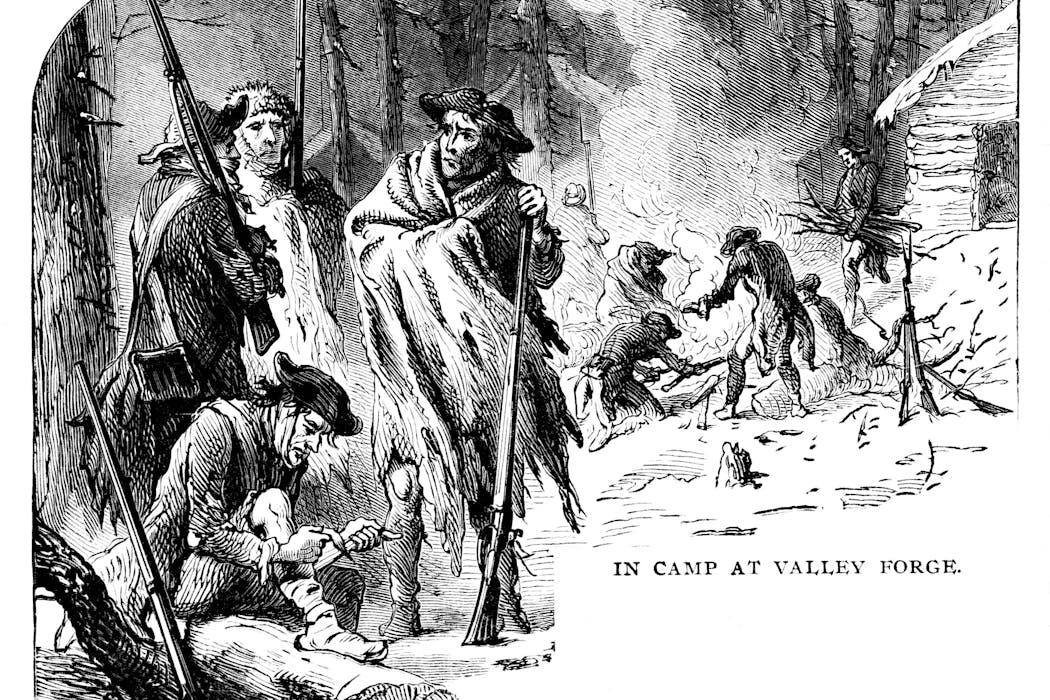
The Continental Army’s winter encampment at Valley Forge, between December 1777 and June 1778, is the stuff of legend. Chased out of Philadelphia by the British Army, George Washington and over 12,000 American troops retreated to Valley Forge, where they spent six long months harried by hunger, disease and the bitter cold.
In this context of frayed nerves and short tempers, a scuffle arose when some of the native-born soldiers antagonized the Irish recruits by dragging an effigy of a “stuffed Paddy” through camp on St. Patrick’s Day, March 17, 1778. The Irish, outraged at the sight of their patron saint being mocked, rose up to meet the challenge with their fists.
But George Washington quickly responded by claiming, “I, too, am a lover of St. Patrick’s Day.” He ordered an extra glass of grog for every man, “and thus all made merry and were good friends.”
By the late 1770s, people had been commemorating the anniversary of St. Patrick’s death – reputedly on March 17, 461 – for over a thousand years. Irish immigrants brought the tradition with them when they moved to North America, and officers in the Continental Army regularly used the holiday to bring glimmers of cheer to their cold and gloomy camps.

In Morristown, New Jersey, in 1780, for example, Col. Francis Johnston insisted that “the celebration of (St. Patrick’s) Day should not pass by without having a little rum issued to the troops,” and he bought a small barrel to prove it. Accounts of the party were published in local newspapers.
“The whole army celebrated the day with that decorum which is characteristic of them, and which evidenced their attachment and unfeigned regard to the valiant Irish nation,” said an eyewitness. The soldiers’ dual loyalties to Ireland and America were reflected in the toasts they drank that day.
Cheers were raised for George Washington and “the American army,” but also for Irish patriots such as Henry Grattan and Henry Flood. “May the field pieces of Ireland bellow,” proclaimed one soldier, “till the nation is free.”
As the author of a forthcoming book on the global history of St. Patrick’s Day, the wartime popularity of St. Patrick’s Day does not strike me as surprising. Irish immigrants made up a sizable fraction of George Washington’s Continental Army during the American Revolution, partly because the war came on the heels of the first wave of modern mass migration from Ireland, which lasted from the early 1720s to the mid-1770s.
As a result, Irish newcomers, especially Presbyterians from Ulster, were overrepresented in the Middle Colonies of Pennsylvania, Delaware, New York and New Jersey when the war broke out. Their disproportionate enlistment accounts for the fact that Pennsylvania’s collection of infantry regiments and companies was nicknamed the “Line of Ireland” during the conflict.
Yet focusing on Irish patriots tells only half the story of what St. Patrick’s Day meant during the Revolutionary War era.
Plenty of Irishmen served as British redcoats throughout the war too.
On March 17, 1779, 2½ years after capturing New York, the British army published a recruiting advertisement in the city’s Royal Gazette newspaper.

“All Gentlemen Natives of Ireland are invited to join the Volunteers of Ireland, commanded by their Countryman, Lord Rawdon,” the ad announced. Francis Rawdon, the scion of a wealthy Anglo-Irish Protestant family from County Down in the north of Ireland, was a dynamic army officer in his mid-20s and the perfect figurehead for this new regiment.
Later that evening, these Irish loyalists celebrated St. Patrick’s Day “with their accustomed Hilarity,” noted a local journalist. Lord Rawdon’s Volunteers of Ireland regiment led the way with a parade, followed by a banquet.
“The soldierly Appearance of the men, their Order of March, Hand in Hand, being all NATIVES OF IRELAND, had a striking effect,” gushed the New-York Gazette. Being “naturally gallant and loyal,” the Irish will always “crowd with Ardour to stand forth in the Cause of their King, of their Country, and of real, honest, general Liberty.”
To be Irish in New York in 1779 meant being loyal to the crown. But when the British evacuated New York four years later, they took their red coats – and their loyalist St. Patrick’s Days – with them.
In time, memories of these pro-British parades and banquets proved unseemly in the fledgling republic. They were subsequently written out of most histories of Irish America. The official website of the world-famous Manhattan St. Patrick’s Day parade, for example, makes no mention of these loyalist processions.
Yet taking a closer look at these forgotten chapters of history is important because it reminds us that there has always been a debate over what it means to truly “be Irish” in America.
In the 1770s, it was a conflict over loyalty to the crown. Today, it can mean disagreements about abortion, gun control or immigrants’ rights.
The truth lies buried in the many stories of Irish America.

Cian T. McMahon received funding for this project through a Hibernian Research Award from the Center for the Study of American Catholicism (CUSHWA).
Politics + Society – The Conversation