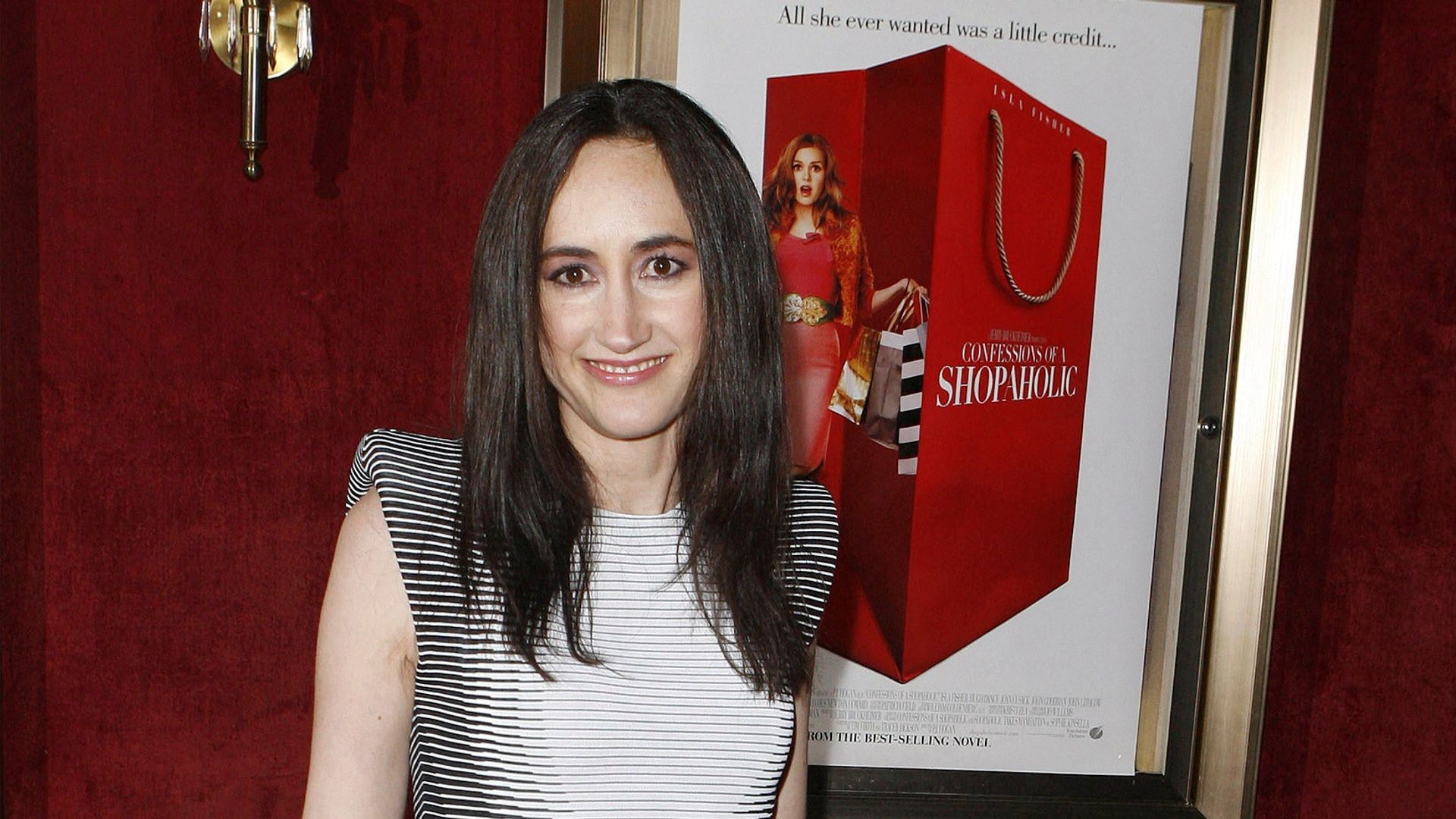
Sophie Kinsella, author of the Shopaholic series of novels, has been hailed as a “graceful” inspiration who left her readers feeling better about themselves, following her death at the age of 55.The Latest News from the UK and Around the World | Sky News
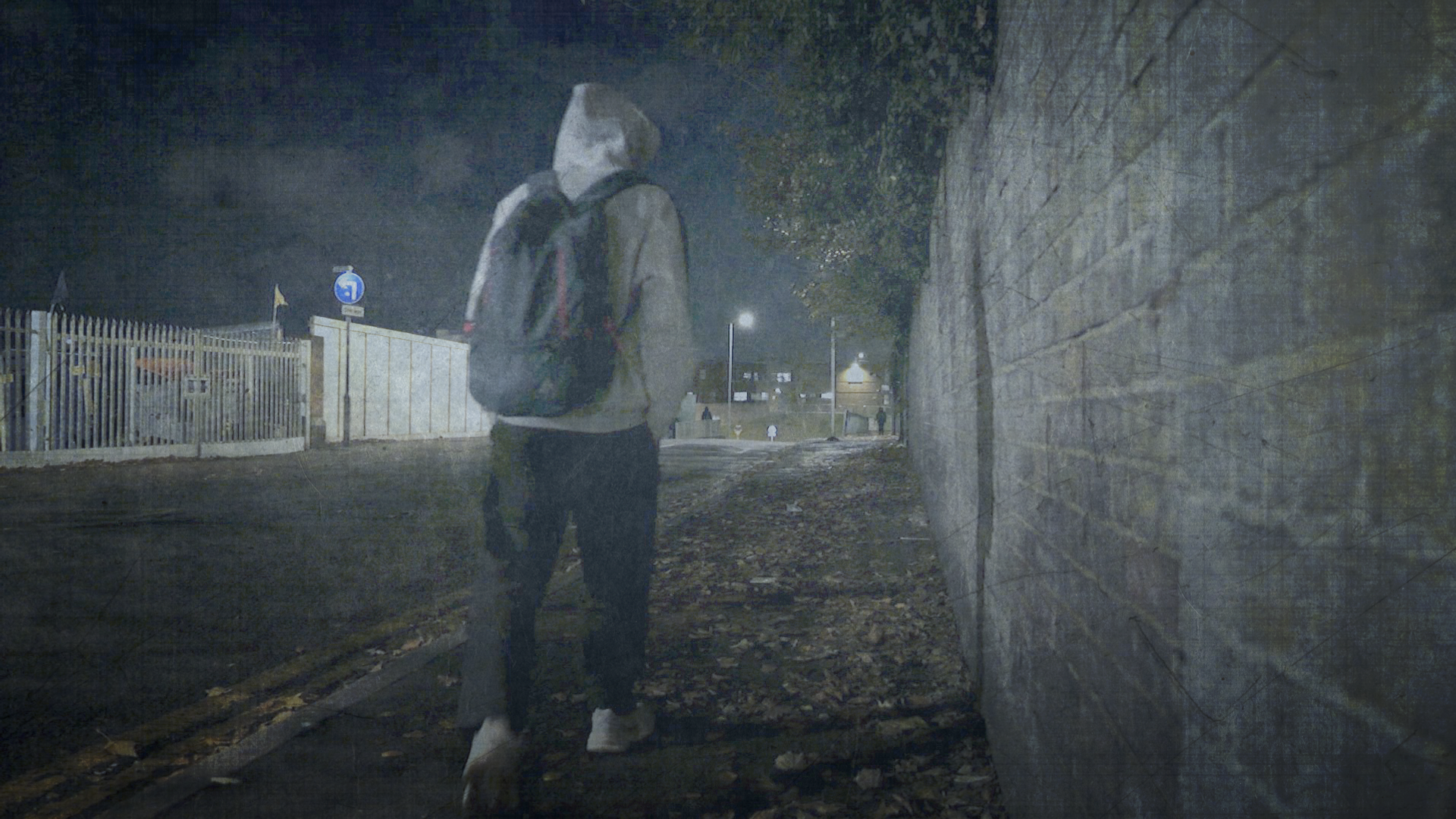
Snapchat is the most commonly-used social media platform in reported child exploitation and abuse offences, according to new police figures.The Latest News from the UK and Around the World | Sky News
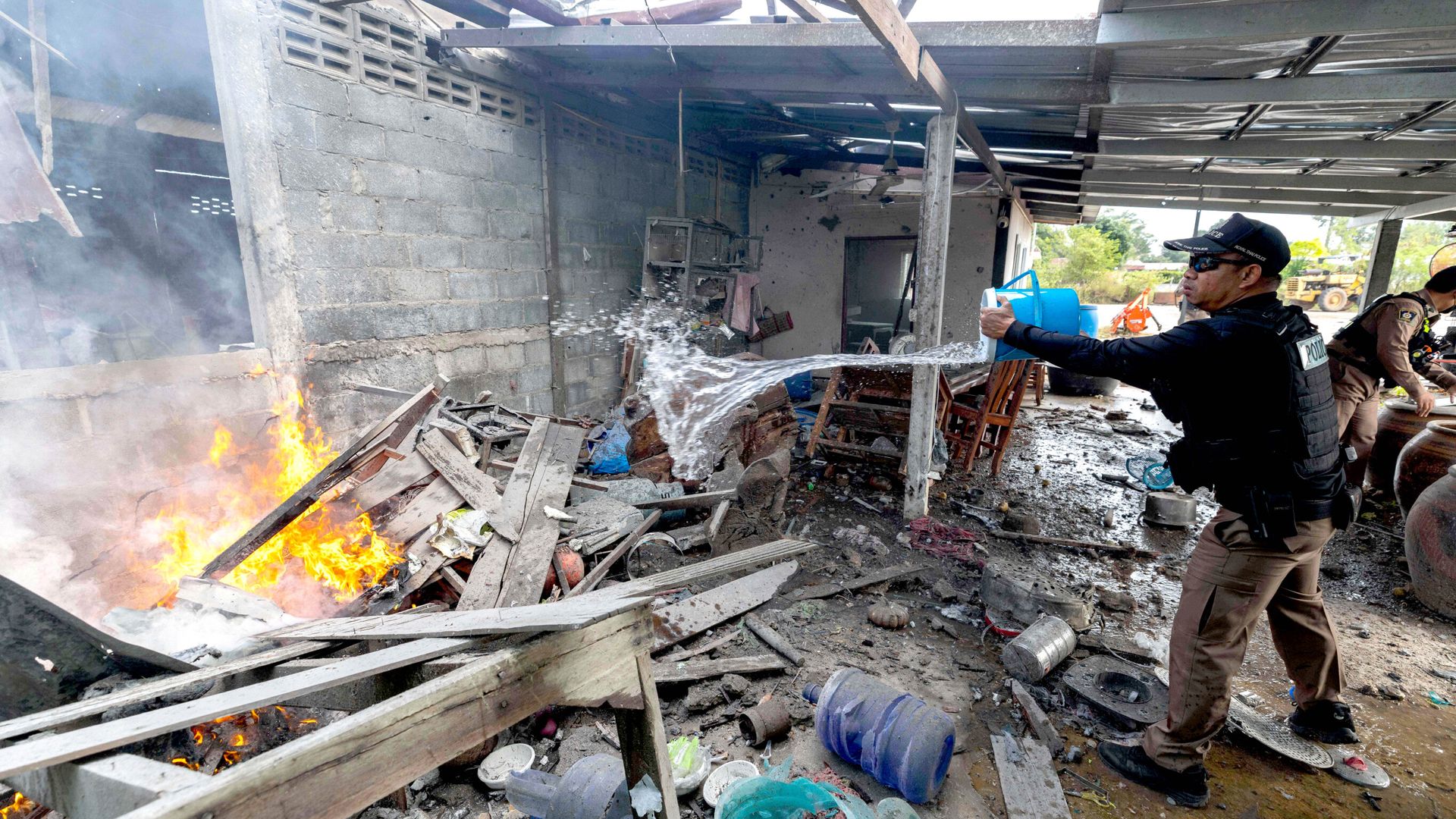
The first civilians have been killed in Thailand as the conflict with Cambodia erupted again, days after a ceasefire pushed by Donald Trump.The Latest News from the UK and Around the World | Sky News
The government has denied claims from Argentina’s president that the two countries are in talks about lifting an arms export ban that has been in place since the Falklands War.The Latest News from the UK and Around the World | Sky News
The US has seized an oil tanker off the coast of Venezuela, escalating tensions between Washington and Caracas.The Latest News from the UK and Around the World | Sky News
Sen. Jesse Bjorkman, R-Nikiski, speaks Wednesday, April 23, 2025, on the floor of the Alaska Senate. (Photo by James Brooks/Alaska Beacon)
In a Friday hearing, members of the Alaska Senate spoke critically about a proposed new ferry terminal in Juneau, questioning why the project would be worth its multimillion-dollar cost.
Earlier this year, state legislators planned to divert $62 million from a variety of transportation projects in order to pay for the state share of federal transportation grants worth between $500 million and $600 million.
Lawmakers included the diversion in their budget for the year, but Dunleavy vetoed the maneuver, saying that the “funding is either still obligated in the original project or has been fully expended and is unavailable for reappropriation.”
That left legislators’ spending plan partially unfunded.
One of lawmakers’ biggest targets this past spring was DOT’s plan to build a new ferry terminal in Juneau, roughly 30 miles north of the existing terminal in Auke Bay, in Juneau at a place called Cascade Point, which would shorten ferry runs to Haines and Skagway.
Legislators sought to divert $37 million from an account intended to fund that new terminal, but Dunleavy vetoed the transfer and the Department of Transportation subsequently signed a $28.5 million contract for work on the terminal.
In October, the state’s ferry advisory board concluded that the project likely did not make economic sense.
“Do you agree with that study?” asked Sen. Jesse Bjorkman, R-Nikiski, during Friday’s hearing of the Senate Transportation Committee.
“Can you please make the case to the Alaska people why you think investing this money … in the Cascade Point project makes fiscal sense for Alaskans?”
Anderson responded that “as a public agency, we’re more than economics. In this case, there’s this idea of saving people time with a much shorter run, saving money, the cost of operating that ship, we’re saving fuel. It’s less carbon emissions. I mean, there’s a lot of good benefits to shorter ferry runs.”
Lawmakers don’t have the votes to override the governor’s vetoes, which means that when they reconvene in January, they’ll have to come up with a new way to fund construction work this summer.
According to documents presented to the committee on Friday, the Alaska Department of Transportation has “deferred” about 25 projects 1-3 years “to remain within available match.”
Without new money, “fewer projects will move to contract award, limiting construction activity.”
Ryan Anderson, commissioner of the Alaska Department of Transportation and Public Facilities, told the transportation committee that his agency is prioritizing “shovel ready” projects, those that are about to go to construction.
“As we go and prioritize projects through this year, we’ll continue that action, and we’ll be ready. That’s really how we’re looking at this program,” he said.
NOTN- Capital City Fire Rescue responded to its first ice-related emergency of the season after a person broke through thin ice on Mendenhall Lake on Tuesday, authorities said in a Facebook post.
The individual fell through the ice but was able to climb out without assistance and was treated for hypothermia, according to a CCFR statement.
The incident comes as Juneau is experiencing cold weather this week.
Officials say that ice conditions remain highly variable and unpredictable across the lake, particularly near the glacier, creek mouths and areas of moving water.
“People ask, ‘When is the lake safe?’ We will say never, as we respond all winter long for people that went through the ice,” CCFR wrote in their post.
The National Weather Service advises that ice thickness can vary dramatically over short distances on Mendenhall Lake and warns that early-season ice is especially unreliable. Even with freezing temperatures, officials expect cycles of thawing and refreezing through the winter.
Dusk in downtown Lumberton, county seat in Robeson County, N.C., the most diverse rural county in America. AP Photo/David Goldman
Roughly 1 in 5 Americans live in rural areas – places the federal government defines based on small populations and low housing density.
Yet many people understand rural America through stereotypes. Media and political conversations often use words or terms such as “fading,” “white,” “farming,” “traditional” and “politically uniform” to describe rural communities.
In reality, rural communities are far more varied. Getting these facts right matters because public debates, policies and resources – including money for programs – often rely on these assumptions, and misunderstandings can leave real needs neglected.
An important thing to know about rural population change is that the places defined as “rural” change over time. When a rural town grows enough, the U.S. Office of Management and Budget reclassifies it as “urban.” In other words, rural America isn’t disappearing – it’s changing and sometimes urbanizing.
The largest share of rural jobs today is in service-sector work, such as retail, food service, home health care and hospitality. These jobs often pay low wages, offer few benefits and have unstable hours, making it harder for many rural families to stay financially secure.
Myth 3: Only white people live in rural America
People often picture rural America as mostly white, but that’s not the full story. About 1 in 4 rural residents are nonwhite. Hispanic and Black people make up the largest shares, and Indigenous people have a greater portion of their population living in rural areas than any other racial group.
Rural America is also getting more racially and ethnically diverse every year. Young people are leading that change: About 1 in 3 rural children are nonwhite. The future of rural America is racially diverse, even if popular images don’t always show it.
Myth 4: Rural America is healthier than urban America
This isn’t just because rural areas have more older people. Rural working-age people, ages 25 to 64, are dying younger than their urban peers, and the gap is growing. This trend is being driven by nearly all major causes of death. Rural residents have higher rates of early death from cancers, heart disease, COVID-19, motor vehicle crashes, suicide, alcohol misuse, diabetes, stroke and pregnancy-related complications.
Myth 5: Rural families are more traditional than urban families
However, social class and regional flips in voting patterns have meant rural voters have been shifting toward Republicans for nearly 50 years. The last time rural and urban residents voted within 1 percentage point of each other was in 1976, when Georgia peanut farmer and former governor Jimmy Carter was elected.
The partisan gap between rural and urban voters averaged 3 percentage points in the 1980s and 1990s, before growing to 10 percentage points in the 2000s and 20 percentage points in recent cycles. So, Trump’s support in rural America was not a new “revolt” but part of a long-term trend.
And in 2024, the key geographic story wasn’t rural voters at all – it was the sharp drop in turnout in big cities. Both candidates got fewer urban votes than in 2020, with Kamala Harris capturing over 10 million fewer votes in major and medium-sized cities than Joe Biden had four years earlier.
Tim Slack has received funding from the NSF, USDA, NIH, U.S. Department of the Interior, U.S. Department of Energy, Louisiana Department of Energy and Natural Resources, and Gulf of Mexico Research Initiative.
Shannon M. Monnat receives funding from the National Institutes of Health and the Lerner Center for Public Health Promotion and Population Health at Syracuse University.
Was Kim Kardashian wrong to call out Howard Stern?
On last week’s The Kardashians episode, Kim recalled the horrors of her 2016 robbery in Paris.
Emerging from that harrowing ordeal only to have people accuse her of staging a hoax for publicity compounded her trauma.
But her callout of Stern invited a response from the man himself. He says that he didn’t accuse Kim of making things up back then — but it sounds like he sure is now.
Almost a decade later, Kim Kardashian told the camera how eager she was to face her robbers in court. (Image Credit: Hulu)
Kim Kardashian has a decade-old grudge against Howard Stern
On the Thursday, December 4 episode of The Kardashians on Hulu, viewers got an in-depth look into the infamous 2016 Paris robbery.
Kim Kardashian called out those who had accused the traumatic incident of merely being a hoax — including ex-husband Kanye West and controversial host Howard Stern.
After fearing that she would be raped, murdered, or both, doubts — and sick jokes — on social media cut her to the core.
Obviously, Ye accusing her of faking such a horror for reality television hurt the most. He was, at the time, her husband.
But hearing actual media outlets even entertain the notion sickened Kim.
‘The Kardashians’ featured throwback footage of Kim Kardashian in Paris prior to the 2016 robbery. (Image Credit: Hulu)
Because Kim called out the notorious radio host by name, it is only natural that he respond. And he did.
However, Stern did not offer an apology. Nor did he double down on being a Kim robbery “truther.”
(It is an indictment of our culture, one of many, that the term “truther” means someone who espouses lies about historic events)
Instead, Stern argued that he did not, in fact, deny that Kim had been the victim of a horrific robbery.
He said that he simply discussed the horrors, only for him and his co-host to affirm that they believe that it happened. (Stern also cracked an unfortunate joke about the matter)
‘If it is a farce, then really they should go to jail for that’ but ‘I don’t think it is’
Though it is possible that Kim Kardashian has her own clips to play, Howard Stern presented his defense in video form.
“If this woman was robbed at gunpoint by a bunch of dudes and they threw her in a bathtub and tied her up — or whatever they did — I mean, that is frightening,” Stern affirmed in one clip.
He continued: “If it is a farce, then really they should go to jail for that.”
Robin Quivers, his co-host, emphasized: “I don’t think it is.”
Stern agreed, saying: “I don’t either.”
On ‘The Kardashians,’ Kim Kardashian repeatedly teared up while recalling the trauma of the 2016 Paris Robbery 9 years earlier. (Image Credit: Hulu)
In addition to discussing the people who doubted Kim’s horror story, Stern did crack a joke.
“The one time the Kardashians don’t have a camera, something interesting happens,” he lamented.
Not in good taste.
But also not the worst joke that he could have made about the harrowing ordeal, either.
Even today, Stern contends that what he said at the time was “a fair assessment.” Like so many of us, he was discussing what others had said — not condoning or echoing their claims.
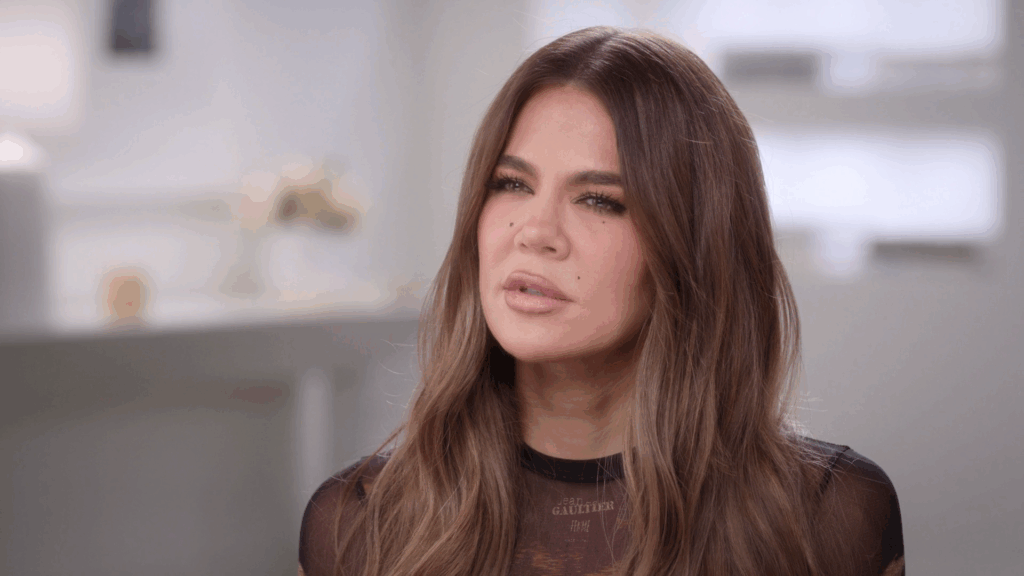
Like the rest of her family, Khloe Kardashian expressed outrage and disgust at people who accused her sister of fabricating the 2016 robbery. (Image Credit: Hulu)
‘You don’t need to make up stuff’
Though he denies claiming that Kim Kardashian pulled a hoax, Howard Stern did acknowledge that he’s said much worse over the years.
“I have said so many awful things in my career,” he admitted.
Stern then added: “You don’t need to make up stuff.”
We would suggest that Kim probably wasn’t manufacturing lines. In the headspace that she must have experienced in 2016, she very likely recoiled at every suggestion that one of the worst moments of her life was fictitious.
That is understandable! Denials and accusations compound trauma.
We do have to wonder if Kim will let the matter drop, or if she plans to hit back with her own clips of Stern’s commentary.