The podcast network has reduced its active lineup to four shows, leading to no new episodes for Open Makers. However, past content remains accessible, with a shift towards deeper discussions on open source and web trends.









The podcast network has reduced its active lineup to four shows, leading to no new episodes for Open Makers. However, past content remains accessible, with a shift towards deeper discussions on open source and web trends.
[00:00:19] Nathan Wrigley: Welcome to the Jukebox Podcast from WP Tavern. My name is Nathan Wrigley.
Jukebox is a podcast which is dedicated to all things WordPress. The people, the events, the plugins, the blocks, the themes, and in this case, migrating to blocks at an enterprise level and what’s involved in moving from a different CMS into WordPress.
If you’d like to subscribe to the podcast, you can do that by searching for WP Tavern in your podcast player of choice, or by going to wptavern.com/feed/podcast, and you can copy that URL into most podcast players.
If you have a topic that you’d like us to feature on the podcast, I’m keen to hear from you and hopefully get you, or your idea, featured on the show. Head to wptavern.com/contact/jukebox and use the form there.
So on the podcast today, we have K. Adam White, or K. Adam for short. K. Adam is the principal engineer at Human Made, an enterprise WordPress consultancy. He’s been involved with WordPress for almost 20 years, attending his first WordCamp in Boston back in 2011, and has contributed to WordPress Core and the broader open source ecosystem. Human Made is known for delivering complex projects, think high stakes, no room for mistakes? From global brands moving to WordPress.
This time around, K. Adam delivered a presentation at WordCamp US focused on a crucial topic for anyone modernising their site, migrating to blocks. Human Made has been all in on the block editor since the Gutenberg plugin days, and the team now specialises in large scale migrations from other content management systems like Sitecore, as well as from other WordPress page builders.
Our conversation focused on the technical and editorial challenges of moving tens, or hundreds, of thousands of posts into the world of blocks and patterns. We talked about the need to combine artisanal care, attention to detail in design, layout, and brand, with industrial scale. The ability to automate, audit and validate mass migrations without losing visual fidelity.
We also discussed the use of patterns as a foundation for development, integrating custom and Core blocks, and leveraging new tools, including AI powered agents and open source plugins like Human Made’s, own rehydrator, to streamline migration workflows.
We also touched upon how clients are onboarded. The process of auditing legacy content. Strategies for training editorial teams on the block editor. And there’s a frank reflection on gaps in WordPress, like granular content permissions.
If you are contemplating a move to the block editor, wrestling with a massive content migration, or curious about what happens when enterprise complexity meets the flexibility of WordPress, this episode is for you.
If you’re interested in finding out more, you can find all of the links in the show notes by heading to wptavern.com/podcast, where you’ll find all the other episodes as well.
And so without further delay, I bring you K. Adam White.
I am joined on the podcast by K. Adam White. Hello, K. Adam.
[00:03:41] K. Adam White: Hello. It’s good to be here.
[00:03:42] Nathan Wrigley: Yeah. Thank you for joining us. You have an interesting name. Just go on, I know it’s totally off piste, but tell us about your name.
[00:03:49] K. Adam White: Sure. It’s a first initial K, and the middle name Adam that got conjoined in college and I quite like it. So I think in a sphere, and a particular niche in WordPress with so many Adams of so many different colours, then K. Adam is a little bit more me.
[00:04:04] Nathan Wrigley: Yeah, nice. So we’re in the corridor, so forgive any noise that you hear on this podcast episode. We can’t avoid it. We’re in the corridor at WordCamp US, and you have done, some presentation work this time around. Do you want to just tell us, I mean I presume it’s happened because we’re at the very closing stages of the conference. How did it go?
[00:04:21] K. Adam White: It went, as far as I can tell, quite well. My session was early yesterday, right after the morning keynotes in that early slot where everyone’s coffee has kicked in, and the fatigue of the conference hasn’t quite set in yet.
So I had a great audience and the talk I thing went quite well. I’ve had a number of different conversations off the back of it on various different topics that I covered. So the breadth of those discussions has been really exciting for me.
[00:04:44] Nathan Wrigley: So that is going to be the meat and the bones of what we’re going to talk about today. But first, if you don’t mind, let’s talk a little bit about you and what you do and where you work, just so that we can paint your credentials if you like.
So tell us about your job, how long you’ve been in the WordPress space? Who do you work for? Et cetera.
[00:04:59] K. Adam White: Yeah. My job is principal engineer at Human Made. We’re a WordPress enterprise consultancy, and I have been there nine years. I’ve been in the WordPress community quite a lot longer than that. My first WordCamp was WordCamp Boston 2011, which is a mind boggling 15 years ago now. And before that, I had been using WordPress personally since 2007. So we’re coming up on 20 years of involvement, at least as a user. And then, became a contributor in the early 2010s around 2013, I think my first commit landed.
[00:05:25] Nathan Wrigley: Yeah, nice and Human Made, if you haven’t heard, we’ll put the links into the show notes, anything that K. Adam mentions today, we will put us a link on the WP Tavern podcast episode website, so you can click through to it. But go and check out Human Made, definitely one of the big hitters. I think it’s fair to say in the WordPress space.
[00:05:40] K. Adam White: It’s very kind of you to say so.
[00:05:42] Nathan Wrigley: You did your presentation and it was entitled, Migrating to Blocks. I’m going to intuit from that, that Human Made is all in on the block editor. You’re not using some sort of other proprietary platform. Would that be the case?
[00:05:55] K. Adam White: That would be the case. We were very early adopters of Gutenberg back in its plugin days. We were doing work before it was merged for building out some early block sites, testing out what we could do. Learning how to build and change our theme development processes to move in a more block oriented direction, and then follow that directly into the Full Site Editor world.
And it’s been a great ride. We do work with other page builders and other blocks, platforms and frameworks. We do tend to, as a company, work on projects that have some sort of particular technical complexity that made someone come to us rather than a different agency.
That does mean that we are broadly specialised in WordPress as a platform, including many of those page builders. We’ve worked with Elementor, we’ve worked with Divi, Beaver Builder, but we as a company will always advocate for the block editor and the site editor. And we have our own processes oriented more and more towards delivery with that framework in mind.
I think that the thing that is bringing some of the companies that we help to migrate to WordPress into this ecosystem is the flexibility and the quality of the editorial experience. And personally, my opinion is that Gutenberg does that leaps and bounds better than any of our other page builders that don’t have that native integration into the platform.
[00:07:09] Nathan Wrigley: So if a client comes to you and they are agnostic as to what you are going to build with, your default posture would be we are going to use the block editor.
[00:07:16] K. Adam White: Absolutely default.
[00:07:17] Nathan Wrigley: Okay. And do you have to do any level of persuasion anymore? I’m guessing if we were to rewind the clock, let’s go to 2017, soon after Gutenberg started to become more widely available. I imagine there was quite a bit of explaining to do. Do you still have to do any of that? Or is it a case now that the enterprise people understand what’s going on, and there’s less of a back and forth about whether they should use blocks and patterns and whatever else?
[00:07:41] K. Adam White: If we are building from scratch, we haven’t found there is any reluctance. Particularly if people are coming from a different content management system, particularly a different enterprise content management system. The editor is so compelling, that there’s never any objection to using it. They might ask, should we use this or some other thing I’ve heard of? And we can say, the block editor is built in. We feel that it’s the most robust and future proof platform that you can choose. So we would recommend going that route rather than adding in another plugin, however good they are.
But we do still, nonetheless, have some projects where they are already on a page builder, and they might have invested a lot of training. We might have an entire business school worth of people that are very comfortable with whatever their existing system is, whether that’s Beaver Builder or something else, et cetera, Elementor.
And I think that it’s very important for us to remember what our remit is when we come into a project. That, doesn’t always involve helping them change everything to match what we see as the future. I think that’s a responsibility of the client to understand where they are in conjunction with where the WordPress roadmap is, and make their own decisions about what tools are right for them.
So, for existing projects, we’ll work with what’s right for the clients editorial team, but if we have to make a recommendation, it will always be the block editor.
[00:08:56] Nathan Wrigley: Okay. Yeah, good to know. At place in the market where you are, I’m presuming there’s very little room for error. When you build something, it’s got to work out of the box, on day one. You’ve presumably got stakeholders who’ve got editorial teams, and they’re fairly, we’re, dealing with large corporations that can’t afford for there to be mistakes.
So that kind of leads us to the nature of your presentation, which was called, and again, links will be in the show notes on wptavern.com. Migrating to Blocks with Artisanal Care and Industrial Scale. And I’m actually just going to read the first paragraph because it summarises what we’re going to talk about perfectly. It’s fairly long, but I’ll go through it all.
Whether we’re modernising an old personal blog or migrating hundreds of thousands of existing posts from another CMS. Using WordPress in 2026 means converting our contents to blocks. The convert to blocks button in the editor works well enough for one post. But if we have dozens or hundreds, what can we do to make the process less manual and more powerful? How can we integrate a site’s content directly into full block patterns without losing the columns and structure it had before? And then it goes on to mention, a particular build, I presume, where you were leaving one CMS coming into WordPress.
Just lay out some of the fun, interesting problems that you have to overcome when you’re moving from an entirely different CMS into WordPress, because I guess it’s more complicated than, “Look, there’s a bunch of paragraphs and images. Let’s just drag those over and hope for the best.” Tell us what the problem before you is.
[00:10:22] K. Adam White: That’s a great question. It’s actually remarkable how close you can get to satisfaction with just moving paragraphs and images over and hoping for the best. But there is a big gap in terms of visual fidelity.
The editor in a theme that we’ve built for a client will be configured with patterns and templates and all of the block variations that they need to be able to very quickly sketch out a page. If they are starting from scratch, a client with a fully site editing enabled theme can drop a hero pattern on the page, set in the media they need. Change any font sizes within the pallet of what’s available with their brand guidelines encoded in the theme.json. It’s very easy for them to build out and write content fresh.
But if you have, again, hundreds of thousands of posts, even if you’ve built all those patterns, the heading and paragraph and image only approach doesn’t cut it, because then there would be a tremendously backbreaking amount of work, adding group blocks, adding background colours, et cetera.
That’s usually data that is available in one form or the other in the current system. If we’re migrating without a design change, we will have, whether it’s the layout database in Sitecore or a metadata in a different WordPress block editor that we’re migrating from. Or whatever the equivalent is in our source. We want to preserve the layout of the page and the styling elements. So making sure that headings get the right text treatment, that anything that’s italicised comes over. All of the nuances there, particularly around background colours, images, et cetera. That’s the piece that we’ve been over the past year, looking at how we can improve our process when we’re building a new site, but bringing content over from an old.
Within that context, my talk covered two broad areas. The specific tail end of the talk was about how we can actually use the theme patterns that already exist in the theme directory, and use those to inject particular pieces of source data. So if you have a pattern for a hero element, and you know from your source data what the image URL is supposed to be, what the title is supposed to be. We can use the HTML directly from the pattern file, and do lightweight search replaces within that using either direct PHP string replacements or a tool that we’ve written, that I shared a link to called rehydrator, which is a very early stage experiment, that we’ve got out on GitHub.
And we can use that to put the content into the structure that it’s going to need to have for it to be fully, visually correct. So rather than just reducing and throwing away anything that isn’t a heading or a paragraph, we’re taking the framework from the theme pattern that’s been built. And then we’re writing a migrator that takes data and puts it into that HTML structure, and saves that into the post content. So that when an editor opens up a page, it loads correctly in the editor without block validation errors and it looks right on the front end.
[00:13:15] Nathan Wrigley: Okay. There’s a lot of depth in that, isn’t there? We’ll come back to that in a moment.
I’m curious about process of how you, persuade clients that you are going to be able to carry this work out successfully. So how does that actually work? You obviously look at their existing content, you have a discussion about what the new design is going to look like, and then do you build out some kind of templates or patterns or what have you, so that you can then pull in a proportion of the content, maybe, I don’t know, 10 or a hundred or 5,000 or whatever it may be, pieces of content. Check that that’s all right. Show it to the client. How does that workflow go to build up their confidence that what you are going to do when you finally click the button is actually going to succeed?
[00:13:50] K. Adam White: The way that we’ve been approaching that, I think particularly, over the past six months, I should caveat first that this process has changed so much. Because the tools we have available with AI agents have been evolving in leaps and bounds alongside this particular migration process, which started in January.
So in this case, we started out by building patterns that we could put content for one test post, from the existing site manually. Bringing the contents over, copying and pasting headings, et cetera. And using that to create the patterns that we could show to the client to say, does this look correct? Does this structure mirror what you’re expecting? Is this what you expect an author to have available within the post editor?
And then you know, which pieces belong in the template, which pieces are managed at the site editor level? We’ve done a lot of that ahead of starting the actual migration.
Now that the migration is in progress, any subsequent pieces we’re developing in tandem, we’re saying, okay, we have a press release. That press release, we have audited the incoming data, and we have determined that there are four different layouts for press releases. And this one is used the most and it has these elements. This one is used less, but it has images, et cetera.
And we can build the template for that post type, and at the same time write the migrator for identifying the content nodes, and the source data and bringing that information over into the new patterns.
So we have the patterns that we can show, okay, if you’re building something from scratch, this is what that looks like in the editor. But then at the same time, we can run the migrator over, in most cases, all of the relevant type of data and say, and here is a list of pages to validate.
So what we’ve been doing is bringing that to our stakeholder, and allowing them to do spot checks, so that they can look through and validate that there are all of the required elements on the test pages. Things like, “oh, alright, we don’t have a mapper yet for video embeds. So videos are missing,” and that’s usually going to be an all or nothing thing. We’ve found very few cases where we end up with one or two errors on a specific post basis that aren’t related to support for a complete type of output pattern.
[00:15:55] Nathan Wrigley: Is there a sort of fault tolerance there? So obviously in the case of this particular migration, tens of thousands of posts, I guess there’s never going to be a moment where you can be a hundred percent confident apart from reading the 10,000 posts that you’ve done everything correctly. Is there a, we’ll do 10 to begin with, then we’ll go up to a hundred, then we’ll go up to a thousand.
What, is the sort of tolerance that you present to the client? I’m just imagining that just lurking in post 9,999 is just some weird thing that was allowable in the CMS but never got used before or since, and that piece of content got missed. I don’t know what’s allowable in that scenario. So is there any level of tolerance for fault?
[00:16:32] K. Adam White: The major advance that we’ve made with migrations as a broad structure this year is a much better understanding of those edge cases. And the way that we’ve done that is by leveraging Claude and various other tools to do cross site audits to make sure that we have a full picture of the source data.
So we are able to feed in whatever export files we get from our source site. In this case we’re working from Sitecore, which is an enterprise CMS, which has two database structure. There’s actually a database with a content tree, and then another database that contains layout information. And a page is rendered by switching back and forth between those and assembling the final output.
We were able to get exports of the relevant content from both of those, from the developer of the current site. And we fed those and a whole bunch of documents from the product owner into a ongoing conversation with Claude. And we’re able to use that to build some actually node.js scripts that would take the files we’d gotten from the Sitecore devs, and build a local database in SQLite that each developer on the team was able to run locally. And we can query against that to find those edge cases.
So in a combination of writing our own manual queries, or having a chat conversation prompt for finding individual things, and then it will run a number of queries and report back to us. We’re able to identify very quickly, oh, there’s only one press release that has images, that’s interesting. But there are 17 that have a FAQ accordion.
So that type of auditing has become trivial, and it’s mind boggling how much faster that’s allowed us to move in terms of understanding the data that’s there, and building out a mapping of how we’ll migrate through the different types of content.
We don’t tend to start with only 10 pages in a post type because it’s relatively cheap to run the migrator over a thousand instead of 10. And that gives you a lot more content for both various people on the client team, but then also agentic tools to click through and do a little bit of spot check validation.
What we tend to do is to migrate content type by content type, and we’ll prioritise those based on what we see as the balance between scale and complexity.
[00:18:39] Nathan Wrigley: Do you leverage Core blocks wherever possible, or do you bring bespoke Human Made blocks where that’s necessary? Or can you basically bind everything in this particular build to a Core block?
[00:18:51] K. Adam White: Most of the time we will start with Core blocks and get as far as we can with them. This is a change from how we used to do it. Our early days, we had a lot of rapid iteration in the markup that Core blocks were using. In some cases, there was a lot of evolution in how the controls for them were set up.
[00:19:07] Nathan Wrigley: It was brutal.
[00:19:09] K. Adam White: It was brutal. But that pace of change for the main building blocks of a site has slowed down tremendously, and I think it’s a very stable foundation. So we will be pattern first in our development. We will start by working, doing a lot of in-editor prototyping actually, to build out layouts and patterns for each individual unit of content, each individual sort of component group in the source site. And, it will only be when we run into something like a carousel or a modal that we might reach for a off the shelf, third party option that’s not in Core, or bring our own solution to the table.
[00:19:45] Nathan Wrigley: So do you take, when you said pattern there, is a pattern a sub component of a, let’s say post for want of a better word? Or is it that the pattern is the entire post with bits injected into it? So paragraphs, headings, videos, whatever it may be? Like I said, at the beginning, or are you building up the entire post from various different patterns? Here’s a video pattern and here’s a, I don’t know, a paragraph pattern with a heading? Or a background image or whatever it may be.
[00:20:12] K. Adam White: Patterns tends to be at number of different levels. We might have individual patterns for a particular treatment of headline for example. But we also will have a pattern for a hero section. We’ll have a pattern for a hero section plus the bio below that, that we can use to populate a template in the site editor.
We build patterns at multiple levels of granularity, and we have a leaf to trunk system where we’ll make sure that we have renderings, whether they’re Core blocks with either default styling or one or two block variations, or individual patterns for things where we need to compose one or two blocks together. We’ll make sure that we have all of those leaf node pieces of content, all of our paragraphs, all of our inline images. And then we’ll build patterns for those higher level groups, the full width backgrounds with coloration and a particular headline treatment.
We build out those patterns at all of those different levels because it’s nice to have the granularity when we’re writing our migrators, and patterns can reference each other. So you can have an accordion pattern, which includes two references to an accordion item pattern, and you can have all of those little bits of HTML be discreet PHP files in your WordPress theme. So it makes it very simple to pull up in your editor only the code that you need to edit for a particular unit and know how that’s going to be scoped.
[00:21:26] Nathan Wrigley: This is going to sound like such a peculiar question, but it genuinely, from my point of view, this sounds like really interesting and curious work. It sounds, like there’s a lot to get your teeth into. You’re pushing the boundaries a little bit, but also you’ve got the scope of WordPress, which kind of makes it slightly easier.
I’m basically just making the comment that I think I would enjoy doing the work that you are doing. I don’t know if that, yeah, there really a question there.
[00:21:47] K. Adam White: Unfortunately, we’re doing less and less of that work, and Claude’s doing more and more of it. It’s been actually very efficient because this is such a core central construct in the WordPress block editor. There’s a lot of good documentation about it and agentic tools are quite good at helping to build pattern markup.
So, what we’ve been doing is bringing our human eyes onto that, doing all of our spot checks, making sure that things are kept as simple as possible. Because I think we’re all familiar with how verbose and overly complicated output can be from some tools. But then it is also something that I really wish more people were talking about and doing. Brian Coords earlier today in his talk, mentioned that pattern driven development really he sees as something that more and more of the WordPress community should be trying out. Because there are so many things that we used to build custom blocks for, that just strictly aren’t necessary anymore. And we can get so far by composing what we get from the lego kit of WordPress out of the box.
[00:22:40] Nathan Wrigley: Yeah, I feel like if we went back to 2015 and began Gutenberg again, I feel going patterns first would actually be a nicer approach, certainly a more straightforward approach. I know that there’s, ways to overcome that, but I always drop patterns in, never blocks, and then I’m always interacting with the blocks within the pattern. But it’s patterns first for me all the time. Just because I like the fact that I’m dropping in multiple bits of content that are pre-configured and pre-made and pre, I’ve fiddled with the CSS and made it just how I like it. And I just click the button once and there it is, and I can just rinse and repeat and it’s really straightforward.
[00:23:12] K. Adam White: I would agree, and over the past two to five releases of WordPress, we’ve also had such powerful additional tools added to the pattern toolkit. For example, Partially Synced Patterns. Was a major topic that I shared in my talk. Being able to have a reusable pattern and then make the content editable on a post by post basis makes it very seamless for a non-technical editor to go in, and not have access out of the box to stylistic controls that would make something drift from the brand’s guidelines that they’re trying to follow, but still be able to customise link targets, CTA, text, all of the descriptive and image elements.
[00:23:47] Nathan Wrigley: You are in the weeds of WordPress, and I’m in the weeds of WordPress all the time, but I still feel those tools are widely, not misunderstood, that’s the wrong, just there’s a void. Nobody even knows they’re there. There’s just tonnes of tooling inside the block editor that people simply don’t know about, because the UI and the UX is still a bit funky. You’ve got to go to various different places, and it’s easy to go down the wrong route.
Do you know what I mean? There’s a bunch of tools inside a WordPress that if you only had a few hours with somebody over your shoulder pointing out, “okay, click on that, look at that menu that does this thing.” It’s a shame in a way that’s the case. But I do feel there’s a lot of unexplored potential in every WordPress website that presumably you are leveraging. But I guess just because you’re in the weeds of it.
[00:24:30] K. Adam White: Wherever possible, we have the privilege of having a lot of history with the CMS. Human Made was founded in 2010 and has always had a strong open source posture. We’ve contributed to Core, we’ve put plugins out there in the ecosystem that are used by a number of other agencies. We’ve found the best of what our frenemy competitors use, and been able to adopt those into our own processes.
And the benefits of understanding all of the different types of block that you can use tremendously outweigh any time sink that it takes to learn them. I hope that, from my talk, people will now know that in 7.0, we added PHP only blocks, where you can have the attributes auto registered so that you get, even as a non JavaScript developer, a interface in the editor that someone can open up and go in and change values in the sidebar.
I hope that more people learn about Partially Synced Patterns. I hope more people learn about all of the different types of block that we have available, and find ways to integrate those into their own toolkits. Because playing with the grain of WordPress and using the Block Editor for all it’s worth, are how we untap the most value for our clients.
[00:25:34] Nathan Wrigley: Yeah, there is certainly an awful lot of power, and like I said, I just think some of it gets missed.
How much after you’ve done the migration, how much time do you have to spend with the clients? I have this impression that the Gutenberg editor is pretty straightforward, muscle memory for me essentially. Hours of playing in it. I know where all the bits and pieces are.
But I would also recognise that if I was to show it to somebody who’d never played with WordPress and was coming from, in this case Sitecore, how overwhelming is it? And do you take steps to make it less overwhelming by minimising what’s available in the interface, or just disabling options? What do you do in that regard?
[00:26:08] K. Adam White: No matter how much flexibility our clients want, it’s usually valuable to disable some options. I can’t remember a site we’ve shipped recently for any large website where we left the custom colour picker in, for example. You want to do a better job of limiting what people can use, so that we have confidence that the output, no matter how design savvy or not someone is, is going to be consistent with the rest of the site.
My colleague, Joeleen Kennedy, gave a talk a couple years ago at the first WordCamp US Showcase Day back in 2024, about work we had done customising the editor for that type of simplicity. And in particular things that we can do around colour palette selection. Ways that we can hide the styling controls for certain blocks through having them embedded in a pattern.
It’s interesting to see that in WordPress recently, if you are editing content that has been marked as having come from a pattern in a post, you can edit all of the text, you can edit all of the images and link targets, but you actually have to hit edit pattern in the sidebar in some cases, depending on how the post is set up, to get into the details within the post that allow all of those other controls to be visible.
That divide took a tiny bit of adjustment for people on our client teams, but the separation has helped them stay focused on the content, and worry less about the overwhelming, combinatorial set of styling possibilities that their blocks have.
[00:27:29] Nathan Wrigley: Do you think that the necessary tools are already built into WordPress to do the kind of work that you are doing? Or is there some missing piece that would make it easier for somebody who doesn’t have the deep pockets that presumably Human Made would require, to do that kind of work. Is the default tooling usually okay to migrate things or have you had to build loads of bespoke tooling?
So in terms of if I was to approach a WordPress website and try to migrate from Sitecore over to WordPress, is this something that you absolutely need a team to do, or would you be able to get some simulation of this with Core WordPress?
[00:28:04] K. Adam White: If you had access to the exports of data from a Sitecore website, and you had a core vanilla WordPress install. And you had a LLM tool of some sort, I think that you could do a lot to get close to what you want. The LLM piece, I think enables this to be done by more people without having to be completely familiar with all of the internal nuances of WordPress. You need to direct it to the architectural pattern that you want, but we have found that it speaks Gutenberg pretty well.
[00:28:32] Nathan Wrigley: What was the name of the tool that you said you’d custom and built?
[00:28:34] K. Adam White: We had built a plugin called rehydrator.
[00:28:36] Nathan Wrigley: Okay, rehydrator, yeah.
[00:28:37] K. Adam White: rehydrator is the tool that we use to take a pattern in the theme and then use that pattern as the template when we’re bringing content over to make sure that we keep all of the styling theme side, and that our migration script doesn’t duplicate the markup specifically.
[00:28:51] Nathan Wrigley: What’s Human Made’s approach to the WordPress project in that regard? You said it was a plugin. Does that mean it’s a wordpress.org repository plugin, or is it one that you have on your own, I don’t know, GitHub repository or whatever it may be.
[00:29:01] K. Adam White: We have some things in the .org repository. In this case, that particular plugin is only on GitHub. A number of ones that we build are only on GitHub, because we’re building them for a very transient in time period of a site.
You don’t need a migration tool to be part of your site long term, it’s not something you’re going to be leaving active, and updating month over month when there is a site running. It’s something that you bring in for the purpose of populating the data. And then you can remove that.
And in that regard, for this particular one, at the moment it’s partly because it’s quite young, and it’s also because we don’t see it as being general purpose. So that plugin specifically is on GitHub and publicly available through Composer, but not on the plugin directory.
In other situations, we’ve gone the opposite direction, and anything that we see as being a ongoing value to a site as it’s running, we do try to move those over as we can.
[00:29:52] Nathan Wrigley: Given that you are on the sort of engineering side of Human Made, I don’t know if this question will land, but we seem to be in this interesting period where there’s a lot of chatter, AI kind of fits into the equation a little bit, but there’s a lot of chatter about the, market share of WordPress and whether or not WordPress as a tool will continue with the same numbers and clout and market share and all of those kind of things.
Do you notice at the enterprise level that there’s been any kind of change in a southerly direction? Maybe there’s been a direct change in a northerly direction. What I’m trying to say is, for the enterprise, does WordPress still maintain that kind of pride place, top of the tree, or are you struggling to find new clients?
[00:30:28] K. Adam White: We’re not struggling to find new clients. We’re lucky that we’re doing quite well on marketing, and we also have had a very powerful year in terms of building relationships with new enterprises, and finding ways to take the technology that we believe in and solve their problems with it.
But I would argue that WordPress has never been the top of the enterprise space. And this actually goes back to your question about what is there that might be missing inside WordPress. The biggest thing that I think someone gets from a more, I’m going to use the term loosely, traditional enterprise CMS, is control.
And WordPress has a security model where the ability to edit and publish a piece of content is usually at the post level. There’s ways to add specific permission checks for metadata. There’s ways that you can restrict what’s accessible and editable with custom interfaces and custom API endpoints. But we tend to have things fall down to the capability checks for user can edit post 1, 2, 3. Yes. No.
And that means that if you have a user profile where your organisation depends on someone being able to come in and touch only the headlines and the SEO metadata, we don’t really have a model for that right now in WordPress.
Whereas something like Sitecore, each individual, almost at the level of every string on the site, whether it’s a set of paragraphs or the label of a button, ends up as a individual node in the content tree. And those can be granted or denied to certain users on a much more granular level. So that to me is a bridge that I still am excited to see what we can do within WordPress to maybe build better interfaces, or better primitives in the editor.
Block locking helps a little bit, but it is an API that’s quite difficult for some teams to wrap their heads around. And it also doesn’t really change the fact that if you can edit the post, and you were able to get the code editor up, then if you’re able to save it, you’re able to save it and doesn’t really go block by block. You’d have to write custom validation or permissions logic in order to be able to reject and update based on the user if they’re editing a block that is next to the one that they were supposed to.
[00:32:32] Nathan Wrigley: So do you have to present to the clients? It’ll be fine. This is what WordPress has. Don’t worry too much about it. If you’ve got this permission, yep, sure. You might be able to overlap and think people could delete things or modify things that perhaps they wouldn’t have to. That’s an educational piece on your side. Go and teach everybody not to mess around with things that they shouldn’t be messing around with.
But you would wish that in WordPress you could assign, say, as you described, this H1, this person can amend it, and this person can access the colour palette for the background image over here, but they can’t access the text. That kind of really granular permission. Whereas block locking just, it seems a bit more of a blunt instrument if you know what I mean. It’s binary. It’s locked or it’s not. You’d like to unlock the capabilities within each block so that certain users can do certain things within the same block.
[00:33:15] K. Adam White: Within blocks, we tend to rely on security through obscurity. We can hide or obfuscate controls behind block locking with content only. We can hide them behind patterns. But if someone’s coming to WordPress, we do make sure that they understand upfront what the nuance of control will be. And we will work with them usually to make things more editable.
Again, I will mention that most of the projects that we get that come from one of these more control-oriented CMSs into WordPress, what they’re seeking is actually more flexibility, not less. So they’re making a decision that they are willing to exchange the stringent control that they get in their existing tool for a process-based change. Maybe they add a review step, or add some sort of workflow plugin, so that we can validate that things look good and have someone sign off on it before it gets published. They would prefer to go that route than to sacrifice the ability for the editors to have the full control, and full pallet of options available to them.
[00:34:13] Nathan Wrigley: Right, so that’s a much more loose approach. Everybody can maybe do more than they ought to do. If we have some editorial guideline where that can’t finally hit the public domain because the publish button is unavailable to you, that’s, okay. We’ll accept that kinda halfway house, if you like. That’s interesting.
[00:34:30] K. Adam White: Each client’s needs are going to be slightly different. We do layer in publication checklists. We have tools to be able to say, this has to be tagged with the primary category before it goes live. We have tools to say, this still has lorum ipsum in it. You can add those in and build workflows, but I tend to like to help clients build processes to support those, rather than trying to take a draconian approach and lock everything down. Because then your work is going to be constantly chasing fine-grained permissions controls when you could be working to use that time making sure that all of the editors know what they can do.
[00:35:04] Nathan Wrigley: I just want to drill into this a bit more. I know this isn’t where we were supposed to go, but I find it really interesting. Would you like those things to ship in Core? obviously they suit you down to the ground, all of those granular permissions, but do you think that belongs in Core?
[00:35:17] K. Adam White: I think that we need more workflow in Core.
[00:35:20] Nathan Wrigley: Okay.
[00:35:20] K. Adam White: I know that there’s a number of different agencies and hosts which each have developed our own workflows solutions. I’ve worked across a number of them on projects that I’ve helped to support.
But the notion that if you have something published and you make an edit out of the box, WordPress will automatically put live any further changes that you make to a published post when you hit save. That is probably the single thing that we most frequently have to build some type of plugin into a site to handle.
Because we need to be able to give people an editorial review step. So that is something that I think we have a number of good tools, but I would love to see a more opinionated default in Core that we can use as a foundation for more complicated post editorial workflow. I think that’s the thing that we most frequently run into. That, and also I guess internationalisation are probably the two things that hopefully will come to the surface of the WordPress roadmap over time.
[00:36:13] Nathan Wrigley: Yeah, I’d really not thought about that. Given Human Made’s sort of credentials and what have you. Do you have a lot of clout? Do you just punch above your weight in conversations about what makes it into Core? Do you get involved in those discussions? I’ve literally no idea how that would happen. Do you communicate to people when a release is coming around. Do you have a voice? Do you make yourself available? What is Human Made’s position in terms of getting things pushed into Core?
[00:36:37] K. Adam White: We participate in the project. I personally have been less involved in Core over the past several years than I would have hoped. I’ve been very much enjoying the detailed, quite close to the ground work that I’m doing on our agency projects. But unfortunately, I have taken a bit of a step back on the open source project.
Some of my colleagues are in a slightly different boat. My colleague, John Blackbourn, our Director of Security for our own hosting product is also the head of the Security Team for WordPress? And has been helping us get the core patches out for the recent set of security releases.
We obviously will advocate in calls for feedback within the Gutenberg project when we feel that there’s a particular direction that we see from our projects. We are able to provide feedback on the UI, and the capabilities of new blocks that are being proposed. But that’s all done through the normal Gutenberg GitHub issue, and WordPress
[00:37:28] Nathan Wrigley: So I think we should probably knock it on the head there. We’ve reached our allocated time. I’ll just point out that these days, it used to be the case that if I was at a WordCamp, you’d really have to wait about six months before the video for the presentation was available. I’m pretty sure it’ll be done already, in all honesty. 24 hours seems to be the time there. So if you were to go to WP Tavern, I will make sure that the link to the video, of K. Adam is there. If not, you can probably go to Google and search Migrating to Blocks, and in parenthesis, with Artisanal Care at Industrial Scale, and you’ll be able to see what it is that K. Adam was talking about.
But really, thank you so much for chatting to me today about all of that.
[00:38:06] K. Adam White: Thank you very much. And I can confirm that the video is already live on YouTube.
On the podcast today we have K. Adam White, or K. Adam for short.
K. Adam is the principal engineer at Human Made, an enterprise WordPress consultancy. He’s been involved with WordPress almost 20 years, attended his first WordCamp in Boston back in 2011, and has contributed to WordPress Core and the broader open source ecosystem. Human Made is known for delivering complex projects, think high stakes, no room for mistakes, from global brands moving to WordPress.
This time around, K. Adam delivered a presentation at WordCamp US focused on a crucial topic for anyone modernising their site, migrating to blocks. Human Made has been all-in on the block editor since the Gutenberg plugin days, and the team now specialises in large-scale migrations from other content management systems like Sitecore, as well as from other WordPress page builders.
Our conversation focused on the technical and editorial challenges of moving tens or hundreds of thousands of posts into the world of blocks and patterns. We talked about the need to combine “artisanal care”, attention to detail in design, layout, and brand, with “industrial scale”, the ability to automate, audit, and validate mass migrations without losing visual fidelity.
We also discussed the use of patterns as a foundation for development, integrating custom and Core blocks, and leveraging new tools (including AI-powered agents and open source plugins like Human Made’s own rehydrator) to streamline migration workflows. We also touched upon how clients are onboarded, the process of auditing legacy content, strategies for training editorial teams on the block editor, and there’s a frank reflection on gaps in WordPress, like granular content permissions.
If you’re contemplating a move to the block editor, wrestling with a massive content migration, or curious about what happens when enterprise complexity meets the flexibility of WordPress, this episode is for you.
Migrating to Blocks (With Artisanal Care, at Industrial Scale) – K. Adam’s presentation at WordCamp US 2026
Human Made’s rehydrator plugin on GitHub

Recently, I moderated a national event that had college students speaking with election officials, something I often find myself doing this time of year. This year, a new question kept coming up: “If I’m voting by mail, can I trust my ballot will actually show up?”
For college students, such considerations have urgency. Many are voting in their first major election, often while living away from home. They may be deciding whether to register where they attend college or request an absentee ballot from home. This year, many are weighing whether they trust the process that will bring their vote from the mailbox to the ballot box to be counted.
This uncertainty comes after a monthslong legal fight over the U.S. Postal Service’s role in mail voting, sparked by President Donald Trump’s attempts to dramatically limit mail voting. On Sept. 14, 2026, the Supreme Court barred new Postal Service restrictions on election mail from taking effect.
The court’s decision resolved the immediate question of whether the restrictions would stand. But it did not settle the larger question that now hangs over this election: Can voters trust the machinery of elections in the first place?
I’m a political scientist, and I study elections and voting. For more than a decade, I’ve helped lead nonpartisan student voter engagement efforts at the University of Maine and helped recruit and train student poll workers. I also serve alongside them, administering elections.
That dual role has given me an unusual view of elections – both as a researcher studying public attitudes and as someone who has spent many long days watching the wheels of American democracy turn firsthand.
Research on confidence in elections points to several factors that play a role in whether voters trust outcomes at the polls.
The most obvious factor is their experience. Voters who encounter problems casting a ballot are likely to have less confidence in the election process.
But the people they encounter matter as well.
Research shows that competent, well-trained poll workers increase voter confidence and that voters’ perceptions of election legitimacy can be affected by whether the people administering the election reflect the racial and ethnic identities represented in the communities they serve.
Familiarity is also critical. If voters are familiar with the processes that translate voter will into outcomes – such as how access to ballots is kept secure and how they are tabulated – they’re likely to have higher confidence in elections. When individuals lack that familiarity, conspiracy theories and misinformation may fill in the gaps.
And then there is one factor that election administrators do not and cannot control: who wins. What political scientists call the “winner-loser” effect can be striking. Pew Research Center reported after the 2024 election, which Trump won, that 93% of Trump voters felt the 2024 elections were administered at least somewhat well, compared with just 21% of Trump’s supporters after the 2020 election, which Trump lost.
So in the face of wavering voter trust – some of it driven by forces outside their control – what can election officials actually do?
One response from election officials has been simple: Mundane processes that most voters once had little reason to think about are increasingly being made visible to the public.
In Maricopa County, Arizona, voters can watch livestreams of signature verification, early-ballot processing, ballot tabulation and more. The county opens testing of its voting equipment for public observation and even offers tours of its election center.
In Maine, where I live, the secretary of state’s office uses live feeds to invite viewers into recounts and ranked-choice voting tabulations. The process can run for days. Much of it consists of watching election officials sit quietly at tables until someone approaches the camera to say something like, “We’re going to reconcile the ballots from Sagadahoc County.” Then it’s back to watching people work.
What voters see is almost comically mundane: checklists, sealed containers, bipartisan teams of observers, rigorous procedures to track who has had access to ballots, and individuals doing repetitive administrative work.
And that’s the point. Election officials cannot control whether voters like the outcome, but they can make the processes that produce it visible and comprehensible.

There is an even more immersive way to make elections understood and thus credible: invite the public to help run them.
American elections require an extraordinary amount of community labor. Researchers have estimated that a presidential election requires roughly 1.4 million poll workers – a temporary civilian workforce about the size of the active-duty U.S. military.
Yet until recently, researchers have paid surprisingly little attention to what happens when people move from voting in an election to actually administering one.
My colleagues and I have been studying that question in Maine. We surveyed poll workers before and after they served in the 2022 and 2024 elections. After working an election, their concerns about voter fraud and voter or poll worker intimidation declined. And those changes weren’t confined to one political party.
Interestingly, serving didn’t necessarily change what people believed about whether fraud or intimidation happens. Instead, firsthand experience seemed to change how threatening those possibilities felt.
We call this process “democratic inoculation.”
Spending a day checking voters in, accounting for ballots and watching election safeguards operate doesn’t make someone completely immune to doubts about elections. But it may make sweeping claims about a chaotic or easily manipulated system harder to square with what they witnessed with their own eyes.
None of this means that transparency or firsthand experience can eliminate distrust in elections.
The harder question is whether seeing how elections actually work can help people maintain faith in the system even when their candidate loses.
With another national election just weeks away, we may soon find out how far that confidence can stretch.

Robert Glover has received funding for election-related research from the Scholars Strategy Network.
Politics + Society – The Conversation
The conventional wisdom is that the Democratic Party has the advantage in the 2026 midterm elections and could become the majority party in one, or both, chambers of Congress. The margin of that anticipated victory is harder to predict.
And the size of a party’s majority makes a difference. To see why, it’s worth looking back to the second half of the 19th century, when two dramatic midterm election results marked the beginning of important eras in the nation’s history.
Most American college students, including the ones I taught for over 40 years, learn that the era of Reconstruction following the Civil War came to an end when the contested presidential election of 1876 led to a deal that combined support for a Republican president with a commitment to withdraw federal troops from Southern states.
The Republican candidate in 1876, Rutherford B. Hayes, did not win the popular vote, but after an Electoral Commission established by Congress resolved disputed electoral college issues, Hayes won a one-vote victory. The White House had a Republican president, but the South was free to block enforcement of the post–Civil War constitutional amendments that protected the civil and voting rights of Black people.
That simple version of the story is not wrong, but it is incomplete. The 1874 midterms set things up for the controversies that would follow.
In the middle of his second presidential term, Republican Ulysses S. Grant was in trouble. There were scandals in Washington and economic hardships from a financial panic in 1873. The Democrats in 1874, amid accusations of fraud and voting irregularities in the South, won over 90 new seats in the House of Representatives and ended the era of Republican dominance on Capitol Hill that began with the election of Abraham Lincoln in 1860.
Before and after the 1874 midterm elections, white Southerners regained control of state governments and used violence and intimidation to suppress Black voter turnout.
Reconstruction was undone by a resurgent Democratic Party that after the 1874 midterms controlled both Southern states and the House. The compromise that removed federal troops from the South and put Hayes in the White House was icing on a cake that was baked in 1874.
For two decades following the 1874 midterm elections, America’s two political parties were in constant and close competition for power.
Between the Grant administration and William McKinley’s election in 1896, no president won a majority of the popular vote. Between Grant and McKinley, no president had unified government – a single party in control of the House, the Senate and the White House – for more than two years. Not much got done.
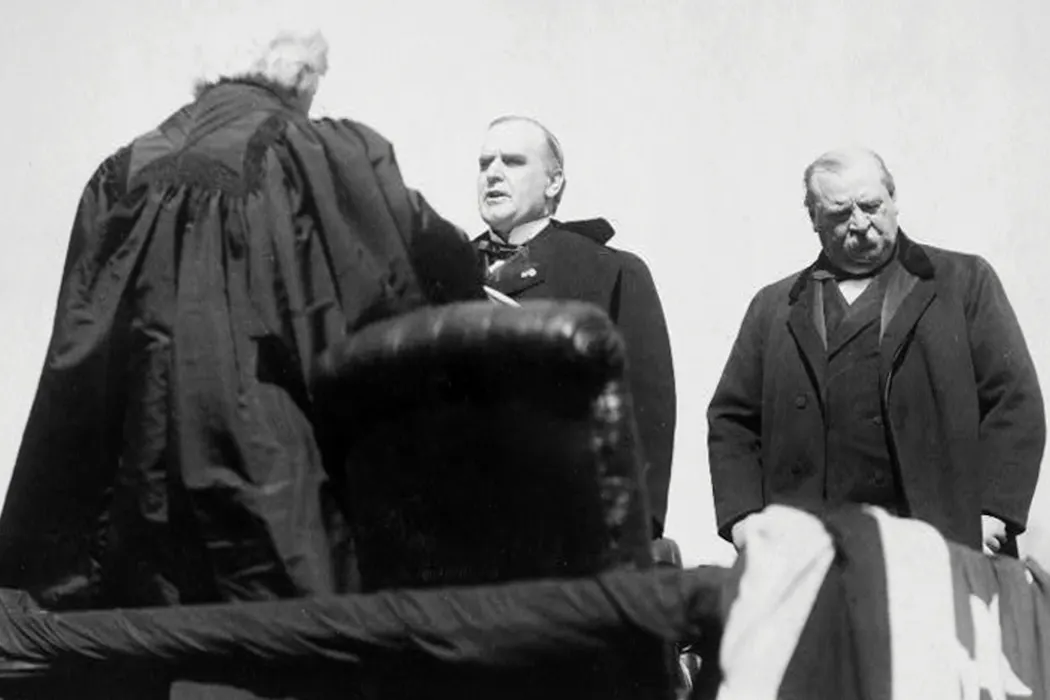
McKinley’s 1896 election was the beginning of a new era of Republican Party dominance in national politics. It would last for decades, and McKinley’s successor, Teddy Roosevelt, would invent the modern presidency, with expanded executive powers and more direct communications with the American people. Political scientists call that kind of change a “realignment,” but it did not begin in 1896. Once again, the previous midterms made a difference.
In the fall of 1894, President Grover Cleveland, the former Democratic governor of New York, was in the middle of his second, nonconsecutive term. It was not going well. Another financial panic, bigger than the one in 1873, accompanied his second inauguration and set in motion a series of economic disasters that produced the largest economic downturn in American history before the Great Depression of the 1930s.
When voters went to the polls in the 1894 midterms, they gave the president’s political party the biggest defeat in U.S. history. Over 100 seats in the House were lost to Republican or third-party candidates. The realignment had begun.
Huge seat shifts in midterm elections, like those in 1874 and 1894, are extremely rare. Smaller midterm shifts, which occur more often, can be a “wake-up call” that forces a sitting president to recalibrate political strategies.
That’s what happened to many modern presidents: Harry Truman in 1946, Dwight Eisenhower in 1958, Lyndon Johnson in 1966, Gerald Ford in 1974, Bill Clinton in 1994, Barack Obama in 2010 and Donald Trump in 2018. Their midterm losses in the House involved 40 or more seats, losses large enough to put the president’s party on notice that something had to change.

Change came in different forms. Truman, Clinton and Obama fought back against a Congress with an opposition majority in the House and won reelection.
Eisenhower could not run again, and a weakened Johnson chose not to. Ford lost to Jimmy Carter; Trump lost to Joe Biden. All four turned the keys to the White House over to a successful candidate from the other political party.
The 2026 midterm elections are unlikely to produce the kind of dramatic political changes that occurred in 1874 or 1894.
“Wake-up call” elections are much more common and are more reasonable to expect. That result is more likely in a closely divided nation, with heavily gerrymandered congressional districts, because even a small shift in House seats matters.
Democrats don’t need a 40-seat swing to retake the House. If they flip a handful of districts, they become the majority party. In the betting markets, that appears to be the likely 2026 outcome.
Every president in the last 80 years who was underwater in presidential approval polling – as President Trump now is – lost seats in midterm elections. The smallest number of seats that flipped in those eight decades was five. A five-seat shift to Democrats in 2026 could make Hakeem Jeffries the Speaker of the House.
A 2026 midterm election in which Republicans hold their slim majority in the House would be a monumental achievement, even if it looked like nothing had changed. It would break a pattern that has been in place since Harry Truman was president in the 1940s and 1950s.
Most Americans pay more attention to presidential elections than they do to midterms. That might be a mistake.
A sizable midterm shift can signal large and long-lasting changes in American politics. A smaller shift can pull a president in a new direction or set the stage on which the next presidential campaign plays out.
The 2026 midterm elections will almost certainly produce significant consequences for American politics. The scale of those consequences and their longevity remain open questions that only American voters are able to answer.

Robert A. Strong does not work for, consult, own shares in or receive funding from any company or organization that would benefit from this article, and has disclosed no relevant affiliations beyond their academic appointment.
Politics + Society – The Conversation

This security release features a fix for a critical severity security vulnerability.
Because this is a security release, it is recommended that you update your sites immediately.
You can download WordPress 7.1.2 from WordPress.org, or visit your WordPress Dashboard, click “Updates”, and then click “Update Now”. If you have sites that support automatic background updates, the update process will begin automatically.
The security team would like to thank Robert Ressl for responsibly disclosing that an unauthenticated attacker can, under certain conditions, make page template resolution include a chosen readable local PHP file outside the active theme directories. If relevant pre-conditions for both the server environment and the active theme are met, this can lead to remote code execution (RCE).
This release was led by John Blackbourn. WordPress 7.1.2 would not have been possible without the contributions of the following people:
Aaron Jorbin, Aki Hamano, Alex Concha, Ehtisham Siddiqui, fiocavallari, Jb Audras, Jeffrey Paul, Jeremy Felt, Joe McGill, John Blackbourn, Lance Willett, Manuel Camargo, marcs0h, martin.krcho, Mukesh Panchal, Olga Gleckler, Pascal Birchler, Peter Wilson, Rajin Sharwar, Ressl, Shail Mehta, Stephanie Walters, and vortfu.
Further details can be found in the advisory: CVE-2026-87902 / GHSA-7hp8-65ch-5whp.
As a courtesy, the security fix is being backported to all branches eligible to receive security fixes (currently through 4.7). As a reminder, only the most recent version of WordPress is actively supported. The backports are in progress and will ship as they become ready.
Stripe fees are fixed, but plugin fees are a choice. Use this simple break-even calculator to see when a free Stripe plugin stops being free.
The post The Real Cost of Stripe on WordPress: Plugin Fees and Break-Even Calculator appeared first on Themeisle Blog.

President Donald Trump loves a good pardon. His generosity is so well known, in fact, that an industry of lobbyists, lawyers and other insiders has reportedly sprung up to facilitate clemency for wealthy criminals. Clemency, meaning mercy or leniency, lets the president reduce the punishment for, or even forgive, federal crimes.
For defendants hoping to avoid jail and walk away from millions of dollars in financial sanctions, paying, say, US$600,000 to a lobbying firm to influence the president may seem like a good investment.
House Democrats recently reported that Trump’s second-term clemency – which includes both pardons, which wipe away every part of a conviction, and commutations, which typically leave convictions intact but shorten a person’s sentence – has saved convicted defendants nearly $1.7 billion in forgiven financial obligations.
Some of that amount – about $700 million – had not yet been officially imposed by courts because the clemency came through so quickly. Much of the remaining $1 billion had been ordered as restitution, meant to repay victims’ losses.
As a legal scholar researching the evolution of modern presidential clemency, I have reviewed every individual pardon and commutation granted by U.S. presidents since 1989, spanning seven administrations, from George H.W. Bush to Trump’s second term. I have found that while other presidents have canceled tens of millions of dollars’ worth of restitution and fines, none of them have come anywhere near the billion-dollar mark – until now.
The main financial penalties faced by federal defendants are fines, forfeiture – where a defendant has to give up, say, the Ferrari they bought with the profits from their drug business – and restitution.
Restitution is an order to pay back the criminal’s gains to the victims of the crime. For example, if the CEO of a company tricks people into investing $600 million into a hydrogen-powered truck that was never operational, the court may order that, if convicted, he pay back the people he defrauded.
Restitution is rarely able to return all of someone’s lost money, but it is supposed to prevent the fraudster from enjoying the fruits of their crime.

Since January 2025, Trump has granted clemency to a lengthy list of big-ticket fraudsters, including a cryptocurrency billionaire whose exchange pleaded guilty to anti–money laundering violations and CEOs convicted of payroll tax fraud.
Many of these pardons and commutations have coincided with the use of lobbying firms or generous donations to causes close to Trump’s heart: his inaugural committee, his reelection campaign or MAGA Inc. One successful pardon-seeker’s mother attended a $1 million fundraising dinner.
Clemency seekers use a variety of ways to catch the president’s attention. The end result is that victims of crime – and taxpayers, who have to pay for these huge white-collar investigations and trials – are often left with nothing.
The U.S. Constitution grants the president nearly unbounded power to pardon whomever he likes, whenever he likes and for whatever reason he likes. This is why, since 1894, the Office of the Pardon Attorney has tried to impose some guidelines on the process and decide which cases should be eligible for clemency at all.
These guidelines generally require that a clemency seeker have been released from prison for five years before they are eligible to request a pardon. If they never went to prison, the five years is calculated from the date of sentencing. Many presidents adhere to this norm: My study shows that between 94% and 100% of people pardoned by George H.W. Bush, George W. Bush and Barack Obama met this criteria. Because he gave so many preemptive pardons, Joe Biden’s percentage was lower, at around 68%, but still well over half.
In contrast, out of the 216 individual pardons granted by Trump in his second term so far, only 34 – about 15% – have gone to people who waited that long.
A look back at recent past administrations shows an erratic but increasing amount of financial obligations canceled. While some presidents have been frugal with their financial forgiveness – George H.W. Bush and George W. Bush remained under the million-dollar mark, while Joe Biden was just over it – others have been less so.
Bill Clinton erased nearly $10 million in fines and restitution through pardons, most notoriously pardoning Marc Rich, a fugitive financier whose ex-wife contributed more than a million dollars to various Democratic causes and the Clinton Presidential Library.
Obama more than doubled Clinton’s record, forgiving $23 million in financial sanctions.
But Trump surpassed them both in his first term, canceling nearly $195 million in financial obligations. The amount of money saved by convicted defendants during his second term is exponentially higher. One could even say that, as Trump likes to put it, “We’ve never seen anything like it.”

Since the main function of commutations is to let people out of prison sooner, commutations usually leave financial obligations in place. During his first term, Trump primarily granted commutations that left “intact and in effect” all conditions of a person’s sentence except for imprisonment. This let numerous defendants out of jail but kept them on the hook for nearly $3 billion in fines and restitution.
That has changed during Trump’s second term. Today, his commutations routinely cancel a recipient’s prison sentence “with no further fines, restitution, probation or other conditions.”
This is how, through commutations alone, Trump has canceled more than $300 million in penalties and restitution since he returned to office.
One figure that is unavailable in public records is whether any given defendant has started to pay, or has fully paid off, their financial obligations. So these figures for every administration represent a ceiling: the full amount of fines, restitution or forfeiture that a judge imposed on a convicted defendant. How much was actually paid down can usually only be estimated, though there are exceptions.
For example, Jason Galanis, who pled guilty to defrauding the Oglala Sioux Nation, had paid just over $2 million of his $80 million restitution before his sentence was commuted and the restitution erased in 2025. But we only know that because he unsuccessfully asked the court to return the money.
One useful indicator of how much someone may have already paid is the speed at which they got clemency. The faster they receive clemency, the less time they have to pay off their penalties. The median delay between sentencing and receiving a pardon during Biden, Obama and George H.W. Bush’s administrations was over 20 years.
During Trump’s second term, in contrast, things are moving faster. Trump has pardoned or given commutations to at least 44 recipients within a year of their sentences who together account for over $270 million in financial obligations.
This includes a nursing home executive who pled guilty to withholding his employees’ payroll taxes – which prosecutors said he spent on a yacht – and was pardoned 12 days after being sentenced, ensuring that he could avoid some $4 million in restitution. A crypto company was pardoned hours before it was due to pay a $100 million fine for violating anti–money laundering laws. A digital media founder was ordered to repay defrauded investors $36 million. His sentence was commuted, and his restitution canceled within four months of sentencing.
In these cases, clemency was issued before most of the money was able to reach the government or the victims it was owed to. The faster clemency is granted, the more likely it is that fraudsters get to walk away without paying their victims anything.

Caren Morrison does not work for, consult, own shares in or receive funding from any company or organization that would benefit from this article, and has disclosed no relevant affiliations beyond their academic appointment.
Politics + Society – The Conversation

Pollsters approach this year’s midterm elections dogged by high-profile misfires in recent elections while facing challenges from brash rivals intent on reshaping the landscape of political forecasts.
There are no guarantees that polling’s troubles – and persistent popular skepticism about the dependability of election polls – will be alleviated anytime soon.
In fact, it hasn’t been very cheery for pollsters for the better part of 10 years, since Donald Trump confounded poll-based expectations to defeat Hillary Clinton for the U.S. presidency in 2016.
In 2020, pollsters turned in their worst collective performance in 40 years by overestimating margins of Joe Biden’s victory over Trump. It’s an outcome I discuss in “Lost in a Gallup,” my book about polling failure.
Polling in the 2022 midterms was more spotty than spectacular. In 2024, pollsters overall underestimated Trump’s popular support — for the third successive election. That outcome prompted The Atlantic to describe the 2024 polls as “quietly still bad.”
The succession of polling embarrassments was extended in August 2026, in the widely followed Democratic primaries for Senate in Michigan and for governor in Wisconsin. In both races, polls signaled double-digit leads that proved illusory when votes were counted. Those results inspired headlines such as “Should we ever trust polls again?”
August also brought disclosures about fabricated poll results in competitive races in Wisconsin, Nevada and Los Angeles. The bogus polling was the work of a 21-year-old recent college graduate who distributed the invented results through a website called Median Strategies. He said he sought to demonstrate how false survey data can attract wide attention.
Results of one of the sham polls, which claimed Los Angeles Mayor Karen Bass was leading by double digits in her reelection bid, were posted on social media by the mayor’s campaign. They also were the subject of newspaper and television reports before being exposed as fraudulent.
Primary elections are difficult enough for pollsters without the disruption effects of made-up survey results. Primaries typically attract low turnouts, which complicate pollsters’ efforts to estimate who is most likely to vote.
Meanwhile, pollsters face pressure from prediction markets such as Kalshi and crypto-based Polymarket, both of which allow participants to wager on election outcomes.
Betting on U.S. elections has a long if little-recognized pedigree. In 1924, The Wall Street Journal reported from New York that “[s]ome half dozen firms here make a business of receiving and placing bets,” noting that a rule of thumb had emerged that “when odds are more than two to one in a campaign the favored candidate is practically certain to win.”
Wagering on outcomes as a way to forecast election results was supplanted beginning in the 1930s with the emergence of quasi-scientific polling techniques developed by pioneers in survey research such as George Gallup and Elmo Roper. Polls at that time offered what scholars Paul W. Rhode and Koleman S. Strumpf called “a ready substitute for the betting odds, one not subject to the moral objections against gambling.”
In recent years, as polling troubles have deepened, prediction markets have returned from obscurity to become inescapable elements in election forecasting.

Their trading volume, political influence and public profiles have expanded — as have their pretensions.
Polymarket’s 28-year-old founder, Shayne Coplan, has characterized prediction markets as “the most accurate thing we have as mankind right now.” Coplan also has scoffed at traditional, interview-based surveys, declaring in 2024, “Nobody takes polling seriously anymore.”
Prediction markets can provide real-time probabilities in fluid ways that election polls cannot. But whether such markets pose existential threats to traditional polling is an unsettled question.
Data journalist Nate Silver has said he doubts whether “prediction markets can serve as a good substitute for polls.” Among the reasons for skepticism is that prediction platform bettors often rely on, and react to, results of preelection polls and poll-based forecasts.
But prediction markets hardly seemed reliant on preelection polls in the 2024 presidential election. Polymarket and Kalshi both predicted Trump’s victory, while polls in aggregate tended to give Vice President Kamala Harris a slight edge.
“Trust the markets, not the polls,” Coplan declared on the social network X soon after the election. Kalshi, meanwhile, proclaimed that its projections favoring Trump “showed how prediction markets can decisively outperform polls and traditional media.”
Wisconsin’s recent Democratic gubernatorial primary election was, however, something of a comedown for prediction markets. Betting odds on Kalshi and Polymarket gave Francesca Hong a 95% and a 96% chance of winning, respectively. Hong lost, narrowly.
Beyond the challenges from prediction markets, pollsters confront the stubborn problem of low response rates. Many people avoid answering pollsters’ overtures, a reality that makes representative samples drawn from surveys alone nearly impossible. This, in turn, obliges pollsters to apply statistical adjustments to their raw data, a process known as “weighting.”
The adjustments are intended to improve accuracy by aligning raw polling data with demographic or political characteristics such as education, race, gender, party registration and how respondents say they voted in the past. But weighting choices vary by pollster and offer no assurance of accuracy.
Josh Clinton, a political scientist at Vanderbilt University, has noted that even “reasonable choices” a pollster may make in weighting can produce marked shifts in a poll’s results.
Deepening the aggravations in survey research these days is a practice called “silicon sampling,” in which AI agents simulate humanlike poll responses.
Silicon sampling, which has gained prominence in recent months, is much faster and far cheaper to complete than conventional polling. And it has gained a toehold in survey research.
For instance, Gallup has said it is “exploring the potential of simulated responses” to determine “whether AI systems and emerging methods can help deepen our understanding of how humans think and behave.”
Silicon sampling troubles some polling traditionalists who are uneasy about ethical and other implications of simulating human responses.
The 2024 presidential election brought a modest example of silicon sampling in action. AI agents of the startup company Aaru forecast that Harris would carry four of the country’s seven critical swing states. Such an outcome would have given her sufficient electoral votes to be elected president.
Those results, however, were no better than traditional polling in the swing states conducted by CNN and The New York Times. Both organizations reported Harris leading in four states – enough to win had outcomes aligned with their polls.
Harris lost all seven swing states.

W. Joseph Campbell does not work for, consult, own shares in or receive funding from any company or organization that would benefit from this article, and has disclosed no relevant affiliations beyond their academic appointment.
Politics + Society – The Conversation

I makes genealogy faster and more accurate while Charleen Mullenweg explains the ongoing need for human review.
The president is going after the press again.
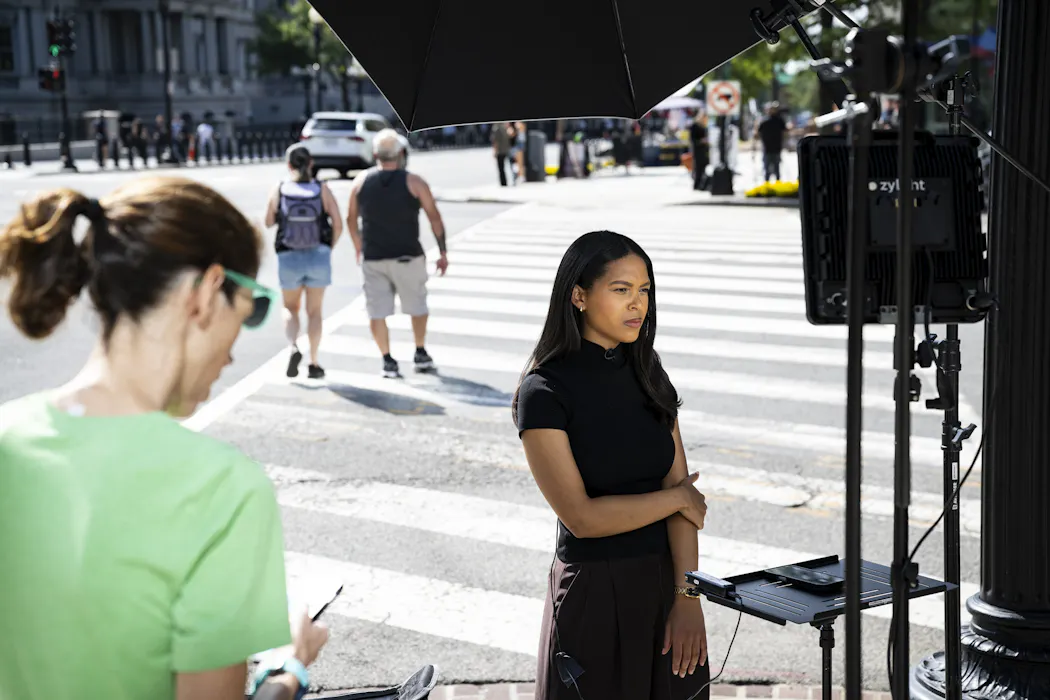
On Sept. 19, 2026, journalists from CNN, MS NOW and Politico were denied access to the White House after President Donald Trump revoked their credentials, citing “their constant ‘reporting’ FAKE NEWS!” On social media, Trump posted, “Media Outlets shouldn’t be able to constantly write or report FICTION and LIES when they’re covering the President.”
This is not Trump’s first attempt at banning journalists from the White House. During his first term, he sought to ban CNN’s Jim Acosta by revoking his credentials following a contentious news conference about the 2018 midterm elections.
In that conflict, CNN quickly filed a lawsuit, arguing that, “If left unchallenged, the actions of the White House would create a dangerous chilling effect for any journalist who covers our elected officials.”
Journalism organizations also responded. The Committee to Protect Journalists, the Radio Television Digital News Association and even Acosta’s peers at The Daily Caller – a right-leaning news outlet – condemned the White House ban.
A federal court granted CNN a temporary injunction – reinstating Acosta’s press pass. The Trump administration later restored Acosta’s credentials, and CNN dropped its lawsuit.
Many commentators and members of the press have called Trump’s latest ban on the three news organizations a violation of the First Amendment.

White House Correspondents’ Association President Jacqui Heinrich said on X, “Today’s action revoking access for journalists from CNN, POLITICO, and MSNOW violates the First Amendment.”
Even George Washington University law professor Jonathan Turley, who staunchly supports Republicans and frequently criticizes the press, said on X that the ban “would be an assault on long-honored principles of a free press.”
As Turley and many others have argued over the weekend, Trump’s ban is almost certainly unconstitutional under the First Amendment, which states that “Congress shall make no law … abridging the freedom of speech, or of the press.” Media law professor Frank LoMonte argued in 2018, “The First Amendment guarantees all Americans freedom to speak and publish without government interference.”
But they may be missing a crucial point. In fact, there’s more than one constitutional right involved in such a case. The judge who restored Acosta’s press pass in 2018 primarily based his ruling on the reporter’s Fifth Amendment rights to due process, not on the First Amendment.
And in my view as a constitutional law professor, it is less clear whether the press has a constitutional right of access to the White House even though past presidents have honored and respected the press’s access to the executive branch.
While several Supreme Court cases, such as Richmond Newspapers v. Virginia, unequivocally provide the press with a right of access to criminal trials, there is no Supreme Court precedent that specifically provides a clear constitutional right of access to the White House.
In one case from 1977, Sherrill v. Knight, Robert Sherrill, the Washington correspondent for The Nation, was – after holding press passes over several years – denied a press pass because the Secret Service advised he should not be given one. The Secret Service refused to disclose their justification.
Sherrill sued, and the D.C. Circuit Court of Appeals concluded that the Secret Service cannot deny a White House press pass absent “narrow and specific standards by which applications are to be judged.”
The court required the White House to provide the press with “notice of the factual bases for denial, an opportunity for (them) to respond to these, and a final written statement of the reasons for denial (of a press pass).”
In the court’s view, these requirements – notice and an opportunity to rebut the bases for the denial of a press pass – are protected by two constitutional guarantees working together, the press protections in the First Amendment and the Fifth Amendment’s protections from arbitrary deprivations of “life, liberty, or property, without due process of law.”
In other words, before the federal government can deprive an individual of their life, liberty or property, the federal government must provide that individual with due process, whose purpose is widely accepted as preventing “arbitrary governmental actions.”

There are a number of Supreme Court decisions that could be key in the current journalists’ lawsuit, which was filed on Sept. 21, 2026.
Among them is Mathews v. Eldridge from 1976, in which the Supreme Court stated that due process is flexible depending on the extent of the liberty or property interest at stake. But in general, the justices said, due process requires the government to provide notice to the individual and an opportunity for the individual to present their case before the deprivation occurs.
In Sherrill v. Knight from 1977, the court ruled that the denial of a press pass implicated a First Amendment liberty interest. That interest, the court wrote, “undoubtedly qualifies as liberty which may not be denied without due process of law under the fifth amendment.”
This nuance – the First and Fifth Amendment working in tandem – is what most commentators and critics are missing in their response to the recent ban of CNN, MS NOW and Politico. In fact, these outlets collectively lead with their claim that the Trump administration violated their Fifth Amendment right to due process in their lawsuit to block Trump’s ban.
“Even if attending a White House event is not a constitutionally guaranteed right, that doesn’t mean the government is free to take it away as punishment,” LoMonte argued in 2018.
Based on public reporting, it is clear that the Trump administration did not provide CNN, MS NOW or Politico with clear written notice stating the reasons for the revocation of their press passes. It certainly did not provide the outlets with an opportunity to rebut Trump’s unsupported claim that they report “FICTION and LIES.”
The same Trump-appointed judge who decided the CNN Acosta case has been assigned to the latest press ban case. So, if the CNN Acosta case is any indication, I expect the federal judge to promptly, but temporarily, reinstate the news outlets’ press passes while Trump tries to argue that his actions are constitutional, which in my view, they are not.

Wayne Unger does not work for, consult, own shares in or receive funding from any company or organization that would benefit from this article, and has disclosed no relevant affiliations beyond their academic appointment.
Politics + Society – The Conversation