The American Revolution is often told as a heroic story of 13 colonies rising up against a mighty empire and, with some help from France, winning their independence.
But the real story is more complicated. As the United States approaches the 250th anniversary of its independence, it is worth remembering that success on the battlefield depended not only on courage and ideals, but also on trade, credit, shipping and access to military supplies.
The center of that trade was not the 13 Colonies – but south of Loyalist Florida, in the greater Caribbean. Here developed the center of the Atlantic economy due to the insatiable appetite for sugar that had grown across Europe by the late 1700s. The economic output of just Jamaica was the same as the entire 13 Colonies. The Caribbean economies depended on slave labor, trade and supplies from around the world to make sure the sugar flowed freely and tax revenues to European colonial powers were maximized. Much of that support flowed through a small Dutch island in the eastern Caribbean that few Americans know today: St. Eustatius.
Barely 8 square miles (about 21 square kilometers) in size, St. Eustatius – or as residents call it, Statia – sits to the northwest of St. Kitts and Nevis. Without this tiny island, the Continental Army might have found itself without the arms, gunpowder and the supplies it needed to survive.
Statia’s importance began with geography. The island rises steeply from the blue waters of the Atlantic and Caribbean. Its dormant volcano, known as the Quill, dominates the southern part of the island.
Unlike taller Caribbean islands, Statia did not receive enough rainfall to make it especially attractive for large-scale sugar production. That made it less valuable to the great sugar powers of the 18th century, especially Britain and France.
What Statia lacked in plantation potential, it made up for as a port. Oranje Bay, on the western side of the island, offered one of the deepest and safest nearshore anchorages in the Americas. Large merchant ships could come close to shore, unload their cargo and reload quickly.
Along the bay stood a long, busy waterfront, lined with warehouses, shops and trading houses. By the mid-18th century, this narrow strip of shoreline had become one of the most important commercial centers in the Atlantic world.
Imperialism through trade
The Dutch had settled St. Eustatius in the 1630s, around the same time they were developing New Amsterdam, now New York City. Dutch merchants, families and investors moved through a wide Atlantic network that connected Europe, Africa, the Caribbean and North America. These commercial ties created trust, credit and opportunity across long distances.
In the 17th and 18th centuries, European empires tried to control colonial trade through mercantilism. Colonies were expected to enrich the mother country by supplying raw materials and buying finished goods through approved channels. Taxes, tariffs and trade restrictions benefited imperial governments and favored merchants, but they raised costs for ordinary colonists, shopkeepers and planters.
British colonists in North America often resented these restrictions, but Dutch traders were willing to help them get around them. For generations, Dutch vessels carried goods throughout the Atlantic, often selling items at lower prices than British merchants could offer legally.
Archaeological evidence from sites such as Pope’s Creek Plantation in Virginia, the Washington family home, shows the presence of Dutch ceramics, clay pipes and yellow bricks. Even before the Revolution, Dutch trade was woven into colonial life.
‘The emporium of the world’
In 1754, the Dutch West India Company petitioned the Dutch government to make Oranjestad, the capital of St. Eustatius, a free port, and the request was granted. The result was extraordinary: Goods could move through the island with few restrictions and without the heavy taxes common elsewhere. The government profited from leases on land, warehouses and homes rather than from taxing every cargo.
Merchants from across the Atlantic world quickly took advantage. Ships arrived carrying textiles, tools, food, enslaved people, weapons, luxury goods and raw materials. Languages from Europe, Africa and the Americas could be heard in the streets. St. Eustatius became, in the words often associated with the island, “the emporium of the world.” In modern terms, it functioned like an Amazon fulfillment center for the 18th-century Atlantic.
Adam Smith, often called the father of economics or the father of capitalism, noticed. In his 1776 book, “The Wealth of Nations,” Smith helped define economics as a modern field of study. Although he never visited St. Eustatius, Smith discusses the island, as it offered him a living example of what freer trade could produce: prosperity, speed, variety and commercial energy.
The same system that made the island rich also made it dangerous to imperial powers. Britain and France depended on controlled colonial trade, but St. Eustatius showed what could happen when goods moved with fewer restrictions. It also showed how merchants, credit networks and shipping families could challenge empires without firing a shot.
When the American colonies declared independence in 1776, they desperately needed military supplies. The Continental Congress knew that ideals alone would not defeat Britain. The new United States needed muskets, cannons, ammunition, uniforms, cloth, food and credit.
St. Eustatius was perfectly positioned to provide them.
The island’s merchants had long-standing connections with North America, and some of the American founders knew these networks well. Alexander Hamilton, who grew up in the Caribbean, spent his youth in the commercial world of shipping, accounts and credit. His family had ties to the region, and the Caribbean trade helped shape his understanding of finance and power.
St. Eustatius soon became a lifeline for the Revolution. American agents used the island to buy and ship supplies. Cargoes moved from Europe to Statia and then onward to North America. Arms and gunpowder that might have been impossible to obtain through official channels could be purchased through this Dutch free port.
The First Salute
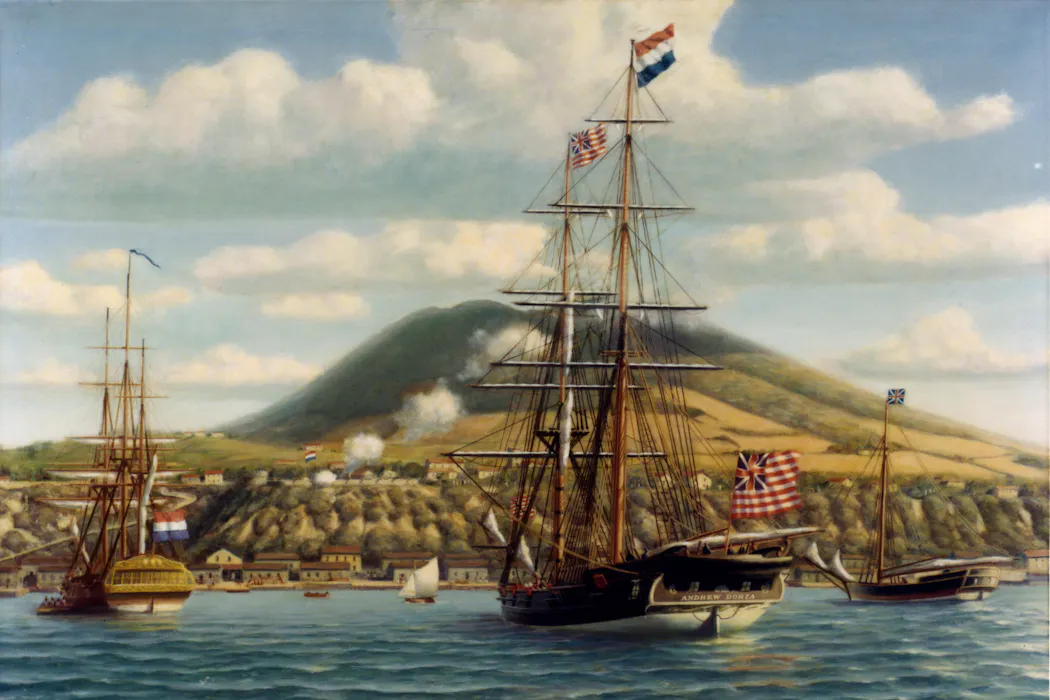
Then, in November 1776, a small but historic event took place in Oranje Bay. The Continental brigantine Andrew Doria arrived carrying a copy of the Declaration of Independence and flying the Continental Colors – the predecessor of the stars and stripes. Following maritime custom, the American vessel fired a salute. Fort Oranje answered with its own guns.
This exchange became known as the First Salute. Many historians regard it as the first formal recognition of American independence by a foreign power. The gesture was brief, but its meaning was enormous. By returning the salute, St. Eustatius publicly acknowledged the flag and authority of the new United States.
Britain understood the significance. The island was not merely a trading post; it was helping sustain rebellion. Over the next several years, much of the gunpowder, shot, cloth and other material that kept the American war effort alive passed through Statia’s warehouses and harbor.
The story of St. Eustatius serves as a reminder that revolutions are not won by ideas alone. The American Revolution depended on farmers, soldiers, diplomats and political thinkers, but it also depended on merchants, sailors, warehouses and credit.
Without St. Eustatius, without Dutch trade and without access to a free port in the Caribbean, the United States might not have survived long enough to celebrate any anniversary at all. The Revolution was a struggle for political independence, but it was also a struggle over who controlled trade. In that struggle, one tiny island helped change the course of world history.
R. Grant Gilmore III does not work for, consult, own shares in or receive funding from any company or organization that would benefit from this article, and has disclosed no relevant affiliations beyond their academic appointment.
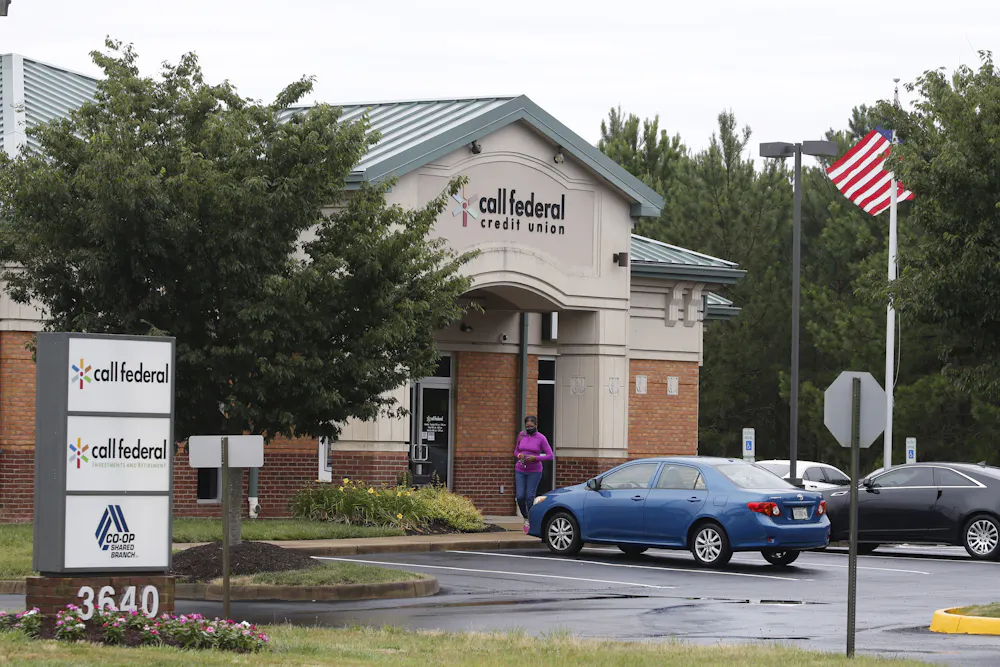
Police obtained cellphone data for many people who happened to be in this area near the time of a bank robbery.AP Photo/Steve Helber
Law enforcement officials frequently draw virtual fences around areas of interest and require Google to identify every cellphone in the area using cell location history. Dubbed a “geofence search,” officers obtain a warrant that permits a multistep, give-and-take information sharing process between officers and tech employees that winnows down and identifies subjects.
On June 29, 2026, the Supreme Court ruled that whenever police obtain an individual’s cell location data, even from a third-party tech company, it constitutes a search under the Fourth Amendment of the U.S. Constitution. The Fourth Amendment protects people from unreasonable government searches and seizures, and it does so in part by requiring search warrants based on probable cause that describe the particular person or thing to be searched. A geofence warrant that identifies every phone in an area does not align well with those requirements.
In its 6-3 decision in Chatrie v. United States, the court sent the case back to the 4th U.S. Circuit Court of Appeals to determine whether the geofence warrant at issue, including each part of its three-step search process, met the Fourth Amendment’s warrant requirements.
As a privacy, electronic surveillance and tech law attorney, author and legal educator, I have spent years researching, writing, educating and advising about these kinds of privacy and legal issues, and my books on electronic surveillance and evidence are routinely cited and relied upon by courts grappling with these issues.
Google tracks the vast majority of cellphones, collecting your location, usage and device data through installed software and apps. The tracking occurs by various autonomous processes you cannot see or stop, even when you turn off location history, and Google and other companies keep that data for years. Outside of your control, your cellphone continuously creates a durable and revealing digital trail that law enforcement can obtain with a warrant.
The Chatrie case involves the hunt for a suspect in an armed bank robbery in busy Midlothian, Virginia, in May 2019, and how police settled on a man named Okello Chatrie as the perpetrator.
Detective Joshua Hylton was granted a geofence warrant that compelled Google to search its database and identify every cellphone in a 17½-acre area around the bank, including private residences and a church, for a period of two hours. Working closely with Google, police ultimately narrowed in on Chatrie. When the trial court denied Chatrie’s motion to suppress the geofence-derived evidence, Chatrie appealed.
The government argued both that Chatrie had tacitly agreed to Google collecting the information and that Chatrie had no reasonable expectation of privacy in third-party Google’s records. The Supreme Court disagreed on both fronts. This decision matters because all cellphone-carrying people can end up in tomorrow’s geofence, like all those who were unknowingly grabbed in the Chatrie search. And nearly all users are unaware of these fences. No one specifically consents to be included in them, but people have no choice. What happened in the Chatrie case is a feat otherwise impossible but for advances in location-tracking technology and advanced AI systems.
A customer walks out of a credit union in Virginia where a robbery in 2019 set in motion events that led to a Supreme Court case. AP Photo/Steve Helber
How geofences work
Geofences are part of modern life. By carrying your smartphone and other devices, you generate location and other device activity data. That data is collected, stored, analyzed, and bought and sold by multiple companies. The location history data being collected about you is what makes geofences possible, and it is comprehensive and precise.
Location history relies on a variety of sources of data that can include cell tower location, cellphone connections to Wi-Fi networks and Bluetooth sources, and cellular data sent via cell tower. This means the communications you received and sent and the apps you used can be swept up in a geofence.
Advanced AI technologies analyze that data to discern increasing amounts of personal and behavioral data – insights about people, groups and activities – that can be used for a variety of purposes, including targeted advertising. Your rich location history and device data get snatched up regularly in such fences by private companies; your present and past self travels through them constantly.
A geofence can be in real time, for instance to identify and track who is or was at a protest or, say, a reflecting pool during any period in the past decade or so. It can be dynamically generated, like a circle around a specific location, or it could be a predefined set of boundaries, such as a specific address or area defined by streets or other geographical boundaries. One geofence warrant that Google received covered 2½ square miles of San Francisco for a period of 2½ days.
There has been a significant increase in law enforcement’s use of geofence warrants over the past decade. Google revealed in court that it received a 1,500% increase in geofence requests from 2017 to 2018, a 500% increase from 2018 to 2019, and that by 2020 it had 11,500 geofence warrants in a year. Between 2021 and 2023, geofence warrants made up over 25% of all warrants that Google received from law enforcement agencies in the United States.
If you carry a smartphone around with you, Google and other tech companies keep track of where you are and everywhere you’ve been. Dilara Irem Sancar/Anadolu via Getty Images
Search warrants and the Fourth Amendment
The Fourth Amendment is the foundation on which all U.S. electronic privacy laws rest. When government agents want to search or seize a person, place or thing – absent consent or emergency – the Fourth Amendment requires agents to get a court-approved warrant based on probable cause. Agents must provide a judge with enough evidence to establish probable cause that the person, place or thing to be searched or seized is associated with a crime.
The resulting warrant must also describe with “particularity” the specific person, place or thing to be searched or seized. If these requirements are not met, the search is unreasonable and therefore unlawful, and evidence obtained in that search cannot be used in court, barring a good-faith exception.
The Fourth Amendment’s “particularity” requirement strictly forbids general warrants, historically used by British troops against colonists to engage in overly broad or all-encompassing searches.
Reverse warrants
The only “particularity” that police can specify in applying for a geofence warrant is that a crime occurred at a particular time and place. Hence, geofence warrants are often called reverse warrants because they literally reverse the traditional process of conducting an investigation. Instead of identifying a suspect and then obtaining a warrant to gather information on that person, geofence warrants gather all devices in a time and place. Then, aided by technology and evolving search parameters, police sift through for potential suspects.
Litigation records reveal a collaborative effort between law enforcement and Google that follows a three-step process. First, agents specify in the geofence warrant a time and place to be searched. The data they’re seeking is not merely a list of cellphone devices in the area; it is usually more detailed, such as whether a device sent texts when it was in the area of the geofence.
Next, the company provides the officials with an anonymized list of users or devices matching the warrant’s criteria. At this point, things start to become more fluid, and the officials may seek additional information about specific users outside the originally authorized search parameters.
Third, officials then analyze the information and request that the company “unmask” certain users. In complying, Google may tell police the account holder’s name, their address, their email address, and even whether they were communicating or using certain apps during the relevant time.
This close work between the private entity – usually Google – and law enforcement throughout the geofence warrant process raises significant privacy and civil liberties concerns. It also does not appear that there is any court review or judicial oversight during this give-and-take between law enforcement officers and Google in the geofence warrant process.
Chatrie and the Supreme Court
For decades, the court has grappled with law enforcement’s use of technologies to track the location of people or things. In its 2018 decision in Carpenter v. United States, it ruled that the U.S. Constitution requires law enforcement agents to obtain a warrant to track a person using their cellphone location history data, as it had done previously with GPS data. And in Carpenter, it specifically ruled that cellphone users have a reasonable expectation of privacy in their cell site location history, even though that data is obviously shared with their cell providers.
It was perhaps not surprising that the court firmly rejected the government’s arguments in Chatrie. The justices had already rejected these arguments in 2018 with very similar technologies at issue.
The court’s ruling is unequivocal: “An individual has a legitimate expectation of privacy in his cellphone location data.” The ruling clarifies and strengthens privacy protections in the digital age. What remains to be seen is how the 4th Circuit will answer the question the Supreme Court posed when it sent the case back to them: Did the geofence warrant – and each part of the multistep search – comply with the Fourth Amendment’s requirements?
This is an updated version of an article originally published on April 29, 2026.
Anne Toomey McKenna serves on the Advisory Board to the Institute for Electrical and Electronics Engineers (IEEE)-USA’s Artificial Intelligence Policy Committee (AIPC) and Chairs multiple AIPC subcommittees. The AIPC work involves subject matter and education-related interaction with U.S. Senate and House congressional staffers and the Congressional AI Caucus. McKenna has received funding from the National Security Agency for the development of legal educational materials about cyberlaw (a course which the government still makes available online for the public) and funding from The National Police Foundation together with the U.S. Department of Justice-COPS division for legal analysis regarding the use of drones in domestic policing.
For President Donald J. Trump, the event inspired a massive redevelopment project. Since the beginning of his second term, Trump has argued that Washington, D.C., needs serious renovation. To date, the president’s beautification projects include repainting the Lincoln Memorial Reflecting Pool “American flag blue,” demolishing the East Wing of the White House to make room for the construction of a large ballroom, and plans for a 250-foot-tall “triumphal arch” near Arlington National Cemetery.
For Trump, how the city looks is perhaps more important than what the city symbolizes.
As a scholar of U.S. presidential rhetoric and political communication, I study how leaders use words and actions to create a particular vision of the United States to national and global audiences, and sustain it. My current book project traces the rhetorical history of Washington, D.C.
In my research, it has become clear that this preoccupation with cultivating the city’s image is not new. In fact, it is built into the very foundations of Washington itself.
Washington was built to be seen
Early U.S. political leaders put considerable thought into how the new capital city would appear to citizens and visitors alike.
In March 1791, French architect Pierre Charles L’Enfant reported to George Washington that he had found “a most elligible position for the First Setlement of a grand city” after a survey of land that would become the nation’s capital. “(F)rom these height(s) Every Grand building would rear with a majestik aspect over the Country all round and might be advantageously seen From twenty miles off.”
L’Enfant designed the city’s grid around key landmarks, including the White House, the U.S. Capitol and the National Mall. These “principal points,” L’Enfant wrote, were linked by lines or avenues that would make “the real distance (seem) less from place to place,” thus providing “them a reciprocity of sight and making them thus seemingly Connected.”
From the very beginning, then, Washington was built to be seen. And as the nation’s sense of self has shifted and changed over time, so too have images depicting what the nation’s capital is and should be.
Many early images of Washington reflected a city under construction. President John Adams was the first to move into the “President’s House,” and Congress assembled in the Capitol’s North Wing in late 1800. Construction on the Capitol was still going on when the British captured the city in 1814.
A print depicting Washington, D.C., under attack by British forces on Aug. 24, 1814. Library of Congress
You can imagine the terror felt by those living in the nation’s capital as the British set fire to the White House and the Capitol. The sight lines so central to L’Enfant’s original design made scenes of destruction that much more visible.
‘Land of the Free’ and ‘Home of the Oppressed’
By the 1830s and 1840s, various prints and broadsides published in magazines and newspapers celebrated the city of Washington’s grandeur – even if and when their visual depictions were not yet a reality. They included depictions of a completed Capitol dome or the initial – yet never built – design for the Washington Monument.
Other groups, however, used images of the capital city to display the chasm between the nation’s founding ideals and the institution of slavery. Such images included depictions of enslaved men, women and children in shackles, with the U.S. Capitol behind them.
An abolitionist’s image from 1830 depicting the U.S. slave trade. Library of Congress
An 1836 broadside condemning the sale and keeping of slaves in the District of Columbia. Library of Congress
Another image on this broadside featured a section of the city’s grid based on L’Enfant’s initial drawing. But unlike that first map, this depiction highlighted Neal’s Prison, Robey’s Old Prison, and the Public Prison – three sites located just off the National Mall where the enslaved were imprisoned before being sold.
When the Civil War began, it came to the very heart of Washington. Abraham Lincoln took the oath of office on March 4, 1861, in the shadow of an unfinished capitol dome.
The 1861 inauguration of Abraham Lincoln took place in front of an unfinished Capitol building. Library of Congress
Later that year, Congress redirected funds from the dome completion to support the Union war effort. But Lincoln understood the Capitol’s symbolism – and what the sight of its construction might communicate. He persuaded Congress to resume funding in 1862.
On Dec. 2, 1863, just 13 days after Lincoln declared that the nation would have a “new birth of freedom,” laborers hoisted the Statue of Freedom to the top of the completed Capitol dome. A 35-gun salute followed – one for every state in the Union, including those in the Confederacy.
So it was that when Lincoln delivered his second inaugural address in March 1865, he did so under a completed dome on the East Portico of the Capitol. Unlike the views 21st-century audiences have come to expect during inaugural ceremonies held on the Capitol’s West Front, Lincoln’s view would have been limited to the surrounding neighborhoods.
But if he had looked out the windows on the West Front, Lincoln would have seen the initial stump of the Washington Monument, an unfinished obelisk designed to honor the nation’s first president. The monument was also a casualty of war funding reallocation.
The unfinished Washington Monument, as it stood for 25 years. Library of Congress
And if he looked farther afield, he could not have imagined that 49 years later, in 1914, construction would begin on a memorial where the words of his Gettysburg Address and second inaugural address would be inscribed in stone.
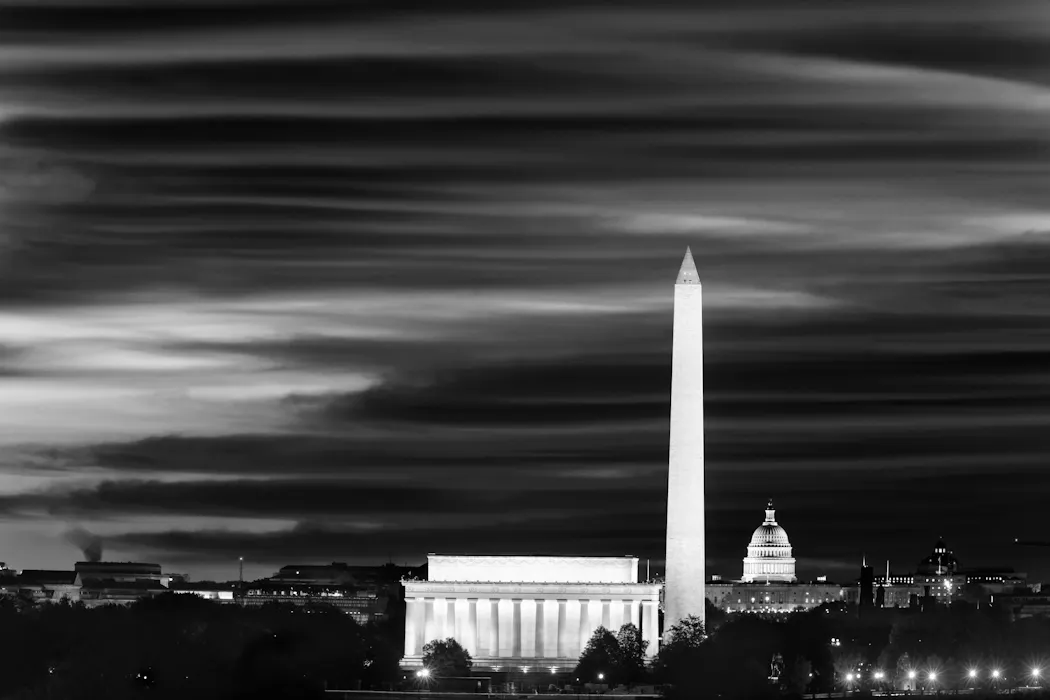
Today, if you stand on the steps of the Lincoln Memorial, above the Reflecting Pool, you can just make out the Capitol dome behind the Washington Monument – and the Statue of Freedom set on top.
These sight lines, and all they communicate, were always part of the plan.
Layers upon layers of rich and complicated history made up of events and actors and stories that are worth telling and reflecting upon. Many of those stories have been hidden over the decades, the result of impulses that obscure the view, just as the murky, algae-infested waters of the Lincoln Memorial Reflecting Pool compromise the sharp reflection of surrounding monuments.
And what can Americans do on the nation’s semiquincentennial?
They can remember that recognizing and reckoning with the complex layers that make up their shared national story opens up space for both celebration and critical reflection.
Allison M. Prasch does not work for, consult, own shares in or receive funding from any company or organization that would benefit from this article, and has disclosed no relevant affiliations beyond their academic appointment.
The ruling in the concealed carry case, Wolford v. Lopez, was no surprise. It followed the expected 6-3 division of the conservative and liberal wings of the court to block the state of Hawaii from making concealed carry a practical impossibility.
In Wolford v. Lopez, the gist of the ruling comes in the first sentence: “For years, the State of Hawaii made it almost impossible to obtain a license to carry a firearm.”
After the Supreme Court’s 2022 Bruen ruling recognized the right to carry a concealed handgun in public for personal defense, Hawaii continued to attempt to restrict the right. The state’s recent gun law flipped the script on allowable concealed carry regulations: Rather than the normal limitation that a property owner can ban concealed carry by posting a sign, all concealed carry was assumed to be banned unless the owner posted a sign allowing it.
As Justice Samuel Alito, the author of the decision, summarized the effect of the law, citizens would “be barred from entering many places that people routinely visit in the course of their daily routines, such as gas stations, convenience stores, restaurants, coffee shops, drug stores, grocery stores, ‘big box’ stores, home improvement stores, barber shops or hair salons, dry cleaners, and laundromats.”
If those restrictions make concealed carry impractical for ordinary citizens, then “this regime hobbles what the Second Amendment protects: the right of Americans to carry arms for self-defense as they go about their daily lives,” Alito wrote.
Justices Ketanji Brown Jackson and Sonia Sotomayor see the regulation as nothing remarkable or unconstitutional, but just property owners exercising their rights to ban guns. The majority sees this as subterfuge.
Under the current court, a core individual right – free speech, free exercise of religion, or personal defense with firearms – can be regulated but not eradicated, limited but not eliminated. For the court majority, the Hawaii regulation was a transparent attempt to stamp out concealed carry in the state.
Guns and drugs
The 1968 Gun Control Act initiated the federal restriction on the combination of guns and drugs, specifically targeting marijuana users.
From 1968 to 2026 it seemed reasonable to believe that drug use and gun use were incompatible because each can kill you. In combination, they seem even more likely to have that result. As Justice Neil Gorsuch noted in the Hemani ruling, “We appreciate that drugs and guns can sometimes make for a dangerous mix.”
Nonetheless, the court ruled unanimously that the federal law overreaches for two interrelated reasons, one about constitutional law and the other about the facts surrounding marijuana use.
In 2021, the New York Rifle & Pistol v. Bruen ruling set the constitutional standard for firearms regulations that do not violate the Second Amendment: They must fit within the nation’s historical tradition. This places the burden on the government to identify examples of similar regulations with a long-standing pedigree. They do not have to be “a historical twin,” but they do have to be grounded in the same “how and why” of the current law.
In its 2024 U.S. v. Rahimi ruling, the court employed the new historical standard to uphold the federal law denying gun rights to people who are under a domestic violence protective order.
At the time of the founding there were no specific laws addressing guns and spousal abusers, but there were laws that disarmed those who went “armed offensively” or “to the fear and terror of any person.” The court considered those comparisons to be close enough.
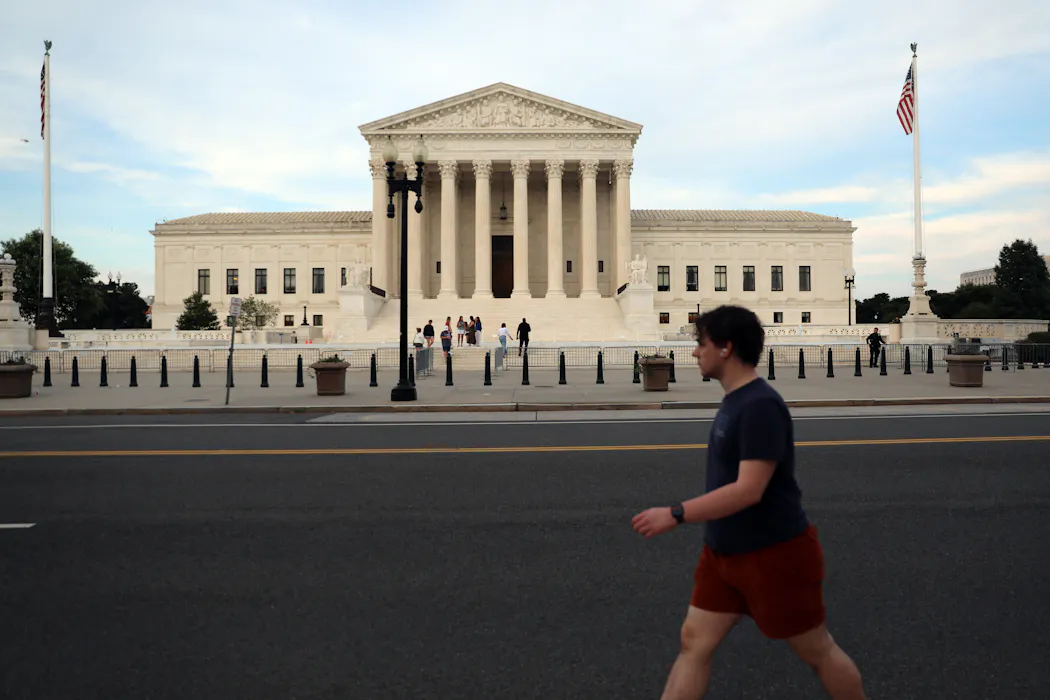
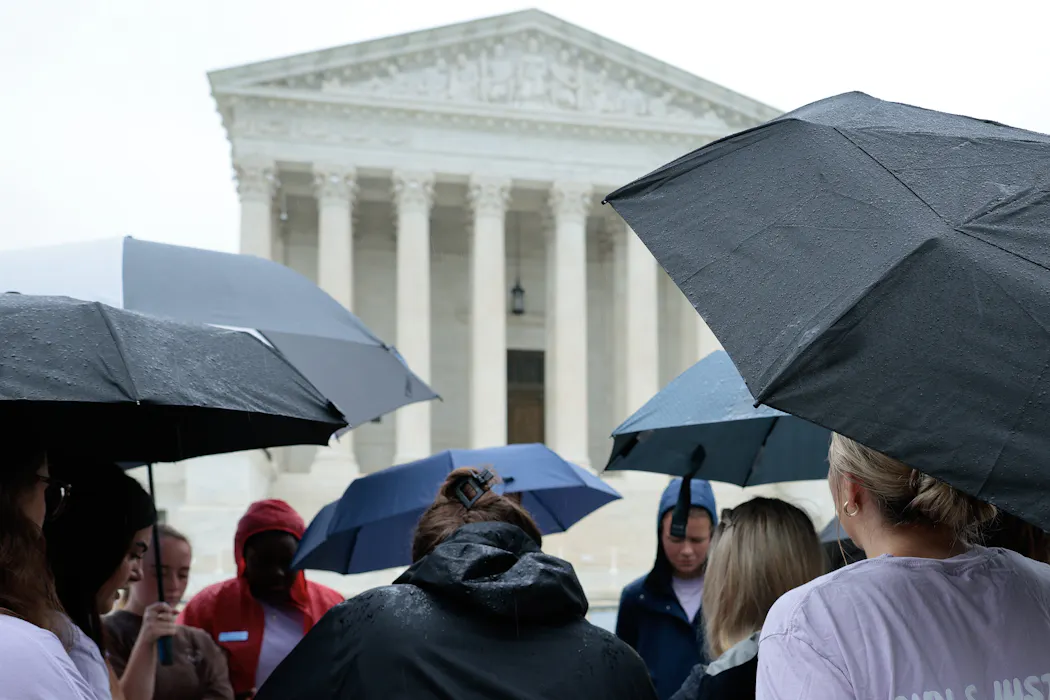
Visitors sit on the steps of the U.S. Supreme Court in Washington on June 8, 2026. AP Photo/Mariam Zuhaib
Regarding drugs, advocates of the federal law outlawing gun ownership for users and addicts argue that historical examples of laws restraining “habitual drunkards” provide the necessary analog.
The court disagreed because those laws focused only on those whose habits rendered them “practically incapacitated.”
In 2022, Ali Hemani, a Texas marijuana user who owned a gun for self-defense, was indicted under a federal statute that makes it a felony for anyone who “is an unlawful user of or addicted to any controlled substance” to possess a firearm.
In the court’s view, Hemani’s kind of moderate marijuana use simply does not qualify given that “he admits to using marijuana about every other day. But how much marijuana does Mr. Hemani use, in what potency, and to what effect? Is he routinely unable to manage his affairs, a risk to himself or his family? Or does he use a mild gummy as a sleep aid a few times a week?”
The court insists that habitual drunkard laws at the time of the nation’s founding applied only to those who could not manage their own affairs, but did not apply to social or even heavy drinkers.
There is copious evidence that the founders themselves – not just Sam Adams, but also John Adams and James Madison – were serious drinkers. Even George Washington “often drank three glasses of madeira in the evening – ‘not enough to be considered a heavy drinker in his day,’” according to the historical research cited in the Hemani ruling.
The implication seems to be that alcohol was normal then, while marijuana has become normal now.
Increasing acceptance of cannabis use
The ruling hinges on evolving perceptions of recreational drugs, especially marijuana. Does pot make users irrational? Does a marijuana habit indicate that someone is irresponsible?
If drug users are more likely to leave a gun unattended, more likely to mistakenly perceive a person as threatening, maybe because they have become paranoid, or more likely to react irrationally when someone steals their Cheetos, then the law may have a rational foundation. But the court’s view is that the government must demonstrate danger connected with drug use, not merely infer it.
The background of the ruling is the increasing acceptance of marijuana use. Even Alito, a conservative, penned a concurrence joined by liberal justice Elena Kagan noting that “marijuana consumption is increasingly common in this country … And from a practical standpoint, law enforcement widely tolerates the use of marijuana.”
The unanimous ruling notes that the federal government recently moved marijuana from Schedule 1, with no accepted medical use and high potential for abuse, to Schedule 3, which includes drugs such as anabolic steroids or Tylenol with codeine. Gorsuch points out that “surveys suggest there now may be more adults in this country who regularly use marijuana than consume alcohol.”
The court seems to have concluded that they can’t fight the new logic: Americans have a constitutional right to guns; Americans smoke weed; so weed can’t justify a denial of constitutional rights.
To meet the new standards, future gun regulations that come to the court will need to have a clear historical pedigree as well as target a group for whom Americans have less sympathy, such as spousal abusers, rather than increasing affinity – pot users.
Morgan Marietta does not work for, consult, own shares in or receive funding from any company or organization that would benefit from this article, and has disclosed no relevant affiliations beyond their academic appointment.
To most onlookers, the contradictions may seem like confusion, bad faith or evidence that the agreement is already unraveling.
But after more than two decades studying how wars end and whether the peace holds, I have learned that contradictions are often a sign the negotiations are working. The real danger lies elsewhere: in what the U.S.-Iran agreement leaves out.
The price of caving
It would be a mistake to assume the United States and Iran are bargaining only with each other.
The political scientist Robert Putnam called diplomacy a “two-level game” in which leaders negotiate abroad and at home at once. And no deal abroad survives unless it can be sold to the audience back home.
And the price of caving differs from place to place. In Washington, it might be electoral. In Tehran, factions of hard-liners may exact a heavy political price from leaders who compromise with the West, a lesson learned by President Hassan Rouhani and Foreign Minister Mohammad Javad Zarif after the 2015 nuclear deal.
A man reads a newspaper bearing an image of the U.S. president and a headline that reads ‘Gone with the wind’ in Tehran on June 18, 2026. AFP via Getty Images
Diplomacy has always worked this way. The first recorded peace treaty, struck by Egypt and the Hittites – an ancient civilization centered in modern-day Turkey – after the battle of Kadesh 3,000 years ago, survives in two versions, each written in its own language for an audience at home.
In October 2025, I saw the Egyptian text carved into the walls at the Karnak complex, a vast array of temples, pylons and chapels near Luxor in southern Egypt. A copper replica now hangs outside the U.N. Security Council, where agreements like these are still negotiated today.
Peace between Egypt and the Hittites held not because the parties told the same story but because each could tell one its own people would accept.
Generous with rewards, short on penalties
Contradictory messaging, then, is not the problem. The problem is that the same multilevel pressures that scramble public narratives also shape what negotiators are willing to put into an agreement.
Each side bargains hard for rewards it can display at home and resists penalties for noncompliance that it would have to defend later. The result is a U.S.-Iran deal generous with benefits and short on enforcement.
While conducting research for my 2009 book “Securing the Peace,” I found that negotiated settlements ending civil wars break down at roughly twice the rate of wars ending in outright military victory. Although my research focused on civil wars, the broader lesson applies to war settlements more generally. They fail not because of what is written on paper but because they lack credible enforcement once implementation begins.
This weakness is hidden at the moment of signing, when all parties are still collecting the benefits an agreement promises. It surfaces later, once those rewards are exhausted and nothing exists to deter or punish defection.
The 1979 Egypt-Israel peace treaty makes the point. It endured not simply because Egypt regained the Sinai Peninsula and Israel won recognition, but because those gains were embedded in a broader enforcement structure: phased Israeli withdrawal from the Sinai tied to compliance and sustained U.S. economic and military assistance to both countries. The treaty also deployed the Multinational Force and Observers in 1982 to monitor Sinai’s demilitarization. More than four decades later, the treaty holds.
The lesson for any U.S. settlement with Iran is clear. Durable peace depends not only on what parties gain but on the institutions and incentives built to enforce it long after the signing ceremony ends.
U.S. Vice President JD Vance attends a meeting between the United States, Iran, Pakistan and Qatar in Lake Lucerne, Switzerland, on June 21, 2026. Fabrice Coffrini/Pool/AFP via Getty Images
By that standard, the U.S.-Iran agreement is built to wobble. It is generous with rewards and short on penalties. The United States lifts its blockade, issues oil waivers, releases frozen Iranian funds and promises more than US$300 billion in reconstruction.
Iran reopens the Strait of Hormuz and dilutes its enriched uranium on its own soil, while keeping the machinery to enrich more. Nearly every step confers a benefit on someone; almost none imposes a cost on the party that walks away.
And there is a deeper problem. The actors most capable of destroying the agreement are precisely those least constrained by it. Israel, Hezbollah and the broader network of Iranian-backed militias across the region all sit outside the agreement. They gain little by complying and risk little by defecting because they never signed. A settlement that excludes powerful spoilers has no way to make breaking it hurt.
None of this means collapse is imminent. The history of peacemaking – from Kadesh to the Dayton Accords that ended the Bosnian war, to the Belfast Agreement that halted the 30-year sectarian conflict in Northern Ireland – shows that public blowups and threats to walk out are normal stages, not proof of failure.
But surviving the turbulence is not the same as lasting. The question is not whether setbacks come. History shows they will. It is whether the parties build institutions capable of deterring defection before the rewards are spent and the incentives are gone.
That points to a clear task, and it is not the one most are watching. The task is not to reconcile competing narratives. It is to create automatic costs for anyone who returns to violence, including actors who never sat at the negotiating table.
Monica Duffy Toft does not work for, consult, own shares in or receive funding from any company or organization that would benefit from this article, and has disclosed no relevant affiliations beyond their academic appointment.
Long before a landmark Supreme Court ruling dominates the headlines, it is shaped by a highly structured legal process, much of which takes place out of public view. This procedure involves strict gatekeeping rules, a series of private conferences, written briefs, oral arguments and, finally, the announcement of an opinion.
As a legal and Supreme Court scholar, I know that understanding how the nation’s highest court actually makes policy requires stepping into this exceptionally regulated, sometimes hidden routine. It is through this process that the court evaluates, and eventually decides, increasingly high-stakes cultural and political battles.
Here’s how it all unfolds:
The agenda-setting process
The Supreme Court is a reactive institution. This means that it must wait for individuals, businesses, governments and the like to bring cases to the court before it can issue a ruling.
The way this most commonly works is that the party who loses in a lower court files a writ of certiorari to the Supreme Court. This is a legal document that outlines why the court should review the case. The party who won in the lower court can file a brief in opposition, arguing that the lower court made the right decision and therefore the case does not warrant Supreme Court review.
Sometimes, interest groups weigh in by filing amicus curiae, or “friend of the court” briefs. Amicus briefs help signal that a case has broad national importance. The court is more likely to review cases accompanied by amicus briefs.
To handle the large volume of petitions, the justices rely heavily on their law clerks. These are young lawyers – typically only a few years out of law school – who write short memos for the justices recommending that they grant or deny each petition.
On most Fridays throughout their term, the justices meet to discuss these petitions. This is a private conference with only the nine justices in attendance. Here, the court employs a rule of four: It takes the votes of four out of the nine justices to agree to review a case.
Following the conference, the court releases its list of cases granted and denied certiorari, known as the orders of the court. For cases denied certiorari, the lower court decision stands. Cases granted certiorari move onto the merits stage.
Legal briefs and oral arguments
The primary way the parties to a case try to persuade the justices is through their legal briefs. The petitioner, who lost in the lower court, tries to convince the justices that the lower court made some sort of legal error that should be reversed. The respondent, the lower court winner, argues that the lower court decision was correct and should be affirmed.
Interest groups, businesses and other interested entities that aren’t parties to the case can weigh in through a second type of amicus curiae brief. These briefs often highlight the public policy implications of a case, and they provide a way for these groups to pursue their ideological goals.
Police stand watch in front of the Supreme Court building on June 18, 2026, in Washington before the court handed down three decisions. Chip Somodevilla/Getty Images
After briefing, oral arguments take place. Most oral arguments take an hour, with the time divided evenly between the petitioner and respondent. During oral arguments, the justices pepper the attorneys with questions and frequently preview how they might vote in the case.
Conference and votes
A few days after oral arguments, the justices meet again in a private conference to discuss cases and cast preliminary votes. The chief justice speaks first, followed by the rest of the court in order of seniority.
A majority forms in this conference, although the justices are free to change their votes until the opinion is announced, and occasionally do so.
Perhaps most importantly, a justice in the majority is assigned to draft the majority opinion. If the chief justice is in the court’s majority, the chief makes the opinion assignment. The chief justice can assign the opinion to another justice in the majority or to himself. If the chief justice is in the minority, the most senior justice in the majority makes the opinion assignment.
Majority opinions typically go through a series of revisions, as justices bargain and negotiate over its content. They do this by providing written feedback to the majority opinion author. If a justice in the court’s initial majority grows unhappy with the content of the draft opinion, they can defect by joining the minority.
In addition to the majority opinion, justices may write concurring and dissenting opinions. Concurring opinions are written by justices in the majority and are often used to highlight a different legal basis for the court’s decision. Dissenting opinions are written by justices who are in the minority and disagree with the outcome of the case and the majority’s reasoning.
Releasing opinions
The final step is the public release and announcement of the court’s opinions. This occurs on a rolling basis throughout the court’s term – from October to late June or early July – but the most important cases usually come down in June.
During opinion announcement, the majority opinion author usually reads a summary of the court’s opinion. On rare occasions, dissenting justices may read from their opinions. Reading a dissent from the bench signals that a justice is particularly unhappy with the majority’s decision.
For instance, on June 29, 2023, Justice Sonia Sotomayor read from her fiery dissent in Students for Fair Admissions v. Harvard College. In that opinion, Sotomayor criticized the court’s majority for effectively ending affirmative action in college admissions. According to Sotomayor, affirmative action programs are constitutional because they help to achieve the 14th Amendment’s guarantee of racial equality by mitigating the enduring effects of racial discrimination.
The blockbuster rulings that dominate the news cycle each June are not sudden flashes of judicial willpower. They are the product of a lengthy and carefully structured process in which thousands of petitions are screened, less than 80 cases are argued, and draft opinions are negotiated and refined behind closed doors. By the time a decision is announced from the bench, it reflects months of legal argument, deliberation and compromise.
Understanding that process helps demystify the court and reveals how nine unelected justices can shape the meaning of the Constitution and, in turn, influence the everyday lives of millions of Americans.
Paul M. Collins Jr. does not work for, consult, own shares in or receive funding from any company or organization that would benefit from this article, and has disclosed no relevant affiliations beyond their academic appointment.
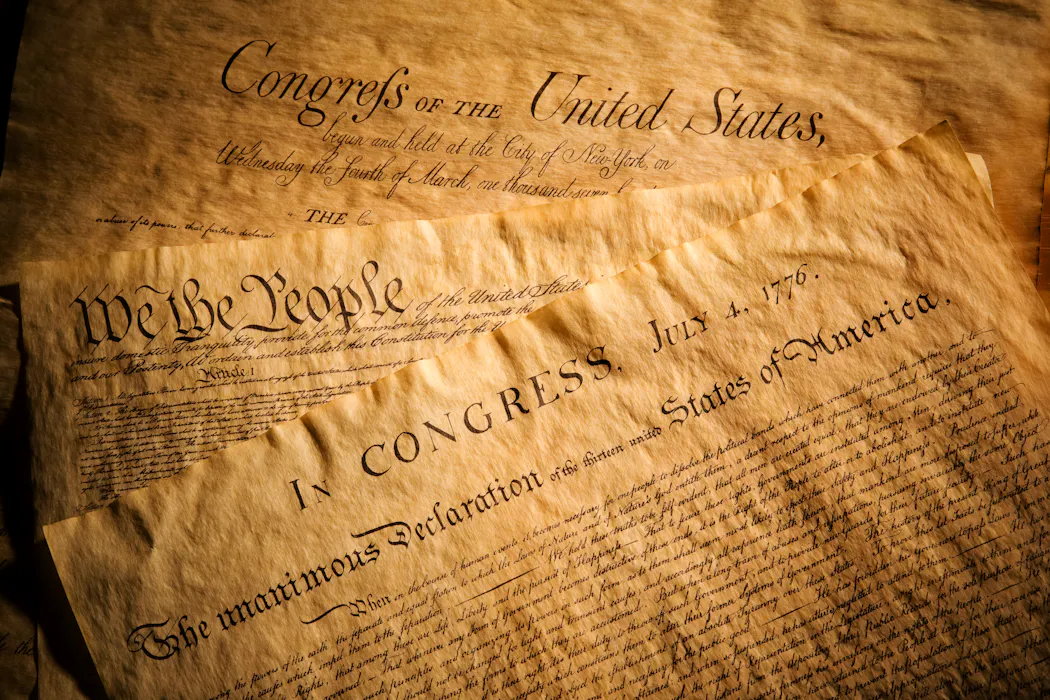
The Declaration of Independence, with its block of cursive letters scrawled onto parchment, looks like a relic from the distant past. Likewise, you might think the 27 grievances against King George III, his government and the British people listed in the body of the document would have little relevance to our lives today.
After all, what could the specific complaints of colonists in 1776 have to do with 2026? The parts of the declaration worth knowing about are the soaring sentences in the opening paragraphs about self-evident truths, pursuing happiness and all men being created equal. Right?
I’m a professor of history, and I have been researching the Declaration of Independence for nearly a quarter-century. The document has been featured prominently in the four books I have written on the founding of the U.S., especially the recently published “Tyrants and Rogues: Understanding the Declaration of Independence.”
In my assessment, the issues that most disturbed the Revolution’s leaders in 1776 are ones Americans are still concerned about today: a partisan judiciary, arbitrary power, officials not being responsible to their constituents, people lacking a voice in decisions that affect their families, and even policies about immigration and citizenship. Moreover, studying the grievances reveals how the Revolution depended on ordinary Americans. Without their political outrage and participation in the rebellion, American independence would have failed.
Where does authority come from? What are the limits of force, coercion and power? To whom are public officials beholden, and who decides the rule of law? What if these problems were to escalate into violence – or even civil war? These are 21st-century problems as much as they were 18th-century ones.
Historian Robert Parkinson explores the 27 grievances at the heart of the Declaration of Independence.
The colonists’ red lines
The declaration’s opening sentences are among the most famous written, but there are powerful statements further down, too, identifying what colonists in 1776 could not tolerate.
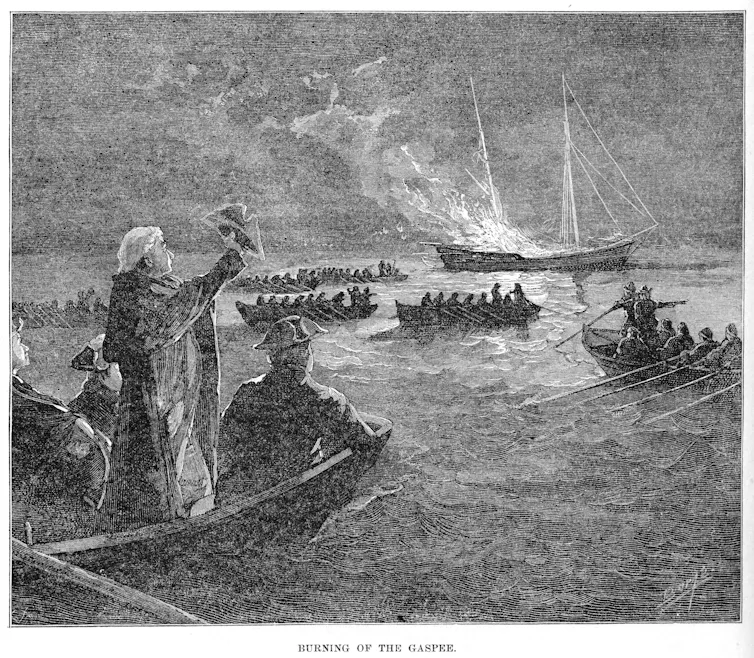
In the declaration, the colonists discuss the king’s effort to make “the military independent of and superior to the civil power.” For example, when Rhode Islanders complained about how the British ship Gaspee was attacking their ships without mercy in its hunt for smugglers, the Royal Navy waved away the colonial government.
The Declaration of Independence also featured threats to the courts: the king’s attempt to make “judges dependent on his will alone,” and Parliament “depriving” Americans “of the benefits of trial by jury.” Parliament was also “taking away our charters, abolishing our most valuable laws and altering fundamentally the forms of our governments.”
For example, in 1774, in response to the Boston Tea Party, Parliament had stripped Massachusetts of its colonial charter and revamped its government, making many elected positions appointed instead.
These were the grounds of revolution in 1776 and what colonists held to be the markings of a tyrant.
The people in the margins
Reading the grievances also illuminates a diverse cast of characters, one different from the 56 white men who signed the declaration, of whom nearly all were wealthy and of whom the majority had been enslavers.
When we learn the stories behind the declaration’s grievances, we find people of color hiding in plain sight, and not just in Thomas Jefferson’s notorious reference to “merciless Indian savages” in the final charge. African Americans and Indigenous peoples were making their presence felt and voices heard in the years before the Revolutionary War.
For example, the declaration’s final charge refers to “domestic insurrections.” “Domestics” was an 18th-century euphemism for enslaved people. This was Congress’ way of including a reference to Lord Dunmore’s emancipation proclamation, which promised freedom to enslaved people who joined the British. Historians estimate that at least 1,000 people reached Dunmore and freedom. Many more tried.
In several other seemingly unrelated grievances – like the king’s use of the royal veto, impressment, and the collapse of the judiciary – minority groups shaped the declaration. The 7th grievance, for example, is about the king preventing immigration to the colonies. But when it says he was “raising the conditions of new appropriations of lands,” it is really about Indigenous people; in fact, no reference to land in America could be about anything else. Those “conditions” included the Proclamation Line of 1763, a policy crafted to protect the boundaries of Native lands. That measure was the result of Indigenous people fighting to defend their homes for more than a decade.
The crowd behind the cause
Ordinary men and women in colonial cities and the countryside are behind the screen of the declaration’s list of charges too. The revolutionary movement could not have gained momentum otherwise.
Rowdy behavior lurks behind what seem like antiquated phrases like, in the 10th grievance, “swarms of officers” sent to eat the colonists’ substance, a reference taken from the Bible and applied to the dozens of customs officers sent to Boston in the late 1760s.
Those swarms? They caused significant unrest in Boston that culminated in paving stones being hurled at British officers and one of their boats being burned on Boston Common.
The grievances demonstrate the widespread, sustained fury that Britain’s imperial reforms produced in the colonies and present a more comprehensive – and complicated – view of the U.S. at the moment of its birth.
From the distance of 250 years, it is natural that Americans have largely forgotten the individuals the colonists held responsible for inflicting such pain. Thomas Jefferson and Congress focused on a tyrant king in the declaration, but George III had all sorts of assistants who, they argued, conspired to injure the American people.
To modern Americans, the grievances may seem abstract and devoid of life, but for the colonists, the grievances had faces. Behind each charge was a person enacting the king’s design. The Revolution’s leaders became convinced that the actions of these officials made it impossible for the 13 colonies to remain in the British Empire. They feared that if they did not take this step toward independence, Americans would lose the ability to seek justice, make their voices heard or enjoy representative government.
In 1825, Jefferson described the Declaration of Independence as an “expression of the American mind.” The grievances were part of that – challenges that ordinary men and women of all backgrounds had faced. Americans today can still learn from how they responded.
Robert Parkinson does not work for, consult, own shares in or receive funding from any company or organization that would benefit from this article, and has disclosed no relevant affiliations beyond their academic appointment.
Coroners in counties across Pennsylvania are ignoring rules that require them to make autopsy reports accessible to the public.Carla Gottgens/Bloomberg via Getty Images
Independent journalist Derek Sherwood submitted a records request in Centre County, Pennsylvania, in January 2026. He requested an autopsy report related to a 1987 cold case that he was researching for a book project.
After Coroner Scott Sayers denied the request, Sherwood successfully appealed to the Office of Open Records, or OOR, a state agency responsible for adjudicating Right-To-Know Law disputes.
But Sayers still refused to release the report.
On May 14, the day before he was legally required to comply with the OOR’s decision, Sayers obtained a temporary court injunction that shielded the autopsy report from release.
Around the same time, PennLive reporter Jenna Wise requested three autopsy reports related to a 2025 crime spree from Susquehanna County Coroner Jessica Chiaramonte. Like Sayers, Chiaramonte also denied the request and then filed motions with the Court of Common Pleas to seal the reports.
And when I contacted Clearfield County Coroner Kim Shaffer-Snyder in May to request autopsy reports for three men who died in Immigration and Customs Enforcement detention, I was quoted US$2,100 for a short stack of printed pages.
These experiences reflect a wider pattern. In counties across Pennsylvania, coroners routinely refuse to make autopsy reports and other records available to members of the public.
Coroners’ reasons for this are inconsistent and often unclear. Sometimes they say that releasing autopsy reports would jeopardize ongoing law enforcement activities. Sometimes they cite medical privacy standards that do not apply to autopsy reports. And sometimes they don’t provide any reasoning at all.
When coroners do agree to release their records, they charge as much as $700 per case. These fees place autopsy reports out of reach for most requesters, including journalists and researchers like me.
In 2022 I partnered with colleague Terence Keel, a professor of human biology and society, to systematically request autopsy reports related to hundreds of deaths in prisons and jails across Pennsylvania.
We submitted requests in over three dozen counties. Then we waited. And waited.
Our plan was to conduct a rigorous statewide study of deaths in custody. Instead, we discovered that autopsy reports are not nearly as public in practice as Pennsylvania law requires.
What PA state law requires
The Pennsylvania County Code provides two pathways through which members of the public can obtain autopsy reports and other coroners records.
First, a requester can obtain them directly from the coroner through the payment of statutory fees. This is the only option available if a requester wants an autopsy report that was produced during the current calendar year.
In most places, however, these fees do not apply to older reports. In all counties with fewer than 500,000 residents, the law requires coroners to deposit the past year’s records with the county prothonotary at the beginning of each new year. The prothonotary is an independent elected official who serves as a designated record-keeper, among other duties.
Once in the prothonotary’s custody, all coroners records are to be made available “for the inspection of interested members of the public” – no fees required. This is the second way a requester can obtain an autopsy report in Pennsylvania.
But the state’s largest jurisdictions, including Philadelphia collar counties such as Bucks, Montgomery and Delaware, are exempt from this requirement. Requesters in those counties must pay the statutory fees no matter how old the requested autopsy report may be.
Due to carve-outs like this, autopsy reports in the counties with the most jail deaths are least accessible to public review.
Philadelphia and Allegheny counties
Philadelphia County and Allegheny County, where Pittsburgh is located, are the only jurisdictions in Pennsylvania to have a chief medical examiner. Unlike a coroner, who is typically elected by the people, a medical examiner is appointed by the county executive or health commissioner.
In a landmark 2023 case brought by journalist Brittany Hailer, the Commonwealth Court of Pennsylvania ruled the Allegheny County Medical Examiner’s Office was subject to the same public release requirements as coroners elsewhere in the state.
Hailer had requested the autopsy report for Daniel Pastorek, a 63-year-old man who died in Allegheny County Jail in 2020 without leaving behind a documented next of kin. The Allegheny County Medical Examiner’s Office denied Hailer’s request on the basis that she was not related to Pastorek, and their policy was to release autopsy reports only to next of kin. But the Commonwealth Court ruled that Hailer was entitled to pay the fees and receive Pastorek’s autopsy report, regardless of her identity.
But the Philadelphia Medical Examiner’s Office is not subject to this ruling. Philadelphia, as the state’s largest county by population, is carved out of the section of the Pennsylvania County Code known as the Coroner’s Act.
The Philadelphia Medical Examiner’s Office releases autopsy reports only to next of kin or in response to a subpoena.
James Garrow, communications director for the Philadelphia Department of Public Health, which oversees the Medical Examiner, described this to me in a June 2026 email as “a policy decision.”
The Philadelphia Medical Examiner’s Office has made no changes to its policies in light of Hailer v. Allegheny County, Garrow added, citing the Coroner’s Act carve-out and the Philadelphia Home Rule Charter of 1951, which eliminated the office of the coroner.
High fees, but ‘no discretion’ – in theory
Pennsylvania law establishes high fees for coroners’ records – $500 per autopsy report, plus an additional $100 each for toxicology and coroner–investigator reports.
By comparison, the Los Angeles County Medical Examiner charges a total of $32 for a comprehensive report that includes all three.
But the hefty price tag in Pennsylvania comes with an unambiguous guarantee.
Yet when Keel and I tried to obtain autopsy reports in 2022, coroners in 21 counties failed to respond to our requests at all. This is despite the fact that Pennsylvania’s Right-To-Know Law requires county officials to acknowledge receipt of all requests within five business days.
Another three coroners acknowledged receipt of our requests but stopped responding to us when we tried to make arrangements to view or collect the reports.
The Coroner’s Act stipulates that in counties with fewer than 500,000 residents, the coroner must deposit “all official records and papers for the preceding year in the office of the prothonotary” for “the inspection of interested members of the public.”
But of the 41 counties we contacted in 2022, only in three was the prothonotary or the county open records officer actually in possession of autopsy reports and able to release them to us.
Some coroners seemed to be unaware of their duty to deposit their records with the prothonotary, telling us they had never done so. Other coroners told us that they had entered into agreements with their local prothonotaries about retaining custody of their records. Such agreements have no clear statutory basis under the County Code.
Still other coroners, however, tried to use the gap between the law and their offices’ practices to stymie our requests.
Sayers, for example, claimed that his office’s autopsy reports were all in the custody of the prothonotary. He suggested we use Webia – Centre County’s online records retrieval system – to locate them.
Webia is a pay-to-use database. It requires a payment simply to set up an account, and it automatically collects a fee for each search a user performs. After a few days of costly and tedious searching, we concluded that Sayers had misled us.
The Office of Open Records agreed.
“There is no evidence that the requested autopsy and toxicology reports were ever deposited with the County Prothonotary,” the appeals officer wrote. “The practical effect is that any requester … is left to obtain them, at great cost,” by paying the statutory fees, he added.
A similar story unfolded in Dauphin County. Coroner Graham Hetrick denied our request and told us to look for autopsy reports at the prothonotary’s office, despite never having deposited them there.
Sayers, however, appealed the OOR’s determination to the Centre County Court of Common Pleas. We didn’t have the resources to fight the case, and the court ruled in Sayers’ favor.
The judge’s 95-word opinion did not address any of the matters raised in the OOR’s 11-page final determination, including the appeals officer’s conclusion that “the County, based upon the actions of its Coroner, may have acted in bad faith.”
I contacted Hetrick and Sayers last year to ask for their responses to the OOR’s criticisms. Neither responded. I reached out to Sayers in June 2026 with a more detailed list of questions, but again he did not respond.
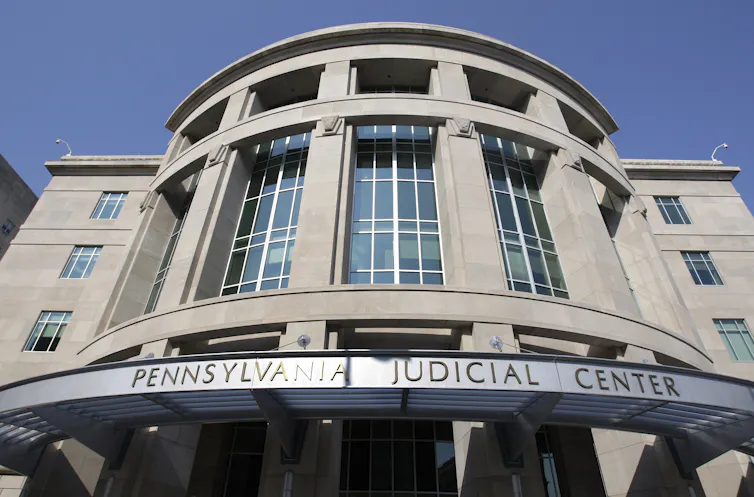
Decisions by the Office of Open Records can be appealed to the local Court of Common Pleas, then further appealed to the Commonwealth Court, which hears cases in the Pennsylvania Judicial Center. AP Photo/Carolyn Kaster
Only 3 of 41 counties readily provided reports
Of the 41 counties we contacted, only Lancaster, Lebanon and Lehigh counties released the autopsy reports we requested without attempting to charge us the statutory fees or requiring us to appeal the matter to the OOR.
In two of those counties – Lancaster and Lehigh – previous court decisions explicitly ordered the coroners to deposit autopsy reports with the prothonotary.
During the 2023-24 legislative session, the Pennsylvania State Coroners’ Association worked with state representative Carol Hill-Evans (D-York) to introduce a bill that would have eliminated the public deposit requirement entirely. Michael Kriner, a registered consultant for the PSCA, confirmed the association’s involvement in an email to me last year.
The proposal never made it out of committee.
In counties with fewer than 500,000 residents – that’s currently 60 of Pennsylvania’s 67 counties – the coroner is still required to deposit all autopsy reports and other records for the preceding year with the prothonotary.
That’s the law, whether coroners follow it or not.
The Conversation U.S. reached out to the Pennsylvania State Coroners’ Association to ask why coroners across the state are withholding autopsy reports and failing to deposit their records with the prothonotary. The Conversation U.S. also asked for clarification on the association’s position regarding the release of autopsy reports in exchange for the payment of fees.
The PSCA did not respond.
A ‘united front effort’ to prevent release
In February 2023, after more than six months of fighting for autopsy reports in numerous Pennsylvania counties, Keel and I obtained a batch of emails through a Right-To-Know Law request that shed light on what was happening behind the scenes.
Within days of receiving our request for autopsy reports in June 2022, Sayers contacted the Pennsylvania State Coroners’ Association to ask for guidance.
“Can you find out if any other coroners received a request like this?” Sayers wrote in an email to Scott Grim, a former Lehigh County coroner who was then the PSCA’s executive director.
A few days later, Susan Shanaman, then an attorney for the PSCA, sent an email to a list of numerous recipients, including dozens of sitting coroners. She suggested that coroners take the maximum extension allowed by law before responding to our requests, since they contained “unique issues … such as the requests seem to be all related to police-involved shootings and deaths in prison.”
Later, in another email, Shanaman suggested “that the requests be denied.”
In yet another email, Shanaman wrote, “I did a little more digging.” She attached a magazine article describing Keel’s research about jail deaths in Los Angeles. “A legacy of confronting injustice,” read the headline. This material, wrote Shanaman, “speaks of the goal to find racism in death investigations.”
A few months later, Chester County Coroner Sophia Garcia-Jackson sent an email to the same list. “If any other counties are dealing with the right to know UCLA Terrence Keel appeal with the Office of Open records, can you please reach out to me directly,” Garcia-Jackson wrote.
“My Solicitor and I would like to discuss a united front effort to prevent these records from being released,” she added.
Garcia-Jackson’s “united front effort” did not succeed.
In December 2023, the Commonwealth Court ruled in Terence Keel v. Chester County Office of the Coroner that Garcia-Jackson had no legal basis upon which to withhold the autopsy reports we requested.
We won.
The OOR now cites the case, alongside Hailer v. Allegheny County, when it orders coroners to turn over autopsy reports.
Despite this victory in court, however, the records we requested remained inaccessible to us in practice. The ruling affirmed the public character of autopsy reports, but it did not comment on the coroner’s failure to deposit them with the prothonotary.
Our only option was to obtain the records directly from Garcia-Jackson’s office. In June 2024, she informed us through an attorney that her office would charge the full statutory fee for each report, plus an additional duplication fee.
At least 14 people died in the custody of Chester County between 2008 and 2021. Autopsies were performed on 12 of them. If we want to study those cases, we will have to pay the coroner $7,520.
That total includes only autopsy and toxicology reports. Getting coroner-investigator reports could cost another $1,200 or more.
I contacted Garcia-Jackson, Grim and Shanaman in March 2025 to ask for their comments on the contents of their emails. None responded.
I also reached out to PSCA president and Washington County coroner Tim Warco to ask whether the PSCA helped to coordinate a statewide effort to prevent the release of autopsy reports to Keel and me.
He didn’t respond either.
Breaking the law – and public trust
In Pennsylvania, the public’s right to review autopsy reports is protected by state law. Yet many coroners do not welcome public oversight.
The autopsy report Sherwood requested in Centre County remains temporarily sealed. The court will hold a hearing at a later date to determine whether this seal can be permanent.
The court in Susquehanna County ruled in Wise’s favor. She obtained the three autopsy reports in April and has since put them to use in a major investigation published on PennLive.
After Shaffer-Snyder quoted me $2,100 in response to my query about the three men who died in ICE custody, I asked whether the relevant autopsy reports had been deposited with the prothonotary, as required by law. She did not answer the question.
Instead, Shaffer-Snyder told me I could travel from California to her office in Clearfield County to view the reports in person. But I would not be allowed to duplicate them in a manner consistent with news reporting or academic research.
“There will be no electronic devices permitted to be present while the files are being reviewed,” she wrote in an email, without providing an explanation or legal justification.
When coroners attempt to shield autopsy reports from scrutiny, they’re not just violating the public trust. Often, they’re also breaking the law.
Jonah Walters does not work for, consult, own shares in or receive funding from any company or organization that would benefit from this article, and has disclosed no relevant affiliations beyond their academic appointment.
More than 10,000 lawyers, many of them from the U.S. Department of Justice, have left the federal government during the second Trump administration. “Their departures show how rapidly the president has eroded the image of the federal government as the gold standard for lawyers seeking public service roles,” writes The New York Times.
Politics and legal affairs editor Naomi Schalit spoke with John E. Jones III about the mass departure of federal government lawyers, as well as other recent issues related to the Department of Justice. Jones, now the president of Dickinson College, is a retired federal judge appointed by President George W. Bush and confirmed unanimously by the U.S. Senate in 2002.
Schalit: What are the repercussions of this exodus of lawyers?
Jones: One thing that I could rely on as a federal judge was the professionalism of the Department of Justice, and hand in hand with that was its collective credibility.
When you have an exodus of those professionals, and when you have, unfortunately, Department of Justice attorneys going into federal courts across the country and outright misrepresenting – the stronger word is lying – to federal judges, it really creates a massive reputational problem for the department.
So “massive reputational problem for the department” means what happens between lawyers and judges. What are the on-the-ground implications of that for people who are caught up in the justice system?
It’s well to remember that the attorney general’s client – the Department of Justice’s client – is the United States of America. It is not the president of the United States, even though one would think that based on the way this president operates his administration. The mission of the Department of Justice is within its name: It’s to do justice, to uphold the rule of law, to operate without fear or favor, and to make sure its prosecutions are righteous and well founded.
Even going back to the Nixon years, Attorney General John Mitchell committed a number of acts that ended up with him spending almost 20 months in prison. But it didn’t involve selective prosecutions – it involved crimes that were largely outside his role as attorney general.
There have also been grand juries rejecting attempts by the Justice Department’s attorneys to get indictments.
That proves a couple things: that grand jurors are doing their job and being very, very clinical about issuing true bills of indictment. And also that the pervasive activities of the administration are becoming known to average citizens, and they are looking with a jaded eye toward the prosecutions that are being put in front of them. That’s happened not just in Washington, D.C., but in Chicago and other places across the country, and I would expect that to continue.
In terms of the prosecutions of the perceived enemies of President Trump, I would want to know just how much interface and discussions there have been between the White House and the Department of Justice, including obviously the president and Mr. Blanche. I’m not sure that you would get a straight answer, but I think it’s worth asking the question. I might want to know whether he has ever refused to investigate or prosecute someone the president ordered him to target.
President Trump has nominated Todd Blanche, seen here at the Department of Justice in Washington, D.C., to be U.S. attorney general. Al Drago/Getty Images
I might also ask him hypotheticals where you test whether or not he could speak truth to power – specific hypotheticals about fairly evaluating a White House mandate ordering him to prosecute the president’s enemies. But if he can’t – as even attorneys general in the first administration Bill Barrand Jeff Sessions did – speak truth to power and stand up to the president and instead becomes a rubber stamp to exact revenge on behalf of the president, I think he’s fundamentally unfit for this really powerful, critical Cabinet post.
Let’s turn to another constitutional question. In reporters Maggie Haberman and Jonathan Swan’s new book, they detail that there was a move to suspend habeas rights, – which allow a person detained by the government to challenge that detention – for unauthorized immigrants, although one high-level administration lawyer advised strongly against it. As a former judge, what’s your reaction to any attempt to do that?
On the one hand, it proves that there is at least one attorney in the White House who is willing to speak truth to power. There’s simply no current basis in law or fact to suspend the writ – look at the Constitution, Article 1, Section 9, which says, “The Privilege of the Writ of Habeas Corpus shall not be suspended, unless when in Cases of Rebellion or Invasion the public Safety may require it.”
I think the courts would stop the president if he tried to do it. The opinion that the president received from counsel was a mixture of both “You’re going to get stopped by the courts, you’re going to get engaged in litigation right away” and “This is going to look terrible if you do it.”
This would have been a quantum leap in the wrong direction had they actually endeavored to do it. Sadly, expediency regularly triumphs over the rule of law far too often in this presidency, and that puts the rights of all citizens at risk.
John E. Jones III does not work for, consult, own shares in or receive funding from any company or organization that would benefit from this article, and has disclosed no relevant affiliations beyond their academic appointment.
Louisiana lawsuit could upend abortion access nationwide
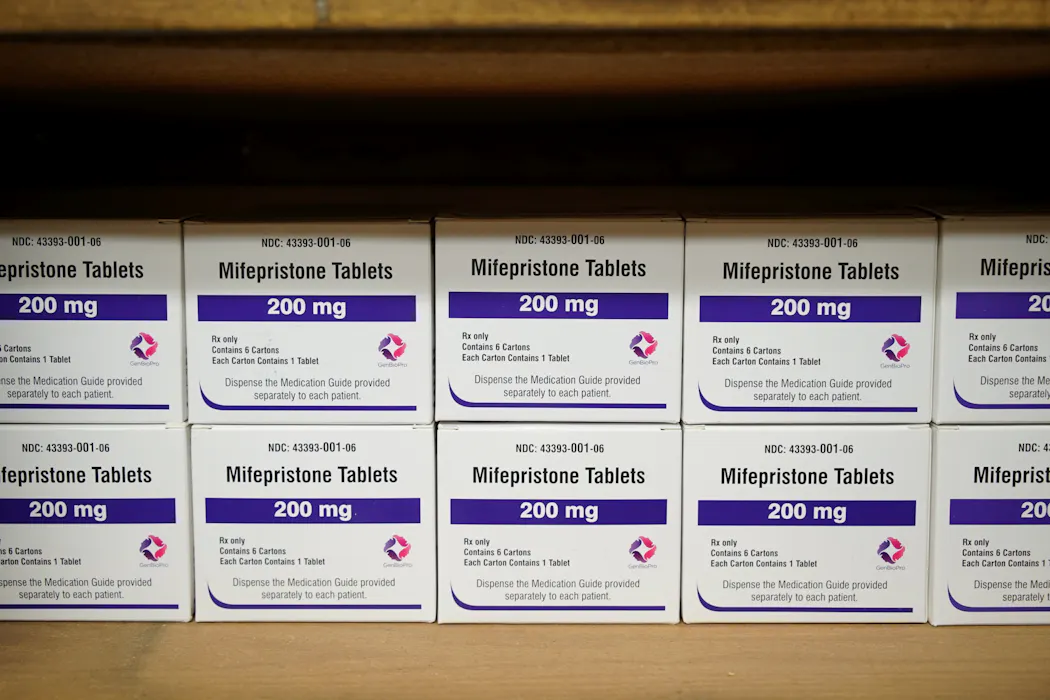
The most imminent threat to mailed abortion pills is the court case Louisiana v. FDA.
Louisiana sued the FDA in October 2025 over the agency’s 2023 decision to remove an in-person dispensing requirement for mifepristone.
The state alleges that the rule change was unlawful, purportedly because the FDA failed to weigh the dangers of the drug. Louisiana, which has a near-total abortion ban, claims that it has suffered direct economic harm and threats to its state sovereignty when providers in protective states legally prescribe abortion pills to pregnant Louisianans across state lines.
This case has moved quickly. In April 2026, at the FDA’s request, a district court in Louisiana paused the case, halting the litigation.
Louisiana appealed to the 5th Circuit, which agreed with the state. On May 1, it reinstated the previous in-person prescription and dispensing requirement for mifepristone – a ruling with nationwide consequences. That weekend, patients across the U.S., regardless of the abortion laws in their state, could no longer get mifepristone through telehealth, the mail or in pharmacies.
Two pharmaceutical companies that manufacture mifepristone asked the Supreme Court to intervene, and on May 14, the justices blocked the 5th Circuit’s decision. That emergency order allows providers to again prescribe mifepristone via telehealth while the litigation proceeds in Louisiana.
By the end of summer, its docketing schedule shows, the 5th Circuit will consider Louisiana’s appeal of the district court’s decision to deny the state a preliminary injunction against the FDA.
Past statements in this case signal how the 5th Circuit might rule. In May, Judge Kyle Duncan, a Trump appointee, wrote that the FDA “conceded it had failed to adequately study whether remotely prescribing mifepristone is safe,” which “resulted in numerous illegal abortions in Louisiana and in Louisiana paying thousands in Medicaid bills for women harmed by mifepristone.”
However the 5th Circuit rules, the losing party is likely to appeal to the Supreme Court.
There is no guarantee that the court would hear this case. When the Supreme Court intervened in May, it wasn’t deciding the case’s substantive issues but rather on a procedural matter. Whether the justices are willing to decide the future of medication abortion based on what could be a sweeping ruling from the 5th Circuit is an open question.
FDA to review medication abortion
The FDA is also reconsidering the regulation of mifepristone, following concerted political pressure from anti-abortion doctors and lawmakers.
To justify reviewing a drug with an established 25-year safety record, Health Secretary Robert F. Kennedy Jr. in May cited a widely debunked study by the Ethics and Public Policy Center, a conservative think tank. More than 260 researchers have denounced it for deep scientific flaws and a lack of peer review.
This process uses the FDA’s Sentinel system – which collects safety information from large electronic health databases of health records, insurance claims, administrative data and registries – to assess possible safety concerns. A status report is due this fall.
The evidence overwhelmingly cuts against reimposing restrictions. A January 2026 JAMA – Journal of the American Medical Association – study of over 5,000 pages of internal FDA documents confirmed the agency’s decisions regarding mifepristone were consistently science-based except in two instances when the agency imposed stricter rules on the drug.
And in October 2025, a federal court in Hawaii questioned the existing restrictions on mifepristone as unsupported by the evidence in Purcell v. Kennedy, directing the FDA to reconsider mifepristone’s regulation.
Reinstating the in-person requirements on mifepristone would not stop all abortion pills from being mailed. Providers would still be free to prescribe and send misoprostol, which has no such restrictions and can safely terminate a pregnancy on its own.
During the 72 hours the 5th Circuit’s ruling was in effect, that’s what some providers did.
Misoprostol alone is slightly less effective than a two-drug regimen. Misoprostol clears all pregnancy tissue in roughly 85% to 90% of cases, versus 95% when paired with mifepristone. It also takes longer to work – up to three days, compared with 24 hours with mifepristone – and may cause more diarrhea and fever.
Researchers are also exploring additional drug combinations to boost misoprostol’s efficacy without mifepristone, including pairing it with drugs that are otherwise prescribed for non-abortion purposes.
Even with in-person pickup of mifepristone, pregnant people could continue to get legal two-drug medication abortions by traveling out of state. Informal abortion-support networks, which rely on national and international sources to obtain mifepristone, would continue to operate in ban states.
Remember the Comstock Act?
The 5th Circuit Court of Appeals and the FDA present the most imminent challenges to medication abortion access. But others are waiting in the wings.
If the dormant Comstock Act were to be tapped for the first time in more than a century, mailing abortion pills would be considered a violation of federal criminal law. And unlike an FDA restriction on mifepristone, Comstock enforcement would bar the mailing of all abortion-related materials, including misoprostol.
International pharmacies could still prescribe and mail abortion pills, but their shipments would risk interception by U.S. Customs and could expose recipients to violation of federal law.
Two wrongful death lawsuits filed in Texas have already invoked the Comstock Act as a basis for tort claims against so-called “shield” providers. These are doctors who practice in states where state shield law protects them against criminal prosecution, civil liability or professional discipline in their home state for facilitating abortion services in places where it is banned.
Shield laws in 22 states and Washington have allowed mailed medication abortion to proliferate in recent years. Eight of those states protect telehealth for medication abortion no matter where the patient lives. Shield providers in those eight states facilitated nearly 15,000 abortions per month in the second quarter of 2025 – mostly in states that outlaw abortion.
Shield laws and shield providers also are under challenges.
Once again, if shield laws fall, abortion medication would not end: People could continue to order the pills from other sources; enforcement would be costly and difficult. But the repercussions for abortion access would be significant.
The bigger picture
Limiting access to medication abortion is one clear step in a national effort to end abortion nationwide.
But by anchoring its campaign to the legal system, the movement has ceded terrain on the ground. While anti-abortion advocates wait on judges and regulators, the abortion-rights movement is adapting its own strategy and rerouting care around restrictions, as it has done since the Supreme Court overturned Roe v. Wade in 2022.
In my view, abortion pills won’t disappear, no matter what the courts or the executive branch does.
This article was published in collaboration with Rewire News Group, a nonprofit news outlet that covers reproductive health.
Rachel Rebouché does not work for, consult, own shares in or receive funding from any company or organization that would benefit from this article, and has disclosed no relevant affiliations beyond their academic appointment.