Categories
Uncategorized

Republicans have beef with Texas Rep. James Talarico – why does meat matter in US politics?

Democratic candidate for U.S. Senate James Talarico speaks during a rally in Texas in May 2026. Whether Talarico is vegetarian or vegan – he says he is not – has featured heavily in the Senate race. Ronaldo Schemidt/AFP via Getty Images

The 2026 midterms are here, and negative campaign messaging is flooding screens across the U.S. In Texas’ Senate race, Republican Attorney General Ken Paxton’s comments about Democratic Texas Rep. James Talarico have gone viral.

Rather than simply suggesting Talarico is weak on border security or inflation economics, Paxton’s campaign has taken a different rhetorical approach. To quote Fox News host Jesse Watters, “The major factor in this race … is whether Tala-freak-o is a vegan.”

Though Talarico maintains he is not vegan, Paxton has referred to his opponent as “Tofu Talarico.”

Paxton and Watters aren’t the only ones making these dietary accusations.

Earlier this year, after Talarico ordered a potato, egg and cheese taco from a restaurant in Austin, Texas Gov. Greg Abbott posted to his campaign social platform X account: “Homie is not beating the vegetarian allegations.”

Texas Sen. Ted Cruz joked that if a soy latte could speak, “that would be Democrat James Talarico.” Even President Donald Trump has chimed in: “He’s a vegan in Texas, and you can’t get elected as a vegan in Texas.”

Again, Talarico denies being a secret vegetarian or vegan. “I’m an eighth-generation Texan,” he has said. “I’ve been eating barbecue since before Ken Paxton’s first indictment.”

The accusations likely stem from a 2022 appearance with the Texas Humane Legislation Network when Talarico suggested Americans reduce their meat consumption for climate reasons. His girlfriend follows a plant-based diet. Nonetheless, Talarico says that his campaign “runs on barbecue.”

As communication scholars who study the symbolic roles of meat and meat-eating in political communication, we see the construction of “Tofu Talarico” not as a one-off political jab but as part of a more sophisticated rhetorical strategy by which politicians appeal to voters.

Attacks on Talarico show how, across American politics, what people eat is a metaphoric marker of who they are, from political affiliation to regional belonging and cultural values. Eating meat – or not – plays a huge role in the political process, and accusations of meat avoidance, regardless of whether they’re true, can be a potent rhetorical weapon.

Three people stand at a counter in a taco restaurant
From left, former President Barack Obama, Texas Democratic Senate candidate Rep. James Talarico and Texas Democratic gubernatorial candidate Gina Hinojosa visit the Taco Joint in Austin in May 2026. Talarico’s order – potato, egg and cheese tacos – drew ridicule from Republicans, feeding vegetarian and vegan attack lines that he denies.
AP Photo/Joel Angel Juarez, Pool

Meat, metaphor and political communication

Communication scholarship shows that metaphors, when a word or phrase denoting one object or idea is used in place of another, are more than literary decoration; they shape the way we perceive reality, acting as part of a “conceptual system” that enables snap judgments and decision-making.

As mental shortcuts, or heuristic devices, metaphors are common in political communication. They’re a means to “see something in terms of something else.”

For example, in the case of Paxton and Talarico, allegations of vegetarianism and veganism are not about Talarico’s nutritional profile or even his environmental ethics. Here, “vegan” and its analogues metaphorically stand in for weakness and nonconformity, whereas “meat” and its affiliates stand in for strength, traditionalism and the stereotypical Texan way.

This usage is consistent with what food politics researchers call the “sexual politics” of meat, wherein meat imagery is often used in displays of traditional masculinity. This is evident in other jabs levied at Talarico. For example, Watters linked Talarico’s diet to his sexual orientation, joking on Fox News that Talarico was a “gay vegan” with a fake girlfriend.

Dietary demographics and election modeling

Dietary preference also links to key political demographics. For example, political scientists have explored whether the concept of a Republican vegan is an oxymoron due to the deep entrenchment of meat-eating and meat production in primarily conservative regions.

Overwhelmingly, vegans tend to be women, young and liberal. Across all political identifications, being male and white correlates with higher meat consumption.

Even the choice of where to purchase meat can be an electoral measure. Political journalist Dave Wasserman has suggested that the 2012 election was a contest between “well-educated, Democratic-trending Whole Foods markets and down-home, Republican-trending Cracker Barrel outposts.”

Meatless political appeals

The “meatless” have long been framed as social and political threats, levied in discussions of whether they should be politically elevated or subordinated. Historically, Western norms during the 19th and 20th centuries held that to not eat meat is odd at best, and suspicious at worst.

In the late 1800s, colonialism in Asia was partially justified on the grounds that Asian men were but “effeminate rice eaters” who, according to 19th-century neurologist James Leonard Corning, lacked “the intellectual vigor of flesh-eating men.”

Negative appeals to veganism again flourished in 2019 after Democratic Representative Alexandria Ocasio-Cortez’s “Green New Deal,” a resolution proposing to combat climate change. Conservative senators like Joni Ernst and Marsha Blackburn attacked the environmentally progressive initiative as a “war on meat,” posing an existential threat to meat eaters and cattle farmers. Notably, the Green New Deal did not contain meat mandates. In the Green New Deal discussion, though, this hypothetical meat ban effectively functioned as metaphorical shortcut for progressive political overreach.

This demarcation is not confined to one political party. In a Democratic primary debate in 2019, New Jersey Senator Cory Booker – a vegan since 2014 – was asked by a debate moderator if, as president, he would demand Americans follow his diet. Booker, surprised by the personal question, said no. He did not win the nomination.

More meat, less elite

Meat, or lack thereof, has gathered more significance in the second Trump presidency via Health and Human Services Secretary Robert F. Kennedy Jr.’s Make America Healthy Again initiative. Kennedy, who touts his “carnivore diet,” says he “only (eats) meat or fermented foods.” He has even modified the food pyramid – the Department of Agriculture’s visual nutrition guide – shifting red meat from a food to be consumed sparingly to a high dietary priority.

Meanwhile, multiple Republican-leaning states have banned cell-cultured meat, or meat produced in a lab, for not being “real” and, so, being dangerous. After signing a ban on cultured meat, Florida Governor Ron DeSantis declared that the bill represented a battle against the global elite and its “authoritarian goals.”

A woman speaks from behind a podium, a poster showing an inverted food pyramid on display nearby
Secretary of Agriculture Brooke Rollins speaks at a Department of Health and Human Services event in January 2026. The Trump administration announced new dietary guidelines emphasizing proteins.
Anna Moneymaker/Getty Images

2026 and beyond

While the beef between Paxton and Talarico will likely resolve after the 2026 midterms, appeals to meat, meat eaters and meat-eating in U.S. political communication will not.

As available meat substitutes increase, economic burdens on ranchers rise and debates over the meat industry’s impact on climate change intensify, we expect meat’s culture war cachet to surge too.

“Tofu Talarico” is just one of what will be numerous examples of meat symbolizing what the future of the country, its leaders and its citizens should be.

The Conversation

The authors do not work for, consult, own shares in or receive funding from any company or organization that would benefit from this article, and have disclosed no relevant affiliations beyond their academic appointment.

​Politics + Society – The Conversation

Categories
Uncategorized

The US murder rate fell to historic lows in 2025 – here’s why

The reported rate of murder and nonnegligent manslaughter may be the lowest since reliable national data began to be collected in 1960. Jeremy Hogan/Photodisc via Getty Images

The murder rate in 2025 was the lowest in modern American history.

Preliminary data shows the murder rate fell nearly 20% from 2024, likely making it the lowest rate since reliable national data began to be collected in 1960.

Why was the murder rate so low?

I’m a professor of sociology and criminology who studies crime trends. In my book, “Crime Wave,” I explore how homicide rates have closely followed three trends over the past decade: alcohol consumption, drug abuse and firearm purchases. Now that the drug and alcohol crises are waning and gun purchases are falling, so too is the murder rate.

The 2015-2021 murder increase

The murder rate’s previous low came in 2014, capping a decline that had been more or less continuous since the early 1990s.

The murder rate usually rises and falls alongside other crimes, so through the 2010s, with property crime and overall youth offending dropping, criminologists expected the murder trend to follow suit.

Instead, the national murder rate increased sharply in 2015 and 2016, and then by an even larger margin in 2020.

Suddenly, it appeared that violent crime was spiraling out of control. By 2021, the homicide rate hit its highest level since the mid-1990s.

Popular, but incomplete, explanations

Some researchers and commentators attributed the homicide spikes to a so-called “Ferguson effect” in 2015 and, likewise, a “Minneapolis effect” in 2020. These theories are based on the idea that law enforcement officers were reluctant to be proactive or make arrests after nationwide protests against police brutality related to the police killings of Michael Brown in Ferguson, Missouri, in 2014 and George Floyd in Minneapolis in 2020. The evidence for these claims is mixed.

There is little consistent indication that a decline in proactive policing contributed to a crime increase in 2015, although the homicide spike in 2020 was likely exacerbated by a police “pullback”.

Still, the majority of the homicide spike took place before June 2020, when protests over Floyd’s death spread nationwide. A study published in the journal Epidemiology found that the increase began as early as October 2019, suggesting de-policing in the summer of 2020 likely worsened the rise rather than caused it.

De-policing is, at best, an incomplete explanation.

Substance abuse, guns and the ‘homicide epidemic’

As I document in “Crime Wave,” the crisis in violence was related to another crisis: deaths of despair, which include drug overdoses, suicides and alcohol-related fatalities.

In the years leading up to the 2015 homicide spike, the prescription opioid crisis gave way to the illicit opioid crisis. As opioid use shifted toward heroin and fentanyl, it became deadlier. People were more likely to overdose, and the drug market moved from pharmacists into the hands of street dealers. It wasn’t just the pharmacological effect of drugs but the systemic nature of drug markets – disputes between dealers, buyers and users – that contributed to the spike in homicides.

At the same time, alcohol consumption began to accelerate. Alcohol is connected to homicide rates in part because it decreases inhibition, nullifying social and personal constraints. A high percentage of both homicide offenders and victims are under the influence of alcohol during a fatal assault.

Finally, amid growing distrust of the police and the government, firearm sales began to increase during 2015 and 2016, setting an all-time record in 2020. Given that assaults with a firearm are more likely to lead to the death of the victim than assaults using other weapons, confrontations became deadlier.

In my assessment, the homicide rate moved in near lockstep with trends in drug overdoses, alcohol consumption and firearm purchases, each of which increased by its largest margin in 2020.

The COVID-19 pandemic likely exacerbated the substance abuse crisis, and the gun-buying spree was especially pronounced at three points: in March 2020, when the U.S. declared a national emergency over COVID-19; in June 2020, following the Floyd protests; and in the months surrounding the 2020 presidential election.

With more people under the influence of alcohol, an expanding illicit drug market and more guns available, the murder rate dramatically increased.

The murder rate decline after 2021

After peaking in 2021, the murder rate began to fall. This occurred slowly at first in 2022, but the estimated declines in 2023, 2024 and 2025 have been substantial. The reversal in the homicide trend has followed a similar timeline as the substance abuse and firearm purchasing patterns, though some indicators of firearm possession, such as their use in suicides, remain elevated.

When the homicide rate was rising, it defied criminologists’ expectations, breaking away from the property crime decline of the 2010s. Now, the murder rate is falling back in line with other crime trends, many of which are also among the lowest ever recorded. As the substance abuse crises continue to wane, I expect murder rates to fall even further in the near future.

Additionally, with youth criminal involvement hitting historic lows, the next generation appears to be one of the least criminally prone in decades, which bodes well for continued reductions in the murder rate.

The Conversation

James Tuttle does not work for, consult, own shares in or receive funding from any company or organization that would benefit from this article, and has disclosed no relevant affiliations beyond their academic appointment.

​Politics + Society – The Conversation

Categories
Uncategorized

Justice Jackson’s birthright citizenship opinion includes Black Americans in the story of the nation’s search for equality

Supreme Court Associate Justice Ketanji Brown Jackson speaks in Cutler Bay, Fla., on March 6, 2023. Joe Raedle/Getty Images

In the annals of Supreme Court decisions, the public likely remembers what justices wrote for the court in famous cases, such as the Brown v. Board of Education ruling that outlawed racial segregation in public schools.

Or perhaps the public remembers great dissenting opinions that display foresight and speak across the ages. Justice John Marshall Harlan’s dissent in the 1896 Plessy v. Ferguson case, which legalized racial segregation, is a shining example.

But Supreme Court scholars and the public alike seldom pay much attention to concurring opinions, in which a justice expounds on the views of their colleagues in the majority. Some legal experts have denigrated concurring opinions as “the worst form of legal clutter… that are, usually, better left unwritten.”

On June 30, 2026, in the Trump v. Barbara ruling, Justice Ketanji Brown Jackson showed how wrong that view can be when she delivered a monumental concurring opinion in the birthright citizenship case.

Chief Justice John Roberts wrote the majority opinion, ruling that the 14th Amendment guarantees automatic citizenship to virtually everyone born on U.S. soil. The decision invalidated President Donald Trump’s executive order that sought to deny citizenship to children born to foreign parents who are unlawfully in the United States.

Jackson, however, used her concurrence to go far beyond that and offer a new understanding of the origins of the 14th Amendment’s guarantee of birthright citizenship and its promise of equal treatment. She did so while emphasizing the singular contributions of Black Americans to that endeavor.

Along the way, Jackson criticized Justice Clarence Thomas and the court’s dominant originalist jurisprudence – centered on interpreting the Constitution based on how it was understood when it was adopted – for distorting the historical record. Jackson has previously signaled that a responsible use of history requires examining all relevant sources instead of cherry-picking among them to make a particular point.

As a politics scholar who has written about history and law, I believe that years from now, when Americans look back on Trump v. Barbara, it will be Jackson, not Roberts, whom they remember.

No shrinking violet

During her brief tenure on the court, Jackson has shown herself to be no shrinking violet. From the start, she has made her voice heard during oral arguments and in her written opinions.

As political scientists Jake Truscott and Adam Feldman wrote in December 2022, after her first three months as a justice, Jackson “was by far the most active participant in oral arguments.”

Since then, nothing has changed about Jackson’s style on the bench. The Washington Examiner reports that she “took up more than 20% of the Supreme Court’s questioning last term.”

Jackson also is not shy about writing dissenting opinions, and the occasional concurrence, whether in combination with others or alone. In both her dissents and concurrences, Thomas, the court’s only other Black member and its leading proponent of originalism, has been one of her main targets.

A close up profile view of a Black woman wearing glasses.
Ketanji Brown Jackson testifies before a Senate Judiciary Committee hearing on pending judicial nominations on April 28, 2021, in Washington.
Kevin Lamarque/Pool via AP

For example, in her 2023 dissent from the court’s decision to end affirmative action in higher education, Jackson directly criticized Thomas when she wrote that “those who demand that no one think about race … refuse to see, much less solve for, the elephant in the room – the race-linked disparities that continue to impede achievement of our great Nation’s full potential.”

Originalism, Jackson-style

Jackson has also called herself an originalist. However, she departs from Thomas’ brand of originalism.

For Jackson, to understand how any provision of the Constitution was understood requires unearthing sources of constitutional meaning that have been largely ignored by others on the court.

That vision was on display in her concurring opinion in the birthright citizenship case. There, Jackson paid particular attention to what Black Americans did in inspiring and crafting the 14th Amendment.

This contrasts with the traditional originalist story that highlights white protagonists such as Pennsylvania Rep. Thaddeus Stevens, who introduced the proposal to add the 14th Amendment to the Constitution, or President Andrew Johnson, who resisted the 14h Amendment on the grounds that it infringed on states’ rights.

Justice Thomas embraced this sort of vision in Trump v. Barbara. As he tells it, the birth of the 14th Amendment can be traced to the concerns of members of the Reconstruction Congress that the 1866 Civil Rights Act, which extended certain fundamental rights to “all persons born in the United States,” would be repealed or overturned in the courts.

Black people have little or no role in Thomas’ account.

Black Americans and birthright citizenship

Jackson’s opinion registers her impatience with such an exclusion. She faults Thomas for his “narrow vision of the Fourteenth Amendment (that) bears little relationship to the history of its ratification.”

Instead, Jackson traces the 14th Amendment to work done by people “within and beyond Congress.”

Jackson follows Harvard historian Jill Lepore’s suggestion that originalist judges should always attend to “all the people who are basically knocking on the windows and banging on the doors with their ideas about what should be in the Constitution.”

A Black woman and white man walk down steps in front of a federal building.
Justice Ketanji Brown Jackson and Chief Justice John Roberts walk down the steps of the Supreme Court on Sept. 30, 2022.
Anna Moneymaker/Getty Images

As Jackson recounts, “In the decades leading up to the ratification of the 14th amendment, black Americans organized and gathered at more than 600 local and national conventions across the country. There, delegates erected the political and intellectual scaffolding of the 14th amendment and, later, for the black civil rights movement more generally.”

Contrary to Thomas, who argues that birthright citizenship applies only to former slaves and their offspring, Jackson notes that Blacks “helped galvanize the push for full equality.” When ratified, Jackson explains, “the citizenship clause thus vindicated the universalist vision of the delegates at the colored conventions and their allies in Congress.”

And in a pointed dig at her colleague, Jackson writes that the “distortion of historical facts – retellings that reimagine and repurpose past events to lend credence to misbegotten aims” – poses a grave threat to the constitutional project and America’s well-being.

Extending the work of the 1619 Project

Jackson’s concurrence in the birthright case builds on the approach to history taken by the so-called 1619 Project. That project, unveiled by The New York Times in 2019, “aimed to reframe the country’s history by placing the consequences of slavery and the contributions of black Americans at the very center of our national narrative.”

Nikole Hannah-Jones, creator of the 1619 Project, insists “the United States simply would not exist without us. The idealistic, strenuous, and patriotic efforts of black Americans have helped the country live up to its founding ideals.”

Jackson fully embraces that story and, in her concurring opinion in Trump v. Barbara, extends it to include what happened in 1866 when the U.S. restated and renewed its founding commitment to equality. She suggests that the 14th Amendment would not have come into being without similar “patriotic efforts” by Black Americans.

What makes Jackson’s concurrence extraordinary, Slate’s Robyn Nicole Sanders writes, “is that it insists on telling the 14th amendment story honestly … (and) it is at moments elegiac in its remembrance of the people whose suffering and resistance gave birth to the citizenship clause.”

That is why I believe Jackson’s concurrence will be remembered as one of the great opinions produced by a Supreme Court justice.

The Conversation

Austin Sarat does not work for, consult, own shares in or receive funding from any company or organization that would benefit from this article, and has disclosed no relevant affiliations beyond their academic appointment.

​Politics + Society – The Conversation

Categories
Uncategorized

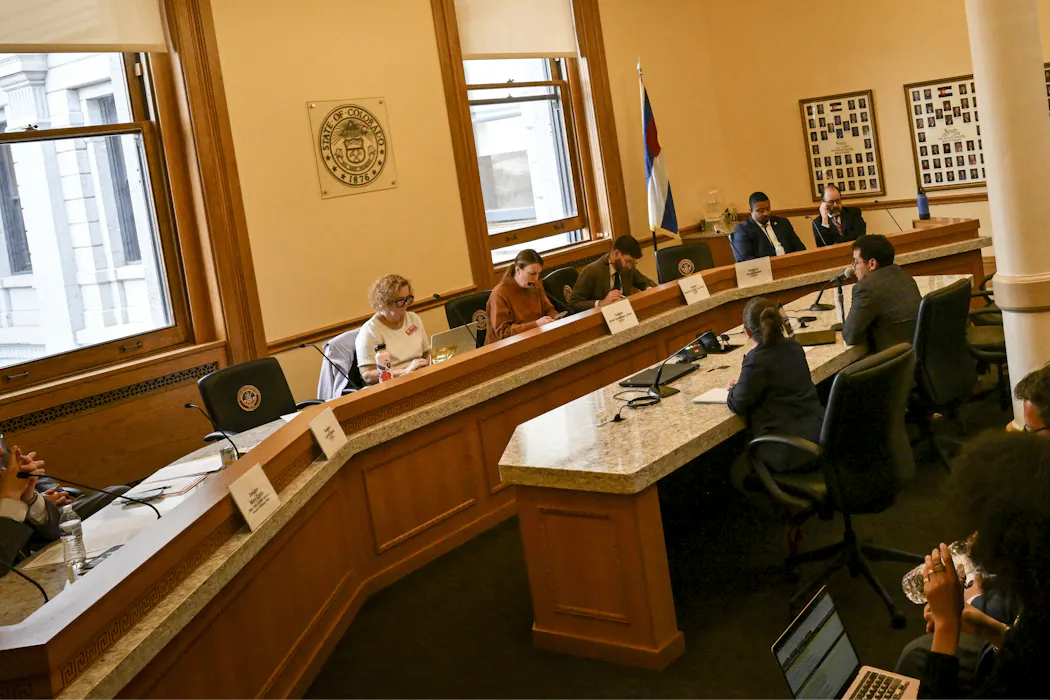
Why Colorado replaced its AI discrimination law with a transparency requirement that the feds might challenge anyway

Colorado passed a landmark artificial intelligence law that was challenged in a federal lawsuit. AAron Ontiveroz/The Denver Post via Getty Images

When Colorado replaced its landmark AI law in May 2026, the move looked like a retreat from ambitious lawmaking. The state abandoned a first-of-its-kind framework that required companies to actively prevent algorithmic discrimination. That’s the risk that automated systems produce biased outcomes based on race, gender, age or other protected characteristics when making decisions about people’s jobs, loans or healthcare.

In its place, on May 14, 2026, the legislature passed something far narrower, including a set of transparency requirements telling companies what they must disclose to consumers.

I study how AI and technology are reshaping policymaking and democratic accountability. I also track state AI legislation through the U.S. State AI Policy Tracker at the University of Denver’s Daniels College of Business.

Colorado’s back-and-forth on AI legislation exposes a fundamental shift in how state leaders are thinking about governing AI. It also raises an unresolved constitutional question that could determine whether any state AI law survives federal challenge.

From prevention to disclosure

The original Colorado law, called the Colorado Artificial Intelligence Act, asked companies to prevent harm. The replacement asks companies to inform consumers. That distinction may sound technical, but it reflects a meaningful change in governing philosophy.

The Colorado Artificial Intelligence Act was built on direct obligations. Developers and deployers of high-risk AI systems – such as tools used to screen job applicants, evaluate loan applications or determine insurance eligibility – had to establish risk management programs. The law also required companies to conduct impact assessments and take proactive steps to avoid discriminatory outcomes. In essence, the state was telling companies: Govern yourselves, and prove you’re doing it.

The replacement law, called the Automated Decision-Making Technology Act, takes a different approach.

Companies must notify consumers when automated technology plays a role in a consequential decision. That could include a hiring determination or a loan denial. If that decision goes against a consumer, the company has 30 days to explain how the technology contributed to the outcome.

Consumers can also request corrections to inaccurate personal data and ask for meaningful human review. The duty of care, risk management mandates and impact assessments from the first iteration of the law are gone.

For Coloradans, the practical difference is significant. Under the old law, a company using AI to deny a loan application, for example, would need internal processes designed to catch discriminatory patterns before they reached the consumer.

Under the new law, that company must tell the consumer that AI was involved and explain its role after the fact. However, the company has no obligation to audit the system that produced the decision. The burden shifts from the institution deploying the technology to the individual affected by it.

Equal protection out, free speech in

A federal lawsuit filed in April 2026 brought the timeline for this legislative overhaul forward quickly. Elon Musk’s company xAI sued to block enforcement of the Colorado Artificial Intelligence Act, the original law.

Days later, the DOJ intervened in support of xAI. It was the first time the federal government had moved to invalidate a state AI law.

The Department of Justice backed a lawsuit led by Elon Musk’s xAI to block Colorado’s artificial intelligence regulations before they took effect in June 2026, according to a 9News report.

In its legal filing, the DOJ made two constitutional arguments against the original Colorado law. The new law neutralized the first argument but may have sharpened the second.

The first was an equal protection argument. The DOJ argued that the law’s antidiscrimination framework effectively forced developers to make race- and sex-conscious decisions about how their models behave. For example, companies would have been required to test whether their AI systems produced different outcomes for different demographic groups and to adjust them if they did.

That kind of government-imposed classification is one courts subject to heightened scrutiny, meaning the government bears a heavy burden to justify it.

The new law eliminated this argument entirely. The algorithmic discrimination provisions are gone, and there is nothing left in the statute that requires developers to monitor or adjust their outputs for discriminatory patterns.

The second argument made by the DOJ was a First Amendment argument, specifically what is called compelled speech. The idea is straightforward: The First Amendment does not just protect a person’s right to speak, it also protects the right not to speak. When a government requires a private company to deliver specific messages to consumers, that mandate has to meet a constitutional standard. Courts ask whether the government has a strong enough reason to force someone to say something they otherwise would not.

xAI characterized the Colorado law’s disclosure and reporting requirements as exactly this kind of forced communication.

In my opinion, this argument was strengthened, not weakened, by the rewrite. The new Automated Decision-Making Technology Act kept little besides notice and disclosure duties, so the new law is, at its core, the government telling companies what they have to say to consumers.

In narrowing the statute this way, the state legislature may have made the compelled speech argument easier to isolate and litigate, even as it made the equal protection argument disappear.

The executive order behind the lawsuit

The DOJ’s decision to intervene in a state-level lawsuit did not come out of nowhere. It followed directly from Executive Order 14365, which President Donald Trump signed in December 2025.

President Donald Trump signed an executive order that lays the foundation for federal testing of the world’s most powerful AI systems before they are publicly released, according to a report from NBC News.

The order declared that a “minimally burdensome national policy framework” should govern AI, and it directed the DOJ to challenge state laws that conflict with that vision. The order also instructed the Commerce Department to publish an evaluation of existing state AI laws, identifying those it deems “onerous.” It included a specific mandate to flag laws compelling disclosures that could violate the First Amendment.

That evaluation was due by March 2026, but it has not yet appeared. If that list materializes – and if Colorado’s new law lands on it – it will signal that the administration sees this state not as a single problem to resolve but as a test case for a broader federal campaign against state AI regulation.

Dozens of states have introduced AI-related legislation in 2026 that touches on the same areas Colorado tried to regulate, including employment, lending, housing and healthcare.

What Coloradans should expect

For now, not much changes in Colorado. A federal judge stayed enforcement of the original law in April 2026, and that stay applies to the replacement law as well. This means none of its provisions can be enforced yet.

The stay will remain in place until at least 14 days after the court rules on xAI’s request for a preliminary injunction, which is a court order that would block the law from taking effect while the case is decided. That request will not be filed until 28 days after the state completes its rulemaking process. So the timeline depends on the attorney general, the courts and the DOJ’s willingness to press a challenge against a law that already conceded substantial ground.

Read more of our stories about Colorado.

The Conversation

Stefani Langehennig receives funding from the American Political Science Association’s (APSA) Centennial Center Research Center..

​Politics + Society – The Conversation

Categories
Uncategorized

Graham Platner’s campaign implosion highlights the hollowness of America’s political parties and how they can be hijacked by insurgents

Graham Platner at a town hall on June 7, 2026, in Portland, Maine. Laura Brett/Getty Images

It wasn’t a surprise, but it was a bombshell.

On July 6, 2026, Politico published the detailed account of a Maine woman who said she had been sexually assaulted by Maine Democratic Senate nominee Graham Platner almost five years ago. Platner called the allegation “categorically untrue,” then said he was “taking the time to reflect on the best path forward.”

Platner had gained the fervent support of progressives in Maine and outside. But he had been dogged by accusations of, variously, racist, misogynist and dishonest behavior – he claimed not to have known the meaning of an SS tattoo on his chest. But his supporters remained behind him.

Soon after the assault allegations appeared, the Platner campaign was in trouble. His early political champion, Sen. Bernie Sanders, took a day to echo what party officials and once-supportive social media stars had almost immediately demanded: that Platner drop out of the campaign. By the evening of July 8, Platner had suspended his campaign.

Politics and legal affairs editor Naomi Schalit spoke with political scientist Nicholas Jacobs, who has followed the campaign and talked with Platner directly in 2025.

An NPR host yesterday opened an interview with a Maine reporter by observing, “A lot going on in your little state.” Maine has two senators, just like other states. Why is this such a high-profile race?

I thought when I moved to Maine in 2019 from Virginia, I was going to the quiet countryside. Politics has been anything but since then. Maine was destined to be in the national spotlight this year because Republican Sen. Susan Collins is up for reelection, running for her sixth consecutive term in office. Every time she is up for reelection, she is viewed as a vulnerable incumbent, if not the most vulnerable incumbent, in the Republican Party. So we were destined to get lots of outside money and outside attention before the whole Platner story even began.

Two men on a stage backed by an American flag and a large group of people raise their arms together in triumph.
Graham Platner and Sen. Bernie Sanders, left, join hands at an event in Orono, Maine, on May 24, 2026.
AP Photo/Robert F. Bukaty

In the past, candidates generally emerged from a pipeline – electoral experience, vetting by the party. They did not emerge out of candidate recruitment by outsiders or party critics. But nationally we’re seeing that kind of insurgent recruitment, including with Platner. Is this a new kind of politics?

Political scientists have been thinking about that question for quite a long time. As far back as the early 1970s they started thinking about how changes to the structure of these party organizations, in particular the rules governing the nomination process, began to produce a different type of candidate. Those changes sat side by side with different types of technologies that I think also increased the likelihood of a candidate-centered campaign.

Now, you could say we’re living in an anti-establishment era, which might mean that voters on the right and the left are more disposed or more likely to favor candidates who are running against the establishment.

As unusual as Graham Platner is, this style of politics is increasingly more common. In 2010, scholars were becoming attuned to something known as the “invisible primary.” That’s where a lot of endorsements among party elites and interest group activists, well before voters had any say in the primary process, meant these insiders had come to some sort of consensus on who the candidate should be.

There’s a flip side of that, which is mirrored in Donald Trump in 2016 and in some of these progressive insurgencies of the past couple of years. Would-be candidates themselves and activist organizations are able to put forward potential contenders for nomination outside of that traditional system where you work your way up through legislative office. That’s clearly what happened with Platner.

In 2025, individuals associated with the Bernie Sanders presidential campaign – now sort of the Bernie Sanders machine – came up to Maine looking for candidates. They found a guy who did an ad against some Norwegian salmon commercial fisheries, realized he was cut straight from central casting, and that’s how we got Graham Platner.

Is there a connection between Platner’s populism and why his deeply engaged supporters weren’t able to look past his obvious problems?

Donald Trump, as a populist candidate, has been able to let scandal after scandal just roll off his shoulders. The left was very critical of Trump supporters forgiving him, to the extent that even Trump himself famously says he can stand in the middle of Fifth Avenue, shoot someone and people will still support him.

There’s an equivalency with Platner, and some of it has to do with a populist style of politics. Platner and Trump really excel, as all populists do, in defining who they’re against, at identifying the enemy, whether it’s immigrants, the deep state, the swamp, the oligarchy or the establishment.

Both Platner and Trump have viewed the national media as an enemy. Every scandal, every attack, every criticism that’s levied at the leader of a populist movement seems to vindicate their idea that there’s some larger force out there trying to take them down. The sexting scandal that broke about a month ago, it was the Platner campaign itself that said this was a hit job, a smear from The New York Times.

There is a sizable mass of individuals in the state, including some elected Democrats, who view this latest set of allegations of sexual assault that Politico reported as a fabricated hit job from the Democratic establishment.

If the critics are the enemy, then Maine’s Democratic Party has a serious problem in terms of who gets to be the next candidate.

Not every Democrat in Maine is ride or die with Platner, nor were they when he did a very impressive job in getting the most votes ever in the Democratic primary last month, after Gov. Janet Mills had suspended her campaign.

The Mills campaign really never mobilized. By early spring here in Maine, when Mills tried to fight back, she ran one set of ads calling out some post that Platner had written diminishing sexual assault, particularly in the military. The left in the state attacked her pretty strongly, saying, “You’re going to weaken our candidate. This isn’t right.”

The fact that a lot of the women who were featured in the ad were Democratic Party stalwarts kind of played into this idea that it was the establishment taking on the insurgency. Several months later, it seems they might have had a point.

Are there lessons from what happened with Platner?

The simple, shallow lesson is this was just bad campaign strategy.

People came in and recruited Platner and just didn’t do enough opposition research. So the next time that they come in and pull somebody out of central casting, they just would want to hire better lawyers to dig up dirt on their own candidate.

But what’s problematic about this is something else.

I sat down with Platner in October 2025. I asked him, “Well, why are you wearing the Scarlet D – for Democrat – around your neck? Why would you do that?

And he said, “The only reason I’m doing it is to get access to Act Blue, so I can raise money.” Act Blue is the Democratic Party’s main fundraising platform.

Editor’s note: The Conversation has reached out to the Platner campaign for a comment and will update this story if it receives one.

So you have this individual who doesn’t want to be a Democrat. He’s openly said he’s not going to vote for the Democratic leadership. He’s an acolyte of Bernie Sanders, who also doesn’t want to call himself a Democrat. What are such individuals able to do? They’re able to take over the Democratic Party.

This is the same type of problem that we saw in 2016: An individual who never really wanted to be a Republican, who was a Democrat for much of his life, bursts out on the scene and ends up taking over the Republican Party.

So the deeper, longer-term problem is the hollowness of America’s organized political party life. I get that there are very few defenders of our two-party system, but our politics, our political system, our Constitution only work with two healthy, robust political parties.

When they can be hijacked by outsiders, parties are not able to do the work of selecting candidates, of building consensus, of doing the work of democratic persuasion. You might say it becomes an entirely different political game altogether.

This story has been updated to reflect Platner’s withdrawal from the Senate race.

The Conversation

Nicholas Jacobs does not work for, consult, own shares in or receive funding from any company or organization that would benefit from this article, and has disclosed no relevant affiliations beyond their academic appointment.

​Politics + Society – The Conversation
Categories
Uncategorized

Florida’s proposed property tax cuts rely on a population boom that has slowed dramatically

Florida’s population continues to grow, but the current growth rate may not be enough to support the state budget if the proposed amendment to property taxes passes. Robert Daly/OJO Images via Getty Images

From 2020 to 2024, Florida’s population grew by 8.5%, from 21.6 million to 23.4 million.

This is nothing new: The state’s warm weather, amenities that include world-class golf courses and beaches, and lack of income tax have long attracted newcomers, so Florida often leads the U.S. in population growth.

But recent data suggests that population growth may be slowing.

As demographers – social scientists who specialize in population change – we evaluated the current trends in the Sunshine State.

Property tax amendment on the ballot

Demographics have political implications, and at the moment, Florida’s government is relying on continued growth.

In early June 2026, the state Legislature approved a ballot initiative for November aimed at reducing property taxes for homeowners. The proposed amendment to the state constitution would expand the homestead tax exemption, not including school taxes, for current Florida homeowners on their primary residence. The exemption would start at US$150,000 in 2027, then ramp up to $250,000 in 2028 and be adjusted for inflation after that.

In other words, the tax collector would deduct the exempted amount from the assessed value of a homesteaded property, and the property tax rate would then be applied to that lower number.

Supporters of the tax cut argue that reduced tax revenue would be recouped by the continued arrival of new residents. These newcomers would be buying homes at the usual property tax rates, with an exemption of only $50,000. After four years, that would increase to $250,000. It’s also possible that the proposed tax cuts might attract new residents.

If Floridians vote for this exemption in November, the state’s continued population growth would be vital to maintaining local and state government budgets.

The state Legislature also recently approved a new congressional map for 2026. Florida Gov. Ron DeSantis says this new map is needed to address “malapportionment” and uneven migration patterns within the state since 2020. Before redrawing the districts in April 2026, the governor more than once had said that the state was shorted a congressional representative because there was more population growth in some areas than others.

Is Florida still growing?

To determine whether Florida’s population is still growing, we used the Census Bureau’s components of change dataset. The Bureau provides annual estimates of population size and the factors responsible for changes: births, deaths, domestic in-migrants, domestic out-migrants, immigrants and emigrants.

From this data, we estimated the annual growth rate for Florida and its 67 counties, along with the contribution of three factors: natural increase, meaning the difference between the number of births and deaths; the net domestic migration, which is the difference between the number of people moving in from other states and moving out; and net immigration, meaning the difference between the number of immigrants and emigrants.

Our data shows that Florida’s population was still growing in 2025, but at an annual rate of just 0.9%. This pales in comparison to Florida’s peak growth rate of 2.5% in 2022 and is also much lower than the five years prior to the COVID-19 pandemic.

Three demographic factors explain this change. First, domestic migration has slowed to a trickle. In 2025, just 22,000 more people moved to Florida from other states than moved out. For comparison, the annual average during the pandemic, from 2020 to 2022, was around 208,000. While no single shift can fully explain this slowdown, rising housing costs in the state may be a culprit. Predicted increases in both property insurance rates and severe weather may also be discouraging newcomers from moving to Florida.

Second, since 2020, more Floridians are dying than being born each year. While this natural decrease is not unique to Florida, its social, economic and demographic impacts may be more pronounced if the state is no longer a migrant magnet.

Third, immigration to Florida from abroad dropped sharply in 2025, a year that saw new anti-immigration policies nationally and within Florida. Plummeting immigration is concerning, since our data suggests that immigration was the biggest contributor to Florida’s growth since 2023.

Where is Florida still growing?

While the currently available data does not indicate the exact changes in the types of people moving in and out of Florida, we can find clues by looking at county trends.

Florida’s peak growth rates occurred following Desantis’ 2021 decision to lift pandemic-era restrictions. During that time, growth was most concentrated in Florida’s retirement destinations.

aerial photo of homes and golf courses in The Villages, Florida
The Villages is a popular retirement destination that saw a huge population boom during the pandemic, but its growth has now slowed quite a bit.
Michael Warren/iStock via Getty Images Plus

Sumter County, home to The Villages, the nation’s largest retirement community, had an astonishing growth rate of 7.4% in 2022. Gulf Coast counties with large retiree populations, such as Collier County where Naples is located, also grew rapidly at 3.6%.

Post-pandemic, these same places saw growth rates slow. Sumter County’s rate fell to 2.3%, while Collier County grew by just 0.1% in 2025.

Some Florida counties are still growing rapidly. St. Johns County, located in the Jacksonville metro area, led all counties in the state with a 3.9% growth rate. St. Johns is suburban, with a high percentage of families with children and some of the best-rated schools in Florida. This suggests that this growth may be due less to retirees and more to families with children moving in from other parts of the state.

Marion County, home to exurban Ocala about an hour north of Orlando, was the only county to experience higher growth rates in 2025 than in 2022. Last year, Marion County grew by 3.4%. Notably, the median home value in Marion County was around $275,000, while the statewide median home price was roughly $397,000. Growth in places like Ocala suggests that rising housing costs are indeed shaping Florida’s demographic future.

Florida has long thought of itself as a state that catalyzes growth, backed up by its booming population. However, our calculations show that population growth in Florida, particularly from out-of-state migrants, has nearly stopped.

What this means for the future is unclear. The parts of the state growing fastest now were not the places growing fastest earlier this decade, and other counties may surge between now and 2030. Regardless, Florida’s population slowdown will bear watching by its government and demographers.

The Conversation

The authors do not work for, consult, own shares in or receive funding from any company or organization that would benefit from this article, and have disclosed no relevant affiliations beyond their academic appointment.

​Politics + Society – The Conversation

Categories
Uncategorized

Young women are identifying as less straight; young men, not so much

Crowds gather for a Pride march in New York in June 2026. New research shows that the boundaries of heterosexuality are changing for young women. Roy Rochlin/Getty Images

Young women are moving away from exclusive heterosexuality faster than young men.

In a recent poll, Gallup found that LGBTQ+ identification has more than doubled since 2012, with especially high rates among Gen Z women, or those born between 1997 and 2012. In 2023, 28.5% of Gen Z women identified as LGBTQ+, compared with 10.6% of Gen Z men.

As researchers who study sexuality, gender and young adulthood, we, along with our former colleague Sarah R. Young, have tracked these patterns in our Human Sexualities Research Lab since 2011. The national trend matches what our interdisciplinary team – spanning psychology, social work and gender studies – has documented over a decade.

Our most recent study asked whether young women and men are changing in similar ways across three measures of sexual orientation: sexual attraction, or who someone sees as a sexual partner; sexual behavior, or who their sexual contacts or partners actually are; and self-identification, or how they label their sexuality. Our findings suggest they are not. In our analysis, this gender gap is not only about who claims an LGBTQ+ identity; it is also about how the boundaries of heterosexuality are changing.

Women are drifting from exclusive heterosexuality

Identity is only one part of sexual orientation. People also differ in who they are attracted to and who they have sex with.

In a study now under review, our team examined 15 years of responses from more than 10,000 public university undergraduates in New York state between 2011 and 2026. We also analyzed more than 700 open-ended responses from 2024 and 2025 in which the same student population explained why they chose their particular sexual identities.

Our research found that, across 15 years, young women have steadily become less likely to report being exclusively attracted to the other sex. In 2011, about 22% of female students reported attraction that was not exclusively to men; by 2026, that had increased to close to 50%. Similar movement appeared across sexual behavior and identity: The share of women who reported not having exclusively male sexual partners increased from 8% to 35%, while the share identifying as something other than exclusively heterosexual increased from 18% to 44%. These trends were broadly consistent across racial groups.

In our survey, students rated sexual attraction on a scale from exclusively other-sex attraction (women attracted only to men; men attracted only to women) to exclusively same-sex attraction (women attracted only to women; men attracted only to men). For young women, the shift was not mainly from exclusive attraction to men to exclusive attraction to women. Instead, women’s responses spread across the scale, from mostly attracted to men to mostly attracted to women. The largest change was a decline in exclusive attraction to men.

Young men have barely budged

Young men showed no comparable long-term shift and instead remained concentrated in exclusive heterosexuality; any movement away from that was limited and less sustained. The share of male students reporting attraction that was not exclusively to women remained nearly unchanged: about 14% in 2011 and 13% in 2026. This lack of movement was also seen in behavior and identity.

Among students who identified as something other than exclusively straight, male students were more likely to report exclusively gay identities than female students were to report exclusively lesbian identities. This is consistent with gender norms that leave men less room for sexual ambiguity and sort male desire into either entirely straight or entirely gay.

The pandemic didn’t start the trend

Researchers and journalists have suggested Covid-era lockdowns changed conditions for exploring sexuality and gender: Social life moved online, dating was interrupted, and some people had more time for reflection, online connection and experimentation away from peer scrutiny.

Our research does show a pandemic-era shift. Around 2020, more women reported being attracted to people other than just men, a change that leveled off somewhat after 2023. But COVID-19 lockdowns did not create the broader trend. Among women, movement away from exclusive heterosexuality was already visible before 2020 and has since continued along the same general path.

In contrast, there was no steady, long-term movement among men away from exclusive heterosexuality. The changes we observed were smaller and more concentrated around the pandemic and the years that immediately followed.

Why the ground shifted for women

To understand why these changes matter, consider what feminist writer Adrienne Rich argued more than four decades ago: Heterosexuality has never simply described who someone desires. As a social expectation, it has helped define women and men as complementary but unequal. It gives men greater authority and social status, encourages women to organize their attention, care and futures around men, and makes that arrangement appear normal, natural and even romantic. As the norm, it also stigmatizes those who do not conform.

Over the past century, feminist movements expanded women’s access to education, paid work, political rights, contraception, divorce and other legal protections. Those changes made adult life outside of heterosexual marriage easier to imagine and, for some, easier to pursue. Although scholars argue this progress has been uneven and, in some areas, has stalled, women today encounter a wider range of possible futures – professional, partnered, child-free, queer, bisexual, activist, caregiver or combinations of these.

At the same time, LGBTQ+ visibility, same-sex marriage, online queer communities, expanding language for sexuality and gender, and the #MeToo movement have challenged the idea that heterosexual partnership should be the unquestioned center of women’s lives.

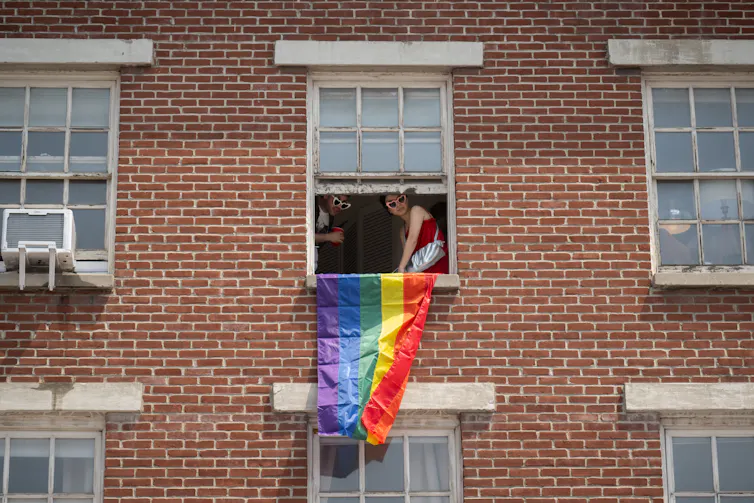
Two people wearing heart-shaped sunglasses lean out a window of a red brick building, a rainbow flag hanging from the sill.
People drape a rainbow flag from a window during the 2026 New York City Pride March.
Noam Galai/Getty Images

For men, heterosexuality defines masculinity

Similar efforts to reimagine masculinity have existed for decades, but they have had less cultural reach and have not loosened masculinity’s reliance on heterosexuality to the same extent. For many, masculinity is still tied to heterosexual dominance, sexual confidence with women and distance from anything seen as gay or feminine.

Heterosexuality also still offers men advantages in relationships, including authority, sexual entitlement and unequal freedom from domestic labor.

Feminist progress loosened assumptions that men and women naturally complete one another through heterosexual relationships. As gender becomes less tightly bound to heterosexuality, marriage and family, some people have found room for exploration. Others have responded by trying to restore more traditional views of masculinity, femininity and heterosexual roles.

That may explain why public arguments about what young adults should want – in dating, sex, marriage, family and identity – so often circle back to gender.

Whereas some young adults embrace queer, pansexual, nonbinary or fluid self-descriptions, others turn to ideals that restore traditional roles: “trad wife” femininity, which casts homemaking and deference as aspirational; “feminine energy” dating advice that prizes softness, receptivity and letting one’s partner lead; male dominance promoted across the manosphere; or claims that men and women are naturally suited to opposite roles. These attempts to restore traditional gender roles offer certainty as expectations linking gender, sexuality, relationships and adulthood weaken.

Our findings don’t just tell the story of young people becoming less heterosexual or young women becoming more queer. Instead, we believe they support the idea that heterosexuality may no longer organize gender in quite the same way for women and men. For young women, its boundaries appear more permeable. For young men, heterosexuality remains bound to masculinity, status and social recognition.

Our research examined young adults at a pivotal life stage, as they begin figuring out who they are and what they want. But those identities form within a changing social world, shaped by rising LGBTQ+ identification, political backlash over LGBTQ+ rights and shifting expectations for dating and family life.

The larger question is what happens as these young adults carry different relationships with gender and heterosexuality beyond college. Those relationships will shape, and be shaped by, dating, families, workplaces, politics and law. They will also face expectations about what women and men should want, with all the pressures, backlash, policing and resistance that come with them.

In our analysis, the gap between women and men may persist unless masculinity itself becomes less dependent on dominance, control and compulsory heterosexuality.

The Conversation

The authors do not work for, consult, own shares in or receive funding from any company or organization that would benefit from this article, and have disclosed no relevant affiliations beyond their academic appointment.

​Politics + Society – The Conversation

Categories
Uncategorized

Why the DOJ is investigating Philadelphia after police stripped gun permits from Black Panthers-inspired group

Paul Birdsong, a longtime community activist, leads the Black Lion Party for International Solidarity in Philadelphia. Jeff Fusco for The Conversation U.S., CC BY-SA

Paul Birdsong leads the Black Lion Party for International Solidarity, an armed, Black Panthers-inspired mutual aid group in Philadelphia.

Until February, the 39-year-old carried a firearm during the group’s neighborhood patrols to increase neighborhood safety. Then the police revoked his carry license. Four other Black Lion members lost their licenses the same week.

The city’s revocation letters, by published accounts, explained little. They cited “good cause” and Birdsong’s “character and reputation.”

They also pointed to a tense January 2026 encounter between a group of Black Lion members carrying rifles and a group of officers. The argument at a snowy intersection at 23rd and Diamond streets in North Philadelphia ended in hard words – but no arrests, citations or violence.

On June 9, 2026, the U.S. Department of Justice opened a civil rights investigation into the Philadelphia Police Department’s licensing practices.

Assistant Attorney General Harmeet Dhillon wrote to Philadelphia Mayor Cherelle Parker that her office would examine whether the Philadelphia police can use a “vague ‘good cause’ standard” to cancel permits.

The Justice Department’s press release stated the rule directly: “It is a violation of the Second Amendment for government officials to use vague, personal discretion when determining whether to issue or revoke permits to carry firearms.”

Philadelphia’s unique gun laws

The prevalence of guns in Philadelphia has real public safety stakes. Gun violence in Philadelphia has fallen from its COVID-19 pandemic-era peak, when there were 562 gun homicides in 2021, but the problem remains serious.

As of late June 2026, city data shows 330 people were shot in Philadelphia so far this year, 71 of them fatally. Parker has made violence reduction central to her agenda. That context helps explain why officials may seek aggressive tools, even as the U.S. Constitution limits their discretion.

We are scholars of gun laws and the Second Amendment. One of us is a law professor at the University of Wyoming, co-author of “Firearms Law and the Second Amendment: Regulation, Rights, and Policy” and an unpaid trustee of the National Rifle Association’s Civil Rights Defense Fund. The other is a law lecturer at the University of Pennsylvania who has taught firearms law across the state and country and is a board member of the National Rifle Association, and who has also represented the organization on a variety of matters prior to becoming a board member.

Philadelphia has long been the outlier in Pennsylvania when it comes to public carry. Public carry refers to legally carrying a firearm in public places, whether openly, where the gun is visible, or concealed, where the gun is hidden from public view. Pennsylvania adults may lawfully carry firearms openly without a license everywhere but in the city of Philadelphia. Statewide, a license is always required to carry concealed.

In Philadelphia, however, gun owners need a license to carry openly too. This exception is rooted in the Pennsylvania legislature’s public policy choices made decades ago.

But this Philadelphia-only firearms rule is under constitutional pressure. In 2025, in Commonwealth v. Sumpter, the Superior Court of Pennsylvania held it unconstitutional as applied. The state Supreme Court is now weighing the question.

Yet, for now, the statute remains on the books and still lets a license be revoked for “good cause” or because an official deems the holder’s “character and reputation” dangerous.

The Department of Justice says that’s a problem.

Supreme Court ruling on gun licenses

To understand the Department of Justice’s case against Philadelphia, it’s helpful to look back to 2022, when the U.S. Supreme Court decided New York State Rifle & Pistol Association v. Bruen.

In its 6-3 ruling along what are considered typical conservative-liberal lines, the court struck down a New York law that issued carry licenses only to applicants who showed special “proper cause.”

The court drew a clear line. A government may screen permit holders with “narrow, objective, and definite standards” – a background check, a safety course, fixed criteria an honest applicant can know and meet. What the government may not do, the justices ruled, is hinge the right on “the appraisal of facts, the exercise of judgment, and the formation of an opinion.”

The majority added in its ruling, “We know of no other constitutional right that an individual may exercise only after demonstrating to government officers some special need.”

Justice Brett Kavanaugh condemned “open-ended” and “unchanneled discretion for licensing officials.”

The dissent saw it differently. Justice Stephen Breyer, joined by Justices Sonia Sotomayor and Elena Kagan, argued the court should have considered “the State’s compelling interest in preventing gun violence and protecting the safety of its citizens.” In that view, dense urban risks justify more room for local judgment.

But Bruen rejected that approach and ruled that the government’s interest in preventing violence cannot justify vague or open-ended discretion over who may exercise a constitutional right.

The problem with ‘good cause’ standards

If someone in Philadelphia wants to carry a gun, they must obtain a license to carry through the Philadelphia Police Department’s gun permit unit. But without an objective yardstick, two police officers can review the same file and make opposite decisions about the granting of a license.

With a subjective standard, an applicant who is quiet, polished and familiar to the licensing office may pass this test, while another who is equally law-abiding but perhaps less polished or more socially awkward may fail.

One officer might treat a passionate social media post as proof of instability; another might treat it as protected speech.

A rule-bound system asks whether the applicant is legally disqualified. A discretionary one asks whether the official is comfortable with the applicant.

That is how a constitutional right impermissibly becomes a discretionary privilege.

Suppose you could vote only if a clerk judged an applicant’s “character and reputation” sound. Suppose a parade permit could be revoked whenever the marchers’ conduct “troubled” police. That would be intolerable in any other setting – not because every voter or marcher is admirable, but because constitutional rights are not based on a government employee’s benevolent opinion.

Whether someone supports the Black Lions or finds their armed patrols unsettling is beside the point. When the test for stripping a right is “good cause” – words that mean whatever the person holding the stamp wants them to mean – the test itself violates the Constitution.

Other cities, including New York City and Boston, also administer gun-licensing systems with subjective moral-character or suitability standards. However, Pennsylvania’s “character and reputation” language is among the most open-ended, particularly as it relates to the revocation of licenses.

Whatever happened at 23rd and Diamond streets, the dispute is relevant to every gun permit holder in the city: May one of the largest police forces in the country switch a constitutional right on and off according to its own read of a person’s perceived suitability or reputation?

Read more of our stories about Philadelphia and Pennsylvania, or sign up for our Philadelphia newsletter on Substack.

The Conversation

Jonathan S. Goldstein, Esq. is a member of the board of directors of the National Rifle Association. He writes here in his individual capacity.

George A. Mocsary receives funding from the U.S. Department of Education to work at the Firearms Research Center at the University of Wyoming. He is also a volunteer Trustee of the Civil Rights Defense Fund.

​Politics + Society – The Conversation

Categories
Uncategorized

Democratic socialists aren’t the only young, progressive Democrats dividing the party

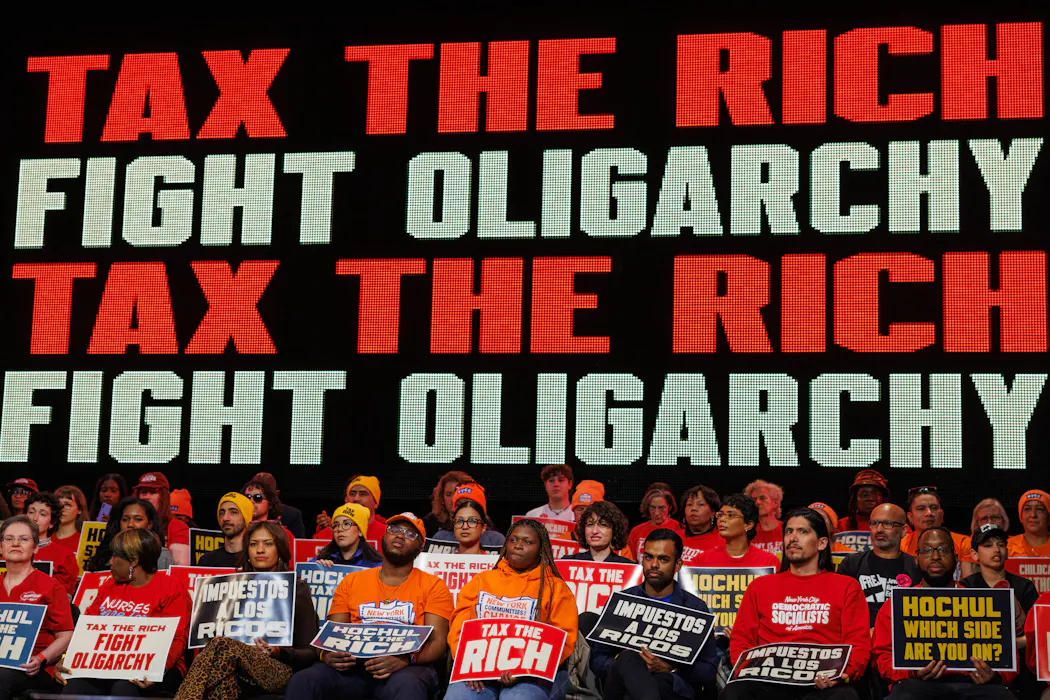
People attend a Tax The Rich rally hosted by the Democratic Socialists of America in the Bronx, N.Y., on March 29, 2026. Jason Alpert-Wisnia/Hans Lucas/AFP via Getty Images

A number of recent high-profile congressional primaries in the Democratic Party have resulted in the nomination of unexpected candidates. Many of these winning candidates have unseated entrenched incumbents, as 29-year-old Colorado attorney Melat Kiros did to U.S. Rep. Diana DeGette, who has been serving in the House for three decades.

Some of these candidates are explicitly running under the banner of the Democratic Socialists of America, known as the “DSA,” a far-left organization known for standard-bearers such as U.S. Sen. Bernie Sanders of Vermont, and U.S. Rep. Alexandria Ocasio-Cortez of New York. New York City’s charismatic mayor, Zohran Mamdani, won his election as a DSA member in 2025 and has since marshaled political support for fellow progressives running for other offices in the city he runs.

Mamdani loaned his star power to three New York progressives, two of them DSA members, in an ad featuring promises to “abolish ICE” and “end corporate greed.” All three went on win their congressional primaries in June 2026.

There is no doubt that the DSA is having a moment within the Democratic Party. And since their candidates in the midterm races are all but guaranteed to win their safely Democratic districts, I believe their influence is likely to be a major factor on Capitol Hill in the next Congress.

That’s especially the case if the Democrats win the House with a narrow margin. The cooperation and votes of a handful of DSA members could be crucial to Democrats’ ability to act effectively as a majority – or not.

That’s because the DSA’s far-left positions on issues such as healthcare in the form of Medicare for All, defunding the police and taxing the ultrawealthy are likely to divide the Democrats, many of whom are more moderate and/or represent conservative districts.

But as a political scientist who studies the many methods politicians have available to represent their constituents, I’m seeing a story that’s more complex than many inside or outside the Democratic Party convey.

Affiliation with the DSA, or even just a far-left ideology, explains only some of the insurgent wins seen in the primaries. In reality, the Democrats’ reckoning is more complicated.

A DSA t-shirt for sale that says 'Capitalism or the planet. Can't do both.'
A T-shirt for sale at the Oklahoma City Free America Walkout on Jan. 20, 2026.
Brett Deering/Getty Images for Women’s March

Who is – and isn’t – a democratic socialist?

Ascertaining the influence of the DSA in the Democratic Party, or in American politics as a whole, means understanding its membership among both elites and its voters.

Sanders, Ocasio-Cortez and Mamdani are all well known, charismatic and proficient fundraisers on the left, as is Rashida Tlaib of Michigan, a second DSA member of the House. And come January 2027, when a new Congress is seated, at least three more – the aforementioned Kiros of Colorado, along with Darializa Avila Chevalier and Claire Valdez, who won primaries in two heavily Democratic seats in New York in June – will almost certainly be added to their ranks. These figures have all won their nomination contests within the Democratic Party but describe themselves as, and received official endorsements from, the DSA.

Meanwhile, the number of voters who officially affiliate as dues-paying members of the DSA is also on the upswing, nearly doubling since Mamdani began his viral mayoral campaign in 2025. Like their candidates, these voters largely participate in Democratic primaries rather than hold their own third-party contests.

But the DSA’s total official membership remains at around 100,000: formidable, but a minuscule percentage of the population compared to the two major parties. And even among this year’s crop of insurgent Democratic candidates, most do not affiliate with the DSA, including a number of ideological progressives.

For example, Graham Platner, the Democrats’ embattled U.S. Senate nominee in Maine, is an economic progressive who boasts an early endorsement from Sanders. But in an interview late last year, Platner declined to be identified as a democratic socialist, saying, “It’s not my politics.”

Brad Lander, New York City’s former comptroller and city councilman who recently won the Democratic primary against incumbent U.S. Rep. Dan Goldman, is also widely recognized as a progressive – and was backed by Mamdani – but does not currently affiliate with the DSA.

Many young and excited people celebrate at a large party.
Supporters of Democratic congressional candidate Melat Kiros celebrate at an election-night watch party after Kiros won the Colorado primary on June 30, 2026.
Michael Ciaglo/Getty Images

Not all insurgent candidates are alike

Even among this cycle’s insurgent progressives, political ideology is not the only differentiating element that seems to matter to Democratic primary voters.

And the democratic socialists’ far-right 2010s counterpart, the tea party, can help shed light on these nonideological factors.

The tea party emerged during Barack Obama’s presidency as a far-right ideological movement with an ostensible focus on fiscal conservatism. And in my own research with Stella Rouse and Kristen Essel, we found that tea party-affiliated state legislators were more ideologically conservative in their voting records.

These legislators were also more likely to be white, to have served in the military and to be religiously observant. Other research has identified the tea party movement driven just as much by Obama-era racial backlash as it was by the movement’s stated fiscal concerns.

Most importantly, we found that tea party-affiliated lawmakers in state legislatures shared a number of anti-establishment tendencies and characteristics. They were less likely to have held previous elected office, to have sought party leadership positions or to have worked with the party before holding office.

Many of these same differentiating elements, such as racial and ethnic identity or a distaste for the established way of conducting politics, are clearly factors among insurgent Democrats this cycle, DSA or not.

Race, age, Israel and Palestine

Many, for example, would add to the ranks of nonwhite members of Congress if elected in November; and nearly all have either questioned or explicitly dismissed the idea of retaining Sen. Chuck Schumer and Rep. Hakeem Jeffries – both New York Democrats – as the party’s congressional leaders.

Age is a related emerging factor in Democratic primaries, which are producing many young nominees.

Kiros, Chevalier and Valdez are 29, 32 and 36, respectively. In the Democratic primary, Platner, 41, beat back Maine’s governor, Janet Mills, who is 78.

And in New York’s 12th District, two comparatively young Democrats, Micah Lasher and Alex Bores, were the top two vote-getters in the race to succeed U.S. Rep. Jerry Nadler, 79, who finally relented to calls for his retirement due to his advanced age. Lasher won the primary and is nearly assured of a win in the heavily Democratic district.

In still other cases, insurgent candidates – DSA or not – have adopted positions on specific issues that mark them as a new generation of Democrats. Most prominent, and controversial, among these is their backlash against Israel, which has propelled an increasing number of pro-Palestine candidates to nomination, often over long-serving incumbents.

For example, the recently defeated Goldman in New York had continued to stake out pro-Israel positions, even as the Democratic Party has increasingly soured on that nation’s actions in Gaza. Goldman’s victorious opponent, Lander, made these positions a relentless focus of his campaign.

What does the DSA mean for Democrats?

It is all but guaranteed that next year’s Congress will feature more democratic socialists than this one. But it is also clear that not all of this cycle’s insurgent Democrats share that label, and that they differ from longer-serving Democrats in more ways than one.

In our research, we found that the tea party was best understood as a “factional group” rather than a separate party, and that its goal was to transform the Republican Party “in ways that go beyond ideology.” Given the U.S.’s entrenched two-party system, this may be the most accurate way to understand the new roster of insurgent Democrats, whether they identify as democratic socialists or not.

Regardless of these candidates’ motivations or DSA affiliations, the Democratic Party will need to reckon with their divergent ways of representing their constituents, particularly if the party retakes one or both chambers of Congress next year. If the factionalism tearing through the current Republican majority is any indication, the Democrats should probably prepare for some new and sharper divisions in their own ranks.

The Conversation

Charlie Hunt does not work for, consult, own shares in or receive funding from any company or organization that would benefit from this article, and has disclosed no relevant affiliations beyond their academic appointment.

​Politics + Society – The Conversation

Categories
Uncategorized

How health insurers get a free pass to deny coverage from a 52-year-old law meant to protect worker pensions

Hurdles in accessing health insurance are major drivers of health and economic inequities. veeranggull orachon/iStock via Getty Images Plus

Florence Corcoran, an employee of South Central Bell Telephone Company, was eight months into a high-risk pregnancy when her obstetrician recommended she spend the final month on bed rest in the hospital, for close monitoring. Despite the recommendation, her health insurer determined that it would only cover partial-day at-home nursing care.

While a nurse was off duty, her fetus went into distress and died.

Corcoran sued her insurer, UnitedHealthcare. Because of a little-known law called the Employee Retirement and Income Security Act of 1974, or ERISA, she was unable to recover any money from her insurer due to their wrongful denial. She would see no legal justice following this avoidable tragedy.

Facing health insurance hurdles is an all-too-common American experience. But while courtroom dramas would have many Americans believe that patients can sue to recover money damages when they face wrongful denials, for most people who have employer-sponsored insurance, that is far from the truth. Corcoran’s case was decided in 1992 – and the situation is only worse today.

I’m a political scientist studying health insurance barriers and the politics of efforts to reform America’s health care system. In my book, “Coverage Denied: How Insurers Drive Inequality in the United States,” I traced how health insurance obstacles can upend patients’ health and economic lives.

ERISA magnifies those barriers by limiting patients’ legal ability to hold health insurers accountable – instead giving them a free pass to keep denying coverage without facing real consequences.

Healthcare rationing by inconvenience

Health insurance hurdles, such as prior authorization and claim denials, are widespread in U.S. healthcare, and the problem is growing.

Americans who have health insurance say prior authorization is the healthcare system’s biggest burden, causing administrative headaches while care is kept out of reach. Claim denials hit hard too.

Between 2016 and 2023, claim denials increased from 9% to 12%. In a nationwide survey I conducted in 2024, I found that 36% of Americans experience at least one coverage denial – though usually, it’s several.

The denial rate is even higher among people on employer-sponsored insurance, the type of insurance to which ERISA applies.

Coverage denials are becoming more common – more than one-third of Americans have experienced an insurer denying at least one health coverage claim.

Denials can be appealed, but doing so demands a level of health insurance literacy and bureaucratic know-how that most people lack. My research shows that less affluent people are less likely to appeal denials in the first place, and sicker patients and those from historically marginalized groups are less likely to prevail even if they do appeal.

Such hurdles effectively create a dynamic that I call “rationing by inconvenience,” with red tape impeding meaningful access to care. This drives both health and economic inequities.

When healthcare is kept out of reach, less affluent and Black and Hispanic patients are more likely to postpone care they need, often to the detriment of their health. And they may delay non-medical spending, too, due to unexpected healthcare costs.

ERISA’s unintended effects

The sweeping impact of coverage barriers makes it especially important for patients to be able to take effective legal action against insurers. But ERISA strictly limits legal leverage for most people who get health insurance through their employer.

ERISA was crafted in response to widespread public concern about the mismanagement of private pensions, such as with the infamous sudden closure of Studebaker’s factory in South Bend, Indiana in 1963, which left thousands of autoworkers without their pension benefits. By establishing minimum federal standards and regulations for private benefit plans, the law aimed to protect workers’ pensions from fraud and mismanagement.

But shortly before Congress voted on the legislation, it added text related to “employee welfare benefit plans,” which include health benefits. It seems that lawmakers failed to appreciate that pensions and health benefits might demand different approaches to enforcement.

Unlike with other insurance plans, patients with ERISA-governed plans can’t sue an insurer for money damages – to reflect pain and suffering or lost income – when an insurer wrongly denies their care. They can only sue to get the specific treatment covered.

The law mainly affects one type of employer health insurance, called self-insured plans, in which the employer pays employees’ medical claims itself rather than buying coverage through an insurer. When ERISA was enacted in 1974, no more than 6% of workers who got health insurance through an employer were covered by a self-funded plan.

Today, 67% of people insured through an employer – roughly 100 million Americans – are in these plans, making the law’s defects especially salient.

Driving health inequity

ERISA’s constraints on patient protections have far-reaching effects. For one thing, lawyers prefer not to take on cases that don’t involve money, making it hard for patients to sue even for the limited benefits to which they would be entitled.

What’s more, even if patients are able to sue an insurer, the harms they experienced from wrongful coverage denials still wouldn’t be fully addressed – or in some cases, addressed at all.

For a worker suing an employer over a wrongly withheld pension, which ERISA was originally enacted to address, receiving that retained money would restore their loss. But that’s not the case for a worker who sues an insurer that denies coverage for their health condition.

A doctor shows an older couple some test results on a tablet.
Even if you successfully appeal an insurer’s claim denial, your condition may decline during the time it takes to go through the process.
Tom Werner/DigitalVision via Getty Images

Imagine a patient denied coverage for cancer treatment, for example. Even if a court reverses the decision, the patient’s condition may have worsened to the point where the treatment is no longer clinically indicated or as effective.

Florence Corcoran experienced this in the extreme: When she lost her fetus at eight months, the only relief to which she was entitled under ERISA was the inpatient monitoring that she no longer required after her pregnancy’s tragic conclusion.

ERISA’s poor design thus creates a destructive feedback loop that limits Americans’ access to healthcare and promotes health and economic disparities. By disincentivizing lawsuits, ERISA makes it virtually costless for insurers to deny coverage for patients’ prescribed healthcare.

A block on health reform

In many cases, individual states can pass their own laws to get around congressional gridlock relating to health policy. But ERISA explicitly overrides state laws that relate to self-insured health plans – including consumer protection laws that could potentially protect patients. In doing so, ERISA blocks states from enacting comprehensive health insurance reforms, including those promoting health insurance equity.

Lawmakers have raised this issue over the years, but Congress has not made serious attempts to reform these provisions since the late 1990s’ unsuccessful efforts toward a patients’ bill of rights. Later healthcare measures, including the Affordable Care Act, have focused on increasing the number of people who have health insurance and largely steered clear of efforts to reduce barriers for the tens of millions enrolled in these plans.

In my view, that is especially unfortunate because at the state level, there is bipartisan appetite to address ongoing health insurance barriers, such as by reforming prior authorization.

For example, California’s prior authorization reform bill, SB 1120, passed in 2024 unanimously. The problem is that ERISA prevents laws like SB 1120 from addressing health insurance barriers within the majority of employer-sponsored insurance plans.

Congress could move toward overhauling this outdated law – for example, by allowing states to seek waivers from ERISA’s constraints. Without such action, insurers will continue to face relatively little legal risk when they wrongly deny coverage, and patients will continue to bear most of the consequences.

The Conversation

Miranda Yaver does not work for, consult, own shares in or receive funding from any company or organization that would benefit from this article, and has disclosed no relevant affiliations beyond their academic appointment.

​Politics + Society – The Conversation