Categories
Politics

Trump-backed candidate in battleground Michigan district loses to opponent who dropped out

President Donald Trump’s endorsed candidate lost a top battleground Republican primary in Michigan — to a candidate who suspended his campaign last month.

Amir Hassan, a Navy veteran and former law enforcement officer from Flint backed by Trump, finished significantly behind Tom Smith on Wednesday. Hassan rallied with Trump in Milford, Michigan, just last week.

Smith, a retired engineer, had dropped out in mid-July and endorsed another candidate who ended up in third in the primary. Smith told POLITICO that he would now return to challenge first-term Democratic Rep. Kristen McDonald Rivet for the purple 8th District.

“I look forward to working with Speaker [Mike] Johnson and the entire Republican team to expand our House majority and advance President Trump’s America First agenda to lower costs for working families and make America affordable again,” Smith said in a statement.

McDonald Rivet is among the more than a dozen Democratic incumbents seeking reelection in a district Trump won in 2024. But a GOP strategist, granted anonymity to speak candidly, characterized her as a “powerhouse.” The strategist added that Hassan had “clear flaws as a candidate” and the “GOP base was reluctant to support a dude named Amir Hassan.”

A handful of Trump-endorsed candidates have lost state-level races this year — including the governor’s races in Iowa and Georgia — but Hassan is the first congressional candidate to lose despite the president’s support this cycle.

​Politics

Categories
Politics

Thanedar becomes latest incumbent to fall to a progressive challenger

Michigan Rep. Shri Thanedar lost his primary to democratic socialist Donavan McKinney on Wednesday — the latest victory for progressives who’ve been on a hot streak of ousting incumbents in safe-blue districts.

Thanedar’s 13th District was a top priority for groups like Justice Democrats that are committed to primarying incumbent members that they believe aren’t in line with the areas they represent. Justice Democrats helped recruit McKinney into the race and spent nearly $1 million on his behalf, making his campaign one of its biggest targets this cycle.

McKinney, a state representative, had secured the backing of a number of progressive House Democrats, including some members of the Congressional Black Caucus who bucked party leadership, which was standing behind Thanedar in the heavily Black Detroit-based district.

Some of Thanedar’s colleagues were also frustrated by his efforts to force a vote on impeaching President Donald Trump last year, an effort he ultimately backed away from.

The district is a safe seat for Democrats, and McKinney is expected to win easily in November.

​Politics

Categories
Politics

Abdul El-Sayed wins Michigan Senate primary — a major victory for progressives

Abdul El-Sayed is Democrats’ Senate nominee in Michigan, a seismic victory for progressives that carries massive implications for both the Senate battlemap and the Democratic Party’s future.

The progressive former public health official on Wednesday narrowly defeated establishment-backed Rep. Haley Stevens, who was boosted by a record-breaking $32 million in spending from the American Israel Public Affairs Committee.

His margin was far slimmer than progressives had anticipated based on polling that had shown him with a double-digit lead ahead of the election, blunting what they hoped would be an emphatic capstone to a series of high-profile wins that had tilted the party’s ideological civil war in their favor.

El-Sayed will have to work overtime to convince skeptical centrists that a progressive can win in purple territory against former GOP Rep. Mike Rogers in a critical battleground that will decide Senate control.

His victory comes after a contentious primary that was defined by clashes over everything from Israel to immigration to health care. Stevens and her allies lobbied accusations ofsexism and antisemitism against El-Sayed, whose supporters in turn accused the moderate Democrat of Islamophobia.

Wednesday’s result is a setback for the pro-Israel lobby as well as for leaders within the Democratic establishment — most notably Senate Minority Leader Chuck Schumer and Michigan Gov. Gretchen Whitmer — who had thrown their weight behind Stevens.

El-Sayed’s win has the potential to scramble Schumer’s gameplan for November; Democrats need to keep retiring Sen. Gary Peters’ seat if they have any hope of retaking the chamber.

And it’s emboldening Republicans who hold a cash advantage heading into November and are growing bullish about their chances for a flip against a progressive who was their preferred nominee. State Republican Party Chair Jim Runestad said the GOP plans to paint him as a “far-left democratic socialist.”

Jason Roe, a longtime Republican operative in Michigan, previously told POLITICO that “El-Sayed is not doing very well outstate and I think that’s what a lot of Republicans are banking on. It will be very difficult for him to beat Rogers with those rural counties.”

Still, El-Sayed’s emergence from the bruising primary that became ground zero for Democrats’ ideological war stands as progressives’ biggest win yet in a year when the left has harnessed a wave of anti-establishment angst to deliver a series of stunning upsets. And it carries significant implications for how Democrats will approach a state that will have an outsized role in picking the party’s next presidential nominee in 2028.

El-Sayed has sought to position his win as a springboard for growing progressives’ influence ahead of 2028.

​Politics

Categories
Politics

Progressives didn’t get the big election night they wanted

Progressives didn’t get the earthquake they expected. Moderates are relishing in their stronger than expected showing.

In the early hours of Wednesday morning, with Michigan’s marquee Democratic Senate primary still in limbo, one of Democrats’ key questions of the midterms remains unresolved: Can the party’s most progressive faction successfully compete — and go on to win — in a battleground state?

The razor-thin margin between progressive Abdul El-Sayed and moderate Rep. Haley Stevens will leave Democrats arguing about the answer regardless of who ultimately prevails.

The finger-pointing within the party has already begun.

“These guys are unbelievably cocky,” said a Democratic operative granted anonymity to speak candidly. The person was frustrated over El-Sayed’s decision to attend a pool party with progressive streamer Hasan Piker on Monday, hours before polls opened.

El-Sayed led by three points by the time both candidates addressed their supporters around 1 a.m. Wednesday, with thousands of votes yet to be counted. He performed best in the state’s wealthiest and most highly-educated places, while Stevens outperformed him in areas with lower average incomes and where fewer voters have college degrees.

But that marginal lead was a far cry from what El-Sayed and his allies had expected.

Public polling in the campaign’s closing stretch showed El-Sayed ahead of Stevens by double digits. And his campaign projected confidence they would deliver a decisive win that would cement the strength of the progressive movement in Michigan, a state crucial to the Democratic Party’s prospects of retaking the Senate in November and, eventually, the White House in 2028.

The progressive wave never materialized on Tuesday night, igniting fresh questions about the potency of the movement. Progressive candidates have notched a series of wins throughout the spring primary season in safe and competitive districts, from California to Maine. Michigan, however, was widely viewed as their biggest test yet.

“The Democratic Party is a coalition that spans everything from center to socialist,” Democratic strategist Tré Easton wrote on social media Wednesday morning in response to Tuesday’s results. “Each part needs the other.”

Voters cast their ballots on primary election day at Salina Intermediate School in Dearborn, Michigan, on Aug. 4, 2026.

El-Sayed has maintained a steady lead after the polls closed, and could very well still pull off a win for his progressive coalition and advance to the general election — but instead of kicking off the next phase of his campaign with a victory lap, he’ll emerge limping out of a closer-than-foretold primary.

Even beyond the Senate race, the results were mixed: Progressive Sunrise Movement co-founder William Lawrence won his primary for Michigan’s 7th District, but largely because two more moderate candidates had split the vote. Democratic socialist Donavan McKinney is still locked in a tight race with incumbent Rep. Shri Thanedar for Michigan’s 13th District. And over in Missouri, progressive Cori Bush’s comeback bid fell apart.

“Bottom line is if [El-Sayed] wins, the DSA brand beyond major urban areas is not popular,” a national Democratic operative granted anonymity to speak candidly said early Wednesday morning. “Certainly puts a dent in the movement especially with Cori Bush’s loss.”

Stevens sent her own supporters home on an optimistic note Wednesday morning: “I’m feeling good about this race.”

El-Sayed, for his part, quickly recast his narrow lead as a victory against the barrage of spending against him from pro-Stevens groups — despite projecting enough confidence to declare he would beat Rogers “by seven” percentage points in the general election earlier on Tuesday.

“I wish I could tell you that I was declaring victory right about now. Turns out it takes a long time to count some votes in Michigan,” El-Sayed told supporters at his election night party in Detroit.

For some El-Sayed allies a win is a win, even if the final margins are close. “Any win is good, as long as it’s called tonight,” Bhaskar Sunkara, a 2020 Bernie Sanders surrogate and former DSA vice chair, told POLITICO.

Regardless of the final outcome, the race’s narrow margin ensures that the winner will have significant work to do to unify the party after an acrimonious primary riddled with personal attacks from both sides — a reality both candidates appeared to acknowledge in remarks to supporters.

“To all of our supporters here tonight, watching on TV, tomorrow we begin to mend fences,” El-Sayed said. “If your instinct is to be like, ‘I told you.’ Nope. Let’s come together to build a movement that’s even bigger, that’s even stronger, that’s even more powerful, that reaches into the very depths of this state, that reminds us the best of who we are and who we can be.”

Democrats across the state had already set their focus on uniting their deeply fractured party ahead of another likely bruising contest in the general election.

“It’s no secret that this has at once been a contentious and bruising primary, but Democrats through it all have shown resilience towards coming together following primaries,” said Chris Herweyer, an organizing director for the Kent County Democratic Party.

Michigan State Sen. Mallory McMorrow, who ran for Senate before suspending her campaign a month before the primary, endorsed El-Sayed early Wednesday as he maintained a narrow advantage over Rep. Haley Stevens — another sign of swift efforts to reconcile, even as the race remained in limbo.

Republicans, meanwhile, are still hoping for an El-Sayed win. Rogers’ primary proved a bright spot for Republicans on the Senate map, where the party successfully avoided a costly and heated primary of their own and could focus early on the general election.

“El-Sayed is the preferred candidate” for Republicans, Jason Roe, a longtime Republican operative in Michigan, said in a text message. “El-Sayed is not doing very well outstate and I think that’s what a lot of Republicans are banking on. It will be very difficult for him to beat Rogers with those rural counties.”

Andrew Howard and Will Steakin contributed to this report. 

​Politics

Categories
Politics

Progressives’ anti-AIPAC wave hits a snag in St. Louis

Two years after former Rep. Cori Bush told the American Israel Political Affairs Committee she’d be back to “tear your kingdom down,” voters in Missouri’s 1st District again rejected her staunch criticisms of Israel and AIPAC.

Rep. Wesley Bell (D-Mo.), who unseated Bush in a 2024 primary after she became one of the first members of Congress to call the Israel’s actions in Gaza in its war with Hamas a “genocide,” trounced the former member of “the Squad” on Tuesday night by a yawning margin.

It’s a snag for Democratic progressives who have otherwise seen a slew of primary wins campaigning on ending military aid for Israel, and who have sought to make support from AIPAC into political poison.

The race had some key differences from when they squared off two years ago. An AIPAC-backed super PAC still spent $2 million boosting Bell, but that was a far cry from the $9.3 million the group spent two years ago, according to data from ad tracker AdImpact.

And Bush got no backup this year on the airwaves from the constellation of progressive groups that rallied to her cause in 2024.

The size of Bell’s victory suggests that Democratic primary voters’ anger toward politicians who remain supportive of Israel isn’t limitless, despite public sentiment nationwide broadly moving against Israel.

Bell, who has affirmed support for Israel’s relationship with the United States, beat Bush by about six points in 2024 and appears on track to win by even more.

On Tuesday night, AIPAC reposted a POLITICO story about the fight over AIPAC in the district, writing simply: “Congratulations, Wesley Bell!”
Bell also enjoyed the backing of establishment Democrats this year, including House Minority Leader Hakeem Jeffries and the Congressional Black Caucus PAC. Bush on the other hand, solidified her progressive bonafides with endorsements from Sen. Bernie Sanders (I-Vt.) and the Democratic Socialists of America.

​Politics

Categories
Politics

South Dakota Democrat exits Senate race, clears way for independent

South Dakota Democratic Senate nominee Julian Beaudion dropped out of the race Tuesday, a move that comes following heightened pressure from within the party to clear the way for a stronger independent candidate, according to paperwork filed with the South Dakota Secretary of State’s office.

Beaudion’s decision comes on the same day as the deadline to withdraw, and just days after he told POLITICO he was not going to leave the race. Now, independent Brian Bengs will face a one-on-one battle with Republican Sen. Mike Rounds in November.

In a statement, Beaudion likened his decision to the failed Apollo 13 mission to the moon.

“It is with a tremendous amount of gratitude to everyone who has supported our campaign mission and a great amount of sorrow, that I say, ‘Houston, we have a problem,’” he wrote.

Beaudion is the third Democrat in a deep-red Senate race who has left in order to give independents — who have polled better and raised more money — a better shot at defeating Republicans. Already, Democrats in Idaho and Nebraska have dropped out and endorsed independents.

But Montana Democrat Alani Bankhead has steadfastly insisted she will not suspend her campaign for the better-funded independent Seth Bodnar in what otherwise could be the best shot for an independent candidate to knock off a red-state Republican this fall.

Bengs, a former Democrat who was crushed by Majority Leader John Thune when he ran for Senate in 2022, has touted internal polling showing a competitive race with Rounds — but only if Beaudion exited.

​Politics

Categories
Politics

Bernie Sanders’ circle is pretty clear on who his successor will be

The battle to become the country’s next progressive leader in the mold of Bernie Sanders is heating up ahead of Democrats’ direction-defining Michigan Senate primary.

Nowhere is the jockeying and strategy unfolding behind the scenes more pronounced than between Democratic Reps. Alexandria Ocasio-Cortez of New York and Ro Khanna of California, who have taken disparate approaches to the midterms as they build out their political brands. Khanna’s go-everywhere mentality versus Ocasio-Cortez’s more selective involvement in key races this cycle will test their political acumen and relationships, potentially setting them up for a 2028 presidential race that could decide who will inherit the movement.

In much of Sanders’ inner circle, who comes next is pretty obvious, even as the wider progressive movement continues to clash over the answer.

“It’s always been clear that AOC is the heir,” one person close to Sanders who’s been involved in such conversations with him for years, granted anonymity to share their understanding of the private discussions. “Always.”

Yet within the broader Sanders coalition, there is plenty of behind-the-scenes posturing — and outright bickering — over who will ultimately take over for the Vermont senator. Khanna’s allies say Ocasio-Cortez is playing it too safe to be the next standard-bearer, with some prominent left-wing leaders irked by her sparing endorsement strategy.

Ocasio-Cortez’s and Khanna’s diverging paths are on full display in Michigan, where Democrats’ most contentious Senate primary is coming to a head Tuesday in a critical battleground that will have outsized importance in selecting Democrats’ next presidential nominee.

Both representatives and Sanders have backed Abdul El-Sayed, a progressive former public health official who has surged in polls against establishment-backed Rep. Haley Stevens as he consolidates support among the left.

But only Ocasio-Cortez has appeared alongside Sanders in stumping for El-Sayed, with the two holding a joint rally in Lansing, Michigan, last month. Ocasio-Cortez and Sanders are featured prominently in one of El-Sayed’s closing television ads, in a key sign of who the campaign thinks can best help push him over the finish line.

Khanna, meanwhile, cut a separate digital fundraising appeal for El-Sayed and has campaigned for him without Sanders.

Sanders and Khanna do maintain a relationship — the California representative was a national co-chair of Sanders’ 2020 presidential bid — but there’s doubt within the Vermont independent’s orbit over how successful a Khanna presidential run would be or whether he’s best positioned to inherit the progressive throne, should Ocasio-Cortez choose not to run for president in 2028.

“Ro is basically already running, but not many are taking him too seriously as the movement’s next leader,” said another operative close to Sanders, granted anonymity to speak candidly.

In an interview, Khanna brushed off the notion that there’s a single heir to the Vermont senator’s progressive movement. “I believe that Sanders is going to have many successors over decades, and the key is to build a majoritarian progressivism that can win across the country,” he said.

Asked whether an Ocasio-Cortez presidential bid would change his calculus, he answered flatly: “No.” His decision, he says, will come “around Thanksgiving.”

A representative for Ocasio-Cortez declined to comment. Sanders, for his part, is trying to rise above the jockeying.

“The presidential election is in 2 years and 3 months,” Sanders said in a statement. “Let’s focus now on how we resolve the urgent issues facing our country. There is plenty of time to worry about possible presidential candidates.”

Why Sanders world sees AOC as the successor

Sanders, 84, and Ocasio-Cortez, 36, share a deeply personal bond their advisers say transcends politics but remains rooted in their shared ideals. They talk directly about key policy, political ideas and candidates to boost, and they even coordinated their endorsements around a group of New York democratic socialists and progressives who ultimately won House seats.

The two also share a circle of advisers, including Faiz Shakir and Mike Casca. Casca, a former long-time Sanders aide, now serves as Ocasio-Cortez’s chief of staff and plays a major role in shaping policy and political strategy. Shakir is an adviser to Sanders and executive director of More Perfect Union, a progressive nonprofit media organization.

“I’m sure there are a lot of people who are interested in being the next Bernie Sanders, I think he’d be less inclined to give them his endorsement” over Ocasio-Cortez, said a third person close to Sanders, who’s been involved in the conversations around his political and policy strategy for years, granted anonymity to discuss them.

Sanders and Ocasio-Cortez have approached the midterms differently. The Vermont independent has worked to expand his endorsement roster and his presence on the campaign trail this year, which his allies see as an effort to cultivate a lasting generation of progressive leaders to carry on his movement. He often endorses early, acting as a validator for left-leaning candidates’ campaigns and platforms, while Ocasio-Cortez has been serving as more of a closer.

It’s a strategic shift for the New York Democrat, who used to get involved in races earlier — a calculus advisers say is a recognition of her ability to mobilize certain voting blocs, like communities of color and working-class voters, late in the game.

They don’t coordinate on every contest, but they have joined forces in several races — including El-Sayed’s Michigan Senate race and Sam Forstag’s House primary in Montana. Ocasio-Cortez called Sanders as soon as she decided to endorse El-Sayed and they immediately began planning a rally for him, according to a person familiar with the discussions and granted anonymity to describe the private conversations.

Earlier this year, Sanders and Ocasio-Cortez together also developed the leading progressive push to address artificial intelligence. Sanders was the first member of Congress to call for an AI moratorium, and he helped shape Ocasio-Cortez’s stance. The pair unveiled joint legislation in March to ban the rapid build up of data center construction.

Months later, the issue is now cutting across progressive and conservative voting blocs, is a preeminent policy issue on Capitol Hill and is at the heart of dozens of midterm races and even early 2028 presidential talk.

“Congresswoman Alexandria Ocasio-Cortez and I understand what is at stake,” Sanders said as he introduced the AI moratorium bill alongside the New York Democrat this spring in the Senate.

Progressive candidates whose campaigns have received nods from both Ocasio-Cortez and Khanna say they are both key validators who carry different appeal.

Khanna has risen in prominence because of his push to release files on Jeffrey Epstein. And Ocasio-Cortez brings the kind of star power and nationalized spotlight that campaigns say is invaluable for growing candidates’ exposure, particularly among younger progressive voters who can be trickier to turn out.

“AOC’s very popular, she has a lot of grassroots support … all across the country,” said Adam Hamawy, who was endorsed by both representatives in his New Jersey House primary this spring. “Ro Khanna has not just progressives, but he’s had a strong stance against corruption. … There’s a lot of overlap but each of them have specific things that come together to paint a wider picture than if I just had one.”

Don’t count Ro out yet

Not everyone around Sanders is sold on Ocasio-Cortez as the heir apparent. Khanna allies argue he’s the one who has been putting in the work — and sticking his neck out for the progressive movement — by backing primary challengers to incumbents, getting out front on issues like the Epstein files, and recently traveling to the West Bank.

“People who are supporting her are supporting her more as a brand,” said one Khanna ally and Sanders world operative, granted anonymity to discuss private conversations. “What does it mean to work with her? What does it mean for her to pass a bill? I don’t know her theory of change.”

There is fear Ocasio-Cortez is “weirdly isolating herself” over the years ahead of a 2028 decision, the operative added. “I could not tell you who AOC’s advisers are at this point [beyond Casca]. If you’re thinking of running for president, you want to be in an expansive, elevated, exciting space, not in a controlled environment.”

Ocasio-Cortez has been significantly more selective in her endorsements than either Khanna or Sanders, backing left-wing candidates across several competitive House primaries but steering clear of some of the messiest contests on the map, including Maine Senate and Wisconsin’s imploding gubernatorial primary.

That approach has drawn consternation from some on the left who say she’s playing it too safe given her political cachet, particularly as she declines to join other progressives in endorsing against incumbents — notably in her own backyard — even though that’s how she won her seat in 2018.

“Who cares about your win-loss ratio? What I care about is, are you trying to help fellow progressives or aren’t you?” said Cenk Uygur, a Khanna supporter who founded the progressive online network “The Young Turks” and Justice Democrats.

“AOC cares so much about her colleagues, and her colleagues are establishment Democrats. I don’t care about them. In fact, I’m opposed to them,” Uygur added. “I want them challenged in primaries.”

Khanna has worked to keep his own close ties to Sanders and his circle.

Jeff Weaver, Sanders’ 2016 campaign manager, now serves as a senior adviser to Khanna as he’s pushing to be a high-profile progressive leader and laying the framework for a possible 2028 presidential run.

“No two candidates are equal,” Weaver said. “But I think Ro Khanna has the chance to do what Bernie did, which is to have appeal beyond the Democratic base.”

Khanna has spent years trying to build the kind of early-state infrastructure a presidential campaign requires, traveling to early primary and battleground states to lay the organizational groundwork for a potential run. Since 2021, he has been working to assemble steering committees of 75 to 100 people in New Hampshire and Nevada, with another being built in South Carolina, while working with local political power players, according to Shannon Jackson, another longtime Sanders operative who is now consulting for Khanna.

Over the last week, the California representative has been on what he is calling an “new economic patriotism tour” through Pennsylvania, holding events in counties Trump carried like Erie, Luzerne and Cambria “There is a great desire for a bold, progressive vision that is going to call out an unfair and rigged political and economic system,” he told POLITICO. But the test, Khanna argued, is making that vision work “not just in the Bay Area, not just in Michigan, not just in progressive areas, but in places like Pennsylvania.”

Khanna has endorsed dozens of candidates up and down the ballot this year, wading into some of the most fraught Democratic House, Senate and gubernatorial primaries in the country.

That widespread involvement has produced a mixed track record with some high-profile losses, including Graham Platner’s disgraced exit from Maine’s Senate primary and Tom Steyer’s expensive loss in the California governor’s race. In the case of Platner, Khanna and Sanders endorsed the Maine progressive, while Ocasio-Cortez, notably, stayed out of the race altogether.

Khanna also has backed candidates against the Democratic Congressional Campaign Committee and establishment. For example, Khanna-endorsed progressive Matt Dunlap in Maine’s 2nd Congressional District successfully defeated the DCCC’s preferred candidate.

“There’s a difference between being a progressive in policies and being a progressive in action,” said Uygur. “And action requires you challenging the system, challenging the establishment. On those grounds, it’s not close. Ro Khanna is head and shoulders above every other Democrat.”

​Politics

Categories
Politics

Democrats’ stance on Israel takes center stage in Bush-Bell rematch in St. Louis

Cori Bush’s 2024 primary loss to Wesley Bell was heralded as a major defeat for the insurgent progressive movement.

Now, their rematch for Missouri’s 1st District two years later comes at a time when Bush and her allies seem to be winning the battle for the future of the Democratic Party.

The dueling factions in St. Louis highlight the growing tension over not just the domestic ideological divide in the Democratic Party, but the party’s — and country’s — stance on the U.S.’s longrunning relationship with Israel.

The former representative was among the first sitting members of Congress to call Israel’s actions in Gaza a “genocide” — and now she’s betting that her progressive bonafides and her criticism of the top U.S. ally will boost her to victory with the same electorate that punished her last cycle.

“One of us is of the people, by the people and for the people,” Bush said in a recent interview. “The other one is paid for by AIPAC. That’s the difference.”

Like two years ago, a group aligned with the American Israel Public Affairs Committee is the largest outside spender in the race. The organization’s super PAC, United Democracy Project, has spent at least $2.1 million on advertising in the primary, according to ad tracking firm AdImpact.

Roughly half of all adults who identify as Democrats believe that Israel has committed genocide against Palestinians, according to a July AP-NORC poll, an accusation that some human rights organizations have made but both the Israeli and American governments strongly deny.

And from Colorado to New York, several progressives have already tapped into voters’ frustrations with party leadership and successfully wielded their criticism of Israel’s government in order to win.

St. Louis is only one of several races on Tuesday testing the Democratic Party’s establishment: voters will also hit the polls in Michigan to cast their ballots for the progressive, Abdul El-Sayed, or the moderate Rep. Haley Stevens for an open Senate seat.

That race has also become a check for voters’ opposition to AIPAC. And some potential 2028 Democratic contenders have already sworn off accepting funding from AIPAC, another sign of the growing unwillingness to be aligned with the organization.

AIPAC and some Democrats have hit back, saying its critics within the Democratic Party have increasingly made the party inhospitable to those generally supportive of Israel.

In response to requests for comment, AIPAC shared a series of ads knocking Bush for her missed votes and her criticism of the Biden administration and former Vice President Kamala Harris’s 2024 presidential bid. (In a recent debate, Bush claimed Bell delayed his endorsement of Harris, but both endorsed the former vice president on July 21, 2024, the same day she announced her candidacy.)

Bell unseated Bush two years ago with heavy financial backing from AIPAC, the country’s preeminent pro-Israel lobby. They’ve once again spent heavily on his behalf, and this time, he also comes into the race with establishment support — including endorsements from House Minority Leader Hakeem Jeffries and the Congressional Black Caucus PAC.

Bell and his allies have absolutely swamped Bush on the airwaves this year. In addition to UDP’s $2.1 million in ad spending, Bell’s campaign has followed closely behind at over $2 million, according to AdImpact, with over $700,000 more from another super PAC called New Democrat Majority.

Bush, meanwhile, has spent less than $200,000, according to the ad tracker. She boasts the backing of a progressive coalition that includes the Democratic Socialists of America, Sen. Bernie Sanders (I-Vt.) and fellow “Squad” member Rep. Rashida Tlaib (D-Mich.).

Bell has brushed aside the attacks that he’s being bolstered by AIPAC money.

“I think we all can agree that there’s too much money in politics, and I’m a vocal and public supporter of campaign finance reform,” Bell said in an interview. “What I’m not a fan of or a supporter of is singling out certain Americans and saying that they should not participate in our democratic process. That is where I would absolutely draw the line.”

Bell added that the difference between himself and Bush is that he can offer both support and criticism of allies.

“While I’m not the biggest fan of [Israeli Prime Minister Benjamin Netanyahu], I still believe that we have to stand with our allies,” Bell said. “That doesn’t mean we’re not going to disagree at times with our allies.”

Bell’s and Bush’s showdown in 2024 was arguably the biggest ideological battlefield for the party that year, outside of the discontent surrounding Biden and then Harris’ presidential bids from progressives critical of Israel.

But two years later, it is just one of many fights that has sprawled across the country. Progressive candidates have been racking up primary victories against establishment figures in a trend that some are calling the “Mamdani effect” after democratic socialist New York Mayor Zohran Mamdani took down Andrew Cuomo in both the 2025 primary and general elections.

Still, this year’s St. Louis rematch isn’t quite the marquee fight it was in 2024. Spending has trended down: Collectively nearly $20 million was dropped on the 2024 contest on advertising, according to AdImpact. That’s roughly four times more than this year’s total.

Usamah Andrabi, spokesperson for Justice Democrats, the progressive group that endorsed Bush earlier this cycle, attributed the broader, nationwide ideological fight to a base that has been “pushed to the edge of desperation by the Democratic Party itself.”

“The Democratic Party’s base woke up in January 2025 realizing that their party’s establishment was unfit, unprepared and frankly unwilling to fight back against Donald Trump and Republican extremists with the urgency the moment demanded,” Andrabi said.

Now, as St. Louis voters head to the polls on Tuesday, Bush cast the eventual outcome in dire terms.

“What is at stake,” Bush said, “is the affordability and the peace of every single person in this country.”

​Politics

Categories
Politics

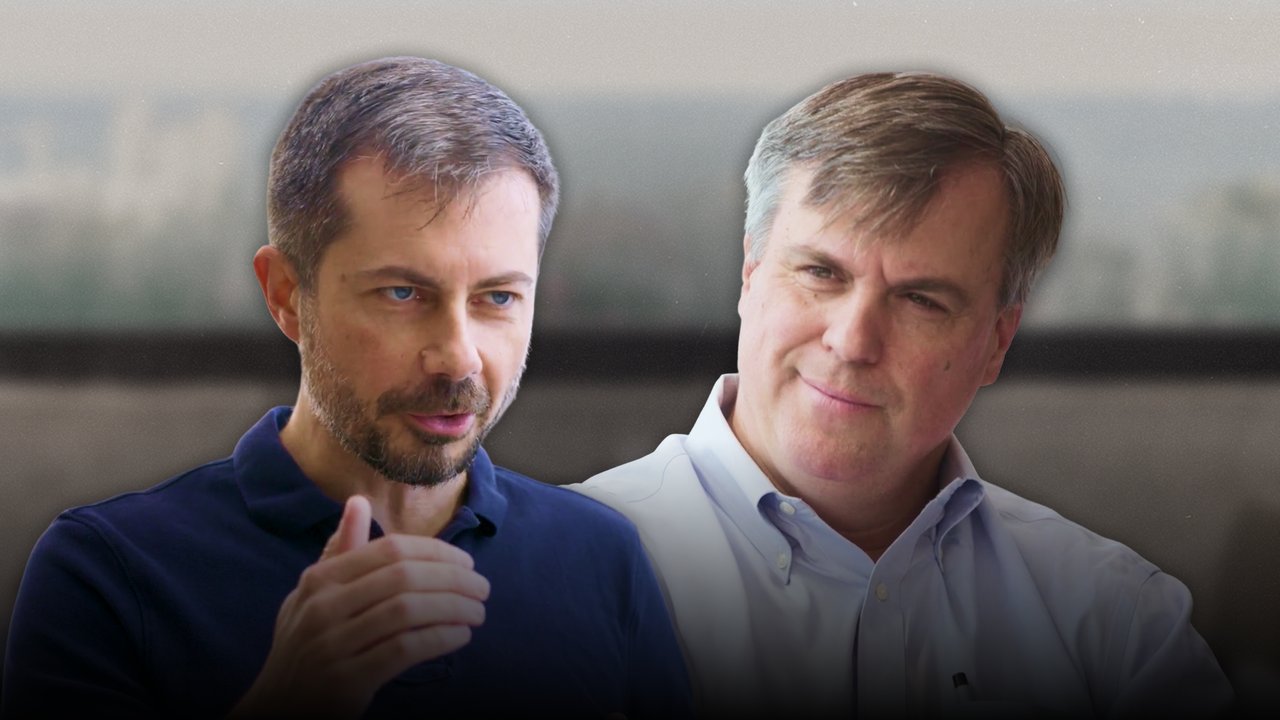
Pete Buttigieg shares his theory for how Democrats can win over cherry ice cream

Pete Buttigieg shares his theory for how Democrats can win over cherry ice cream

lead image

​Politics

Categories
Politics

We’re about to find out how powerful progressives really are

Michigan is ground zero for the Democratic Party’s ideological war.

Its marquee Senate race and two of its House primaries on Tuesday — in Michigan’s 7th and 13th Congressional Districts — will provide another crucial test of whether progressives can not only keep up their winning streak in safe-blue seats but also break through in battlegrounds crucial for control of Congress.

The stakes for the Democratic Party are huge: A strong progressive performance, especially a victory by Abdul El-Sayed in the high-profile Senate race, would significantly bolster the left’s argument that its message resonates widely — setting the stage for a bruising fight over the party’s ideological direction ahead of November.

And any Democrat eyeing a White House bid in 2028 will be watching closely for clues about what kind of message can win in Michigan, the perennial battleground that was recently selected as an early Democratic presidential primary state, giving it outsized influence on the nominating process.

“If Abdul El-Sayed is successful next Tuesday, this will mean the hyper-progressive socialist movement has percolated into one of the most crucial general election states,” said Adrienne Elrod, a longtime Democratic strategist who was senior adviser and spokesperson for former Vice President Kamala Harris’ presidential campaign.

“This means Democratic candidates running for President in 2028 will have to be even more mindful of how to approach this sector of the electorate.”

A critical Senate battleground

Buoyed by a string of primary victories this spring — in both safe and competitive districts from California to Colorado to Maine — progressives now face a major proving ground as they try and capture a statewide sweep.

Backed by progressive stalwarts like Sen. Bernie Sanders (I-Vt.) and Rep. Alexandria Ocasio-Cortez (D-N.Y.), El-Sayed faces moderate Rep. Haley Stevens in a bitter and costly feud for the Democratic nomination to take on former Rep. Mike Rogers, the unopposed Republican running for the open seat. The contest to replace retiring Democratic Sen. Gary Peters, is one of a handful of seats Democrats must defend in their longshot bid to take back control of the Senate.

A victory by El-Sayed, who has leaned into his image as a progressive firebrand on social media, could provide a new playbook for Democrats in battlegrounds.

“If El-Sayed wins the primary, there’s no real test case for a hard-edged, base-first, super online candidate succeeding at the state level — at least not in a swing state,” said Democratic strategist Matt McGrath, who was former President Barack Obama’s 2012 Michigan communications director.

Public polling in the closing stretch shows El-Sayed with a double-digit lead over Stevens. The contest has attracted millions in outside spending and intense attention from Washington, as the candidates spar over campaign finance, Israel and electability — and what that means in a state Harris lost by fewer than 100,000 votes in 2024, even as Democratic Sen. Elissa Slotkin beat Rogers, who is back for redemption, that same year.

“There’s all this handringing across the country about electability,” said Jeff Weaver, a progressive Democratic strategist. “The same people who are carping about electability have lost the White House twice to Trump.”

Progressive power in the purple 7th District

The fight for Michigan’s 7th District has parallels to the Senate contest: It’s a true battleground — it went for President Donald Trump by just over 1 percentage point in 2024 — that will be vital to Democrats’ bid to flip the lower chamber in November.

Sunrise Movement co-founder William Lawrence is rising in the polls, as two more-moderate Democrats fight over the future of that wing of the party and in turn risk splitting the vote. Whoever emerges from the primary will face GOP Rep. Tom Barrett.

Lawrence has received the backing of Sanders and El-Sayed and has centered much of his campaign on fighting data centers, an issue progressives think they can own in the run-up to 2028, when they’re betting the rapid rise of artificial intelligence will make policies around its growth crucial to a winning campaign.

The prospect of progressive wins in the battlegrounds has already unnerved some centrist Democrats: “If he wins, we’re done,” one operative told POLITICO recently, describing Lawrence’s chances of beating Barrett in the general election as “highly unlikely.”

Others warn that even without a sweep, having El-Sayed atop the ticket alone could be a boon for Republicans up and down the ballot in a deeply purple state.

Centrists are “quite concerned and they should be,” said Michigan-based Democratic strategist Adrian Hemond. “Regardless of whether Will [Lawrence] wins that primary or not, if Abdul is the Senate nominee for Democrats, [Republican Reps.] Tom Barrett and Bill Huizenga are getting reelected.”

Democratic splits roil safe-blue 13th District

Michigan’s 13th District has become another proxy between the party’s progressive and establishment wings, this time for a safe-blue seat.

The race pits the Sanders-backed state Rep. Donavan McKinney against the incumbent Rep. Shri Thanedar, who has the support of House Democratic leaders Hakeem Jeffries, Katherine Clark and Pete Aguilar.

The divide burst further into public view last week when some members of the Congressional Black Caucus, including progressive Reps. Ilhan Omar (Minn.) and Ayanna Pressley (Mass.), broke with party leadership and endorsed McKinney, who is Black.

Thanedar’s district was one of the first that Justice Democrats, a progressive group that challenges incumbents, decided to target this year. The group helped recruit McKinney and has spent nearly $1 million backing him.

“When we look at Michigan, its diverse voter base, its status as a Midwestern state with a big working class population, it’s a barometer of where the party is going and what voters want,” said Ravi Mangla, the spokesperson for the Working Families Party, a progressive group that has backed Lawrence and McKinney’s challenge of Thanedar.

Republicans, meanwhile, are eagerly watching on.

“The popcorn machine is warming up for next Tuesday night’s grand finale of Michigan Democrats’ messy, expensive primaries full of surging socialists,” NRCC spokesperson Zach Bannon said in a statement.

Lisa Kashinsky and Meredith Lee Hill contributed to this report.

​Politics