







Every week political cartoonists throughout the country and across the political spectrum apply their ink-stained skills to capture the foibles, memes, hypocrisies and other head-slapping events in the world of politics. The fruits of these labors are hundreds of cartoons that entertain and enrage readers of all political stripes. Here’s an offering of the best of this week’s crop, picked fresh off the Toonosphere. Edited by Matt Wuerker.Politics
Category: Politics

Sen. Bernie Sanders says he can’t be everywhere at once — even though some of his allies want him to be.
Democratic socialist Francesca Hong lost by less than 4,000 votes in Wisconsin’s gubernatorial primary, an outcome several high-profile progressives are blaming on Sanders and other top national progressive leaders for staying out of the race. Some said his endorsement alone could have helped bring in badly needed resources for Hong. Others said the Vermont senator has a responsibility to play widely across the battle map.
Sanders, in an interview, touted a series of progressive wins Tuesday night and brushed off the criticism.
“My response is that we have limited resources and capabilities, and there are a lot of really great candidates who have run for office who we have not endorsed,” Sanders told POLITICO on Wednesday.
“We can’t endorse every single candidate,” he added. “So, you know, we have to pick and choose and I think that Hong ran a very, very great, and very strong, grassroots campaign, got a lot of people involved and I applaud her for that.”
Hong ultimately lost to Milwaukee County Executive David Crowley, a major victory for establishment Democrats who worried she wouldn’t be able to win a general election in a top battleground. It was a notable blow for the far left that overshadowed progressive Lt. Gov. Peggy Flanagan’s win in the Minnesota Senate race the same night.
Sanders and other progressive leaders “have a responsibility, whether they like it or they don’t,” to help steer candidates in the movement, said Cenk Uygur, a progressive activist who co-founded the Young Turks and Justice Democrats. “If they endorse people, it makes a difference. If they don’t endorse people these days, sometimes it makes a bigger difference. Because there’s a certain expectation, and when they don’t deliver on that expectation, it gives people pause. So it feels like, to some degree, they’re shirking their responsibility.”
Uygur also criticized Sanders for saying on a podcast ahead of the primary that he was “not that familiar” with the Wisconsin race.
“I love Bernie, but that’s not true. Sorry, brother, but you have a giant team. Of course somebody on your team knows who’s running for governor in Wisconsin,” Uygur told POLITICO on Thursday.
One Democratic operative working on progressive campaigns, granted anonymity to speak candidly about the electoral dynamics, also rejected Sanders’ argument, noting the senator won Wisconsin’s presidential primary in 2016.
“He knows Wisconsin very well,” the operative said, adding: “What resources? You’re not cutting checks. [Sanders] endorsing somebody raises the money.”
Sanders in the interview noted primary wins from Flanagan, Rebecca Cooke in Wisconsin’s 3rd District and Matt Little in the crowded race for Rep. Angie Craig’s Minnesota seat — all Democrats he endorsed.
“Needless to say, I’m feeling really very good,” Sanders said. “The American people are catching on that we have an economy that is rigged, the very rich are getting richer while working families are struggling.”
But the Wisconsin governor primary result Tuesday exposed a critical vulnerability for a movement that has largely relied on Sanders and a handful of other headline-grabbing stars, such as Rep. Alexandria Ocasio-Cortez (D-N.Y.), to help seal the deal in contentious races as progressives look to prove they can play in competitive seats. The underdog wing of the party, some progressives argue, can’t be selective about where it’s playing if they want to take on a vast and well-funded establishment.
The bulk of the blame is being laid at Sanders’ feet in part because the movement he turbocharged in 2016 has struggled to land on a clear successor. Some progressives argue there’s an overreliance on Sanders and leaders such as Ocasio-Cortez.
Our Revolution, a group born from Sanders’ 2016 campaign but that the senator no longer associates with, blasted the broader progressive ecosystem for not doing more for Hong in a post early Wednesday morning, as the returns in Wisconsin showed Crowley was poised to defeat Hong. Several groups that have backed insurgent progressives in other races declined to join Our Revolution in getting involved in the governor’s race.“We cannot build progressive power while gatekeeping our own movement through the eyes of the establishment,” the group posted.
Sanders pushed back: “Our Revolution is an organization I’ve not had any interaction with, any participation with … for I think nine years,” he said in response. “They do what they want and they say what they want. They have nothing to do with me.”
Our Revolution declined comment on Sanders’ remarks and on its post.
Nina Turner, a former Our Revolution leader and Sanders 2020 co-chair who had backed Hong, said support from “more well-known, more popular, actively elected progressive types … probably would have” made a difference in Hong’s race. She declined to call anyone out specifically for not getting involved.
“The progressive movement is going to have to reckon with how we continue to win around certain personalities,” Turner said. “I don’t think the movement should put all our hopes and dreams on certain personalities to come out or to not come out, because it is their choice and they have a right to their choice, even if I don’t agree with it.”
Rep. Ro Khanna (D-Calif.) was one of the few national progressive figures who had endorsed Hong. He has employed a far more aggressive endorsement strategy than Sanders this primary season and said he sees an advantage to backing candidates early, despite the potential headwinds facing long-shot contenders, as long as they align with him on policy.
But he wasn’t willing to play the blame game in the aftermath of Wisconsin’s primary, saying in a text message that: “We have so many candidates running and I believe progressive leaders have been doing an extraordinary job lifting them up.”
A spokesperson for Ocasio-Cortez, who has also faced criticism for not backing for Hong, declined to comment.
Not everyone on the left believes Sanders and other progressive stars could have swung a race in which several other factors were working against Hong. The candidate did very little traditional advertising. She faced a barrage of negative press over controversial past social media comments that put her on defense over everything from public safety to Thanksgiving. Several candidates likely siphoned away votes from both Hong and Crowley — including two who dropped out after voting began: Lt. Gov. Sara Rodriguez and former Lt. Gov. Mandela Barnes.
Dillon Sheehan, the chapter secretary for the Madison Area Democratic Socialists of America, which endorsed Hong, said “it’s entirely possible” big-name progressives like Sanders could have “put her over the edge.”
But “we need candidates who can win without Bernie’s endorsement, he’s not going to be able to endorse forever,” Sheehan said. “I think what this shows is that even without his endorsement, without Alexandria Ocasio-Cortez’s endorsement, [Hong] did fantastic.”
Politics

David Crowley has a strategy to win over the voters who backed democratic socialist Francesca Hong on Tuesday: make the governor’s race an existential fight against “MAGA extremism.”
Wisconsin Democrats have spent the past day scrambling to unite the far left and centrist factions of the party after a bitter primary battle defined by questions of electability and how far left of an ideology to pursue. The same is happening in Michigan, where the party has just three months to mend broken fences and get progressive Abdul El-Sayed elected in another competitive state this November.
Crowley told POLITICO he plans to use GOP Rep. Tom Tiffany and President Donald Trump as the foils that bring everyone together.
“We’re not all going to agree on everything. But I think we agree that the ultimate goal is making sure that we don’t have a MAGA extremist and congressman Tom Tiffany sitting in the governor’s office,” Crowley said in an interview Thursday, adding that the state “has a grand opportunity in putting some level of check on Trump’s agenda” amid the “affordability crisis.”
Democrats view holding onto the governor’s mansion in Wisconsin — a top battleground state that Trump won by just shy of 30,000 votes in 2024 — as critical for acting as a bulwark against Trump. They’re hoping to secure a governing trifecta in the state for the first time since 2010.
Crowley, the Milwaukee County executive who was hand-picked by current Gov. Tony Evers, said he plans to not only fold in the left flank, but also reach out to independents and previous GOP voters who “feel rejected by this current Republican party.” Evers himself ousted GOP then-Gov. Scott Walker in 2018 thanks to a coalition that cut across Democratic strongholds, independents and some Republican-leaning voters.
Crowley also said he’s already talked to “some Republicans who are more interested in defeating Tom Tiffany.”
Trump’s approval rating has been continually slipping, and Crowley’s advisers believe focusing on the cost of living under the Trump administration amid an unpopular Iran war is a sweet spot to hit a broad cross-section of voters.
But even as he committed to reaching out to voters who had backed Hong, Crowley told POLITICO he would not campaign with some of her top surrogates on the trail — and demurred when asked whether he’d bring on any Hong allies to staff his general election campaign, saying everyone is “welcome” at the table.
When asked whether he would campaign with controversial, leftist social media influencer Hasan Piker, Crowley responded: “No.”
“I don’t know Hasan, but I always want to be focused on Wisconsin voters,” he added.
Hong has committed to hitting the trail with Crowley ahead of November, but many of his allies see her as too much of a political liability to be directly involved. They’re worried her brand of democratic socialism — and past controversial social media posts about defunding the police and canceling Thanksgiving — could affect Crowley’s wider appeal.Crowley also isn’t budging on a key campaign policy issue that divided the primary: He will not embrace the moratorium on data center development that Hong ran on.
“No moratorium,” Crowley said in the interview, adding he and Hong do agree on adding “guardrails” on data center development and operation via a package of legislation.
“I let folks know exactly where I stood on data centers,” he said. “That’s why we were able to not only consolidate many of those undecided voters, but get many rural communities to support us as well, because we have a common-sense approach to make sure that we’re protecting our environment, protecting our water, and protecting ourselves … when it comes down to these data centers.”
Politics

Former Maine Senate candidate Graham Platner, who dropped out of the race last month amid sexual assault allegations, was announced as a speaker for a Labor Day event in Ellsworth, Maine, next month.
The event was organized by the groups Hancock County Activists and Acadia Action Peacemakers, according to information shared with the Hancock County Democratic Party. Both have been behind “No Kings” protests and other organized events in the area since the start of last year. Platner is slated to talk about the history of the labor movement in the U.S., as he did at the same rally last year.
Platner, who is from nearby Sullivan, Maine, dropped out of the Senate race following a July POLITICO report that a woman he dated accused him of sexually assaulting her in 2021. Platner denied the allegation.
Marcia Myers, the chair of the Hancock County Democratic Party, said the event set to feature Platner was not a sanctioned party event but that the party often shares information about activist-led events in the area. The county party’s Facebook and Instagram posts mentioning Platner’s event were deleted, though the event was still listed on the party’s website.
The event was first reported by the Bangor Daily News.
Platner did not immediately respond to an inquiry about the event on Thursday.
Platner was replaced in the Senate race by former Maine Senate President Troy Jackson, as Democrats are seeking to take on GOP Sen. Susan Collins in an election of high importance to both parties nationally.
Outside groups supporting Collins have sought to tie Jackson to Platner, noting Jackson, who previously ran for governor, endorsed Platner’s campaign and appeared at rallies for him. Jackson called for Platner to drop out of the race after the sexual assault allegation.
Jalen Beckford contributed to this story.
Politics
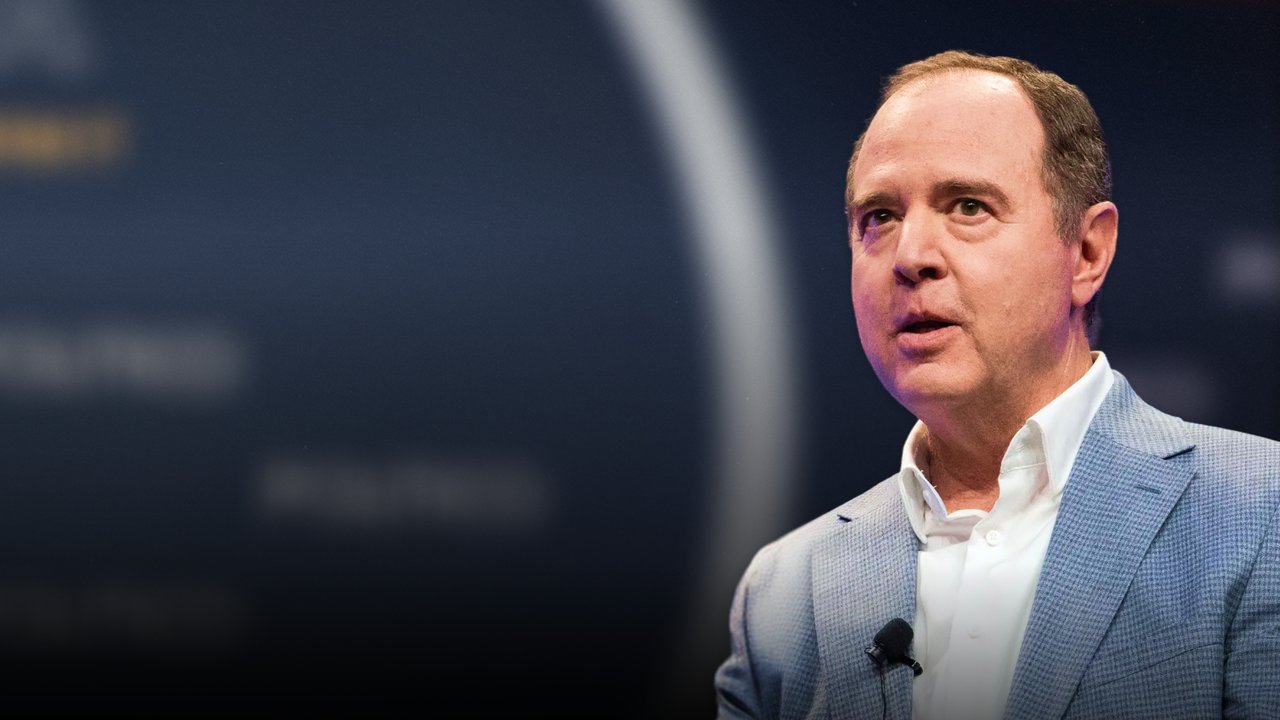
Adam Schiff on Democrats’ ‘losing message,’ AOC and AIPAC
lead image
Politics

After hot DSA summer comes the fall.
Democratic socialist Francesca Hong’s stunning loss in Wisconsin’s Democratic gubernatorial primary Tuesday night revealed limits to the far left’s power — and is undercutting the narrative of an emerging insurgency.
While progressive Peggy Flanagan cruised by 20 points in Minnesota’s Senate primary, and last week the further left Abdul El-Sayed squeaked through his Senate race in Michigan, Hong, the furthest left of the three, received no major national support and fell short.
For a movement that had been riding high off a string of primary victories this cycle, including the Democratic Socialists of America’s recent wins in New York and Colorado, the deflating Wisconsin result led to an immediate round of finger-pointing on the far left. Some dyed-in-the-wool democratic socialists blamed fellow travelers who didn’t join the effort to boost Hong. More institutional-leaning progressives argued that she was a fatally flawed candidate with a long string of gaffes — and that her loss shouldn’t be read as a referendum on the broader movement.
“She got clobbered by the national media, didn’t respond as deftly as Abdul and didn’t have time to build a counter-narrative,” said Cenk Uygur, the Young Turks founder and Justice Democrats co-founder. “The negative publicity of the last two weeks seems to have taken its toll.”
Some mainline progressives sought to distinguish far-left democratic socialism from a broader movement, citing examples such as Wisconsin Sen. Tammy Baldwin (D-Wis), a progressive who has won statewide by focusing on kitchen table issues, health care and the state’s agricultural economy — all while refraining from the so-called woke battles.
“I wouldn’t equate progressive and DSA,” said one Wisconsin Democratic operative, granted anonymity to speak candidly. The person added of a democratic socialist’s outlook in Wisconsin ahead of 2028: “I do think there is a ceiling at this point.”
Baldwin, notably, did not endorse in the primary — nor did other top Wisconsin progressives including Rep. Mark Pocan (D-Wis.), a former co-chair of the House Progressive Caucus.
The movement’s leading national voices, Sen. Bernie Sanders (I-Vt.) and Rep. Alexandria Ocasio-Cortez (D-N.Y.), also kept Hong at arm’s length and withheld their endorsements. Some who viewed Hong as a long shot in the general election and want the movement to avoid missteps like they saw with Graham Platner in Maine say the results proved those concerns were well founded.
“Bernie, AOC, and most national groups stayed out,” said a progressive Democratic strategist, granted anonymity to speak candidly. “Abdul El-Sayed was a great foot forward, Graham Platner was not, and we didn’t need our political reputation hanging on this race.”
“There’s a reason the institutional left mostly stayed away,” said a Democratic operative who works on progressive campaigns, granted anonymity to speak candidly. “The people who made those calls are relieved.”
Hong’s surprise flop drew attention on the left away from their biggest win of the night, where the Sanders-backed Flanagan — a solid progressive but not a democratic socialist — easily defeated moderate Rep. Angie Craig in the Minnesota Senate primary. A progressive won a primary in the seat to replace Craig, while the Sanders-backed Rebecca Cooke won a primary for Wisconsin’s swingy third district.
One donor adviser who works with progressive candidates around the country said Hong’s loss is a “good thing for the movement,” because it shows there is voter appetite for progressive ideas — but that candidate quality still matters, especially in a battleground.
“This is a far better outcome, and says that it is so close that a progressive who doesn’t say the dumbest shit in the world, [like] Thanksgiving should not exist, would have won,” the donor adviser said.
But others blame Sanders and Ocasio-Cortez for sitting out the race, arguing their involvement could’ve gotten Hong comfortably over the finish line.
Other DSA rising stars including Melat Kiros and Chris Rabb, who had spent other recent primary days campaigning in states like Michigan and Colorado, also skipped Wisconsin.
“This movement will fail if we see more letdowns at the critical moment, like we saw in this race,” said popular socialist voice Nathan J. Robinson, editor-in-chief of the leftist magazine Current Affairs. “Especially if AOC wants to be taken seriously as a national leader of the left movement, she needs to actually support the candidates out there who have a chance to notch victories.”
Sanders’ and Ocasio-Cortez’s teams did not respond to requests for comment.
Some in the movement looked to downplay Hong’s showing as more of a stumble than a turning point, noting that a first-time statewide candidate came within a few thousand votes of sitting Gov. Tony Evers’ hand-picked favorite in a battleground state.
They also noted Hong had her margins cut down in key strongholds by a fellow progressive who didn’t heed calls to drop out of the race. State Sen. Kelda Roys pulled over 7 percent of the vote.
Organizers watched a national volunteer army flood neighboring Michigan just a week earlier to help El-Sayed grind out a surprisingly close race. To them, the contrast with Wisconsin — where Hong was largely left to fend for herself down the stretch — was hard to ignore.
“Wisconsin being this close is very frustrating because folks like AOC and Bernie Sanders stayed out. If they just did one rally in Wisconsin for Hong, that would have probably wrapped it up for her,” said Deep Singh Badhesha, a DSA political operative who campaigned in past primary states.
Our Revolution, the progressive group founded out of Sanders’ 2016 campaign that is no longer associated with him, offered a veiled jab at the progressives that didn’t publicly support Hong — including, seemingly, their original founder who sat out the race.
“We cannot build progressive power while gatekeeping our own movement through the eyes of the establishment,” the group said on X. “Solidarity cannot be something we practice only after someone has proven they can win without us.”
Politics

MADISON, Wisconsin — Progressives believe they are on the cusp of another major victory against the establishment in the Wisconsin governor primary Tuesday — one that could pave the way for the movement in 2028 and beyond.
But so far, many national progressive leaders want nothing to do with the race.
A win by front-runner and democratic socialist Francesca Hong over Gov. Tony Evers’ handpicked successor David Crowley would be a major shockwave, setting up a key opportunity for the progressive movement to show its brand of politics can succeed in one of the most cutthroat battleground states. Some progressive organizers also argue that a Hong win serves as a test run of sorts for potential 2028 presidential contenders like Rep. Alexandria Ocasio-Cortez (D-N.Y.).
But the stars of the left like Ocasio-Cortez and Sen. Bernie Sanders (I-Vt.) have not endorsed Hong despite having hit the trail for other prominent candidates, including Michigan Senate nominee Abdul El-Sayed. And a few have privately raised questions about the sharpness of Hong’s messaging and electability, as she navigates a series of controversies over her old social media posts advocating for canceling Thanksgiving and defunding the police — comments she now calls “bad takes” that she says she has learned from.
And other leaders say they aren’t familiar with who she is, underscoring the work Hong has ahead of her if she wins Tuesday.
“I don’t know her,” Sen. Elizabeth Warren (D-Mass.) said in a brief hallway interview.
Sanders has said he would not endorse Hong and declined to comment when asked by POLITICO about the race last Friday on Capitol Hill. Two people close to the senator, granted anonymity to discuss the private conversations, said that even as Hong has invoked Sanders’ name and political ideology on the campaign trail, he doesn’t know her personally. Sanders has acknowledged he’s met Hong before, but indicated that’s the extent of their relationship.

Those two people added that Hong is less vetted and not as sharp on some of her messaging than other candidates — presenting more of a risk for Sanders, who has already been burned by endorsing Graham Platner in the Maine Senate race.
Ocasio-Cortez also declined to endorse Hong. “My focus has been in winning back the Congress, winning back the House, and positioning ourselves to have the best chance possible to win the Senate,” Ocasio-Cortez said in a recent interview on ABC’s “This Week.”
Both Sanders and Ocasio-Cortez, along with their advisers, say they’re more focused on control of Congress, and rarely endorse in state-level contests. But their lack of involvement, or even public encouragement of Hong’s campaign, could foretell just how immense a task Hong faces as she tries to convince moderate Democrats, independents and even people within her own progressive movement that she’s electable in November against Donald Trump-backed Republican Rep. Tom Tiffany.
General elections in the battleground state have been determined by extremely narrow margins in recent years. Trump won the battleground state in 2024 by just shy of 30,000 votes. Joe Biden won it by fewer than 21,000 votes in 2020.


Some Democratic officials in Wisconsin privately note Republicans have a big opportunity to hammer Hong on democratic socialism, which had a net negative rating among all registered voters in a July Marquette Law School poll.
But in spite of the hesitation from some top leaders of the left, a number of progressive groups are on board with her campaign.
“If Francesca Hong is elected the governor of Wisconsin, people are going to see somebody working very, very rigorously as the governor, like [Zohran] Mamdani is as the mayor of New York, to pursue a set of policies that people are rapidly going to recognize are in their best interests,” said Alan Minsky, executive director of Progressive Democrats of America. “They’re going to embrace [Hong] as much as they have Mamdani, whose popularity right now is off the charts.”
On whether she can dispel electability criticisms that moderate Democrats often lob at progressives, Minsky said: “The proof will be in the pudding in November.”
A few federal-level progressive lawmakers have traveled to Wisconsin to campaign with Hong, including Rep. Ilhan Omar (D-Minn.). Hong has also channeled progressive star power in other ways: leftist influencer Hasan Piker rallied with her in Milwaukee earlier this month. Rep. Ro Khanna (D-Calif.) has also endorsed Hong.

Republicans in Wisconsin and at the national level are also already planning coordinated attacks against Hong for signing a questionnaire from the Madison-area Democratic Socialists of America stipulating candidates uphold the DSA platform and “view themselves as socialist organizers first, and legislators second,” as well as attacking her for her deputy campaign manager, a sex worker advocate named Renee Faust, having an OnlyFans account.
The Hong campaign pushed back on those attacks. “Renee Faust is a licensed mental health clinician who has spent her career providing care to trafficking survivors. She has helped build the largest grassroots campaign in Wisconsin history. The right-wing politicians attacking her are the same ones who want government dictating women’s health care decisions,” a Hong spokesperson said.
Hong’s allies privately attribute the lack of national endorsements from leading progressives to Sanders’ decision to stay out of the state-level race, arguing that others have taken a cue from him. However, the Vermont senator did endorse Troy Jackson for governor of Maine before Graham Platner dropped out.
Interviews with voters on the ground in Wisconsin show Hong has been able to tap into voters’ frustrations with party leaders and lean into local policies around cost of living to rally a strong enough base heading into Tuesday’s primary: She’s led Crowley by double digits in recent polls, though he’s been making gains.


If she can make it through the primary and general election against a Donald Trump-backed Republican, then she will force the Democratic establishment, and leading national progressives, to take notice.
“I feel like we’re at a point in our policies where Democrats are very happy to just kind of stay focused on being centrist,” Paige Gerber, a 33-year-old Hong supporter, said in an interview after running into Crowley at an ice cream shop campaign stop in Sheboygan. “And that’s where we’re losing in so many spaces, especially as we get more and more destitute in the economy. People are hurting, and people are really looking for … policies that are really for the people.”
Wisconsin Democratic officials are already planning a unity tour across the state with the governor and lieutenant governor nominees immediately following Tuesday’s primary, to try to turn the page from intense Democratic infighting between Hong’s allies and establishment Democrats in the state during the primary, according to three people with direct knowledge of the matter. State party chair Devin Remiker will join nominees on the tour.
Evers in an interview last Friday did not commit to endorsing or campaigning for Hong, should she win. But Democrats involved expect both he and Crowley would join the unity tour at some point ahead of November.
Still, many senior Democrats in the state believe Hong will need the help to convince enough voters in the purple state to turn out for her in November. They’re deeply concerned Hong isn’t running the kind of disciplined campaign that can defeat Tiffany.
“Socialism scares the shit out of the persuadable voters we routinely need to win here,” said one longtime Democratic campaign operative in the state, granted anonymity to speak candidly. “And the unforced errors will be deadly if she doesn’t sharpen some of her answers … for her past tweets and positions.”
A Democratic staffer who is supporting Hong said she “needs to be more on message about what actually matters,” adding: “ I don’t think she has to moderate her policies … she is just going to have to be more precise.”

Wisconsin’s lone Democratic Sen. Tammy Baldwin, who hasn’t endorsed in the race, said in an interview last Friday she “decided not to put my thumb on the scale,” though she does plan to back whoever wins.
When asked about Hong’s electability as a democratic socialist in a general election, Baldwin pivoted to an attack on Republicans.
“I’m preparing to bring up Trump’s record on the same things,” she said. “Look, this is a referendum this fall about whether we’re going to elect MAGA people or whether we’re going to stand up for health care, stand up for SNAP benefits. Those are the issues before the state.”
Politics
Members of President Donald Trump’s political team asked Ohio Republicans last week not to wage a public pressure campaign against embattled GOP Rep. Max Miller, after they became increasingly convinced he wouldn’t end his reelection bid.
Their engagement, according to three people granted anonymity to share direct knowledge of private conversations, came as Miller insists he has no plans to withdraw despite serious allegations of domestic abuse, which he denies. Before that, some White House officials and Republicans had urged Miller to drop out of his race for reelection.
Miller’s determination to remain in the race would render efforts to oust him moot, administration officials reasoned in calls with party leaders and other Republicans in the state over the past week. It would complicate messaging, the officials argued, when those same leaders would likely later have to defend Miller’s candidacy against a Democratic challenger.
“They basically told us to back off,” said one Ohio Republican involved in the conversations, “and let the voters decide.”
Miller faced a 4 p.m. Monday deadline to drop out, and state party leaders would have had to schedule a meeting to discuss his replacement two days prior to that.
At one point, Republicans in the state discussed scheduling the required meeting to replace Miller, in the hopes it would pressure him to drop out of the race, according to two of the people. But Ohio Republicans scuttled that effort as White House officials warned them that Miller would not drop out and Republicans would likely have to defend the seat without a new GOP replacement contender.
Spokespeople for Miller and for the White House did not respond to requests for comment.
Some Republicans argue they have no choice but to close ranks around a candidate accused by his former father-in-law, Ohio GOP Sen. Bernie Moreno, of being unfit to serve and needing psychological help; Ohio’s other Republican senator, Jon Husted, has also said Miller should resign and not run for reelection. Miller has remained defiant amid the calls to resign.
Allegations from Emily Moreno, the senator’s daughter and Miller’s ex-wife, include that Miller held a gun to her head and broke their daughter’s collarbone. Many of the allegations were contained in state investigatory documents related to a child abuse probe. Miller has denied the allegations.
Speaker Mike Johnson has so far declined to weigh into Miller’s candidacy as well, telling POLITICO in an interview that he will let the House Ethics Committee process play out first. The committee announced an investigation into Miller last week, after the representative said he would file paperwork to investigate himself.
The allegations could haunt Miller in his competitive race this November against Democrat Brian Poindexter, a union ironworker already benefitting from the political headwinds facing Republicans — from high gas prices to the ongoing war in Iran.
“As I’ve said before, if the accusations against Max Miller are proven true, he should be in prison, not in Congress. It’s unfortunate that Miller has chosen to keep putting his ex-wife and her family through this nightmare in the public spotlight,” Poindexter said in a statement when it became official Miller was staying on the ballot. “But let me be perfectly clear. I got into this campaign to fight for my neighbors and for working people across this district. That continues to be my north star.”
It comes at a time when Republicans cannot afford to lose any members of their slim majority without risking a House Democratic takeover in 2027. Ohio’s 7th Congressional District was, just weeks ago, considered safely red; now, Republicans have polling that shows Miller underwater in his district.
Some National Republicans argue the seat will inevitably stay in GOP hands. It is a reliably conservative district Trump won by 11 points in 2024. Republican National Committee Chair Joe Gruters said in an interview Sunday with NewsNation that the party’s main campaign fundraising arm would likely continue to support Miller’s reelection bid.
“We’re gonna support our nominees,” Gruters said. “We need to make sure we hold the majorities. Max, I’m sure, is on that side, but listen, everybody has to prove that they are capable of winning, and then we’re going to look at our resources and make the decisions.”
But other Republicans fear that Miller’s decision to remain in the race will force party committees to spend heavily.
“It’s still winnable, it’s just going to be expensive,” said one national Republican operative, like others granted anonymity to speak candidly. “At a time when Republicans are playing defense, like you’re just spreading your dollars thinner and thinner across the board.”
A second Ohio-based Republican said they are “concerned” that the allegations against Miller are “going to result in fewer votes, less ability to fundraise.”
“Nothing good comes out of this,” the Republican said. “He’s not going to gain any votes, and he’s not going to gain any fundraising, and he’s going to be completely distracted. It’s a sideshow.”
Another White House official last week noted the growing sense of inevitability that Miller would remain in the race, once the two-term lawmaker and former Trump aide began comparing his situation to attempts over the years to take down Trump for similar accusations of abuse and misconduct.
“I don’t think he’s going anywhere,” the White House official told POLITICO after the president spoke with Miller on the matter.
Politics

Montana’s Democratic Senate nominee on Monday refused to drop her campaign to clear the way for an independent candidate, setting up a crowded race that is likely to help Republicans win in November.
Alani Bankhead made certain with hours to go before Monday’s deadline that she would not step aside to give independent Seth Bodnar — who is backed by former Sen. John Tester (D-Mont.) — a clearer run at Republican Kurt Alme.
“I’ll never bow down,” Bankhead said during a press conference ahead of the 7 p.m. Eastern Time deadline to drop out. “I am in this race to win it and I am staying through Nov. 3.”
Bankhead accused her opponents of being “hand picked” by the establishment while she won the Democratic Primary.
Her refusal to drop is no surprise. She told POLITICO earlier this month that it would take “a lighting bolt from God” to convince her to exit, and she’s cast Bodnar’s backing from Tester as proof that he’s more aligned with the establishment than she is.
It’s caused a significant headache for Democrats, who have had some success getting their candidates to drop out for independents in other deep-red states carried by President Donald Trump by wide margins in 2024. Democrats in Idaho, South Dakota and Nebraska have all dropped their bids, though legal challenges could still complicate some of those efforts.
But Montana is Democrats’ best shot of actually flipping a seat with an independent candidacy, and Bankhead remaining on the ballot is likely to complicate that path exponentially.
Polling has shown Bodnar in a competitive head-to-head position against Alme and closer than if Bankhead had a one-on-one contest. But with both on the ballot, Alme leads by more than 20 points. Democrats like Tester and former Gov. Steve Bullock have found success in the red-leaning state, but a split ticket all but cedes the race to the GOP and narrows Democrats’ path to a majority in the upper chamber.
Bodnar and his allies have upped their focus on Bankhead in recent days. A super PAC backing Bodnar has been hammering her on television while another group is posting signs around the state calling for her to drop out.
More than 20 local Democratic lawmakers recently called on Bankhead to drop out, as well as former Democratic Party leaders. But in the end, their argument wasn’t enough to change Bankhead’s mind.
Bodnar recently told reporters ahead of the Monday deadline that he, too, had no plans to drop — while publicly bashing Bankhead for the first time.
“On the Democratic side, millions of dollars of outside dark money poured into a primary to determine an outcome,” Bodnar said at a press conference. “Now they have a candidate who’s unvetted.”
Politics

KENOSHA, Wisconsin — The progressive movement’s midterms march has arrived in Wisconsin, where a democratic socialist is forcing establishment Democrats to mount an all-out, last-ditch effort to stop her.
State Rep. Francesca Hong is the front-runner to become the Democratic gubernatorial nominee, fueled by a populist campaign tapping into voters’ cost of living concerns. David Crowley, the Milwaukee County Executive backed by outgoing Gov. Tony Evers, has emerged as the top candidate trying to cut off Hong’s bid.
Ahead of Tuesday’s primary, electability was top of mind for voters and both candidates as they raced to prove they could build the widest, strongest coalition against presumptive Republican nominee Tom Tiffany.
Crowley and Evers have been barnstorming the swing state over the past week, warning a vote for Hong risks losing the governor’s mansion in November to Tiffany, a hard-right member of the House Freedom Caucus backed by President Donald Trump.
“You know, it’s the only time that I know that the governor — Tony Evers — the Republican Governors Association and Turning Point USA have ever been on the same page: in thinking that Francesca Hong is the best candidate to lose this race,” Crowley said in an interview at a local tavern in Sheboygan on Friday.


Hong rejects those warnings. Speaking to voters at events across the state, Hong argues Democratic voters are fed up with the establishment ahead of November — and that she can appeal to a wide array of Democrats, Republicans and people who don’t feel represented by either party.
“We have to take this moment, a movement moment, and be bold with transformative change, and build the actual big tent that we can and we must be as Democrats,” Hong told a crowd of about 50 people gathered at a senior community center in deep-red Siren.
Hong, a 37-year-old former chef and single mother who represents the bluest district in the state assembly, has charted a remarkably rapid rise in a purple state that Trump won by just shy of 30,000 votes in 2024. She launched her campaign as a long shot, with far less name recognition than other Democrats in the race like Lt. Gov. Sara Rodriguez and former Lt. Gov. Mandela Barnes. Both of them have since dropped out. And despite being at a consistent fundraising disadvantage — Hong still has not put out a single television ad — the progressive has maintained wide leads in public polling.
But Hong’s campaign has also faced intense scrutiny over a string of controversial past social media posts, including advocating for defunding the police and railing against Thanksgiving. She was later slammed for being unable to give a straightforward answer to CNN about whether she would “cancel Thanksgiving.”
Following those missteps, Hong’s team has clamped down on her interactions with both local and national media at campaign events in the final stretch. She has also moderated some of her past positions in public remarks, emphasizing repeatedly that she is “serious about public safety” and even attempting to eschew some of her anti-establishment ties.
On Wednesday, she reversed herself on Thanksgiving, telling POLITICO that it was, in fact, her favorite holiday. And asked by POLITICO on Saturday if she had any regrets about her past, she told reporters at a campaign stop in Sheboygan that she had learned from her tweets.

“I had some hot takes, some bad takes on Twitter, but when you’re a business owner running a restaurant during Covid, trying to pay bills as a student, you’re putting feelings out there into the world,” Hong said. “But I’ve evolved, I’ve learned. I think it’s more dishonest not to learn.”
Hong has leaned heavily into affordability policies, including raising the state’s minimum wage from $7.25 to $20, progressive taxation and a statewide one-year moratorium on data center construction — a salient issue in Wisconsin, where several local governments have already voted on moratoriums.
“While many of our supporters or other folks have framed us as anti-establishment, what we are for is working-class people,” she told POLITICO. “It’s not so much being anti-establishment as it is ensuring that we’re listening to voters who are demanding change.”
But many Democrats in the state worry her ideology — including the old social media posts hawking far-left talking points — will be a political risk in a battleground general election.
Pro-Republican PACs, including one associated with the Republican Governors Association, have spent millions of dollars to boost Hong in the primary so they can face who they perceive to be a weaker candidate in November.
Kyle Kilbourn, a Democrat who unsuccessfully ran against Tiffany for his House seat in 2024, said he still had not decided who to support in the primary because of concerns about “electability statewide.”
“The last several elections have been very very close, by one or two percentage points, and so it matters,” he told POLITICO while attending a Hong event at a brewery in Rhinelander.
Even some of Hong’s supporters are anxious.
“It’s always going to be a concern,” Jan Stroman, who attended an event in River Falls, said when asked if Hong could win against Tiffany.
Robert LaGesse, 74, said at an event in far-north Superior on Friday he was voting for Hong — but admitted Hong’s tweets about abolishing the police “sounds like a foolish statement that could hurt her big time.”

At the same event, a young Hong campaign volunteer asked her about those social media posts. “I’m not going to abolish the police as governor,” Hong responded. “I cannot and I will not defund the police.” She was asked a similar version of the same question at nearly every other event last week.
Some supporters also fear that Hong will face racist and sexist backlash as an Asian American woman. Wisconsin has never elected a governor who is not a white man.
“There’s a lot of sexism yet in our country,” Tim Freiss, 60 — a Hong supporter who previously voted for both Bush presidencies — said in an interview outside his home in Green Bay.
“Honestly, what I’m worried about is her race, because our state is very racist,” another Hong supporter, Heidi Meyer, 48, said as Hong canvassed her neighborhood in Appleton.


Democratic officials in the Badger State are determined to unify after the primary, but many are deeply concerned Hong isn’t running the disciplined campaign required to defeat a Trump-backed Republican in Wisconsin.
The messy race has also deeply divided Democrats in the state. Hong’s allies bristle at Evers’ campaign against her, using his resources — including his own communications staff — to boost Crowley. Evers defeated Republican then-Gov. Scott Walker in 2018 by deploying his brand of more moderate Democratic policies to win over independents and limit deep losses in rural areas. But he decided not to run for a rare third term as governor.
Evers on Friday would not commit to endorsing or campaigning with Hong should she win — though Democrats expect he’ll have to.
“I want to have a chance to take a breath, and once that’s in a position, we’ll see,” Evers said in an interview as he walked with Crowley from a Hmong family-owned bakery in Sheboygan to the corner tavern packed with supporters.
Crowley, asked if he would campaign for Hong this fall if she wins the nomination, shot back with a smile: “Ask her that too.” But he quickly added: “I want to be very clear: I’m not in this race running against any of my opponents. I’m running for the votes of Wisconsinites, and if they don’t choose me to be the nominee, my job is to make sure that it’s blue no matter who.”

Asked Saturday if she would endorse and campaign with Crowley if he wins on Tuesday, Hong replied with one word: “Yes.”
Hong has admitted the democratic socialist label comes with baggage — “I can’t say I always love it for me,” she said at a restaurant in River Falls — but she also rejected the notion that her campaign is undisciplined and noted that establishment Democrats had consistently underestimated her bid. She hopes to work with Democrats across the ideological spectrum in the sprint toward November.
“We’re a serious campaign that has built a movement and turned out new voters, folks who are voting for the first time,” Hong said. “We’re a serious campaign that knows how to win, but we’re also serious about working as a coalition and making sure that we collaborate and coordinate with the people that we need to to make sure we defeat Tom Tiffany in the fall.”
Crowley has charted a more moderate path than Hong’s blistering democratic socialism. In an interview, he argued the party needs “someone who’s not just going to fight back, but also who can sit at the negotiating table and be able to work with folks who want to deliver for those that we represent.” He also ruled out the data center moratorium popular with a wide swath of voters that Hong is running on and using to pull in some pockets of rural support: “So, the way I hear that question is that we’re going to preempt local communities from not being able to focus on their own economic development,” Crowley said.
There are signs that Crowley is making some gains. But he’s still 20 percentage points behind Hong in the latest polling.
“Crowley is closing the gap, but it’s likely too little, too late,” said one longtime Wisconsin Democratic strategist, who was granted anonymity to candidly discuss the governor’s pick.

Crowley’s team argues that Wisconsin polling is likely off just as it was in Michigan, where Abdul El-Sayed clinched the Democratic Senate nomination last week by a tighter than expected margin. But the signs of Hong’s strength are evident across the state, beyond just her stronghold of Madison. The first voter Crowley greeted at his opening Sheboygan stop Friday, Paige Gerber, said in an interview later she had already voted early for Hong.
Supporters at the Crowley event later in the day were well aware of his standing. Voter after voter in interviews with POLITICO expressed alarm that their party was poised to pick Hong, a losing horse in their view.
Retirees in “radicalized by basic decency” T-shirts sipped on beer and cheered when Evers walked through the door with Crowley, alongside local IBEW union workers and teachers. “Tony! Tony!” chants eventually rang through the bar.
A Crowley staffer at one point tried to start a “David! David!” cheer. But it never caught on.
Tyler Katzenberger contributed to this report.
Politics