Jason Aldean’s latest album is stirring up buzz, especially with the possibility of a special guest on tour — and it’s someone close to home. Continue reading…The Boot – Country Music News, Music Videos and Songs
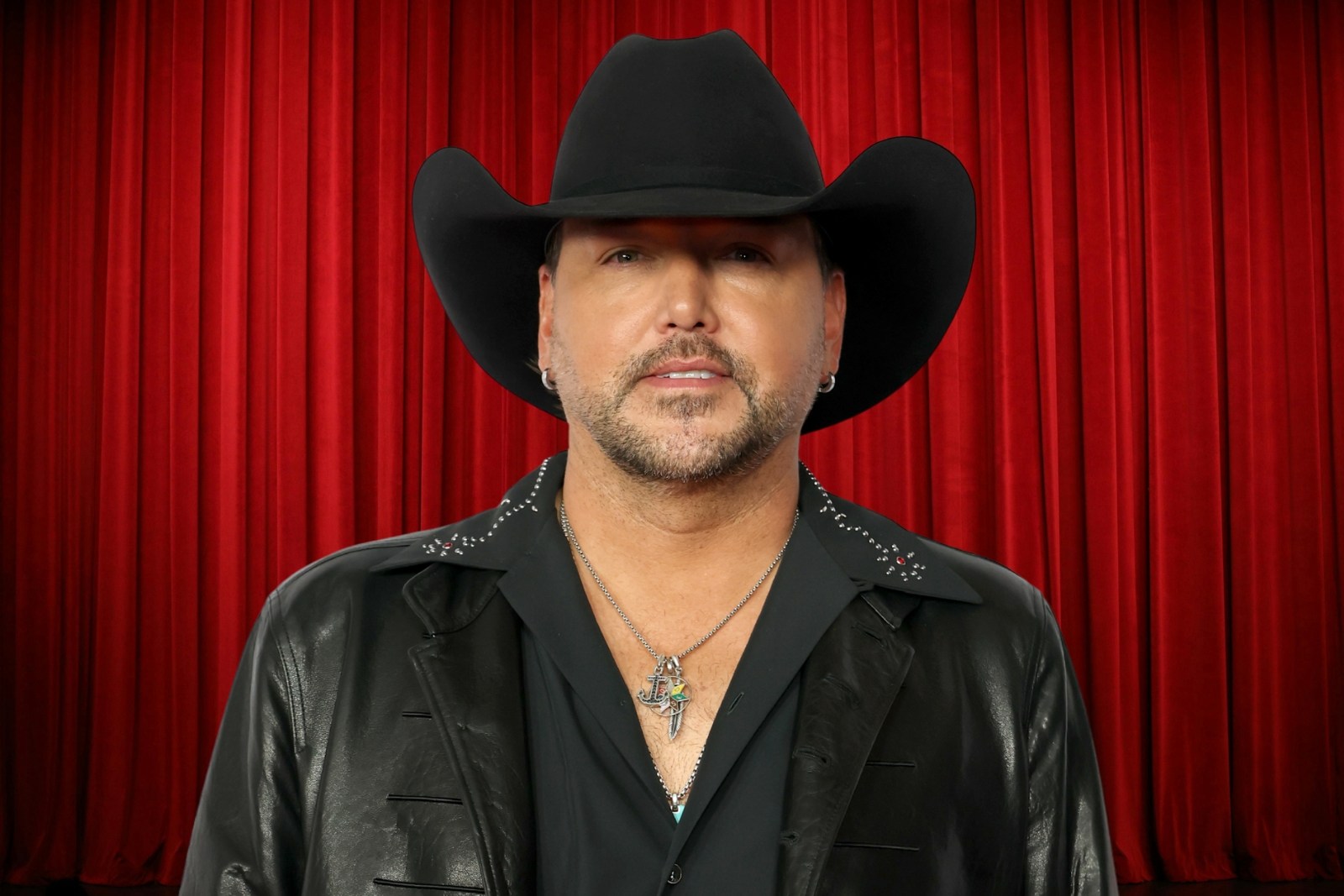








Jason Aldean’s latest album is stirring up buzz, especially with the possibility of a special guest on tour — and it’s someone close to home. Continue reading…The Boot – Country Music News, Music Videos and Songs

Love staying ahead of the curve on Walmart’s newest grocery drops? If so, you’re in for a treat with the lineup of goodies arriving in stores this May.

Food Republic – Restaurants, Reviews, Recipes, Cooking Tips
Michigan Democratic Senate candidate Abdul El-Sayed for years has publicly said he’s a physician — but there’s overwhelming evidence that he’s had no experience as a licensed medical doctor.
This April, he gave an interview to a local TV journalist where he talked up his credentials as a physician multiple times. In March, he told a group of Teamsters nurses that he had “been in enough codes to watch who really does the work” and said that same month on a podcast that “I’ve been a doctor my whole career.”
His LinkedIn profile currently says he’s a “physician,” and late last month he called himself “a physician and epidemiologist” at a Council of Baptist Pastors debate in Detroit.
But according to a review of Michigan and New York state medical records, he’s never been granted a medical license in those states. El-Sayed’s hands-on experience treating patients appears to be a short clinical rotation called a sub-internship at a small hospital in Manhattan for four weeks at the end of medical school, he told a podcast in 2022, where he said his “job was to be the, like, worst doctor on the team” and he was “cosplaying a doctor.”
“The perception in Michigan is that he is, at least at one point in his life, a licensed physician,” said Chris Dewitt, an unaligned Democratic strategist based in Michigan. “That apparently is not the case, and it blows up a big part of his campaign.”
There’s no doubt that El-Sayed has top-notch medical credentials. He attended the University of Michigan Medical School and ended up receiving his medical degree from Columbia University College of Physicians and Surgeons. He has a doctorate in public health from Oxford University and worked as an assistant professor of epidemiology at Columbia for a year before moving to Detroit to be executive director and health officer of the Detroit Health Department.
“He has earned the right to be called ‘doctor’ twice over,” El-Sayed spokesperson Roxie Richner said in a statement. Richner didn’t respond to questions about his use of the word “physician.” El-Sayed has said in the past that he decided not to practice medicine after treating a patient during medical school and decided he wanted to address systemic issues, instead of individual patients.
But his history of suggesting to voters that he served as a practicing physician — with examples stretching back almost a decade — has muddled his personal history, adding confusion to his otherwise impressive achievements. In 2018, when El-Sayed was running for governor of Michigan, Crain’s Detroit Business published a story that also examined his claims of being a physician but not having a license to practice medicine in Michigan.
“I think there’s a lot of ways that one serves as a physician. And I think the work that I have done and I continue to do is true to the core and the ethos of medicine,” El-Sayed told Crain’s Detroit Business at the time. “And when I took my Hippocratic Oath, that is still an oath that I use to guide my work today. I’m a physician because I have an MD, but I’m also a physician because of the work that I’ve dedicated my career to.”
The state of Michigan prohibits anyone who is not licensed “to induce the belief” that they have a license or are registered to practice medicine.
El-Sayed has made his medical credentials a key part of his appeal on this campaign, often highlighting his background in medicine and as a physician — or not correcting people when they mention it. When Sen. Bernie Sanders appeared with El-Sayed last year at a Medicare town hall, the Vermont independent stopped to remind the livestreamed audience why he was backing El-Sayed: “there are no people in the Democratic caucus who are physicians,” he said. Abdul sat silently by and didn’t correct him.
To some in Michigan’s political establishment, his claims are misleading.
“It’s a weird thing to hang your hat on in terms of a biographical detail if you never actually practiced medicine,” said Adrian Hemond, a Democrat who is CEO of Lansing-based political consulting firm Grassroots Midwest.
“It’s not as though he hasn’t done anything with all of the fancy education that he got like running public health programming for Wayne County and for the city of Detroit. And so maybe you would lean into that, as opposed to giving people the impression that you may have practiced medicine before,” Hemond said.
Richner, El-Sayed’s spokesperson, said the Senate hopeful has two doctorates and has spent his career improving health care for Michiganders, including being a top champion of Medicare for All. His campaign pointed to a story he’s repeatedly told about why he wanted to work in public health and not practice medicine: When he was doing his sub-internship, he treated a homeless woman for a host of issues, including a head injury, AIDS and alcohol addiction. After she was discharged from the hospital, he ran into her sleeping on the subway and then realized that his calling was not to practice medicine, but instead to break the poverty cycle so there would be fewer patients like his last patient.
“Rather than this being a gotcha attack, this is Dr. El-Sayed’s origin story — one that Michiganders are familiar with,” Richner said.
Polls currently show a three-way primary contest between El-Sayed, Rep. Haley Stevens and state Sen. Mallory McMorrow — with El-Sayed rising, a move that has alarmed some moderate Democrats because of some of his more progressive views on defunding the police and his controversial appearance with the left-leaning Twitch streamer Hasan Piker.
El-Sayed has also touted being a “physician” in at least two instances when he was in New York even though New York state law prohibits people from using the title “physician” if one is not licensed. At one conference in 2015 in New York City that he was slated to speak at, his bio said he was “a public health physician and epidemiologist.” In a 2012 op-ed he wrote, he called himself “a social epidemiologist and physician” who was studying at Columbia.
In 2018, he dressed up in a white doctor coat in an ad for his campaign for governor, and also used a photo of himself in the same garb last June for a fundraising pitch.
El-Sayed’s publisher’s description of his 2020 book, titled “Healing Politics,” said El-Sayed was a physician who “could heal the sick.” In 2024, he said “many of my doctor friends” call him a “self-hating doctor” because “the way that we tend to operate tends not to put our patients first.”
“I think it does matter for voters that he hasn’t really practiced medicine, but it’s part of a broader pattern of him doing a job and not sticking around very long,” said Joe DiSano, a Michigan Democratic consultant not affiliated with any campaign in the race. “If you’re gonna claim that you’re a doctor, you should have the practical experience of seeing patients on a regular basis.”
Politics

Ever wonder why you don’t see these colorful crustaceans on your plate? For starters they’re incredibly rare, but there’s also a specific reason they’re blue.

Mashed – Fast Food, Celebrity Chefs, Grocery, Reviews
![<a href="https://tasteofcountry.com/dutton-ranch-why-did-beth-and-rip-move-to-texas/" target="_blank">Dutton Ranch: Why Did Beth and Rip Move to Texas? [Dutton Rules]</a>](https://townsquare.media/site/204/files/2026/03/attachment-dutton-ranch-14.jpg?format=natural)
Dutton Ranch begins on Friday and there is one burning question every Yellowstone fan wants answered. Continue reading…Country Music News – Taste of Country
Dutton Ranch begins on Friday and there is one burning question every Yellowstone fan wants answered. Continue reading…The Boot – Country Music News, Music Videos and Songs

Alaska’s economic development agency owns oil leases at the northern edge of the Arctic National Wildlife Refuge — one of the most hotly debated areas of federal land in the country. (Photo by Max Graham/Northern Journal)
Alaska’s industrial development agency this week is set to vote on spending $190 million on controversial plans for oil exploration in the Arctic National Wildlife Refuge.
The budget, drafted by staff and still pending approval by the agency’s governor-appointed board, includes up to $175 million for advanced geologic testing, plus as much as $15 million to bid on new areas of the refuge in an upcoming federal lease sale.
If approved, the plans from the Alaska Industrial Development and Export Authority, or AIDEA, could represent a major step toward development in the refuge. They could also represent a massive expenditure, as $190 million exceeds the yearly general fund budgets of more than half of Alaska’s executive branch agencies.
The refuge occupies the state’s northeast corner, east of existing oil infrastructure, and its future has been the subject of a fierce, decades-long national debate. No oil is produced there now, and just one community sits within it, the Iñupiaq village of Kaktovik.
AIDEA’s proposed spending is outlined in a resolution that the authority’s board is set to discuss at a meeting Wednesday. The state published a notice about the meeting on Sunday.
The geologic work, known as seismic testing, involves searching for oil deep underground by using sound waves — a technique that geologists liken to an ultrasound of the earth.
The program would allow the agency to move to “the next level” of exploration and development in the Arctic refuge, according to Randy Ruaro, AIDEA’s executive director and a former chief of staff to Gov. Mike Dunleavy. But it would also come with risk, as there is no guarantee that exploration would lead to the discovery of profitable deposits; the authority’s critics say its money would be better invested in Alaska’s permanent fund.
AIDEA bought seven leases in the refuge, totaling about 365,000 acres, at a sale held during the first Trump administration five years ago. But it has yet to do any exploratory work.
“It’s time to move forward and get the oil and gas on the coastal plain, on our leases, producing for the nation,” Ruaro said in a brief phone interview Sunday.
There could be “billions and billions of barrels of oil” beneath the refuge’s 1.5-million-acre coastal plain, Ruaro added. He cited an October report commissioned by AIDEA that describes the refuge’s coastal plain as the “most prospective unexplored onshore area in North America,” citing new discoveries just to the west.
The area’s true oil and gas potential has long been a mystery, though; much of the geologic data that’s been collected there is decades old, and preliminary. Reporting by the New York Times before the 2021 lease sale indicated that confidential results from the sole test well drilled inside the refuge were not encouraging.
The Trump administration is currently taking sealed bids in another lease sale in the refuge, with 700,000 acres available and results to be announced June 5.
AIDEA intends to submit bids, according to Ruaro. “We’re absolutely interested,” he said.
AIDEA’s board chair, Bill Kendig, declined to answer questions Sunday about the proposed spending.
The proposal on Wednesday’s agenda explicitly exempts authorization for “drilling or well execution,” but Ruaro said the board could change that at the meeting.
The prospect of oil development in the refuge — the nation’s largest federal wildlife reserve — has been hotly debated for 50 years.
Leaders from Kaktovik and other North Slope communities largely support opening the coastal plain to oil companies.
But the area includes the calving grounds of the Porcupine caribou herd — a cultural touchstone and important traditional food source for the Gwich’in people, who live over the Brooks Range to the south but still within the herd’s migration route, and who are stridently opposed to oil development.
The refuge also provides habitat for migratory birds, polar bears and musk oxen.
Until 2021, the area was never formally opened for oil development, in spite of intense lobbying efforts by Alaska’s congressional delegation.
And it remains far from existing oil infrastructure, which is concentrated near the massive Prudhoe Bay field some 60 miles to the west.
The oil industry itself showed little interest in the first-ever lease sale in the refuge, in 2021. AIDEA was the top bidder, and no major companies participated.
The Biden administration canceled AIDEA’s leases in 2023. But a federal judge later restored them, and the industry’s outlook in the Arctic has shifted since then, with huge demand at a recent lease sale in the National Petroleum Reserve-Alaska.
Nonetheless, opponents of drilling in the Arctic Refuge say they’ll be fighting AIDEA’s move toward development.
Kristen Moreland, executive director of the Gwich’in Steering Committee, called it a “deeply unpopular project” that lacks a “meaningful public engagement process.”
“They know that they don’t have the support of the majority of Alaskans, and most certainly don’t want to face the voices of Gwich’in,” Moreland said in a text message Sunday. “We will continue to fight any entity that bids on leases on the coastal plain of the Arctic Refuge under the legally questionable grounds that this administration is holding a lease sale on. This is way too important to the survival of the Gwich’in and their communities.”

Starbucks’ 2026 summer menu is a visual delight and packs a punch, but not in the places you’d expect. Our review shares exactly what you should order.

Food Republic – Restaurants, Reviews, Recipes, Cooking Tips

Misconceptions about popular foods abound, and honey is no exception. Some folks falsely believe you must avoid handling it with this type of material.

Mashed – Fast Food, Celebrity Chefs, Grocery, Reviews
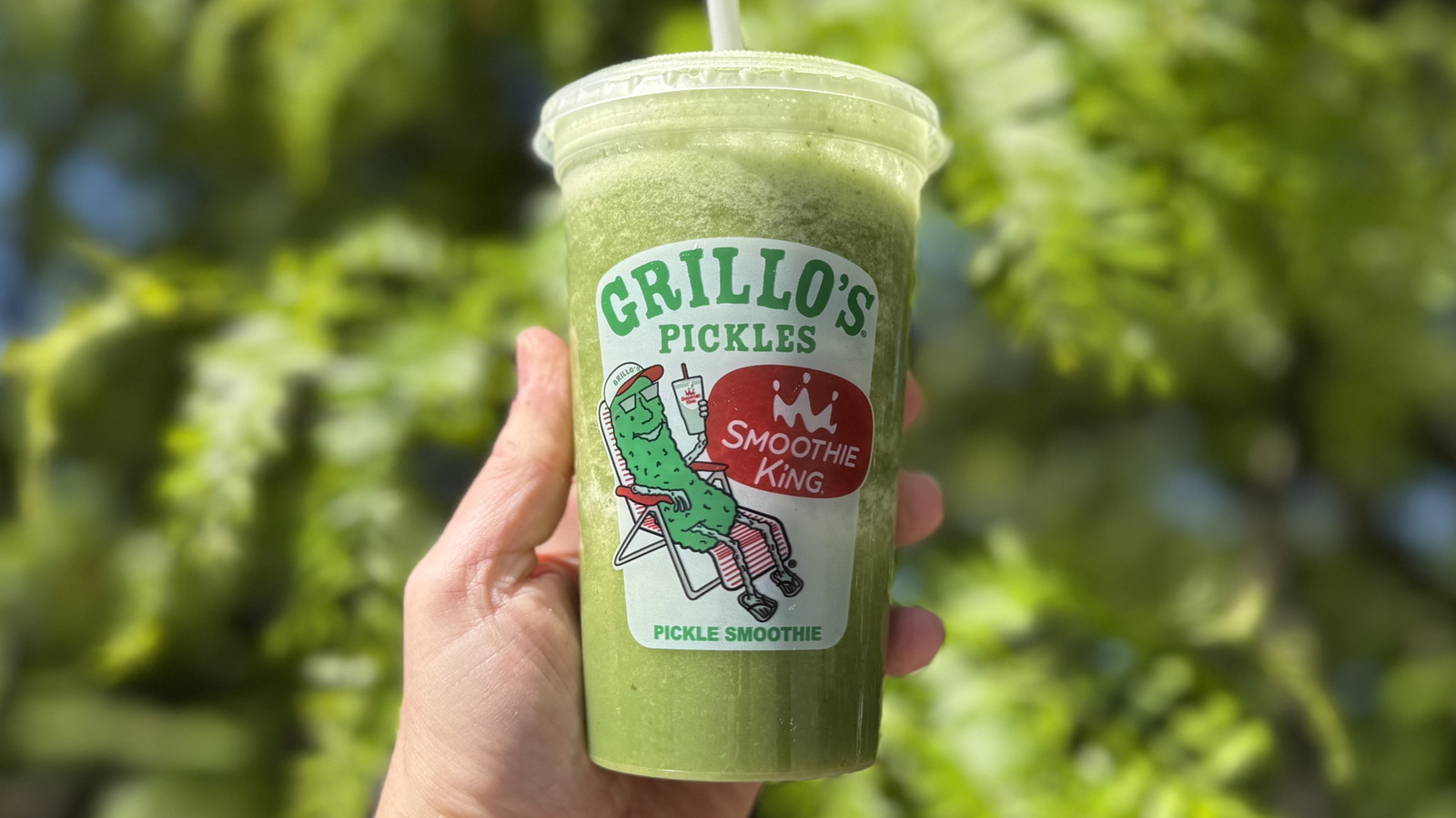
Pickles are all the rage today. They are popping up in everything from chips and cookies to pretzels and popcorn.
Mashed – Fast Food, Celebrity Chefs, Grocery, Reviews