A subadult brown bear sniffs the air as it walks across the tundra in Katmai National Park and Preserve on Aug. 10, 2023. (Photo by F. Jimenez/National Park Service)
Last week, a state court approved the Alaska Department of Fish and Game’s plan to resume killing scores of brown bears, including newborn cubs, across a 40,000 square mile area in southwest Alaska. The goal of the extensive bear kill effort, according to ADFG, is to reduce the number of predators in order to increase the size of the Mulchatna caribou herd.
The court stated:
“The Court is in no position to second guess the Department’s biologists in their technical conclusions. The Court must give deference to the Department on these technical game management decisions… The information considered by the Board (of Game) at the July 2025 meeting could be problematic or incorrect. However, the Court is not in the position, nor does it have the authority, to make that determination at this point in the proceedings. The Court simply does not possess the technical and specialized skills to do so.”
Indeed, this is a perpetual problem, and one that Rep. Andy Josephson’s bill, HB364 — “An Act relating to intensive management of big game prey populations” — seeks to resolve by requiring independent scientific peer review of all predator control proposals from the state. Science requires independent peer review.
Regarding the ruling, the ADFG commissioner stated: “We are happy that science prevails.” They may be happy, but science clearly did not prevail.
What did prevail is the state’s continued reliance on inadequate, anecdotal information to advance its objective of killing predators as political spectacle to mask its mismanagement, including its wildly unrealistic population goal of 30,000 – 80,000 for the Mulchatna caribou herd. Science points to lack of adequate nutrition, rather than predation, as the main driver of Mulchatna caribou numbers — a fact the state conveniently ignores.
Regarding HB364, the administration did not endorse the bill and the Legislature has ignored it entirely. Obviously, predator control advocates do not want independent scientific review of their proposals, as they know such proposals would not survive independent scientific scrutiny.
So “we the people” are left not to trust the state administration, the legislature or the courts on such matters of natural resource policy. And scores of brown bears will be killed in the next few weeks, without solid scientific justification, ostensibly on behalf of all Alaskans.
Hopefully, our next governor will better appreciate science and the need to apply it effectively in resource policy.
I recently visited a Burke Williams spa for the first time and it did not disappoint. Apart from a much-needed deep tissue massage and bouncing between the steam room, sauna, and hot tub, I was… E! Online (US) – Top Stories
There are three casual steakhouses that rule the roost in the United States, and they are Texas Roadhouse, Outback, and LongHorn. Which is the biggest?
The Alaska State Capitol is seen behind other buildings on Tuesday, Feb. 10, 2026, in downtown Juneau. (James Brooks photo/Alaska Beacon)
A late amendment to a bill nearing final passage in the Alaska Capitol would exempt some Alaska Native village corporations from public financial disclosures required by state law.
On Monday afternoon, the Alaska Senate’s labor and commerce committee voted to amend House Bill 126 with a new section that reduces and caps the number of Native corporations required to share information annually with the Alaska Division of Banking and Securities.
Sen. Jesse Bjorkman, R-Nikiski and chair of the labor and commerce committee, declined to answer questions when asked Tuesday about the change.
In Monday’s committee hearing, Bjorkman said, “I think members of the media might be interested in information therein, but at the end of the day, I don’t know that information is their business because it happens within the confines of a Native corporation.”
State law currently requires corporations with at least 500 shareholders and $1 million in assets to provide financial documents to the state, which treats them as public records.
Because Native corporations are exempted from federal disclosure requirements, existing state law provides the only free public avenue for non-shareholders to inspect their work.
Of the state’s 200-plus Native corporations, 59 are currently required to file reports with the division, and the number is growing over time because shareholders are splitting their shares and passing them to their descendants, pushing more corporations over the 500-shareholder limit.
The new definition would limit disclosures to corporations with 500 shareholders when they were created, regardless of how many they currently have.
That change would exempt at least seven village corporations — the division isn’t sure of the exact number and is reviewing another 30. None of the 12 regional corporations would be affected by the change because each had more than 500 shareholders when they were created.
Shareholders of each exempted corporation would still have access to financial information, but members of the public would not.
Curtis McQueen, executive director of the Alaska Native Village Corporation Association, is supporting the change and wrote to the committee, saying that the modification brings state law back to its original intent.
“The amendment will exempt, as was originally intended, smaller village corporations from the filing requirements. This amendment will allow their staff and leadership to focus their time and energy on improving the health of their communities and providing benefits to their shareholders, not filling out forms and complying with the complex requirements of the division of banking and securities,” he said.
Attorney Christopher Slottee, representing the Village Corporation Association, testified separately, writing that no other private corporation in the state is subject to the same reporting requirements as Alaska Native corporations.
“It means that an ANC’s non-Native competitor in the same federal contracting market … faces no public disclosure obligation, while the ANC must publicly expose the financial details that inform its pricing, overhead structure, profit margins, and executive compensation to the exact same competitors,” he wrote.
The original bill was from Rep. Neal Foster, D-Nome. On Monday, members of the labor and commerce committee asked a Foster aide if he was open to the change.
“It’s not core to what the bill itself does, but we are not opposed to it,” the aide said.
Alaska has more than 200 village corporations and 12 regional corporations, which were created as part of the Alaska Native Claims Settlement Act of 1971.
Since that act, many of these corporations — legally distinct from tribes, which are sovereign governments — have become a powerful force in Alaska, holding vast swaths of land and employing tens of thousands of Alaskans.
Many corporations have also become important nationally because they receive preferential treatment under federal contracting rules. Under the 8(a) program — named for the relevant section of federal law — some Native corporations have become successful behemoths with more than a billion dollars in annual revenue.
Most had humble beginnings, with just a few hundred initial shareholders. Federal law prohibits those shares from being publicly traded or sold, so Native corporations are not required to file documents with the federal Securities and Exchange Commission, as publicly traded corporations are.
On Monday, Sen. Forrest Dunbar, D-Anchorage, proposed an amendment with a different exemption criteria, but members of the committee rejected that proposal.
After Monday’s action, members of the committee voted to advance the bill to the Senate Rules Committee, the last stop before a vote of the full Senate.
Because the bill has already passed the House, Senate approval would trigger a single up-or-down vote in the House, which would be asked to agree or disagree with the change.
What are Native corporations required to disclose?
In the state-operated portal, you can find copies of all documents that qualifying Alaska Native corporations are required to disclose. As described by attorney Christopher Slottee, these include:
Named individual compensation — the total compensation of each of the five most highly compensated persons of the corporation and its subsidiaries, identified by name, including all deferred compensation, pension, and retirement plan contributions (3 AAC 08.345(b)(2));
Full audited consolidated financial statements — including balance sheet, income statement, statement of cash flows, and all footnotes (3 AAC 08.365);
Management’s Discussion and Analysis — a narrative analysis of financial condition, results of operations by segment, liquidity, and capital resources that reveals the internal financial architecture of the business (3 AAC 08.365);
Related-party transaction details — descriptions of all financial transactions exceeding $20,000 involving directors, executive officers, their family members, or entities in which they hold interests (3 AAC 08.345(b)(3)); and
A full description of the corporation’s business operations and subsidiary structure — including the principal products, services, markets, and significant subsidiaries through which operations are conducted (3 AAC 08.365).
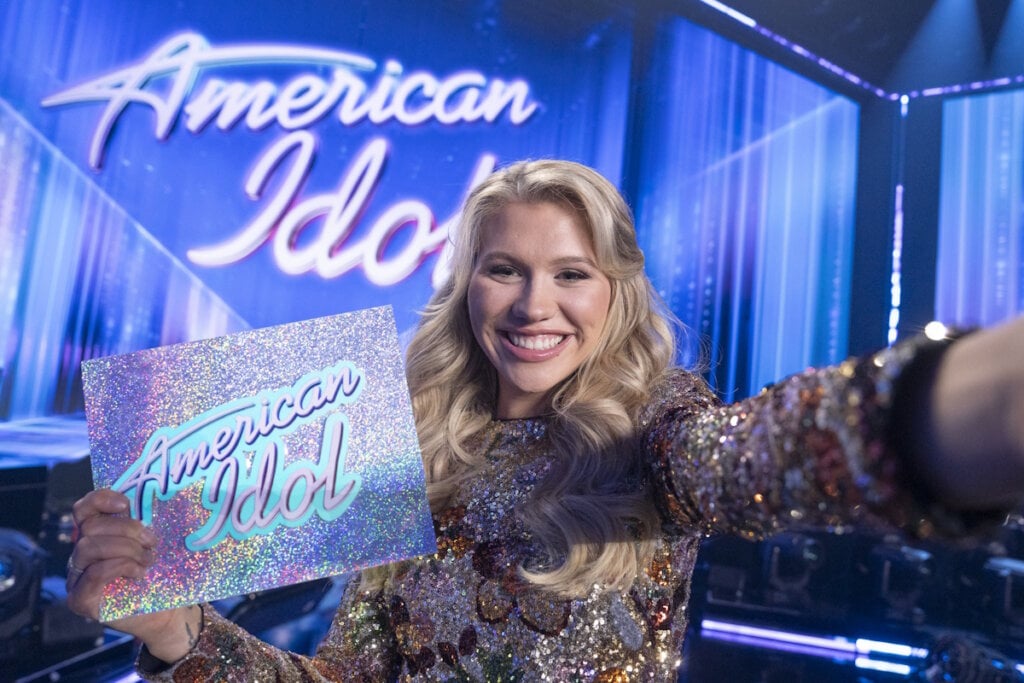
Hannah Harper was officially crowned the winner of American Idol Season 9 (Season 24 overall) on Monday night, marking a milestone moment as she became the first female country artist to win the show since Carrie Underwood in 2004.
Moments after her crowning moment, she spoke with Entertainment Tonight about making history, following in Underwood’s footsteps, and winning the show, which she admitted was a “challenge.” .
Harper is the first female country artist since Carrie Underwood to win the show, and she didn’t learn that news until the night she won.
Hannah Harper; Photo by Disney/Eric McCandless
“That blows my mind,” she admitted.
After she won American Idol, Harper had the chance to speak with Underwood for “five seconds” and in that moment, she revealed what she told her:
“She was more so like, ‘I know life with babies and let me know if you need anything. I’ll give you all the tips and tricks.” I was like, girl, I need all of it. Give me all the help.’
Of the entire process, Harper admitted her time on the show and ultimately winning has been “overwhelming” but in the best way.
“I wept. It’s all overwhelming. I don’t think it’s hit yet,” she said.
Feeling a sense of “gratitude,” Harper went on to share that this journey didn’t take just her, it was everyone who supported her along the way.
“I mean, I didn’t get here myself. It was all the voters, all the people out there who believed in me. It was insane. It’s all overwhelming, but I’m so appreciative and I just can’t believe that … I mean, God opened the door and I just kept running and we’re still here and it’s nuts.”
Admitting she has “some big shoes to fill,” Harper said, “I’ve got to get to work.”
Hannah Harper; Photo by Disney/Eric McCandless
As for her plans after the show, the Missouri native plans to take some time off to catch her breath, and then it will be time to get busy.
“Rest for sure. I’m going to take about two weeks to rest and then record and write some more music because everybody’s letting me know that I have a voice to be heard and I have a lot to say. So I’m excited about that.”
Harper also teased plans to hit the road and told fans tour dates are “coming soon.”
If you just picked up a loaf of bread from the grocery store, you’re going to want to read this to make sure you properly store it so it’s not moldy or stale.
Mashed – Fast Food, Celebrity Chefs, Grocery, Reviews
Ryan Lochte is jumping into a sea of change.
Over a year after his wife Kayla Reid filed for divorce following seven years of marriage, the 12-time Olympic medalist announced a pivot in career,… E! Online (US) – Top Stories
The 2026 Cannes Film Festival is ready for its close-up.
The prestigious celebration of cinema kicked off May 12, with celebrities from across the globe gathering in Cannes, France, for the… E! Online (US) – Top Stories
Before he became a hero for an unlikely World Cup team that knocked out a historic powerhouse, Esmir Bajraktarević was a kid from a small Midwestern town. Bajraktarević, who picked up the nickname “Milwaukee Messi” along his journey, etched his name in lore back in March for Bosnia and Herzegovina by eliminating Italy from contention for this summer’s tournament. Bajraktarević may not have grown up in Bosnia and Herzegovina, but the 21-year-old was raised eating borek (a savory, flaky pastry filled with cheese, spinach or meat) and cevapi (sausages made of minced meat). He was brought up understanding the struggles of his parents who escaped a war-torn country to settle in Appleton, Wisconsin, which has a population of 75,000. He spoke Bosnian and listened to Bosnian music at home, and loved to play soccer in the backyard with his brother. They practiced penalty kicks every day, usually imagining German legend Manuel Neuer in goal. Bajraktarevic dreamed of scoring in the World Cup. It’s why, as he stepped up to take up the decisive penalty against the Azzurri on a chilly night in the Bosnian town of Zenica and a World Cup spot on the line — with one of his childhood idols in Edin Dzeko standing mere yards behind him — Bajraktarević was up for the moment. “Here it is,” Bajraktarević told himself, “I can win it.” And so he drilled a left-footed shot under the diving Italian captain and Manchester City goalkeeper Gianluigi Donnarumma. As the ball hit the bottom left corner of the net, the PSV Eindhoven winger ran toward supporters in the stands, tore off his shirt and held it up proudly in front of a roaring crowd. “It’s one of the best feelings I’ve ever had in my life,” Bajraktarević told me about the moment, before joking that he knows there’s a video clip somewhere of him crying. “It was like a dream come true. It sounds [cheesy], but that’s the only way I can explain it.” Bajraktarević’s penalty kick meant Italy would miss a third straight World Cup, and it placed Bosnia and Herzegovina in a winnable Group B alongside co-hosts Canada, as well as Qatar and Switzerland. This summer, Bajraktarević will return home to the United States to play in a World Cup in front of family and friends. He played for the U.S. youth national teams and made his senior team debut in January 2024 under Gregg Berhalter. Later that year, however, he made the difficult decision to switch affiliations and represent Bosnia and Herzegovina instead. U.S. Soccer tried to keep him, but in the end, the tug of his heritage was too strong. “This was something that I was dreaming about since I was a kid, representing your country at the highest level,” Bajraktarević added. “The opportunity was there, and I just chose to go. I didn’t compare the two [national teams]. It was just, Bosnia called, and it was really special for me.” ‘Esmir Is Really Effing Good’ Bajraktarević grew up playing and watching a lot of soccer and with his brother, Osman. Their dad, Elmir, might have had a chance to play professionally had it not been for the Bosnian War from 1992 to 1995. “It’s really all I knew since I was a baby,” Bajraktarević said. He never rooted for a specific team, he said, but his favorite players were Cristiano Ronaldo and Dzeko, the Bosnian veteran who has taken the youngster under his wing since joining the national team. “It’s unreal,” Bajraktarević said, smiling while talking about the footballing icon. “I don’t even have words to describe it. Now he’s like one of my friends, which is crazy.” Bajraktarević’s youth soccer career started 100 miles south of Appleton in Milwaukee, and in Chicago, before he was discovered by New England Revolution brass. When he was 16, he was recruited to play for the MLS club’s academy team and moved from Wisconsin to Massachusetts. Leaving home was rough at first, and Bajraktarević cried a lot. His mom used to send care packages with bananica, a chocolate-covered banana candy that’s popular in Southeastern Europe, which reminded him of home. Eventually, he made friends, got used to a routine and started showing his stuff on the field. His rise through the Revs’ system was quick. On his first day with the academy team, the teenager turned heads, forcing then-technical director Curt Onalfo to say, “We’ve got to get him with the second team.” So he signed a contract with the second team (which plays in MLS Next Pro), and within a year, Onalfo said they ripped it up and signed him to the first team (which plays in MLS). Bajraktarević eventually became the first player from the Revolution’s academy residency program to ascend to the first-team roster. Onalfo, now the Revs sporting director, said it wasn’t hard to know that Bajraktarević was ready. “If you were to come and watch our second team play, you would be like, ‘Oh wow, Esmir is really effing good,’” Onalfo told me. “He’s got exceptional technique. A mastery of the ball that is better than most people. So that, in itself, gives you a really good chance because technically, you’re more advanced than many of the players.” Bruce Arena, the former U.S. men’s national team coach who coached Bajraktarević while with the Revolution, remembers having a similar gut feeling. “He caught our attention by the quality that he demonstrated,” Arena told me. “He’s technically good, good at passing the ball, he can take players on and shoot well from distance. … I think there’s a lot ahead for him.” Origin Of A Unique Nickname Bajraktarević developed and improved over the course of five years within the Revs’ system. In fact, he was so impactful that somewhere along the way, teammates started calling him the “Milwaukee Messi.” The nickname became popular, mostly in the media, and was referenced when he made the critical penalty against Italy. “I mean, [Messi] is one of the greatest of all time,” Bajraktarević said with a chuckle. He’ll never forget the one time he shared a field with World Cup-winning Argentina superstar. On Oct. 19, 2024, the Revs visited Messi and Inter Miami. Coming on as a second-half sub, Messi promptly scored a hat trick. “He walked by me, and I was looking at him,” Bajraktarević recalled. “It was surreal.” But Bajraktarević was just fine making a name for himself. He made 45 appearances in MLS, including 28 starts with three goals and three assists across the 2022-24 seasons. “I was playing with men at 16, 17 years old, so it was really a good opportunity for me just to mature and get better,” he said. Bajraktarević eventually transferred to PSV in Jan. 2025 and has helped the Dutch club win two Eredivisie championships. He’s made 38 appearances and scored seven goals and added five assists across all competitions. And ever since he nailed that fearless penalty against Italy, his name has circulated around the transfer rumor mill. The latest gossip is that Premier League club Everton is interested, and it’s possible that if Bajraktarević has an impressive summer at his first World Cup, more big European clubs will come knocking. Bajraktarević earned his first cap for Bosnia on Sept. 7, 2024, recording an assist on a Dzeko goal during a UEFA Nations League match against the Netherlands — ironically at Philips Stadium in Eindhoven where he plays regularly for PSV. He was subbed on in the 68th minute and helped set up the goal in the 73rd. “I was warming up, and they waved me over, and I was like, [Oh my god], you know what I mean?” Bajraktarević said. “Then I just remembered the first time I got the ball, I didn’t want to just pass it back or play it safe. I knew I wanted to take a risk because we were losing the game. I went in and wanted to make a difference.” Choosing Bosnia Over The USA? ‘Living His Dream’ Bajraktarević has been making a difference for Bosnia and Herzegovina ever since — he’s made 14 international appearances and was confirmed as part of the World Cup squad on May 11 — and is excited about what kinds of things his team might accomplish this summer. “He’s one of those players that has the ability to change the game because of that exceptional technical quality that he has,” Onalfo said. “He’s a dynamic, fun player to watch because he’s got great skills, and he can make great little passes, and he can also beat you one-v-one, and he’s very good in front of the goal.” It’s been close to two years now, but the choice to officially change national team affiliations from the U.S. to Bosnia and Herzegovina was tough for Bajraktarević. It wasn’t a total shock to those who know him well, though. “I wasn’t surprised,” Onalfo said. “I think he felt like he had maybe more of a real clear path playing for that team, and he chose it. It’s dear to his heart. He was born here, but he’s very European.” Neither Onalfo nor Arena could confidently say whether they thought Bajraktarević would have had a shot at making the USA’s 26-man World Cup roster. But it doesn’t matter. Bajraktarević became an immediate Bosnian star and is viewed as the future of the program. Soon, he’ll have a chance to make more history. Bosnia and Herzegovina’s opening match is against Canada in Toronto on June 12. Bajraktarević’s family is planning to be there. The team then arrives in the U.S. for the match against Switzerland on June 18 in Los Angeles, followed by a trip to Seattle on June 24 for the group stage closer against Qatar. “He’s an American kid with Bosnian parents, and he basically helped bring his team to a World Cup that’s happening in the United States,” Onalfo said. “I mean, it’s pretty awesome. I’m really proud and happy for him. “He’s living his dream.”Latest Sports News from FOX Sports
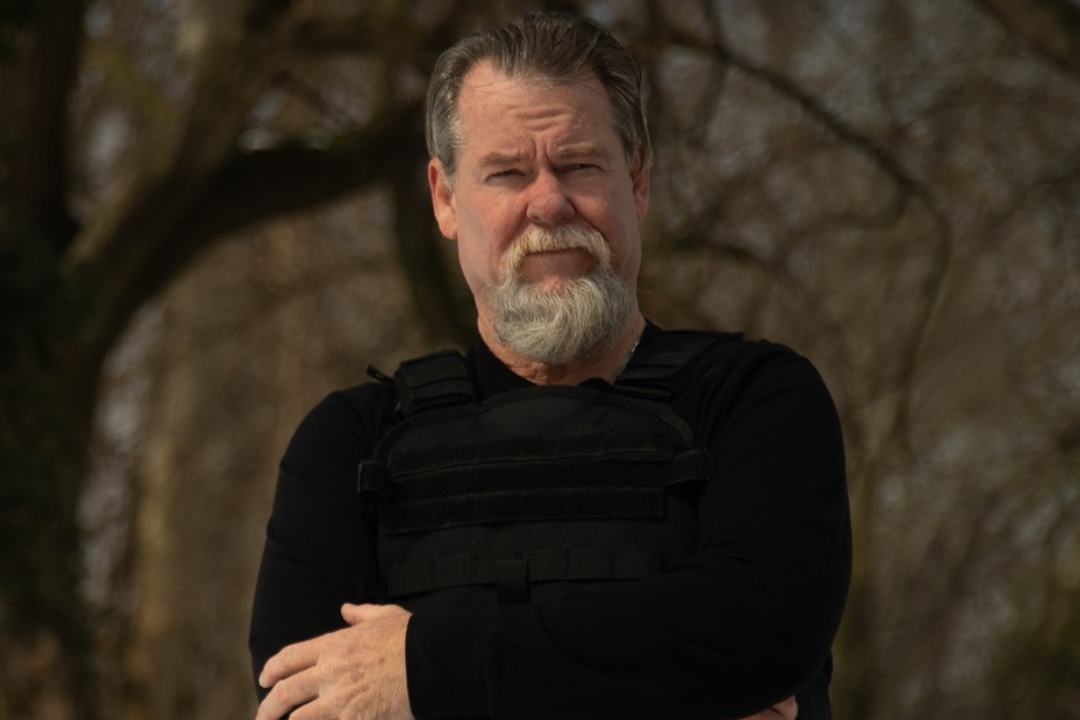
Flash Shelton is hoping A&E’s new series ‘Squatters’ changes how Americans think about a growing issue affecting homeowners nationwide. Continue reading…The Boot – Country Music News, Music Videos and Songs










 I recently visited a Burke Williams spa for the first time and it did not disappoint. Apart from a much-needed deep tissue massage and bouncing between the steam room, sauna, and hot tub, I was…






 Ryan Lochte is jumping into a sea of change.
 The 2026 Cannes Film Festival is ready for its close-up.