Dairy Queen has been around for decades and decades, bringing joy to countless generations. Now, relive the past with this throwback sundae.

Food Republic – Restaurants, Reviews, Recipes, Cooking Tips









Dairy Queen has been around for decades and decades, bringing joy to countless generations. Now, relive the past with this throwback sundae.
Food Republic – Restaurants, Reviews, Recipes, Cooking Tips

Bunnie Xo is giving a tour of the sprawling Tennessee home she kept after divorcing Jelly Roll, complete with an enormous closet, shoe room and glam space. Continue reading…The Boot – Country Music News, Music Videos and Songs

Most of the time, we want to run to Trader Joe’s to pick up the latest and greatest product, but this particular food item won’t really be missed.

Mashed – Fast Food, Celebrity Chefs, Grocery, Reviews

Brad Paisley explains why Taylor Swift and Travis Kelce’s wedding wasn’t as over-the-top as it seemed. Continue reading…The Boot – Country Music News, Music Videos and Songs

The third gastrointestinal illness in less than two months has hit the National Geographic Sea Bird cruise ship, infecting 18 of 88 people aboard the five-day voyage from Sitka that ended in Juneau on Wednesday, according to the U.S. Centers for Disease Control and Prevention.
The 152-foot-long ship operated by Lindblad Expeditions also had 12 of 90 people infected during a voyage May 26-31 from Juneau to Sitka, and 20 of 95 people on a June 25-30 trip between Juneau and Ketchikan.
The cause of the most recent outbreak is unknown, with abdominal cramps and vomiting reported as the main symptoms, although norovirus is the listed cause of the first two outbreaks.
During the Sea Bird’s latest trip, it made a stop in Haines on July 13. This is the second time the company has visited the community during a trip in which more than 20% of the people on board became ill. It is next scheduled to be in Haines on July 27.
There have been eight outbreaks on cruise ships making stops in U.S. ports in 2026, with the Sea Bird the only vessel with more than one, according to the CDC’s Vessel Sanitation Program website.
Lindblad Expeditions has not responded to requests from the Chilkat Valley News or the Juneau Independent for comment about the previous outbreaks. A message sent by the Independent to the company’s media relations office Saturday morning did not receive an immediate response.
The most recent outbreak infected 18 of 62 passengers and none of the 26 crew members, according to the CDC. The agency reports Lindblad Expeditions and the ship’s crew performed standard procedures including increased cleaning and disinfection, isolating ill passengers, and consulting with the CDC.
A fourth viral outbreak on a cruise ship stopping in Juneau was reported at the beginning of July, when norovirus infected 125 of 4,176 people aboard the Ruby Princess during a round-trip voyage between San Francisco and Alaska from June 12 to July 2 that included an overnight stop June 17 in Juneau.
This story was originally published by the Juneau Independent. Local reporting was added by Rashah McChesney of the Chilkat Valley News.
The post Third gastrointestinal illness outbreak hits National Geographic Sea Bird appeared first on Chilkat Valley News.
Final whistle. After six weeks, that’s a wrap on our World Cup coverage and live analysis — tracking not the goals and games, but the power plays, political battles and geopolitical stakes shaping the tournament. Thanks for following along.
Politics
Saudi Arabia’s 2034 World Cup may not be a 2034 World Cup at all. The tournament is unlikely to be played in the summer — and the calendar math could push it into 2035.
FIFA has, of course, switched the World Cup to winter before to avoid playing games in intense summer heat, with Qatar’s 2022 tournament the first to ever break from seasonal tradition. But that Gulf precedent won’t carry to Saudi neatly. In 2034, Ramadan is slated to fall around Nov. 12 through Dec. 12 — squarely in the late-year window that Qatar used.
In Muslim countries, Ramadan does far more than shuffle mealtimes and deepen prayer. The rhythm of public life bends completely, with social, civic and work schedules pushed later into a day defined by the night. A Saudi World Cup during Ramadan would solve one problem only by creating another.
Alternative slots in 2034 are not much more forgiving. January and February would run into Salt Lake City’s Winter Olympics, splitting audience attention, sponsor dollars and media oxygen. Then around early March comes Hajj, a massive logistical undertaking that brings roughly 2 million pilgrims from across the world to Saudi for a highly coordinated week of rituals. Unlike a typical event on the global calendar, Hajj cannot simply be moved — its timing is set by the Islamic lunar calendar. Anything after that starts to nudge the tournament out of the cooler season that made summer untenable in the first place.
All of this primes an option that otherwise sounds absurd: early 2035. FIFA has not indicated that it is considering such a move, but the calendar constraints make it a scenario that cannot be easily dismissed.
The cleanest stretch looks to be between the Christmas-New Year’s time frame, which FIFA is sure to avoid, and Hajj, expected that year in mid-February. That leaves a plausible, though still narrow, six to seven weeks to stage a tournament across Saudi’s 15 proposed stadiums, possibly with 64 teams. That would be a tighter squeeze than this year’s 48 teams at 16 stadiums over five and some weeks.
The scheduling bind sharpens a test of hierarchy in the global calendar: which dates become constraints and which become variables.
The likelihood of another winter World Cup is already reviving 2022 resentment, especially in Europe, where it will interrupt club seasons. And that prospect feeds into a larger unease over Saudi as host, from human rights concerns that hang over the kingdom to the unusual circumstances surrounding its selection.
FIFA has spent years trying to present Qatar, and now Saudi Arabia, as proof that world football’s governing body is becoming less parochial and more global. That framing also serves a commercial purpose, courting football audiences and markets beyond FIFA’s traditional centers of power. A World Cup competing with the host country’s religious observances would put all of that under obvious strain. Even Muslims with no affection for the Saudi state, including those well beyond the Gulf, are likely to view any FIFA conflict with Ramadan or Hajj as an overstep.
Because the Islamic calendar is lunar, Ramadan and Hajj drift roughly ten days earlier each year, constantly shifting their collision points with global sports seasons. Hajj is a Saudi-specific factor, but Ramadan reaches across the Muslim world, a growing presence among host countries: Qatar in 2022, Morocco as part of 2030, Saudi Arabia in 2034. If that sequence hints at FIFA’s future, these calendar conflicts foreshadow a recurring tension.
This year’s North American tournament has also revived a broader question: whether the summer months can remain the World Cup’s permanent home as temperatures rise. That could eventually force countries outside the Gulf to begin reconsidering their own seasonal blueprint, making Saudi 2034 less an anomaly and more a preview of what’s to come.
Last October, FIFA President Gianni Infantino said that the soccer world should be more open-minded about tournament timing — suggesting that a game spread across climates and continents cannot expect to remain tied to the traditional June-July template.
Politics
Good things come to those who wait. Perhaps that’s why Culver’s fans have sometimes had to go entire years without seeing this award-winning burger on the menu.
Mashed – Fast Food, Celebrity Chefs, Grocery, Reviews
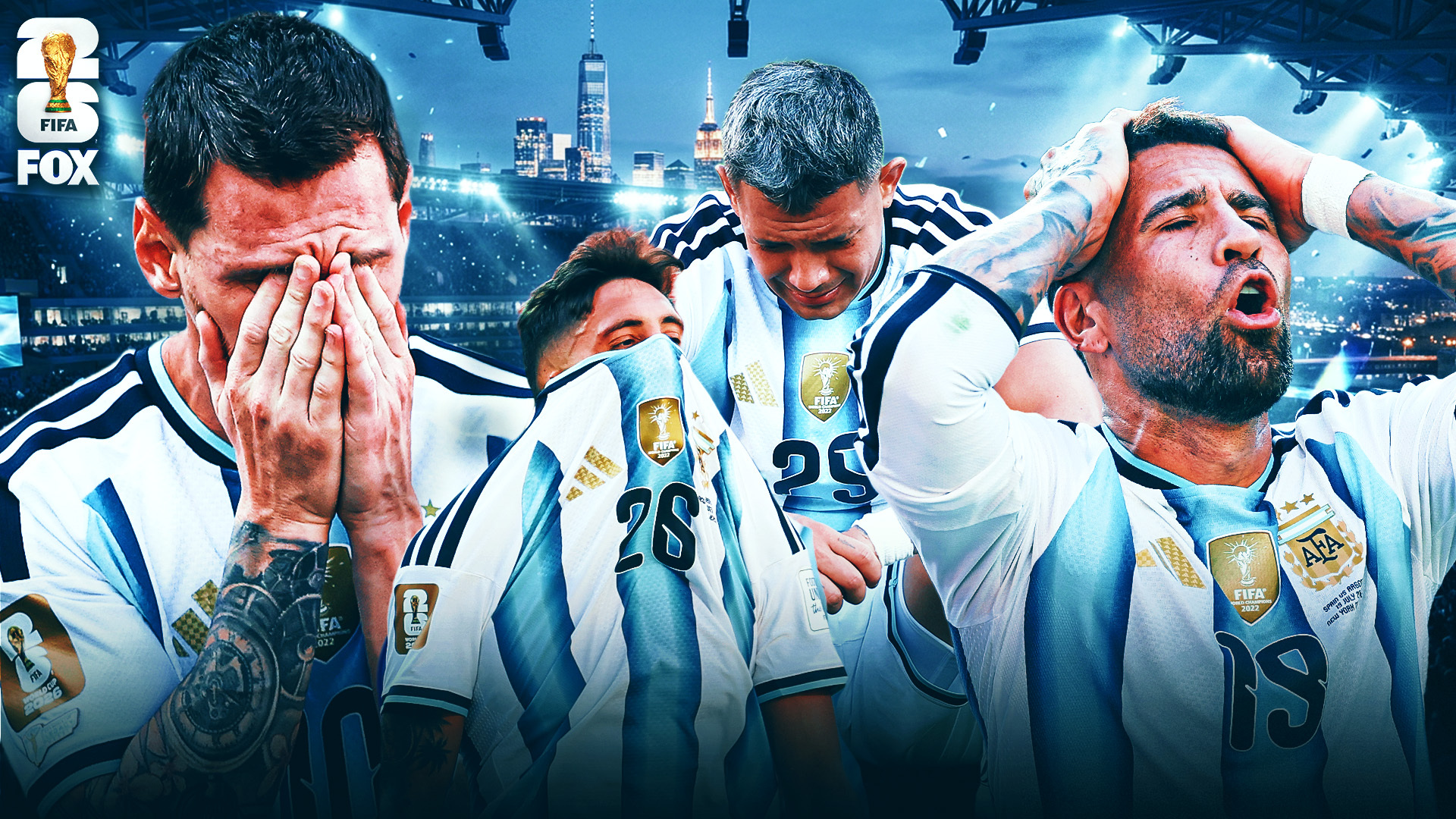
NEW YORK NEW JERSEY STADIUM – After what seemed like every player from Spain came over to shake his hand, Lionel Messi sat alone on the pitch. Argentina’s superstar took off his cleats and shinguards and plopped his legs out in front of him, leaning back on his arms. As FIFA volunteers assembled the stage for the trophy presentation, one of them waved in his direction. Messi looked past him, instead scanning the stands for his family. Spain had just defeated defending champion Argentina 1-0 to win its second-ever World Cup behind a goal from Ferran Torres in the second half of extra time. Messi and his La Albiceleste had arrived in pursuit of history, hoping to become the first nation since Pelé’s Brazil to successfully win a second consecutive World Cup title. No such luck. Argentina finished with zero shots on goal. Spain had 12 and one went in. “We’re sad,” Argentine manager Lionel Scaloni said in his press conference after the match. “We feel extremely grateful to all our fans, all those people who just needed that energy that we were lacking. We managed to go all the way to the end when the match was so open, and it just couldn’t be. In the end, they deserved the victory. That’s reality. We need to accept it. “But these are the moments to bounce back stronger. We need to reset and start again.” Argentina’s reign is officially over. It entered this summer on an unprecedented high as the two-time defending Copa América champion, having won the tournament in 2021 and 2024 with the 2022 World Cup sandwiched in between. It was also Argentina’s third World Cup final appearance in the last four editions. For Messi, there was an added layer of symbolism as he spent much of his life in Spain, where he became a global icon playing for Barcelona. So, will this be the last time the soccer world sees Messi on its biggest stage? Who knows. Regardless of what he decides, the 39-year-old defied age over the past 39 days. He opened the tournament with a hat trick in Argentina’s 3-0 victory over Algeria, scored a stunning equalizer in the round of 16 against Egypt and delivered two defense-splitting assists in the semifinal against England. He finished with eight goals and four assists, narrowly missing out on the Golden Boot after France’s Kylian Mbappé scored twice in Saturday’s third-place match to finish with 10. Sunday was different. With Spain controlling possession for long stretches, Argentina was chasing rather than dictating and Messi didn’t have opportunities to influence things the way he had throughout the tournament. An already exhausted La Albiceleste was forced to play with 10 men for more than 30 minutes after Enzo Fernández was shown a red card just before extra time. Goalkeeper Emiliano Martínez, the 2022 Golden Glove winner, had to make a World Cup final-record 11 saves with a broken finger just to keep La Roja at bay. “I do have to be thankful for this group because they were warriors and that is the truth,” Scaloni said. After the game, Scaloni was asked repeatedly about Messi’s future. “It’s crystal clear to me that he will play up until he decides not to,” said Scaloni, who had not yet spoken with Messi before addressing the media. “I hope everyone is proud of what he’s achieved because he’s the best football player ever to step foot on a pitch. I have no doubts about this. What he did this World Cup is incredible.” As the trophy presentation stage came together, Messi rose from the turf and led his teammates to the left side of the pitch where Spain’s players were celebrating. He didn’t appear to say a word. Instead, he stood quietly, taking it all in. His hands rested behind his back, the captain’s armband still wrapped tightly around his left biceps. Every so often, a photographer stepped in front of him, capturing another image that would soon be seen around the world. There was criticism, mostly throughout the knockout stage, that FIFA wanted Argentina to keep advancing. In reality, no matter what Egypt or England fans might say, Argentina was a resilient team. Time and again, they’d find themselves trailing only to respond with remarkable late comebacks. They embraced the suffering and the chaos and just knew they’d find a way to win. In the end, only Spain – the most complete squad in the entire 48-team field who only conceded one goal the entire tournament – could stop them. La Roja are now unbeaten in 38 consecutive matches. “It really hurt in our soul not being able to take the trophy with us,” Scaloni said. “But we feel so proud of having competed like this. We could have been in better shape towards the end. But still, even so, we were very close to competing and making it and we’re so proud of our players. And that’s all we can ask for is Argentina players to give it their all until the end and that’s what they did.” Scaloni, whose contract as manager expires in December, said he “cried my heart out in the locker room” and grew visibly emotional again toward the end of his press conference while talking about the success he’s experienced in this job, a post he’s held since 2018. “I never in my life would have thought, bear with me,” Scaloni said, pausing to compose himself. “I never could have imagined that we would be in this place. In order to continue, you need a great deal of things, especially resetting your mind, rebooting, creating a group like this again. “That is very difficult. It’s really painful.” Messi took a deep breath and guided his team through a tunnel of Spain players onto the presentation stage where FIFA president Gianni Infantino and President Donald Trump placed silver medals around their necks. Argentina then walked past the World Cup trophy that they hoisted four years ago, across the stage and over to the south end of the stadium where thousands of devoted supporters draped in blue and white were still chanting and singing. The video board zoomed in on Messi’s face, tears welled in his eyes. After a while, he led the team off the field and through the tunnel. Perhaps for the last time.Latest Sports News from FOX Sports
Before the final whistle blows on the 2026 World Cup, a familiar tension is already bubbling ahead of its next two installments.
Morocco, which will co-host the 2030 World Cup alongside Spain and Portugal, criminalizes same-sex sexual activity. And in Saudi Arabia, host of the 2034 tournament, homosexuality is understood to be illegal under Islamic law.
Both countries submitted plans to address the potential human rights risks associated with hosting the tournament as part of their bids, but human rights advocates say the nations must guarantee that queer fans are not prosecuted under those laws. And they say FIFA, which has an ostensible commitment to fighting discrimination in football, should play a role in securing that.
“It doesn’t mean that FIFA is the world police and somehow has the power to tell countries what to do with their laws,” said Steve Cockburn, Amnesty International’s head of labor rights and sports. “But it can certainly engage and use its leverage to put in place measures that would be protective of that.”
The debate over what role FIFA should play in promoting human rights, and how far it should go to do so, is familiar to most fans of international soccer.
FIFA drew criticism from international spectators when it announced ahead of the 2022 World Cup in Qatar that it would deliver a yellow card to team captains who donned the multi-colored “OneLove armband,” while the Qatari Emir said that all would be welcome so long as they respect the country’s culture.
Critics also drew attention to Russian laws prohibiting so-called gay propaganda ahead of the 2018 contest.
Morocco’s human rights strategy document notes that its independent human rights committee and the Moroccan Football Federation would “encourage both the parliament and the government to ratify key international conventions,” broadly referring to widely understood human rights standards, though the document did not explicitly mention discrimination on the basis of sexual orientation.
Saudi Arabia’s proposal similarly makes no explicit mention of addressing discrimination on the basis of sexual orientation, but asserts that the federation would “continuously verify that our legislations and practices align with our commitments to various international agreements pertaining to anti-discrimination and implement any required enhancements.” The nation’s tourism ministry says on its website that it welcomes all people, but it asks visitors to “respect our culture and traditions and follow our laws as they would when visiting any other country in the world.”
“Like other governments around the world, visitors are not required to disclose their personal information and we will respect visitors’ right to privacy,” its tourism FAQs site continues.
The FIFA Congress, made up of its member federations, approved both uncontested bids. FIFA and the Saudi and Moroccan embassies in Washington, D.C., did not respond to requests for comment.
Cockburn, whose organization authored a 2022 report slamming both the Moroccan and Saudi human rights strategies, said FIFA must go to greater lengths to guarantee that queer fans are protected while attending the games. That’s on top of the slew of concerns directed specifically at Saudi Arabia over workers’ rights and a lack of a minimum wage, contained in its report.
Countries regularly guarantee bits of policy to FIFA during negotiations to host World Cups, including special tax arrangements and altered visa protocols.
“There needs to be a bit more of an upfront, honest, grown up conversation about this, so that everyone’s clear, that it’s not fudged and that fans are not left guessing about what the situation is and how to look after themselves,” Cockburn said.
The arrival of the world’s most watched sporting event in those two nations can contribute to “a fair degree of, sort of, cynicism or general, sort of, distrust” among some LGBT-rights advocacy groups that FIFA sometimes doesn’t take this issue on in a systematic way that we would all like to see, said executive director of FIFA’s anti-discrimination partner Fare network Piara Powar.
“They just seem very kind of cautious around it and sadly it’s just not really taking us anywhere,” Jon Holmes, spokesperson for the group Football v Homophobia, said of FIFA.
If history is an indication, however, it’s possible that such concerns over human rights at the World Cup could fade once the international drama of the tournament begins. Such was the case in the U.S., where concerns over potential ICE raids, overwhelmed logistical systems and more — which did cause some to boycott the games — largely faded away amid a wildly successful tournament.
“We all kind of get lost in the event, and the narratives, and the storylines, and the athletes, and the beautiful game, and the cultures all coming together,” said Ryan Turcott, an associate professor at Gonzaga University who studies the politics of international sports. “But we lose track of the impact and the legacy when it comes to improving human rights.”
CORRECTION: A previous version of this report misspelled Ryan Turcott’s name.Politics