Mindy Kaling doesn’t see weight loss in the same light as her younger self. Instead of being motivated by vanity, she says this is what keeps her going.

Health Digest – Health News, Wellness, Expert Insights









Mindy Kaling doesn’t see weight loss in the same light as her younger self. Instead of being motivated by vanity, she says this is what keeps her going.
Health Digest – Health News, Wellness, Expert Insights

Fast-food chains were different decades ago, changing with the times and customer demand. Many fast-food joints once had all-you-can-eat buffets.

Mashed – Fast Food, Celebrity Chefs, Grocery, Reviews

Big box warehouse retailers are all the rage right now. Hungry shoppers can easily grab a snack to help them get through their grocery list in store.

Mashed – Fast Food, Celebrity Chefs, Grocery, Reviews

Whereas people once had it good, with refrigerators that lasted up to 50 years, today’s versions typically don’t hold up for anywhere near that long.

Food Republic – Restaurants, Reviews, Recipes, Cooking Tips

Guy Fieri has made a name for himself in the food industry, branching out into products like wine, but this California community has pushed back against him.

Mashed – Fast Food, Celebrity Chefs, Grocery, Reviews

House Speaker Bryce Edgmon, I-Dillingham, stands to applaud the House pages, staff and clerks at the end of the 34th Legislative session on May 20, 2026. (Corinne Smith/Alaska Beacon)
An Alaska Legislature defined by its conflicts with Gov. Mike Dunleavy came to an end at 9:43 p.m. Wednesday night as legislators officially adjourned their second regular session.
Lawmakers will return to work Thursday as they open a special session focused on the planned trans-Alaska natural gas pipeline. As with other topics, the Legislature and the governor appear far apart on the issue.
“I would say farewell, except I get to see you at 10 a.m.,” said Speaker of the House Bryce Edgmon, I-Dillingham, shortly before final adjournment.
Before adjourning, the 34th Alaska State Legislature passed a large, multi-part crime bill that raises the state’s age of consent and criminalizes the act of using AI to create child sexual abuse material. Lawmakers voted to ban foam food containers, named the giant cabbage the state vegetable, approved a fast lane through airport security and passed dozens of small bills that were priorities for local communities and individuals across Alaska.
Bills that fail to pass before adjournment die and must be reintroduced at the start of the next Legislature. Among this year’s casualties were a proposal to offer paid leave for new parents, a bill to stabilize public school budgets, a right-to-repair bill, and all of the proposed constitutional amendments.
This fall is an election year and many incumbents are retiring, which means that when lawmakers return next year, the House and Senate will include many new faces. They also will work with a new governor: Because of term limits, Dunleavy may not run for re-election.
The Alaska Legislature is the only one in the United States controlled by multipartisan coalitions in both the House and Senate.
“The Senate majority and the House majority have worked extremely well together. We’ve been on the same page through this entire two years,” said Senate President Gary Stevens, R-Kodiak.

In their two-year term, the 34th Legislature passed 111 bills, on par with the 33rd Legislature, which passed 101 bills, and the 32nd Legislature, which passed 112.
Of the 111 bills passed by the 34th Legislature, Dunleavy has vetoed 12, including one he vetoed less than three hours before lawmakers adjourned on Wednesday.
Dunleavy is vetoing bills at a higher rate than any governor since statehood. Though other governors have issued more vetoes, Dunleavy’s represent a higher proportion of the number of bills passed through the Capitol.
At the start of the 34th Legislature, the House and Senate majority coalitions set education funding as their top priority.
Last year, they voted to permanently increase the core of the state’s public school funding formula, putting themselves at odds with the governor and setting up a historic set of veto override votes with the help of some Republicans from the House and Senate minority caucuses.
This year, the majorities passed a significantly less ambitious package of education policy reforms but also approved $144 million in one-time bonus payments to public schools and millions more in funding for maintenance and construction projects across the state. Some of the bonus payments are contingent on oil prices remaining high through July 1.

They were less successful with other stated priorities, including pension legislation. Alaska has been without a public pension program since 2006, and the 34th Legislature was the first since then to pass a bill creating a new pension plan.
Dunleavy vetoed that bill on Monday and lawmakers failed to override it on Tuesday.
The governor’s veto came after legislators failed to reach agreement with him on one of their other stated priorities, energy.
Dunleavy has urged lawmakers to cut the state’s petroleum property tax in order to incentivize the proposed trans-Alaska natural gas pipeline. Building the pipeline, the governor has said, is critical for lowering energy prices and improving the state’s economy.
Many legislators are skeptical of those claims.
This week, Dunleavy and House Majority Leader Chuck Kopp, R-Anchorage, had negotiated a deal in which the governor would allow the pension bill to become law if legislators approved a gas pipeline bill that aligned with his vision.
When the pipeline bill failed to materialize on Monday, the governor vetoed the pension bill.
The Senate Majority also prioritized elections reform and passed a bill on the topic earlier this year, but Dunleavy vetoed it.
Legislators fell two votes short of an override because two Republican supporters flip-flopped and voted to sustain the governor’s choice. They had previously voted in favor of the bill.
“We passed the bills, and that’s all we can really get. It’s out of our hands at that point,” said Senate Majority Leader Bill Wielechowski, D-Anchorage.
The House Majority’s fourth priority was balancing the state’s budget, and while lawmakers successfully did so this year, the budget was balanced on the back of high oil prices caused by the Iran war, not because of a particular legislative action.
“In the beginning, we were worried about just keeping the (Permanent Fund dividend) alive and getting a balanced budget,” said Sen. Bert Stedman, R-Sitka, “and talking about how long our (Constitutional Budget Reserve) is going to last. Then, within a period of a couple of months, things totally changed, and the revenue forecast jumped up.”
When oil prices recede, legislators expect the state will again face major budget deficits.
“Next year will be a very, very difficult session,” Wielechowski said.
In the meantime, the state treasury is reaping wartime rewards, and lawmakers were able to balance the budget without spending from savings.
They passed a multibillion-dollar state spending plan spread across four budget bills: $2.5 billion in construction and renovation projects, $13.9 billion for services, $450 million in retroactive budget changes, and a $1,000 Permanent Fund dividend bolstered by a $200 one-time energy relief bonus payment.
“Folks, this is what we accomplished, and we accomplished it on time and under budget,” said Rep. Andy Josephson, D-Anchorage, as he presented the final version of the operating budget bill on the House floor.
Members of the Republican House minority criticized the adopted budget for not spending more wartime oil revenue on the dividend.
“My primary objection to this budget is that in FY26, the state is absolutely swimming in money,” said Rep. Will Stapp, R-Fairbanks.
“We should have waterfalled that extra money into the Permanent Fund dividend,” he said.
Both the operating budget and the capital budget are subject to the governor’s line-item veto powers. The governor can eliminate or reduce individual items, but he cannot add or increase them.
Kopp gave the majority coalition a “B” for its performance. Senate President Gary Stevens, R-Kodiak, thought the majority coalition there warranted an “A,” while Senate Minority Leader Mike Cronk, R-Tok, thought the Legislature overall merited a “B”.
The last day of the session saw several lawmakers offer their goodbyes, including some who had not previously announced their retirement.
“I am not planning on being back here for the 35th Alaska Legislature,” said Rep. Dan Saddler, R-Eagle River. Saddler has served for 12 nonconsecutive years in the House.

Rep. Andy Josephson, D-Anchorage, is retiring after 14 years in the House and received multiple rounds of applause. Rep. Louise Stutes, R-Kodiak, is leaving the House as well, but for a state Senate run rather than retirement.
Speaker of the House Bryce Edgmon, I-Dillingham, has not announced plans to leave the House, but he has been repeatedly named as a possible replacement for Sen. Lyman Hoffman, D-Bethel. Hoffman is retiring as the longest-serving state legislator in Alaska history.
Senate President Gary Stevens, R-Kodiak and the oldest member of the Legislature, is also retiring. The Legislature’s youngest member is also leaving — Rep. David Nelson, R-Anchorage, is getting married this summer.
After the final gavel fell, staff and legislators cheered and filed out of the chambers.
Within an hour, Saddler was leading a group of them in songs that echoed up and down the Capitol’s stairwell.
Corinne Smith contributed reporting from Juneau.

SUBSCRIBE: GET THE MORNING HEADLINES DELIVERED TO YOUR INBOX.
By James Brooks, Alaska Beacon
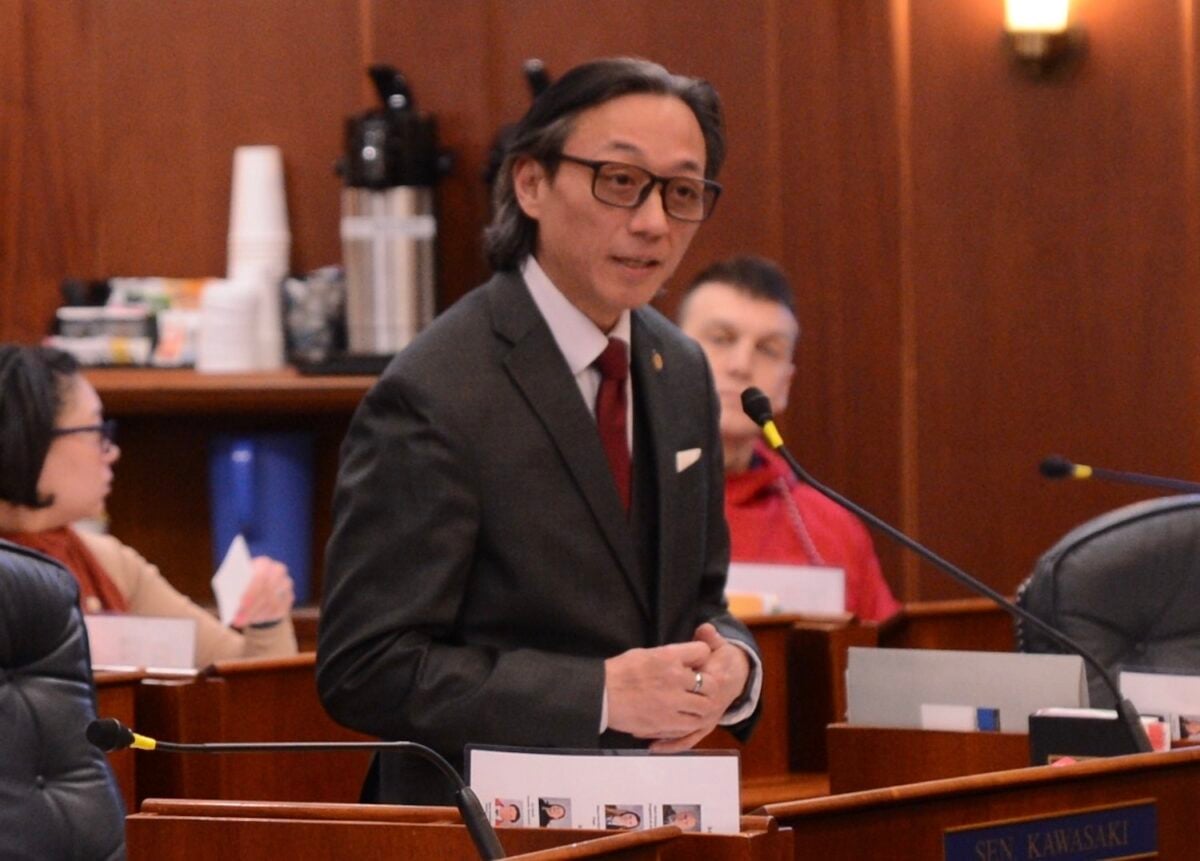
The Alaska Legislature has approved a state driver’s license data-sharing bill that would allow some travelers to speed through security at airports in Alaska.
On Wednesday, the Alaska Senate voted unanimously to approve Senate Bill 237, from Sen. Scott Kawasaki, D-Fairbanks. Because the House voted to pass the bill 40-0 on Tuesday, the Senate’s vote sends the bill to Gov. Mike Dunleavy for final approval or veto.
As originally drafted by Kawasaki, SB 237 would have only allowed the state Division of Motor Vehicles to share driver’s license information with “a nonprofit organization, governmental, or tribal entity.”
That would allow Alaskans to apply for a replacement Social Security card over the internet. Currently, someone who needs a replacement must visit an office in Juneau, Anchorage or Fairbanks in person.
Alaska is the only state that does not allow residents to get a replacement card online.
In the House, Rep. Steve St. Clair, R-Wasilla, proposed an amendment that would allow the state to share driver’s license data with “an entity participating in the Transportation Security Administration’s Registered Traveler Programs.”
That includes CLEAR, a for-profit company that offers fast-lane service at airport security checkpoints across the country.
“There’s actually a contract between CLEAR and the (Anchorage) airport right now, they just can’t do anything or share data until we pass legislation saying that they can,” St. Clair said.
House lawmakers approved that amendment unanimously.
At the urging of Rep. Andrew Gray, D-Anchorage, lawmakers also amended the bill with a section that will allow Alaskans to store digital copies of their driver’s licenses on their smartphones.
If a police officer performs a traffic stop, that digital copy would be valid ID.
That amendment was originally a separate bill, House Bill 180, from the Office of the Governor.
“For anyone who lives their life on their phone, this would be a wonderful convenience that the administration would like to offer,” Gray said.
That amendment passed the House by a 38-2 vote, and SB 237 proceeded toward a final vote in the Legislature without opposition.
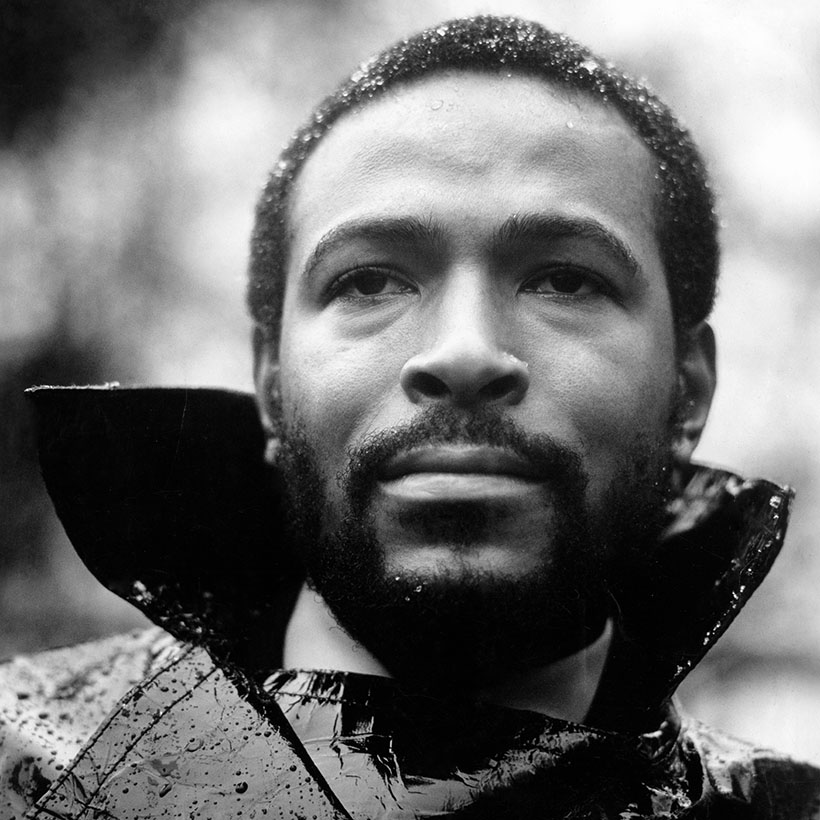
It is notable, to me, that when Berry Gordy first heard “What’s Going On” back in the late summer of 1970, he suggested that Marvin Gaye was going to ruin his career. That the artist was going down a path from which he wouldn’t be able to recover. Some of this was simply care. Gaye was Gordy’s brother-in-law, and Gaye’s career seemed to be on shaky ground. Another big, failed album release could do irreversible damage. The music business is a business, after all. There are interests that must be served outside of whatever personal investments an artist might have in the complicated nature of the world they’re in.
But there were young people, dying in a war. There were Black soldiers coming home wounded, and still being treated like second-class citizens. The time demanded some attempt at rich, historical archival, lest it be lost, or told from the mouths of people who were not touched by the weight of it in the same way.
Marvin’s defiance of a Black boss running a Black label is important, to me. It is what makes this a singular album of seeking. Seeking answers, not for the public, but for the self. The title track and its endless questioning feels rhetorical, but this is an album loaded with questions to which there can be no satisfying answers. At the end of “Mercy Mercy Me (The Ecology)” when Marvin brings a listener to the edge of the cliff, shows them the land and asks how much more abuse from man can she stand?, he sounds as lost as a listener might be. As lost as I am now, anxiously basking in the 50-degree days of my deep winter. I don’t know, and even in my not knowing, the questions refuse to vanish. Even as I throw my hands up and shout the same questions out into the air, they are blown back to me, with a responsibility to keep asking. I love this album for how Marvin’s many voices ask and ask but don’t resolve.

The way What’s Going On tugs at the hems of gospel while not losing any of its grief, its rage, its longing – the album feels to me now like it did when I first heard it. Like a small corner of a city. A corner that might feel like a corner I have known and loved. With towering churches, and concerned grandparents, and children playing with a balance of worry and carefree exuberance. Conversations held in the heat of a night around a card table after those kids go to bed. Where the talk gets a little realer, the songs get a little heavier. The album’s concept – a soldier, based on Marvin’s brother Frankie to be exact, returning home from war and sinking into a country’s many oppressions – makes for a tightly woven sequence, but the album’s atmosphere and geography has always far outpaced its concepts. It is an album that I knew I understood even before I understood what its central concerns were. I understood it by the way older people I love hummed along to it, or turned it up, or shook their heads solemnly when certain lines hung in the air.
I hear Black artists get asked, often, the question of who they make their art for. It’s a question I’ve always found boring, and it is certainly a question I don’t hear white artists get asked nearly as much. Some of this, I suspect, is because of the American obsession with Black people creating and existing as a type of duty to serve the machinery of the country. Or, of course, to act as the country’s moral compass. If you are here, and an ancestor of someone who endured capture and forced labor in the name of America’s evolution, America might still turn to you for answers. To make sense of its many ever-evolving messes. And even in an artist’s rejection of that, there is that question: if you are not making art for us to make sense of the world, then who is it for?
There has never been a concrete answer to that, for me. It’s something that changes from project to project, which is the case for every other artist I know. I cannot speak for Marvin Gaye, and he is not here to speak for himself. But when I listen to this album now, or when I listen to it any time, I am confronted with the reality of what Marvin was carrying within when he made it. The concurrent losses, and traumas, and confusions. He was holding all of that, on top of holding the instability of a country that didn’t make the same sense to him as it used to. If there’s anything to learn from this album all of these years later, it’s that Black artists are sometimes simply trying to save themselves, as best as they can, for a little while longer. People can take what they can from that process but, at the core, they are required to be grateful witnesses.
I am grateful to be a witness to Marvin, again and again. Each time, I unlock a new idea, a new mode. A new way of running into a constantly unchanging world, and still asking if it’s up for doing better.
Written in January 2021, a longer version of this essay can be found in the 50th-anniversary edition of Marvin Gaye’s What’s Going On. Hanif Abdurraqib is the author of They Can’t Kill Us Until They Kill Us and Go Ahead in the Rain: Notes on A Tribe Called Quest, among other works. Buy or stream Marvin Gaye’s digital deluxe edition of What’s Going On here.
Discover more about the world’s greatest R&B artists | uDiscover Music

Sen. Scott Kawasaki, D-Fairbanks, speaks Friday, Feb. 7, 2025, on the floor of the Alaska Senate. (Photo by James Brooks/Alaska Beacon)
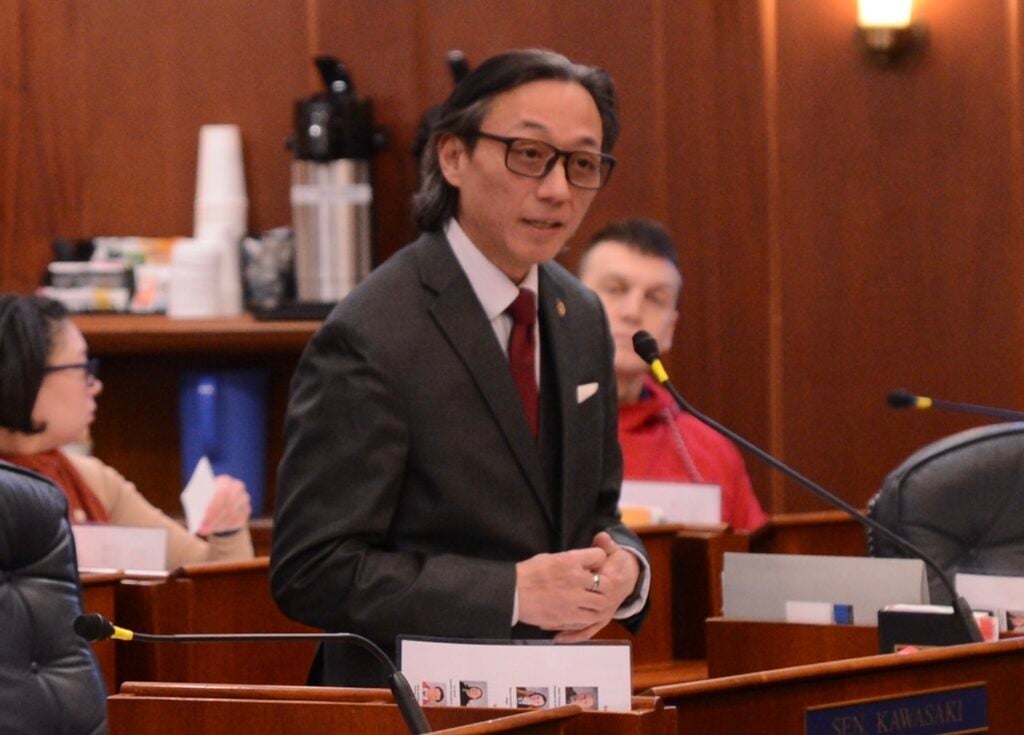
The Alaska Legislature has approved a state driver’s license data-sharing bill that would allow some travelers to speed through security at airports in Alaska.
On Wednesday, the Alaska Senate voted unanimously to approve Senate Bill 237, from Sen. Scott Kawasaki, D-Fairbanks. Because the House voted to pass the bill 40-0 on Tuesday, the Senate’s vote sends the bill to Gov. Mike Dunleavy for final approval or veto.
As originally drafted by Kawasaki, SB 237 would have only allowed the state Division of Motor Vehicles to share driver’s license information with “a nonprofit organization, governmental, or tribal entity.”
That would allow Alaskans to apply for a replacement Social Security card over the internet. Currently, someone who needs a replacement must visit an office in Juneau, Anchorage or Fairbanks in person.
Alaska is the only state that does not allow residents to get a replacement card online.
In the House, Rep. Steve St. Clair, R-Wasilla, proposed an amendment that would allow the state to share driver’s license data with “an entity participating in the Transportation Security Administration’s Registered Traveler Programs.”
That includes CLEAR, a for-profit company that offers fast-lane service at airport security checkpoints across the country.
“There’s actually a contract between CLEAR and the (Anchorage) airport right now, they just can’t do anything or share data until we pass legislation saying that they can,” St. Clair said.
House lawmakers approved that amendment unanimously.
At the urging of Rep. Andrew Gray, D-Anchorage, lawmakers also amended the bill with a section that will allow Alaskans to store digital copies of their driver’s licenses on their smartphones.
If a police officer performs a traffic stop, that digital copy would be valid ID.
That amendment was originally a separate bill, House Bill 180, from the Office of the Governor.
“For anyone who lives their life on their phone, this would be a wonderful convenience that the administration would like to offer,” Gray said.
That amendment passed the House by a 38-2 vote, and SB 237 proceeded toward a final vote in the Legislature without opposition.

A discarded polystyrene foam food container lies along the sidewalk on April 26, 2026, near the intersection of Northern Lights Boulevard and the Seward Highway in Midtown Anchorage. A bill passed by state lawmakers aims to cut down on plastics pollution by barring restaurant use of polystrene food containers starting Jan. 1. (Photo by Yereth Rosen/Alaska Beacon)
Restaurants in Alaska will have to stop serving food in disposable polystyrene foam containers, under a bill passed by the Legislature and awaiting Gov. Mike Dunleavy’s signature.
The measure, House Bill 25, prohibits food establishments from using containers made of Styrofoam and similar plastic foam materials starting on Jan. 1. The bill applies to restaurants and to state agencies’ food operations, but it does not apply to containers sold in stores.
The prime sponsor, Rep. Andy Josephson, D-Anchorage, said he was inspired to introduce the bill after attending meetings of the National Caucus of Environmental Legislators and learning how other states are trying to curb plastic pollution.
There are several reasons to ban containers made from Styrofoam and other polystyrene, Josephson said at a May 11 hearing of the Senate Labor and Commerce Committee. The materials are linked to cancers such as leukemia and lymphoma and other health problems, like endocrine disruption. They cannot be recycled. And they crumble into tiny pieces that spread into the environment, including Alaska’s marine environment, he said.
The bill’s ban would be “historic,” Josephson said. “It would send a strong message that Alaska, with its massive coastlines, greater than the rest of the country, intends to clean up,” he said at the hearing.
Sen. Scott Kawasaki, D-Fairbanks, summarized the environmental concerns when he spoke in favor of the bill on the Senate floor on Monday. “Styrofoam never breaks down. It always floats away. And it can float through air and water,” he said.
Some Alaska municipalities already have such bans, Josephson and Kawasaki said, naming Bethel, Cordova and Seward as examples.
The bill went through several refinements after it was first introduced before the start of the 2025 session.
Lawmakers made some changes to ease the transition to non-polystyrene materials. The final bill allows restaurants to continue using polystyrene containers that had been stockpiled prior to the effective date of Jan. 1, 2027. Another change grants municipalities the option of allowing the containers.
The local-option change was important to Sen. Rob Yundt, R-Wasilla, and helped him overcome his earlier reluctance to support the bill. He and his wife own a restaurant and the ban “very well might cost us a little bit of money,” Yundt said in floor comments on Monday, when the bill won final passage in the Senate. “But I can tell you it’s common sense. It’s long overdue.”
Environmental groups praised the bill. Among the risks of polystyrene pollution cited by those groups is the damage to fish and wildlife, which mistake tiny bits of plastic for food.
“Alaska is on the frontlines of the global plastics crisis, and lawmakers are stepping up with meaningful solutions,” Christy Leavitt, senior campaign director at Oceana, said in a statement released Wednesday. “We are grateful to Rep. Andy Josephson as the bill’s sponsor and the support from legislators across party lines. By passing HB 25, Alaska is taking an important step to reduce harmful plastic pollution, protect ocean wildlife, and safeguard the health of Alaska’s communities.”
Other organizations that were prominent supporters were Alaska Community Action on Toxics and the Alaska Environment and Research Policy Center; the latter group conducted a study that found microplastics such in all 39 Southcentral Alaska water bodies it tested.
A national trade organization representing manufacturers of polystyrene materials opposed the bill.
Lindsay Stovall, director of state and regulatory affairs for the American Chemistry Council, described her organization’s objections in written comments and in committee testimony. She said the bill would impose costs on consumers, businesses and state agencies.
“While we support efforts to reduce plastic waste, we believe the legislation would increase costs, create implementation challenges, and fail to achieve its intended environmental objectives,” she said in testimony to the Senate Labor and Commerce Committee on May 15.
An analysis commissioned by her organization found that the Alaska Department of Corrections, for example, would have to spend an extra $1.8 million to switch to paper alternatives or $2.6 million to switch to degradable options, Stovall said.
However, the analysis of the bill conducted by the state Department of Revenue found that it would impose no additional costs on any state agency.
The Alaska Department of Environmental Conservation, which would oversee the ban, “can integrate compliance into existing processes without the need for regulatory development or significant additional staff workload,” and would be able to use previously allocated resources, according to the Department of Revenue’s fiscal analysis.
The bill does not apply to food-service items purchased in stores for home use or to storage containers such as those used to ship fish. The bill also contains an exemption for disaster emergencies.
SUBSCRIBE: GET THE MORNING HEADLINES DELIVERED TO YOUR INBOX.