Categories
Alaska News Featured Juneau News juneau Juneau Local Juneau Local Ketchikan Local News Feeds Sitka Local

Alaska Supreme Court to rule on question of bias in ballot measure language

By-Corinne Smith, Alaska Beacon

Voters at Anchorage City Hall wait in line to cast their ballots on Nov. 4, 2024, the day before Election Day. City hall, in downtown Anchorage, was one of the designated early voting sites in the state’s largest city. (Photo by Yereth Rosen/Alaska Beacon)

The Alaska Supreme Court heard oral arguments on Tuesday on legal challenges brought by two groups on opposing sides of the state’s current ranked choice voting election system. The two groups of plaintiffs brought lawsuits against the Alaska Division of Elections challenging the language of a ballot measure, set to go before voters in November, abolishing the voting method along with other changes.

Ballot Measure 2, which will appear on the ballot as 24ESEG, would overhaul the state’s elections system via three major components: repeal ranked choice voting; rescind the nonpartisan, open primary system; and repeal campaign disclosure rules enacted by voters in 2020.

A Superior Court ruled in June that the state’s ballot summary was “true and impartial,” siding with the Alaska Division of Elections, overseen by Lt. Gov. Nancy Dahlstrom.

Plaintiffs have appealed that decision to the Alaska Supreme Court, which is expected to issue a fast-tracked ruling before a division deadline of Sept. 2 to print general election ballots.

The Alaska Supreme Court heard oral arguments in a case challenging the Alaska Division of Elections' language of a ballot measure that would overhaul state elections on Aug. 25, 2026. (Screenshot of hearing via Gavel Alaska)
The Alaska Supreme Court heard oral arguments in a case challenging the Alaska Division of Elections’ language of a ballot measure that would overhaul state elections on Aug. 25, 2026. (Screenshot of hearing via Gavel Alaska)

One group of plaintiffs are represented by attorney Scott Kendall, an author of the 2020 ballot measure implementing Alaska’s ranked choice voting and open primary system. They argued that the current ballot measure language is unclear, partisan and omits serious implications of the repeal effort.

The other group of plaintiffs, drafters of the measure, is called the “Repeal Now” campaign. The measure’s primary sponsors are Republican gubernatorial candidate Bernadette Wilson, along with former Anchorage library director Judy Eledge and former Alaska House Rep. Ken McCarty of Eagle River. 

In court, attorneys representing Repeal Now argued against the lawsuits being combined and for a series of language changes, including changing of the term “repeal,” which they say is not easily understood by voters, and the term “true source” of campaign disclosures as “inflammatory partisan suasion.” 

Under Alaska law, the division is required to prepare a ballot measure with a “true and impartial” summary of the proposed law. It must be “free from misleading tendency, whether the amplification, of omission, or of fallacy, and … must contain no partisan coloring.”

In the June ruling, a Superior Court judge found the division fulfilled its legal obligation and “if ballot summary language is true and impartial, the Court will not invalidate the language just because better language could be written.” 

On Tuesday, the division, represented by attorney Laura Fox with the Alaska Department of Law, argued that the ballot language could be edited thousands of ways, but the division fulfilled its legal duty and prepared the ballot with a “true and impartial” summary and title.  

“This case is not an editing exercise,” Fox argued. “We’re not assembled here as a big team of editors trying to polish a piece of writing by committee, as fun as that might be. Instead, the question here is just whether the summary clears the basic hurdle of being true and impartial. Because it does, the court should affirm.”

The Alaska Supreme Court justices will either uphold the lower court’s decision or order the division to revise the language. They’re expected to issue a ruling before Sept. 2 and then follow sometime later with an extended legal opinion. 

Timeline of ballot measure and legal challenges

Alaska voters narrowly rejected a similar initiative to repeal ranked choice voting in 2024. Proponents quickly restarted the campaign in 2025, collecting more than 34,000 signatures to again place the question on the ballot in 2026. The division first published the ballot language last December. 

A group of plaintiffs represented by Kendall filed a lawsuit challenging the ballot language in January. Plaintiffs include Anchorage Republican Sen. Cathy Giessel, AFL-CIO union president Joelle Hall, and former member of the Juneau Borough Assembly and vice president of Ocean Conservancy ‘Wáahlaal Gidaak Barbara Blake. They argued the ballot language was biased and inaccurate.

The division subsequently revised the ballot language in February with significant changes to the title and summary. The plaintiffs dropped the lawsuit without prejudice, according to court documents. 

In mid-February, the Repeal Now group filed a lawsuit challenging the new language, arguing “opponents got their preferred language” adding the term “repeal” three times, and the summary was not “true and impartial.”

In March, the division again revised the title of the ballot measure, adding the phrase “ending ranked-choice general elections.”

Giessel and fellow plaintiffs filed a new lawsuit, and the two suits were consolidated by the Superior Court judge in April. 

Both groups of plaintiffs filed suggested ballot language with the court, and the state filed a motion defending their ballot language. 

Court arguments

On Tuesday, Kendall argued before the Supreme Court that the ballot language should be a clear map for voters to understand what the measure does.

“But the state’s language here isn’t a map. It’s effectively an obstacle course where a voter can only understand Ballot Measure 2 by doing independent research outside the four corners of the ballot language. The state’s language is unclear, contains partisan suasion, and omits details that would give voters significant pause,” he said.

In particular, Kendall raised concerns the ballot measure does not clarify that if passed, nonpartisan or Independent voters would be excluded from voting in party primaries, unless registered with that party.  

“It fails to make clear that Ballot Measure 2 specifically empowers political parties at the stroke of a pen to make it illegal for undeclared and nonpartisans to vote in the primary election,” he said. “I think voters need to be put on notice, especially the two-thirds of voters that don’t belong to either party, that you may not be able to vote in the primary election at all.”

Kendall also argued the language related to campaign finance disclosure rules was inadequate, and fails to give details of the implications.

If passed, the measure would repeal campaign disclosure rules and limits enacted by the ballot measure passed in 2020, including rules that individuals and entities who contribute more than $2,000 to candidates or campaigns must disclose the true source, as defined by law.

Attorney Julie Pack, representing the group of plaintiffs with the Repeal Now campaign and supporting the ballot measure, argued against the use of the term “repeal” because she said campaigners collecting signatures for the ballot measure found voters were not familiar with the term. 

“Many people do not use that word on a daily basis. It’s not common parlance. It is for lawyers. It’s not for people who are not lawyers, and it’s not a term that is readily understood,” she said.

Justices pushed back, pointing out the term is in the name of their organization.

“My organization named itself before they canvassed, got all the signatures, talked to over 31,000 Alaskans, and understood that repeal is not a word that lots of people understand,” she replied. “So my client named itself before it learned that repeal is a term that’s mildly to moderately sophisticated.”

“There is no need to use words that are sophisticated,” she added. “When ‘redo,’ ‘remove,’ ‘undo,’ ‘get rid of’ are perfectly fine, and they would protect Alaskan voters’ right to know what they’re voting on.”

Pack also raised concerns with the term “true source” related to campaign finance disclosures, and argued the measure would maintain “open primaries.”

Arguing on behalf of the Division of Elections, Fox urged the justices to reject the plaintiffs arguments and affirm the lower court’s decision that the division met its legal obligations and should print the ballot measure as is.

Ballot Measure 2 as currently proposed by the Alaska Division of Elections:

An Act Restoring Political Party Primaries, Ending Ranked Choice-General Elections, and Repealing Recent Campaign Finance Laws

This Act would get rid of open primary elections, where all candidates appear on one ballot. It would also get rid of ranked-choice general elections. It would bring back political party primaries and single-choice general elections. It would also repeal certain campaign finance rules that were added by a 2020 ballot measure. 

Elections would occur as they did before open primaries and ranked choice elections. In the primary election, voters would choose a party’s ballot, unless prohibited by the party’s bylaws. They would only vote for candidates on that ballot. The winning candidates from each primary would be the party’s nominee. In the general election, voters would vote for only one candidate in each race. Party petitions, special runoff elections, and other processes would return. 

This act would repeal campaign finance rules that were passed in 2020. It would remove the limits on donations to joint campaigns for governor and lieutenant governor. It would remove limits and disclosure rules under current law, including for digital ads, out-of-state donations, undisclosed donations and the true source of donations. It would change the meaning of a campaign expenditure and remove some fines.

Should this initiative become law? 

Categories
Alaska News Featured Juneau News juneau Juneau Local Juneau Local Ketchikan Local News Feeds Sitka Local

Alaska to receive up to $23 million in landmark child safety settlement with Meta

By: Corinne Smith, Alaska Beacon

Meta, which owns social media platforms Facebook and Instagram, has agreed to a $17 billion multistate settlement announced on Aug. 26, 2026. Alaska is set to receive up to $23 million over the next ten years. (Photo by Corinne Smith/Alaska Beacon)

Alaska is set to receive up to $23 million from Meta Platforms Inc. under a landmark $17 billion settlement agreement that would also require the company to implement a sweeping set of safety features for its social media platforms, aimed at protecting children from addictive features and harmful content.

The multistate settlement agreement was announced Wednesday that state officials are lauding as one of the biggest consumer protection settlements in history outside the Big Tobacco settlements of the 1990s.

New protections for teens, controls for parents included in Meta settlement

Time Limit: A default two-hour daily time limit that can only be turned off with a parent’s permission. Time spent scrolling on Facebook and Instagram counts toward the total.

Night mode: A default block from Meta apps between midnight and 6 a.m.

School Mode: Notifications will be muted by default between 8 a.m. and 3 p.m. During those hours, young people will no longer receive push notifications, except for direct messages and alerts about their account security or safety.

Regular Prompts: Young users will receive prompts after every 15 minutes of continuous screen time on Facebook and Instagram.

Algorithmic Feed Control:Young users will be able to choose a non-algorithmic feed — one that isn’t personalized by Meta’s recommendation system.

Autoplay Control: Young users will be able to turn off autoplay, so that content no longer automatically plays.

Hidden Likes: Young people won’t see the number of likes and reactions on posts — both their own and those from others — by default.

Disabling cosmetic surgery and extreme makeup filters: Young users will not be able to use extreme makeup filters.

Direct messaging features will be excluded from Night Mode, Time Limit and School Mode restrictions.

Meta, the owner of Facebook and Instagram, would be ordered to pay the up to a $17.1 billion penalty to 47 states, the District of Columbia and several U.S. territories. The final settlement remains subject to approval by the U.S. District Court for the Northern District of California, where the case was filed. 

Alaska leaders praised the announcement in a statement on Wednesday. 

“As a mom of two, I can’t tell you what a relief this settlement brings to me knowing there will be better safeguards on Meta’s platform to keep teens healthy and positively engaged,” said Acting Attorney General Cori Mills. 

Gov. Mike Dunleavy called the settlement a “necessary and imperative step” to protecting children. 

“Social media promised us connection and the ability to productively engage with each other in life’s joyful and mundane moments. What social media gave us was a generation of children scarred by bullying, harassment, doom-scrolling and predation,” Dunleavy wrote. “This is a good first step towards protecting our children from online dangers, and I hope we see more actions like this in the future.”

Mills also praised the work of attorneys general across the country “regardless of political party” and their consumer protection teams for pursuing the case. “It is only through that collaboration that settlements like this are possible,” she said. “This truly is a historic moment, and I am hopeful it sets the precedent for social media platforms going forward.”

The settlement ends a high-stakes lawsuit first filed in federal court in California in 2023, where states argued that Meta purposefully designed addictive social media features in order to maximize profits, illegally collected data on children and teens, and repeatedly misled the public about the harms of social media use.

Meta denies wrongdoing, and that it has any liability to the plaintiffs.

The company agreed to the settlement, which also requires major changes to Facebook and Instagram features for young users. That includes a daily two-hour time limit and frequent prompts to restrict endless scrolling; night time blocks from midnight to 6 a.m.; muted notifications during school hours; a choice of a non-algorithmic feed that is not personally tailored by Meta; hidden social comparison features, like beauty filters and “like” features, and others.

Under the settlement agreement, Meta sought similar restrictions on its competitors, TikTok and Youtube. Meta agreed to pay out 70% of the settlement, $12.7 billion, to states initially. The company agreed to pay the remaining 30%, or $17.1 billion total, only if TikTok and Youtube agree to implement a one-hour daily limit, night mode and age assurance measures. TikTok and Youtube must also agree to pay roughly $5.3 billion in penalties to states.

Alaska is expected to receive $16 million over the next 10 years, and up to $23 million if the other social media platforms agree to the terms, according to a spokesperson with the Alaska Department of Law. 

Meta reports 3.9 billion active users on its social media apps each month, worldwide. 

The company still faces thousands of lawsuits across the country from individuals and school districts accusing them of fueling harmful content and addiction in children, and inadequate safety features.

Categories
Alaska News

Alaska to receive up to $23 million in landmark child safety settlement with Meta

Meta, which owns social media platforms Facebook and Instagram, has agreed to a $17 billion multistate settlement announced on Aug. 26, 2026. Alaska is set to receive up to $23 million over the next ten years. (Photo by Corinne Smith/Alaska Beacon)

Meta, which owns social media platforms Facebook and Instagram, has agreed to a $17 billion multistate settlement announced on Aug. 26, 2026. Alaska is set to receive up to $23 million over the next ten years. (Photo by Corinne Smith/Alaska Beacon)

Alaska is set to receive up to $23 million from Meta Platforms Inc. under a landmark $17 billion settlement agreement that would also require the company to implement a sweeping set of safety features for its social media platforms, aimed at protecting children from addictive features and harmful content.

The multistate settlement agreement was announced Wednesday that state officials are lauding as one of the biggest consumer protection settlements in history outside the Big Tobacco settlements of the 1990s.

Meta, the owner of Facebook and Instagram, would be ordered to pay the up to a $17.1 billion penalty to 47 states, the District of Columbia and several U.S. territories. The final settlement remains subject to approval by the U.S. District Court for the Northern District of California, where the case was filed. 

Alaska leaders praised the announcement in a statement on Wednesday. 

“As a mom of two, I can’t tell you what a relief this settlement brings to me knowing there will be better safeguards on Meta’s platform to keep teens healthy and positively engaged,” said Acting Attorney General Cori Mills. 

Gov. Mike Dunleavy called the settlement a “necessary and imperative step” to protecting children. 

“Social media promised us connection and the ability to productively engage with each other in life’s joyful and mundane moments. What social media gave us was a generation of children scarred by bullying, harassment, doom-scrolling and predation,” Dunleavy wrote. “This is a good first step towards protecting our children from online dangers, and I hope we see more actions like this in the future.”

Mills also praised the work of attorneys general across the country “regardless of political party” and their consumer protection teams for pursuing the case. “It is only through that collaboration that settlements like this are possible,” she said. “This truly is a historic moment, and I am hopeful it sets the precedent for social media platforms going forward.”

The settlement ends a high-stakes lawsuit first filed in federal court in California in 2023, where states argued that Meta purposefully designed addictive social media features in order to maximize profits, illegally collected data on children and teens, and repeatedly misled the public about the harms of social media use.

Meta denies wrongdoing, and that it has any liability to the plaintiffs.

The company agreed to the settlement, which also requires major changes to Facebook and Instagram features for young users. That includes a daily two-hour time limit and frequent prompts to restrict endless scrolling; night time blocks from midnight to 6 a.m.; muted notifications during school hours; a choice of a non-algorithmic feed that is not personally tailored by Meta; hidden social comparison features, like beauty filters and “like” features, and others.

Under the settlement agreement, Meta sought similar restrictions on its competitors, TikTok and Youtube. Meta agreed to pay out 70% of the settlement, $12.7 billion, to states initially. The company agreed to pay the remaining 30%, or $17.1 billion total, only if TikTok and Youtube agree to implement a one-hour daily limit, night mode and age assurance measures. TikTok and Youtube must also agree to pay roughly $5.3 billion in penalties to states.

Alaska is expected to receive $16 million over the next 10 years, and up to $23 million if the other social media platforms agree to the terms, according to a spokesperson with the Alaska Department of Law. 

Meta reports 3.9 billion active users on its social media apps each month, worldwide. 

The company still faces thousands of lawsuits across the country from individuals and school districts accusing them of fueling harmful content and addiction in children, and inadequate safety features.

SUPPORT: YOU MAKE OUR WORK POSSIBLE

Categories
Sports Fox

Unproven & Unfazed Malik Willis Works To Assure Dolphins He’s QB Of The Future

MIAMI GARDENS, Fla. — In terms of career NFL starts, the Miami Dolphins’ Malik Willis will likely be the least experienced Week 1 starting quarterback in the league. Willis is 27, with four years of NFL experience under his belt. But starts? He has only six, fewer than all of last year’s notable rookies — fewer than the Tennessee Titans’ Cam Ward, fewer than the New York Giants’ Jaxson Dart and fewer than the New York Saints’ Tyler Shough. He’s thrown all of 155 career passes, which is fewer than both Cleveland Browns rookie quarterbacks last year in Shedeur Sanders (212) and Dillon Gabriel (185). And yet Willis is the quarterback the Dolphins will build around this season, having signed him to a three-year, $67 million contract that includes $45 million guaranteed. It’s a low number by today’s gaudy quarterback contract standards, but it represents a significant investment as Miami begins a franchise rebuild with a new general manager and new head coach. That coach, Jeff Hafley, spent the last two years with Willis in Green Bay, seeing him in practice every day and seeing the potential of a former third-round draft pick who learned on the sidelines, under Mike Vrabel in Tennessee before going to the Packers. “He’s become very confident, more consistent,” Hafley said before a joint practice with the Giants last week. “He’s taking care of the football. He’s getting rid of the ball on time. He’s playing in the pocket, but now, what he’s starting to do is, as it gets closer, he’s starting to use his legs not just to run the ball, but to step up, escape, make some throws down the field, or take off or extend plays.” Hafley wanted to test his quarterback in practice one day last week, surprising him with pressure in a walkthrough, just to see how he’d handle it without warning. “I thought we had him,” Hafley said. “I was like, ‘All right, we got him.’ They’re not going to block him. And it was really cool. For the first time, I saw him; he kind of baited it, because it was to his blindside. He kind of baited him, saw him and then spun out and ran and threw a touchdown. And I was angry, because I’m the one who made the call. But I was really happy because I looked at him and kind of smirked. I was like, ‘I’ve got no answer for that.’ So he’s starting to play the game a little bit, more rather than just practice.” Being a starting quarterback carries an expectation of leadership, and that is new for Willis, long accustomed to being a backup and needing an injury or illness to get on the field. How do you command authority from a locker room full of new teammates who have yet to take the field with you in a real game? You go to work every day and show them how you prepare yourself. “He has been amazing,” veteran Dolphins defensive lineman Zach Sieler said. “Just coming in here, hitting full stride, the energy, the great attitude he brings to the facility, the respect towards everyone in the building. The players cling to that and roll with that. Everyone’s just firing on all cylinders. Seeing us grow as a team, seeing him grow as a quarterback to get more and more comfortable each day, it’s been incredible.” It could be a long year ahead for Willis and certainly for the Dolphins. The oddsmakers have their season win total at 4.5 wins — only the Arizona Cardinals have lower expectations — and Miami went 7-10 last year, so some kind of regression is a foregone conclusion. With that in mind, Willis’ challenge in his first full year as an NFL starter is to show enough to convince the Dolphins that they don’t need to use a high first-round pick on a quarterback from a deep and talented group of 2027 prospects. If Willis can sell Hafley and general manager Jon-Eric Sullivan that the quarterback of their present should be the quarterback of their future, then that same high draft pick could be used on a player to help him, like Ohio State wide receiver Jeremiah Smith, who was born in Miami Gardens and went to high school down the road in Hollywood. In his first few months in Miami, Willis has shown good instincts as a quarterback. He led voluntary workouts with receivers during downtime to build chemistry with them, and he’s using a helmet-mounted GoPro camera in practice to show where he’s looking and how he’s progressing through his reads during a play, reviewing reps from his own perspective in addition to normal cutups. A starting quarterback gets the largest share of practice reps, so he’s savoring the chance to develop and grow faster than at any point in his career. A joint practice with the New York Giants last week, facing one of the league’s most athletic front sevens, was a chance for the Dolphins to test themselves against outside competition, even if it was humbling at times. “Playing football is still fun. It’s still awesome to go out there and compete and see different looks and get to play against guys you haven’t been going against every day,” Willis said. “We got lucky enough to get a few different style defenses. Obviously, there’s different style defenses throughout the league and we hit more than our share of different types and we can see how we want to try to attack that when we get into the season. I think that was awesome.” Miami has as anonymous a receiving corps as you’ll find in the NFL, with Tyreek Hill and Jaylen Waddle gone and replaced by the likes of Malik Washington and Jalen Tolbert. The group became even more anonymous when the Dolphins traded Tutu Atwell to the Los Angeles Rams on Thursday. Part of Willis’ job is improving the people around him, and first-year offensive coordinator Bobby Slowik has been most pleased by how well he’s taken to that aspect of quarterbacking. “He’s been great on the field, and he’s just consistently gotten better in everything that we’re doing,” Slowik said. “And really there’s a lot that goes along with the quarterback position. You’ve got to handle yourself, you’ve got to handle the huddle, you’ve got to handle the guys around you, you’ve got to make sure that you’re on your stuff, to make sure they’re on their stuff. You’ve got to help guys out post-huddle. There’s just a lot of things that naturally come with the position that he handles with ease really. So that’s been pretty awesome to see. And just to see his continued improvement every day within what we’re doing has been fun.” There were glimpses of promise with Willis last year. He came off the bench to replace an injured Jordan Love and held his own against the Bears, going 9 of 11 for 121 yards and a touchdown and taking the game to overtime before Chicago prevailed. His lone start a week later was a loss to the Ravens, but he went 18 of 21 for 288 yards and one touchdown, rushing for another 60 yards and two more scores. It’s a small sample, but he’s completed 79% of his passes in the last two years. Nobody else with at least 50 passes is higher than 72%. Willis will have a chance to prove himself on a much larger scale this season, trying to find success leading a team expected to have very little of that. Hafley sees steady growth in his quarterback, with the hopes that will continue throughout the season. “Can he take another step?” Hafley said of his expectations in preseason. “Can he take another step with the playbook? Can he take another step with the execution? Can he take another step as the leader of the offense? And then can he start to become a leader of the entire team? … I think he’s a guy that has gotten better every single day, and he’s just been unfazed. He’s the same person. You can’t rattle him, I’m pleased with where he’s at. I think it will be a work in progress for the rest of camp, but I’m excited where he’s at.”​Latest Sports News from FOX Sports

Categories
Music

Vin Diesel Sings Dolly Parton’s ‘I Will Always Love You’: LISTEN

The ‘Fast & Furious’ star surprised fans with a rendition of Dolly Parton’s “I Will Always Love You,” and his voice cracks during the emotional tribute. Continue reading…​The Boot – Country Music News, Music Videos and Songs

Categories
Music

Everything We Know About Lainey Wilson’s Guest Appearance on Season 2 of Netflix’s ‘Leanne’

Season 2 of the hilarious new sitcom, Leanne, officially premiered on Netflix today (August 27), and it’s brought a slew of special guests making cameos throughout the episodes including country superstar Lainey Wilson.

The sitcom, inspired by Leanne Morgan’s stand-up comedy, picks up as the star herself continues adjusting to life after her divorce. This season sees her taking on everything from a kitchen remodel to getting back into the dating world after nearly 30 years of marriage, all while her family remains close by to help her navigate it all.

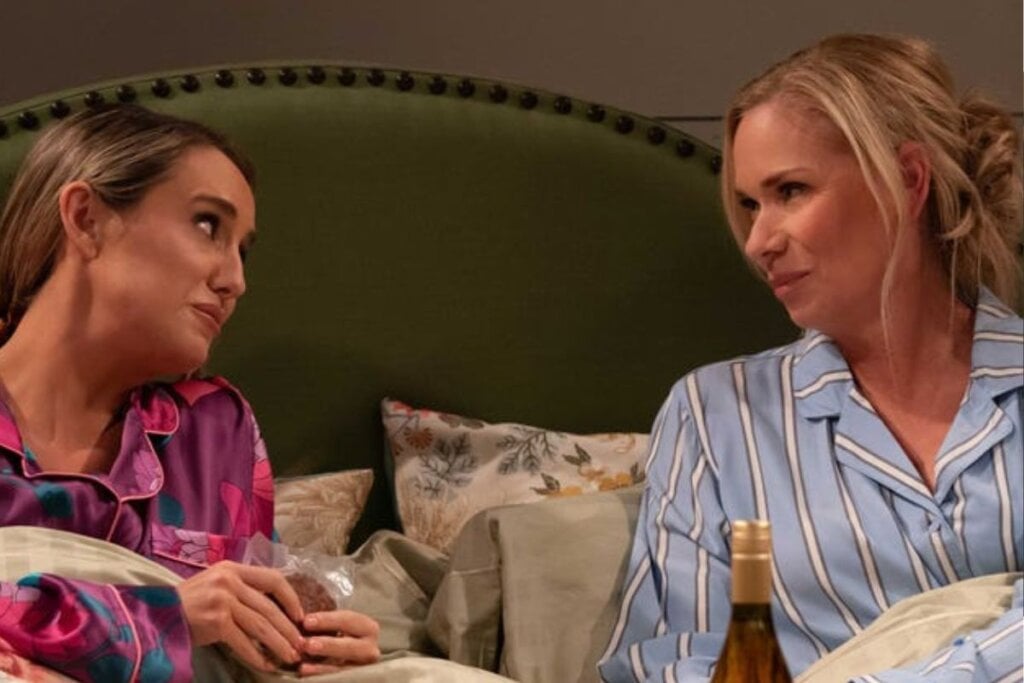
Lainey Wilson; Leanne Morgan; Photo Courtesy of Netflix

After the success of its first season that premiered in the summer of 2025, Netflix quickly renewed Leanne for a second season. Throughout these 10 episodes, viewers will catch guest appearances from Jaime Pressly, Ben Foster, Billy Gardell and Wilson. The singer steps into the role of Jessie, Leanne’s cousin, and appears in Episode 9.

Morgan first teased Wilson’s involvement in the show earlier this year when she shared behind-the-scenes photos from the set, including one with Wilson.

“Look who dropped by the set of ‘LEANNE’ season 2!!! 😍 Couldn’t we all be family?? 😝💙,” she wrote in the caption.

Now that the season is here, fans can finally see the two stars share the screen. In a more recent clip previewing the new season, Wilson’s character is seen showing up at Leanne’s house, leading to a fun reunion between the cousins.

“Is that my favorite cousin?” Leanne asks.

“You know it is,” Jessie replies.

Viewers then learn that Jessie went to visit Leanne after going through a breakup, giving the two characters another connection as they both navigate major changes in their personal lives.

In addition to her guest stars, Morgan’s character has made a strong return to Netflix alongside her ex-husband Bill (Ryan Stiles), her sister Carol (Kristen Johnston), and her parents Mama Margaret (Celia Weston) and Daddy John (Blake Clark) in tow.

The multi-camera sitcom quickly became a favorite among Netflix’s standout comedy series. Co-created by Chuck Lorre, Leanne Morgan and showrunner Susan McMartin, the series pulled in 1.34 billion viewing minutes in the U.S. during its first two weeks, according to Nielsen. Netflix’s engagement data also showed the series racked up around 12 million views during the second half of 2026

The show has also received recognition from the Television Academy, earning two Emmy nominations for Outstanding Production Design For A Narrative Program and Outstanding Picture Editing For A Multi-Camera Comedy Series.

Season 2 began filming in January 2026 in front of a live audience at Warner Bros. Studios in Burbank, California. All 10 episodes are now available on the streaming platform.

The post Everything We Know About Lainey Wilson’s Guest Appearance on Season 2 of Netflix’s ‘Leanne’ appeared first on Country Now.

​Country Now

Categories
Music

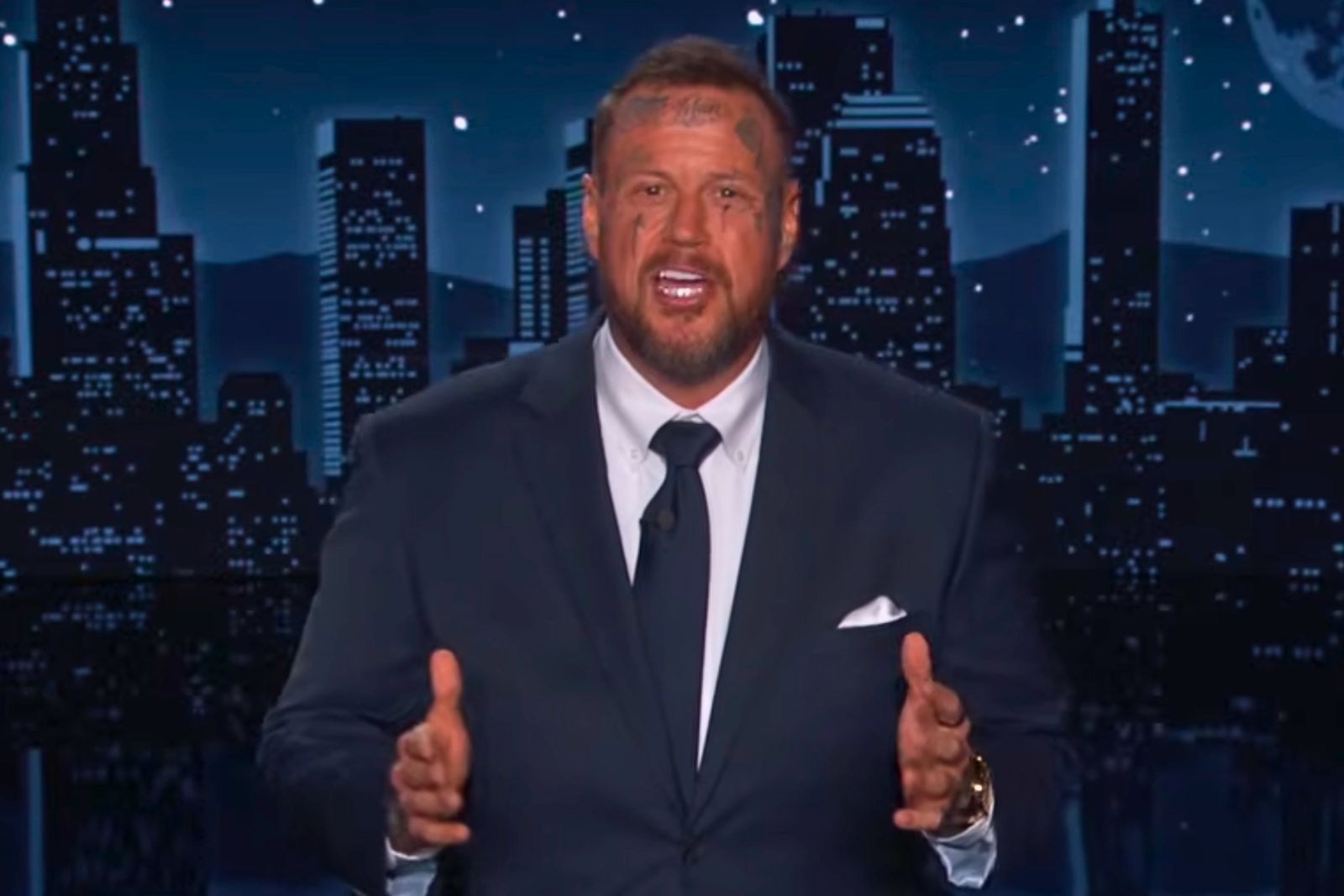
Jelly Roll Defends Donald Trump Digs During Jimmy Kimmel Live

Jelly Roll says, “I thought fat-on-fat crime was OK.” Continue reading…​The Boot – Country Music News, Music Videos and Songs

Categories
Music

Jelly Roll Defends Donald Trump Digs During Jimmy Kimmel Live

Jelly Roll says, “I thought fat-on-fat crime was OK.” Continue reading…​Country Music News – Taste of Country

Categories
Music

Dolly Parton’s Sister Stella Reveals How Dolly Wanted to Help Others Even in Her Final Months

Dolly Parton’s younger sister, Stella Parton, has shared a deeply personal tribute to her big sister and the country music icon, just two days after her passing. In the emotional message, Stella reflected on the special bond they shared as sisters and revealed a touching detail about Dolly’s final months, including her desire to continue helping others even amid her private battle with cancer.

“My big sister Dolly got her wings this past Tuesday. If anyone gets to heaven I’m sure she made it right on time. I know she’s showing out big time, in all her sparkles and shine. That was my sister’s way,” she began.

Stella went on to share one of the simple traditions that kept her and Dolly connected through the years: their standing Tuesday morning phone calls. Despite their busy lives, the sisters made a point of setting aside time to catch up over their morning coffee.

Dolly Parton; Photo Provided

“Every Tuesday about this time, before the sun came up and the world was still asleep, she and I for many years had our coffee together over the phone,” she wrote. “Being little farm girls we’ve continued to be early risers. As she liked to say; “shoot Tedda we get more work done before the sun comes up than most folks do all day long!” We would catch up on gossip, as sisters do, and drink coffee and make plans as it has always been our way.”

Stella also offered a glimpse into the Dolly the public knew and loved, assuring fans that the woman they saw on television and onstage was the same person she knew privately: generous, thoughtful and always wanting to help others.

In one of the most revealing portions of her tribute, Stella shared that Dolly had even expressed a willingness to participate in experimental medical treatments if doctors determined there was no hope left for her. According to Stella, Dolly hoped that doing so could potentially help researchers learn more and benefit others in the future.

“My sister was one of the most generous, thoughtful and kind people I’ve ever known. What the world saw is exactly who she was, so much so, she told me recently that if there was no hope for her, she would still allow her medical team to try experimental drugs in the hope of helping others in the future,” she shared.

Stella encouraged people to continue her sister’s legacy by showing kindness to others. 

“My sister was always thinking of others and if you want to honor her legacy, show more kindness, lift others up and give more of your time and resources as she continued to do to the very end.I want to personally thank all of you for the out pouring of love and respect you are showing my sister. Your love and respect for her is deeply felt by all of us who loved her first and it helps as we grieve her passing through our lives!”

Dolly Parton; Photo by Andrew Wendowski

She later added, “She left the world a better place by being in it so let’s  follow her example. Love and respect to all of you.” 

Dolly Parton was one of 12 siblings. Over the years, she experienced the loss of four of her brothers: David, Randy and Floyd, while another brother, Larry, died as an infant.

The post Dolly Parton’s Sister Stella Reveals How Dolly Wanted to Help Others Even in Her Final Months appeared first on Country Now.

​Country Now

Categories
Entertainment

Jake Reiner Gives First Interview Since Parents’ Murders, Brother’s Arrest

Reading Time: 2 minutes

Jake Reiner is opening up about the unimaginable family tragedy that has changed his life forever.

Eight months after his parents, Rob and Michele Reiner, were found dead inside their Los Angeles home, Jake sat down for his first television interview since their deaths — and since his younger brother, Nick Reiner, was arrested and charged with their murders.

Speaking with KABC-TV, Jake, 35, offered a heartbreaking glimpse into the reality of losing both parents while simultaneously watching his brother become the central figure in the criminal case surrounding their deaths.

Honoree Rob Reiner poses with family at the 41st Annual Chaplin Award Gala at Avery Fisher Hall at Lincoln Center for the Performing Arts on April 28, 2014 in New York City.
Honoree Rob Reiner poses with family at the 41st Annual Chaplin Award Gala at Avery Fisher Hall at Lincoln Center for the Performing Arts on April 28, 2014 in New York City. (Photo by Michael Loccisano/Getty Images)

“It’s been eight months,” Jake said (via Page Six). “It feels like eight years at the same time. And it also feels like eight minutes.”

The eldest Reiner son recalled learning that something was terribly wrong after receiving a call from his sister, Romy.

“Romy told me our dad was dead and then she said, ‘I can’t find mom,’” he recalled.

Rob and Michele were found dead at their Brentwood home on December 14, 2025. Their deaths were determined to have resulted from multiple sharp force injuries.

Nick was arrested shortly afterward and has pleaded not guilty to two counts of murder. He is currently being held without bail while awaiting further proceedings.

For Jake, however, the legal case is only one part of a much larger nightmare.

“I physically lost my parents. And then Nick was arrested. … He’s in jail,” he explained. “And now it’s me and Romy.”

Jake and Romy previously described their parents as their “best friends” in a joint statement following the killings. Jake later wrote about the devastating loss in an April essay, acknowledging the complicated reality of mourning his parents while his brother was accused of killing them.

“We lost more than half of our family that night in the most violent way imaginable,” he wrote at the time.

Jake also spoke about the unconditional love his parents had for all three of their children, including Nick, who has struggled with addiction and mental health issues for years.

He pointed specifically to the 2015 film Being Charlie, which Nick co-wrote and Rob directed, as an effort by his father to understand and connect with his son.

“My parents had unconditional love for all three of us,” Jake said. “They never stopped wanting to help him.”

Jake and Romy have not attended Nick’s court hearings, although both siblings recently testified before the grand jury that indicted him. The contents of their testimony remain unknown.

Asked about the tragedy and whether he expects to ever understand why it happened, Jake offered a devastatingly simple response.

“I’ll never understand,” he said. “I don’t care what facts come out. I will never understand why this happened.”

Nick’s next pre-trial hearing is scheduled for September 15. He faces life in prison without parole or potentially the death penalty if convicted.

We will have further updates on this developing story as new information becomes available.

Jake Reiner Gives First Interview Since Parents’ Murders, Brother’s Arrest was originally published on The Hollywood Gossip.

​The Hollywood Gossip