The King and Queen will meet the new Pope during a state visit to Vatican City next month.The Latest News from the UK and Around the World | Sky News









The King and Queen will meet the new Pope during a state visit to Vatican City next month.The Latest News from the UK and Around the World | Sky News

Hackers who claimed to have stolen pictures, names and addresses of over 8,000 children in a cyber attack on a nursery chain have told Sky News they will release the profiles of more children and employees.The Latest News from the UK and Around the World | Sky News

The Prince of Wales has told Schitt’s Creek star Eugene Levy that 2024 was the “hardest year” of his life.The Latest News from the UK and Around the World | Sky News
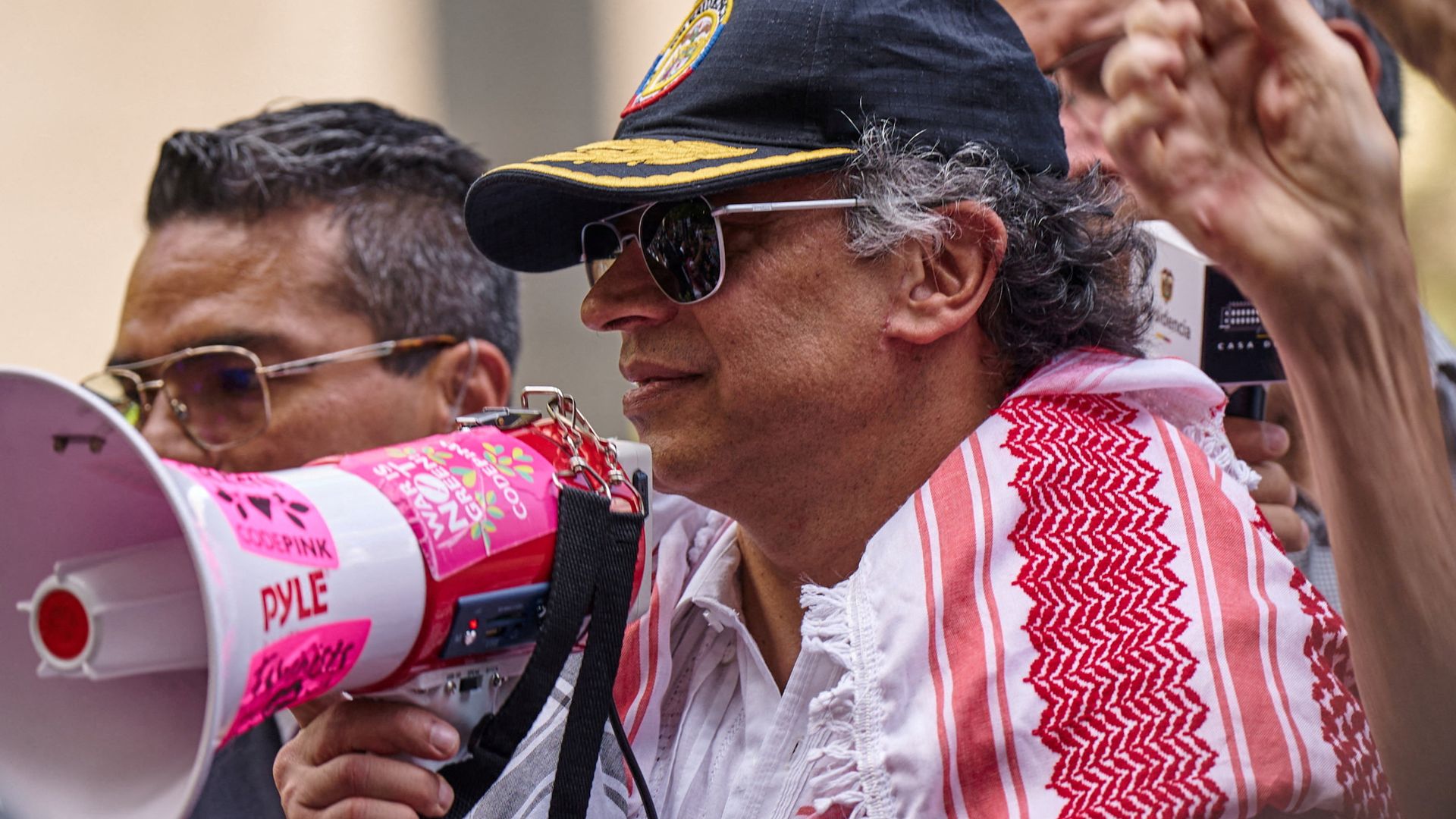
The US has said it will cancel the visa of the President of Colombia after he urged US troops to disobey Donald Trump’s orders.The Latest News from the UK and Around the World | Sky News
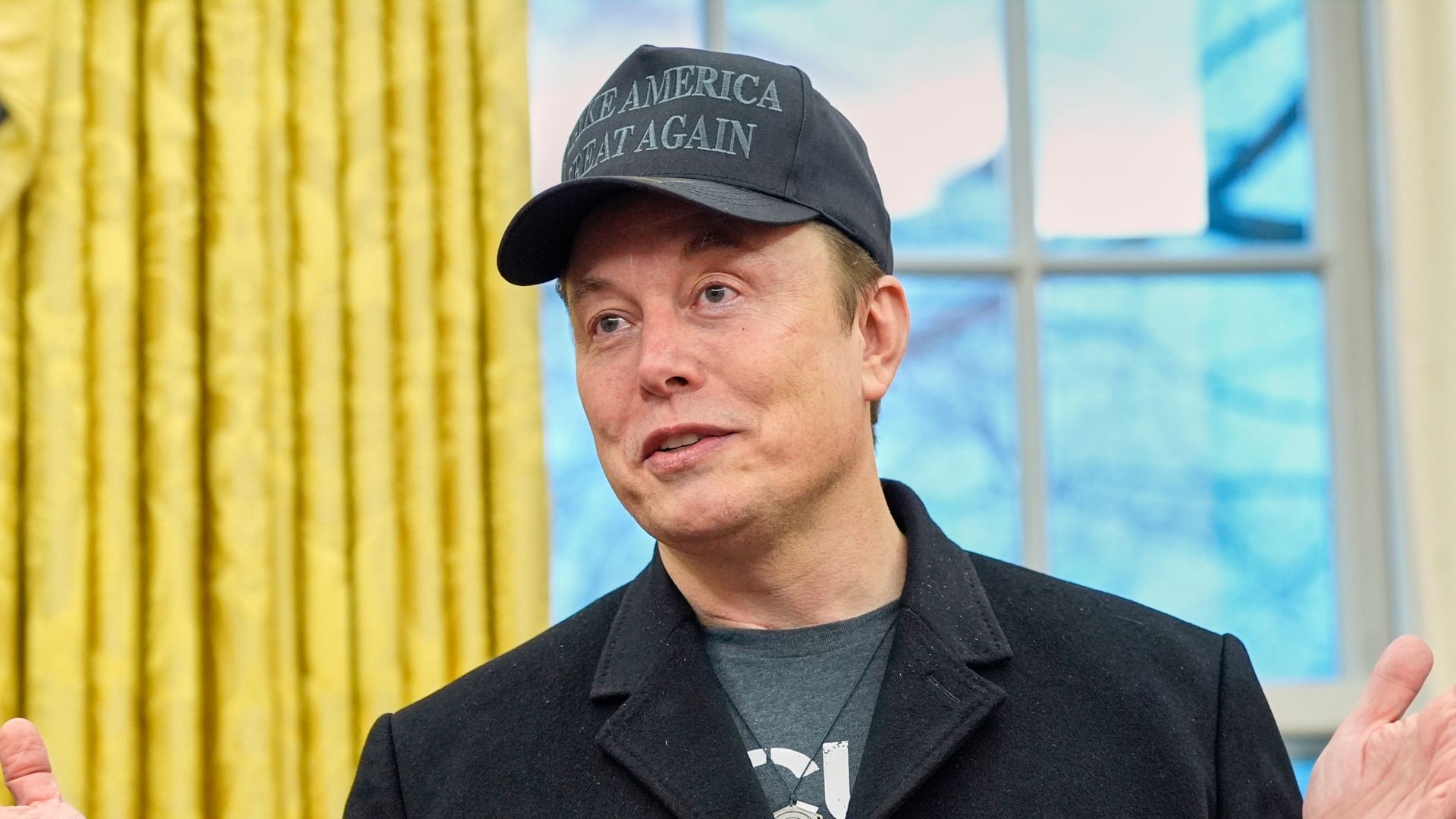
Elon Musk’s name has appeared in files relating to Jeffrey Epstein, with a reference made to the world’s richest man potentially visiting the paedophile’s island.The Latest News from the UK and Around the World | Sky News

West Ham have sacked their head coach, Graham Potter, after a poor run of results for the club.The Latest News from the UK and Around the World | Sky News
How often do migrants successfully fight their removal from Britain on the basis of their human rights?The Latest News from the UK and Around the World | Sky News

It was an event organisers had hoped, perhaps optimistically, would be civil. Then comes a shout: “Shut the f**k up!”The Latest News from the UK and Around the World | Sky News

AP- A new report from Portland State University found that budget cuts under President Donald Trump’s new spending bill threaten nearly half of federal funding allocated to federally recognized Native American and Alaska Native nations last year.
Roughly $530 million of the $1.19 billion allocated to Northwest tribal nations in fiscal year 2024 — used to fulfill the federal government’s trust and treaty obligations to Native American and Alaska Native tribes — is at risk of being cut. The congressionally allocated funds serve myriad functions for tribes in the Northwest, including providing clean drinking water, affordable housing, schools, transit and land management. Funding is decided by Congress on a yearly basis and can be disbursed over a period of time that exceeds the calendar year it is allocated.
“All across the board tribes are worried about the funding cuts that are happening right now,” said Serina Fast Horse, who is Lakota and Blackfeet and serves as the co-director of the Northwest Environmental Justice Center, which provides grant application assistance and advising to Indigenous communities in the Northwest.
Fast Horse says there are serious concerns among Northwest tribes about further cuts to vital programs ranging from health and wellness to early childhood education. The report warns of vulnerabilities to programs and grants that tribes rely on for resilience in the face of climate change, like improving home weatherization, managing forestland and renovating aging homes. Federal dollars to help Northwest tribes bolster their infrastructure against the increasing threats from wildfire, drought and sea-level rise could also be slashed.
The Portland State report found millions in Clean Air Act funding could also go away — the Environmental Protection Agency earmarked nearly $2 million in 2024 for Northwest tribes in a series of grants for monitoring air quality and pollution. Much of the congressionally allocated funding has yet to be distributed to tribes and is now at risk of being cut altogether.
The report demonstrates how proposed major reductions across the federal government, including at the Environmental Protection Agency, the Department of the Interior and the National Oceanic and Atmospheric Association, could reverberate across Indian Country.
Tribal officials shared concerns that drastic cuts could cause the federal government to fall short of trust and treaty obligations that mandate the federal government support tribal services, uphold tribal sovereignty and protect tribal treaty resources — responsibilities that courts, including the U.S. Supreme Court, have repeatedly upheld.
“All the funding reductions addressing clean water, air and dealing with climate change have impacts on the Tribes’ culture and treaty protected resources,” said William E. Ray Jr., chair of the Klamath Tribes.
Researchers declined to disclose specific projects at risk of elimination for fear of retaliation, and a number of tribes and tribal organizations declined to comment to InvestigateWest, citing similar concerns.
“Trump and Congressional Republicans are wreaking havoc on Tribal communities with their ‘Big, Ugly BETRAYAL’ of a law that arbitrarily cuts many programs supporting folks in Indian Country, where chronic underfunding is already impacting services and exacerbating disparities,” said Oregon Senator Jeff Merkley, a Democrat.
He added that the federal government plays an outsized role in funding essential services to tribal communities, including health care, education and public safety, and that the Inflation Reduction Act took important steps in advancing funding for water infrastructure and environmental programs for tribes.
In 2024, Clean Air Act related funds were used to fund 15 projects for 12 Northwest tribes. The Confederated Tribes and Bands of the Yakama Nation, the Confederated Tribes of the Umatilla Indian Reservation, and the Tulalip Tribes are some of the Native American nations set to receive research grants for improving air quality and pollution monitoring. Among 12 tribes selected for funding, several of them focus on minimizing exposure to poor air quality and harmful pollutants to their elderly and medically vulnerable residents. Other tribes intend to study impacts of pollutants on important first foods — culturally significant staple foods consumed before colonization — that officials say are critical to improving health outcomes for their citizens.
Researchers at PSU examined 469 programs impacted by President Trump’s reversal of former President Joe Biden’s Executive Order 14008, which sought to address climate change and created a number of environmental justice initiatives. Sixty of the programs identified by researchers were specifically named in the Republican-led spending bill for cuts, and 17 of those provided funding directly to tribes. The programs accounted for roughly 35% of all federal investments in tribes in 2024. The report says not all of the funding will be cut, but a significant portion of it could be.
The cuts come at a time when Native Americans and Alaska Natives already have limited access to federal services and funds, according to a December 2024 report from the U.S. Government Accountability Office, a nonpartisan congressional watchdog. It found when tribes had to compete with other entities for federal funding, they may receive a small portion of the total amount, and that limited access to federal services and funds contributes to known disparities for Native Americans and Alaska Natives compared to other Americans.
Of the $20.15 billion in federal funding that went to tribes between 2010 and 2024, tribes within the boundaries of Idaho received a total of $304.56 million, Washington tribes $1.81 billion, Oregon tribes $690.76 million, and Alaska Native tribes received $2.35 billion.
Other programs at risk of being cut include the EPA’s embattled Environmental Justice Government-to-Government Program, which funded initiatives by states, tribes and local governments to support activities that lead to measurable environmental or public health impacts.
Under that program, in 2023, the EPA awarded the Tulalip Tribes $977,000 to work in conjunction with the Confederated Tribes and Bands of Yakama Nation to create a tool to detect which homes are at greatest risk from wildfire smoke infiltration and dangerously hot weather, which are growing issues affecting both communities.
While the federal government has repeatedly affirmed its obligations to tribes, actual allocations remain disproportionately small compared to population figures. In 2024, Native American tribes received just 1.7% of federal energy and environment spending, despite Native people making up 2.9% of the U.S. population.
Between 2010 and 2024, tribes within the bounds of Idaho, Washington and Oregon received roughly $2.81 billion in federal investments in energy and environmental infrastructure, which represents roughly 14% of the $20 billion in allocations made to tribes nationwide.
The researchers determined that programs funded under the Inflation Reduction Act, Biden’s 2022 climate, health and tax law, are at particular risk of being eliminated. The funding allocated to tribes under the IRA represented a historic investment in infrastructure in Indian Country, more than doubling energy and infrastructure investment from $1.51 billion nationwide to $3.94 billion in 2024, around .04% of total federal grant spending obligations for 2024.
“When you put them in the context of how much money the federal government actually spends on certain things, it’s pennies on the dollar,” said Sophie Lalande, a co-author of the PSU report.
Soon after taking office and without consulting Congress, the Trump administration suspended some grants that tribal communities used heavily, such as community change grants, distributed by the EPA’s Offices of Environmental Justice and of External Civil Rights Compliance during the Biden administration, to support climate resilience and clean energy. Distributed as a part of the Inflation Reduction Act, the grants were suspended as part of the Trump administration’s anti-diversity, equity and inclusion efforts.
The grants helped tribal communities in the Northwest tremendously, according to Fast Horse.
“They were providing hundreds of thousands of dollars to communities for infrastructure improvements, like access to clean drinking water and climate resilience hubs, just really essential pieces of community development for health and safety of communities,” she said.
The report stresses a multiplier effect from investments made in tribal communities. Infrastructure dollars invested on tribal lands often serve as anchors for broader local development, since tribal lands often share regional infrastructure like power grids, roads or water systems with non-Native communities, with the power of dollars rippling outward into surrounding rural towns and cities.
Bobby Cochran, a researcher with Portland State University and senior project manager at the National Policy Consensus Center, co-authored the report.
“We just haven’t made a major investment in infrastructure since the ’60s or ’70s, so this wasn’t fluffy,” he said. “It’s really important stuff that was just trying to play catch-up.”
___
This story was originally published by InvestigateWest and distributed through a partnership with The Associated Press.
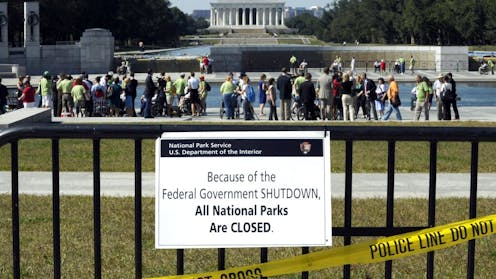
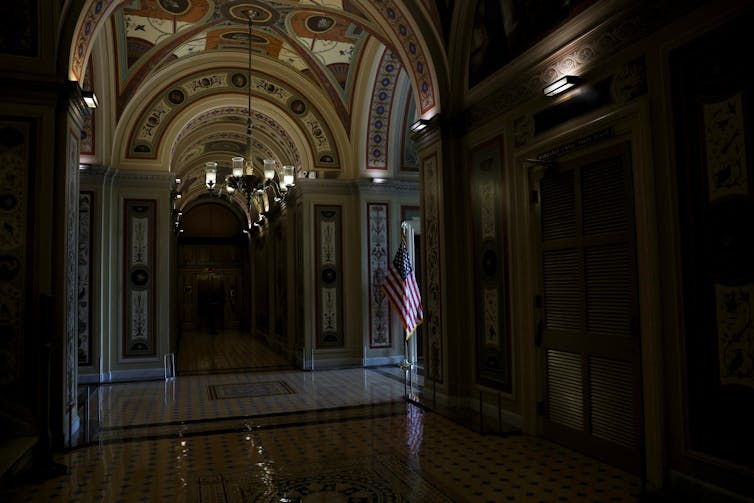
As the federal fiscal year draws to a close, an increasingly familiar prospect is drawing near in Washington, D.C.: a possible government shutdown. And for federal workers, it couldn’t come at a worse time.
In the fractious and polarized political landscape of the United States, Democrats and Republicans have come to rely on short-term, stopgap funding bills to keep the government operating in the absence of elusive longer-term budget deals.
With the parties currently wide apart over the terms of even a short-term budget resolution, the government is set to shut down on Oct. 1, 2025, barring an 11th-hour deal that appears far off. If the shutdown does happen, it would mark another difficult moment this year for a federal workforce that has so far shed more than 300,000 jobs. This is largely due to ongoing Trump administration efforts to downsize parts of the federal government and restructure or largely eliminate certain government agencies with the stated aim of increasing efficiency.
With a government shutdown, hundreds of thousands of federal employees would be furloughed – sent home without pay until funding resumes.
As a team of financial economists who study labor markets and public sector employment and have examined millions of federal personnel records spanning such government shutdowns in the past, we have found that the consequences reach far beyond the now-familiar images of closed national parks and stalled federal services. Indeed, based on our study of an October 2013 shutdown during which about 800,000 federal employees were furloughed for 16 days, shutdowns leave an enduring negative effect on the federal workforce, reshaping its composition and weakening its performance for years to come.
Millions of Americans interact with the federal government every day in ways both big and small. More than one-third of U.S. national spending is routed through government programs, including Medicare and Social Security. Federal workers manage national parks, draft environmental regulations and help keep air travel safe.
Whatever one’s political leanings, if the goal is a government that handles these responsibilities effectively, then attracting and retaining a talented workforce is essential.
Yet the ability of the federal government to do so may be increasingly difficult, in part because prolonged shutdowns can have hidden effects.
When Congress fails to pass appropriations, federal agencies must furlough employees whose jobs are not deemed “excepted” – sometimes commonly referred to as essential. Those excepted employees keep working, while others are barred from working or even volunteering until funding resumes. Furlough status reflects funding sources and mission categories, not an individual’s performance, so it confers no signal about an employee’s future prospects and primarily acts as a shock to morale.
Importantly, furloughs do not create long-term wealth losses; back pay has always been granted and, since 2019, is legally guaranteed. Employees therefore recover their pay even though they may face real financial strain in the short run.
A cynical observer might call furloughs a paid vacation, yet the data tells a different story.
Using extensive administrative records on federal civilian workers from the October 2013 shutdown, we tracked how this shock to morale rippled through government operations. Employees exposed to furloughs were 31% more likely to leave their jobs within one year.
These departures were not quickly replaced, forcing agencies to rely on costly temporary workers and leading to measurable declines in core functions such as payment accuracy, legal enforcement and patenting activity.
Further, we found that this exodus builds over the first two years after the shutdown and then settles into a permanently lower headcount, implying a durable loss of human capital. The shock to morale is more pronounced among young, female and highly educated professionals with plenty of outside options. Indeed, our analysis of survey data from a later 2018-2019 shutdown confirms that morale, not income loss, drives the exits.
Employees who felt most affected reported a sharp drop in agency, control and recognition, and they were far more likely to plan a departure.
The effect of the motivation loss is striking. Using a simple economic model where workers can be expected to value both cash and purpose, we estimate that the drop in intrinsic motivation after a shutdown would require a roughly 10% wage raise to offset.
Some people have argued that this outflow of employees amounts to a necessary trimming, a way to shrink government by a so-called starving of the beast.
But the evidence paints a different picture. Agencies hit hardest by furloughs turned to temporary staffing firms to fill the gaps. Over the two years after the shutdown we analyzed, these agencies spent about US$1 billion more on contractors than they saved in payroll.
The costs go beyond replacement spending, as government performance also suffers. Agencies that were more affected by the shutdown recorded higher rates of inaccurate federal payments for several years. Even after partial recovery, losses amounted to hundreds of millions of dollars that taxpayers never recouped.
Other skill-intensive functions declined as well. Legal enforcement fell in agencies that became short of experienced attorneys, and patenting activity dropped in science and engineering agencies after key inventors left.
Official estimates of shutdown costs typically focus on near-term GDP effects and back pay. But our findings show that an even bigger bill comes later in the form of higher employee turnover, higher labor costs to fill gaps, and measurable losses in productivity.
Shutdowns are blunt, recurring shocks that demoralize the public workforce and erode performance. These costs spill over to everyone who relies on government services. If the public wants efficient, accountable public institutions, then we should all care about avoiding shutdowns.
After an already turbulent year, it is unclear whether an upcoming shutdown would significantly add to the strain on federal employees or have a more limited effect, since many who were considering leaving have already left through buyouts or forced terminations this year. What is clear is that hundreds of thousands of federal employees are likely to experience another period of uncertainty.

The authors do not work for, consult, own shares in or receive funding from any company or organization that would benefit from this article, and have disclosed no relevant affiliations beyond their academic appointment.
Politics + Society – The Conversation