Paul Skenes’ first start of the 2026 season might not have even lasted a New York minute. The Pittsburgh Pirates’ ace surrendered five runs in his Opening Day start against the New York Mets, and was pulled after pitching just ⅔ of an inning. All five runs were earned, with the Mets logging four hits and two walks off Skenes before he drilled catcher Francisco Alvarez. Skenes also recorded a strikeout. Mets shortstop Francisco Lindor began the inning with a walk before star outfielder Juan Soto moved him to third on a single in the following at-bat. Third baseman Bo Bichette scored Lindor on a sacrifice fly in his first at-bat with the Mets. A single by first baseman Jorge Polanco and a walk from outfielder Luis Robert Jr. allowed the Mets to load the bases with just one out against Skenes. That’s where Skenes’ day quickly unraveled, with Pirates center fielder Oneil Cruz making a pair of mistakes to make matters worse for the reigning NL Cy Young winner. Designated hitter Brett Baty hit a bases-clearing triple that might have been caught by Cruz had he not misplayed the ball off the bat. On the very next pitch, second baseman Marcus Semien hit a pop fly that should’ve been caught by Cruz, but dropped in the gap. New York took a 5-2 lead by that point, negating the early lead Pittsburgh took off a two-run homer from Brandon Lowe in his first at-bat with the Pirates. While Skenes was able to strike out right fielder Carson Benge in the following at-bat, his day ended after he plunked Alvarez. Skenes threw 37 pitches in the first inning before getting pulled. Thursday marked the shortest outing of Skenes’ young career, and just the second time he allowed five earned runs in an outing. It’s also the first time that the Mets have scored more than three runs in the first inning on Opening Day in franchise history. Skenes’ outing came on the heels of his impressive showing for Team USA at the World Baseball Classic. The righty allowed just one run in 8 ⅓ innings over two outings during the tournament. But Pirates manager Don Kelly expressed that he wanted to limit Skenes’ usage after things went south in the first inning. “It was all pitch count related, really, for him,” Kelly told the NBC broadcast. “We didn’t want to put him in harm’s way, up in the 40-pitch count mark. If we get in a foul ball battle there, we don’t want to push him in the mid-40s [in the first inning].” The Mets wound up pulling away from the Pirates to win 11-7. Lowe hit his second homer of the day for the Pirates, but the Mets’ new-look lineup was too much for the Pirates to overcome. Benge and Alvarez hit back-to-back home runs, while Robert had two RBI singles in his Mets debut.Latest Sports News from FOX Sports
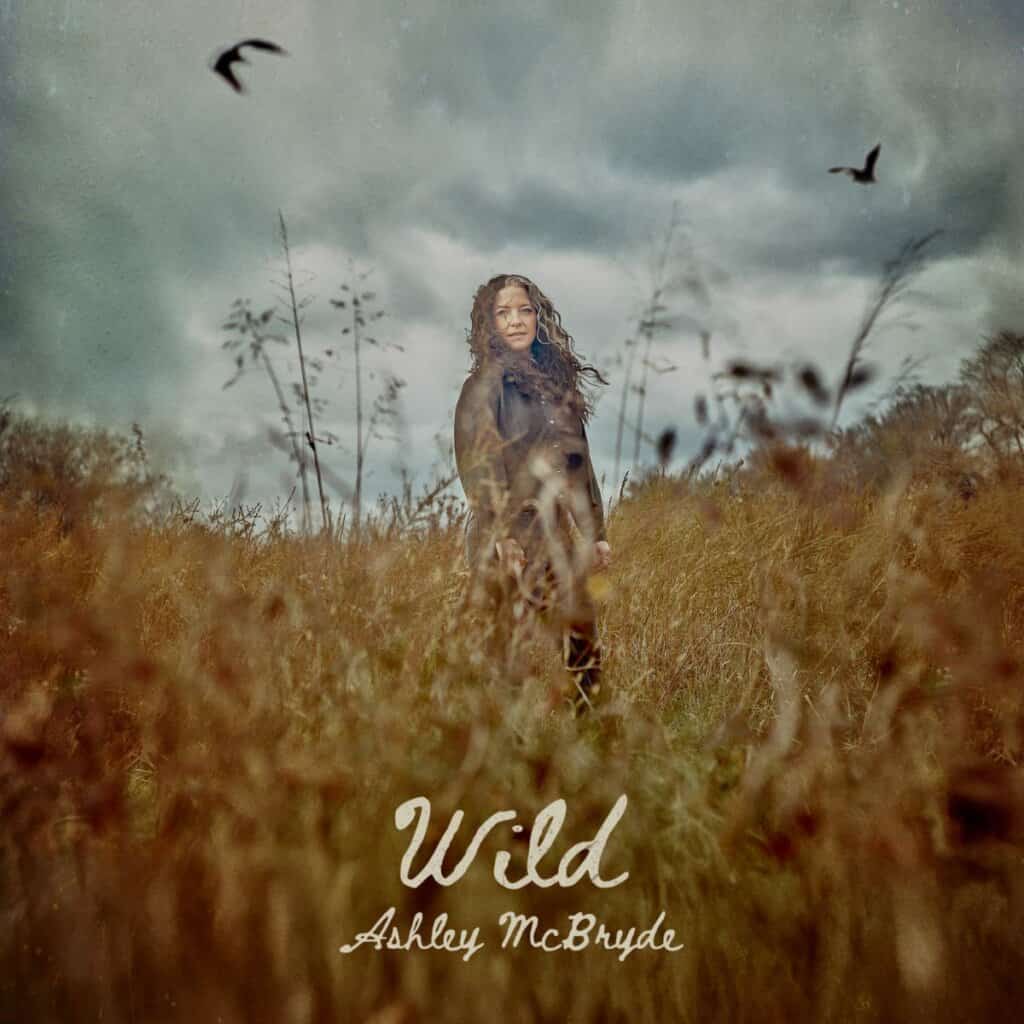
Ashley McBryde is getting ready to unload a brand-new collection of personal stories and powerful tunes on her upcoming album, Wild. Adding to the excitement, she also dropped the official track list and teased what to expect from this chapter.
To help fans prepare for the project’s arrival next month, we have compiled everything you need to know about Wild, from the creative process and standout tracks to the themes shaping the songs and more.
Release Date
Starting off with one of the most important pieces of information, the record will be dropping on May 8 via Warner Records Nashville. This marks McBryde’s fifth studio album. Along with sharing the release date, the country star also revealed the track list with a bit of help from her fans.
Photo Courtesy of Ashley McBryde
Wild is Made Up of 11 Tracks
In the week prior to the announcement, 11 unique patches were mailed around the world to some of McBryde’s most devoted fans and members of her official fan club known as The Trybe. Each patch included a passcode and instructions for unlocking the title of a different song from Wild. Fans were told to enter their code on McBryde’s official website, causing the coordinating patch to light up on a jean jacket matching the one she wears on the album cover, and reveal the song title.
With every patch collected, the Trybe worked together to unlock the full album tracklist, unveiling all 11 songs to the world. Those same fans now have the chance to re-enter their password to hear an early preview of each track.
Ashley McBryde; Wild
The Tracklist is Built on Over 15 Years of Stories
Now that that information has been shared with the public, we can see that Ashley McBryde served as a co-writer on six songs and chose five outside cuts bringing the total to 11. The Arkansas native also explained that when selecting songs for this record, she took a different approach, one that found her diving back into songs that she once feared were too honest and “unvarnished” to ever be released.
Wild came together during a pivotal moment in Ashley McBryde’s life. Even after years of success during which she achieved great recognition, like 2020’s Never Will becoming one of the only LPs ever to garner Country Album of the Year nominations from the ACM, CMA, and GRAMMY®s all in the same awards season, she found herself questioning her path.
As she attempted to find her footing and move forward in her music career with more confidence, McBryde began to revisit songs she had kept on the shelf for way too long, some have lived only in her live shows up until now.
That time allowed her to gain a new perspective on the unpolished songs. Between the co-writes and outside cutsWild gradually took shape with stories that were written over the course of 15 years.
“At the time I was told I needed to be more palatable than what those songs were offering,”McBryde explains. “I’ve kept them in my live show over the years, and I’m so thankful that I never cut them before this album. When I hear myself playing them now, I can finally believe the woman who’s singing.”
John Osborne of Brothers Osborne Produced The Entire Album
To help bring these tunes to life, McBryde recorded the songs with her live band, Deadhorse and tapped Lindeville collaborator and member of the award-winning country duo Brothers Osborne, John Osborne, to act as producer.
She continued, “We brought an entirely new approach to the studio every day, where we cut what spoke to us in that moment. No plan for an album, no timeline, no pressure – just me, John, the boys and a feeling…These songs that have lived with us for years, and new songs that found their way to us and immediately felt like mine, they all started to outline the shape of a story I knew too well. They fell together to tell my story; I think that’s what happens when you let the Wild back in.”
McBryde Digs Deep Into Her Sobriety Journey
Based on the tracks released so far, including “Rattlesnake Preacher,” “Arkansas Mud,” current single to country radio, “What If We Don’t” and her latest release, “Bottle Tells Me So,” it’s clear that this collection takes fans on a raw and honest journey leading up to the moment McBryde quit drinking nearly four years ago.
“Bottle Tells Me So” was penned by the Grand Ole Opry member with Shelly Fairchild and Terri Jo Box, and illustrates the aftermath of a drunken night that left the person at hand struggling to gain control. McBryde’s lyrics paint a vivid picture of the morning after a night spent drinking when the confusion, regret, and the realization that the consequences hit all at once. With a mix of self-reflection and honesty, the song marks a pivotal turning point in McBryde’s life.
“When I was drinking, it was much easier to turn off my inner critic as I was creating,” McBryde admits, who got sober in June 2022. “But over time I learned I needed to acknowledge that voice, tell her she’s no fun to work with, and then try to tap into the younger version of me—the one who couldn’t handle all the things she left behind in Arkansas, and who ended up drinking to soothe herself. I had to tell her, ‘Okay, the alcohol’s gone and you’re scared—so, do it scared. You’ve been through worse, and you made it out all right.’”
GRAMMY®, CMA, and ACM award-winning singer-songwriter Ashley McBryde will celebrate her new chapter of vulnerability tonight and tomorrow for the second installment of her sold-out Redemption Residency. Her solo acoustic “Just Me and My Shadow” shows will feature fan favorites, deep cuts, and previously unheard tracks from her catalog.
Wild Tracklist
1. Rattlesnake Preacher(Randall Clay)
2. Arkansas Mud(Ashley McBryde, Jessie Jo Dillon, Chris Tompkins)
3. Water in the River(Randall Clay, Blue Foley, Roger Hodges)
4. Creosote(Ashley McBryde, Lisa Carver)
5. Bottle Tells Me So (Ashley McBryde, Shelly Fairchild, Terri Jo Box)
6. What If We Don’t(Ashley McBryde, Terri Jo Box, Randall Clay)
7. Lines In The Carpet(Lauren Hungate, Caroline Watkins, Lori McKenna)
8. Behind Bars(Jeff Hyde, Jessie Alexander, Jon Randall)
9. Hand Me Downs(Ashley McBryde, Jessie Jo Dillon, Laura Veltz)
Rising star Dasha is finding her way through fame’s spotlight, but it’s not all glitz and glamour — there’s a deeper story beneath her success. Continue reading…Country Music News – Taste of Country
Rising star Dasha is finding her way through fame’s spotlight, but it’s not all glitz and glamour — there’s a deeper story beneath her success. Continue reading…The Boot – Country Music News, Music Videos and Songs
A sign hangs outside the director's office of the Alaska Division of Elections, Thursday, March 19. 2026, in Juneau, Alaska. (AP Photo/Becky Bohrer)
A sign hangs outside the director’s office of the Alaska Division of Elections, Thursday, March 19. 2026, in Juneau, Alaska. (AP Photo/Becky Bohrer)
AP- The tiny Alaska Native village of Beaver is about 40 minutes — by plane — from the nearest city. Its roughly 50 residents rely on weekday flights for mail and many of their basic supplies, from groceries to Amazon deliveries of everyday household items.
Air service plays an outsize role in the nation’s most expansive state, where most communities rely on flights for year-round access. Planes also play a critical role in elections, getting voting materials and ballots to and from rural precincts such as Beaver and in delivering ballots for thousands of Alaskans who vote by mail — some in places where in-person voting is not available.
The vast distances and relative isolation of so many communities make Alaska unique and are why its residents have a significant interest in arguments taking place Monday before the U.S. Supreme Court.
Many here worry that a case from Mississippi challenging whether ballots received after Election Day can be counted in federal elections could end Alaska’s practice of accepting late-arriving ballots. Alaska counts ballots if they are postmarked by Election Day and received within 10 days, or 15 days for overseas voters in general elections.
“These processes have been in place for a long time just to ensure that our ballots are counted,” said Rhonda Pitka, a poll worker and first chief in Beaver, which sits along the Yukon River 110 miles (177 kilometers) north of Fairbanks.
If the court decides ballots in all states must be received by Election Day, she said, “They’ll be disenfranchising thousands of people — thousands of people in these rural communities. It’s just basically saying that their votes don’t count, and that’s a real shame.”
Some ballots already arrive late
Alaska is one of 14 states that allow all mailed ballots postmarked by Election Day to arrive days or weeks later and be counted, according to the National Conference of State Legislatures and the Voting Rights Lab. An additional 15 provide grace periods for military and overseas ballots.
But Alaska’s geography, weather and great distances between communities — Alaska is more than twice the size of Texas, the nation’s second-largest state — raise the stakes for voters. The unusual way the state counts its votes also makes a grace period important, advocates say.
Under Alaska’s ranked-choice system for general elections, workers in small rural precincts call in voters’ first choices to a regional election office. All ballots, however, ultimately are flown to the state Division of Elections in the capital, Juneau. There, the races not won outright are tabulated to determine a winner.
Even with Alaska’s current 10-day grace period, ballots from some villages in 2022 were not fully counted because of mail delays. They arrived too late for tabulations in Juneau, 15 days after Election Day.
If the Supreme Court rules that ballots cannot be counted if they arrive at election offices after Election Day, scores of Alaska voters could be affected. About 50,000 Alaskans voted by mail in the 2024 presidential election.
“I think there’s probably no other state where this ruling could have a more detrimental impact than ours,” Alaska’s senior U.S. senator, Republican Lisa Murkowski said in an interview.
Murkowski sees the case — a challenge by the Republican National Committee and others to Mississippi’s allowance of late-arriving ballots — as an effort to end voting by mail nationwide.
‘Seeing a level of voter intimidation’
The RNC argues such grace periods improperly extend elections for federal office, but Mississippi responded that no voting occurs after Election Day — only the delivery and counting of already completed ballots.
The Supreme Court will hear arguments as the U.S. Senate is debating legislation being pushed by President Donald Trump that would require people to show proof-of-citizenship to register to vote and a photo ID to cast a ballot.
Taken together, Murkowski said such efforts could discourage people from voting.
“I think we’re seeing a level of voter intimidation, I’ll just say it,” she said. “I feel very, very strongly that the effort that we should be making at the federal level is to do all that we can to make our elections accessible, fair and transparent for every lawful voter out there.”
Alaska’s other congressional members, Rep. Nick Begich and Sen. Dan Sullivan, both Republican allies of Trump who are seeking reelection this year, support the SAVE America Act now before the Senate. But they also said they want to ensure that ballots properly cast on or before Election Day get counted.
“We’ll see what the courts choose to do on that issue, but I do think that we need to allow for time for ballots to come in from the rural parts of our state,” Begich said during a recent visit to Juneau.
Alaska officials highlight challenges to the court
A court filing in the Mississippi case by Alaska Attorney General Stephen Cox and Solicitor General Jenna Lorence did not take sides but outlined geographic and logistical challenges to holding elections in Alaska.
In Atqasuk, on Alaska’s North Slope, poll workers counted votes on election night in 2024, tallies they would normally relay by phone to election division officials. But the filing said they could not get through and “chose what they saw as the next best solution — they placed the ballots and tally sheets into a secure package and mailed them to the Division, who did not receive them until nine days later.”
The filing seeks clarity from the Supreme Court, particularly around what it means for ballots to be received by Election Day.
While it is clear when a ballot is cast, “when certain ballots are actually ‘received’ is open to different interpretations, especially given the connectivity challenges for Alaska’s far-flung boroughs,” Cox and Lorence wrote.
Effect on Native voters
Lawyers with the Native American Rights Fund and Great Lakes Indigenous Law Center said in filings with the court that limited postal service in rural areas means that some ballots might not be postmarked until they reach Anchorage or Juneau, which can take days.
In the 2022 general election, between 55% and 78% of absentee ballots from the state House districts spanning from the Aleutian Islands up the western coast to the vast North Slope arrived at an election office after Election Day, they wrote. Statewide, about 20% of all absentee ballots in that election were received after Election Day.
Requiring ballots to be received by Election Day, they warned, would “disproportionately disenfranchise” Alaska Native voters. The lawyers represent the National Congress of American Indians, Native Vote Washington and the Alaska Federation of Natives.
Michelle Sparck, director of Get Out the Native Vote, a nonpartisan voting rights advocacy group affiliated with the Alaska Federation of Natives, worries about creating confusion and fear among voters.
She sees the case before the Supreme Court and the Republican SAVE Act as “a multipronged attempt to take control or wrest control of elections away from states.” Alaska, she said, already has enough inherent barriers for many voters.
“There is a minute record of election fraud — not at the rate that requires this heavy-handed response through the legislature and the Supreme Court,” she said.
Breakfast foods are almost always tasty, but depending on what’s in them, they may start you off on the wrong foot. Here’s the ingredient you should avoid.
Mashed – Fast Food, Celebrity Chefs, Grocery, Reviews
Elsewhere in the interview, Savannah tackled a very difficult topic — namely, the rumors and allegations that have been hurled at her family throughout this ordeal.
Co-host Savannah Guthrie speaks during an episode of The Today Show. (Image Credit: NBC)
“When you talk about the cruel speculation, the whispers, the innuendo that it was somebody in your family, how did you weather that?” Hoda asked.
“It’s unbearable. And it piles pain upon pain. There are no words, there are no words. I don’t understand and I will never understand,” Savannah answered (via The New York Post).
Guthrie went on to note that “no one took better care” of her mother than her sister and brother-in-law, who lived nearby in Tucson.
“And no one protected my mom more than my brother,” she said of her brother, Camron Guthrie.
“And we love her and she is our shining light. She is our matriarch. She’s all we have.”
During her first interview since her mother’s disappearance, Savannah Guthrie explains that she and her family are in agony. (Image Credit: NBC)
Savannah added that the video of a masked man outside Nancy Guthrie’s home on the night of her appearance at least seemed to quiet the rumors of an inside job.
Savannah went on to explain that the public attention paid to the case has complicated things in more ways than one.
For example, while she believes that two of the ransom notes the family received were authentic, the rest seem to be nothing but cruel attempts at exploitation.
“There are a lot of different notes, I think that came and I think most of them … are not real and I didn’t see them,” she said, adding:
“But I believe the two notes that we received that we responded to, I tend to believe those are real.”
Later in the interview, Savannah revealed that he family knew from the start that Nancy had not wandered off on her own.
A tearful Savannah Guthrie urges someone out there to do the right thing. (Image Credit: NBC)
“From the very early moments, Annie and Tommy were saying, ‘This isn’t that case that you are used to where someone wanders off. She can’t wander off,’” Savannah said of her sister and brother-in-law.
“My mom, she was in tremendous pain. Her back was very bad… on a good day, she could walk down to the mailbox and get the mail, but most days not,” she continued, adding:
“So there was no ‘wander off.’ And the doors were propped open and there was blood on the front doorstep and the Ring camera had been ripped off, and so we were saying, ‘This is not okay. Something is very wrong here.’ “
Nearly two months after Nancy’s disappearance, it’s difficult to be optimistic about the odds of her safe return.
But we remain hopeful that Nancy and her siblings will eventually find the answers they’ve been seeking.
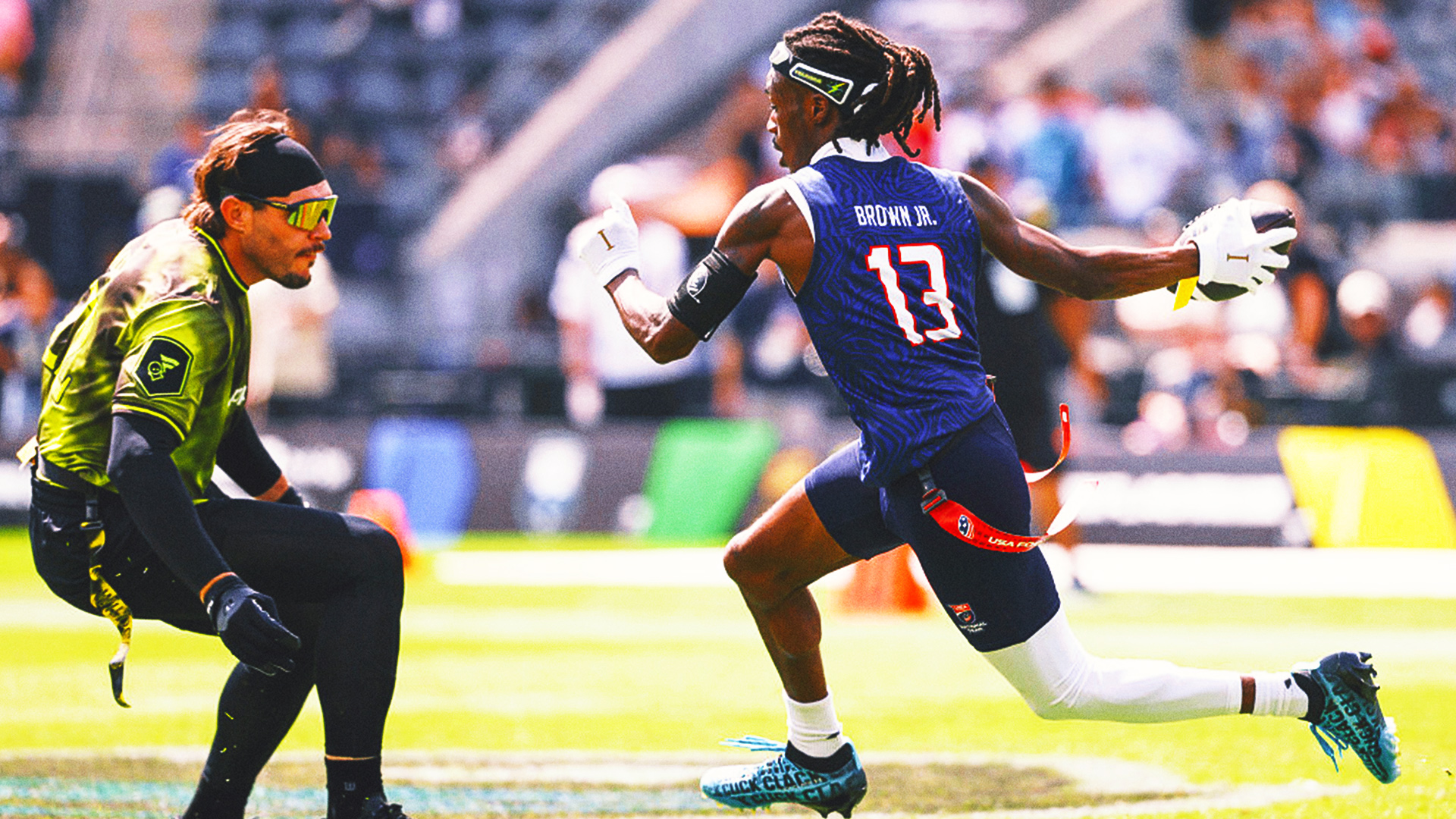
A minute before halftime of the inaugural Fanatics Flag Football Classic last weekend, Team USA’s Velton Brown Jr. caught a pass just past midfield. He surveyed the open field around him and scanned the defense. Then he accelerated. As Team Wildcats’ Luke Kuechly tried to pull one of his flags from behind, Brown contorted his body mid-sprint to make the Hall of Fame linebacker miss. When veteran NFL receiver DeAndre Hopkins lunged toward him by the sideline, Brown niftily jumped backward to avoid his arm. Then, with both Kuechly and Hopkins in front of him, Brown started a series of jukes. He slipped between them. Still, they couldn’t pull his flag. Brown’s dazzling array of moves finally ended at the 7-yard line, where his right knee touched the ground. But the viral highlight on Saturday — on top of Team USA’s dominance of current and former NFL stars throughout the day — encapsulated the message that the flag players hoped to send. Team USA went 3-0 to win Saturday’s round-robin tournament in Los Angeles, scoring on every possession except a kneel-down at the end of one victory. “I think truly that guys understand that flag football is its own sport,” Darrell “Housh” Doucette, a Team USA flag national team member since 2021 and MVP of Saturday’s tournament, told me. “We are in our own lane.” The flag players were noticeably smaller and quicker than their NFL counterparts. Their shiftiness often made their opponents look silly. But the biggest takeaway was the flag players’ mastery of their sport, prompting discussion about what it would take for NFL players to challenge for spots on the U.S. flag team that will compete in the 2028 Olympics, when flag football will make its Olympic debut. [4 Takeaways From Fanatics Flag Football Classic] As a discipline of football, the flag game’s similarities to tackle football are clear. The ball looks the same. The ability to throw, catch and cover translates. Speed, athleticism and versatility matter, too. But flag football is a faster game than tackle football. It’s played on a much smaller field (50 yards long between the end zones, 25 yards wide). Receivers have to run routes differently in a smaller space. For quarterbacks, the clock in their head is sped up because the rush gets to them a lot faster than what they’re accustomed to. The non-contact component of flag is “obviously a glaring one” for NFL players, according to former NFL assistant coach Callie Brownson, USA Football’s senior director of high performance and national team operations. “I think when we say non-contact, everybody just automatically goes to tackling, which obviously is very true. You can’t tackle in a 5-on-5 game. But what also falls under that category of non-contact that people don’t give enough credit to is, for example, you can’t hold somebody up while you’re trying to pull their flag,” Brownson told me. “You can’t initiate any sort of contact with a player at the top of the route. You can’t run through a player in order to make a play on the ball. You can’t shield or block or post anybody up. Non-contact is actually a little more complex than just the tackling component. “Then the other piece is flag-pulling,” she added. “It’s a super, super unique skill that I don’t think enough people appreciate until they go through that process. You’re not just pulling a stationary flag. As you saw on Saturday, these are unique, dynamic movements that these ball carriers are making. The plane and the level of the flag is changing. The axis of the flag is changing on a dime. Flag-pulling is a super unique skill that’s particular to our sport. It [requires] a certain type of hand-eye coordination that has to be trained over time.” Brown, the cousin of Detroit Lions star safety Kerby Joseph, played high school and semi-pro football before getting involved with flag football. He says there was an acclimation process to learning the nuances of flag. “A lot of people are used to the blocks,” Brown told me. “A lot of people are used to the heavy hits and things like that, but flag consists of more finesse, more IQ to where it’s a smaller field. “You don’t necessarily get to read a hole like a running back. It’s a totally different game,” he added. “Maybe a guy is trying to pull your flag and you may stiff-arm just because that’s the natural instinct of what you’re used to. That was kind of the adjustment for me, learning how to keep my hands up and not to necessarily want to jam somebody or slap the ball out of their hands, things like that.” Team USA member Isaiah Calhoun, who had a pick-six off Cincinnati Bengals quarterback Joe Burrow, places a higher emphasis on smarts than athleticism in flag football. “If you just athletic and not smart, you’re not going to know what to do. But if you’re smart and add your athleticism to the game, then you’re going to be one of the best players in the world or one of the most known players in the world,” Calhoun told me. “You have to learn from various people that have been playing for a long time before you get on the field. If you just get on the field and not know what to do, you’re going to be embarrassed out there.” While it’s clear that there will be a learning curve for them to master flag football, NFL players remain on track to participate in the sport at the 2028 Olympics. Last May, NFL owners approved a resolution permitting it, though specifics of their participation must still be finalized with the NFL Players Association and relevant Olympic authorities. Doucette, Brown and Calhoun don’t see a problem with NFL players challenging for roster spots on the flag team. They view their involvement as part of their sport’s growth. “When [NFL players] step on the flag football field and they’re competing with us, they’re not NFL guys in my eyes,” Doucette told me. “We all feel that we are one, we are equal and we are all flag football players at that time. And if they study the game and they’re willing to take the time out of their busy schedule and to come out and learn it, hey, man, hats off to them. Come out and be great, because now you’re a part of our community and we accept you with open arms, the same way they accepted us as peers over the past weekend. “We are the USA national team, but the USA national team also gives open invites to guys to come out and make the team better,” Doucette added. “And if you say, OK, 10 [NFL] guys would be better suited for the game, and they go out there and win gold, you can’t blame them for putting out the 10 best guys. And I think that’s what it’s all about.” Brownson said that “time on task” is the biggest thing that NFL players need with flag football. Athletes in basketball, soccer and track & field have also found success in the sport due to transferable skills, she said. “What you see sometimes in the tackle [football] world, a player has a predominant position in college and they get drafted and have to do something else at the NFL level. It’s no different than that in the sense that it takes reps and it takes time [to master flag football],” Brownson told me. “It’s specific to each player on how quickly they pick things up or how much practice they need. “There’s no really true, ‘Hey, here’s how much time it takes for you to be a great flag-puller.’ It’s unique to the player. But I’d say, holistically speaking, it’s time on task just like anything else to be able to build instincts that are applicable to flag.” Team USA came out of the Fanatics event feeling like the NFL and celebrity players acknowledged the time they have put into their sport. “It was just like, ‘We understand why y’all do this,’” Doucette said of the conversations that transpired. “‘People look at y’all size, but they don’t understand how twitchy you guys are, how fast and how quick y’all can break down, whether it’s stopping on the dime or dropping low to dip through defenders.’ “Those guys really had the utmost respect for us,” he added. “A big salute to those guys for accepting us.”Latest Sports News from FOX Sports
Craving some seafood? Before sitting down at that seafood restaurant, check these obvious giveaways to avoid getting sick, scammed, or sad about your seafood.
Ella Langley is giving fans a more stripped-back look at one of her most personal songs yet. The rising country star just announced that she recorded a more intimate rendition of “Loving Life Again” as part of her Back Home Sessions, which is now available on YouTube.
The country star has recently opened up about finding comfort in spending more time at home, especially when life starts to feel overwhelming. “Loving Life Again” came from a season where she stepped back from the music scene, spent time with loved ones, returned to her Alabama roots, and leaned into her faith. On the other side of that, she became a better version of herself and it feels fitting to honor that chapter with the Back Home Sessions.
Ella Langley; Photo Courtesy of Youtube
The video captures her in a peaceful open space surrounded by nothing but the greenery, horses roaming in the background and her band members. Langley stands in front of the mic barefoot while donning a flowy long sleeve dress with a patchwork design while the musicians around her all sported the same ensemble consisting of brown boots, blue jeans, a white button-ups and black suspenders.
Langley truly looked right at home as she effortlessly delivered the soft, uplifting tune backed by a delicate, layered array of instruments that brought the stripped-back performance to life.
The song opens with a reflective tone, as the Alabama native compares life’s ups and downs to seasons that come and go. She captures that feeling of getting stuck in her own thoughts and finds herself leaning on comforting memories to escape when the world feels too overwhelming to handle.
“Seasons come like seasons go, I guess/ Ain’t it just like me, making all this mess/ Of my head again?/ I got memories I like to think of/ When this big old world gets a bit too much/ When days are long, I drift away/ I play that song I used to play/ When skies are always summertime blue,” Langley sings.
Later in the song she even adds a subtle nod to the memories of hearing her grandma call out from inside her home, the sounds of the front porch swinging in the wind. Upon reaching the chorus, Langley explains the pure and joyful shift that she feels when going back to those comforting days.
The imagery of drifting away while playing a familiar song and basking in endless “summertime blue” skies instantly sets a nostalgic, peaceful mood—inviting listeners into a space of quiet reflection and gentle joy.
Langley’s gritty but soulful vocals deliver, “Just like that, I’m back to loving life again/ Dreaming dreams about back home riding on the wind/ When I close my eyes, I find some peace in the back of my mind/ In between them pines where I’m jumping on that quarter horse, and then/ Just like that, I’m back to loving life again.”
It wasn’t just fans that admitted they were loving the Back Home Sessions version of “Loving Life Again.” Fellow country artist Tucker Wetmore also offered her praise as he took to the comment section and simply wrote, “This is good.” She also received a compliment from current Idol contestant, Hannah Harper who said “That DRESSSSS.”
Ella Langley; Dandelion
Penned by Ella Langley with ERNEST and Devin Dawson, “Loving Life Again” marks the last single to be unveiled before her Dandelion album drops on April 10. It follows previously released tracks from the complete collection, “Choosin’ Texas,” “Be Her,” and the title track.
In support of the sophomore project, she will also embark on The Dandelion Tour, kicking off on May 7 in Toledo, Ohio, and running through August 15 in Fort Worth, Texas.