The attacks on September 11th, 2001 sent shockwaves across the country. As the world watched the heartbreaking video from New York and our nation’s capital, the United States military moved into action, including at Malmstrom Air Force Base.








The attacks on September 11th, 2001 sent shockwaves across the country. As the world watched the heartbreaking video from New York and our nation’s capital, the United States military moved into action, including at Malmstrom Air Force Base.

Tuesday dinner gets easier when the pan does most of the work. These 17 one-pot recipes cover beef, chicken, shrimp, pasta, curry, rice, and quick skillet dinners with less cleanup.The post 17 one-pot recipes for the Tuesday nobody wants to…

The doors to the Office of the Governor are seen Monday, Aug. 1, 2022, on the third floor of the Alaska State Capitol in Juneau, Alaska. (Photo by James Brooks/Alaska Beacon)
On Monday, the Alaska Department of Law released a report that identified potential gaps in the Public Official Financial Disclosure documents filed by 91 different candidates for state office this year.
The gaps were uncovered by department staff who consulted business licensing databases, property records, and a large national database called TLOXP.
Among the 91 candidates flagged for possible omissions are all four finalists — one Democrat and three Republicans — in Alaska’s election to replace Gov. Mike Dunleavy.
Here’s what the report said about each governor and lieutenant governor candidate, in alphabetical order:
According to state corporate records, Republican Dave Bronson is the manager of Piper LLC, an entity owned entirely by the DWB Revocable Trust. That affiliation wasn’t listed on his POFD.
His POFD also doesn’t show him as being a director of an Arizona-registered corporation called Bible Archaeology Search and Exploration Foundation or as being director of the nonprofit Alaska Governor’s Prayer Breakfast.
Land records show him as having an interest in an Eagle River property that wasn’t listed on his POFD.
The POFD filed by Bronson’s lieutenant governor candidate, Josh Church of Fairbanks, didn’t list him as being director of the Amanita Heights Subdivision Homeowners Association Inc., a nonprofit, and it didn’t list him as having a financial interest in a Fairbanks property or in a North Carolina property sold last year.
The Department of Law flagged three Sitka-related business ties that went undisclosed by Democrat Jonathan Kreiss-Tomkins. These include his status as a “member” of Borealis LLC, a company at the same address as his self-named company, JKT LLC.
He also has an undisclosed property interest in Sitka and was listed as director and vice president of Outer Coast, a liberal arts undergraduate program he helped start. His POFD lists Outer Coast as a tenant but not a business interest.
According to the Department of Law, Zac Johnson, an independent and currently serving on the Anchorage Assembly, has previously undisclosed business interests in Indiana with Charity Horse Shows Inc. and Traders Point Hunt Club, two organizations with addresses that are the same as a previously disclosed separate business.
Republican Treg Taylor has been in a year-old dispute with the Alaska Public Offices Commission over whether or not he is legally required to disclose the full names of the tenants at properties he owns in Anchorage.
The largest of these properties is the rental and extended stay apartment complex, Inlet View Tower in Anchorage.
Taylor initially did not list any renters’ names, but after a deadline to disclose them, he amended his POFD with a partial list that includes either a first or last name and an initial.
The POFD filed by Candi English, Taylor’s lieutenant governor — and briefly, a governor candidate in her own right — is missing accurate information about six different properties, the Department of Law said. One is in Big Lake, another is in Anchorage, another is in Montgomery, Alabama; a fourth is in Seldovia, and a fifth is in Deschutes County, Oregon.
A sixth property is listed in her POFD with only an Alaska zip code, but the Department of Law couldn’t find any ownership records for it. Two other properties were listed under another Alaska zip code, but the Department could verify only one in land records.
The report for Republican Bernadette Wilson notes that she is president, director and shareholder of Denali Disposal, a garbage company, but her POFD lists her only as its salaried general manager.
The POFD for Shower, Wilson’s lieutenant governor candidate, had no known problems.

Gov. Mike Dunleavy, Lt. Gov. Nancy Dahlstrom and Stephen Cox, general counsel to Dunleavy, speak at a news conference on Sep. 7, 2026 defending the decision to re-certify Treg Taylor as a candidate for governor on the general election ballot, citing issues with multiple candidates’ financial disclosure reports and litigation risks if he were disqualified. (Photo by Wil Courtney)
A decision that reversed Alaska Republican governor candidate Treg Taylor’s disqualification was motivated in part by a review that found 91 possible disclosure problems among 121 state-office candidates, Lt. Gov. Nancy Dahlstrom said Monday.
“My decision, I believe, was necessary for the integrity and the orderly administration of the election, and I believe this decision serves the public,” she told reporters during a news conference in Anchorage.
“There’s going to be a lot of people that think there were nefarious things going on. We don’t think so,” said Gov. Mike Dunleavy.
It wasn’t immediately clear whether any of the disclosure problems put candidates at risk of violating state law or if the state would require candidates to fix those problems.
Dahlstrom disqualified Treg Taylor and an Anchorage state House candidate on Aug. 31, following the recommendations of the Alaska Public Offices Commission, which cited flaws in their Public Official Financial Disclosure forms.
APOC is a regulatory agency of the Alaska Department of Administration that oversees campaigns and public officials’ financial disclosures, as well as lobbying activities.
Elected officials, members of state boards and commissions, and the governor’s cabinet, are required to use the POFD to disclose all business dealings worth more than $1,000 in order to discourage corruption.
Taylor, Dunleavy’s former attorney general, and Republican state House candidate Jose Tagle failed to file complete forms within 30 days after they registered as candidates, causing APOC to recommend that they be disqualified from advancing past the August primary.
Dahlstrom followed that recommendation but then reversed herself four days later, restoring Taylor and Tagle to the ballot on Sept. 4.
Rachel Witty, the top civil attorney for the Alaska Department of Law, said during Monday’s news conference that the department had conducted a “limited and expedited” review of other candidates’ POFDs after Taylor’s disqualification in order to judge whether Dahlstrom’s action was legally defensible.
“This was done over the course of a day and a half. So I can’t emphasize enough that this is a preliminary review. We didn’t have time to contact candidates,” she said.
The resulting review found dozens of potential problems, including some with every other finalist candidate for governor — Democratic candidate Jonathan Kreiss-Tomkins, Republican Bernadette Wilson and Republican Dave Bronson.
Wilson and Kreiss-Tomkins’ lieutenant governor candidate, Zac Johnson, were the subject of APOC complaints on Friday about their disclosures, according to the Anchorage Daily News.
APOC had not published the complaints as of Monday evening.
Dahlstrom said she was not aware of those complaints before making the decision to restore Taylor’s candidacy.
Candidates appeared to be surprised by Monday’s disclosure. None of the four candidates for governor responded to questions on Monday afternoon and evening about the issues raised by the Department of Law.
“And just because there are potential discrepancies, that doesn’t mean that those candidates violated the law,” said Stephen Cox, attorney to Gov. Dunleavy.
Cox was appointed as attorney general following Taylor’s departure, but was rejected by the Alaska State Legislature in May.
Cox said he worked with Witty and the Department of Law on the review; the extent of his involvement wasn’t immediately clear.
The Department of Law’s investigation is unusual, if not unprecedented. APOC typically operates on a complaint-based system, with most actions taken when a member of the public alerts the commission to a potential problem.
The agency is chronically underfunded and understaffed. Ten years ago, it had 13 staff; today it has nine, and APOC has struggled at times to fill those positions.
Until last year, Taylor served as attorney general, head of the Department of Law. He’s now running as a Republican for governor, and the decision to both disqualify him and restore him came from a Republican elected official.
Witty said that “unequivocally,” the review “was completely an initiative of the Department of Law as we assess litigation risk.”
When asked whether candidates will be fined or required to correct the potential discrepancies before the general election, Witty said that’s within the jurisdiction of APOC to investigate.
“We don’t know what APOC is going to do,” she said. “If they find there’s reason to believe there is a violation, they can refer that to the APOC commission to take action on, and at that point, we’re talking about different fines and in the form of penalties.”
Moving forward, Dunleavy said, he intends to recommend that the next governor and next Legislature review APOC laws and regulations with a group of former elected officials.
“That’s something that I’ve been thinking about quite honestly for some time, and this just kind of hits home that it’s long overdue,” he said.

More than 600,000 Alaskans are scheduled to get $1,200 payments starting Oct. 1 through the Alaska Permanent Fund Division.
The payout includes a $1,000 PFD plus a $200 energy dividendapproved by the Alaska Legislature this spring. The PFD amount is the same as a year ago — which was the lowest adjusted for inflation since dividends have been issued in 1982 — with the extra $200 due to extra revenue the state got from…

About 56 runners from Hoonah, Skagway and Juneau competed in Haines during the North Cross-Country Meet on Saturday.
The meet…
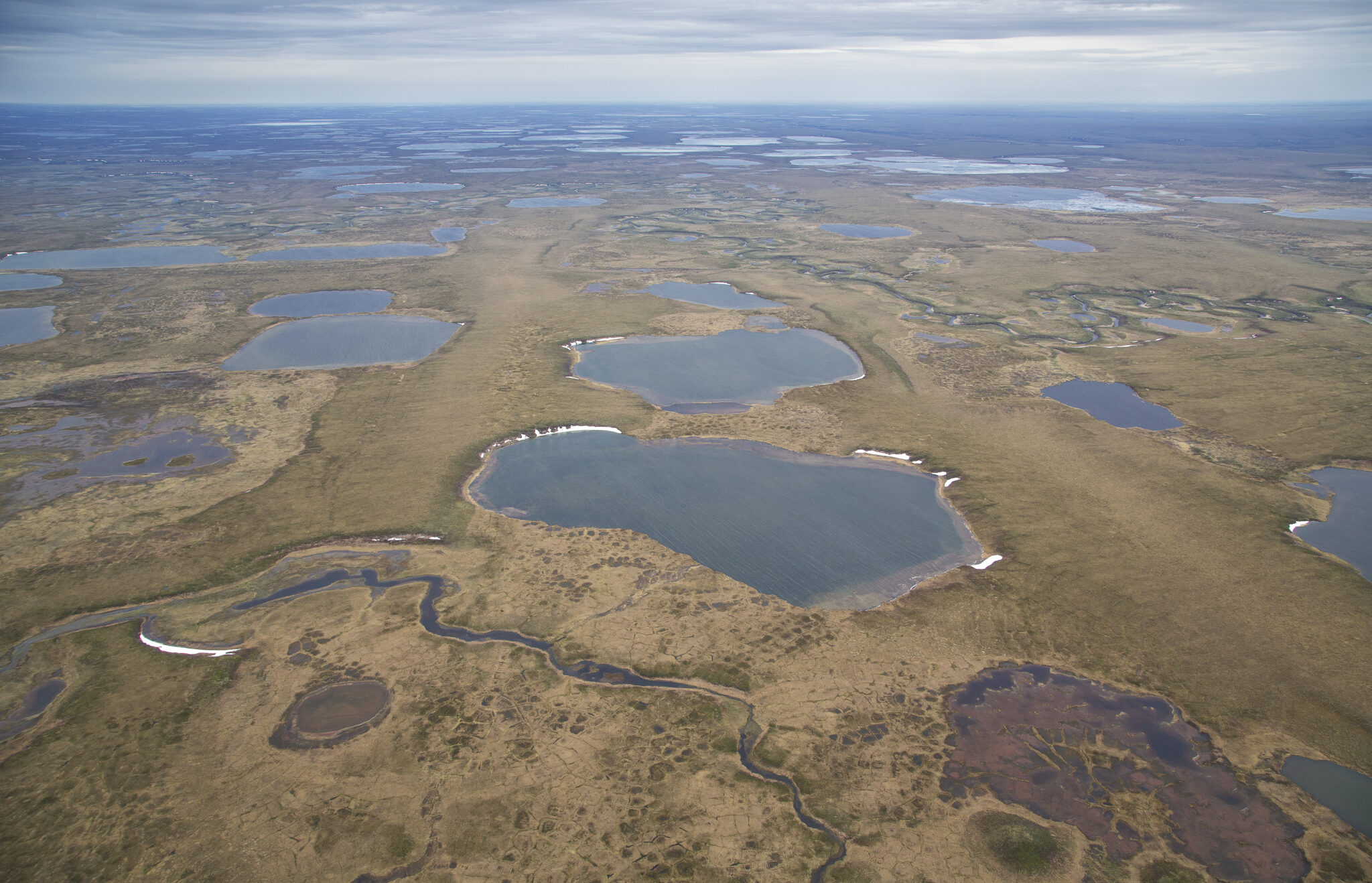
The Trump administration on Friday moved to exempt oil projects in federal territory on the west side of the North Slope from environmental reviews that have been standard for decades.
An industry-initiated proposed rule announced by the U.S. Bureau of Land Management would eliminate the need for review of individual development projects in the National Petroleum Reserve in Alaska, or NPR-A.
Those projects would be excluded from requirements for individual reviews, as is prescribed by…
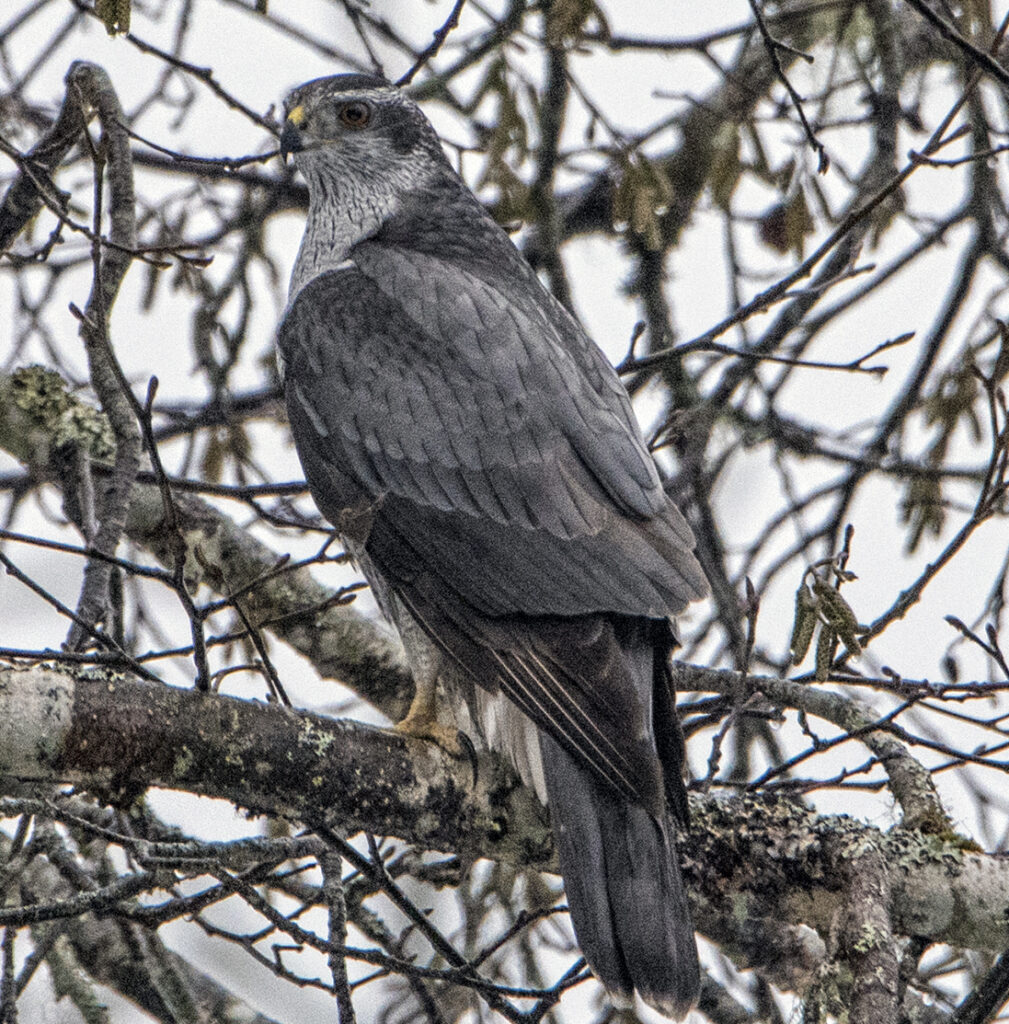
Deep in some of the most remote areas of forest on Wrangell Island, U.S. Forest Service natural resource technician Anna Belback tramped her way through dense trees and brush to set up a pair of speakers. She cranked up the volume and hit play — an invisible bird began to call loudly from the speaker. The alarm call of an adult goshawk.
The Wrangell Ranger District has recently wrapped up a large goshawk survey to prepare for potential timber sales.
There is a push to increase logging on federally managed lands in Alaska following the 2025 presidential order to “unleash Alaska’s extraordinary resource potential.” Ahead of any logging operation, there are a variety of wildlife surveys required before anything can be cut, including these goshawk surveys.

“We’ve gone kind of all around Wrangell Island … parts of the island that I never thought I would see,” Belback said. “And some places that I quite frankly don’t really want to hike back into because, man, they’re pretty wicked.”
Despite the efforts of Belback and two other crew members who spread out across potential logging units, no goshawks were identified by this survey. The surveys must happen in two separate years before a timber sale, but they do not have to be consecutive years, according to Belback.
To conduct the surveys, field technicians hike into areas of land, often with no trails, to play bird calls to trigger responses from goshawks and other birds of prey that may be in the area.
In June, Belback said the calls mimic the goshawk alarm call, one a female might give her partner when there is danger in the area. Whereas in July they play a mixture of alarm calls and fledgling begging calls, the ones a baby goshawk would make when asking their parents for food.
They repeated this process over almost the entirety of Forest Service-managed potential timber units.
This might seem like a lot of effort to go through to identify some hard to locate, sparsely populated birds, but this species has a history of contested protection in the Tongass National Forest and is also used as a metric for ecosystem health.
Originally, these birds were considered northern goshawks, which are pretty widespread and well populated. However, in the 1990s, it was understood that the goshawks in Southeast Alaska and British Columbia were a subspecies. They named them the Queen Charlotte goshawk — which may be renamed yet again, since Queen Charlotte Islands have been renamed Haida Gwaii — which were far more rare.
In 1994, the Center for Biological Diversity petitioned for the subspecies to be listed under the Endangered Species Act, which in some ways led to a renaming of the northern goshawk to the American goshawk and the Eurasian goshawk, according to Forest Service biologist Joe Delabrue.
“The way I understand it back when it was proposed for listing, the U.S. Fish and Wildlife Service separated out the two populations: the one in Southeast Alaska and the ones in British Columbia,” Delabrue said, “and the ones in B.C. got listed, but the ones in Alaska didn’t.”
Whatever you call them, Delabrue said the ones in Alaska were not listed as endangered, at least in part, because of the Tongass resource management plan.
“We definitely have significant conservation concerns for the goshawk within the Tongass,” said Cooper Freeman, the Alaska director for the Center for Biological Diversity.
He said protections provided by the management plan are barely enough to keep the population alive. However, with surveys only occurring ahead of timber sales, he said there isn’t consistent population data to compare since the management plan took effect.
Freeman said that, with renewed push for logging in the second Trump administration, there has been an increase of surveys, but that he did not think the survey methods were very effective at locating the hawks. “So it’s quite likely that many goshawks, if they’re there, would go undetected, and logging would harm the birds.”
The Center for Biological Diversity is pushing for the protection of intact old-growth forests to protect, not only the goshawks, but the many species that rely on unfragmented habitat in the region. He said they would like to see an emphasis on other types of economic activities like hunting and recreation to create a more sustainable Alaska economy.
“I think it would be an error to paint this as (the) birds versus the economy,” said Freeman, “It’s time for the Tongass to move on and start taking care of its forests and protecting them for their highest value, which is leaving these old-growth trees standing.”
The post Forest Service surveys goshawks appeared first on Chilkat Valley News.
(The Center Square) – More than half of American voters say the government should limit healthcare prices to make care more affordable, according to a new poll.
On a warm afternoon at The Farmstand in Silex, Missouri, a customer pulls into the gravel drive, fills a bag with tomatoes still warm from … Read moreThe post Farm stands tap into nostalgia as demand for local food grows…
