Categories
Alaska News Featured Juneau News juneau Juneau Local Juneau Local Ketchikan Local News Feeds Sitka Local

Alaska Department of Law says it found dozens of potential gaps in candidates’ financial disclosures

By: James Brooks, Alaska Beacon

Gov. Mike Dunleavy, Lt. Gov. Nancy Dahlstrom and Stephen Cox, general counsel to Dunleavy, speak at a news conference on Sep. 7, 2026 defending the decision to re-certify Treg Taylor as a candidate for governor on the general election ballot, citing issues with multiple candidates’ financial disclosure reports and litigation risks if he were disqualified. (Photo by Wil Courtney)

A decision that reversed Alaska Republican governor candidate Treg Taylor’s disqualification was motivated in part by a review that found 91 possible disclosure problems among 121 state-office candidates, Lt. Gov. Nancy Dahlstrom said Monday.

“My decision, I believe, was necessary for the integrity and the orderly administration of the election, and I believe this decision serves the public,” she told reporters during a news conference in Anchorage.

“There’s going to be a lot of people that think there were nefarious things going on. We don’t think so,” said Gov. Mike Dunleavy.

[GET MORE: What possible gaps were found in filings by Alaska’s four governor and lieutenant governor candidates?]

It wasn’t immediately clear whether any of the disclosure problems put candidates at risk of violating state law or if the state would require candidates to fix those problems.

Dahlstrom disqualified Treg Taylor and an Anchorage state House candidate on Aug. 31, following the recommendations of the Alaska Public Offices Commission, which cited flaws in their Public Official Financial Disclosure forms.

APOC is a regulatory agency of the Alaska Department of Administration that oversees campaigns and public officials’ financial disclosures, as well as lobbying activities.

Elected officials, members of state boards and commissions, and the governor’s cabinet, are required to use the POFD to disclose all business dealings worth more than $1,000 in order to discourage corruption. 

Taylor, Dunleavy’s former attorney general, and Republican state House candidate Jose Tagle failed to file complete forms within 30 days after they registered as candidates, causing APOC to recommend that they be disqualified from advancing past the August primary.

Dahlstrom followed that recommendation but then reversed herself four days later, restoring Taylor and Tagle to the ballot on Sept. 4.

Rachel Witty, the top civil attorney for the Alaska Department of Law, said during Monday’s news conference that the department had conducted a “limited and expedited” review of other candidates’ POFDs after Taylor’s disqualification in order to judge whether Dahlstrom’s action was legally defensible.

“This was done over the course of a day and a half. So I can’t emphasize enough that this is a preliminary review. We didn’t have time to contact candidates,” she said.

The resulting review found dozens of potential problems, including some with every other finalist candidate for governor — Democratic candidate Jonathan Kreiss-Tomkins, Republican Bernadette Wilson and Republican Dave Bronson.

Wilson and Kreiss-Tomkins’ lieutenant governor candidate, Zac Johnson, were the subject of APOC complaints on Friday about their disclosures, according to the Anchorage Daily News. 

APOC had not published the complaints as of Monday evening.

Dahlstrom said she was not aware of those complaints before making the decision to restore Taylor’s candidacy.

Candidates appeared to be surprised by Monday’s disclosure. None of the four candidates for governor responded to questions on Monday afternoon and evening about the issues raised by the Department of Law. 

“And just because there are potential discrepancies, that doesn’t mean that those candidates violated the law,” said Stephen Cox, attorney to Gov. Dunleavy.

Cox was appointed as attorney general following Taylor’s departure, but was rejected by the Alaska State Legislature in May.

Cox said he worked with Witty and the Department of Law on the review; the extent of his involvement wasn’t immediately clear. 

The Department of Law’s investigation is unusual, if not unprecedented. APOC typically operates on a complaint-based system, with most actions taken when a member of the public alerts the commission to a potential problem. 

The agency is chronically underfunded and understaffed. Ten years ago, it had 13 staff; today it has nine, and APOC has struggled at times to fill those positions.

Until last year, Taylor served as attorney general, head of the Department of Law. He’s now running as a Republican for governor, and the decision to both disqualify him and restore him came from a Republican elected official.

Witty said that “unequivocally,” the review “was completely an initiative of the Department of Law as we assess litigation risk.”

When asked whether candidates will be fined or required to correct the potential discrepancies before the general election, Witty said that’s within the jurisdiction of APOC to investigate. 

“We don’t know what APOC is going to do,” she said. “If  they find there’s reason to believe there is a violation, they can refer that to the APOC commission to take action on, and at that point, we’re talking about different fines and in the form of penalties.”

Moving forward, Dunleavy said, he intends to recommend that the next governor and next Legislature review APOC laws and regulations with a group of former elected officials.

“That’s something that I’ve been thinking about quite honestly for some time, and this just kind of hits home that it’s long overdue,” he said.  

Categories
Alaska News

A California cloud-seeding company created rain near Homer — and an uproar

A California tech company recently tested its drone-based cloud-seeding technology in Alaska. (Photo courtesy of Rainmaker Technology Corp.)

A California tech company recently tested its drone-based cloud-seeding technology in Alaska. (Photo courtesy of Rainmaker Technology Corp.)

This story was originally published by the Anchorage Press. 

A California tech company is facing an uproar from local residents and elected officials after launching a drone near the small Alaska fishing town of Homer with a goal fit for a sci-fi novel: to create rain and snow.

The company, Rainmaker Technology Corp., says it produced 19 million gallons of water in the sky near Homer in about three hours Aug. 23 by dispersing a small amount of silver iodide — a chemical that induces precipitation under the right atmospheric conditions — from a drone.

It was a training run for a company whose mission is to alleviate water scarcity in drought-stricken areas and ultimately to make the planet more habitable as it warms.

Rainmaker says it received the necessary regulatory approvals and notified state officials before launching its operation. But local representatives say they learned about the test after the fact — and that many of their constituents, even those typically divided over politics, are united in concern.

“The fact that these guys are literally dropping materials on constituents without any notification or checklist of what should occur prior to the flight is clearly a gap in responsible lawmaking,” said Peter Micciche, the mayor of the Kenai Peninsula Borough.

The issue has generated one of the largest outpourings of local opposition “in a very, very long time,” said state Rep. Sarah Vance, a Republican who represents Homer and its surroundings.

Vance sent a letter this week to Rainmaker asking it to “cease and desist” its operations in her district. She also asked that the company hold a public open house.

Rainmaker mainly operates in the Lower 48, where it’s trying to revive Utah’s Great Salt Lake, save the Colorado River and help snow-starved ski resorts stay in business. Its work is known as cloud seeding, one of several technologies that startups are promoting as scientists and investors look for ways to blunt the impacts of global climate change.

The company came to Alaska just to test its process, which works only when clouds are cold enough for ice to form around the silver iodide particles, according to the company’s chief executive, Augustus Doricko.

Augustus Doricko, 26, is chief executive of Rainmaker Technology Corp. (Photo courtesy of Rainmaker)

But cloud seeding also has potential uses — enhancing hydropower and protecting glaciers — that are “immediately relevant to Alaska,” said Doricko, 26.

The company launched a drone from two sites near the head of Kachemak Bay, some 20 miles northeast of Homer.

The drone was about the size of a lawn mower, Doricko said. It held several small flares. Once it reached a certain elevation — thousands of feet in the air, in the middle of a supercool cloud — the flares combusted and released silver iodide dust into the air, Doricko said.

In total, the company dispersed some 375 grams of silver iodide — a little less than a pound — over a wide area, according to a technical corporate report. Doricko asserted that the chemical is totally safe at those levels; the resulting increase in silver concentrations on the ground is orders of magnitude less than the 100 parts per billion threshold set by the Environmental Protection Agency for drinking water, he said.

“In a certain sense, I am running a conservation company, or at least a company that’s trying to make our ecosystems and our farms healthier, and more green,” Doricko said. “So, it would be pretty ridiculous if I was using something that acted to the contrary of that.”

Micciche, the mayor, said he’s not especially concerned about silver iodide.

“But the fact that someone can drop something from a drone on my constituency without any prior notification or public comment, in my view, is inadequate,” he said.

“The contrail people are saying, ‘See, I told you so.’ But it’s the other 85% of the population that’s like, ‘Wait a minute, I can’t drop things on my neighbors without public notice… or some sort of permit,’” Micciche added.

Micciche said he plans to introduce a resolution and ordinance at the next borough assembly meeting, with the intent to increase local oversight over cloud-seeding.

The issue has struck a chord not only in conservative circles and among politicians like Micciche and Vance, but also among local environmental advocates.

Cooper Freeman, a Homer resident and Alaska director of the Center for Biological Diversity, a national conservation group, said he has concerns, too.

“At best, it’s absolutely bizarre,” Freeman said in a text message. “At worst, it’s a dangerous and potentially toxic false solution to addressing the severe climate disruption facing the state.”

Meanwhile, Vance, the state legislator, said she is pushing Rainmaker for an open house so they can explain their technology and hear directly from the public.

She said her constituents “don’t want weather modification over our skies or in our skies.”

Doricko said he understands the concerns.

“I’m really empathetic to people that have questions about what we’re doing, right? You hear about a tech company with a mulleted CEO that’s in his 20s, that’s modifying the weather. That should absolutely raise eyebrows,” he said.

But Doricko added that companies have tested cloud-seeding technology for decades— though experts also have long questioned its effectiveness. And he said that even though 19 million gallons of water sounds like a lot — and could provide drinking water to more than 150 households for a year — it’s not enough to create a “torrential downpour” or blizzard. That amount equates to about 0.01 of an inch of rain across 100 square miles.

Rainmaker is not planning another test in Alaska next summer, Doricko added. But the company is working to schedule a town hall.

“We absolutely have to talk to the folks before we operate, and we did, and we got those approvals,” he said.

He said Rainmaker notified the Alaska Department of Natural Resources and reached out to the region’s Alaska Native corporation and a local tribal government. The company also received approvals from the Federal Aviation Administration.

A document that Rainmaker says it presented to state land managers — and that the company shared with the Anchorage Press — describes plans to “conduct atmospheric data collection, cloud seeding feasibility assessments, and precipitation enhancement research via Aerosol Dispersal System (ADS) and silver iodide (AgI) flare dispersal at altitude.”

After meeting with company representatives, the Alaska Department of Natural Resources issued a letter to Rainmaker noting that the use of a drone for research is a generally allowed use on state land, meaning it does not require a permit.

The agency does not have jurisdiction over cloud-seeding, and did not issue any specific authorization for it, according to spokesperson Lorraine Henry.

Another state regulatory agency, the Alaska Department of Environmental Conservation, “is aware of Rainmaker’s reported activity and is reviewing the available information in coordination with other state agencies,” Sam Dapcevich, an agency spokesperson, said in an email.

“A more thorough response with our evaluation will follow in the coming days,” he added.

Doricko, for his part, said he’s “absolutely down” to do more outreach in the future.

He just insisted on one thing for the town hall: metal detectors at the door.

This story was originally published by Anchorage Press, the revived independent alt-weekly. Find a place to pick up a copy of their first print issue on this map.

Categories
Alaska News

25 years after 9/11: Debate over govt surveillance powers persists

(The Center Square) – The 25th anniversary of the Sept. 11 terrorist attacks on the World Trade Center occurs as a political battle rages in Congress over government surveillance powers enacted after the deadly event that killed 2,996 people.

Categories
Alaska News

Taxpayer Philanthrophy: LA Opera took $27 million, executives made $33 million

(The Center Square) – The nonprofit Los Angeles Opera Company (LA Opera) has reported accepting more than $27 million in government grants over the past decade while spending roughly $33 million on executive compensation, according to data from IRS tax…

Categories
Alaska News

Election 2026: Tarheel Democrat in close reelection bid condemns socialism

(The Center Square) – Only one North Carolina congressional candidate in the 2026 midterms broke away from party partisanship in the U.S. House of Representatives’ vote to condemn socialism.

Categories
Alaska News

New York got 4 world events in 1 September weekend, and the month is far from done

New Yorkers pride themselves on being unfazed, and this September might be the one that tests it. The U.S. Open championship weekend, the opening of … Read moreThe post New York got 4 world events in 1 September weekend, and…

Categories
Alaska News

Swanson’s first TV Dinner came in a box shaped like a television set, and we’re still eating frozen entrees

Accounts differ on whether Swanson introduced the TV Dinner in 1953 or 1954, but Swanson took an existing frozen-dinner concept and turned it into an … Read moreThe post Swanson’s first TV Dinner came in a box shaped like a…

Categories
Alaska News

United States Air Force

United States Air Force

Categories
Alaska News

Malmstrom Air Force Base

Malmstrom Air Force Base

Categories
Alaska News

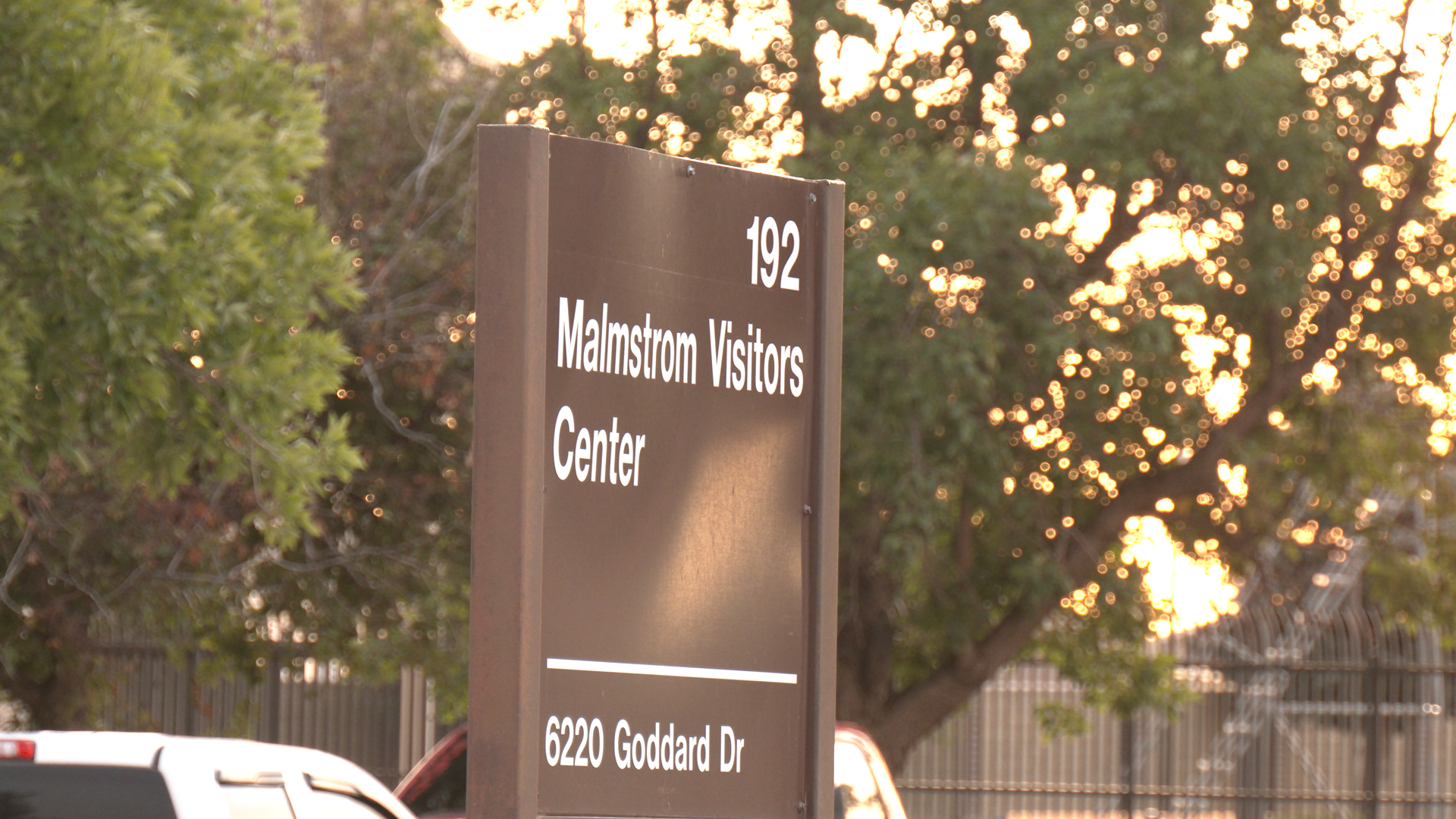
25 years after 9/11, Malmstrom remembers

The attacks on September 11th, 2001 sent shockwaves across the country. As the world watched the heartbreaking video from New York and our nation’s capital, the United States military moved into action, including at Malmstrom Air Force Base.