Post Content
Categories
Brewer









Post Content
Landon Brewer was selected in the 15th round of the MLB Draft by the Texas Rangers, becoming the first Crimson Tide player drafted out of high school since 2004.

MISSOULA, Mont. — Splash Montana Water Park in Missoula is marking 20 years with a week full of activities, including scavenger hunts, lawn games and safety demonstrations.
The anniversary week also highlighted Splash Montana as a place where Montana families could spend time and swim with lifeguard supervision.
(The Center Square) – Extreme heat and wildfires have defined this summer in the Southwest.

An early voting site is seen on Monday, Aug. 1, 2022, at the State Office Building in Juneau, Alaska. (Photo by James Brooks/Alaska Beacon)
Alaska’s primary election just over a month away, and the deadline to register to vote in that election is Sunday July 19.
Alaska’s primary election is Tuesday August 18, when voters will mark their ballots to choose among candidates for governor, legislators in the Alaska House and Senate, and representatives in the U.S. House and U.S. Senate. A sample of the primary ballot can be found on the Alaska Division of Elections website.
The top four vote-getters in the primary will advance to the general election on November 3.
Residents can check their voter registration at myvoterportal.alaska.gov.
To register to vote in the primary election, eligible voters must be at least 18 years old within 90 days of registering, a U.S. citizen and an Alaska resident. They may not be registered to vote in another state. Voters must be a resident in Alaska and the district in which they seek to vote for at least 30 days before the election.
Language assistance is available with voting information and ballots available in Tagalog, Inupiat, Cup’ik and Yup’ik variations. Language assistance is available at every stage of the voting process, and can be requested from the division.
Naturalized U.S. citizens are eligible to vote, but U.S. nationals and non-citizens are not allowed to vote.
Individuals who have been convicted of a felony involving moral turpitude are ineligible to vote in all elections until the date they are unconditionally discharged. That means they have completed their sentence and are no longer in Alaska Department of Corrections’ custody or supervision, which includes halfway houses, sentenced electronic monitoring, probation or parole. Once an individual is unconditionally discharged, they can re-register to vote if they otherwise meet eligibility requirements.
Residents are automatically registered to vote or their voter registration information is updated when they apply for the Alaska Permanent Fund dividend. Residents have 30 days to opt out if they do not wish to register.
Individuals are considered Alaska residents if they reside in the state and intend to remain a resident or if they leave the state and have an intention to return. Active duty military members and family are exempt from the intent to return requirement and can register and vote by absentee ballot.
Residents can register to vote online, by mail or in-person at regional Division of Elections Offices, Division of Motor offices, Division of Vocational Rehabilitation offices, participating Tribal government offices, Legislative Information Offices, United States Armed Forces Voter Assistance Offices, Division of Public Assistance agencies, city or borough clerk’s offices, participating public libraries, or voter registrars.
Residents need a current Alaska driver’s license or state ID to register or update voter registration. After registration, eligible voters will be issued an Alaska Voter ID card within four to six weeks.
Residents can apply to vote by absentee mail-in ballot by August 8 for the primary, and by October 24 for the general election. Eligible voters can apply by email, fax or in-person. Ballots must be postmarked by election day.
Regional elections offices will open for absentee and early voting in the primary election on Sunday August 16.

Matt Kissinger and Frank Richards of the Alaska Gasline Development Corp. prepare to testify to the House Finance Committee on May 27, 2026, in Anchorage. Richards is AGDC’s president and Kissinger is AGDC’s venture development manager. The hearing was conducted as part of a special session called by Gov. Mike Dunleavy. Kissinger and Richards tesified in favor of property-tax concessions sought by Glenfarne, now the majority partner in the Alaska natural gas pipeline project. Dunleavy has argued that the tax concessions are the needed to make the pipeline project viable. (Photo by Yereth Rosen/Alaska Beacon)
Last month, a confidential draft agreement between the Alaska Gasline Development Corporation and Glenfarne leaked. It shows why AGDC is so reluctant to make the details public: The Alaska LNG project could be a financial black hole for Alaska, at a time when the state is struggling to keep schools open and roads maintained.
The document suggests that if Glenfarne fails to develop the tenuous megaproject, Alaska could have to pay to regain control of the asset it’s developed with state funds — a fee based on a subjective assessment of the change in the project’s value under Glenfarne, which could be billions of dollars. That also means if the governor’s proposed tax subsidy boosts the project’s economics, the state’s clawback fee could soar if the company withdraws.
History shows that blank checks and huge tax cuts for outside businesses don’t pencil out for Alaskans. That makes all of the manufactured urgency around Governor Dunleavy’s attempt to force through a massive property tax cut for the LNG pipeline developers this year even more alarming. Glenfarne Group, the company the state gave away development rights to, won’t even have accurate engineering cost estimates for the project until the middle of next year at the earliest. Since the project’s costs will likely escalate, the estimated $16 billion these tax cuts will take from state and borough revenue are likely to be an underestimate too.
Developers’ cost estimates for the project continue to shift, but remain unrealistic and unsupported by data. Through months of legislative hearings, a consultant with AGDC maintained that the decade-old estimate of $46.2 billion was accurate, though another contractor for Governor Dunleavy privately said it was $57 billion. Economists from the Department of Revenue later told legislators that the project costs could range from $46.2 to 92.4 billion. After Senator Stedman called these outdated estimates “complete garbage,” Glenfarne admitted the range could be $44.5 to 54.5 billion dollars.
But according to legislative consultants and a new report on LNG export projects in North America, cost overruns are essentially a guarantee — averaging out to 60 percent higher than projected costs across 20 projects. Applying that to Alaska LNG, the report’s authors found the project could actually cost as much as $104 billion. Accurate cost estimates are essential for legislators to make fact-based decisions around proposed property tax cuts. If they don’t have detailed information, any legislation will be based on false assumptions, and have unquantified consequences.
The developers still haven’t answered basic questions that any lender would ask about the claims project developers are making. Questions like: Why would developers assume that North Slope producers will sell gas to the pipeline for $1.50 per thousand cubic feet (mcf) when gas is currently trading at $3/mcf on the North Slope? Where is the gas going to come from, since the promise of untreated gas from Great Bear Pantheon has already evaporated? What hypothetical industrial customer will anchor ‘Phase One’ of the pipeline by buying the majority of the gas? How much will a Fairbanks spurline cost, and who is going to pay for it? According to recent testimony by Adam Prestidge of Glenfarne, developers think Alaskan consumers should foot that bill. So when promises of affordable gas for Alaskans get thrown around, be sure to read the fine print, and ask, who will pay to build utility infrastructure to use gas in the Interior, or for the thousands of dollars for homeowners to convert their homes to natural gas? What else is in AGDC’s contract with Glenfarne that could cost Alaska millions or billions of dollars?
AGDC has attempted to brush aside these reasonable inquiries from legislators trying to protect Alaskans from inflated energy prices and unknown costs. AGDC board member Dennis Michel recently attempted to joke that legislators are like mosquitoes, calling them “irritating, relentless, and somehow always present,” for asking questions about this project.
In reality, as the leaked draft AGDC-Glenfarne agreement shows, the ever present questions hovering over this project are what crucial information are developers withholding, and what will it cost Alaskans?
SUBSCRIBE: GET THE MORNING HEADLINES DELIVERED TO YOUR INBOX.

A summary sheet is seen during ballot review on Tuesday, Aug. 27, 2024, at the headquarters of the Alaska Division of Elections in Juneau. (Photo by James Brooks/Alaska Beacon)
The Alaska Democratic Party is suing the Alaska Division of Elections, alleging that officials improperly approved a Republican candidate who failed to disclose his personal finances, as required by state law.
The candidate in question is Jose Anthony Tagle, the lone challenger to Democratic incumbent Rep. Ted Eischeid in Anchorage’s House District 22.
The Alaska Democratic Party challenged Tagle’s eligibility in June after he filed a completely blank Public Officer Disclosure Form alongside his candidacy application. That form is supposed to list all income — including Permanent Fund dividends — that a candidate and their immediate family received during the previous year.
Tagle’s listed no income, including dividends. On social media, Tagle describes himself as a small-business owner, and public records list him as director and president of “Stardust Limited Liability Corp.”
Tagle did not return text messages sent to the phone number listed on his candidacy application. The voicemail box at his number is full and not accepting new messages.
The Alaska Public Offices Commission has begun censoring phone numbers on financial disclosures, making it impossible to know whether he uses a different number.
His residence address is listed as the Anchors Way Inn in Anchorage, a business he owns. Online reviews of the inn label the location a private residence and a “sham.”
According to the Alaska Democratic Party’s legal complaint, filed last week, the party challenged Tagle’s candidacy because state law requires a candidate “file a statement giving income sources and business interests, under oath and on penalty of perjury.”
Division of Elections director Carole Beecher dismissed the challenge, saying the blank form was the responsibility of the Alaska Public Offices Commission — which controls the form — not the Division of Elections.
In prior lawsuits, the division has examined public records, including hunting and fishing license applications, to determine eligibility.
“Appellants challenge this determination as arbitrary, unreasonable, inconsistent with the Division’s statutory authority, and in conflict with the Division’s own prior positions regarding its authority to determine candidate eligibility from public records,” the party’s complaint states.
The party has asked for an expedited hearing on the case, and Judge Josie Garton has tentatively scheduled oral arguments for Aug. 7 in Anchorage Superior Court.
The Democratic Party has argued that if the division prevails in the lawsuit, that decision would allow all candidates to file blank disclosure forms, effectively bypassing state law.
If the Democratic Party prevails in the case, it would be too late for Tagle to be removed from the August primary election ballot, but he could be disqualified from the November general election. If that were to take place, Eischeid may run unopposed, except for any write-in challengers.
By: James Brooks, Alaska Beacon
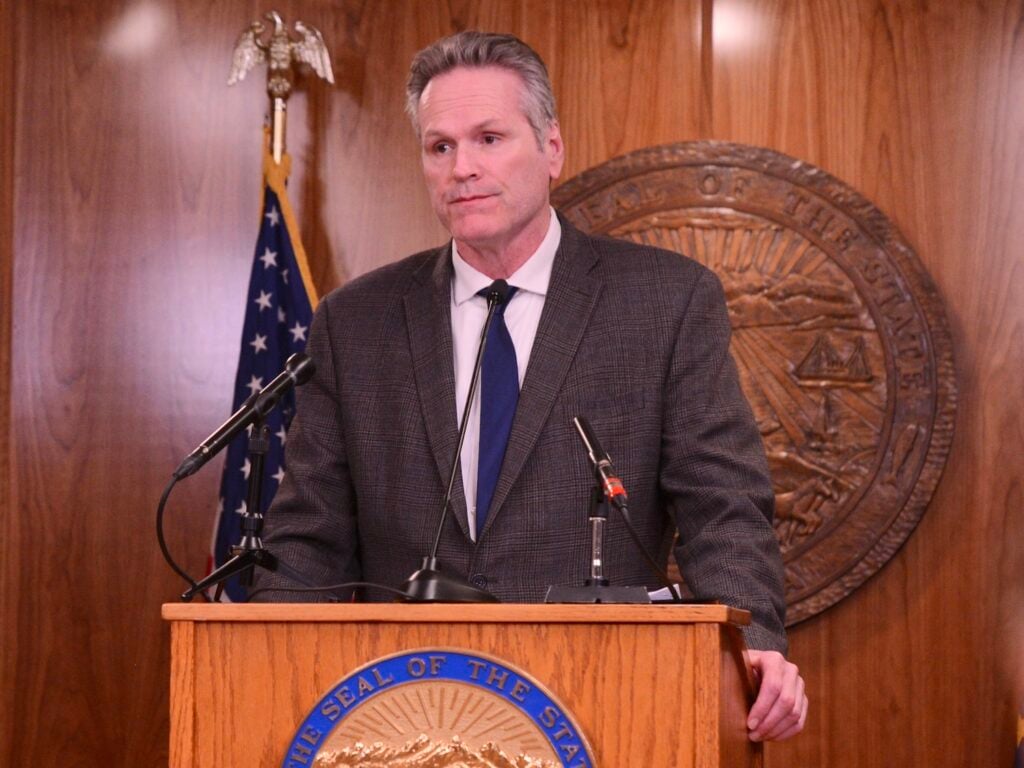
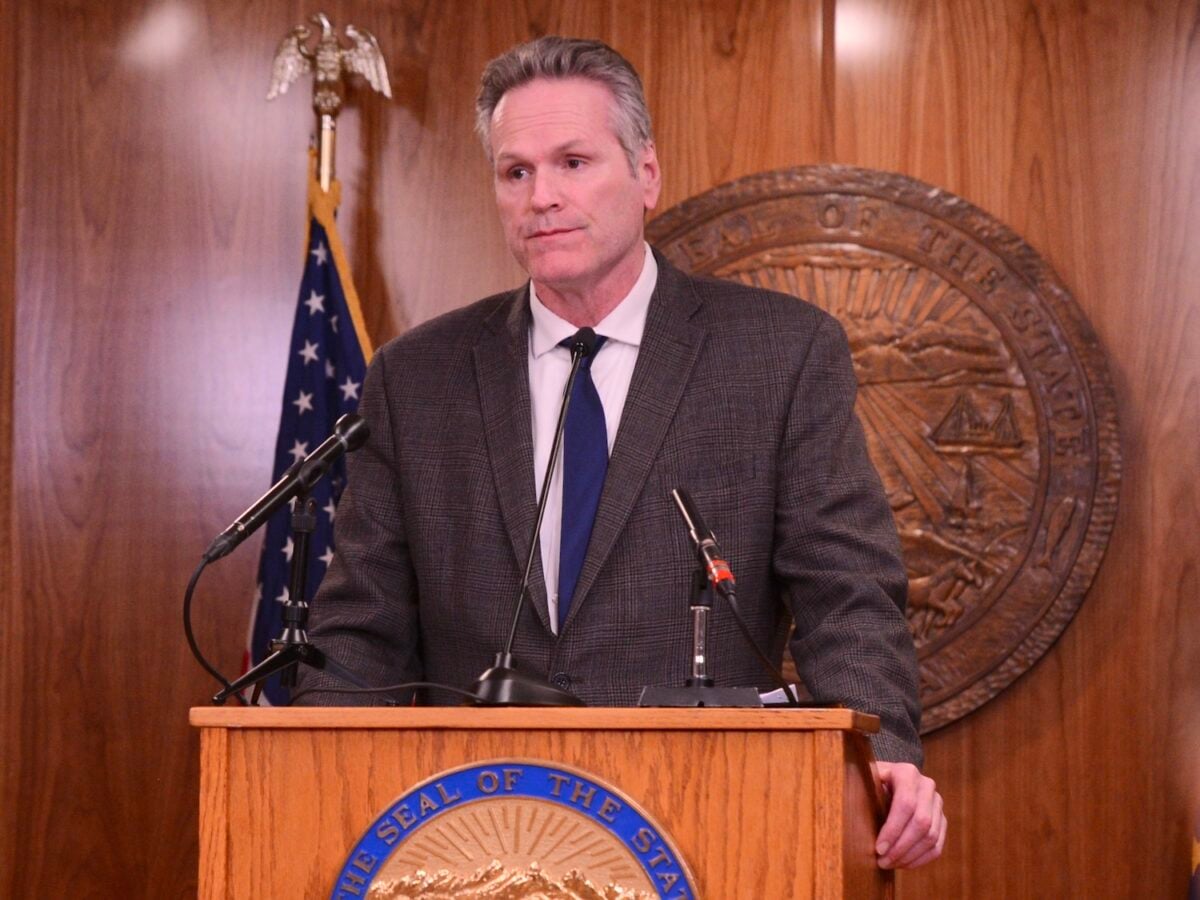
Amid a series of disagreements with lawmakers in the state House and Senate, Alaska Gov. Mike Dunleavy has set a record for the most vetoes by an Alaska governor during a single two-year Legislature.
Through Friday morning, Dunleavy had vetoed 29 of the 115 bills passed by the 34th Alaska Legislature.
The previous record, 25 vetoes, was held by Gov. Tony Knowles in the 19th Alaska State Legislature, which ran from 1995 through 1996.
Dunleavy’s record is particularly notable because the number of bills passed by the Legislature has dropped precipitously in recent years.
During the 19th Legislature, Knowles’ vetoes accounted for 8.9% of all bills passed by lawmakers. Dunleavy’s vetoes cover more than 25% — one in four — of all bills passed by the 34th Legislature.
Dunleavy is a Republican. During his first six years in office — the 31st, 32nd and 33rd Legislatures — either the state House or Senate was controlled by a solidly Republican majority. During the 34th, both the House and the Senate have been controlled by coalition majorities where Democrats and independents hold some leadership roles.
The Beacon asked the governor’s office why the governor has vetoed so many bills during the 34th Legislature and whether there is a fundamental disagreement between the Legislature and governor.
“The fact that Governor Dunleavy has vetoed a few more bills in a legislative session than previous governors does not necessarily indicate a fundamental disagreement between the executive and legislative branches,” said Jeff Turner, the governor’s communications director, by email. “Governor Dunleavy has always evaluated legislation on a bill-by-bill basis.”
Senate President Gary Stevens, R-Kodiak, and Speaker of the House Bryce Edgmon, I-Dillingham, declined to speak at length about the vetoes issue because legislators are currently negotiating with the governor on perhaps the biggest bill of the 34th Legislature: A multibillion-dollar property tax break benefiting the developer of the proposed trans-Alaska natural gas pipeline.
Legislators may vote next week on whether to send a revised version of the tax break to the governor for approval.
Dunleavy has said he opposes the current version being discussed by a legislative conference committee. Asked this week whether he would veto the bill, he told Alaska’s News Source that it would be “tough” for him to accept it in its current form.
Eight other bills are awaiting the governor’s consideration. Those include House Bill 14, a comprehensive insurance bill; and House Bill 249, which changes the procedure for turning a car over to an insurance company after a wreck.
The governor has until Monday to act on HB 14 and until July 20 to act on HB 249.
The Legislature has not yet sent six other bills to the governor for action. Under the Alaska Constitution, that means the clock for final action has not begun.
While Dunleavy has the record for the most vetoes in a two-year Legislature, he does not hold the career record.
Gov. Jay Hammond, who served as governor from 1974 through 1982, issued 74 vetoes, the most of any governor during their career. Knowles vetoed 69 bills during his eight years in office. Gov. Bill Egan, who served 12 years in office, vetoed 56 bills. Dunleavy, who will leave office in December, has thus far vetoed 44.
Those figures do not include line-item vetoes in budget bills.

Alaska Gov. Mike Dunleavy talks to reporters during a news conference on Monday, May 19, 2025. (Photo by James Brooks/Alaska Beacon)
Amid a series of disagreements with lawmakers in the state House and Senate, Alaska Gov. Mike Dunleavy has set a record for the most vetoes by an Alaska governor during a single two-year Legislature.
Through Friday morning, Dunleavy had vetoed 29 of the 115 bills passed by the 34th Alaska Legislature.
The previous record, 25 vetoes, was held by Gov. Tony Knowles in the 19th Alaska State Legislature, which ran from 1995 through 1996.
Dunleavy’s record is particularly notable because the number of bills passed by the Legislature has dropped precipitously in recent years.
During the 19th Legislature, Knowles’ vetoes accounted for 8.9% of all bills passed by lawmakers. Dunleavy’s vetoes cover more than 25% — one in four — of all bills passed by the 34th Legislature.
Dunleavy is a Republican. During his first six years in office — the 31st, 32nd and 33rd Legislatures — either the state House or Senate was controlled by a solidly Republican majority. During the 34th, both the House and the Senate have been controlled by coalition majorities where Democrats and independents hold some leadership roles.
The Beacon asked the governor’s office why the governor has vetoed so many bills during the 34th Legislature and whether there is a fundamental disagreement between the Legislature and governor.
“The fact that Governor Dunleavy has vetoed a few more bills in a legislative session than previous governors does not necessarily indicate a fundamental disagreement between the executive and legislative branches,” said Jeff Turner, the governor’s communications director, by email. “Governor Dunleavy has always evaluated legislation on a bill-by-bill basis.”
Senate President Gary Stevens, R-Kodiak, and Speaker of the House Bryce Edgmon, I-Dillingham, declined to speak at length about the vetoes issue because legislators are currently negotiating with the governor on perhaps the biggest bill of the 34th Legislature: A multibillion-dollar property tax break benefiting the developer of the proposed trans-Alaska natural gas pipeline.
Legislators may vote next week on whether to send a revised version of the tax break to the governor for approval.
Dunleavy has said he opposes the current version being discussed by a legislative conference committee. Asked this week whether he would veto the bill, he told Alaska’s News Source that it would be “tough” for him to accept it in its current form.
Eight other bills are awaiting the governor’s consideration. Those include House Bill 14, a comprehensive insurance bill; and House Bill 249, which changes the procedure for turning a car over to an insurance company after a wreck.
The governor has until Monday to act on HB 14 and until July 20 to act on HB 249.
The Legislature has not yet sent six other bills to the governor for action. Under the Alaska Constitution, that means the clock for final action has not begun.
While Dunleavy has the record for the most vetoes in a two-year Legislature, he does not hold the career record.
Gov. Jay Hammond, who served as governor from 1974 through 1982, issued 74 vetoes, the most of any governor during their career. Knowles vetoed 69 bills during his eight years in office. Gov. Bill Egan, who served 12 years in office, vetoed 56 bills. Dunleavy, who will leave office in December, has thus far vetoed 44.
Those figures do not include line-item vetoes in budget bills.