The most important thing for parents to know is that the order does not change which vaccines are available to children and is not based on any new data about vaccine safety.









The most important thing for parents to know is that the order does not change which vaccines are available to children and is not based on any new data about vaccine safety.

A sign posted on Aug. 18, 2024, outside of the Alaska Division of Elections office in Midtown Anchorage directs voters to the polling place inside. (Photo by Yereth Rosen/Alaska Beacon)
“There oughta be a law” is a common expression when people are frustrated with the behavior of others, the rules of society or the actions of their elected officials.
Well, Alaskans will have an opportunity in the statewide primary election Aug. 18 to approve a new law, limiting the dollar size of donation checks to political campaigns of candidates running for the state Legislature and governor’s office.
This is the chance for voters to do something about taking the money out of politics, limiting big-donor influence and fighting inflation — Alaskans can’t do anything about the price at the gas pump, but they can knock down the escalating cost of running for public office.
The new law would not limit free speech for Alaskans who want to post on social media, knock on doors, give lectures, buy advertising or send junk mail to promote their favorite candidate. It would merely limit how much money they can give to a candidate’s campaign or other political advocacy groups that favor a particular candidate.
A citizens petition drive put the question on the ballot after a federal court struck down the state’s limits on contributions in 2021 and after the Legislature failed to pass a new law in 2022 and again in 2024. Lawmakers succeeded in passing campaign limits this year, but Gov. Mike Dunleavy used his well-worn veto pen, which may be running out of ink, to kill the legislation because he does not believe in limiting political donations.
That leaves it to Alaskans to make the decision whether to place reasonable limits on just how big of a fat check anyone or any group can write for a candidate’s campaign for public office.
The ballot measure would limit individual contributions to $2,000 for each candidate. Individuals could give up to $5,000 to political parties. Groups could write larger checks: $4,000 to candidates, with the same $5,000 limit on donations to groups and parties.
Opponents of the initiative say in their statement in the state election guide: “By putting a cap back on individual donations, this act makes it harder for regular people to have a big impact.” How many “regular people” can afford to hand over more than $2,000 per candidate in each election? That’s a regularly poor excuse to continue the practice of unlimited donations.
In 2006, 73% of Alaska voters cast their ballots to limit campaign donations to $500 for an individual. Though the court struck down those limits in 2021 as too restrictive, backers of this year’s measure have taken the court ruling into account and believe the higher limits will survive a legal challenge.
It’s worth a try. My vote is yes for all the regular people who cannot afford to write more than a $2,000 check.
SUBSCRIBE: GET THE MORNING HEADLINES DELIVERED TO YOUR INBOX.

More than 2,800 Alaskans are on a list of alleged noncitizens registered to vote in the state, according to a document obtained by the Alaska Beacon via a public records request.
The list, dated Friday, was released after the division removed more than 3,000 Alaskans from the state’s active voter list following an unusual data-sharing arrangement with the Division of Motor Vehicles.
The list includes people flagged for a variety of reasons, not just the data-sharing arrangement with DMV, but the DMV data appears to be the reason why most people are on the list.
In August 2025, the Division of Elections released a list containing the names of 541 possible noncitizens. This year’s list is more than five times as large.
It also appears to contain many errors.
This year, the Division of Elections compared the entire state’s list of active voters with DMV data, a new practice. Prior procedure involved comparing only a fraction of the list.
After this year’s comparison, the Division of Elections moved more than three thousand voters to the inactive list with the condition code “NC,” meaning noncitizen.
People on the inactive list can still vote, but only if they fill out additional forms to prove their identity. In addition, someone on the inactive list is on a path to be purged from the state’s voter rolls altogether.
Anyone affected by the removal also will no longer appear in the Division of Elections’ online registration checker. To have their voter registration reactivated, anyone on the inactive list needs to contact the Division of Elections and affirm that they are a citizen.
A problem with the procedure used by the Division of Elections this year is that many of the relevant DMV records are old, and many registered voters have become citizens since obtaining driver’s licenses as noncitizens.
According to a series of interviews conducted by the Beacon and a review of the list of alleged noncitizens, the problem appears to be most acute for Alaskans who became naturalized citizens between 2016 and 2026.
After the DMV-related removals, more than 600 people have contacted the division to say that they are citizens and that they were removed in error. More than 100 people have said they were not citizens.
More than 2,000 of the removed residents haven’t responded to a letter sent by the Division of Elections about the change.
Noncitizens are not allowed to vote in state or federal elections in Alaska, and President Donald Trump has urged Congress to mandate citizenship checks in elections nationally.
How to check your voter registration
It’s worth checking your voter registration status right now, considering how many Alaskans have been pulled from the active voter registration list.It’s easy. You just need to know your name and the community where you get your mail.
Just click this link.
You can even check for a friend or neighbor.
In December, as part of a federal effort to identify noncitizen voting, the Alaska Division of Elections shared a copy of its active voter roll with the U.S. Department of Justice. Most states have refused to turn over their data, citing privacy concerns. In Alaska, privacy advocates sued the state over the issue. That lawsuit is not expected to be resolved until after the election.
The Beacon consulted with immigration attorneys and privacy experts after receiving its public records request and has decided to not publish the list.
The New York Times reported Monday that the U.S. Department of Homeland Security is using lists like the one obtained by the Beacon to target Americans for deportation.
The large number of errors within Alaska’s list could cause innocent residents to be targeted by the federal government.
Immigration attorney Margaret Stock said she is representing a military spouse who is seeking to become a permanent noncitizen resident of the United States, but that person was incorrectly registered to vote by the DMV and is on the list despite canceling her registration soon after.
Last year, the inadvertent registration of a Kodiak couple exposed that the DMV had been improperly registering noncitizens to vote for years, even if they had indicated that they were not citizens.
It isn’t clear why the Division of Elections expanded its data-sharing arrangement with the DMV, or why it used DMV data rather than Permanent Fund dividend data, which is updated annually. The Division of Elections has not answered questions from the Beacon or state legislators.
In a legal analysis published Monday by the Anchorage Daily News, an attorney for the Alaska Legislature said the large-scale removal may have violated state and federal law.
Of the 2,809 people on the list of possible noncitizens, 2,502 are listed as “undeclared” voters — the default for new registrants who haven’t picked a political party. The list includes more registered Republicans (122) than Democrats (100), Libertarians (3) or Green (5) voters.
There are more women (1,556) than men (1,244). More than half (1,589), say they live in Anchorage, but there are many people on the list from Fairbanks, Juneau, Kodiak and Unalaska. There are some in rural Alaska, too — in places like Kotlik, Elim and Galena.
Seven hundred and sixty-three have voted at least once in a state or federal election. Unless they prove their citizenship, that could make those people subject to criminal prosecution.
Already, the state has charged 11 Whittier residents for voting without citizenship. Those defendants remain on the list provided to the Beacon on Friday.
Why we didn’t publish the list
The Division of Elections supplied the Alaska Beacon with a list of the 2,800 voters it recently removed from its active voter list.
The Beacon strongly considered publishing those people’s names and locations, so they would know what happened. We thought friends and neighbors would be able to check up on each other if they read the article.
But we considered, too, that the people on the list could be targeted by either the federal government or by malicious people who believe people on the list are breaking the law.
We weighed the potential harm against the potential benefits and decided that since it is easy and free to check your voter registration status, we would not publish the names and locations of the alleged noncitizens.
If you want to check to see if you are on the list, email us at info@alaskabeacon.com, and we’ll check privately.
The post Alaska’s list of alleged noncitizen voters includes more Republicans than Democrats appeared first on Chilkat Valley News.

Reject stickers await ballot envelopes Wednesday, June 15, 2022 at the Division 1 office of the Alaska Division of Elections in Juneau, Alaska during counting for Alaska’s special U.S. House primary election. (Photo by James Brooks/Alaska Beacon)
Editor’s note: This article was updated after initial publication to include a warning letter sent by the Alaska chapter of the American Civil Liberties Union to the Division of Elections.
More than 2,800 Alaskans are on a list of alleged noncitizens registered to vote in the state, according to a document obtained by the Alaska Beacon via a public records request.
The list, dated Friday, was released after the division removed more than 3,000 Alaskans from the state’s active voter list following an unusual data-sharing arrangement with the Division of Motor Vehicles.
Of the 2,809 people on the list of possible noncitizens, 2,502 are listed as “undeclared” voters — the default for new registrants who haven’t picked a political party. The list includes more registered Republicans (122) than Democrats (100), Libertarians (3) or Green (5) voters.
There are more women (1,556) than men (1,244). More than half (1,589), say they live in Anchorage, but there are many people on the list from Fairbanks, Juneau, Kodiak and Unalaska. There are some in rural Alaska, too — in places like Kotlik, Elim and Galena.
Seven hundred and sixty-three have voted at least once in a state or federal election. Unless they prove their citizenship, that could make those people subject to criminal prosecution.
Already, the state has charged 11 Whittier residents for voting without citizenship. Those defendants remain on the list provided to the Beacon on Friday.
The list includes people flagged for a variety of reasons, not just the data-sharing arrangement with DMV, but the DMV data appears to be the reason why most people are on the list.
In August 2025, the Division of Elections released a list containing the names of 541 possible noncitizens. This year’s list is more than five times as large.
It also appears to contain many errors.
This year, the Division of Elections compared the entire state’s list of active voters with DMV data, a new practice. Prior procedure involved comparing only a fraction of the list.
After this year’s comparison, the Division of Elections moved more than three thousand voters to the inactive list with the condition code “NC,” meaning noncitizen.
People on the inactive list can still vote, but only if they fill out additional forms to prove their identity. In addition, someone on the inactive list is on a path to be purged from the state’s voter rolls altogether.
Anyone affected by the removal also will no longer appear in the Division of Elections’ online registration checker. To have their voter registration reactivated, anyone on the inactive list needs to contact the Division of Elections and affirm that they are a citizen.
A problem with the procedure used by the Division of Elections this year is that many of the relevant DMV records are old, and many of the affected voters have become citizens since obtaining driver’s licenses as noncitizens.
According to a series of interviews conducted by the Beacon and a review of the list of alleged noncitizens, the problem appears to be most acute for Alaskans who became naturalized citizens between 2016 and 2026.
After the DMV-related removals, more than 600 people have contacted the division to say that they are citizens and that they were removed in error. More than 100 people have said they were not citizens.
More than 2,000 of the removed residents haven’t responded to a letter sent by the Division of Elections about the change.
Noncitizens are not allowed to vote in state or federal elections in Alaska, and President Donald Trump has urged Congress to mandate citizenship checks in elections nationally.
In December, as part of a federal effort to identify noncitizen voting, the Alaska Division of Elections shared a copy of its active voter roll with the U.S. Department of Justice. Most states have refused to turn over their data, citing privacy concerns. In Alaska, privacy advocates sued the state over the issue. That lawsuit is not expected to be resolved until after the election.
The Beacon consulted with immigration attorneys and privacy experts after receiving its public records request and has decided to not publish the list.
The New York Times reported Monday that the U.S. Department of Homeland Security is using lists like the one obtained by the Beacon to target Americans for deportation.
The large number of errors within Alaska’s list could cause innocent residents to be targeted by the federal government.
Immigration attorney Margaret Stock said she is representing a military spouse who is seeking to become a permanent noncitizen resident of the United States, but that person was incorrectly registered to vote by the DMV and is on the list despite canceling her registration soon after.
Last year, the inadvertent registration of a Kodiak couple exposed that the DMV had been improperly registering noncitizens to vote for years, even if they had indicated that they were not citizens.
It isn’t clear why the Division of Elections expanded its data-sharing arrangement with the DMV, or why it used DMV data rather than Permanent Fund dividend data, which is updated annually. The Division of Elections has not answered questions from the Beacon or state legislators.
In a legal analysis published Monday by the Anchorage Daily News, an attorney for the Alaska Legislature said the large-scale removal may have violated state and federal law.
Shortly after this article was published, the Alaska chapter of the American Civil Liberties Union said it had sent a letter to the Division of Elections and Lt. Gov. Nancy Dahlstrom, warning that the ACLU and other groups share the belief that the state has violated state and federal law for a variety of reasons, including the timing of the removals and because notice letters that were sent to affected voters only in English.
The letter asks the division to take eight “remedial steps” in order to fix the problem, including additional training for poll workers so they are able to help Alaskans affected by the removals.
Should the state not take action, the letter would serve as a pre-lawsuit notice required by federal law.
This article was originally published by Popular Information.
The Alaska Navigator bills itself as “independent news covering the Last Frontier.” On June 10, the outlet published an article headlined, “As Fentanyl Deaths Rise in Alaska, Sullivan Pushes Tougher Penalties and Enforcement.”
The piece, which has no byline, reports that Senator Dan Sullivan (R-AK) — who is locked in a competitive campaign against Democrat Mary Peltola — “is leading efforts to combat fentanyl trafficking and support law enforcement agencies confronting the epidemic.”

Curiously, although Sullivan has been in the Senate for more than a decade, the piece cites only one piece of evidence: Sullivan’s vote for the HALT Fentanyl Act in March 2025. Sullivan was one of 84 senators to vote for the bill, which classified fentanyl-related substances as schedule I narcotics. But Sullivan did not lead the effort to pass the HALT Fentanyl Act. He was not the bill’s sponsor or one of its 16 original co-sponsors. (Sullivan became a co-sponsor on March 6, 2025, about a week before it passed the Senate).
The Alaska Navigator also reports that “Retired Alaska Wildlife Trooper Director Doug Massie, who spent 25 years in law enforcement… credits Senator Sullivan with supporting tougher penalties for traffickers and policies aimed at reducing the drug’s impact on communities throughout the state.” But there is no direct quote from Massie, who is running for the Alaska state legislature as a Republican, or an explanation of why Sullivan deserves credit. There is no record of Massie making a public statement about Sullivan on fentanyl or any other topic.
Both the content and tone are highly unusual for an independent news outlet. That is because the Alaska Navigator is not an independent news outlet. Rather, it is a website fully controlled by One Nation, a dark money group that works in concert with the Senate Leadership Fund (SLF), the super PAC of Senate Republicans. One Nation has directly contributed over $70 million to the SLF this political cycle.
Other content published by Alaska Navigator includes “Senator Dan S. Sullivan’s Legislative Record of Supporting Alaska’s Veterans,” “Sen. Sullivan’s tax policy helps Alaska businesses thrive,” and “Opinion: Dan Sullivan has earned another term by delivering for Alaska.”

One Nation has ensured that Alaskans see this content by spending tens of thousands of dollars on Meta ads promoting Alaska Navigator articles since June. These ads further distort reality. For example, the fentanyl article was promoted with an ad declaring there was a “New Bill to Crack Down on Fentanyl Trafficking, Supported By Dan Sullivan.” But the only bill mentioned in the article was the HALT Fentanyl Act, which was signed into law in July 2025.
While the ad discloses it was paid for by One Nation, it does not disclose that Alaska Navigator is owned and operated by One Nation. That fact is only revealed in small, faint type at the very bottom of the Alaska Navigator website.
Alaska Navigator’s domain, thealaskanavigator.com, was registered on March 20, 2026. The website, however, includes an article dating back to January 2026, making it appear more established. That article was added using a tool called FakerPress, according to the website’s source code. FakerPress markets itself as “a clean way to generate fake and dummy content.”
The fake Alaska news outlet is one of at least six operated by One Nation in states with key U.S. Senate races. Popular Information identified these sites through disclosures in their Meta advertisements. The other five sites in the network include:
Maine Policy Updates (“Maine’s News Source”)
Ohio Pulse (“Your trusted source for local news, investigative journalism, and community stories across the Buckeye State”)
Iowa Voice (“Stay Informed. Stay Iowa”)
Peach State Post (“Georgia’s Premier News Source”)
New Hampshire Daily (“An independent news organization dedicated to covering the stories that matter most to Granite State residents”)
Collectively, One Nation has spent between $198,900 and $274,640 promoting these sites on Meta platforms. Maine Policy Updates has been operating since January, but most of the ad spending for the other sites began in June.
Iowa Voice features a story headlined, “Iowa Farmers Say Potential ‘Death Tax’ Threatens Family Succession Plans.” The piece praises Ashley Hinton, the Republican candidate for Senate, for being “an original cosponsor of the Death Tax Repeal Act, legislation that would permanently repeal the federal estate tax.” The piece highlights that supporters of the bill believe it would “make it easier for family farms and small businesses to remain in family hands across multiple generations.” The piece does not mention that the estate tax impacts only 0.3% of farms. It also does not quote or paraphrase a single farmer.
Other content on these sites mirrors One Nation’s TV ads. A July 30 article on Peach State Post falsely suggests that Senator Jon Ossoff opposes increasing the Child Tax Credit. A One Nation political ad, which has blanketed the state over the last several days, contains the same attack.
The sites attempt to appear more legitimate by cutting and pasting content from actual news outlets. The Peach State Post recently published a story under the headline “Former Atlanta city officials Bickers, Beard who were convicted in corruption cases denied clemency by Trump.” At the end of the piece it says, “Read more here” and links to 11Alive, an Atlanta news website. But the story on Peach State Post contains the full text of 11Alive’s story. There is nothing more to read. There is no indication that Peach State Post secured permission to repost 11Alive’s work. The article is presented as Peach State Post’s original work.
One Nation, which is organized as a 501(c)(4), is not required to disclose its donors. So it is unknown who is bankrolling its fake websites or other activities.
One Nation did not immediately respond to a request for comment.
Popular Information is an independent newsletter dedicated to accountability journalism.
The post Dark money group backing Senate Republicans launches network of fake news sites appeared first on Chilkat Valley News.

The U.S. Department of Education is expected to award $41.3 million in grant funding through the Alaska Native Education Program to 26 Alaska grantees after some delay, according to an announcement from Alaska Republican U.S. Sen. Lisa Murkowski.
The grant funding was expected on July 1, but has been delayed more than a month. Grantees alerted Murkowski’s office they had not yet received the funding, prompting Murkowski to press the U.S. Sec. of Education Linda…
A small cruise ship operating in Southeast Alaska made an unexpected detour on Monday night to help a 21-foot skiff that ran out of fuel between Petersburg and Juneau.
Michael Love, a software developer from New York City, was a passenger aboard the cruise ship and described the event on social media.
What got his attention the most wasn’t the rescue itself — it was when the captain announced that the yacht of billionaire Facebook owner Mark Zuckerberg was closer and hadn’t answered the radio call for help.
“There was near unanimous booing when the captain announced this,” he said in a post on the social media network Bluesky.
Vessel tracking services in the area back up that account — they show the $300 million, 387-foot yacht Launchpad slowing to a halt outside Farragut Bay as the UnCruise Adventures ship Wilderness Legacy steams around and past the Launchpad, stops at the apparent site of the skiff, then tows it into sheltered Farragut Bay.
Through a Bluesky message, Love said it was nice to be on a boat that was engaging with its surroundings in a positive way.
“Frankly, if I was Mark Zuckerberg I would be absolutely ecstatic at a chance to do something helpful for someone in need and maybe get some good PR out of it,” he said.
Social media accounts responding to Love’s account accused the yacht’s crew of violating international agreements that mandate aid from the nearest ship to one in distress.
According to the U.S. Coast Guard and the Marine Exchange of Alaska, which monitors ship traffic in Alaska, there was no distress call — just a general request for assistance.
Coast Guard Public Affairs Specialist Shannon Shepard said by email that the Coast Guard heard the call for help just after 9:30 p.m. Monday night.
“At approximately 9:56 p.m., the Coast Guard determined they were not in distress and issued a marine assistance request broadcast on their behalf,” she said.
John Hollingsworth is the chief operations officer of the Marine Exchange, which is based in Juneau and repeated the broadcast.
“We did assist the Coast Guard with callouts on our radio and (were) able to hail the Wilderness Legacy who ended up rendering assistance,” he said.
“From my experience, I know that situations like this contain myriad details for the vessels involved, so the AIS (tracking) snippet you obtained only reveals one of those details,” he said by email. “I do know that Wilderness Legacy is an UnCruise vessel and is very familiar with Alaska waters, so that may have contributed to them rendering assistance quickly.”
No information was available Friday about who may have been aboard the Launchpad on Monday evening. The Launchpad has been in Southeast Alaska for much of the summer.
After the initial publication of this article, a spokesperson for Mark Zuckerberg emailed a statement: “Mark and his family were not on board at the time of the incident. As the Coast Guard noted, the boat was not in distress, and by the time the crew reviewed the Coast Guard contact on a different radio channel from the one they were operating on, the assist was already underway. We’re grateful all parties are safe.”
The Wilderness Legacy’s detour is the second incidence of aid rendered by a small cruise ship in Southeast Alaska within two weeks. On July 30, the National Geographic Quest assisted a family who had to swim to shore in Glacier Bay National Park after a humpback whale sank their sailboat.
Dan Blanchard, who owns UnCruise, said he wasn’t initially aware of the Wilderness Legacy’s detour because “this kind of aid is such a common thing that it does not always rise to my attention.”
Sarah Scoltock, a spokeswoman for UnCruise, said the Wilderness Legacy was able to refuel the skiff after towing it into a sheltered area.
“The next day the (Wilderness Legacy’s) captain, Sean Manske, contacted them and received word they made it safely to Petersburg,” she said by email.
The post Cruise ship helps stranded skiff and crew in Southeast Alaska as Zuckerberg yacht stands by appeared first on Chilkat Valley News.

Volunteers are circulating a ballot initiative petition this week to reduce the senior property tax exemption from $300,000 to $200,000.
Reducing this exemption is necessary in order for our government to fully fund essential services without depleting our town’s savings. If 297 signatures are gathered by Aug. 12, voters will have the opportunity to decide this matter in the October municipal election.
A Haines voter initiative in 2024 that increased the senior property tax exemption…
My motto was “Fill the Barn” and we did just that for the 2026 Southeast Alaska State Fair. It wasn’t just me though. I wish there was room here to print the names on my list of more than 60 people who joined in the fun of building pens, hutches, and cages, painted fences, and cared for the animals, as well as those who sponsored this project, and the animal owners who trusted us with…
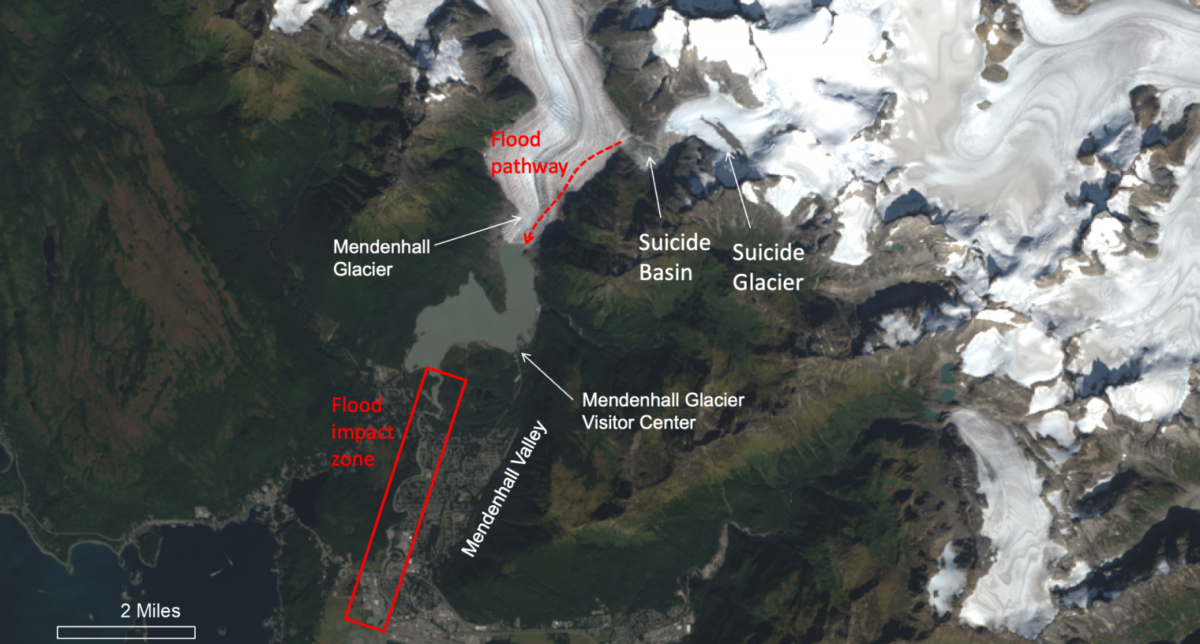
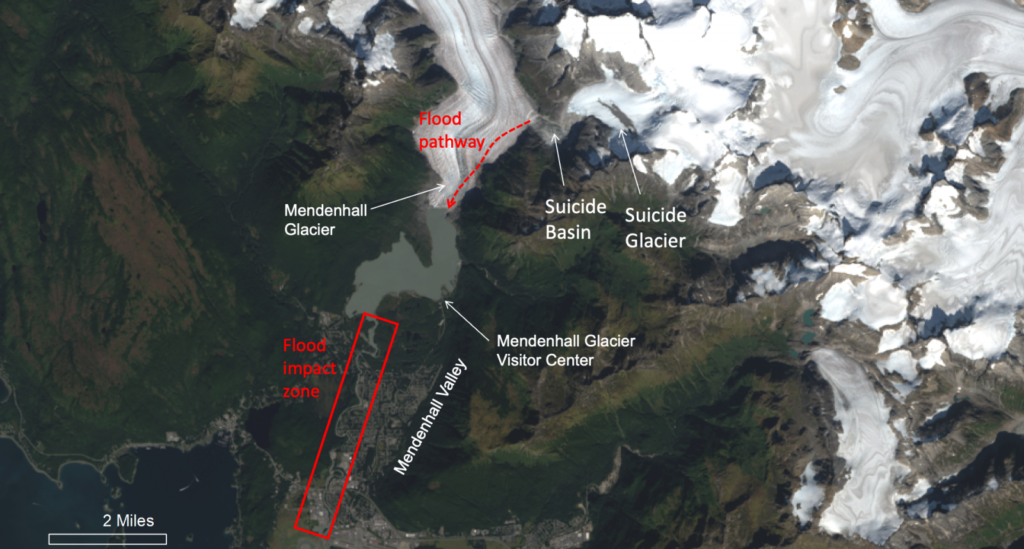
NOTN- The city of Juneau has entered a heightened state of readiness after officials confirmed just this morning that Suicide Basin is full, meaning the anticipated Glacial Lake Outburst Flood in the Capitol city could happen at any time.
“We call this the set phase, where people should be prepared to evacuate.” Said Mayor Beth Weldon, “But it could still be days, if any. We’re all getting used to this. It could be within 24 hours, or even as much as five or six days until the basin releases.”
Weldon said the timing of any potential outburst flood remains uncertain. The City is in the “Set” phase of it’s ‘Ready, Set, Go’ framework, which means residents affected by the GLOF should stay vigilant and continue to check in with emergency officials, have a go bag packed and be ready to activate a plan of safety.
According to the National Weather Service, in the past it has taken up to 6 days for the main event to start after the basin is full.
City officials urged residents to closely follow evacuation notices and stay away from flood control structures, particularly the Hesco barriers along vulnerable stretches of riverbank.
“Please do not climb up on the Hesco barriers,” Weldon said. “If they fail, it’s going to be catastrophic, and they could fail in a moment’s notice. You will not have time to run or move.”
if you have any questions, you can call the flood hotline at 907-500-0890 for information and updates.
“Everybody, try and be safe, and please abide by the evacuation notice,” Weldon said. “Again, everybody stay safe.”