A brown bear walks on the tundra in Katmai National Park and Preserve on Aug. 11, 2023. (Photo by F. Jimenez/National Park Service)
Time and again, colleagues told bear biologist Beth Rosenberg that her quest to develop a new and less invasive way of identifying and studying Alaska’s brown bears was a futile one. There were simply too many obstacles, too many unknowns, to overcome.
“It just won’t work,” she heard repeatedly.
Inspired by her hero, the acclaimed primatologist Jane Goodall, Rosenberg stubbornly pushed ahead, just as Goodall had done decades earlier in the face of great skepticism.
While working at Alaska’s famed McNeil River brown bear sanctuary, Rosenberg had quickly learned that by paying close attention, she, like others on the sanctuary staff, could over time identify the “regulars” among the bears who fished at McNeil Falls, especially mature males.
It’s true the sample size was small. But if people could learn to recognize individual bears among the dozens that pass through McNeil River each summer — and do so repeatedly, despite dramatic changes in their seasonal appearance — wouldn’t it be possible to do the same thing at greater scale, using new, state-of-the-art technologies?
Rosenberg began to build a photo database of McNeil’s most recognizable bears, just as others on staff had done before her. And when promoted to assistant manager in 2016, she made expanding that database a priority. Over the next several years, she enlarged it to nearly 73,000 images, representing 109 individual bears.
Joined by Nathan Wolf, her advisor at Alaska Pacific University — and an enthusiastic supporter of her work — Rosenberg then went looking for computer and technology whizzes who could assist her in this quest.
The two eventually found such a group at the École Polytechnique Fédérale de Lausanne in Switzerland, led by Alexander Mathis.
One of the keys to clinching the partnership was Rosenberg’s immense file of McNeil bear images, which Wolf — eventually her research colleague as well as mentor — describes as “a data set that’s unique in the world; there’s nothing else like it.” Another key was Mathis and Rosenberg’s shared excitement about the possibilities their collaboration might open up.
Combining their expertise, a team composed of Alaska biologists and Swiss computer scientists was able to develop an artificial intelligence — or, as Rosenberg prefers to say, “deep learning”— system that they call PoseSwin.
“Trained” on the dataset of nearly 73,000 McNeil River images, PoseSwin has proved capable of recognizing individual bears across seasons — and even years — despite major changes in the animals’ body size, fur condition, position, and also seasonal and environmental variations, such as light and weather conditions.
Importantly, the researchers emphasize, their work demonstrates it’s possible to accurately — and repeatedly — identify individual bears across space and time using photographs alone, what Rosenberg calls “photo ID.”
This means there’s no need to physically handle and mark the animals, for instance with collars or tags, or to retrieve fur or blood samples, as routinely done in conventional population studies and other research. That in turn opens all sorts of new possibilities for the study, management, and conservation of brown bears — and other species — in Alaska and beyond.
Adding greatly to the credibility of their work, the Alaska-Swiss team produced an article describing their research and findings: “Individual identification of brown bears using pose-aware metric learning” was published in the February 2026 issue of the prestigious, peer-reviewed scientific journal, “Current Biology.”
While it’s not possible to get into the details of their work in a commentary of this length, I can share several important takeaways.
In developing their new research tool, the team started with this simple fact: brown bears are “unpatterned” animals without distinctive markings — as opposed to zebras, leopards and humpback whales, for instance. Besides that, the appearance of any single bear can change dramatically over time, not only from year to year, but even from spring to fall.
Thus the initial challenge for the scientists and their computer modeling was to determine what characteristics, if any, would allow the AI program to reliably identify individual animals. Rosenberg prefers the term ”computer vision,” rather than AI. It turned out that certain characteristics of the bears’ heads and skull structures were key, because they change little over time, for instance the shape of the muzzle and pattern of “bumps” atop it; the angle of the forehead, called the “brow bone” in the study; the placement of the ears and scarring on the face and head.
Figuring out those few essential characteristics proved indispensable to the PoseSwin’s successful development.
In its testing of the new photo-ID program, the team showed it is able to not only recognize previously identified bears, but also unknown bears, a key to population studies. And, using images from McNeil River and some donated from Katmai National Preserve, PoseSwin proved capable of tracking the long-distance movements — nearly 50 miles — of individual bears using photographs alone, a historic first.
The team’s initial research also has suggested that citizen science could greatly expand the application of their Photo ID modeling, by using images taken by ordinary bear watchers photographing the animals at popular tourism spots like Katmai’s Brooks Falls and then entering those images into a central data base.
There’s plenty more, but the bottom line, say Rosenberg and Wolf, is that the low-impact, hands-off PoseSwin/Photo ID program promises to revolutionize the way bears are studied and understood by “adding a new tool to our toolbox,” as Wolf puts it. And a greatly advanced tool at that.
The Alaska-Swiss team plans to keep expanding its database and refining its PoseSwin program. All of this will lead to an increased understanding of bears’ individual and collective behavior, their movements across the landscape, and interactions with each other and other species, including — and especially — humans.
That knowledge in turn promises to lead to more informed, fact-based management of both the animals and the habitat that is essential to their well-being, which can only benefit their conservation, not only in Alaska, but anywhere bears inhabit the landscape.
Eventually, members of the PoseSwin team are confident, scientists studying other unpatterned species will likely apply this new research tool to their own studies.
Both Rosenberg and Wolf emphasize that PoseSwin and Photo ID technology is not intended to replace other, more conventional research methods, for instance those based on radio-collaring and genetics, but to supplement them with a powerful new tool that, more than anything, figures to benefit the bears.
Here I’ll leave the science arena and move into an area where Rosenberg, Wolf, and the rest of the PoseSwin team prefer not to tread: wildlife politics.
In Alaska, the state’s Department of Fish and Game has long depended on population estimates that many wildlife advocates, including myself, regard as suspect. That’s not so much because the research methods are faulty, but rather because the information is outdated and/or withheld from the public.
This is especially true for predators such as bears and wolves, and “intensive management” programs intended to control their numbers. The recent — and ongoing — Mulchatna bear kill program in Southwest Alaska is a prime example.
Over the past three years, ADF&G has killed close to 200 bears, the great majority of them brown bears, ostensibly to help the Mulchatna Caribou Herd recover from a steep decline that the state’s own biologists have shown has nothing to do with bear predation, without any good idea of the region’s overall bear population. This is a major reason that two superior court judges ordered the department to stop its Mulchatna bear-kill effort in 2025.
State game managers continue to insist that their intensive management programs are based on what they call good science, but remain unwilling to share the specifics of what that science shows or how it’s been done. And they apparently plan to resume the bear killing this spring — no matter the paucity of population data they have — and the lack of evidence that this will benefit the caribou herd.
It may be asking too much for the state’s current wildlife managers to welcome, let alone embrace, the revolutionary research methods promised by PoseSwin and photo ID. Maybe with a change in Alaska’s leadership following this year’s gubernatorial election, a more open and progressive state-run wildlife management program will be put in place, whose leaders recognize the benefits of a new research system truly grounded in fact-based scientific methods.
SUBSCRIBE: GET THE MORNING HEADLINES DELIVERED TO YOUR INBOX
 No, no, there’s no question about how much Emily Blunt’s family loves The Devil Wears Prada.


 Meryl Streep and Anna Wintour’s friendship is, in fact, groundbreaking.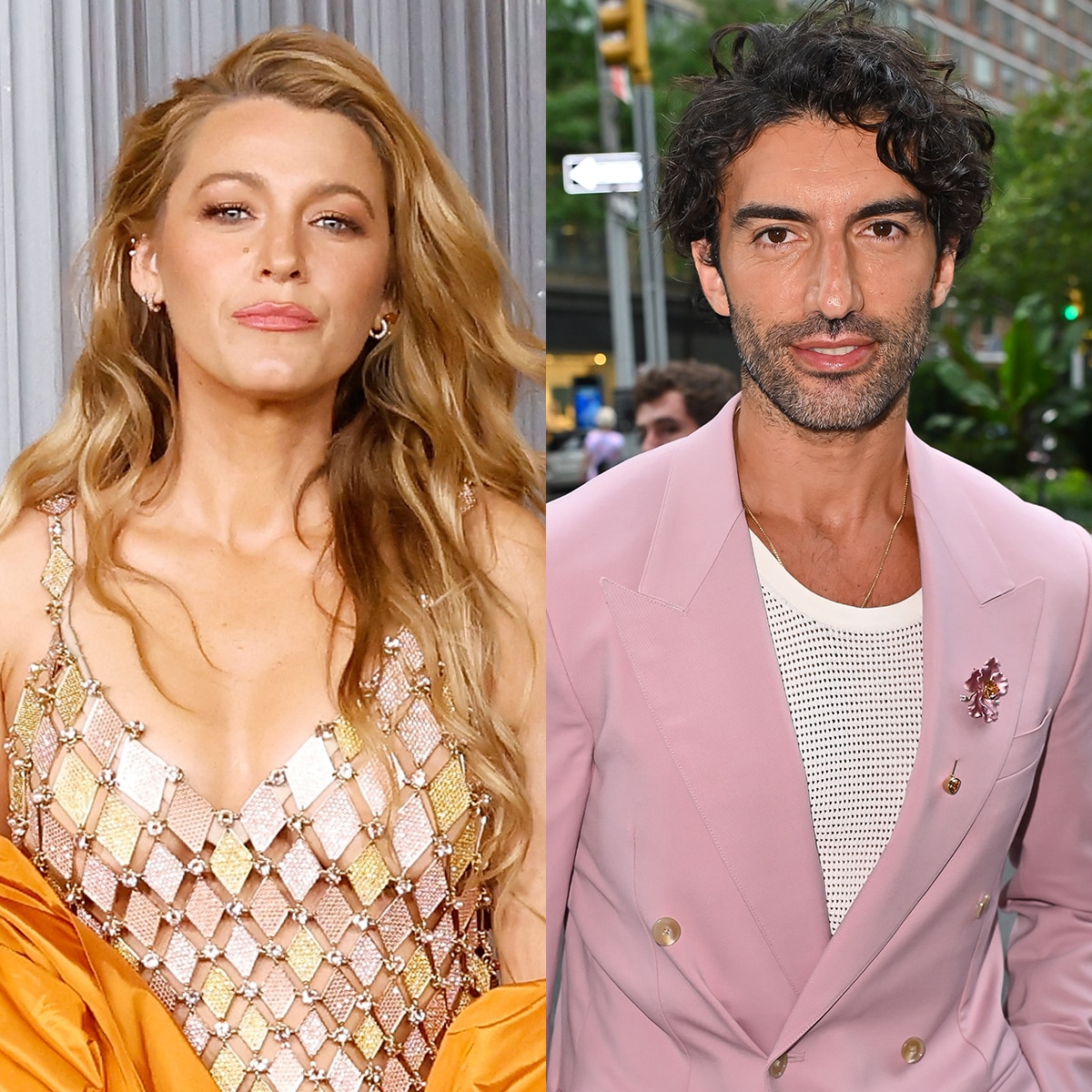
 Blake Lively is taking a look at her finances.
 Carrie Ann Inaba is getting candid about her struggles with Sjogren’s disease.