If you have high-interest debt, you could consider paying it off with your home’s equity. One way to do this is with a home equity line of credit, or HELOC.Since HELOCs are secured by your home, you can usually get…











If you have high-interest debt, you could consider paying it off with your home’s equity. One way to do this is with a home equity line of credit, or HELOC.Since HELOCs are secured by your home, you can usually get…
mature man opening a bill

(The Center Square) – Less than four months before fiscal year 2027 begins, the U.S. House passed the second of the 12 annual appropriations bills that will fund the federal government.

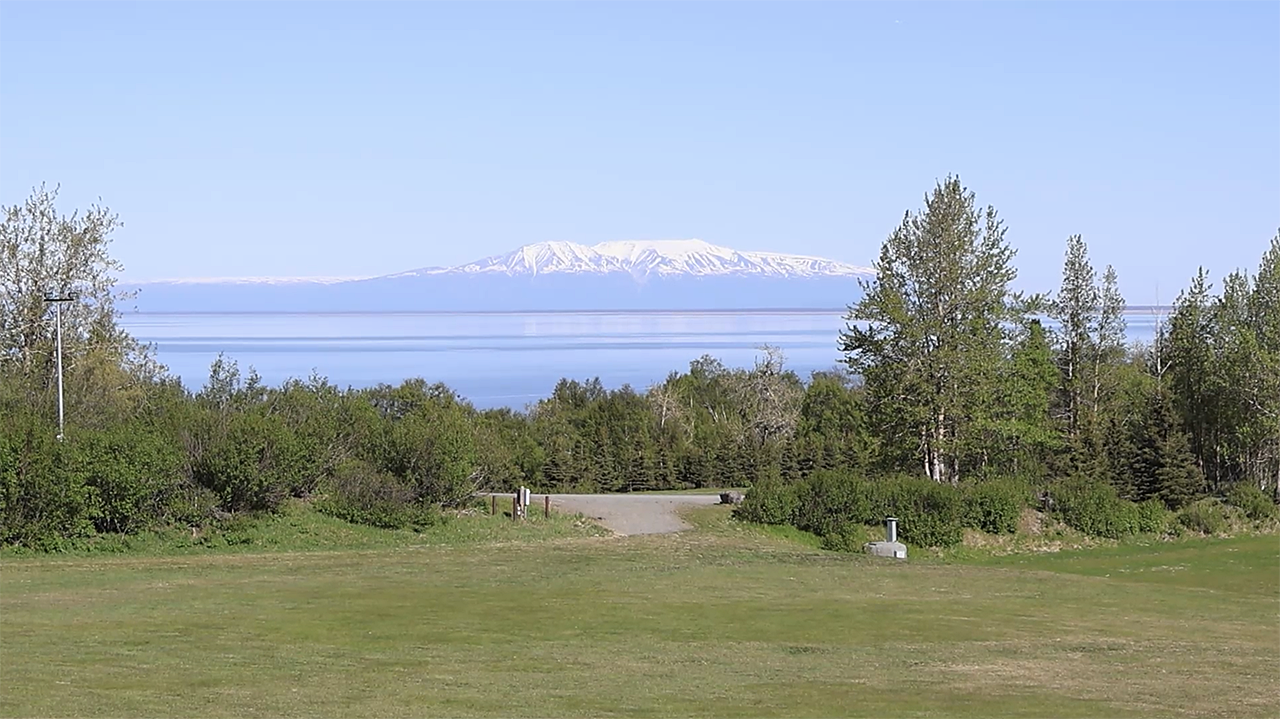
Brief summer-like weather drew crowds outdoors across Anchorage as parks and trails filled, with visitors enjoying sunshine, wildlife sightings, and views of Denali.
Residents and visitors in Anchorage enjoyed brief summer-like weather, with crowds at Westchester Lagoon and Kincaid Park taking in sunshine, wildlife sightings, and views of Denali. The warm spell may be short-lived.
Post Content
Anchorage is heading into another summer with a lifeguard shortage that has left some popular lakes without supervision. City officials say they are operating with minimal staff, prioritizing pools over beaches due to safety concerns and limited personnel, with competitive…

 Skims’ Team USA Olympics collection is red, white, blue, and on sale now!
Yes, we know the 2026 winter Olympics happened a few months ago, but now’s your chance to lock in great deals on pieces…
E! Online (US) – Top Stories

A pile of marine debris colected during the May 2025 beach cleanup campaign on St. Paul Island is dominated by discarded fishing line and netting. Organized community beach cleanups in locations ranging from northwestern Alaska to the tip of Southeast Alaska removed more than 1.5 million pounds of trash in 2025. (Photo by Kristina Tirman/Ocean Conservancy)
Alaskans collected more than 1.5 million pounds of marine debris last year in organized community cleanups involving nearly 1,700 people in total, a new report says.
The report, issued Wednesday by Ocean Conservancy, Alaska Sea Grant and the Sitka Sound Science Center, summarizes beach trash cleanups conducted in 2025 in more than two dozen coastal communities or regions. Sites ranged from the Inupiat village of Wales that is about 55 miles from Russia’s mainland in the northwest to Prince of Wales Island at the southern tip of the Southeast panhandle.
“This report gives us an opportunity to better understand the scale of the marine debris problem in Alaska and highlight the incredible efforts happening in communities across the state,” Kristina Tirman, Ocean Conservancy’s Arctic marine debris manager, said in a statement. “Ocean Conservancy is pleased to support and amplify the work of the organizations and Tribes who have been leading this work to protect Alaska’s coastlines and communities.”
Although there is no comparable annual report that was compiled in past years, according to Ocean Conservancy, an earlier report found that over 3 million pounds of beach debris had been collected from 2006 to 2014 in various cleanups done in different communities.
Fishing-related materials like pieces of netting, line and buoys dominated Alaska’s collected marine debris in past years, according to a report released by Ocean Conservancy last year.

That appears to be the case still.
In the Pribilof Island community of St. Paul, for example, over 90% of the 25,888 pounds of marine debris collected last year consisted of fishing net and line material, according to data provided by Ocean Conservancy.
In addition to supporting community cleanups, Ocean Conservancy contributed to an Alaska Marine Debris Action Plan issued last year by the National Oceanic and Atmospheric Administration.
Alaska has about 66,000 miles of coastline, including islands, inlets, coves, fjords and other features, according to the U.S. Geological Survey. That is more than the rest of all other states combined, and most of it is remote and difficult for people to reach. Additionally, much of the marine debris littering Alaska’s shores comes from distant sources. All that makes beach cleanup much more difficult in Alaska than in other states.
Those challenges were cited by Alaska lawmakers, who unanimously passed a measure, Senate Joint Resolution 20, urging additional federal funding to support marine debris removal. The non-binding resolution also calls for better federal and state coordination with coastal communities, tribes, nonprofits and other entities.
The problems associated with marine debris include ingestion and entanglements by birds, fish and marine mammals and interference with fishing and recreation and hazards for mariners, said the resolution, which won final passage on May 19. The problem “is particularly acute in the state because of the state’s rugged shoreline, ocean currents that concentrate debris in remote locations, and ocean dependent coastal communities,” the resolution says.
The approved resolution is now headed to Gov. Mike Dunleavy for a signature, which is voluntary but not necessary, before being transmitted to Alaska’s congressional delegation.
Editor’s note: this story has been updated to clarify that joint resolutions don’t require a governor’s signature to pass.

The Lutak Dock redesign project is in limbo after a meeting borough manager Alekka Fullerton described as a “huge step back.”
Borough staff say they’re ready to submit a “white paper,” a document that explains to the federal agency funding much of the project what the new dock design, selected in April, will entail. As a condition of $20 million funding from MARAD, the Federal Maritime Administration, the agency must sign off on the project.
Borough staff released a draft of that white paper this week, and at a special meeting Tuesday night the assembly was scheduled to vote on sending it to MARAD.

After a two-hour meeting in which members of the assembly and members of the public at times shouted back and forth at each other across the room, the assembly failed to either approve or reject sending the white paper to Washington, D.C.
Assembly members Craig Loomis and Eben Sargent voted against sending it, and assembly members Mark Smith, Cheryl Stickler, and Gabe Thomas voted in favor. That meant neither side of the resolution reached the required four votes to pass.
Any vote from assembly member Kevin Forster would’ve broken the deadlock, either adding a fourth vote to the yes side, or making it a 3-3 tie, sending the decision to the mayor. Forster was not present at the meeting, and Smith referred to him as “conspicuously missing,” noting that Forster voted with him, Stickler, and Thomas in the April dock selection decision. Forster said Wednesday he was on a trip planned in December and had notified the mayor of his absence.
After the vote, Fullerton initially said she would go forward with sending the white paper as written. “The purpose of bringing this to light and bringing this to this meeting was so the community could see the white paper and that the community could know how we were going to move forward. My understanding is I will continue to go forward irrespective of the failure of the resolution to reach four (votes).”
That followed assembly members arguing, in lieu of a four-vote majority on the white paper issue, the only solid guidance to the manager was the assembly’s prior vote selecting a dock design. That vote, they said, authorized the manager to take steps to pursue the chosen dock design.
“That was the will of the assembly that continues to be the will of the assembly,” Stickler said.
But Wednesday afternoon, Fullerton said her position during the meeting, of moving forward despite the deadlock, “feels bad and is not how I want to go forward.”
“I don’t know what the next step is as I sit here,” Fullerton said, adding that the topic would “certainly come up” at Tuesday’s assembly meeting.
Fullerton may choose how to proceed with the white paper without another assembly vote. “My gut is to always be open and talk about things and try to be on the same page,” Fullerton said, about her rationale for seeking an assembly vote on the white paper decision. “But it backfired last night, and in twenty-twenty hindsight I probably should’ve just sent it to MARAD and told the assembly after, which is a shame.”
Despite cautious optimism in recent months, Tuesday’s meeting suggested the community has not moved past the rampant mistrust that has plagued past years of the dock process. It was apparent in the tenor of the debate — so much so that at the end of the meeting mayor Tom Morphet felt the need to implore participants to “peacefully and civilly leave this meeting and come back Tuesday with a kind and respectful attitude towards all.”
At the same time, Morphet’s effort to end the meeting included a decision to not let Fullerton speak during a portion of the meeting before adjournment reserved for assembly comments.
Fullerton said she was angry she wasn’t allowed to speak and would’ve tried to move the room away from some of the conflict. “If I were allowed to speak, that’s what I was going to try to do — I think we need to have a conversation about it,” she said. “I feel like people got reentrenched in their positions. I think it was handled very poorly.”
The distrust was also apparent in the substance of the debate.
The two no votes from Sargent and Loomis stemmed from concerns that the process was being mishandled.
Sargent said the design selection was “based on multiple pieces of information that proved to be incorrect,” including information about permitting for the design that was selected, and that the physical size of that design “was likely overstated.”
Sargent said he didn’t believe, given estimated permitting times and lead times to order materials , that the scheduled 2027 start to construction would be possible.
Sargent also raised the topic of mining, which has haunted dock debate for years. At least one local conservation group has argued that old iterations of the dock rebuild plans were designed to accommodate ore shipments, either out of the Yukon or from a potential mine in the upper valley.
Multiple assembly members in the past year have said the new dock will not be used to ship ore. Current assembly member Gabe Thomas has twice said he intends to introduce legislation banning ore shipments across the dock, but that hasn’t happened.
Sargent asked Fullerton Tuesday if she had had any conversations with federal agencies about ore shipments over the new dock, signalling the mine debate may still be part of the dock conversation.
Morphet moved the conversation away from the topic before Fullerton answered. But Fullerton said Wednesday ore shipment hasn’t been brought up “in any way” by borough staff in discussions with federal agencies.
Loomis took aim at the assembly and borough staff’s handling of the Section 106 process with the Chilkat Indian Village — a legally mandated consultation between the federal government and the tribal government regarding the dock’s impact on historic and contemporary cultural resources.
Fullerton and the borough’s permitting consultants say they have confirmation from MARAD that the Section 106 consultation has been completed. Chilkat Indian Village tribal council president Kimberley Strong, however, spoke during Tuesday’s public comment, saying that “from (the Chilkat Indian Village’s) perspective and from what we understand the law to be, the 106 is not complete until your project is complete.”
“There is a permit out there that we have no control over,” Loomis said. “It’s the 106 and it’s people that have lived here a heck of a lot longer than us. (The Chilkat Indian Village) has a right to do what they’re doing, and I’m behind them 100%.”
Loomis and Sargent took heavy criticism for their statements. Stickler, and Fullerton last week, said Sargent, by questioning the dock design choice, is violating principles of good government.
“We passed as a body (dock design) option one,” Stickler told Sargent. “Even if the vote doesn’t go my way or your way, that’s how the vote went. At this point it’s time to move on.”
Borough consulting engineer Paul Wallis agreed with Stickler’s statement, telling Sargent
“not everyone gets a trophy here. This isn’t YMCA tee ball. But the whole community can still win, so I encourage you to stay the course.” Wallis later apologized for the tee ball analogy.
Public commenters also spoke out against Sargent, Loomis, and others who advocated against proceeding with the borough’s selected dock design, calling them “obstructionist.”
New information
Amid the conflict, the meeting did provide some new clarity on how the process will work moving forward.
One of the main concerns right now is a time constraint: Fullerton and borough consultants have repeatedly said the borough must finish permitting for the dock before it can sign a grant agreement, securing the $20 million of federal funding currently dedicated to the dock. That grant agreement must be signed by September 2027, or else the funding will likely disappear, borough officials have said.
At Tuesday’s meeting, borough consultant Robin Reich, a permitting expert, reiterated that some of the required permits must go through a process estimated to take nine months. Complicating things is the fact that the nine-month clock cannot until the borough reaches a 35% design level, Reich said. That 35% design is currently scheduled to be completed by consultants Moffatt & Nichol in August.
But even that information doesn’t seem certain. At a June 1 meeting, Wallis told Moffatt & Nichol permitting specialist Margaret Shwertner he believed the nine-month clock referred to the timeline for the longest permitting tasks, start to finish. Shwertner disagreed, saying she believed the nine-months referred to the timeline for submitting permitting to MARAD, after which the agency would take further time to review the permit.
The permitting process “has changed so much lately,” Shwertner said. “It’s so up in the air…. permitting is a lot of back and forth with the agencies so it can vary a little bit.”
Nevertheless, Reich, the other permitting expert, said Tuesday she was “very confident” the permitting would be completed in time to meet the grant agreement deadline next September.
There’s also the lingering question of how the assembly handles votes going forward when neither side meets the four-vote threshold to pass. The issue has come up a number of times in 2026, including with votes on a severance tax, a plastic bag ban, and a heliport permit, and the absences have come from multiple assembly members.
“We have these really important votes that require four, and having less than a full assembly — it has proven to be a problem with this assembly, and it has never been a problem previously,” Fullerton said.
The post Dock meeting leaves Lutak Dock project in limbo appeared first on Chilkat Valley News.