Jim Bakker, the controversial televangelist who built a massive Christian television empire with his first wife, Tammy Faye Bakker, has died. He was 86.
Bakker died Monday, his second wife, Lori Bakker, announced.
A cause of death has not been revealed.
Lori described her husband as a “pioneer of Christian television” and said she was honored to have spent so many years alongside him.
For millions of Americans, Jim and Tammy Faye were once among the biggest names in religious television.
The couple launched The PTL Club in the 1970s, with PTL standing for “Praise the Lord.” The program eventually became the centerpiece of an enormous ministry that included the Heritage USA Christian theme park and resort in South Carolina.
At its height, The PTL Club reportedly reached as many as 13 million viewers, while the ministry brought in more than $100 million annually. Jim preached an upbeat message while Tammy Faye became famous for her singing, flamboyant personality, and, of course, her heavy makeup.
Their seemingly unstoppable empire came crashing down in 1987.
Bakker resigned after admitting to a sexual encounter with church secretary Jessica Hahn. The scandal was followed by an investigation into PTL’s finances, and Bakker was eventually indicted on charges of mail fraud, wire fraud, and conspiracy.
In 1989, he was convicted on all 24 counts and initially sentenced to 45 years in federal prison.
The sentence was later reduced, and Bakker ultimately spent about five years behind bars. Prosecutors accused him of defrauding followers through the sale of lifetime vacation packages connected to Heritage USA.
St Michael’s Church, an Anglo-Saxon church. (Photo by Archive Photos/Getty Images)
Tammy Faye remained publicly supportive of Jim during his trial, but their marriage ultimately ended. She divorced him in 1992 while he was still incarcerated. Tammy Faye died of cancer in 2007.
Jim was released on parole in 1994 and married Lori in 1998. The couple eventually returned to television with The Jim Bakker Show, which launched in 2003 and was later filmed near Branson, Missouri.
But Bakker’s controversies were far from over.
In 2021, he and his production company agreed to a $156,000 settlement over allegations that he falsely promoted a product called Silver Solution as a treatment for COVID-19.
Despite the scandals that defined much of his later life, Bakker continued preaching and broadcasting until his death.
His legacy is a complicated one: He helped transform Christian television into a powerful entertainment and fundraising machine, only to see his empire collapse spectacularly before rebuilding his career decades later.
Taylor Swift and Travis Kelce met up for dinner and a glass of wine.
But instead of Tuesdays, this time the married couple stepped out on a Monday night to ring in Kelce’s birthday, dining at the… E! Online (US) – Top Stories
This year’s primaries were also the most competitive in recent history; 13 congressional incumbents were defeated, the largest number since the 1950s other than the years when redistricting forced some incumbents to run against each other.
Primary competition is often a predictor of general election competition. In wave election years, as this year is expected to be, the party that gains seats in Congress often had more competitive primaries, a consequence of the increase in candidates seeking nomination and the enthusiasm of voters. This year, that competition bodes well for Democrats.
The story the 2026 primaries tell about democracy, however, is less rosy. The 2026 primaries were held on 21 dates, from March to September. State turnout levels varied substantially, and in many states it appears that politically moderate voters stayed home. Some states, such as Maine and Michigan, had heated battles in marquee races, while other states, such as Connecticut, had virtually no competition.
From my perspective as a political scientist, each of these facts represents a problem for democracy. If the purpose of primaries is to allow each party’s voters an opportunity to choose candidates, the 2026 primaries – like primaries in most years – did not achieve those goals. In fact, their outcomes represented the views of a small group of people who turn out inconsistently and often do not even represent the views of the parties’ voters, to say nothing of the general public.
My recent book, “The Problem with Primary Voters,” co-authored with Caroline Tolbert and Nathan Micatka, documents these problems. Here they are, and how they undermine democracy.
Supporters of Democratic congressional candidate Melat Kiros, a member of the Democratic Socialists of America, celebrate in Denver on June 30, 2026, after Kiros defeated incumbent U.S. Rep. Diana DeGette in the primary. Michael Ciaglo/Getty Images
1. Turnout in primaries is very low
In the past three midterm elections – 2014, 2018 and 2022 – primary turnout averaged approximately 20% of the voting age population.
We studied data about more than 3 million American voters for our book. We found that fewer than half of primary voters in any given year voted in the primary four years earlier.
This creates a problem of representation, and this lack of consistency, we found, is a particular challenge for U.S. House or state legislative candidates: They cannot know who will actually show up in the primary. And even if they try to represent their party’s voters, the voters who show up are unlikely to be there because of them.
In 2026 this problem was made worse by the mid-decade redistricting prompted by the Supreme Court’s Louisiana v. Callais decision, along with the decisions by governors in Louisiana and Alabama to postpone their states’ primaries. No one has studied voter awareness of primary dates, but surely many eligible voters do not know when their states’ primaries are held, especially in states without a competitive primary for governor or U.S. Senate, or where dates have recently changed.
Low primary turnout can also lead to unexpected results – and these results can create misleading perceptions of the election.
In 2026, for instance, upset victories by Democratic Socialist candidates in New York, with an 11% turnout, and Colorado, with a 34% turnout, led to a spate of news stories about the success of socialists. But these candidates’ victories were the result of small shifts in particular districts, not major changes in the Democratic electorate.
Can primaries be improved?
The Alaska Division of Elections explains how the state’s nonpartisan top-four primary election works.
Many reform advocates who are concerned about political extremism have proposed changing primary election laws.
The reforms include adopting a top-two nonpartisan primary, such as those in California and Washington, or a top-four nonpartisan primary with a ranked-choice general election, as is used in Alaska. In each of these cases, a specific number of candidates chosen in a nonpartisan primary go on to the general election.
Others have proposed mandating open primaries, where any voter can request the ballot of either party.
These reforms can have targeted, albeit limited, effects – they can increase competition in lopsidedly partisan districts and give members of the minority party more of a voice.
However, these reforms are unlikely to solve the turnout problem. Increasing turnout by 5 percentage points or so will not necessarily make the electorate more representative or encourage people to vote more consistently.
To increase the participation, representation and consistency of primary voters, I believe it is necessary to consolidate primary dates. One way to do this would be to establish a national primary day. If all states voted on the same day, we expect turnout would increase in part because people would know when to vote, and those who vote based on a sense of duty, as opposed to partisanship, would be more likely to show up.
If this seems too far-fetched, reformers could still push states to consolidate their primaries on fewer days – to create a set of regional primaries.
Some scholars have argued that political parties should exert more control over nominations, and that strong parties may not need the input of voters in order to offer voters clear and responsible choices about public policies.
It is true that most democratic countries do not use primaries at all. Yet there is no chance that America will get rid of primaries any time soon. If we are going to have them, and they are to fulfill their purpose, it is important that they be predictable – that politicians know who the voters will be and that the voters look like the population.
Otherwise voters, nonvoters and politicians risk learning the wrong lessons from the primaries.
Robert Boatright does not work for, consult, own shares in or receive funding from any company or organization that would benefit from this article, and has disclosed no relevant affiliations beyond their academic appointment.
It seems to be an issue both major political parties agree on: For many candidates, age is just a number, even when it starts with an 8 or a 9.
Letting go
My colleagues and I study succession in family-run businesses and other occupations where leadership, identity and longevity can become deeply intertwined. Whether someone is in charge of a company or is a lawmaker, their work does not only keep them busy. It provides status, an identity and a sense of mission. Letting go means giving up more than a job.
When business leaders or politicians linger for too long, it can be costly for their companies or constituents because potential successors may become frustrated by waiting and decide to move on.
When any kind of leader remains in their role for decades, underlying reasons can range from a genuine love for what they do to not knowing what they will do – or who they will be – once they leave. However, waiting too long can mean they’ll have to hand off their responsibilities in crisis mode.
In family businesses, my research team found, the people closest to their leaders – including relatives, employees and longtime supporters – may go quiet rather than press the issue.
This dynamic is not limited to the business world. It also applies to many of the older members of Congress.
A closer look at the large numbers of legislators who continue to serve during their golden years reflects two trends.
First, many are elected for the first time when they’re middle-aged. New House members were about 50 years old and new senators around 55 in 2025.
Every lawmaker can have a reason to say “not yet.” So can their staff members, who may be loyal to them and their missions and professionally invested in the work they have built together.
However, unusually prolonged service in any position increases the possibility that illness, cognitive decline or death will lead to an unplanned and probably rocky transition.
What’s more, when politicians serve into their late 70s, 80s or beyond, they are breaking with ordinary employment patterns.
The typical American retires in their early 60s, with two-thirds of U.S. workers exiting the labor force before their 65th birthday.
U.S. Sen. Dianne Feinstein of California arrives at the U.S. Capitol on May 10, 2023, after a more than two-month break tied to a hospitalization for shingles. Anna Moneymaker/Getty Images
Setting good and bad examples
There are examples of long-serving politicians choosing to plan their exit closer to standard retirement age.
One is Barbara Boxer. After more than three decades in Congress, the 74-year-old California Democrat announced in January 2015 that she would not seek reelection to the U.S. Senate the following year. “There is a time when you want the next generation to step in and step up,” she said.
Boxer’s early decision gave prospective successors nearly two years to organize and voters the opportunity to choose among them. Kamala Harris won the seat but stepped away to serve as President Joe Biden’s vice president.
This departure offers a striking contrast with that of Boxer’s longtime colleague, Sen. Dianne Feinstein, who remained in the Senate through a lengthy health-related absence in 2023. Feinstein, also a California Democrat, died in office that September. She was 90 years old.
She served on the influential Senate Judiciary Committee, which considers federal judicial nominations, including Supreme Court nominees. During her nearly three-month absence, the committee was deadlocked on dozens of Biden nominations after Republicans refused to let the Democrats appoint a temporary replacement for her and she refused to step down.
A rushed attempt at succession followed Biden’s abrupt withdrawal from the race. Harris became the Democratic nominee without participating in any of the 2024 primaries.
When change finally came, it arrived under duress rather than by design. And Harris lost the election to Donald Trump.
U.S. Rep. Kay Granger, a Texas Republican, announced in 2023 that she would not seek reelection the following year. It soon became clear that severe health problems were preventing her from serving her constituents.
The former House Appropriations Committee chair didn’t cast a vote in her final six months in office for a good reason: She had dementia and was staying in a Texas assisted-living facility that provided memory care services to some residents. Granger died in August 2026 at 83.
U.S. Sen. Mitch McConnell, a former Senate majority and minority leader, has announced that he will step down when his current term – the Kentucky Republican’s seventh – ends in January 2027. But a fall, hospitalization and subsequent stint in a rehabilitation center in mid-2026 prompted renewed public scrutiny of the 84-year-old’s health and ability to complete his term.
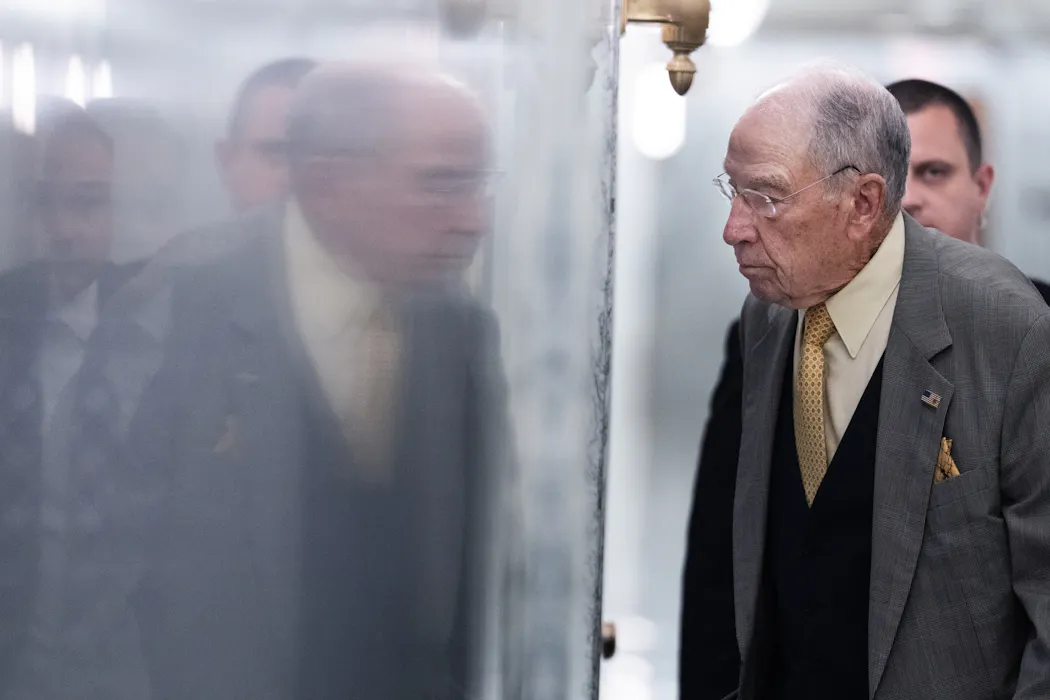
U.S. Sen. Chuck Grassley of Iowa, who turned 93 on Sept. 17, 2026, and appears to be in good health, has not yet said whether he’s running for a ninth six-year term in 2028. But the Republican, who is the oldest person serving in Congress, has urged his constituents to vote for a Republican for governor.
My colleagues and I found an unlikely way to think differently about leadership transitions: considering lessons about letting go from palliative care.
Leaving political office or another leadership role, of course, is not the same as dying. But, as is true before someone develops a terminal medical condition, advance planning is most useful while people can still articulate what matters to them and exercise meaningful choices about what comes next.
I’ve learned that it’s a mistake to treat succession as something to discuss only when a leader must move on for health or other reasons. So, in addition to my work as a management professor, and to inform my research, as well as the workshops I hold for aging business owners and members of their inner circles, I have been trained as an end-of-life doula. I decided to do this because I lacked the vocabulary and tools that facilitated difficult conversations and decisions about their legacy and what is important to the leader as they let go.
Palliative care supports the act of letting go long before death – the same challenge confronting business leaders and the companies they run.
When voters consider whether to vote for an aging incumbent, they may wonder whether that lawmaker is already too old for their demanding job or soon will be. But that may be the wrong question. It might be better to ask whether the legislators who represent you, no matter their age, have a plan for letting go.
Nancy Forster-Holt does not work for, consult, own shares in or receive funding from any company or organization that would benefit from this article, and has disclosed no relevant affiliations beyond their academic appointment.
Abbey Yung is well known on TikTok for creating the Abbey Yung Hair Method, a multi-step hair care process that took the internet by storm.
But the certified trichologist is also known for her… E! Online (US) – Top Stories
Sunscreen is critical all year round for glowing, protected skin! And for a limited-time during Amazon Prime Day, you can score the SPF that Lisa Rinna calls her “little secret” for 25%… E! Online (US) – Top Stories
As artificial intelligence becomes more integrated into genealogical research, it is tempting to imagine a future where longstanding mysteries are unraveled with a few keystrokes. AI tools can now scan, transcribe, and sort through centuries of records, but the heart of successful genealogy still depends on something machines cannot replicate: the human touch. No matter […]WordPress Planet
A few days ago, someone opened a support thread about AllTerrain Forms and, in the middle of otherwise useful feedback, wrote something very direct: “I hate OpenStation.”
Obviously that is not the nicest sentence to read when you are working on the product, but at the same time it immediately got my attention because this is exactly the kind of feedback that can be useful if you don’t take it personally.
So instead of trying to explain why OpenStation is good, or why we made certain decisions, I asked a very simple question: what exactly makes you hate it?
Her answer was actually very good.
She works on a laptop, so screen space matters a lot. OpenStation was opening windows too small for her workflow, which meant that one of her first actions was always maximizing them. She also didn’t like losing the visible URL because she regularly copies URLs into emails, project trackers or messages. On top of that, her users are not very technical, and from her point of view OpenStation was adding another layer to WordPress that she would eventually have to explain and support.
She basically said that browser tabs already exist, users understand them, they use the whole screen, and they don’t hide the URL.
And I think this is exactly where building software becomes interesting, because from our side all of those decisions had reasons behind them, but reasons don’t really matter if the final experience is worse for the person using it.
None of these are theoretical product discussions. They are very concrete things that someone hit while trying to use the software for real work.
That matters a lot to me.
We started discussing these points immediately, and one of them has already made it into the next OpenStation release.
Users will now be able to choose how new windows open: using the current default behaviour, maximized, or focused. Focused mode maximizes the new window and minimizes the other windows on the same desk, so people working on smaller screens can have something much closer to the experience they expect.
This came directly from that kind of feedback, and the implementation is already merged:
We obviously have our own vision for OpenStation. We believe WordPress can have a much better working environment than the traditional admin experience, and there are many things we still want to explore there. But having a strong idea of where the product should go does not mean pretending every decision we make is correct.
Sometimes the most useful feedback is not “great release” or “this looks amazing”. Sometimes it is someone telling you that a window is too small, that they want the URL back, that something scrolls when it shouldn’t, or simply that they don’t see the benefit of what you built.
That kind of feedback forces you to look at the product from outside your own head, which is probably one of the hardest things to do when you have been working on it every day for months.
For me, OpenStation becoming more mature is not only about adding more apps, more features or more ambitious ideas. A big part of maturity is improving all those small things that make the product feel natural, predictable and less annoying to use.
And I think there is also something important here about open source. People can complain, explain exactly what does not work for them, and a few days later they can literally see the code that changes that behaviour.
That is a pretty healthy way to build software.
So yes, tell us when OpenStation is great, but especially tell us when it sucks. We may not agree with every suggestion, and we obviously cannot build every requested feature, but if there is a real problem behind the feedback, we want to understand it.
In this case, someone said “I hate OpenStation.”
Fair enough.
A few days later, OpenStation got better because of it.










 Taylor Swift and Travis Kelce met up for dinner and a glass of wine.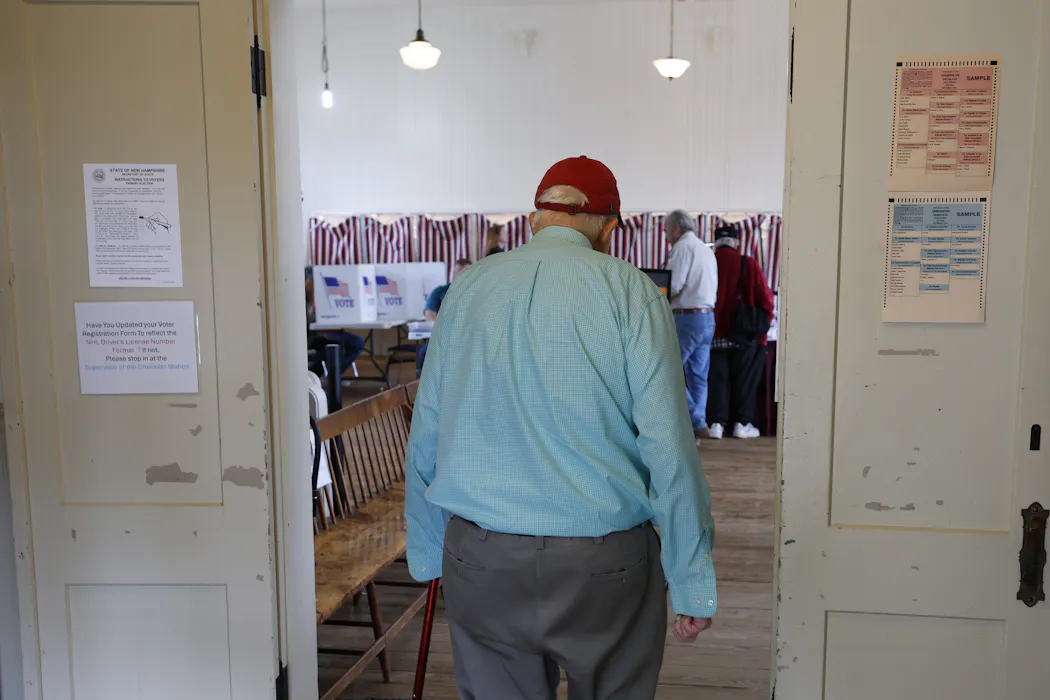







 Abbey Yung is well known on TikTok for creating the Abbey Yung Hair Method, a multi-step hair care process that took the internet by storm.
 Sunscreen is critical all year round for glowing, protected skin! And for a limited-time during Amazon Prime Day, you can score the SPF that Lisa Rinna calls her “little secret” for 25%…