Students working on class requirements inside their dorm in a campus accommodation.









Students working on class requirements inside their dorm in a campus accommodation.
Always and Tampax reports that a survey reveals 64% of women feel unprepared for college periods, with many wishing for more open conversations and guidance.

The frappe has accumulated several distinct meanings across different food traditions, and each has a legitimate history. National Frappe Day this Oct. 7 celebrates a … Read moreThe post The frappe is one of America’s favorite drinks and nobody can…

 The Y2K renaissance isn’t over yet, and it’s spilling into beauty, as proven by Maybelline’s revival of their iconic Baby Lips balms and TikTok’s obsession with the Tuscan mom aesthetic.
With the…
E! Online (US) – Top Stories

We’re down to three unbeaten teams in the NFL, and those teams sit atop my rankings this week. The Las Vegas Raiders and Buffalo Bills suffered their first defeat of the season and fell, but the No. 2 team didn’t slide straight into the top spot that Buffalo occupied last week. Instead, another jumped three spots to No. 1 after an impressive victory. Here’s where things stand after NFL Week 4’s Sunday slate. Super Bowl odds: +7400 A disappointing home loss to the Chiefs shouldn’t dim the Raiders’ outlook after the first four weeks of the season. Head coach Klint Kubiak has his offense clicking behind a creative scheme that showcases the Raiders’ blue-chip players in quarterback Kirk Cousins, running back Ashton Jeanty and tight end Brock Bowers. Player Stat: Bowers reached 2,000 career receiving yards in his 31st career regular-season game, tying Hall of Famer Kellen Winslow for the second-fastest tight end to reach that mark in NFL history. The record is 30 games by fellow Hall of Famer Mike Ditka. Super Bowl odds: +18000 Credit head coach Todd Monken for helping Deshaun Watson rediscover some of his playmaking magic. The quarterback delivered a third straight game-winning drive, while showing steady improvement as a passer and playmaker in a new offensive scheme. Player Stat: Rookie receiver Denzel Boston shares the league lead with three receptions of 40 or more yards this season, tied with the Ravens’ Zay Flowers and the Chiefs’ Tyquan Thornton. Super Bowl odds: +850 Derrick Henry’s presence and playmaking potential allow the Ravens to bludgeon opponents with a downhill running game that tests the discipline and courage of opposing defenders. The super-sized running back continues to find pay dirt as the ultimate short-yardage/goal-line weapon for a team that’s quietly sitting at 3-1. Player Stat: On Sunday, Henry became the second player in NFL history to score a rushing touchdown against a former team with whom he recorded at least 9,000 career rushing yards. Adrian Peterson did it in Week 17 of the 2020 regular season for the Lions against the Vikings. Super Bowl odds: +2000 Head coach Ben Johnson is showing the football world that his offense rolls with or without a franchise quarterback under center. The Bears’ underrated running game keys the weekly offensive explosions, with D’Andre Swift and Kyle Monangai taking turns leading the way. Monangai took the honors on Sunday, with a 30-carry, 146-yard effort that gives the Bears a pair of top-10 rushers this season. Player Stat: Monangai’s 30 carries are the most in a single game in the NFL this season. Super Bowl odds: +750 Despite dropping a tough game to a divisional rival, the Bills are off to another strong start under Josh Allen. The former MVP became Buffalo’s all-time leader in scrimmage touchdowns (88), surpassing a pair of Hall of Famers — running back Thurman Thomas and wide receiver Andre Reed. With the rugged dual-threat QB continuing to flash take-over-the-game ability in head coach Joe Brady’s revamped offense, the Bills always have a puncher’s chance in an AFC heavyweight fight. Player Stat: Allen is now the only quarterback in NFL history to hold a franchise’s all-time record for career regular-season scrimmage touchdowns. Across the other 31 active franchises, the all-time leader is either a running back, wide receiver or tight end. Super Bowl odds: +950 The defending champs are thumping opponents with a hard-hitting defense and an efficient offense paced by wide receiver Jaxon Smith-Njigba’s playmaking. The reigning Offensive Player of the Year joined Randy Moss (2007) and Jimmy Smith (2000) as the only players in NFL history with 30 catches, 450 receiving yards and six touchdowns through the first four games of the season. Player Stat: Smith-Njigba set the Seahawks franchise records for receptions and receiving yards through the team’s first four games of a season. Super Bowl odds: +1500 Trevor Lawrence & Co. are quietly putting together a run that is making the league take notice. The former No. 1 overall pick is carving opponents up with surgical precision without force-feeding the ball to a WR1. The ball could go anywhere and everywhere based on his reads and progression on any given play, which will always keep opponents guessing. Player Stat: With the Jaguars’ win over the Bengals, Lawrence has now beaten every AFC team in his career. Super Bowl odds: +2200 If you’re into winning pretty, the Vikings won’t appeal to you. This is a gritty, hard-nosed team that lets the defense take the lead. Defensive coordinator Brian Flores’ unit disrupts and destroys opponents with an exotic scheme and relentless pressure from a collection of high-IQ and high-motor defenders. Player Stat: Tight end T.J. Hockenson caught all 13 passes thrown to him for 119 receiving yards, ranking second in the NFL in Week 4 receptions (trailing only CeeDee Lamb’s 17 catches). On the season, Hockenson is tied for third in tight end receptions with 22. Super Bowl odds: +950 Kenneth Walker III has balanced out the Chiefs’ offense with his dynamic running skills. The marquee free agent leads the NFL in rushing, with his 537 yards ranking as the most by an NFL player through the first four games in over a decade. Player Stat: Walker has the most rushing yards through the first four games of a season in Chiefs history. Super Bowl odds: +850 The most consistent team in football continues to methodically beat down opponents, with its veterans leading the way. Tight end George Kittle (32 years old, four touchdowns), wide receiver Mike Evans (33, three), wide receiver Deebo Samuel (30, two) and fullback Kyle Juszczyk (35, one) are all thriving within their specific roles in head coach Kyle Shanahan’s offense. Player Stat: The 49ers have the most TD catches ever by players who are at least 30 years old through four games, with 11. Wide receiver Demarcus Robinson (32) is the other player 30 or older who has a score for San Francisco this season.Latest Sports News from FOX Sports
Halloween has outgrown one night, and this October the proof is a river parade of 100-plus witches in canoes, a theater ghost with his own … Read moreThe post The most interesting Halloween trips this year are in cities nobody…

The Alaska State Office Building in Juneau, the state capital, is seen on Feb. 16, 2023. (Photo by Yereth Rosen/Alaska Beacon)
By the end of 2027, as many as 14,000 Alaska state workers could be paid by someone outside the state.
After years of trouble within the payroll department within the Alaska Department of Administration, the agency is planning to outsource the state’s public employee payroll to an outside company.
Proposals from interested companies were due Thursday, and in an internal letter, DOA Commissioner Paula Vrana said “it likely will be several weeks before a final decision is made.”
Vrana implied that if the proposals aren’t affordable or are otherwise unfavorable, the state will not proceed with outsourcing.
“As of now, we are exploring what options are available to the state and what value may be realized by this approach,” she wrote. “The final decision will be based on the proposals we receive.”
Vrana wrote that the department will begin talking with unions “to explore the options for transfers/placements of employees displaced by outsourcing” and if DOA does choose to outsource, “we will also work with the vendor to include as many existing state payroll employees as possible in their staffing plan.”
The state’s payroll department has struggled with staffing issues for years, leading to times when employees missed paychecks or encountered other problems with their pay.
In April, DOA published a request for information from companies that might be interested in providing “comprehensive payroll processing” for the state.
A three-page feasibility study dated Sept. 28 states that payroll work involves 78 employees in different agencies; all would be affected by outsourcing.
According to the state’s formal request for proposals, it is prepared to pay $4 million per year for a company to handle payroll. It currently spends about $10 million per year on payroll employees and functions, the feasibility study stated.
According to the study, in fiscal year 2025, state employees filed more than 1,500 “notice of pay problem” reports, and reducing the number of problems could make employees in other departments happier.
The first outsourced paychecks would come to a handful of departments on April 1, 2027, and other departments would be transferred to the outsourced payroll company through the rest of the year.
The outsourcing company would have to use the state’s existing payroll software programs, the document states, and the work would have to be done in the United States, but the contractor could get a waiver from the state that would allow payroll work to be done in a foreign country.
“The goal is not to change the system used to process payroll but to make payroll processing more efficient and ensure the state’s existing systems and processes are supported by qualified contracted professionals who can maintain continuity, reduce errors, and uphold the state’s obligations to its employees and the public,” the document states.
DOA provided a copy of the RFP documents to the Beacon this week; they were not previously published on the state’s public notice system, and the two public employee unions whose members would be affected by the outsourcing said they also had not previously seen the documents.
The Beacon asked DOA for an interview with Vrana or someone else involved with the outsourcing decision but was turned down.
In response to a written question asking why the department is planning to outsource, a spokesperson said by email: “Ensuring that employees are paid correctly and on time is the essential duty of payroll. Challenges stemming from high turnover and persistent vacancies within the Department have resulted in pay problems for some state employees. The administration has determined that outsourcing payroll may both provide significant recurring cost-savings to the State and improve services to its employees. However, no final decision on outsourcing payroll will be made until responses to the RFP issued earlier are evaluated.”
Jeff Kasper is the business manager of the Alaska Public Employees Association, which represents payroll workers. He’s not a fan of outsourcing.
“It usually costs more and doesn’t provide the efficiencies that you’re looking for. When you’re talking about public services, you’re essentially having the public pay more for something that’s probably not as good,” he said.
Kasper isn’t convinced that the Department of Administration has done enough to fix the problems that have deterred Alaskans from working for the payroll department.
“If people aren’t applying for jobs and accepting jobs, it’s usually because it doesn’t pay enough or it doesn’t provide benefits or it’s bad working conditions. This one could be all three, and I don’t think any of them have been addressed,” he said.
The state’s own feasibility study acknowledged those problems.
“Payroll processing occurs on a bi-weekly basis and does not have down time. This work environment and the entry level pay range are likely reasons for low retention and high staff turnover,” the study concluded.
As of last month, the study said, 58% of all payroll positions in the state are vacant, and it can take as long as a year of training before a new worker is capable of working independently.
MaryAnn Ganacias is the interim executive director of the Alaska State Employees Association, whose members are paid by the payroll department.
“Alaskans deserve to know what the problem is with the state and what they’re trying to solve by privatizing payroll,” she said.
Ganacias said state money spent outside Alaska is money that doesn’t benefit Alaskans.
“We need to do better investing in our own employees here in Alaska, and not outsourcing where the money actually goes,” she said.
Kasper said he doesn’t think the timeline described in the state’s RFP follows collective bargaining agreements or is realistic.
“The union’s not just gonna sit down and let this happen,” he said. “We don’t think the state has been following the process that’s in the contract.”
Kasper said his union’s contract with the state requires a 30-day consultation period before any outsourcing takes place, and even though the state’s RFP calls for a contract in November, he doesn’t think one is likely before Gov. Mike Dunleavy leaves office in the first week of December.
Kate Sheehan, policy adviser for the Department of Administration, said by email in response to Kasper’s comments, “The State engaged the Confidential Employees Association (CEA) on September 25th, and we have entered into the 30-day period for the union to submit any alternate plans to be considered during this process. DOA does not intend to contract out prior to the Union’s response and analysis of their input.”
The sweet-and-salty combination has a history stretching back centuries, but the chocolate-covered pretzel is a much more recent invention. The biology behind why the pairing … Read moreThe post The real reason chocolate-covered pretzels are impossible to put down appeared…

Some folks tend to associate baby boomers with increased flatulence. But according to a recent study, seniors might not actually deserve this “stinky” rep.

Health Digest – Health News, Wellness, Expert Insights
Reading Time: 3 minutes
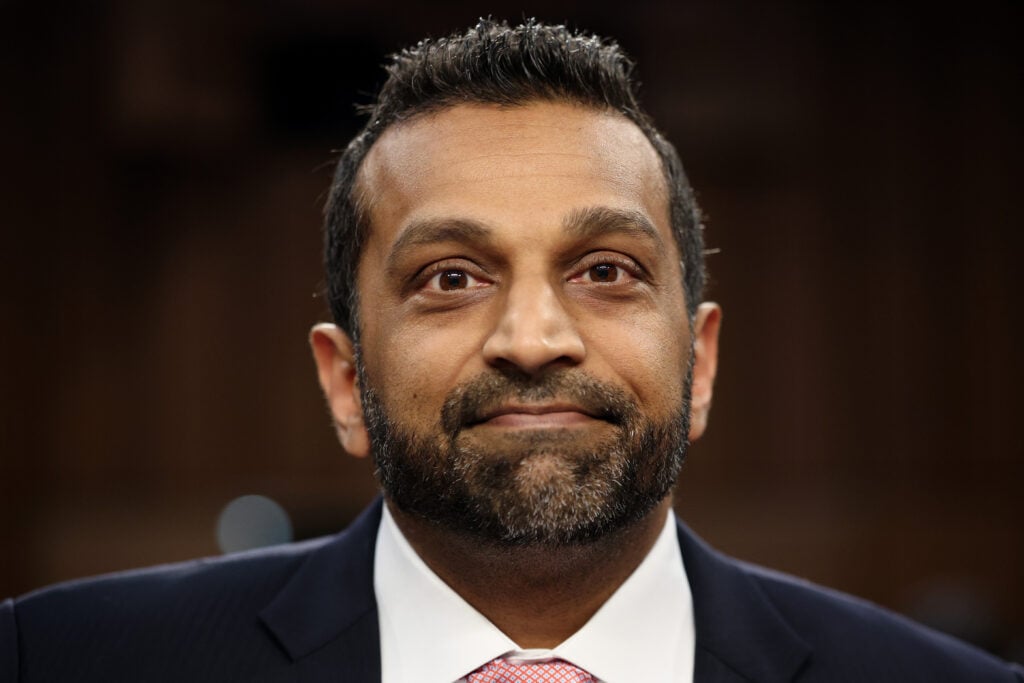
Kash Patel put a ring on it. And yes, she’s a human.
The Trump regime’s FBI Director proposed to his country singer girlfriend. She said yes.
Patel has made controversial use of numerous government resources and trips. His now-fiancee even sang at Trump’s very sad America 250 event.
Now, they’re taking that $60 million taxpayer-funded jet straight to the altar.
On the evening of Sunday, October 4, 27-year-old Country singer Alexis Wilkins took to her Instagram to share some news.
“Went and got the law involved,” she captioned the photo.
The photo itself showed a black-and-white image of her with 46-year-old boyfriend Kash Patel.
Patel, whose eyes appeared to be facing directly at the camera (at least in the photo), wore a smile.
Wilkins was also smiling as she held up her left hand, showing off a dazzling engagement ring.
In her caption, Wilkins shared a ring emoji and a red heart emoji.
Obviously, in theory, any one person could unilaterally share an out-of-context or doctored photograph to announce big news. (Especially if the poster is the less famous member of a couple).
In case there were any doubts, Patel confirmed the news.
In a quote-tweet, he, too, shared the ring emoji and the red heart emoji.
The news has been controversial, to say the least. But perhaps the couple has friends or loved ones who are happy for them.
❤️💍
— Kash Patel (@Kash_Patel) October 4, 2026
In January of 2023, Kash Patel and Alexis Wilkins began dating after having met a few months earlier at a friend’s house party in Nashville.
However, both of them remained obscure-to-unknown figures until Patel became the Trump regime’s FBI Director. Notably, a conspiracy theorist podcaster became Deputy Director under him.
Almost immediately, public awareness of Wilkins arose because of Patel using FBI resources to travel to see her perform, even if it were nothing but the National Anthem.
Not all of Patel’s brazenly unprofessional use of time and resources has involved Wilkins. (Anyone else remember him partying it up in Italy at the Olympics, not long after Nancy Guthrie’s abduction?)
However, there is a public perception that he prioritizes his relationship with Wilkins and apparently a luxurious schedule and accommodations when setting his travel itinerary. It is … unbecoming of his position.
Patel’s primary qualification as Trump’s FBI Director appears to be his loyalty to Trump himself.
He has shown some of that same loyalty towards Wilkins, viciously defending her — as if she were personally under attack — when accused of unprofessionalism.
(He has also insisted that past FBI Directors were even more capricious with their use of resources, which sounds unlikely but perhaps he knows something that we don’t.)
To be fair, Wilkins has also been accused of being a honeypot (the timeline doesn’t really work for that). That’s probably not a reasonable accusation, folks.
Patel is not a good person or a good FBI Director. By all accounts, Wilkins doesn’t seem to be such a great person either. Perhaps they’ll make each other happy.
Kash Patel, 46, Engaged to Country Singer Alexis Wilkins, 27 was originally published on The Hollywood Gossip.
The Hollywood Gossip