Categories
Featured Juneau News Juneau Local Ketchikan Local News Feeds Sitka Local

Gov. Dunleavy approves Alaska National Guard assisting ICE in Anchorage

Corinne Smith, Alaska Beacon

Members of the Alaska Air and Army National Guard, Alaska Naval Militia, and Alaska State Defense Force work together to load plywood onto a CH-47 Chinook helicopter, in Bethel, Alaska, Nov. 2, 2025, bound for the villages of Napaskiak, Tuntutuliak, and Napakiak. The materials will help residents rebuild homes and restore community spaces damaged by past storms. (U.S. Army National Guard photo by Spc. Ericka Gillespie)

Gov. Mike Dunleavy has approved a U.S. Defense Department request for Alaska National Guard service members to assist the U.S. Immigration and Customs Enforcement office in Anchorage with “administrative support,” the guard office announced Tuesday.

The Alaska National Guard said five service members will assist with “administrative and logistical” duties at the Anchorage ICE office for up to a year. 

“The Alaska National Guard members are administratively supporting the Enforcement & Removal Operations section and Homeland Security Investigations section, ensuring seamless operations at the Anchorage ICE office. Their mission includes a wide range of duties, from vehicle fleet management and safety compliance to office support and processing purchase orders,” the Guard statement said. 

The announcement included a list of clerical duties, including data entry and creating reports, answering phones, managing fleet vehicles and checking fire extinguishers. Officials said the partnership is authorized by Title 32 Section 502(f) of the U.S. Code, which enables National Guard members to perform additional duties under the direction of the President or Secretary of Defense. 

Grant Robinson, Dunleavy’s deputy press secretary, confirmed the governor approved the request.

“The Alaska National Guard members joined the guard to serve our nation. This support they are providing the Anchorage ICE office is in service of the nation,” he said by email Tuesday.

Grant did not say whether the National Guard would provide further assistance with immigration enforcement actions.

“Any future requests for administrative and logistical support will be considered on a case by case basis,” he said.

The Trump administration has continued to accelerate immigration enforcement operations, and officials have promised to “limit legal and illegal immigration,” after the shooting of two National Guard service members in Washington, D.C. last week. The Trump administration has also continued to roll back humanitarian programs for immigrants, including ending the temporary protected status of 330,000 nationals from Haiti last week.  

While ICE has been conducting mass raids, court house arrests and large-scale detentions and deportation operations across the United States, in Alaska ICE has focused enforcement efforts on specific individuals identified through the U.S. Citizenship and Immigration Services or having interactions with law enforcement, according to the ACLU of Alaska. 

Rep. Andrew Gray, D-Anchorage is the co-chair of the Alaska Joint Armed Services Committee and has been outspoken about his concerns about the Alaska National Guard being deployed domestically for “civil disturbance operations.” 

“I see it’s a long list of boring, banal administrative tasks that are in no way controversial or concerning in and of themselves,” he said of the National Guard announcement. “What’s concerning is that Alaska ICE is requesting additional support, and the assumption that I make is that it’s because Alaska ICE intends to be doing more detainments, and intends to be doing more field operations in which they’re going to need this administrative support behind them. So that’s my concern.”

Gray was reached by phone Tuesday leaving a meeting with U.S. Sen. Dan Sullivan in Washington, D.C. Gray said he expressed his concerns at the meeting about the leadership of U.S. Department of Defense, which the Trump administration has renamed the “Department of War,” and Secretary Pete Hegseth. 

Gray said he’s also concerned about a wider chilling effect of ICE activity and increased immigration enforcement in Alaska.

“It’s going to increase fear, not only in the undocumented folks that might be in Anchorage and the rest of Alaska, but also fear in people who are here legally, and even U.S. citizens who might be mistaken for someone who might be undocumented,” he said. 

An October investigation by ProPublica found that more than 170 U.S. citizens were detained by ICE in raids and at protests, and the government does not track how many citizens are held by immigration agents. 

Dunleavy’s office did not respond to requests for comment on the concern around ICE overreaching its authority, and arresting and detaining U.S. citizens. 

“It seems that Alaska’s notorious SNAP backlog caused by a lack of workforce doing many of the tasks in this memo would be much better use of our Guard,” Gray added. “Why not deploy Guard members to feed Alaskans instead of deploying them to earn brownie points with the Trump administration?”

Cindy Woods, senior staff attorney on immigration rights with the ACLU of Alaska, said they have tracked at least 70 ICE arrests this year, as reported in the custody of the Alaska Department of Corrections. That’s an almost 500% increase from last year. 

“We have been seeing a growing ICE presence in the state and a growing trend of ICE enforcement,” she said. The ICE activity has been largely in Anchorage, she said. 

“We are very concerned about what this signals in relation to our state government’s willingness to cooperate with federal law enforcement, specifically in relation to ICE enforcement operations,” she said of the National Guard announcement. “I think it can’t be overstated the negative impact that increased enforcement has had across the country and Alaska, unfortunately, is not immune to that.”

An estimated 7.7% of the population, or more than 57,000 people, in Alaska are foreign-born, Woods pointed out, and the Trump administration’s continued restrictions on paths to legal immigration and citizenship, as well as humanitarian and refugee resettlement programs are impacting Alaskans. 

“It’s kind of an assault from both sides, and so we’re really concerned about that as well,” she said.

Woods said the ACLU is not aware of any U.S. citizens being detained by ICE in Alaska, but there is heightened scrutiny. 

“One case that we have heard of recently is of a longtime Anchorage resident who has been happily married and was going to their interview for their green card based on that marriage, and being arrested with basically accusations of marriage fraud,” she said. “And so we’re seeing folks who are in affirmative applications, who are not in any sort of civil enforcement proceedings, who are also being subject to heightened scrutiny and enforcement actions.”

Categories
Politics

Why protecting Colorado children from dying of domestic violence is such a hard problem

More than one-third of homicides of women are perpetrated by intimate partners, and there has been a steady increase in domestic violence-related deaths of children. Alvaro Medina Jurado/Getty Images

A record number of Colorado children died in 2024 as a result of domestic violence, despite a statewide reduction in overall homicide.

Of the eight children who died, five were involved in active custody disputes. These deaths took place when families faced high stress but also when legal systems should have been well placed to intervene. Multiple children were killed alongside a sibling or a parent.

As a researcher studying domestic violence, crime and anti-violence policy, I have watched these numbers with a sense of resignation rather than surprise.

Domestic violence homicide is persistent. Local, state and federal governments spend millions of dollars each year to operate hotlines, fund shelters and engage in prevention programs for victims of domestic violence. Yet more than one-third of homicides of women are still perpetrated by intimate partners. And there has been a steady increase nationally in domestic violence-related deaths of children over the past 20 years.

It’s clear that something is different about domestic violence that resists our attempts to reduce overall violent crime. But researchers have struggled to identify exactly what those differences are in ways that can inform effective policy.

To start addressing these deaths, we first need to effectively measure them, a task that is more challenging than one might expect.

Measuring domestic violence

Studying domestic violence is, at best, difficult — not least because data is highly limited.

Researchers often try to ask causal questions about what works to prevent domestic violence. To do this, they use large-scale national datasets, including the Uniform Crime Reporting Program and the National Incident-Based Reporting System. However, these datasets are often incomplete or have inconsistent reporting from responding agencies.

Law enforcement may not recognize and interpret a fatality as resulting from domestic violence if abuse was not previously reported. It is particularly challenging to identify whether a death involved dating or sexual partners unless witnesses who knew the victim closely cooperate with the investigation.

Additionally, the vast majority of victims of domestic abuse do not contact law enforcement or seek medical care. Often, this is due to fears that police will not believe them or that their abuser will find out. Parents may worry their abuser could take custody of their children, or that calling 911 will instigate child welfare system involvement.

The result is that half of the perpetrators of domestic violence fatalities in Colorado in 2024 did not have a prior domestic violence-related arrest. Only one-fifth had been previously convicted of domestic violence.

Domestic violence affects more than intimate partners

Domestic violence affects more than intimate partners or spouses. It can also affect siblings, roommates and even neighbors, co-workers or bystanders. These are collateral victims – people harmed by domestic violence without directly being part of the abusive relationship.

9News reports on the increase in domestic violence-related deaths in 2024.

Colorado and Wisconsin have expanded their definition of domestic violence fatalities to account for some of these collateral deaths. For years, Colorado has included abusers who died by suicide, or whom law enforcement killed in the line of duty, in statewide counts. But states disagree on how wide to cast the net, making comparisons between states difficult.

These fatality reviews are further hamstrung by the boundary between domestic violence and child abuse.

In Colorado, deaths due to child abuse and neglect are counted in the Domestic Violence Fatality Report only if the death can be traced to violence between intimate partners. Children can therefore get lost in the count when violence between parents or caregivers is hidden behind closed doors.

What we don’t know can hurt us

These data gaps present challenges to understanding, predicting and preventing domestic violence. Policymakers struggle to gather up-to-date information to make effective public safety policy, including over how and when to detain alleged abusers before their day in court.

In Colorado, pretrial detention recommendations are made using a rigid scoring rubric. This rubric includes the accused’s prior criminal sentences or time served in jail or prison. However, it does not include information about domestic violence protection orders or prior charges that did not result in conviction.

In general, this is a well-intended policy that upholds the principle of “innocent until proven guilty.” But in domestic violence cases, it creates a catch-22. The vast majority of abusers have never been found guilty in court. This can be due to dropped charges, lack of victim cooperation or unclear evidence. These abusers can have long histories of abusive behavior that aren’t visible to a judge when making pretrial detention decisions.

Designing effective prevention and response

Despite these challenges, policymakers have made substantial steps forward.

In 2022, the national Bipartisan Safer Communities Act closed the so-called “boyfriend loophole” whereby married individuals convicted of domestic violence offenses were prohibited from gun ownership but dating partners were exempt. This is particularly important given that the majority of firearm mass shootings in the U.S. are domestic violence-related.

States and counties nationally are improving the way courts assign pretrial detention and arrest and charge offenders. Mandatory arrest policies require law enforcement to make an arrest when they suspect abuse. No-drop orders prevent abusers from intimidating survivors into dropping charges.

However, these laws have limited effectiveness and introduce new harms, including increasing domestic violence homicides. Colorado’s own mandatory arrest law has been criticized for increasing arrests of victims of domestic violence. This can threaten victims’ own custody of their children and cause further economic precarity, increasing the risk of lethal violence.

Because laws and law enforcement cannot do everything or support every survivor, solutions must come from outside of the criminal-legal system. Community-based services and programs such as emergency housing, counseling and cash assistance help survivors to overcome barriers to safety.

Adams County, Colorado, unveils new Family Justice Center to help domestic violence survivors.

However, access to these programs and services varies. Not all counties – in Colorado or most other states – have emergency domestic violence shelters. Recent federal funding cuts threaten many programs’ continued operations. Even when programs exist, local availability of housing and services can limit service providers’ effectiveness for their adult clients and their children.

Failing to effectively measure, prevent and respond to domestic violence can be a matter of life and death. Given how survivors’ needs vary, policymakers need to recognize that policy solutions and programs are not one-size-fits-all. And tailored, local policy solutions require improved data and better resources.

Read more of our stories about Colorado.

The Conversation

Kaitlyn M. Sims receives funding from the Wisconsin Department of Children and Families, the Arnold Ventures Foundation, and the Institute for Humane Studies.

​Politics + Society – The Conversation

Categories
Politics

Ranked choice voting outperforms the winner-take-all system used to elect nearly every US politician

Ranked choice voting makes use of more information from the voters than plurality voting. stefanamer/Getty Images

American democracy is straining under countless pressures, many of them rooted in structural problems that go back to the nation’s founding. Chief among them is the “pick one” plurality voting system – also called winner-take-all – used to elect nearly all of the 520,000 government officials in the United States.

In this system, voters select one candidate, and the candidate who receives the highest number of votes wins.

Plurality voting is notorious for producing winners without majority support in races that have more than two candidates. It can also create spoilers, or losing candidates whose presence in a race alters the outcome, as Ralph Nader’s did in the 2000 presidential election. And it can result in vote-splitting, where similar candidates divide support, paving the way for a less popular winner. This happened in the 2016 Republican primaries when Marco Rubio, Ted Cruz and John Kasich split the anti-Donald Trump vote.

Plurality can also encourage dishonest voting. That happens when voters are pressured to abandon their favorite candidate for one they like less but think can win. In the 2024 elections, for example, voters whose preference for president was Jill Stein, the Green Party nominee, might have instead cast their vote for Democrat Kamala Harris.

An increasingly well-known alternative to plurality voting is ranked choice voting. It’s used statewide in Maine and Alaska and in dozens of municipalities, including New York City.

Better performance

Whereas plurality voting allows voters to select only one candidate, ranked choice lets them rank candidates. If a candidate secures a majority of first-place rankings, they are the winner just like they would be under plurality.

But the two systems diverge when there is no majority winner. Plurality simply chooses the candidates with the most first-place votes, while ranked choice voting eliminates the person with the fewest first-place votes and transfers their votes to the next candidate on each ballot. The process is repeated until there is a majority winner.

Ranked choice voting makes use of more information from the voters than plurality, but does it avoid some of the problems plurality suffers from?

We are a team of mathematicians who recently concluded a study aimed at answering this and related questions. We analyzed some 2,000 ranked choice elections from the U.S., Australia and Scotland. We supplemented those real-world results with 60 million simulated elections.

The results were clear: Ranked choice voting performed much better across all the measures we tested, including spoiler, vote-splitting, strength of candidates and strategic voting.

A woman smiles and places her left hand on a Bible held by a man.
Eugene Peltola Jr. holds the Bible during a ceremonial swearing-in for his wife, U.S. Rep. Mary Peltola, D-Alaska, on Capitol Hill in Washington, D.C., on Sept. 13, 2022.
AP Photo/Jose Luis Magana, File

Empowering voters

Plurality voting produced a spoiler up to 15 times more often than ranked choice voting. And it was 50% more likely to elect an extreme candidate. Plurality, furthermore, was highly susceptible to vote-splitting, while ranked choice voting was nearly impervious to it.

Ranked choice voting picked strong candidates up to 18 times more frequently than plurality voting, where by “strong” we mean candidates who received many first-place votes and also had broad support, even among their noncore supporters. This method also rarely elects a weak or fringe candidate and typically elects a candidate near the electorate’s ideological center.

Ranked choice voting is also more resistant to various forms of strategic behavior such as bullet voting, where voters choose only one candidate despite the ability to rank more, and burying, where voters disingenuously rank an alternative candidate lower in the hopes of defeating them.

Our research also studied the ways in which election systems can influence behavior. In a plurality election, voters are afraid that their ballot could be “wasted” on a candidate who doesn’t have a shot at winning, or that they might contribute to a spoiler. Our study shows that ranked choice voting largely avoids these pitfalls, empowering voters to express their true preferences rather than being strategic.

We found that candidates in ranked choice voting elections do best when they adopt the policies the greatest number of people support, meeting the voters where they are.

In Alaska’s 2022 special U.S. House election, for example, Democrat Mary Peltola positioned herself firmly within Alaska’s center-left base – while still embracing some positions considered conservative outside of Alaska. She won by garnering enough second-place votes from supporters of Republican Nick Begich.

And in the New York mayoral primary in June 2025, Zohran Mamdani won by creating a coalition with another progressive candidate, Brad Lander, and occupying a progressive space representing a range of voters.

The Alaska and New York examples highlight some differences with plurality voting, which often favors appealing to a narrow base without the necessity of reaching out beyond it.

A person flips through tabulated ballots.
Ballots are prepared to be tabulated for Maine’s 2nd Congressional District House election on Nov. 12, 2018, in Augusta, Maine. The election was the first congressional race in U.S. history to be decided by the ranked-choice voting method.
AP Photo/Robert F. Bukaty

Mending a broken system

A mathematically interesting feature of Alaska’s 2022 special U.S. House election is that Begich beat both Peltola and Republican Sarah Palin in head-to-head contests – meaning that more people ranked Begich above Peltola than the other way around – but lost the ranked choice voting election to Peltola.

Critics seize on such cases as reasons to avoid ranked choice voting. But our work shows that these are statistical outliers, occurring fewer than 1% of the time.

Overall, our research shows that ranked choice voting elects candidates with broader support and greater democratic legitimacy than plurality. It therefore seems sensible that voting reform advocates continue to pursue this method as an alternative to plurality voting.

At a time when Americans are losing faith in democracy, voters cannot afford systems that hand victory to unrepresentative candidates and force them to play tactical games. The math is in, and the evidence is overwhelming: Plurality voting is broken. Ranked choice voting will not solve every democratic ailment, but it is a good step toward mending them.

The Conversation

Ismar Volić receives funding from Schwab Charitable.

Andy Schultz receives funding from Schwab Charitable. He is a registered Democrat.

David McCune receives funding from Schwab Charitable.

​Politics + Society – The Conversation

Categories
Entertainment

Donyelle Jones Cause of Death: So You Think You Can Dance Finalist Gone at 46

Reading Time: 3 minutes

Very, very sad news this week out of the world of reality television:

Donyelle Denise Wilson, who went by the name Donyelle Jones when she advanced to the finals of So You Think You Can Dance in 2006, has passed away.

She was 46 years old.

(FOX)

Her passing comes nearly ten years after Donyelle was diagnosed with stage 3C breast cancer in 2016, which later progressed to Stage 4 metastatic breast cancer.

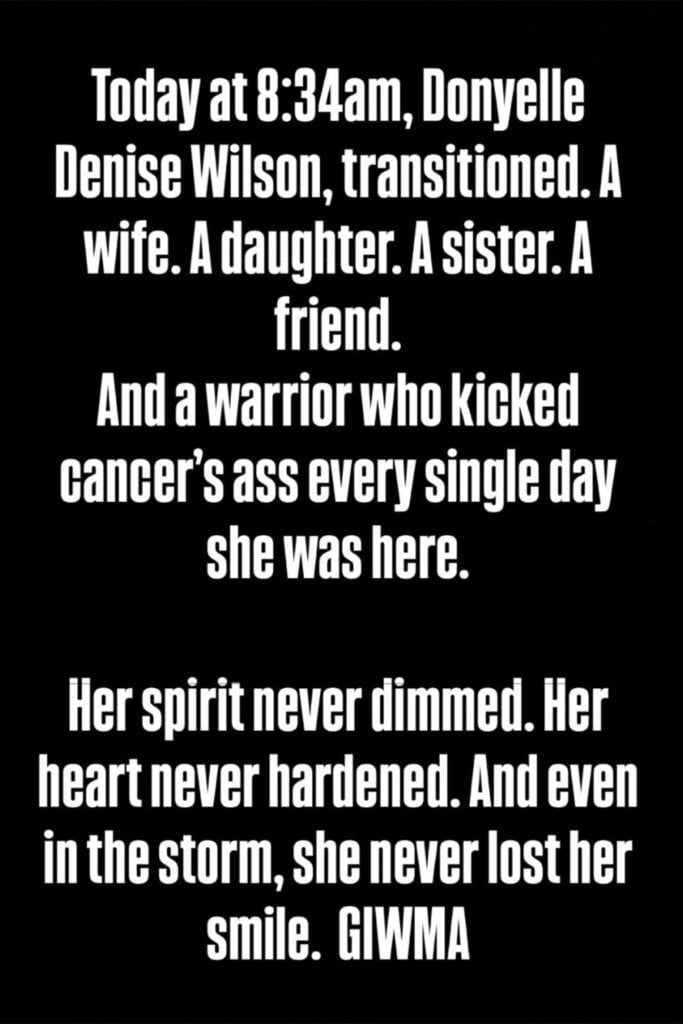
Donyelle was remembered as “A wife. A daughter. A sister. A friend. And a warrior who kicked cancer’s ass every single day she was here,” in the social media announced that confirmed her death.

“Her spirit never dimmed. Her heart never hardened. And even in the storm, she never lost her smile.”

After appearing in various music videos and other dance projects, Jones broke out as a contestant on Season 2 of So You Think You Can Dance, which aired on Fox in the summer of 2006.

The contestant specialized in the hip-hop and jazz styles and ultimately finished in third place, behind winner Benji Schwimmer and runner-up Travis Wall.

Pretty darn impressive.

(Instagram)

Since being diagnosed with breast cancer, Donyelle actively chronicled her journey on Instagram and other platforms, highlighting July 6, 2025, as the date she taught her first dance class in four years … something she called a “bday gift to myself.”

The “theme for this evening was Love, Peace, Reassurance,” she added.

“Cancer has robbed me of so much and I Iet the grief of losing what I had in dance or how it connected to my life take over the possibility of how it can show up in my life right now.

“I’m learning at every twist and turn of this journey called life how to navigate each season as they come.”

(FOX)

Just this past June, Jones shared an Instagram video in which she said the following:

“Right now, I have to choose absolute radical faith, because I am in the fire, y’all.

” just got some horrible news from my doctor. … But I don’t even have a tear for it right now. I am strapping in and I am choosing radical faith. I have to choose radical faith because it’s the only thing that actually will make sense. Otherwise, I’ll lose it. But today, I feel good.”

Donyelle was remembered by many in Hollywood, including actress Yvette Nicole Brown, who wrote a tribute on Instagram, describing the dancer as a “dear friend” and also stating:

@donyelledenise8 was… no IS the best of us. One of one. We love you, Donnie! Thank you for showing us how to live and fight and love and DANCE! We will see you on the other side. I will be the one dancing towards you. Me and my two left feet.

Donyelle Jones Cause of Death: So You Think You Can Dance Finalist Gone at 46 was originally published on The Hollywood Gossip.

​The Hollywood Gossip

Categories
Entertainment

Aubrey O’Day Addresses Allegation That She Was Raped By Diddy

Reading Time: 3 minutes

As we previously reported, a new Netflix docuseries about Sean “Diddy” Combs has the imprisoned mogul running scared.

And it’s not hard to see why.

The series — co-produced by longtime Diddy rival 50 Cent — contains never-before-seen footage and some shocking new allegations against Combs.

Aubrey O'Day arrives at the launch of the DermKing Humanity Foundation on November 05, 2023 in Los Angeles, California.
Aubrey O’Day arrives at the launch of the DermKing Humanity Foundation on November 05, 2023 in Los Angeles, California. (Photo by Kevin Winter/Getty Images)

In one scene from Sean Combs: The Reckoning, former Danity Kane singer Aubrey O’Day reads from an affidavit in which a woman who filed a civil suit claims that she saw Combs and another man raping O’Day at a party.

According to the shocking account, O’Day was “sprawled out on a leather couch looking very inebriated.”

“She was naked from the bottom half, and she had something over her top. Puff Daddy was penetrating in her vagina, and there was another stalky light-skinned man with his penis in her mouth,” the affidavit continued.

O’Day has criticized Diddy before, claiming that he was verbally abusive to her when they worked together, and stating that she believes he was guilty of all the crimes he was charged with.

(Combs was acquitted of the most serious sex trafficking charges and is now serving 50 months in prison, rather than the life sentence he had been facing.)

Singer Aubrey O'Day of the duo Dumblonde attends the 2015 MTV Video Music Awards at Microsoft Theater on August 30, 2015 in Los Angeles, California.
Singer Aubrey O’Day of the duo Dumblonde attends the 2015 MTV Video Music Awards at Microsoft Theater on August 30, 2015 in Los Angeles, California. (Photo by Jason Merritt/Getty Images)

But when it comes to the claim that Diddy raped her while she was intoxicated — O’Day says she has no idea if the allegation is accurate … and she prefers to keep it that way.

In the documentary, Aubrey revealed that she “didn’t drink like that at all” during that time.

“I don’t drink at all. It’s never been an issue with me,” she explained.

So O’Day doesn’t see how she would have wound up heavily inebriated at one of Diddy’s infamous parties — but that doesn’t mean the alleged assault never happened.

“Even after I told her I didn’t have a recollection of this, I said, ‘Could she be making a mistake?’ I asked in every way I possibly could think of, [and] she was certain,” the singer explained, adding:

Sean "Diddy" Combs attends the 2022 Billboard Music Awards at MGM Grand Garden Arena on May 15, 2022 in Las Vegas, Nevada.
Sean “Diddy” Combs attends the 2022 Billboard Music Awards at MGM Grand Garden Arena on May 15, 2022 in Las Vegas, Nevada. (Photo by Frazer Harrison/Getty Images)

“Does this mean I was raped? Is that what this means? I don’t even know if I was raped, and I don’t want to know. I don’t want to find out any more what that woman has to say.”

O’Day says she was hesitant to push back against the claims, as she feared that doing so might discredit other Combs’ accusers.

“If she made it up, I would be compelled to take her the f–k down,” she explained.

“And you realize the burden that that puts on my soul for the past year, which is if I expose one victim who’s got a civil lawsuit, that gives Diddy and his legal team credit to take down everybody else as potential liars,” O’Day added.

“It goes right back on my shoulders, just like that. The weight of that man and his bulls–t … I will never get up from under it.”

Yes, like many women who crossed paths with Combs, O’Day believes she’ll be haunted by their interactions for the rest of their days.

And while he might have avoided a life sentence, hopefully Diddy’s victims can take some solace in the fact that he’ll be locked up until at least 2028.

Aubrey O’Day Addresses Allegation That She Was Raped By Diddy was originally published on The Hollywood Gossip.

​The Hollywood Gossip

Categories
Entertainment

1000-Lb. Sisters Season 8 Trailer: Tammy vs. Amy!

Reading Time: 3 minutes

Tammy Slaton and Amy Slaton are about to return to the small screen.

In a way we haven’t really seen them before.

On December 2, TLC released the officia trailer for 1000-Lb. Sisters Season 8.

And the stunning sneak peek features the show’s two leads appearing to have some animosity toward one another as they document their topsy turvy lives for the cameras.

(TLC)

“It feels like we’re drifting apart,” Tammy says in a confessional interview about her sister Amy. “She used to be my best friend.”

What might be the basis for this rift?

Tammy allegedly calling her sibling a deadbeat mom. Ouch, huh?

“I can’t handle her toxic ass no more,” Amy says while trying to hold back tears in the preview. “I’m done.”

Amy and Tammy Slaton pose here for a 1000-lb Sisters promo. (TLC)

Later on in this footage, Amy and Tammy’s brother, Chris Combs, attempts to play the role of mediator and bring the sisters together.

But it doesn’t go very smoothly.

“Every other word is an F-bomb,” he says about the family group chat. “Beep, beep, beep, you beep, beep, beep ass.’”

We don’t know exactly when these episodes were filmed, but we hadn’t heard much in recent weeks or even months of issues between the Slatons.

Tammy recently got new teeth.

Amy recently got married.

They seem to be doing pretty darn well, but maybe not as a tandem.

Tammy Slaton says on Season 7 that she’s now dating a woman. (TLC)

In a separate scene from Season 8, Tammy tells her brother, “If Amy keeps her mouth shut, so would I.”

Away from each other, though, we see Tammy embrace her MEGA weight loss and skin removal surgery, while she continues to explore a new relationship with Andrea Dalton.

Slaton also goes on a job interview in hopes of finding a new passion.

“Kinda wonder if she’s gonna ask me to marry her,” Tammy says in the sneak peek clip after hanging out with Andrea.

(SPOILER ALERT: Yes, she is!)

Tammy Slaton appears here on the season finale of 1000-Lb Sisters. (TLC)

Elsewhere, Amy is planning her dream wedding to boyfriend Brian Lovvorn — with a surprise twist.

“The wedding is like, in six months. It’s really important for the venue to be haunted because that’s a symbol of our love,” she says. “My family, they don’t want nothing to do with it and neither does Queen Tammy.”

We do know what Amy ended up exchanging vows with Brian in October.

But will she and Tammy ever reconcile?

“I’m not going to have you feed me this bologna when I don’t like bologna,” Tammy tells her brother after he tries to bring the sisters together.

1000-Lb. Sisters returns to TLC on Tuesday, January 6, at 9/8c.

1000-Lb. Sisters Season 8 Trailer: Tammy vs. Amy! was originally published on The Hollywood Gossip.

​The Hollywood Gossip

Categories
Entertainment

Kim Kardashian to Teach ‘Ten Kimmandments’ Business Class

Reading Time: 3 minutes

Kim Kardashian wants to teach you her “Ten Kimmandments” for success.

Yes, really.

No matter how many times Kim fails the bar exam, she’ll always be a success in other areas.

Can students mimic that success by listening to her Kimmands?

Kim Kardashian with tearful eyes.
A tearful Kim Kardashian falters as her voice breaks with sadness. (Image Credit: Hulu)

Kim Kardashian wants to teach you the ‘Ten Kimmandments’ of business

MasterClass is an online education subscription platform.

Experts in various fields pre-record their lectures and tutorials. Students then access this material, ideally to their benefit.

In this case, the “expert” is Kardashian. The field is business.

Kimberly is branding her rules for business as “The Ten Kimmandments.”

It’s looking like the class is about building your own brand.

On 'The Kardashians,' Kim Kardashian pays tribute to her sister.
Kim Kardashian films a confessional segment for ‘The Kardashians.’ (Image Credit: Hulu)

Her content goes live on MasterClass on Thursday, December 4.

However, TMZ is offering a sneak peek at the … let’s call it “wisdom” … that The Ten Kimmandments will impart.

Kim’s first rule is “You are the product.”

It starts there, and ends with Kimmandment 10: “Because I said so.”

In between are other silly quips, like number four: “Don’t follow the feed. Be the feed.” (Someone put that sign up at a cattle ranch, please and thank you)

Who wants business advice from Kimberly?

Kim Kardashian is wildly successful.

How did she get there?

She took a sex tape, her good looks, her late father’s relative fame, a friendship with Paris Hilton, and being born into colossal wealth and turned it into worldwide mega-fame and even more wealth.

We’re sure that even Kim would say that following her Kimmandments is not a guaranteed recipe for success.

But after thousands of people have attempted to use her meteoric climb like a blueprint, interest in her branding advice is sure to be high.

Kim Kardashian wears all black while speaking to the confessional camera on The Kardashians in 2023.
On The Kardashians, Kim Kardashian addresses the confessional camera. (Image Credit: Hulu)

That said, very few could even begin to emulate the perfect storm that led to Kim’s success. Among other things, they would need an internet-breaking buttload of luck.

If you ask a lottery winner how they succeeded, they might tell you that they made their wealth by playing the lottery. It’s true, but that doesn’t mean that it will work for you.

The same applies to Kim — or to Taylor Swift, or any other big name under the sun.

Kim Kardashian wears blonde hair, a lot of jewelry, and a sour expression.
While all decked out ahead of her Milan show, Kim Kardashian appeared to be all geared up to fight Thanos and win. (Image Credit: Hulu)

How many people still see Kim as someone from whom to take advice?

Kim Kardashian being out of touch is normal. One expects it, given literally everything about her and her entire life.

However, lately, Kim has seemed … almost dangerously misinformed, even gullible. That took many by surprise.

Kim doesn’t believe in the moon landing. She seems to believe that Buzz Aldrin will back her up on this.

She also drives her cringe Cybertruck. And she uses ChatGPT for legal advice, only to wonder why she fails tests. (Don’t use AI chatbots for anything, please)

Do we think that Kim is dumb? Well, no. But she’s clearly lacking in basic reasoning skills as they apply to some really basic, important topics.

Kim Kardashian to Teach ‘Ten Kimmandments’ Business Class was originally published on The Hollywood Gossip.

​The Hollywood Gossip

Categories
Entertainment

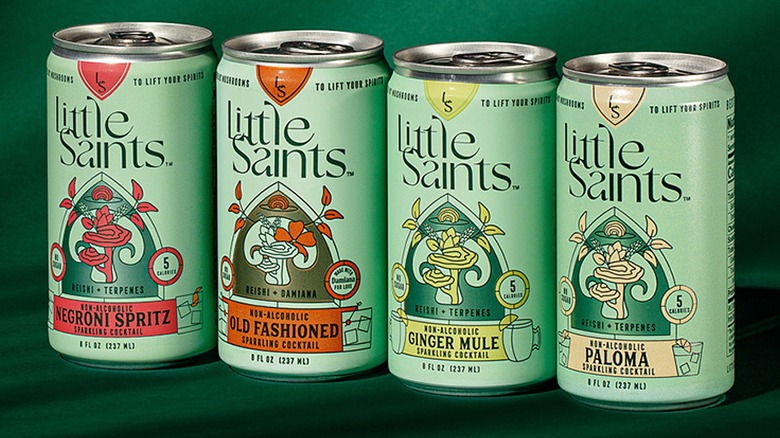
What Happened To Little Saints Mocktails After Shark Tank?

Little Saints founder Megan Klein made a splash with her “Shark Tank” pitch but declined a possible deal. Here’s how the mocktail maker has fared since then.

​Mashed – Fast Food, Celebrity Chefs, Grocery, Reviews

Categories
Entertainment

This Los Angeles Italian Steakhouse Was One Of Anthony Bourdain’s Favorites

Based in California, this Nancy Silverton-owned steakhouse has earned praise from many customers, including the late great Anthony Bourdain.

​Mashed – Fast Food, Celebrity Chefs, Grocery, Reviews

Categories
Health

The Hair Loss Drug Donald Trump Used Has Some Serious Drawbacks

Back in 2017, it was reported that the U.S. president used a certain medication that’s prescribed for male pattern baldness or benign prostatic hyperplasia.

​Health Digest – Health News, Wellness, Expert Insights