The ceremony also involved in Jessi Draper walking the couple through a handfasting ritual.
Hand-fasting is an ancient marriage ceremony involving using a length of cord or ribbon to link the hands and forearms of newlyweds.
Like the blood-drinking, these are not Mormon rituals.
A number of religious traditions might include one or both of these acts, but they can also be done for their spiritual meaning or for their purely symbolic meanings.
Two people have chosen to combine their lives. That’s beautiful. And so was the ceremony that Jessi officiated.
The video did, unfortunately, receive some odd hateful comments — some of which were extremely colorful and dramatic.
Some accused the couple’s nuptials of being witchcraft, which they seemed to mean as a negative. (Could Trump’s acting Navy Secretary Hung Cao have a whole bunch of sockpuppet accounts?)
Even for those of us who might prefer more bloodless ways to symbolically (or spiritually) link our lives, it was a lovely ceremony.
Jessi’s life has transformed dramatically since viewers first got to know her just a couple of years ago.
It’s great to see that she became such a beautiful part of her sister’s nuptials while Hulu cameras (presumably) were not running. We hope that she and the newlyweds can tune out the weird haters.
Tyquan Thornton got a down—in more ways than one.
The Kansas City Chiefs wide receiver earned the team some major yardage (55, to be exact) and a first down after catching the ball from Patrick… E! Online (US) – Top Stories
Pennsylvania voters could shift the balance of power in Harrisburg in the 2026 midterms.Matthew Hatcher/Getty Images
While many people are paying attention to how the 2026 midterm elections might change the balance of power in Washington, D.C., it is also a potentially pivotal election here in Pennsylvania.
Gov. Josh Shapiro is up for reelection, running against Republican challenger Stacy Garrity, the current state treasurer. Who wins that race will certainly shape the state’s policy agenda for the next two years.
In the General Assembly, which is currently split – Republicans control the Senate and Democrats control the House – both chambers are also up for grabs. Democrats have been slowly eroding the Republicans’ hold over the Senate. In the House, Democrats have a three-seat majority, but Republicans could flip it.
I teach public policy at Penn State Harrisburg and have a particular interest in Pennsylvania state politics. I think voters should understand not just the positions of the individual candidates on the ballot, but what the legislative priorities will be for either party if they gain control of the General Assembly.
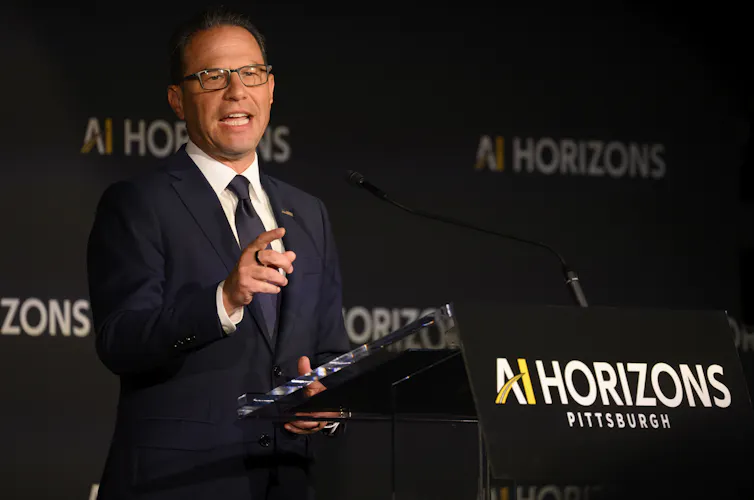
Pennsylvania Gov. Josh Shapiro, a Democrat, works with a split legislature, with Republicans controlling the Senate and Democrats controlling the House. Jeff Swensen/Getty Images
If Democrats control the Assembly
For a glimpse at potential Democratic priorities should they keep the House and win the Senate, it is helpful to look at what legislation the current Democrat-controlled House has been sending the Republican-controlled Senate.
1. Election reform
Election reform has been a perennial priority in the commonwealth since the passage of Act 77 of 2019 and the 2020 election. Act 77 authorized no-excuse absentee balloting and eliminated straight-ticket voting, which was a bipartisan compromise but became a political flash point in President Donald Trump’s efforts to question the 2020 election results. No-excuse means that voters do not need to provide a specific qualifying reason to vote by mail.
Gov. Shapiro has repeatedly included revenue projections from adult-use recreational marijuana legalization in his budget proposals, and the House even passed a legalization bill in 2025. Democrats have said that they will legalize recreational marijuana if they can take the Senate in 2026. But important details of legalization will remain to be worked out, even if Democrats have full control.
Democrats and Republican supporters of legalization disagree as to whether sales should be through private dispensaries or state stores, similar to how alcohol is sold in Pennsylvania.
Social equity measures meant to repair some of the harms of the War on Drugs on communities disproportionately affected by the criminalization of marijuana will also be key to eventual passage. These include things like expungements of past convictions, license set-asides for minority dispensary owners, and community reinvestment of cannabis tax revenues. Even with Democratic control, the devil will be in the details.
3. Same-sex marriage
Same-sex marriage equality may seem like a settled issue with the 2015 Obergefell v. Hodges decision by the U.S. Supreme Court, but the 2022 overturning of Roe v. Wade by today’s more conservative court has sparked concerns of further changes to precedent.
Pennsylvania’s statutory definition of marriage is still between “one man and one woman,” something that a bipartisan majority in the House tried to change in 2026 to “two individuals.” Democrats are very likely to pick this back up if they win a trifecta. They may even attempt a more durable, but also more procedurally difficult, constitutional amendment that enshrines same-sex marriage rights.
Given that this election is shaping up to be heavily influenced by voters’ concerns about affordability, both parties have the issue on their agendas but will approach it differently.
The Democrats’ Affordability Action Plan includes measures such as property tax and rent rebates, other housing protections for underserved communities, doubling the income tax credit and increasing food and energy security funding.
Another affordability priority for House Democrats since taking control of the chamber in 2023 has been raising the state’s US$7.25 minimum hourly wage over time. The bill passed by the House in March 2026 would have raised it to $11 in 2027, $13 in 2028 and $15 in 2029, with subsequent annual cost-of-living adjustments, if it had been also passed by the Senate. This is important in Philadelphia, given that state law prohibits the city from setting its own minimum wage.
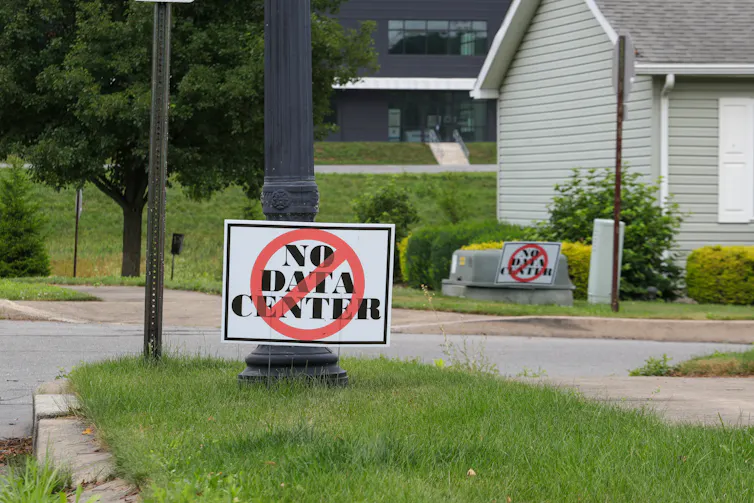
Communities across the state are pushing back against large data centers. This sign is in Allenwood, Pa., and very near the site of a proposed 300-megawatt data center. Paul Weaver/SOPA Images/LightRocket via Getty Images
If Republicans control the Assembly
We can turn to the current Republican-controlled Senate for insight into what will be on the party’s agenda if it resumes full control of the Assembly in 2027.
Senate Republicans have also been active in proposing and passing AI- and data center-related legislation. A bill banning “nudification” apps, which use AI to remove the clothing from people in pictures and replace them with fake nude images, passed the Senate unanimously in late September.
There has also been bipartisan support for a Republican-proposed ban on the use of nondisclosure agreements in data center development. Republicans in the Senate also proposed designating all of Pennsylvania a Commonwealth Opportunity Zone for AI, which would fast-track data center permits and create a regulatory framework in collaboration with the industry.
While Republican AI legislation is likely to be more enabling of the emergent industry than regulating, Republicans are also concerned about privacy, transparency and costs to their constituents.
The stark promise of higher electric prices and poorer grid reliability due to projected data center development in a 2026 Public Utility Commission report is likely to add fuel to Republicans’ push for energy development.
A full plan with 10 bills is to be released in coming weeks, but will also include changes to zoning and construction rules to enable faster housing construction.
Daniel J. Mallinson does not work for, consult, own shares in or receive funding from any company or organization that would benefit from this article, and has disclosed no relevant affiliations beyond their academic appointment.
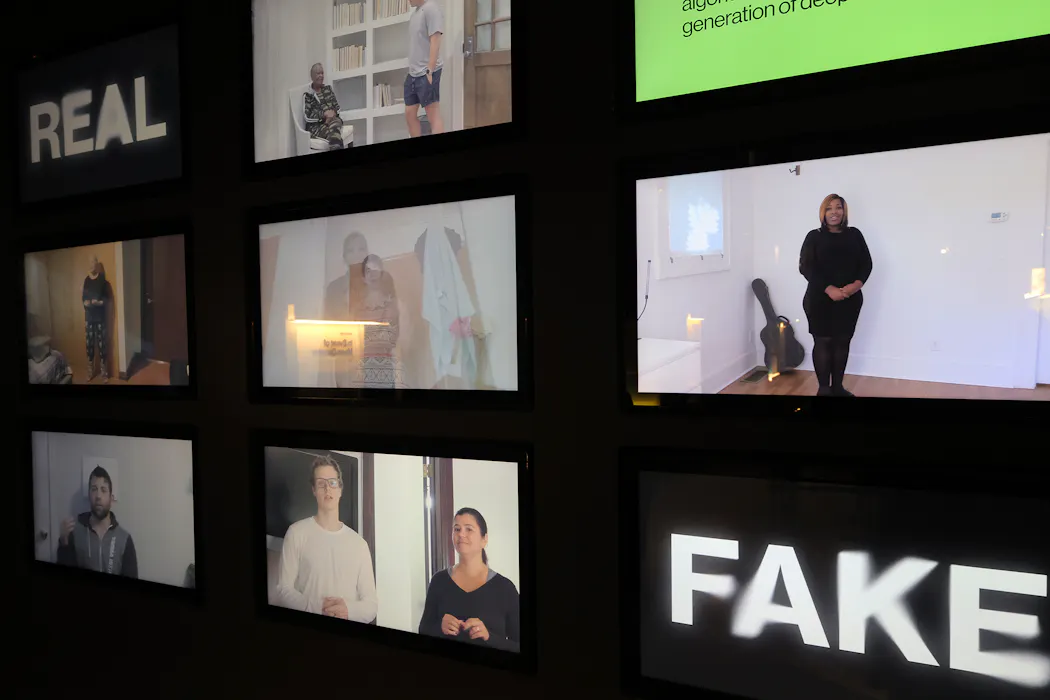
The 2026 U.S. midterm campaigns are the first in which AI-generated political ads are regularly appearing on people’s televisions and social media feeds.
What we found has surprised us: AI use spans from hyperrealistic deepfakes to subtle enhancements; Republican sponsors – both candidates and interest groups – are much more likely to use AI than are Democratic sponsors; and, thanks to a patchwork of state legislation, many of these ads do not disclose the use of AI at all.
From deepfakes to subtle edits
An assortment of politicians and watchdog groups have expressed concern about campaigns using generative AI to produce deepfakes – synthetic videos showing people doing things they did not do – that might deceive voters.
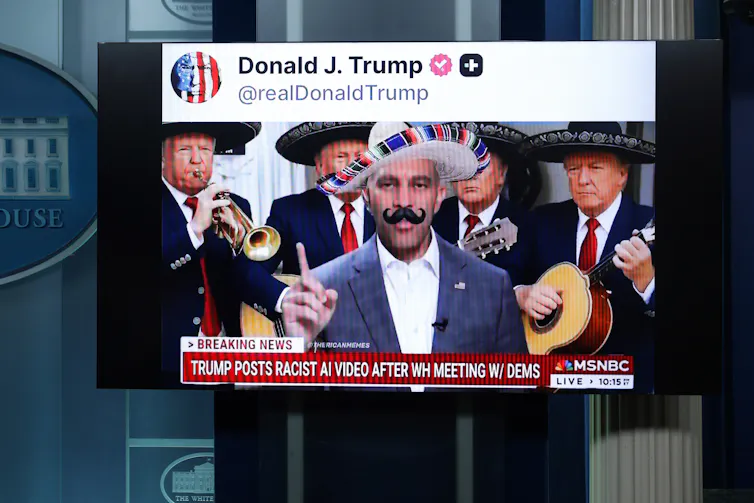
We’ve noticed several ads containing hyperrealistic deepfakes of famous politicians, including Donald Trump, Nancy Pelosi, Barack Obama, Kamala Harris and Alexandria Ocasio-Cortez. Ocasio-Cortez, in particular, is a favorite among Republican advertisers, appearing in at least five ads.
We’ve seen deepfakes in which a Republican Senate candidate from Louisiana drives a school bus full of undocumented immigrants, a Republican candidate for governor from South Carolina walks arm in arm with drag queens, and an ad in which Liz Cheney, Mitt Romney and Mike Pence are seen carrying pitchforks on the White House lawn.
People who are not politicians made appearances, too, including a fake Dr. Anthony Fauci, seen running around a state fair with a huge syringe, presumably eager to vaccinate everyone. We’ve also noticed several ads in which AI was used to generate crowds or constituents.
In several cases, AI was used to enhance visuals rather than generate something new. One ad from Chip Keating, a Republican candidate for governor in Oklahoma, includes an AI disclaimer, but it doesn’t specify exactly how AI was used. Ads that use AI to enhance visuals don’t necessarily look different from ads that were created in the pre-AI era, which makes it difficult for viewers to discern whether they depict something false.
A partisan gap
Republicans – both candidates and groups such as super PACs and 501(c) organizations – are much more likely to use AI in their ads than are Democrats, according to our research.
In fact, Republican candidates or pro-Republican groups were behind 80% of the ads we tracked and 83% of the spending.
We can only speculate as to why Republicans dominate the use of AI in political advertising in 2026. In general, Democrats tend to take on a regulatory mindset when it comes to political campaigns, favoring limits on campaign spending and required disclosures. In 2022, for instance, only Senate Democrats and two independents voted to advance the DISCLOSE Act that would have required additional campaign finance disclosures for super PACs, labor unions and corporations. Republicans, by contrast, tend to be more in favor of a free market approach.
These more general philosophies may be reflected in the parties’ use of generative AI for political advertising, something about which voters are worried. Polling shows broad support for more regulation, with 78% of registered voters favoring a ban on AI content that makes deceptive claims about candidates.
AI-modified videos of House Minority Leader Hakeem Jeffries posted by President Donald Trump were displayed at the White House in October 2025. Alex Wong/Getty Images News via Getty Images
Disclaimers all over the map
Because regulation of AI in advertising depends on a patchwork of state legislation, many of these ads are not required to disclose the use of AI. This lack of disclaimers makes tracking AI use in ads challenging. Our team has relied on media coverage and trained student coders to flag ads that are potentially AI-generated.
Across 35 states, only 31% of the ads we tracked – representing 22% of the spending – disclosed the use of AI tools. The wording of these disclaimers was all over the map. For example, one Georgia ad included the disclaimer, “This video has been manipulated or generated with artificial intelligence,” while an Oklahoma ad said, “Political satire. AI-generated images do not depict actual events.” A North Carolina state Senate ad said, “You guessed it! AI was definitely used to generate these silly video clips.”
Laws don’t drive disclosure
Some advertisers voluntarily disclose the use of AI even when they are not required to do so. Sometimes, the opposite occurs – advertisers don’t include disclaimers even when state law requires them to. In fact, we’ve found that a state law that requires disclaimers on ads that use AI has very little relationship with the actual use of disclaimers.
In states without laws governing the use of AI in political ads, 32% of ads contained a disclaimer; by contrast, in states with laws governing the use of AI, 29% contained a disclaimer. This comparison, however, is not perfect, as some of the ads in our database aren’t covered by their state’s law. Some states, such as Colorado, have laws that apply only to candidate deepfakes and thus exclude other uses of AI. In other instances, such as in Louisiana, an AI law was enacted after the ad aired.
Minnesota law generally bans deepfakes in political ads, but an ad featuring synthetic video of Democratic Senate candidate Peggy Flanagan aired in May 2026 anyway. Whether it violated state law is uncertain, as the law requires that the media be “so realistic that a reasonable person would believe it depicts speech or conduct of an individual who did not in fact engage in such speech or conduct.”
Moving forward, the real policy challenge will revolve around transparency, the enforceability of existing laws and simply figuring out what type of disclosure would be helpful to voters.
The authors do not work for, consult, own shares in or receive funding from any company or organization that would benefit from this article, and have disclosed no relevant affiliations beyond their academic appointment.
Brats, pork, cabbage, potatoes, pretzels, and mustard give these 15 German-inspired dishes their old-world feel, with beer used only where the recipe actually calls for it.The post 15 German-inspired dishes that taste like they were cooked with beer and pride…
Whether or not the disadvantages of a gas stovetop outweigh the perks is a personal decision, but consider the importance of energy efficiency and cleaning.
Mashed – Fast Food, Celebrity Chefs, Grocery, Reviews
Over a third (34%) of American football fans believe their game-day routines influence the outcome of a game. A recent survey of 2,000 football fans revealed that another 32% of fans aren’t sure if their rituals influence the outcome, but…
In a world where even drugstore beauty prices feel steep, e.l.f. is holding down the fort when it comes to affordable makeup and skincare.
More specifically, e.l.f. is known for creating… E! Online (US) – Top Stories
Ken Paxton is less than a month out from the conclusion of a D.C.-outsider campaign for a Texas U.S. Senate seat that he privately admitted is being run by Washington.
“I’ve never been in a race where I felt less control over the campaign and, like, what issues are going to matter because it’s all coming — you know — from D.C.,” Paxton said during a small fundraising event last month, according to an audio recording obtained by POLITICO from a person in the room who does not support Paxton, and verified by another attendee.
“I don’t control message or what we’re doing.”
The lunch, hosted Sept. 24 in Washington by Chris Brinson and Susan Hirschmann of the D.C.-based lobbying firm Williams & Jensen, was attended by about a dozen people including Scott Kopple, VP of government relations at defense contractor BWXT.
“Texas is a big state, and some of these issues obviously resonate with real — I’ll call real people — you know, like back home,” Kopple, who did not respond to a request for comment, said to some chuckles in the room. “I know you need money to get the message out and stuff, but how does this stuff translate?”
Paxton replied saying: “I miss the days when I could go to, get around with all the people. But we have 32 million people, so let’s just say for the next 40 days I’m in front of 1,000 people a day — which I’m not — and that’s 40,000 people. Ten to 10.4 million people are gonna vote.”
“But then it comes down to your messaging,” he continued, “which in a federal race comes from other people a lot of times, which you don’t control.”
One attendee granted anonymity to discuss the private meeting said that Paxton never explicitly said he was referring to Trump’s team controlling his campaign, but “everybody knew what he was talking about.” The person said Paxton’s comments came amid a broader discussion about the national political environment.
“I don’t have ability to change anything,” Paxton went on. “So I have to live with whatever I’ve got. So it is a challenge.”
Paxton campaign adviser Nick Maddux said, “Campaigns don’t coordinate with super PACS and that’s obviously what AG Paxton was referring to,” in a statement to POLITICO. “AG Paxton is thankful for the support and knows how important Texas is to keeping the majority which is why he’s on the ground every day talking to Texas, raising money, and taking his message directly to the people including with his statewide television buy that started over this past weekend.”
Neither Hirschmann nor Brinson responded to a request for comment.
In an audio recording of the same meeting obtained by The New York Times, Paxton told attendees the midterm convention hosted by Trump in Texas last month “dropped our numbers. Everybody’s numbers dropped. Right now, yeah, not good.” Maddux described the article as “manipulated nonsense.” Playbook hasn’t heard the contents of the rest of the hourlong meeting.
The most recent New York Times/Siena poll has Paxton running 6 points behind Democratic challenger James Talarico.
The private comments follow a bitter primary campaign waged against Republican incumbent John Cornyn, whom Paxton framed as a “Washington insider” and “RINO” while publicly aligning himself with Trump.
“His money is coming from the D.C. establishment,” Paxton said of Cornyn while campaigning in Texas before the primary, the AP reported. “That’s how they always try to convince us from Washington with their money that we should select their person. Well, I’m not their person and I’m never going to be their person.”
Paxton maintains a cash advantage heading into November and announced a $20 million ad buy last month. The Senate Leadership Fund, a top GOP super political action committee closely aligned with Senate Majority Leader John Thune, pledged millions to back Paxton earlier in September.









 Tyquan Thornton got a down—in more ways than one.







 In a world where even drugstore beauty prices feel steep, e.l.f. is holding down the fort when it comes to affordable makeup and skincare.