Buckle up, food lovers! A major player in the fast-food scene has hit a bump in the road. What does this mean for your next fried chicken fix? Continue reading…The Boot – Country Music News, Music Videos and Songs












Buckle up, food lovers! A major player in the fast-food scene has hit a bump in the road. What does this mean for your next fried chicken fix? Continue reading…The Boot – Country Music News, Music Videos and Songs
Reading Time: 3 minutes
Prosecutors are charging an 11-year-old as an adult after the shooting death of his father.
Shortly after midnight following his birthday, Clayton Dietz allegedly shot his sleeping father.
“Daddy’s dead,” he reportedly told his mother.
There are a lot of unanswered questions surrounding the alleged sequence of events. Here’s what we know:
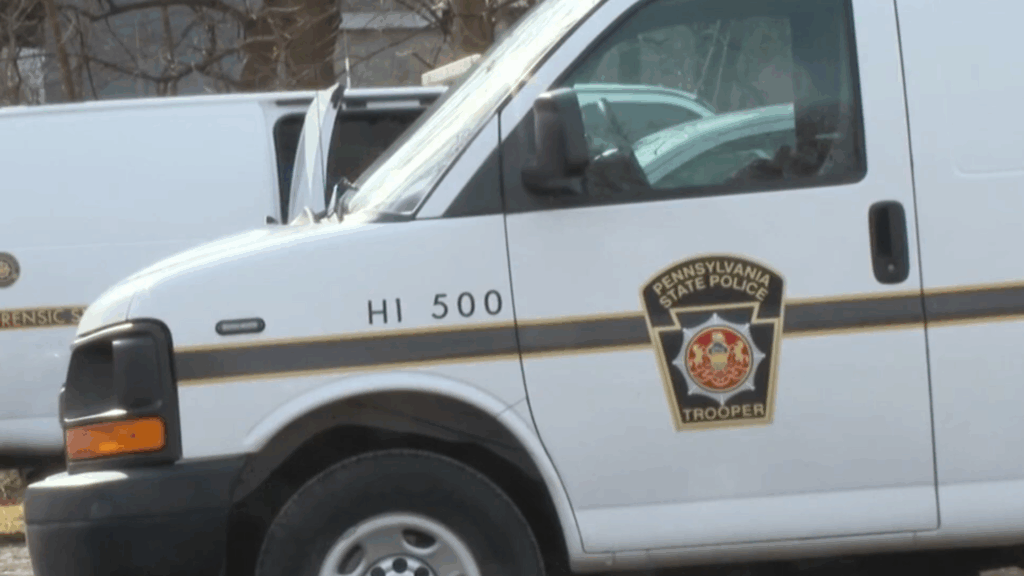
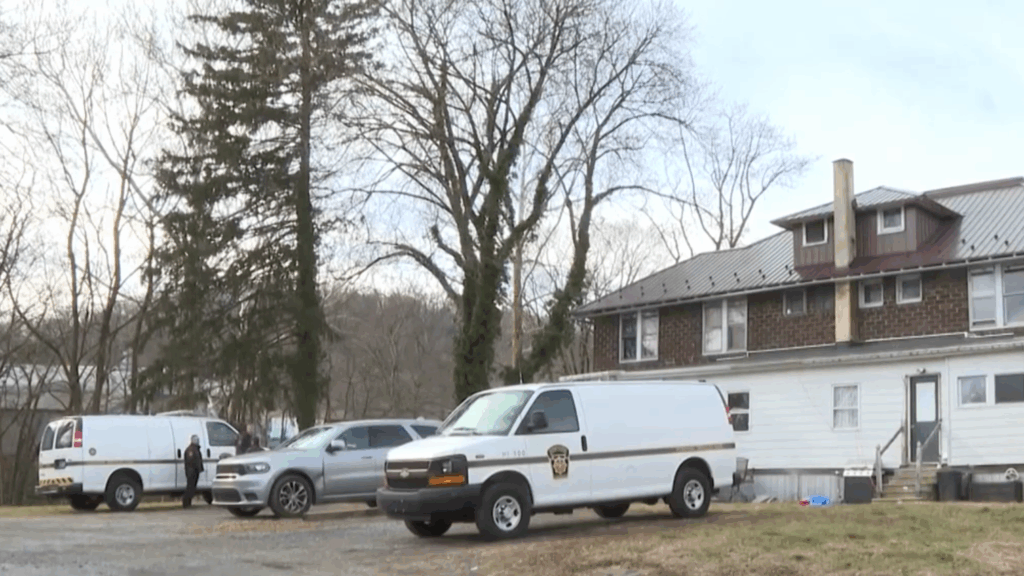
In the early hours of January 13, police arrived at the Dietz residence on South Market St. in Duncannon, Pennsylvania.
They were responding to a report of an “unresponsive male.”
At 3:20 AM, authorities found Douglas Dietz dead in bed, having apparently died of a gunshot wound to the head.
His wife, Jillian Dietz, had been asleep in bed beside him.
She awoke at a loud noise, thinking that she smelled “fireworks.” Attempting to awaken her husband, she realized that he was wet — from a tremendous amount of blood.
Just hours earlier, the couple had celebrated their birthday of their 11-year-old son, Clayton.
A lot of details are unclear, but allegedly, there was a conflict that night after Jillian had gone to bed.
42-year-old Douglas apparently took away Clayton’s Nintendo Switch and told him to go to bed.
“When his dad told him he needed to go to bed, he got mad at him,” police reported.
Clayton had found the key to the safe and unlocked it, hoping to recover his Switch and continue playing. Instead, he found a gun.
Police say that the child confirmed to them that he went through the process of “removing the gun from the safe, loading bullets into it and walking over to his father’s side of the bed, he pulled back the hammer, and fired the gun at his father.”
When speaking to him, authorities asked Clayton what he believed would happen when he pulled the trigger.
“He was mad and he had not thought about that,” investigators reported in their affidavit.
Meanwhile, Jillian apparently told police that she found her son hiding in a closet after her husband’s death.
“He’s dead,” he allegedly said. Clayton supposedly then ran downstairs, yelling: “My dad’s dead.”
One detail that only some outlets, like WGAL, have taken the time to report is that Clayton had injuries to his face. There was a contusion above one eye and a laceration on his lip.
The report has not detailed the source of these wounds.
Speculation has ranged from abuse to recoil from the gun. Obviously, that could be a game-changer when it comes to the upcoming trial, as one of those answers could lead to a very reasonable application of jury nullification.
Clayton is being held without bail until his Thursday, January 22 court date. He is being tried as an adult, and has only a public defender in his defense.
As we said, there is a lot that we don’t know. We do know that trying a 5th grader as an adult is nothing short of diabolical.
11-Year-Old Boy Arrested, Allegedly Kill Dad Over Nintendo Switch was originally published on The Hollywood Gossip.
The Hollywood Gossip

The singer says he’s recently taken on a ‘dad role’ that he never thought would be possible when he weight 500 lbs. Continue reading…Country Music News – Taste of Country
The singer says he’s recently taken on a ‘dad role’ that he never thought would be possible when he weight 500 lbs. Continue reading…The Boot – Country Music News, Music Videos and Songs

Country music’s heart beats with just three chords, but the stories it tells about love and life hit home like a heartfelt letter. Continue reading…Country Music News – Taste of Country
Country music’s heart beats with just three chords, but the stories it tells about love and life hit home like a heartfelt letter. Continue reading…The Boot – Country Music News, Music Videos and Songs
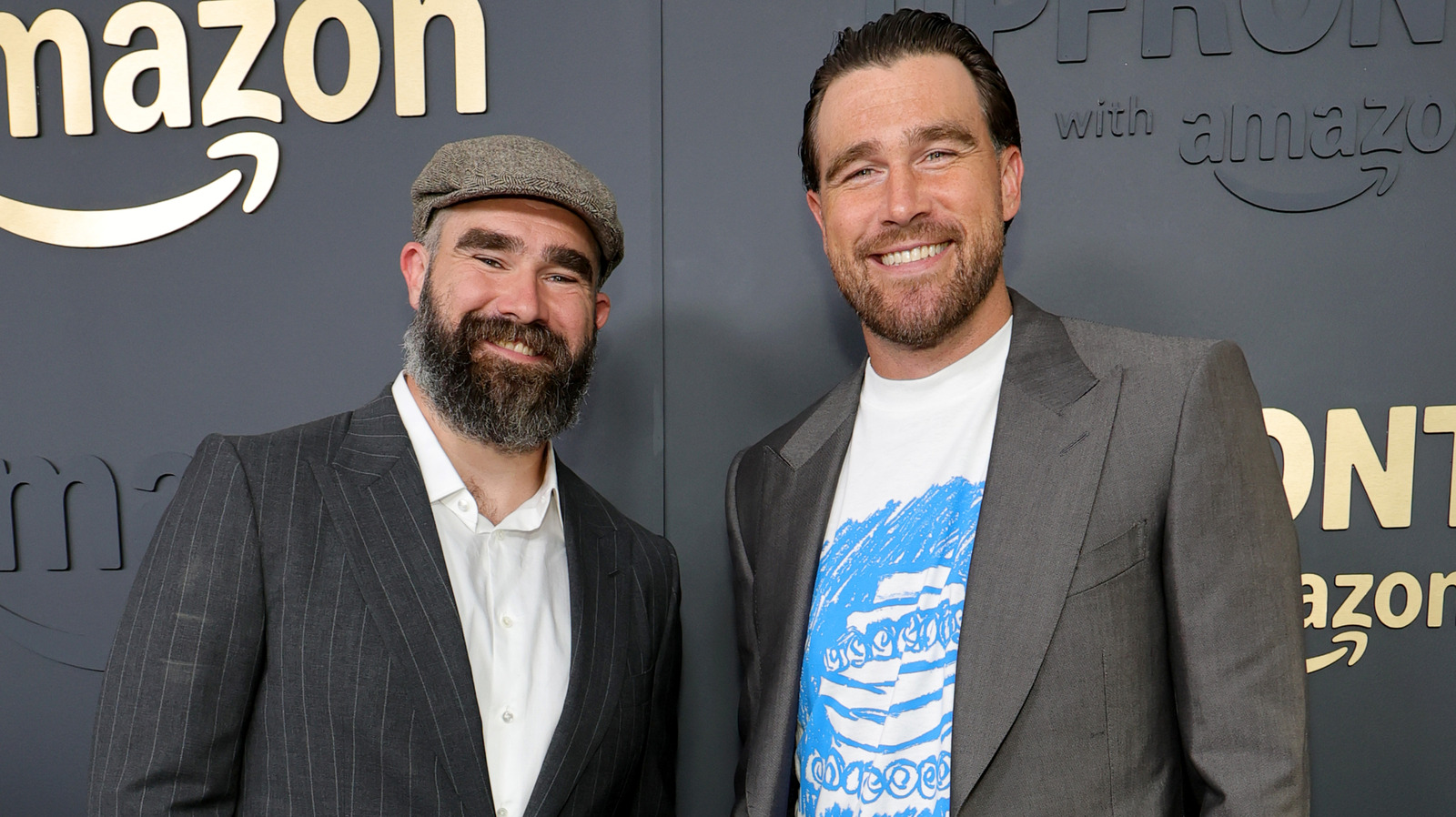
Jason and Travis Kelce are both football players, so it’s no surprise that they had large appetites growing up. Here’s the snack their mother always had ready.
Mashed – Fast Food, Celebrity Chefs, Grocery, Reviews
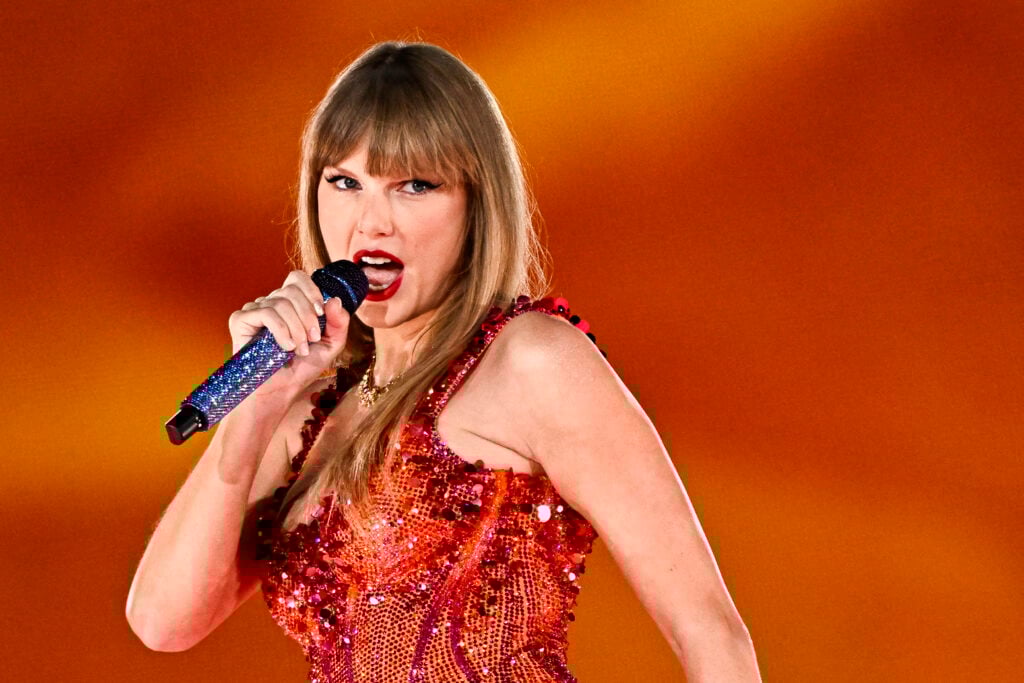
Reading Time: 4 minutes
Blake Lively is not alone.
Written records from Jenny Slate and others show that Justin Baldoni gave a lot of women the heebie-jeebies.
Now, we’re seeing a text message in court records where Taylor Swift weighs in.
She’s, uh, not mincing words when it comes to what she thinks of the guy.
On Tuesday, January 20, unsealed text messages from Blake Lively and Justin Baldoni’s legal battle shed light on yet another person who didn’t care for the guy.
Taylor Swift had texted a particularly heated line about the It Ends With Us director.
“I think this bitch knows something is coming because he’s gotten out his tiny violin,” Taylor wrote, according to NBC News.
Lively’s attorneys have confirmed the text’s content. The texts are from a December 4 & 5, 2024 conversation.
However, Baldoni’s team claims that the text was discussing the then-upcoming New York Times article exposing his smear campaign. Team Lively disputes that assertion on the context.

To be clear, Swift was not part of It Ends With Us.
She licensed a song for the film but had no other professional involvement.
Personally, however, she had one tie to the film — her friendship with Lively.
Team Lively commented: “The newly unsealed, damning documents show the consistent reaction numerous women, cast, crew, executives, partners, co-host and even his own PR team had working with Justin Baldoni.”
That line is not merely a reference to Taylor’s text. A lot more came out this week.
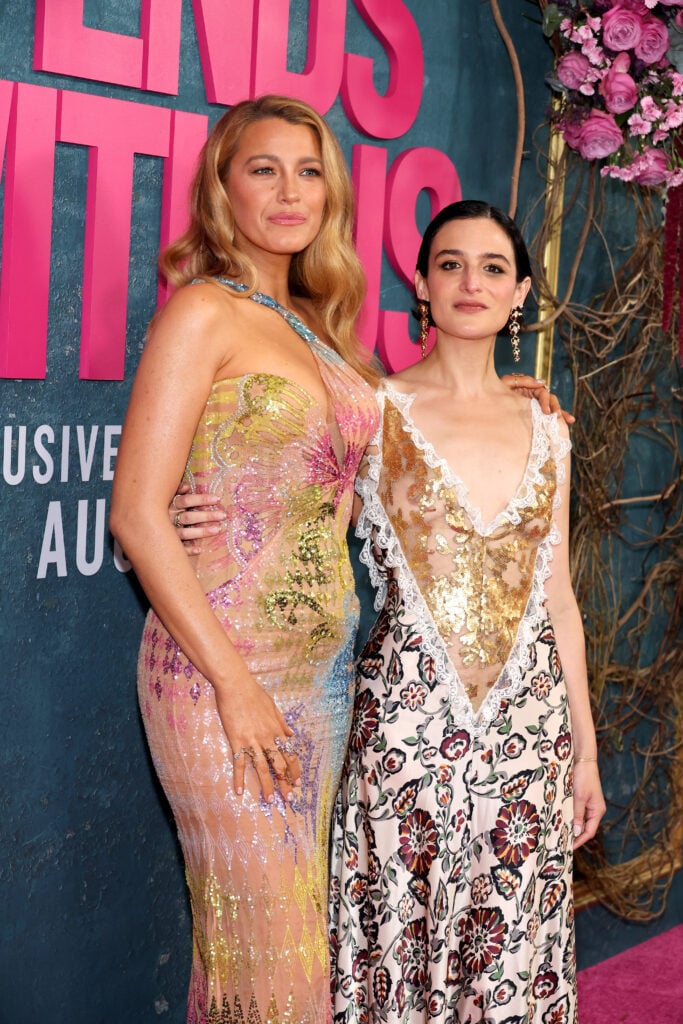
Perhaps most jarring of all came statements from Jenny Slate that, in no uncertain terms, made it clear how she felt about Baldoni.
“This has really been a disturbing shoot,” she wrote in her own text messages in 2023, “and I’m one of many who feel this way.”
Slate continued: “Blake and I have both complained directly to Ange [production executive Andrea Giannetti] at Sony (and they agree w us btw).”
She roasted him, describing: “Justin is truly a false ally and I’m unwilling to do anything that promotes the image that he’s crafting as a ‘male feminist’ … like … honestly I have no words to describe what a fraud he is.”
Slate obliterated Baldoni, writing: “I honestly have never ever encountered anything like this dude. He’s the biggest clown and the most intense narcissist.”
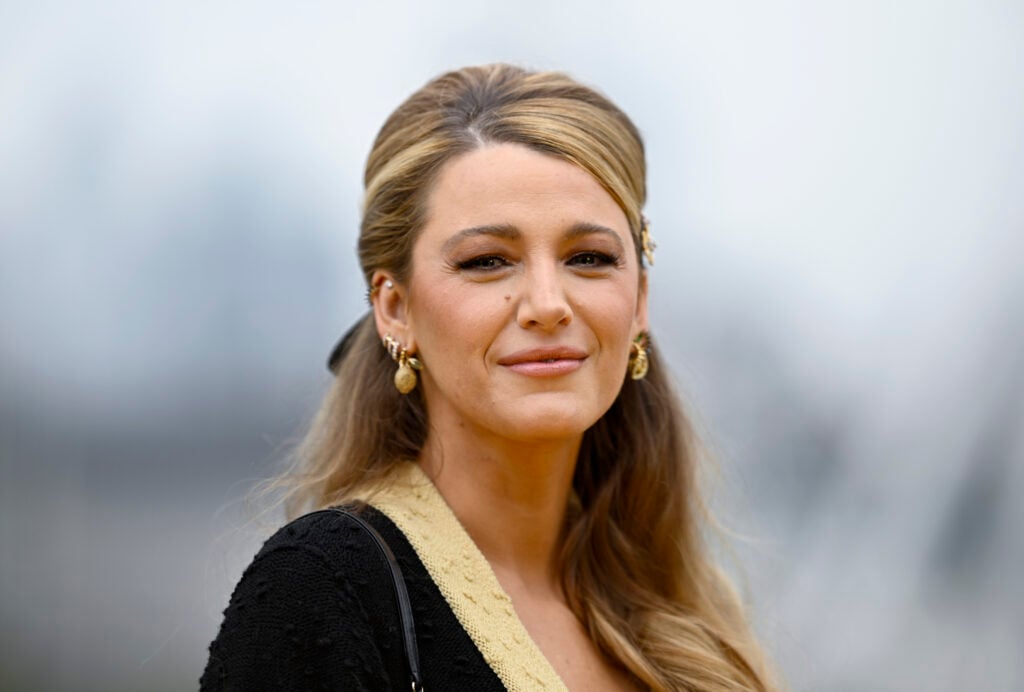
Even the author of It Ends With Us, Colleen Hoover, had her own written account of wanting to avoid the dude at the premiere event for the film.
“Am I going to be comfortable if Justin is there?” she asked, as if rephrasing someone’s question.
Hoover continued: “No, things are beyond uncomfortable at this point.”
Actress Isabela Ferrer also spoke in a deposition on Baldoni referring to an intimate scene as “hot.” Sometimes, that’s genuine feedback in a creative project — but that’s not how it came across.
“It didn’t feel appropriate for a work environment,” Ferrer expressed. Rather than a note on her acting, she commented that it instead felt “personal.”

Any one person can “give the ick” to any other person. It happens. Sometimes, the personalities are incompatible, the vibes are bad, and people just butt heads.
But that doesn’t mean that one person might not actually — and perhaps unintentionally — be repeatedly committing misconduct in the workplace.
As we’ve seen, Lively is far from the only woman to have taken issue with Baldoni.
Some may argue that women are simply echoing Lively’s claims, but that’s not what the timeline of events is adding up to.
Remember, Jenny Slate’s texts come from the year before any of the drama went public. And she filed her own grievance over a separate issue during production.
It is likely that Baldoni sees himself as a good guy who’s being misunderstood. But it seems clear that women who have worked with him see him very differently.
Taylor Swift Called Justin Baldoni ‘This B–ch’ in Texts to Blake Lively was originally published on The Hollywood Gossip.
The Hollywood Gossip
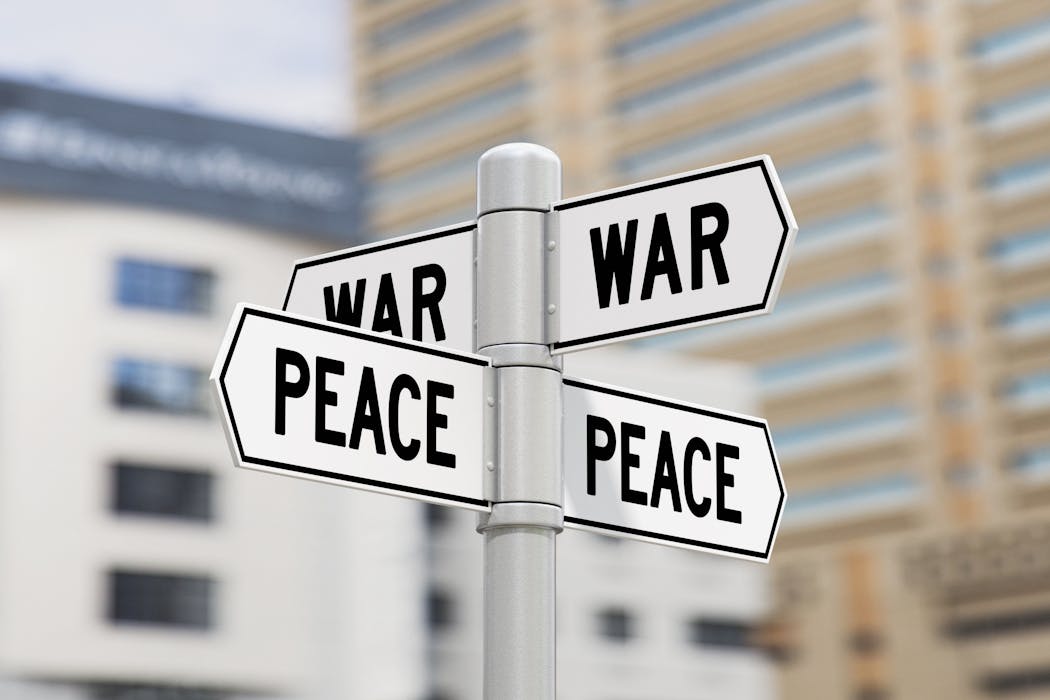
In a week filled with news about President Donald Trump’s aggressive moves to take control of Greenland, the world got a window into his thinking about the concept of “peace.”
“Considering your Country decided not to give me the Nobel Peace Prize for having stopped 8 Wars PLUS, I no longer feel an obligation to think purely of Peace, although it will always be predominant, but can now think about what is good and proper for the United States of America,” Trump said in the message to Norway’s prime minister, Jonas Gahr Støre.
Trump has long coveted the Nobel Peace Prize. In his second term as president, he has styled himself as a peacemaker, as his message to Støre demonstrates. But as I have learned from my work as a scholar of Roman history and rhetoric, the word “peace” can mean something entirely different when used by those wielding power.
In the year 98 CE, the Roman historian Tacitus wrote, “With lying names they call theft, slaughter, and plunder ‘control,’ and when they make a wasteland, they call it ‘peace.’”
This line, said of the Romans by an enemy of Rome in Tacitus’ work “Agricola,” has had a long and varied afterlife among those commenting on imperialism.
Nearly 2,000 years after Tacitus’ time, U.S. Sen. Robert Kennedy used the phrase in a 1968 speech questioning the U.S. war in Vietnam; the Irish poet Seamus Heaney echoed it in a 1974 poem figuring his homeland’s centuries of desolation; more recently still, the HBO series “Succession” reworked the words into a critique of the show’s despotic central character.
The quotation has had staying power because it cuts to the core of how talk of peace can be used as a tool of war and power acquisition.
At the one-year mark of the second Trump administration, these words from two millennia ago speak as presciently as ever.
Time and again over the last year, Trump has branded acts of war with the language of peace. More broadly, his administration’s persistent styling of Trump as a “President of Peace” and his continuous claims of entitlement to the Nobel Peace Prize have moved in tandem with a growing agenda of military aggression, both foreign and domestic.

Tacitus, who lived from c. 55 to c. 120 CE, places his critique of Roman imperial rhetoric into the mouth of Calgacus, the possibly fictionalized chief of the Caledonians in northern Britain. The words, delivered in a speech before the Battle of Mons Graupius in 83 CE, anticipated what was to come: a crushing Roman victory and the devastation of the Caledonian people.
Calgacus’ aphorism gets at something fundamental about Roman imperial propaganda, which presented the cessation of war – on their terms – as “peace.” A physical representation of this is the Altar of Augustan Peace, from 9 BCE, which was built after the warlord Augustus’ victories in foreign and civil wars. A reconstruction of one of the monument’s friezes includes the personified goddess Roma sitting atop war spoils. Peace for Rome was tantamount to victory for Rome – or, as in this case, for one of Rome’s strongmen.
And while Tacitus, an accomplished Roman politician and provincial governor, was himself no opponent of Roman imperialism, it is significant that he crafts a speech for an enemy of Rome that gives the lie to the Roman rhetoric of peace. The non-Roman’s perspective on Romans’ “lying names” cuts through the posturing of the imperialist.
Calgacus’ critique thus puts into relief the jarring juxtapositions the world has seen and heard from Trump over the last year.
On Dec. 31, 2025, Trump declared that his New Year’s resolution for 2026 was “peace on Earth.” Three days later, he invaded Venezuela and captured President Nicolás Maduro, a military action that left 100 dead and a humanitarian crisis looming. Apart from claiming control of some $2.5 billion of Venezuela’s oil reserves, Trump has provided few details about how he will personally “run the country.”
A similarly striking disconnect between rhetoric and reality came earlier in 2025 with the U.S.’s June 21 bombing of Iran, which the White House X account celebrated with the declaration “CONGRATULATIONS WORLD, IT’S TIME FOR PEACE!” Some seven months later, as the Iranian regime violently suppresses broad protests, Trump is weighing additional acts of war, saying that “the military is looking at it and we’re looking at some strong options.”
In Gaza, Trump is chairing a “Board of Peace” to oversee the ceasefire between Israel and Hamas and to implement a new government. The Israel/Hamas War is one of eight wars Trump claims credit for ending.
As with the seven other cases, the claim to have brought peace in Gaza lacks substantiation.
From the announcement of the ceasefire on Oct. 10, 2025, through Dec. 30, 2025, 414 Palestinians have been killed and 1,145 injured by Israeli attacks. That is, the war rages on.
Now Trump, apparently out of resentment at not being award the Nobel, declares that he will seize Greenland “one way or the other” and that Cuba must accept his terms on Venezuelan oil shipments “before it is too late.”
At home, Trump ramps up the presence of ICE, whose violent approach to enforcement has had deadly consequences for 32 people in custody and one woman protester.
All this as FIFA, the international governing body for soccer, awards Trump its first-ever Peace Prize; and as he stamps his name on – after defunding – the U.S Institute of Peace.
Today’s dizzying clashes in word and deed are illuminated by Calgacus’ searing words, which show how easily the rhetoric of peace can be used to cover for or distract from acts of war.
At the same time, Tacitus points readers to the prevalence and thus the normalization and commonness of this rhetoric, which can become an inseparable corollary of a program of making war.
Indeed, Tacitus presents similar indictments of Roman imperial rhetoric twice elsewhere in his writing, again from the perspectives of those threatened by Rome.
For both the Batavians, of modern-day Netherlands, in the “Histories” and another group of Britons in the “Annals,” the great menace to their peoples is Roman “peace.”

Timothy Joseph does not work for, consult, own shares in or receive funding from any company or organization that would benefit from this article, and has disclosed no relevant affiliations beyond their academic appointment.
Politics + Society – The Conversation
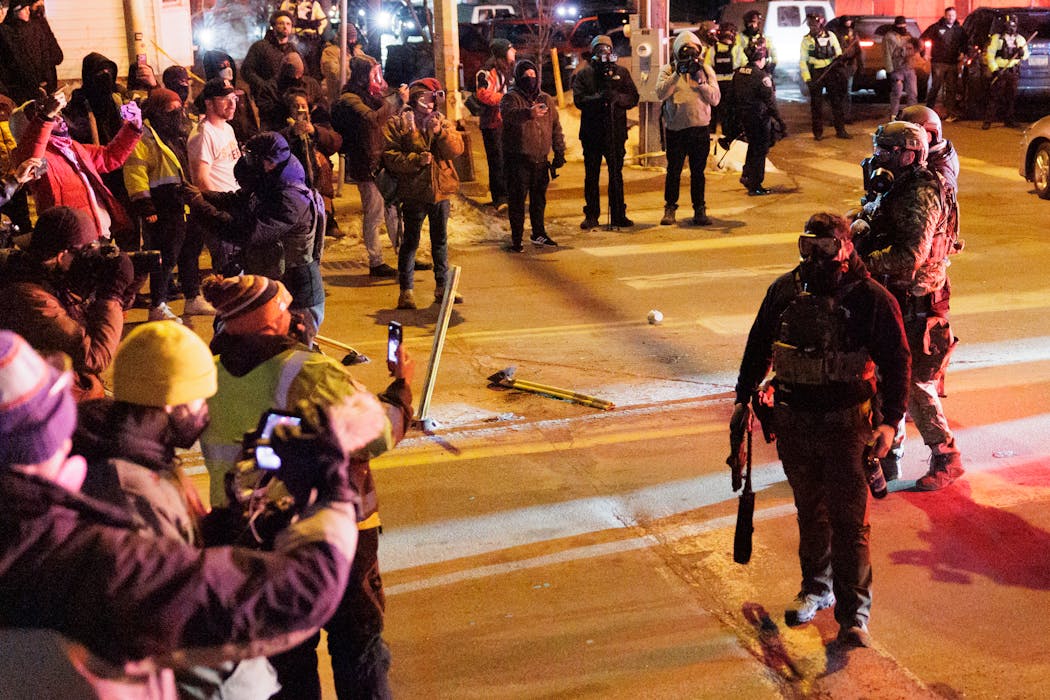
When an Immigration and Customs Enforcement agent shot and killed Renee Nicole Good in south Minneapolis on Jan. 7, 2026, what happened next looked familiar, at least on the surface. Within hours, cellphone footage spread online and eyewitness accounts contradicted official statements, while video analysts slowed the clip down frame by frame to answer a basic question: Did she pose the threat federal officials claimed?
What’s changed since Minneapolis became a global reference point for bystander video in 2020 in the wake of George Floyd’s murder is how thoroughly camera systems, especially smartphones, are now entangled with the wider surveillance ecosystem.
I am a researcher who studies the intersection of data governance, digital technologies and the U.S. federal government. The hard truth for anyone filming law enforcement today is that the same technologies that can hold the state accountable can also make ordinary people more visible to the state.
Recording is often protected speech. But recording, and especially sharing, creates data that can be searched, linked, purchased and reused.
Video can challenge power. It can also attract it.
Documentation can be the difference between an official narrative and an evidence-based public record. Courts in much of the U.S. have recognized a First Amendment right to record police in public while they perform official duties, subject to reasonable restrictions. For example, you can’t physically interfere with police.

However, that right is uneven across jurisdictions and vulnerable in practice, especially when police claim someone is interfering, or when state laws impose distances people must maintain from law enforcement actions – practices that chill filming.
While the legal landscape of recording law enforcement is important to understand, your safety is also a major consideration. In the days after Good’s killing, Minneapolis saw other viral clips documenting immigration enforcement and protests, along with agents’ forceful engagement with people near those scenes, including photographers.
It’s difficult to know how many people have been targeted by agents for recording. In Illinois in late 2025, the U.S. Press Freedom Tracker, operated by advocacy group Freedom of the Press Foundation, documented multiple incidents in which journalists covering ICE-facility protests reported being shot with crowd-control munitions or tackled and arrested while filming.
These incidents underscore that documentation isn’t risk-free. There is an additional layer of safety beyond the physical to take into account: your increased risk of digital exposure. The legal right to record doesn’t prevent your recording from becoming data that others can use.
In practical terms, smartphones generate at least three kinds of digital exposure.
The first is identification risk, including through facial recognition technology. When you post footage, you may be sharing identifiable faces, tattoos, voices, license plates, school logos or even a distinctive jacket. That can enable law enforcement to identify people in your recordings through investigative tools, and online crowds to identify people and dox or harass them, or both.
That risk grows when agencies deploy facial recognition in the field. For example, ICE is using a facial recognition app called Mobile Fortify.
Facial recognition accuracy also isn’t neutral. National Institute of Standards and Technology testing has documented that the technology does not perform equally across different demographic groups, meaning the risk of misidentification is not evenly distributed across groups. For example, studies have shown lower recognition accuracy for people with darker skin color.
Second is the risk of revealing your location. Footage isn’t just images. Photos and video files often contain metadata such as timestamps and locations, and platforms also maintain additional logs. Even if you never post, your phone still emits a steady stream of location signals.
This matters because agencies can obtain location through multiple channels, often with different levels of oversight.
Agencies can request location or other data from companies through warrants or court orders, including geofence warrants that sweep up data about every device in a place during a set time window.
Agencies can also buy location data from brokers. The Federal Trade Commission has penalized firms for unlawfully selling sensitive location information.
Agencies also use specialized “area monitoring” tools: ICE purchased systems capable of tracking phones across an entire neighborhood or block over time, raising civil liberties concerns. The tools could track a phone from the time and place of a protest – for example, to a home or workplace.
There are more pathways for tracking than most people realize, and not all are constrained by the courtroom rules people picture when they think “warrant.”
The third type of potential exposure is the risk of having your phone seized. If police seize your phone, temporarily or for evidence, your exposure isn’t just the video you shot. It can include your contacts and message history, your photo roll, location history and cloud accounts synced to the device.
Civil liberties groups that publish protest safety guidance consistently recommend disabling the face and fingerprint unlocking features and using a strong passcode. Law enforcement officials can compel you to use biometrics more easily in some contexts than reveal memorized secrets.
This isn’t legal advice, and nothing is risk-free. But if you want to keep the accountability benefits of filming while reducing your digital exposure, here are steps you can take to address the risks.
Before you go, decide what you’re optimizing for, whether it is preserving evidence quickly or minimizing traceability, because those goals can conflict. Harden your lock screen with a long passcode, disable face and fingerprint ID, turn off message previews and reduce the risk of what you carry by logging out of sensitive accounts and removing unnecessary apps. Even consider leaving your primary phone at home if that’s realistic.
If you’re worried about having your recording deleted, plan ahead for how you’ll secure footage. You can either send it to a trusted person through an encrypted app or keep it offline until you’re safe.
While filming, keep your phone locked when possible using the camera-from-lock-screen feature and avoid livestreaming if identification risk is high, since live posts can expose your location in real time. Focus on documenting context rather than creating viral clips: Capture wide shots, key actions and clear time-and-place markers, and limit close-ups of bystanders. Assume faces are searchable, and if you can’t protect people in the moment, consider waiting to share until you can edit safely.
Afterward, back up securely and edit for privacy before posting by blurring faces, tattoos and license plates, removing metadata, and sharing a privacy-edited copy instead of the raw file. Think strategically about distribution because sometimes it’s safer to provide footage to journalists, lawyers or civil rights groups who can authenticate it without exposing everyone to mass identification. And remember the “second audience” beyond police, including employers, trolls and data brokers.
Recording law enforcement in public is often a vital democratic check, especially when official narratives and reality conflict, as they have in Minneapolis since Jan. 7, 2026.
But the camera in your pocket is also part of a maturing surveillance ecosystem, one that links video, facial recognition and location data in ways most people never consented to and often don’t fully recognize.
In 2026, filming still matters. The challenge is ensuring the act of witnessing doesn’t quietly become a new form of exposure.

Nicole M. Bennett is affiliated with the Center for Refugee Studies at Indiana University.
Politics + Society – The Conversation
.jpg)