Bob Dylan reserves his tweets for when he has something meaningful to say, like the time he shouted out a historic New Orleans restaurant after eating there.
Mashed – Fast Food, Celebrity Chefs, Grocery, Reviews











Bob Dylan reserves his tweets for when he has something meaningful to say, like the time he shouted out a historic New Orleans restaurant after eating there.
Mashed – Fast Food, Celebrity Chefs, Grocery, Reviews
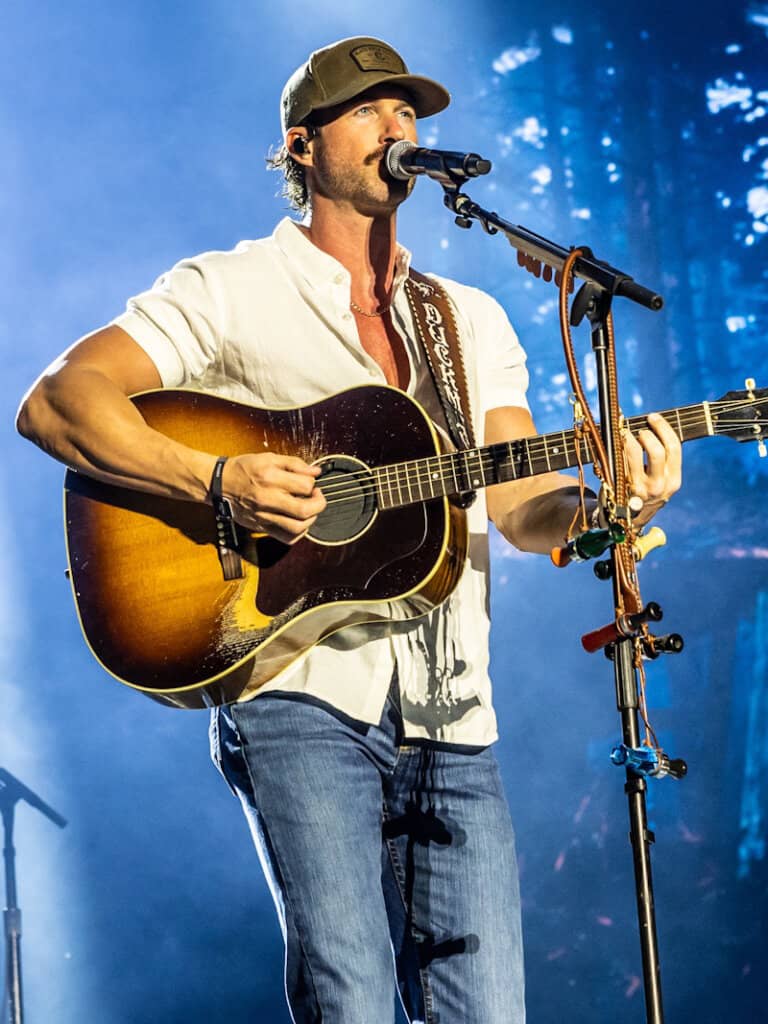
Riley Green values a good glass of bourbon, not just for the taste or its warmth, but for the way it fosters a sense of community. Although he’s likely shared a drink with countless people over the years in various settings, he reveals if he could pour one out with any country legend, it’d would be Merle Haggard.
While speaking with Men’s Journal, he reflected on his latest venture as the face of the new whiskey brand, Duck Club Bourbon and revealed why, if he could go back in time, he would jump at the opportunity to sit down with the late country music icon. The two of them never got to meet, but Green imagines that if they did it, it would feel nostalgic and almost like they’ve known each other for forever.
Green described his deep connection to Haggard’s music, noting how some of his earliest memories involve both Haggard and his beloved grandfather, Buford, who passed away in 2010. He explained that much like a glass of bourbon, those memories have a way of capturing a moment and bringing people together, even the ones who are no longer around.
“Well, you know, this is a completely true story. First song I ever sang was ‘Mama Tried.’ My granddaddy Buford loved Merle Haggard. And, you know, my granddaddy Lennon was a hunter, the outdoorsman, never missed a ball game with any of his grandkids. And my granddaddy Buford was more artsy, wrote poems, really a witty guy, really good with words. And he had an old Epiphone guitar and we’d sit around and kind of play,” Green recalled.
The Alabama native went on to say when Haggard’s death was announced, it hit him so hard that it felt almost as if his own grandaddy had passed away for the second time.
“That was the only celebrity, somebody I’ve never met that I really had some type of emotional connection to, and that’s got to be through the stories and songs,” he continued. “Everything that he sang made me feel something and certainly takes me back to a place in my life. It’s got a nostalgia to it. A really cool thing is that bourbon can certainly have that too, you know?”
The brand that Riley Green has partnered with created this Borbon in honor of the “Don’t Mind If I Do” singer’s passion for the great outdoors. Duck Club Bourbon is available at 92 proof with a suggested retail price of $30, and a 110-proof version, Duck Club Bourbon High Brass, priced at $40.
This appears to be a natural fit for Green, who enjoys a good glass of bourbon, whether he’s preparing to hit the stage, sitting in a duck blind, or hanging out around a campfire. He also opens up about the unique connection he sees between country music and bourbon and how the two have impacted his life.
When he thinks about what country music means to him, Green says he pictures sitting on a porch at sunset with his dad, grandpa, and friends, swapping stories and sharing laughs, likely with a drink nearby.
“Country music to me is storytelling. I mean, melodically, it goes in a lot of different directions and there’s some more poppy stuff and more traditional, but the storytelling is at the root of country music to me. What makes a song country is to have a story. And I think the best stories are told over a glass of bourbon on a porch somewhere.
To ensure he keeps that feeling alive during his shows, the country star says he will have to add Duck Club to the list of dressing room requests on his rider.
“My rider has always been pretty simple,” he noted. “It’s like a case of water and some protein drinks and some granola bars, but now I’m going to have to have Duck Club on there. We’ll have a nice setup and we have a little bar in the backstage called the Duck Blind and we’ll make sure it’s stocked up with it. So I definitely won’t be going anywhere for a show without it there with me.”
Riley Green is gearing up to hit the road very soon, with upcoming dates on his Cowboy As it Gets Tour. The trek launches March 16 with stops across Australia and then returns to the U.S. in April for more dates across the country through August.
Fans can also find him appearing as a guest star in Season 1 of the new Yellowstone spinoff series, MARSHALS, premiering Sunday, March 1 (8:00–9:00 PM ET/PT) on the CBS Television Network and streaming on Paramount+.
The post Riley Green Gets Candid About His Deep Connection To The Late Merle Haggard appeared first on Country Now.
Country Now
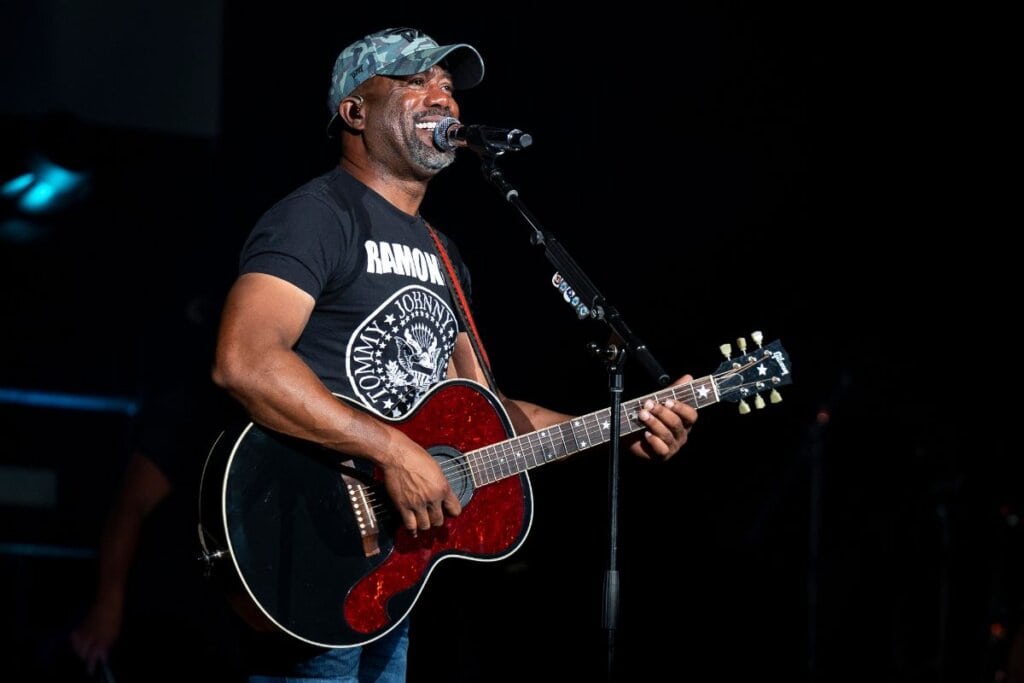
Darius Rucker is gearing up for a busy summer on the road with his newly announced Songs of Summer Tour. The country act will make his way to 20 cities across the country, performing in various amphitheaters and iconic venues with his unmistakable voice and hit-filled setlist in tow.
According to Rucker, nothing captures the spirit of summer quite like a night of live music outdoors. This tour is his way of capturing everything that makes those concerts feel special, like the energy of the crowd heating up as the sun goes down and massive singalongs under the stars.
“For me, it’s not summer if we’re not playing music outdoors,” he shared. “When I think of the concerts I love attending, it’s the people, the hits and the hot summer air… there’s nothing that compares, so Songs of Summer in a lot of ways is my nod to being in that moment together.”
Promoted by Live Nation, the 2026 tour will launch on June 4 with a show in Toledo, Ohio and continue with stops throughout the U.S. before wrapping up on August 1 in Indianapolis, Ind.
The South Carolina native won’t be hitting the road alone, as he has a stacked lineup of special guests joining him. Lauren Alaina, George Birge, Evan Honer, Old Crow Medicine Show, Robert Randolph and Austin Williams have all been tapped to serve as supporting acts on select dates.
Tickets for the Songs of Summer Tour go on sale starting this Friday, Feb. 27 at 10 a.m. local time, with select cities on sale in March. For more information regarding tickets, visit DariusRucker.com.
Those hoping to score tickets will also have the option to purchase one of the different VIP packages and experiences being offered. Packages vary but include premium tickets, exclusive pre-show meet & greet and photo op with Darius Rucker, guided backstage tour, autographed tour poster and more. VIP package contents vary based on the offer selected. For more information, visit vipnation.com.
In addition to his upcoming tour, the Three-time GRAMMY Award winner has also revealed plans for a special, one-night-only Big Band Gala at Charleston’s Gaillard Center on April 7. Presented by Explore Charleston, the show will give fans a unique chance to see him in a more intimate, elevated setting, accompanied by Robert Lewis and the Charleston Jazz Orchestra, conducted by Peter Graves.
A portion of the ticket sales will go toward supporting music education through the CMA Foundation in Charleston County Schools, as well as the Carolyn G. Rucker Nursing Scholarship at MUSC Shawn Jenkins Children’s Hospital.
Between his Songs of Summer Tour and the special one-night Gala, Darius Rucker is ready to make 2026 a year fans won’t forget while supporting causes close to his heart.
June 4 | Toledo, Ohio | Toledo Zoo Amphitheatre | George Birge, Austin Williams +
June 5 | Grantville, Pa. | Hollywood Casino at Penn National Race Course | George Birge, Austin Williams *’
June 6 | Canandaigua, N.Y. | Constellation Brands – Marvin Sands Performing Arts Center | George Birge, Austin Williams *’
June 11 | Bethel, N.Y. | Bethel Woods Center for the Arts | George Birge, Austin Williams *
June 12 | Atlantic City, N.J. | Hard Rock Live at Etess Arena | Austin Williams *
June 13 | Gilford, N.H. | BankNH Pavilion | George Birge, Austin Williams *
June 18 | Greensboro, N.C. | White Oak Amphitheatre at Greensboro Coliseum Complex | George Birge, Austin Williams *
June 19 | Wilmington, N.C. | Live Oak Bank Pavilion at Riverfront Park | George Birge, Austin Williams *
June 25 | Grand Rapids, Mich. | Acrisure Amphitheater | Lauren Alaina, Austin Williams +
June 26 | Cincinnati, Ohio | Riverbend Music Center | Lauren Alaina, Austin Williams #
June 27 | Clarkston, Mich. | Pine Knob Music Theatre | Lauren Alaina, Austin Williams +
July 16 | Washington, D.C. | The Theater at MGM National Harbor | Austin Williams *
July 17 | Bridgeport, Conn. | Hartford Healthcare Amphitheater | Robert Randolph, Austin Williams *
July 18 | Boston, Mass. | Leader Bank Pavilion | Robert Randolph, Austin Williams *
July 23 | Phoenix, Ariz. | Arizona Financial Theatre | Old Crow Medicine Show, Austin Williams +
July 24 | Albuquerque, N.M. | First Financial Credit Union Amphitheater | Old Crow Medicine Show, Austin Williams *
July 25 | Morrison, Colo. | Red Rocks Amphitheatre | Old Crow Medicine Show, Austin Williams *
July 30 | Rogers, Ark. | Walmart AMP | Evan Honer, Austin Williams *
July 31 | Kansas City, Mo. | Starlight Theatre | Evan Honer, Austin Williams ^
August 1 | Indianapolis, Ind. | Everwise Amphitheater at White River State Park | Evan Honer, Austin Williams *
* on sale Feb. 27
+ on sale March 6
# on sale March 13
^ on sale March 20
’ not a Live Nation show
The post Darius Rucker Plots 2026 Songs Of Summer Tour appeared first on Country Now.
Country Now

If you’re a baking enthusiast, listen up: Whatever cooking oil you’ve been using in your recipes probably isn’t as good as the one we’re about to suggest.

Mashed – Fast Food, Celebrity Chefs, Grocery, Reviews
Video shows her singing for and talking with patients of St. Jude. Continue reading…Country Music News – Taste of Country
Video shows her singing for and talking with patients of St. Jude. Continue reading…The Boot – Country Music News, Music Videos and Songs
It’s heartbreaking to hear how health challenges have reshaped Christina Applegate’s daily life. Continue reading…Country Music News – Taste of Country
It’s heartbreaking to hear how health challenges have reshaped Christina Applegate’s daily life. Continue reading…The Boot – Country Music News, Music Videos and Songs
None of us are immune to health scares and even misdiagnoses. However, these celebrities had to do it in the glare of intense public spotlight.
Health Digest – Health News, Wellness, Expert Insights
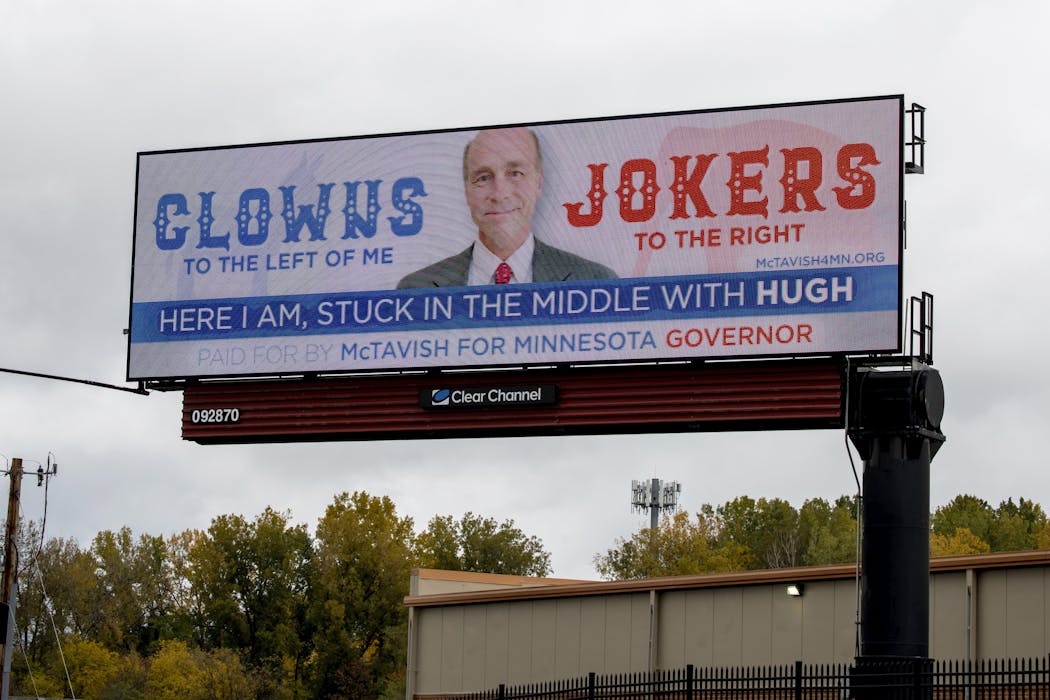
A majority of Americans say they are “frustrated” or “angry” – or both – with Republicans and Democrats, according to the Pew Research Center. But that rarely translates into support for independent or third-party candidates.
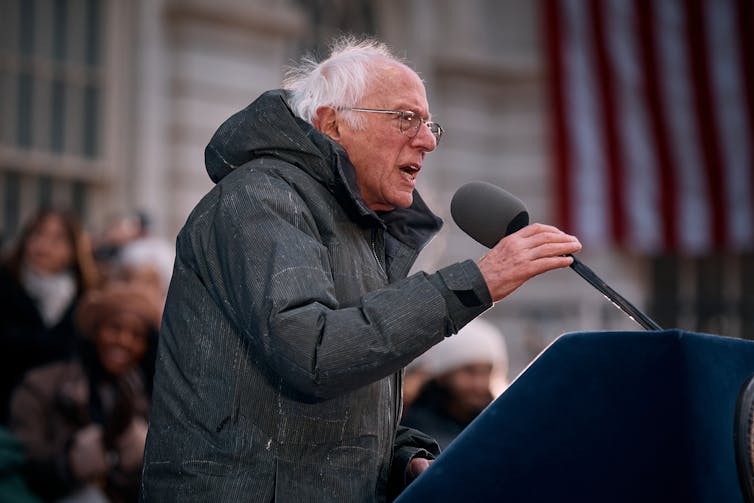
One exception has been in the Northeast. Angus King of Maine and Bernie Sanders of Vermont are the Senate’s only independents. King, along with Lowell Weicker of Connecticut and Lincoln Chafee of Rhode Island, represent three of the five independent and third-party governors elected nationwide since 1990. And of the 23 current independent or third-party state legislators in the country, excluding technically nonpartisan Nebraska, 14 of them, or 61%, are in New England.
As a political scientist who has taught in Vermont for two decades, I was intrigued by the question of why third-party and independent candidates are so successful, relatively speaking, in the Northeast? And can this region teach us lessons about broadening the choices available to voters?
In their classic book “Third Parties in America,” Steven Rosenstone, Roy Behr and Edward Lazarus argue that alternative parties succeed where motivation for third-party voting is high, constraints against doing so are low, or both.
Those may sound like obvious points, but let’s explore them individually. First, motivation. Third parties do better when voters are frustrated with the two major parties and see them as incapable or unwilling to respond to their needs.
In a polarized national political climate, New Englanders might appear to be good candidates for anger. Vermont gave Donald Trump his smallest share of the 2024 presidential vote of any state – less than a third. Massachusetts was not far behind.
This should not necessarily be interpreted as enthusiasm for the Democrats. Pew found that two-thirds of Democrats are frustrated with their own party.
Channeling some of this discontent, Vermont Gov. Phil Scott, although a Republican, has frequently criticized Trump and accused the president and other politicians in Washington of creating “chaos.”
Still, the idea that discontent explains New England’s openness to third parties and independents clashes with other pieces of the picture. Other states where most voters are hostile to Trump, such as California, Maryland and Illinois, have few successful third-party or independent candidates.
And the Northeast has been fairly friendly territory for third parties and independents in very different national contexts. New England elected far more third-party and independent legislators than other regions back in 2010 as well, at a point during Barack Obama’s presidency when political discontent was most famously centered within the conservative tea party movement.
That brings us to the second possibility: constraints on third parties, or their absence.
Unlike parliamentary democracies, including Brazil and Spain, that use proportional representation – giving some proportion of the seats even to parties that garner small shares of the overall vote – the U.S. system is stacked against third parties because of its “first-past-the-post” electoral system, under which candidates can win with pluralities of the vote.
This type of voting encourages citizens to consider only the two major parties because other candidates are generally considered not to have any realistic shot of winning. This helps explain why Sanders ran for president as a Democrat in 2016 and 2020.

In presidential voting, the Electoral College sinks third-party chances – even if they have wide support – if their voters are not concentrated enough to win individual states. Running as an independent in 1992, businessman Ross Perot won 19% of the national vote but received exactly zero votes in the Electoral College.
These constraints, while formidable in national politics, play out differently at the state and local levels. Absent the Electoral College, there is less of a guarantee that the Democrat and Republican will always be perceived as the two most viable candidates in local races, especially in regions with lopsided support for one party or the other.
In areas with overwhelming Democratic support, the next most viable option might not be a Republican but a progressive. In areas with overwhelming Republican support, Democrats could be less viable than libertarians.
But if this is true, why do we not see just as many third-party and independent victories in red states, such as Alabama and Mississippi, as we do in Vermont and Maine? The answer lies in a seemingly mundane but crucial factor: ballot access laws.
States set the rules governing which candidates quality for the ballot. In almost every state, Democrats and Republicans have advantages over other parties or independents. But in the Northeast it is easier for independents and candidates from other parties to get on the ballot.
In no New England state does an independent candidate for a state legislative seat have to collect more than 150 signatures to secure a ballot spot. In Georgia, by contrast, candidates must collect signatures equal to 5% of the total number of registered voters in the jurisdiction holding an election, which can translate into thousands of signatures.
To see the impact of ballot access rules on candidates outside of the major parties, you only need look at one of the few states outside of New England where such candidates have done as well: Alaska.
Alaska has long had ballot access rules that are among the most open in the nation. Candidates for state House races need only pay a filing fee of US$30 to get a ballot line, and it is nearly as easy for them to file as a recognized party or group.
That helps explain why five independents currently serve in the Alaska House, that the state elected as governor a third-party candidate in 1990 and an independent in 2014, and reelected U.S. Sen. Lisa Murkowski as a write-in candidate after she lost the Republican primary in 2010.
Ease of ballot access attracts outsider candidates, increases competition, and gives voters an outlet for their frustrations.
To sum up, if people want more choices in elections, they will need to change the rules.

Bert Johnson does not work for, consult, own shares in or receive funding from any company or organization that would benefit from this article, and has disclosed no relevant affiliations beyond their academic appointment.
Politics + Society – The Conversation