Morgan Wallen just hit a historic sales milestone, surpassing country legends like Garth Brooks and Carrie Underwood. Here’s the full Top 10 breakdown. Continue reading…Country Music News – Taste of Country










Morgan Wallen just hit a historic sales milestone, surpassing country legends like Garth Brooks and Carrie Underwood. Here’s the full Top 10 breakdown. Continue reading…Country Music News – Taste of Country
Reba McEntire’s son Shelby and his wife Marissa have welcomed a baby boy! Continue reading…Country Music News – Taste of Country

INTIFADA FLARE UP: One of New York City’s most prestigious public high schools is facing backlash because a school-based socialist youth group co-signed a social media post declaring “Intifada Until Victory!”
The Young Democratic Socialists of America chapter of Stuyvesant High School — along with YDSA chapters at Hunter College, the New School, City College and Lehman College — all signed onto an Oct. 8 Instagram post that accused the Democratic Socialists of America’s New York City chapter of silencing student activists who wanted to protest Mayor Zohran Mamdani over Israel.
The groups accused the democratic socialist mayor of betraying the Palestinian cause and blasted his decision to keep NYPD Commissioner Jessica Tisch in her position, referring to her as a “Zionist billionaire.”
The term intifada — which refers to violent uprisings against Jews in Israel — is viewed by many Jews as a call to violence against them.
Moshe Spern, president of United Jewish Teachers — an advocacy group representing Jewish teachers and students across the city — is demanding the posts be removed immediately and that the YDSA group provide a public apology to the school community.
“NYC public schools have seen hundreds of antisemitic and anti-Israel incidents since October 7, 2023,” he wrote in an email yesterday to Stuyvesant Principal Seung Yu and New York City Schools Chancellor Kamar Samuels. “When a school-recognized club amplifies this rhetoric, it risks contributing to a hostile environment.”
In the missive, Spern invoked Title VI — the federal law that bans discrimination based on race, shared ancestry and national origin — and demanded a review of the YDSA chapter’s charter, faculty adviser and recent activities for compliance.
Spern also cited a chancellor’s regulation that states that student clubs operate under the principal’s supervision and must remain consistent with the school’s educational goals.
Yu did not respond to requests for comment. Mamdani’s Department of Education also did not respond to Playbook.
Spern told Playbook today that he has yet to receive a response from Yu.
“To flat out ignore it is extremely irresponsible,” he said.
The NYC-DSA defended the organization.
“We support the right to organize,” NYC-DSA co-Chair Gustavo Gordillo said in a statement. “NYC-DSA did not organize or endorse this particular rally, but red scare tactics have never been effective tools for engaging with student movements.”
The social media uproar is the latest flashpoint in ongoing tensions in the city over Hamas’ Oct. 7, 2023, attack on Israel and the war that followed.
Mamdani, a longtime critic of Israel, was reluctant to condemn the term “globalize the intifada” on the campaign trail last year before finally saying he will not use the term. He also drew bipartisan backlash over his statement marking the third anniversary of the attack. Israeli Prime Minister Benjamin Netanyahu labeled the mayor an antisemite, which Mamdani has denied.
Mamdani, though, has also simultaneously faced backlash from pro-Palestinian activists who accused him of betraying the Palestinian cause by retaining Tisch, who’s Jewish and a self-described Zionist. Those critics have also criticized him for not doing enough to prevent local synagogues from holding events that promote land sales in Israel, some of them in the occupied West Bank. — Madina Touré

Q’S LATEST: Gov. Kathy Hochul has a 55-41 lead over Republican challenger Bruce Blakeman, a Quinnipiac University poll released this afternoon found.
That 14-point advantage is narrower than the 19-point lead Quinnipiac gave Hochul last month. But it’s more in line with the numbers from other pollsters: Marist found Hochul up by 11 two weeks ago, Emerson had Hochul up 12 in early October, and Siena measured her lead at 9 points last month.
Despite Hochul’s lead, the Q Poll concluded Blakeman has an enthusiasm advantage. A total of 65% of his backers were “very enthusiastic” to support him, while only 33% of Hochul’s supporters said the same. — Bill Mahoney
LANDER DETAINED: Democratic congressional candidate Brad Lander was detained today by Israeli security officials while harvesting olives in the West Bank.
Lander, a self-described liberal Zionist and critic of Israel, said he went to the West Bank as part of the “Protect the Harvest” coalition to support Palestinians gathering crops.
Rabbi Jill Jacobs, CEO of T’ruah, a progressive rabbinical organization, said she was also detained Wednesday, along with “approximately 80 American, Israeli, and international volunteers providing a protective presence for Palestinian farmers.” According to a press release from T’ruah, there were “approximately two hours of peaceful harvesting” until “Israeli forces declared the area a closed military zone” and detained them to transport them to a police station, despite the volunteers agreeing to leave.
An Israeli military official told POLITICO that officers from the Israel Defense Forces and Border Police, along with local police, arrived at the scene because Palestinians did not submit a request to coordinate harvesting in that area, which is required ahead of time. The official added that the farm in question “requires only a small number of harvesters to collect its produce” and “the security establishment views the arrival of dozens of activists as an act intended solely to provoke, which undermines the harvesting process.”
Lander was released “once the matter was brought to our attention” that he is a congressional candidate, the official said.
Lander confirmed in a social media post that he was released with a “warning” because of his “public profile.”
Read more from Madison Fernandez in POLITICO.
— MUSK: Elon Musk has spent more than $500,000 to support Rep. Mike Lawler’s reelection bid against Democratic challenger Cait Conley. (Gothamist)
— STOP: New York City deployed 600 red light cameras to intersections, the maximum number allowed under state law. (New York Daily News)
— MEASLES: In the wake of a measles crisis, the state Health Department remains locked in a court battle with Amish schools over religious vaccine exemptions. (The New York Times)
Missed this morning’s New York Playbook? We forgive you. Read it here.
Politics

A super PAC listing this Wasilla office space as its address boosted a Green Party and fringe Democratic Party candidate in Alaska’s U.S. Senate race. (Amy Bushatz/Mat-Su Sentinel)
A left-leaning dark money organization and a GOP fund were among the groups behind the last-minute blitz of cash into Alaska’s U.S. Senate primary in August, when super PACs flooded the state with ads for fringe candidates on both the left and right, according to new filings with federal campaign finance regulators.
The ads were part of apparent efforts to boost lesser known candidates onto the four-person general election ballot who would dilute support for the mainstream candidates opposed by the groups.
At the time, the super PACs — Fair Deal Alaska and Right for Alaska — disclosed spending millions of dollars on mailers, phone calls and digital ads to boost Alaska U.S. Senate candidates like Richard Grayson, who lives in Arizona and said he was running “for fun,” and conservatives Gerald Heikes and Earl Southworth, who have reported no fundraising.
But federal law allowed the vast majority of the groups’ donor information to remain secret until after ballots were counted, which one critic describes as a major loophole.
“It’s outrageous that super PACs, which must, by law, disclose their funders, are able to game transparency rules in so many ways,” Michael Beckel, the director of money in politics reform at Issue One, a Washington, D.C. advocacy group, said in an email. “No super PAC should be able to avoid disclosing its donors until after voters have already made their choices at the ballot box.”
The policy issue, Beckel added, is a “bipartisan problem, and neither party has clean hands.”
“The sad reality today is that both Republicans and Democrats are pumping massive amounts of money into opaque groups,” he said, “leaving voters in the dark about which ultra-wealthy megadonors and special interests are trying to buy access and influence through large political contributions.”
The Aug. 18 primary resulted in Democrat Mary Peltola advancing to the general election along with incumbent Republican U.S. Sen. Daniel S. Sullivan and two other GOP candidates who could end up pulling votes from him: Heikes, and Petersburg teacher Daniel J. Sullivan.
Leading up to the primary, GOP-aligned Fair Deal Alaska spent more than $800,000 on mailers and phone calls to boost multiple fringe left-leaning candidates who, had they advanced to the general election, could have pulled votes from Peltola.
Fair Deal Alaska listed its address as a suite in a Wasilla office building that offers “virtual office and mail services,” and at the time, its officials did not respond to requests for comment about its ad campaign.
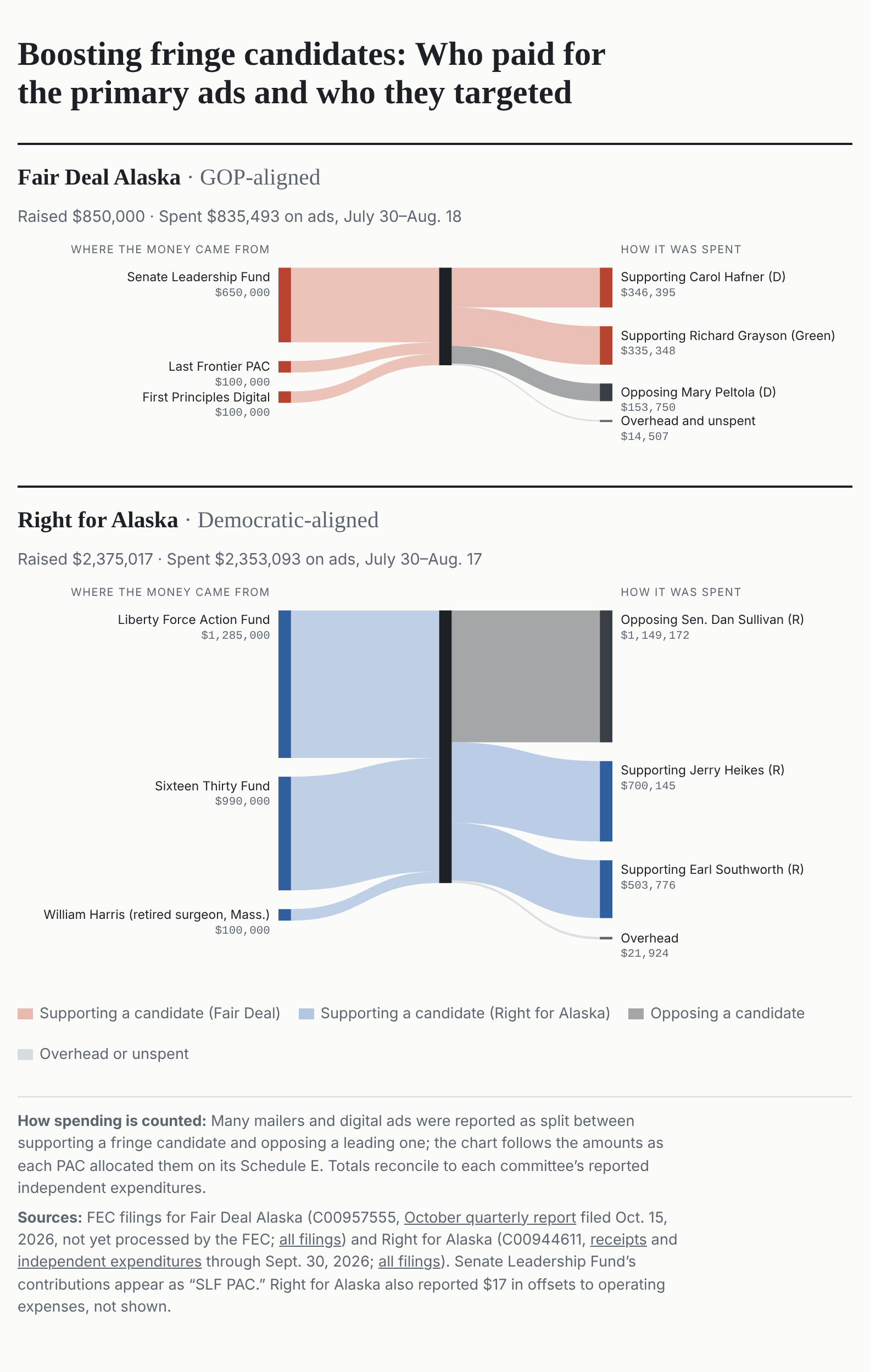
Only this week did the group say where its money came from: $650,000 from Senate Leadership Fund — the main GOP group supporting U.S. Senate candidates across the country, which in turn has drawn much of its cash in recent months from Elon Musk.
Another $100,000 for Fair Deal Alaska came from Last Frontier PAC, a group supporting incumbent Sen. Sullivan that’s funded by wealthy conservative donors. The last $100,000 came from First Principles Digital, a super PAC that says it backs “pro-crypto” candidates.
Last Frontier PAC, Senate Leadership Fund and First Principles Digital did not respond to requests for comment on their contributions to Fair Deal Alaska.
The Democratic-aligned Right for Alaska, meanwhile, spent nearly three times more. Much of its $2.35 million went toward boosting fringe Republican and other conservative candidates in apparent efforts to put candidates on the general election ballot who could pull votes from Sen. Sullivan.

Because of the late timing of most of its contributions, Right for Alaska had to disclose only the donor behind a single $100,000 contribution, a retired Massachusetts doctor. The group’s officials did not respond to requests for comment at the time.
New filings made in September show that the rest of Right for Alaska’s money came from two groups. Roughly $1 million came from Sixteen Thirty Fund, described by Politico as “the left’s preeminent dark money hub,” which put more than $300 million into liberal causes and elections in 2024.
Sixteen Thirty Fund is a 501(c)(4) “social welfare” nonprofit, meaning that it does not have to disclose its donors. The fund did not respond to a request for comment sent Thursday.
The rest of Right for Alaska’s fundraising, another $1.3 million, came from what the group identified as an Alexandria, Virginia-based contributor called “Liberty Force Action Fund.”
There’s no evidence of that group’s existence online — Google returns no results for a query of its specific name — though its Alexandria post office box was once used by a Texas-based company called Liberty for All Inc.
The same political operative behind Right for Alaska, Thomas Datwyler, is also affiliated with another apparently Democrat-aligned super PAC, Alaska Values, that this week disclosed more than $1 million in spending to oppose the incumbent Sullivan and boost Heikes, the Republican U.S. Senate candidate who’s reported no fundraising.
New Facebook ads from Alaska Values feature a man attacking Sullivan for supporting for “the largest debt increase in history,” and urging viewers to vote only for Heikes on their ranked choice general election ballots. The group has not yet disclosed any of its donors.
Beckel, the campaign finance reform advocate, said that proposed federal legislation already exists that would force groups like Right for Alaska, Fair Deal Alaska and Alaska Values to disclose information about “large, last-minute campaign contributions.”
The Stopping Hidden Interests and Non-Disclosure in Elections Act, or SHINE Act, was introduced earlier this year by Democratic Rep. Jason Crow of Colorado. It remains stuck in committee.
This story was originally published in the Anchorage Press. Subscribe here.
SUBSCRIBE: GET THE MORNING HEADLINES DELIVERED TO YOUR INBOX.
Reading Time: 2 minutes
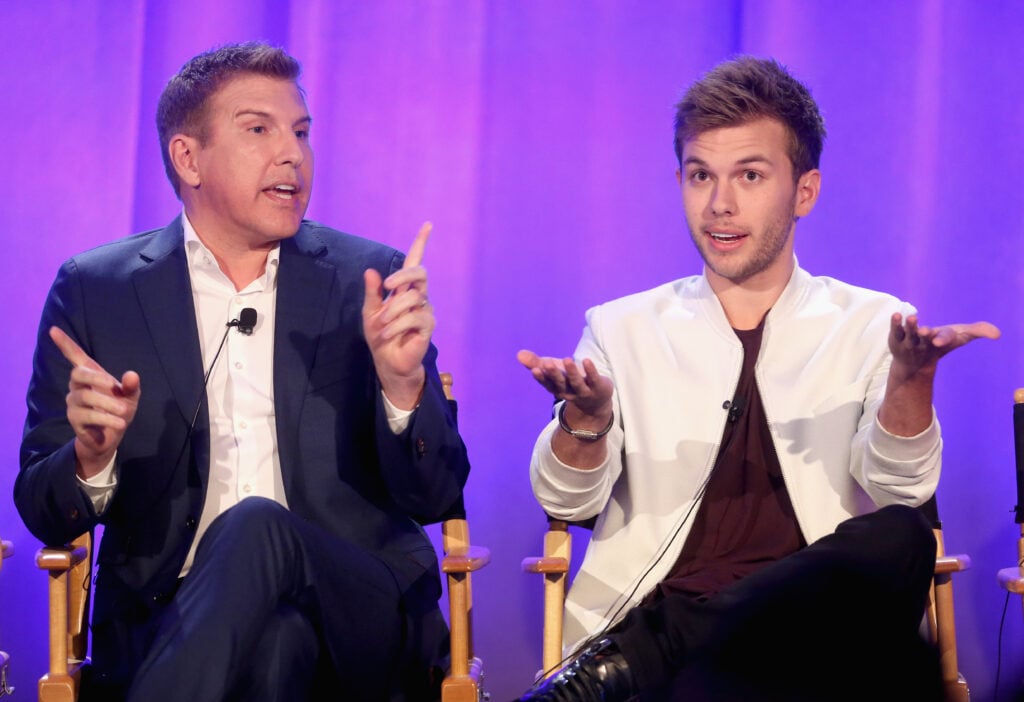
Usually, when Chase Chrisley makes headlines, it’s not for anything good.
Just look at his 2025, for example:
In January, Chase was arrested on battery charges. And in September, his sister, Savannah Chrisley, accused Chase of being an alcoholic.
So what’s next on Chase’s never-ending roller coaster ride? Well, if one new report is to be believed, the troubled former reality star is now a married man!
Yes, the generally reliable gossip outlet Deuxmoi is reporting that Chase secretly tied the knot in Michigan.
Michigan is one of the few states that allows people to marry in secret, so there’s no public license for Chase and his new partner.
But Deuwmoi rarely gets it wrong, and the folks who run the page seem confident that Chase has taken the plunge with an unidentified spouse.
“A source tells Deuxmoi that Chase Chrisley, known for his family’s reality series Chrisley Knows Best, which aired for 10 seasons from 2014 to 2023, allegedly tied the knot in a private ceremony in Michigan,” the site reports, adding:
“According to the source, the couple opted for a confidential marriage license.
“Michigan allows confidential marriages under certain circumstances, potentially explaining why no public record has surfaced.
“Chase has not publicly confirmed the alleged marriage.”
The Chrisleys, as you might be aware, have had a turbulent few years.
In fact, when discussing the family’s many ups and downs, it’s tough to know where to begin.
Last year, Todd and Lindsie Chrisley were pardoned by Donald Trump and released from prison after serving time on fraud charges.
Lindsie was later booked on DUI charges. But that’s one reason why pardons are so much better than parole — she was not sent back to the clink.
And then there’s Kyle Chrisley, who was recently arrested for punching a police officer.
So while he might not be the black sheep in the family anymore, it’s easy to see why Chase decided to keep his wedding details under wraps:
His family is pretty popular with the tabloid media these days.
Anyway! Our congrats go out to the happy couple. Hopefully they’re enjoying a honeymoon far away from the rest of Chase’s family.
Chase Chrisley: MARRIED Amid Ongoing Legal and Family Troubles? was originally published on The Hollywood Gossip.
The Hollywood Gossip

McGriddles are a delicious way to start your day: an entire breakfast in one bite! However, if you want to make a convenient muffin version at home, use this.

Food Republic – Restaurants, Reviews, Recipes, Cooking Tips
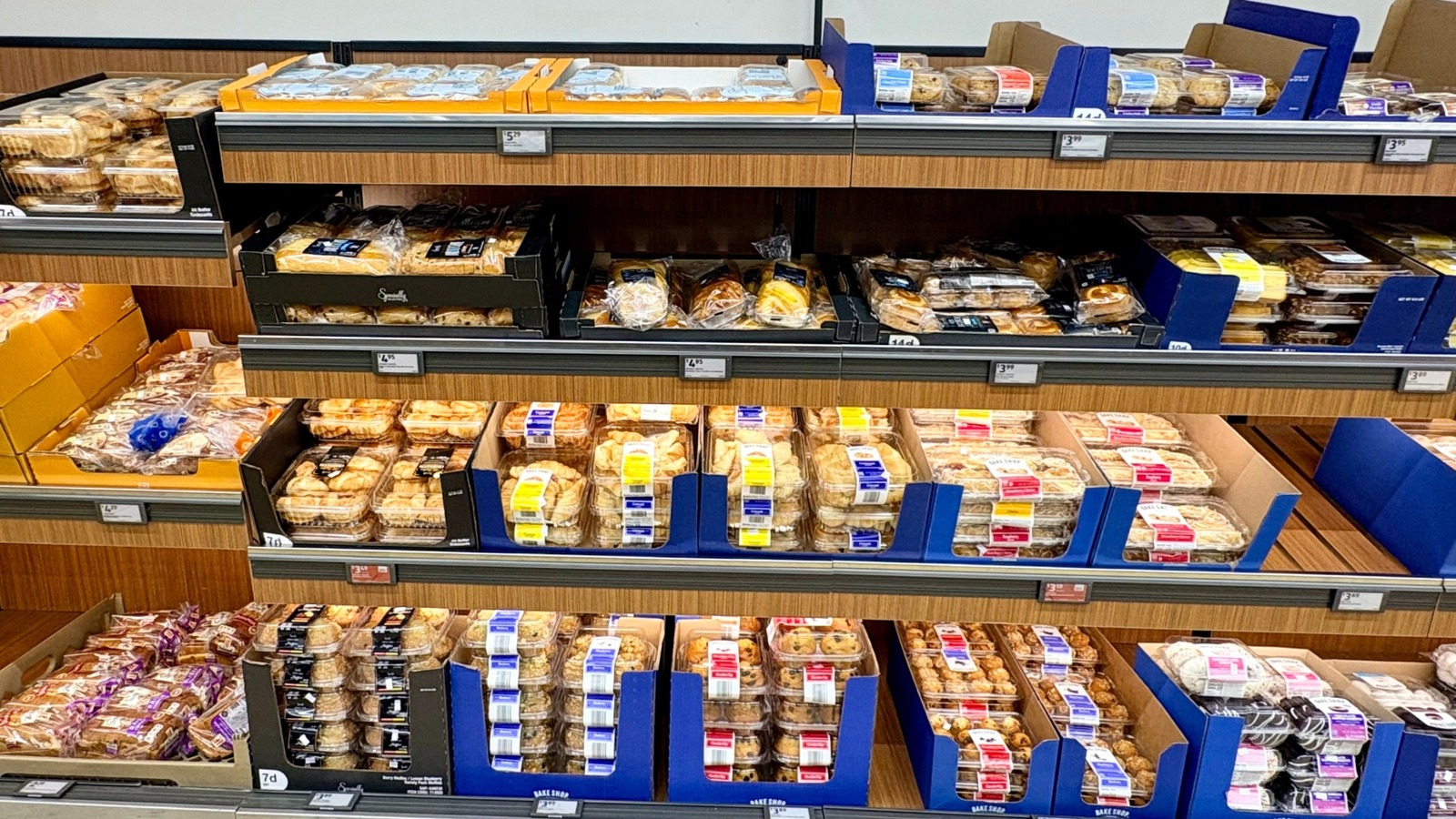
With the year soon drawing to an end, fall unofficially kicks off the season of sweets – and Aldi’s autumnal options should hit the spot.
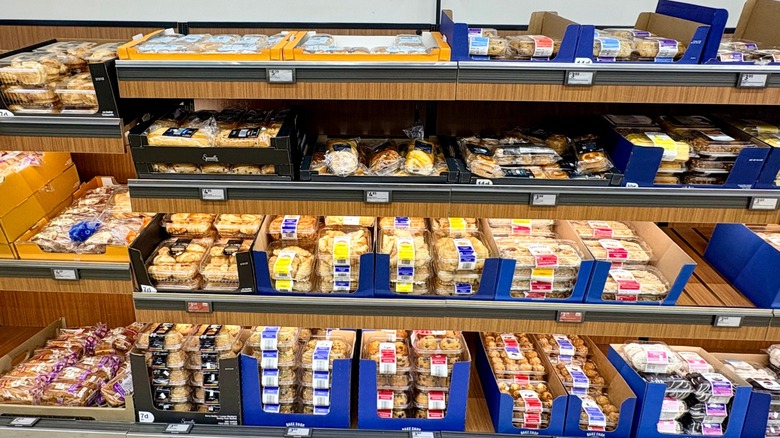
Mashed – Fast Food, Celebrity Chefs, Grocery, Reviews

Boy, did the last week of college football games live up to its billing. Five of the top seven teams in the Associated Press Top 25 lost for the first time this season. If that doesn’t make you feel romantic about college football, I don’t know what will. We still have little idea who’s actually good, who’s punching above their weight and whose season is about to fall apart. But that’s the beauty of the sport with 12 College Football Playoff spots on the line, and it’s certainly looking like there’s more playoff madness to come. In massive news, the CFP is seemingly headed for expansion to 24 teams from the current format of 12. Here’s what you should be keeping an eye on. The 24-team playoff is coming. It’s not 100 percent completed, but everything I and others have reported over the past two weeks suggests this is headed for resolution in short order. What should college football fans make of it? Well, there’s a lot to unpack. For our purposes, let’s dive into a few of the lingering pieces that need to be sorted out — and there are many fine details. These are just a few: What Will The New CFP Schedule Look Like? I wrote about this at length about two weeks ago, but the exact scheduling puzzle with the new CFP games isn’t quite as complicated as you might think. The skinny is that with the elimination of most, if not all, conference championship games, that first weekend of December is now open for Army-Navy to play their contest in a standalone window. CFP first-round games, meanwhile, would then be played starting the second week of December — where Army-Navy had traditionally resided — with the new second round, quarterfinals, semifinals and national title progressing from there. A few other nuggets related to the schedule Who Will Broadcast The New CFP Games? The NFL has done wonders in boosting its annual media returns by rotating the Super Bowl to a handful of networks. College football, meanwhile, doesn’t operate that way. The piecemeal approach to media rights in the college space is essentially the equivalent of the NFC East and AFC West having different deals with different networks that are based on past performance and history. Right or wrong, that’s how this world exists. The thought within the industry has been that the CFP could fetch more money for its additional games — helping justify the expansion — if it were to take it to market and allow for other networks to bid. That is unlikely to be the case at this point, as ESPN has angled toward controlling the entire postseason. That does, however, open the door to sublicensing. The network might look to offload some of these new games in the way it already has through an agreement with TNT Sports (now part of Skydance). Sources briefed on the CFP discussions told me there are machinations to be worked out around any sublicensing that might happen and where any added revenue from such efforts would go. For games on TNT, for example, ESPN received all the additional revenue it generated by sublicensing. So — using hypothetical numbers — if those games were valued at $50 million each and ESPN sold them for $100 million, the extra $50 million went entirely to the network. Discussions are ongoing, but it’s possible a revenue share above the make-whole value of those games could be incorporated into the CFP’s new games, if they’re offloaded at some point in the future — which is no guarantee. Again, none of this is final and talks are ongoing. What Other CFP Negotiations Might Be Coming? One thing that’s worth noting in all of this is that the CFP’s latest media rights deal with ESPN, which went into effect with the 2026 event, has not actually been finalized. The parties have been effectively working off a memorandum of understanding (MOU) for the better part of a year now. That left the door open for discussions involving expansion and potential changes or clarifications that needed to be made in the long-form version of the contract. One key component is that the CFP has a look-in provision slated for 2028. What a look-in actually entails is subjective and varies widely depending on who you ask. If the games over-perform, could the CFP ask for more money? Perhaps. Is it really just a chance to evaluate minor details? Also, possibly that. That said, I’m told it’s unlikely there would be any major changes made to the CFP structure through the end of the current deal in 2031-32, assuming it does, in fact, expand to 24 teams. I sat down with SEC commissioner Greg Sankey during SEC media days in 2025, and one thing we discussed was whether constantly changing the CFP format created increasing angst with fans. “Depends if your view is consistent with the notion that any publicity is good publicity,” he joked, tongue-in-cheek. “My personal view is the move to 12 was appropriate. The timing was really on point. I think 12, as envisioned, worked well. “… Whether it goes to 14 or 16, that conversation became public pretty quickly, without the rationale. But for any set of issues, you need to make a decision, put the book on the shelf and refer to it a bit when you need to, but not rewrite the story all the time.” The CFP is now headed toward 24 teams. Are we just a year away from tinkering even further? Probably not.Latest Sports News from FOX Sports
Reading Time: 2 minutes
Earlier this week, Roseanne Barr gave a very candid interview to The Hollywood Reporter.
In addition to divulging secrets from her own private life, Roseanne spilled tea about some of her famous friends, including the late Lisa Marie Presley.
Presley passed away in 2023, but prior to her death, she lived a very eventful life.
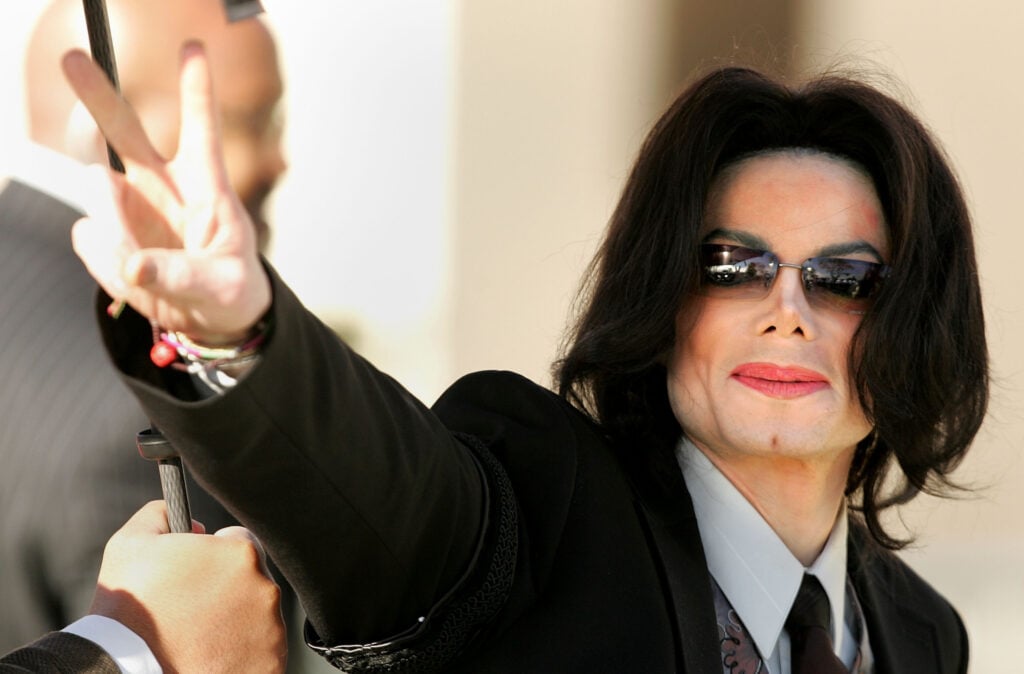
In addition to being Elvis’ only child, Lisa Marie was briefly married to Michael Jackson — and it seems the two of them enjoyed some pretty intense chemistry.
“He had it going on. She said he told her all the things girls want to hear,” Barr said in her THR conversation.
She added that Presley “never lied about s–t like that”
Apparently, Jackson was a quick learner, as Lisa Marie revealed in her memoir that he was “still a virgin” when they started dating.
“I think he had kissed Tatum O’Neal, and he’d had a thing with Brooke Shields, which hadn’t been physical apart from a kiss. He said Madonna had tried to hook up with him once, too, but nothing happened,” she wrote.
Elsewhere in the interview, Roseanne talked about her new sitcom, Meemaw, in which she plays a Texas doomsday prepper and leader of a local prayer group.
“I haven’t really showed it to anybody yet. But it is so funny. It’s the funniest shit I’ve ever done, and I had a ball and I play a really wacky old lady this time,” Roseanne said.
The show seems to be a reflection of Roseanne’s recent shift toward the far right, so it makes sense that she cast actor turned controversial conspiracy theorist Randy Quaid as her love interest.
“I’m in love with him and I wish he would leave his wife and marry me. I enjoyed making out with him so much that I wrote extra scenes where we would make out,” Barr quipped of her relationship with Quaid.
Barr also revealed that she asked her Roseanne co-star John Goodman to do a cameo on her new show — but he declined.
Given some of the things Roseanne has said lately, we suppose that’s not a big surprise.
Lisa Marie Presley Said Michael Jackson Was Her ‘Best Lay,’ Roseanne Claims was originally published on The Hollywood Gossip.
The Hollywood Gossip
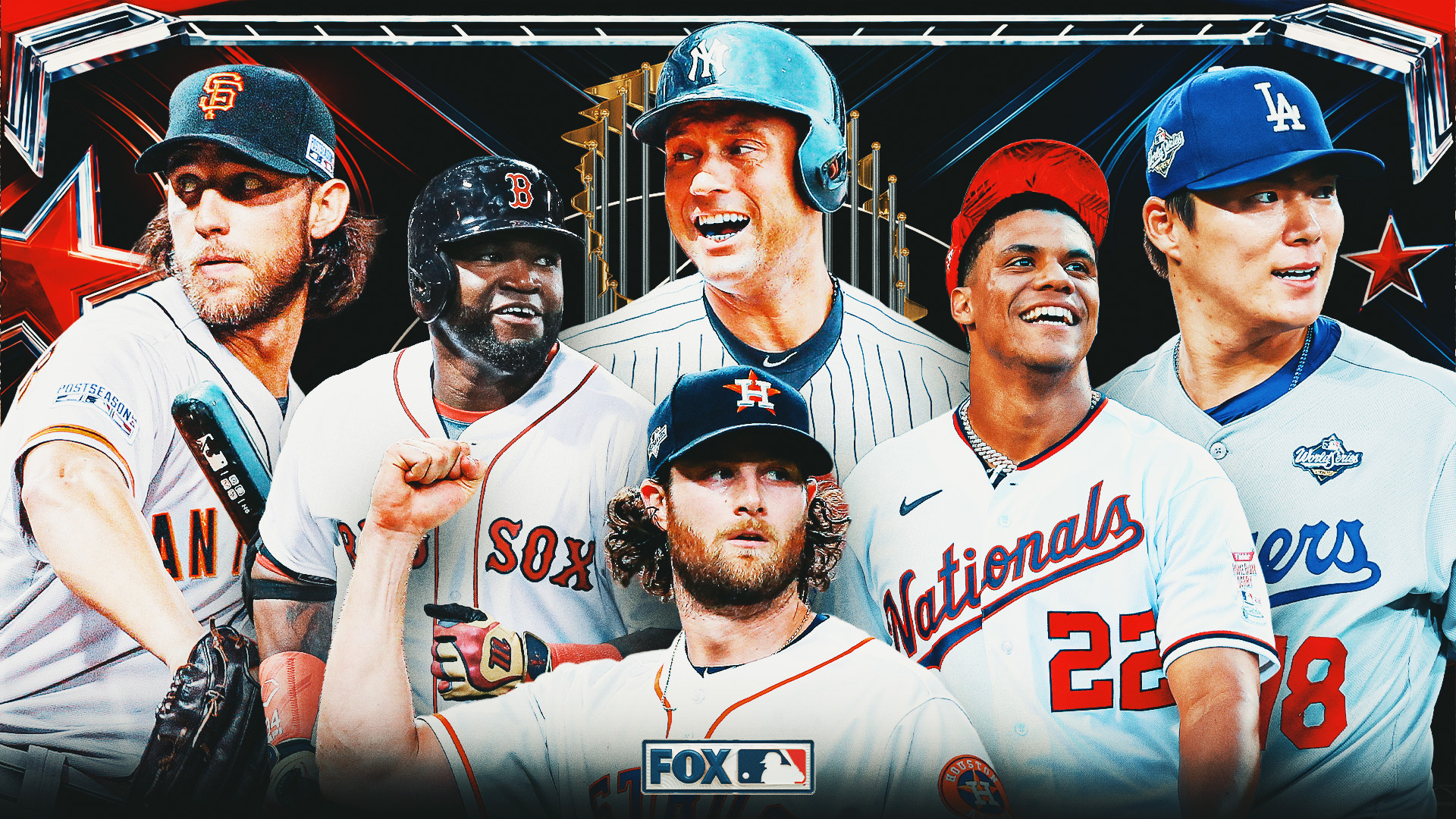
The World Series is where legends are made. Even the most dreadful season can be saved with one moment of magic in the Fall Classic, and for the last 25 years, the biggest stars in baseball have risen the occasion and cemented their names in baseball history forever. But what exactly makes a great World Series player beyond the big hits and clutch saves? To answer that question, we put together our dream 21st century World Series roster, with 26 players across the American League and National League, and some of the names that made — and didn’t make — it might surprise you. Starting Lineup “Señor Octubre” himself. Or, as Carlos Ruiz is more commonly known, Chooch. Ruiz was the catcher on five-consecutive Phillies’ postseason teams, from 2007 through 2011, which included back-to-back World Series appearances in 2008 and 2009. While Philadelphia lost the ‘09 Fall Classic to the Yankees, you can’t blame Ruiz for any of it: he batted .353/.488/.707 with seven extra-base hits, five RBIs, six runs and a walk-off single in Game 3 of the ‘08 World Series against the Rays. Freddie Freeman helped the Braves win the 2021 World Series by batting .318/.360/.636, which is plenty impressive on his own. The 2024 World Series with the Dodgers, though, that’s where Freeman made his mark on history: his 12 RBIs are tied for the most in a single Fall Classic, and he bashed the first-ever walk-off grand slam in World Series history in Game 1 against the Yankees — for the entire series, he slugged an even 1.000. Freeman then won Game 3 of the 2025 World Series against the Blue Jays with another home run, becoming the first-ever player with two World Series walk offs, and that shot also tied him for the 10th-most World Series dingers in history with seven. Chase Utley failed to record a single hit in the 2017 World Series while with the Dodgers, but that just reiterated how good he was in his two previous trips to the Fall Classic as a member of the Phillies. Utley picked up three hits — two of them home runs — in the 2008 series, then added another five in the 2009 World Series. In 15 games, despite batting .200, Utley got on base at a .357 clip and slugged .689 with seven homers, tied for 10th among all players in World Series history and ranked first among second basemen. If it feels like, in 2011, David Freese had the most impactful World Series ever thanks to his Game 6 efforts — a two-out, two-strike, game-tying two-run triple in the bottom of the ninth for the Cardinals against the Rangers, followed by a walk-off solo homer to lead off the 11th and tie the series up 3-3 — then it’s not just you: the numbers back it up. His 2011 Win Probability Added — which measures changes in win expectancy — is the highest-ever for a single Fall Classic. On top of that, Freese possesses a career .296/.406/.556 line in 64 World Series plate appearances across 2011, 2013 and 2018 — his stellar performance went beyond just one historic game. While Derek Jeter played on seven World Series teams in his career, he doesn’t get extra credit for that here. He also doesn’t need it, though: four of those seven happened in the 21st century, in 2000, 2001, 2003 and 2009, and Jeter hit .324/.361/.510 over 109 plate appearances within them — all nine of his career World Series doubles, good for third all-time, came in those four years. That actually undersells it for the Yankees’ captain, as he had just a .438 OPS in the 2001 World Series: in the other three, Jeter managed OPS of 1.344, .854 and .947 respectively, with New York winning two of those three. Quantity and quality. Few players in MLB history have had a better World Series career than George Springer. In 2017, 2019 and 2025, Springer dominated to the tune of a combined .351/.444/.727 over 19 games and 90 plate appearances. He’s tied for 10th in World Series home runs (7) and ninth in doubles (8), with 17 runs and 12 RBIs. In the 2017 World Series, he hit .379/.471/1.000 with a record 29 total bases in a single World Series, while tying for the most homers with five — even with this performance, it took the Astros seven games to defeat the Dodgers. Unsurprisingly, Springer won World Series MVP honors. Here’s how you know Barry Bonds was feeling it in 2002: despite playing in just one World Series with the Giants — and San Francisco losing to the Angels — here he is on this list of the century’s best. In 30 plate appearances, Bonds posted the highest career slugging (1.294), on-base percentage (.471) and OPS (1.994), and is first in walks in a single World Series with 13. He hit .471 in the at-bats where he wasn’t walked, with four homers, two doubles and 22 total bases. The only thing that kept him from winning series MVP was the Angels, which beat the Giants in seven. Hideki Matsui was merely pretty good in his initial World Series action in 2003. The Yankees DH was historic in his second go of things in 2009, though: the 35-year-old hit .615/.643/1.385, earning a 2.027 OPS that ranks third all-time. He hit three home runs, including a two-run home run in a decisive Game 6 to give the Yankees a lead they would not give up. Matsui drove in six of New York’s seven runs in Game 6, tying Bobby Richardon’s record for a single game, and put up all those numbers despite playing only in New York’s home games — in 2009, the DH rule was only active in AL parks. Where to start with David Ortiz. He’s sixth in career average thanks to batting .455 across 14 games and three World Series — his .688 mark in the 2013 Fall Classic is No. 2 all-time. He ranks second in on-base percentage both for a career (.576) and season (.760 in 2013), fifth in slugging (.795) for his career and eighth for a single season (1.188, 2013) and fourth in career World Series OPS, at 1.372. For all the huge hits in the ALDS and ALCS in Ortiz’s career, the World Series is actually where he’s shined the brightest, and it led the Red Sox to three world championships in three tries in his career. Madison Bumgarner isn’t just the best starting pitcher of the 21st-century World Series — he might be the best the league has ever seen in that setting. Bumgarner allowed the fewest hits per nine (3.5), is tied for ninth in lowest walk rate — a combination that earned him the lowest WHIP in a World Series career, at 0.528 — is on the short list of pitchers with a shutout in the World Series, and has the highest championship win probability added in World Series history. His 0.25 ERA across 36 innings is the lowest for a career, and he never lost a World Series game in five chances. Hitting isn’t what won the World Series three times in five years for the Giants — Madison Bumgarner was. Bench Juan Soto will turn 28 during the 2026 World Series, and yet, he’s already made a name for himself in the Fall Classic. As a 20-year-old in 2019 with the Nationals, he hit .333/.438/.741 with three homers, 6 runs and 7 RBIs in seven games against the Astros, helping Washington to the franchise’s first-ever World Series championship. Then, with the Yankees in 2024, Soto slugged .563 with a .522 on-base percentage. You can’t blame Soto for New York losing to the Dodgers: The Phillies won the 2008 World Series with more than a little help from Jayson Werth, who hit .444/.583/.778 with three doubles, a homer and three steals in five games. He wasn’t quite as good in the 2009 championship round, but that’s all relative: Werth still batted .263/.417/.579 against the Yankees, bashing a pair of homers, drawing five walks, and driving in and scoring three runs a piece in those six contests. Yadier Molina wasn’t a bad hitter in his career by any means: across 8,554 regular-season plate appearances, he hit .277/.327/.399, which had him a little below-average overall but better than that for a catcher — and he was a fantastic backstop. In the World Series, however, Molina’s bat usually rose to the occasion: he’s a career .328/.395/.403 hitter across 21 World Series games, and that’s despite going hitless in his first effort as a 21-year-old against the Red Sox in 2004. Corey Seager’s World Series debut in 2017 didn’t go all that well, with the 23-year-old shortstop batting just .222/.290/.370 in seven games against the Astros — that’s the kind of performance that helped Houston sneak by Los Angeles. He more than made up for it the next two times out, however. In 2020, still with L.A., Seager hit .400/.556/.700 with two homers, seven runs and five RBIs against the Rays, and in 2023 with the Rangers hit .286/.375/.762 with another three long balls; his career World Series line is now .294/.402/.588. Most San Francisco Giants didn’t hit in the World Series, even as the team won three of them in a span of five seasons. Third baseman Pablo Sandoval did hit, though, and he hit a lot. Panda bashed the ball to the tune of .426/.460/.702, with three homers, four doubles, nine runs and eight RBIs across 50 plate appearances, helping the Giants to two of those three rings. Thanks to picking up nine hits in the 2014 series, Sandoval is tied for the ninth-most hits in a single World Series, and that was technically the lesser of two performances: Sandoval hit .500/.529/1.125 in 2012, but that was a four-game sweep of the Tigers, so he had “just” eight hits. A .270/.349/.500 line across three World Series is excellent, and thanks to logging eight doubles in 18 games and 83 plate appearances, Justin Turner is tied for ninth all-time in World Series two-baggers. The only knock against Turner is that the bulk of this production came in 2020 — he was a relative no-show in 2017 against the Astros, and had a very good, but not standout .801 OPS against the Red Sox in 2018, but in 2020 he hit .320/.346/.720 with eight hits, four of them doubles and two others homers to help lead the Dodgers to their first World Series title since 1988. Alex Rodriguez played in 76 postseason games over the years, with the Mariners at the start of his career and then with the team he helped sink in the postseason as a rookie, the Yankees. New York reached just one World Series with A-Rod around, however, but he delivered whenever given the opportunity. Rodriguez batted .250/.423/.550 with a .973 OPS, three doubles and a home run — four of his five hits in six games were for extra bases, and he drove in six runs, stole a base and drew three walks, too. Rodriguez was also responsible for two of the biggest plays of the entire series, per win probability added: in Game 3, with the Yankees down 3-0, Rodriguez hit a two-run homer off Cole Hamels in what eventually became an 8-5 victory, and in Game 4, tied 4-4, A-Rod hit one of those two-baggers to drive in the game-winning run against closer Brad Lidge. Pitchers Curt Schilling’s worst World Series performance this century came in 2007, when he allowed one earned run over 5 ⅓ innings to the Rockies while picking up the W. That was inferior to his 2004 start in a different Red Sox sweep, in which Schilling went six innings only allowing an unearned run to the Cardinals. Since the Diamondbacks had to work a little harder than that to win the World Series in 2001, Schilling had more chances to flex in his finest hours: three starts totaling 21 ⅓ innings, with 26 strikeouts — the fifth-most in a single World Series — and just four runs allowed, a 1.69 ERA. It’s incredible that Schilling was so good in the 2000s that he allowed fewer runs over five starts and 32 ⅔ innings than he did in his first World Series appearance in 1993 with the Phillies. Not that it counts for our purposes here, but just for posterity: that one poor start was followed up with a complete-game shutout. There’s the narrative, of course. Jon Lester missed the end of his rookie 2006 season after it was discovered he had cancer, returned halfway through the 2007 season, then was the winning pitcher in the deciding game of the World Series for the Red Sox. There are also the numbers: this was Boston’s second World Series championship of the decade — the one that proved there wouldn’t be another 86-year wait in between titles — and he’d get them a third in 10 seasons with two starts and a 0.59 ERA in the 2013 Fall Classic. Lester would end up on the 2016 Cubs, too, and posted a 3.68 ERA over two starts and three appearances, helping Chicago to its first championship since 1908 — narrative and numbers. All told, Lester produced a 1.77 ERA over 35 ⅔ World Series innings, and was part of three winning teams in three tries. Admittedly, Yoshinobu Yamamoto’s first World Series experience doesn’t jump off the page. It was a great start, but it was just one of them, with one run allowed in 6 ⅓ innings. In the 2025 sequel, though, Yamamoto was the clear star for Los Angeles: he started two games and relieved in another, with the relief appearance 2 ⅔ scoreless, one-hit innings in Game 7 to help bring back-to-back titles to the Dodgers. Before Game 7? Yamamoto threw a complete-game in his first start in Game 2, allowing only one run, then managed another six one-run innings in Game 6. That’s right: one day after throwing six innings, Yamamoto came back for 2 ⅔ more. He won three of L.A.’s four games and was, understandably, named MVP for his efforts: he’s now thrown 24 World Series innings with a 1.13 ERA. The most significant knock you can make against Gerrit Cole is that his teams haven’t won the World Series. That hasn’t really been his fault, though. While with the Astros and against the Nationals in 2019, Cole started Game 1 and lost while allowing five runs, but he bounced back in Game 5 with one run in seven innings. In 2024 against the Dodgers — now with the Yankees — Cole shoved in two starts. He allowed one run in six frames in Game 1 without issuing a walk only for New York to lose in extras. In a decisive Game 5 the Yankees’ defense faltered, and he allowed five unearned runs in the fifth inning thanks in part to two errors. For his part, he has a 2.36 ERA in 26 ⅔ innings, with 25 strikeouts against seven walks and just 19 hits allowed. Four World Series starts and three wins — earned wins, too. Chris Carpenter took the mound for the Cardinals in 2004 following six middling, injury-filled years with the Blue Jays, and almost instantaneously transformed into a top-of-the-rotation arm in St. Louis. It wasn’t actually instant, though: the Cardinals signed him in December 2002, but he didn’t make it back to the majors in 2003 thanks to more arm trouble. He missed pitching in the 2004 World Series against the Red Sox, but was there for 2006 against the Tigers with a scoreless eight-inning gem, then in 2011 made three starts against the Rangers, in which he logged 19 innings and allowed just six runs. Carpenter wrapped his career with a 2.00 ERA in 27 innings and four World Series starts, as well as two rings. At just 23 years old, Josh Beckett had already made a name for himself on baseball’s biggest stage. The wild-card-winning Marlins, in their second-ever World Series, took on the juggernaut Yankees and won. And they did so in no small part because of Beckett, who made two starts totaling 16 ⅓ innings with 19 strikeouts against five walks, and just eight hits and two total runs allowed. He won World Series MVP for his efforts, then ended up back there again in 2007 with the Red Sox, where he made one start in the four-game series, giving up a single run in seven dominant frames. Across two World Series, Beckett managed a 1.16 ERA and more strikeouts (28) than innings (23 ⅓.) His 10.8 strikeouts per nine is the third-best in World Series history. Maybe an unlikely name compared to some of these other heavyweights, but Walker Buehler has been as good as almost anyone else come World Series time. With the Dodgers, he threw seven scoreless in the 2018 World Series against the Red Sox, then followed that up with a 10-strikeout, one-run start against the Rays in 2020’s Game 3. Buehler would pitch in two games in 2024’s World Series — one start, one relief appearance — picking up the dub in Game 3 against the Yankees and then the save in the clinching Game 5: across six combined frames, he didn’t allow a run and limited the Yankees to four total baserunners. The only thing keeping Buehler from the third-best World Series ERA ever is falling one inning short of qualifying for that list. Tim Lincecum was a key starter for the 2010 Giants, winning both of his starts in that World Series against the Rangers while allowing five runs in 13 ⅔ innings. He would not make another World Series start despite the Giants getting there on two more occasions, but instead shifted to the bullpen for both of those series. He had loads of success in extended relief, too: in 2012, he threw 4 ⅔ innings out of the pen in two appearances without allowing a run, then extended that streak into 2014, with another 1 ⅔ scoreless frames. Across three World Series, 20 innings and five appearances, Lincecum’s ERA sits at 2.25 with 23 strikeouts against five walks and 11 mostly scattered hits. Closers, as far as World Series success goes, tend to be fleeting. A World Series here or there, rarely a return appearance, and even rarer that more than one goes well. Mariano Rivera, unsurprisingly, is the major exception of the century. His career 0.99 ERA over 36 ⅓ innings — more than plenty of starters managed in their own World Series careers — ranks ninth all-time, and while three of those World Series occurred in the 90s, there was plenty leftover for the aughts. Of those 36 ⅓ total innings, 20 ⅓ came in 2000, 2001, 2003 and 2009, with Rivera producing a 1.33 ERA and six saves in that decade-spanning stretch. Even a diminished version of Rivera is a very obviously comparative thing, and one that dominated.Latest Sports News from FOX Sports
