From fabled singer-songwriter to beloved ’80s and ’90s hitmaker, John Anderson did it all in the country genre. Continue reading…Country Music News – Taste of Country










From fabled singer-songwriter to beloved ’80s and ’90s hitmaker, John Anderson did it all in the country genre. Continue reading…Country Music News – Taste of Country

Wednesday brought a quarterback change in New York and a pair of offensive stars returned to practice as teams around the league ramp up for Week 7. J.J. McCarthy will start for the Giants against the Texans after Jameis Winston was benched in Sunday’s loss to the Saints. Lamar Jackson got in some limited work for the Ravens as he tries to return from his ankle injury, and Josh Jacobs was back at practice for the Packers after being cleared following an NFL investigation. Here’s the latest from around the NFL on Wednesday. John Harbaugh is going with J.J. McCarthy at quarterback for the Giants’ Week 7 road game against the Texans on Sunday, head coach John Harbaugh announced. McCarthy, acquired from the Vikings last month for a 2027 fifth-round pick, replaced Jameis Winston in the fourth quarter of Sunday’s loss to the Saints after Winston threw two interceptions. He finished with 243 yards, a touchdown, an interception and 26 rushing yards. Winston had started four of the last five games after Jaxson Dart’s season-ending knee injury, totaling 957 yards, seven touchdowns and five interceptions. New York is 2-1-1 in his starts and leads the NFC East at 3-2-1. McCarthy has a history with the Harbaugh family, having played for Jim Harbaugh at Michigan and won the 2023 national title. The No. 10 pick in 2024, he missed that season with a torn meniscus and started 10 games for Minnesota in 2025. Josh Jacobs is back on the field for Green Bay and is expected to play this week, according to NFL Network. Jacobs has been on the commissioner’s exempt list due to a misdemeanor battery charge in May. Jones was convicted of battery and fined $1,000 and agreed to a deferred judgment agreement on a charge of damage to property after pleading no contest in September. Jacobs had his first media availability of the season and opened with an apology. “I’m sorry for putting this team in this situation,” Jacobs said. “Sometimes, when you go through life, situations occur. A 4-second, 3-second decision can alter your life.” Packers coach Matt LaFleur also addressed Jacobs’ return Wednesday. “I think a lot of times you get in a situation where you might not make the right decision. I think people learn from their mistakes. He’s extremely remorseful,” LaFleur said. “I do believe he is a good person. I’ve been around him quite a bit. I believe in second chances.” Lamar Jackson is finally back on the practice field in some capacity. Coach Jesse Minter said the quarterback got “limited work in” during practice on Wednesday, though he called Jackson’s recovery “a day-by-day thing.” Jackson has missed the last two games since spraining his left ankle in an Oct. 4 win over the Titans. Tyler Huntley led a comeback win in Atlanta in Week 5, before Baltimore fell 13-10 to the Browns last Sunday. At 4-2, the Ravens host the division-rival Bengals this week in a pivotal AFC North matchup. Minter had said Monday that Jackson could “potentially” practice this week, and Wednesday’s work is the first sign his return to the lineup could be close. The Patriots and Bears both have injury concerns heading into Thursday night’s game at Soldier Field. Chicago ruled out running back Kyle Monangai, who will miss his third straight game with a thumb injury and turf toe. Linebacker Jack Sanborn is also out with a concussion. New England ruled out five players: guards Alijah Vera-Tucker (hamstring) and Ben Brown (knee), and cornerbacks Carlton Davis III (neck), Karon Prunty (hamstring) and Channing Canada (hamstring). The Patriots will have receiver A.J. Brown, who is off the injury report. Davis will miss his third straight game, and the Patriots haven’t had him and Christian Gonzalez on the field together since Week 3.Latest Sports News from FOX Sports

Not every team will trade a player between now and the Nov. 10 trade deadline, but what if they did? As the NFL trade deadline is now less than three weeks away, it’s time to explore which players might get moved. So, we named the top trade candidate on all 32 teams. Some are more prestigious and obvious, while some others might be a sneaky depth piece a team needs in order to make a playoff run come January. Let’s take a look at the top trade candidate for all 32 teams. Trade Candidate: DE Josh Sweat Eric D. Williams: Sweat had 20 sacks in the last two years, but he has just two sacks through the first six games this season. Sweat, 29, didn’t participate in offseason work because of a knee issue and was thought to have wanted a trade before the season started. The Cardinals are in full rebuild mode and traded 2024 first-round pick Marvin Harrison Jr. to the Texans earlier in October. Why not move on from Sweat as well? Sweat is in the second year of a four-year, $76.4 million contract he signed with Arizona at the start of free agency last year. He’s underperformed so far this year, though, so the Cardinals should get whatever draft compensation they can and see if Sweat can restart his career with a new team. Trade Candidate: CB Mike Hughes Greg Auman: Atlanta’s still in strong contention in the NFC South, so don’t expect the Falcons to deal core pieces away. But trading Hughes for even a pick swap would clear a path for second-round rookie Aveion Terrell to step into a larger role. Terrell only has six tackles in his first five games, and Hughes is a reliable veteran who started 27 games over the last two years. Perhaps once A.J. Terrell is back from his groin injury, Atlanta will be comfortable dealing Hughes to get both brothers on the field together. Trade candidate: WR Rashod Bateman Steven Ruiz: Bateman is off to another slow start in what many expected to be a breakout year for the former first-round pick. The Ravens aren’t flush with receiving options, but Bateman doesn’t look like an essential piece right now. He’s received three or fewer targets in more than half of his games, even with Baltimore’s WR1, Zay Flowers, missing time. First-year offensive coordinator Declan Doyle loves his tight ends, so there are fewer snaps to go around. With a younger, cheaper option in Ja’Kobi Lane, Bateman looks expendable. The 26-year-old still has some trade value, so Baltimore can recoup draft capital while saving about $4 million in cap space over the next two seasons. Trade Candidate: WR Joshua Palmer Henry McKenna: The Bills acquired Palmer with high hopes for what he could do in the offense, but basically everyone else has emerged while he has not. D.J. Moore is a crucial piece when healthy. Keon Coleman is finally emerging. Khalil Shakir is steady Eddie. And rookie Skyler Bell might soon earn playing time. That makes Palmer expendable. Trade Candidate: TE Ja’Tavion Sanders Auman: With injuries all over, the Panthers are more likely to make an addition than to take away from a team they see as still in strong contention to repeat as NFC South champs. But if they can get a seventh for Sanders, it’s a win. He’s been a healthy scratch so far this season after totaling 62 catches for 532 yards and two scores in his first two years in Carolina. Find a contender who has an injury at tight end, and he can add depth and is on his rookie deal for one more year as well. Trade Candidate: TE Cole Kmet McKenna: The heavy tight end sets have not turned into the new normal in the ways that many expected in Chicago, and the Bears now have three tight ends who are potential contributors, from Colston Loveland to Kmet to rookie Sam Roush, a third-round pick in 2026. I’m not certain the Bears trust Roush to take over the TE2 spot, and I know Chicago loves Kmet’s leadership. But this might be the deepest position on Chicago’s roster. Trade Candidate: DE Shemar Stewart Ben Arthur: Stewart was a first-round pick just last year, but he doesn’t appear to be in the Bengals’ long-term plans. He’s played just 8% of defensive snaps in games he’s appeared in. He didn’t play at all in the Bengals’ Week 3 loss to the Steelers despite being on the game-day roster. Having depth on the defensive line is not an excuse for being unable to find snaps for your healthy top pick from a year ago … unless you’re done with him. Cincinnati should be able to fetch a decent return for Stewart, the No. 17 overall pick in 2025. Trade Candidate: WR Jerry Jeudy Arthur: Jeudy had a career-high 1,229 receiving yards in his first season with the Browns in 2024, but his production has been on a downward trajectory since. His receiving total dropped by more than half in 2025 (602) and he’s currently averaging a career-low 16.2 yards per game in 2026, pacing for a career-low. Rookies Denzel Boston and KC Concepcion also represent the Browns’ future at wide receiver, so Jeudy doesn’t appear to be in the team’s long-term plans anyway. Trade Candidate: TE Luke Schoonmaker Ruiz: The 2023 second-round pick has fallen out of favor in Dallas after Brevyn Spann-Ford beat him out for the backup tight end job in camp. The Cowboys may not have a spot for Schoonmaker, but three-tight-end groupings are the newest offensive fad, so some teams may be interested in giving him playing time. Schoonmaker is a solid blocker with enough athleticism to contribute as a pass catcher. There are worse ways to spend a Day 3 pick if the Cowboys are willing to sell low. Trade Candidate: CB Jahdae Barron Ruiz: It’s unlikely the Broncos would want to cut ties with the 2025 first-round pick so soon, but if the team wants to make a big splash at the deadline, the second-year cornerback, who’s stuck on the bench behind Patrick Surtain and Riley Moss, could be the piece that gets a blockbuster deal over the line. Injuries at the position have thrust Barron into a starting role, but he’ll return to playing limited snaps once the starters get healthy. Trade Candidate: RT Larry Borom Ruiz: The Lions are paying Borom $5 million to sit on the bench. Detroit signed the right tackle early in free agency but then drafted Blake Miller in the first round to play the same position. With holes all over the defense, a $5 million backup tackle isn’t really a luxury Detroit can afford right now. It’s tough to say what the asking price for Borom would be. He’s struggled as both a blocker in both the pass and run games, but he has plenty of experience at a premium position. Trade Candidate: WR Jayden Reed McKenna: Reed’s currently on IR, but he seems like a player who might be better — and more productive — in another offense. He might provide something different from what Matthew Golden and Christian Watson have to offer. But the Packers don’t really make use of Reed’s talents, and they haven’t missed a beat offensively without him. Trade Candidate: DT Sheldon Rankins Arthur: The Texans, who just added wide receiver Marvin Harrison Jr., don’t have an obvious trade candidate. But veteran defensive tackle Sheldon Rankins could be appealing to some teams. The 32-year-old former first-round pick is a full-time starter for Houston and was signed to a two-year extension this offseason, but moving him could be a way to get rookie second-rounder Kayden McDonald more snaps. Rankins’ snap count has gone down in the two games McDonald has played since being activated off injured reserve. In a potential deal, the Texans would probably have to eat some of the guaranteed salary owed to Rankins, who’s owed $3.5 million in guarantees for 2027. Trade Candidate: DT Grover Stewart Arthur: Former No. 4 overall pick Anthony Richardson Sr. obviously comes to mind here — he requested a trade this offseason, after all — but he’s the Colts’ top backup quarterback and Daniel Jones’ current struggles make him more valuable. That’s why I look at someone like the 32-year-old Stewart, a productive veteran on an expiring contract. If the Colts’ season continues to go downward, he’s worth a late-round pick to a contending team that needs interior defensive line help. Stewart has no guaranteed money left on his contract, which helps. Trade Candidate: WR Brian Thomas Jr. Auman: BTJ has fallen off in the two years since his 10-touchdown rookie season. He’s totaled nine catches for 105 yards and one touchdown in six games this season. But if Marvin Harrison can fetch a second and then some, the Jaguars would do well to get assets back for a receiver who clearly isn’t part of their plans. He’s being outproduced by sixth-round rookie Josh Cameron, so a fresh start could help him. He’s only $2.8 million next year on the last deal of his rookie contract, so it’s not just a three-month rental. Trade Candidate: OT Khalil Benson McKenna: It’s nice to have depth options at tackle, but you won’t go broke taking a profit. Khalil Benson has been a serviceable depth option after arriving as a rookie free agent. But if someone offered the Chiefs good value in a draft pick, maybe they’d consider immediately getting a return on their investment in Benson. Can’t go broke taking a profit? Trade Candidate: QB Kirk Cousins Ruiz: Quarterbacks are always in high demand, and with several vacancies popping up throughout the league, the demand could be even greater at the deadline. If the Raiders continue their slide after a 3-0 start, passing up the draft capital Cousins could fetch in a trade wouldn’t make much sense, with first-overall pick Fernando Mendoza ready to step in and get on-field experience. Mendoza looked ready to play during preseason and impressed in a brief cameo against the Patriots. Cousins may be playing well now, but he has no future with the team. If a team is willing to give up a Day 2 pick for the 38-year-old, Las Vegas would be silly to pass on such a deal. Trade Candidate: Edge Khalil Mack Williams: The Chargers were expected to emerge as Super Bowl contenders with the addition of innovative offensive coordinator Mike McDaniel to jump-start Justin Herbert’s career. Instead, the wheels have fallen off, and it’s a lost season for the Bolts. One of the best pass rushers of his era, Mack can still rush the passer at 35 years old and has enough gas left in the tank to jump-start the pass rush for another team like the Chicago Bears or San Francisco 49ers. Mack signed a one-year, $18 million deal to return to the Chargers instead of retiring this offseason, but $10 million of that has already been paid via signing bonus, and that expiring deal could be an appealing contract for a team looking to go on a deep playoff run at the end of the season. Mack has three sacks through six games. Trade Candidate: TE Colby Parkinson Williams: Yes, the Rams run three tight end sets more than anyone in the NFL, deploying that look in 31% of their offensive snaps. And Parkinson has played in 206 snaps on offense this season; only Tyler Higbee has played more at tight end. However, Parkinson is in the final season of a three-year contract that pays him $7 million in total compensation this season. The Rams drafted his potential replacement in Max Klare, who’s only played in one offensive snap this season. Last year’s second-round pick, Terance Ferguson, is also expected back at some point this season from an ankle injury, so the Rams have depth at tight end. And for a roster in need of receiver help, Parkinson could be a potential trade chip to bring back much-needed pass-catching help on the perimeter. Trade Candidate: DL Zach Sieler Auman: Sieler is the longest-tenured Dolphins player left on the roster, and there’s a value in keeping veteran leaders to guide an extremely young roster. But if they’re collecting picks, they could deal him to a contender — he’s 31 but has never won a playoff game — and free up cap space for the inevitable free agency spending. Sieler has two sacks and five tackles for loss, so he could be a solid addition for a team lacking experience up front. Trade Candidate: WR Jauan Jennings McKenna: There’s already buzz about him getting traded, given that he’s putting together cryptic social media posts. Jennings is good in the Shanahan system, which makes him appealing to the greater NFL, given that system’s popularity. And the Vikings appear set at receiver with Justin Jefferson, Jordan Addison and even Tai Felton. Trade Candidate: RB TreVeyon Henderson McKenna: You don’t really want to sell on a playmaker who brings explosives in the run game. But if someone came offering? Maybe the Patriots would think about letting Henderson go. He’s good for a long run here and there. Otherwise, he has a nasty habit of running into the backs of his offensive line — and missing blocking assignments in pass-pro. Trade Candidate: Edge Cameron Jordan Auman: Jordan is a career Saint and a future Hall of Famer, but he considered signing elsewhere this summer before returning. If their struggles continue, he’s 37 and hasn’t been to a playoff game since 2020, so maybe you give him a chance to go out as a backup for a Super Bowl contender. He has zero sacks and zero tackles for loss this season, so you’re going to get a seventh back for him, not likely anything more. This is more about giving him one last shot somewhere else. Trade Candidate: Edge Kayvon Thibodeaux Ralph Vacchiano: It would be hard to do if the Giants stay in contention because of the season-ending injury to Brian Burns, but Thibodeaux is still their most valuable trade chip — a young pass rusher with an expiring contract. He hasn’t been the same since he had 11.5 sacks in 2023, and hasn’t had any in the last 11 games. He’s been mostly a non-factor on the Giants’ defense this season. Surely someone who needs pass-rushing help sees his talent and believes they can untap whatever is left of his potential. Trade Candidate: Edge Will McDonald Vacchiano: The self-described “fireball” still has a lot of pass-rushing value, even as his role on the Jets seems to diminish. With the emergence of super-rookie David Bailey and the addition of vets Kingsley Enagbare and Joseph Ossai, McDonald has played more than 50% of the Jets’ snaps in just one game this season. Since he’s signed through 2027, he could bring a bigger haul in return than a regular rental. And as the Jets build towards a better future, draft picks may matter more to them than wins. Trade Candidate: G Landon Dickerson Vacchiano: Everybody needs offensive line help, and at just 28 years old, this 6-foot-6, 332-pounder could bring a huge return. He’s signed through 2028, with only about $24 million left after this season (and $21 million of that in yearly option bonuses), so it’s an easy contract for another team to absorb. He’s on IR with a knee injury, so he’d have to prove he’s healthy. However, the Eagles already traded C/G Cam Jurgens and look like they’re ready to rebuild their once-powerful offensive line. Dickerson could be part of that, but not if the return is too good to pass up. Trade Candidate: LB Patrick Queen Vacchiano: Queen’s only 27 and still a tackling machine, but he’s never quite had the impact the Steelers expected when they signed him to a three-year, $41 million deal. Now in the last year of that contract, he makes perfect sense as a rental for a team that needs defensive help down the stretch. It could be tough to sell anyone for a team trying to make one last playoff run for retiring QB Aaron Rodgers. But the Steelers also just brought back veteran ILB Elandon Roberts, who is 32. and could be a short-term fill-in if Queen is dealt. Trade Candidate: QB Mac Jones Williams: Brock Purdy is playing at an MVP level, but the Iowa State product has had injury issues in the past and the 49ers might not want to move on from an insurance policy like Jones. However, the Alabama product is in the final year of a two-year deal and would receive decent draft compensation in return from a team looking for a competent starter during the backstretch of the season familiar with Kyle Shanahan’s offensive scheme. Specifically, a team like the Atlanta Falcons with Michael Penix Jr.’s injury history or the Tennessee Titans with Cam Ward’s struggles might be interested in having another option at quarterback. Titans head coach Robert Saleh is familiar with Jones from his time working as the defensive coordinator for San Francisco. Trade Candidate: OL Olu Oluwatimi Williams: Seattle selected Oluwatimi in the fifth round of the 2023 draft as a potential starter at center, but he never seized the starting job, and Jalen Sundell now appears like a long-term answer at the position. In the final year of his contract, Oluwatimi could prove expendable and someone who has value in a trade because of his starting experience that helps bring in a player that could help improve Seattle’s roster as they push to defend their Super Bowl title down the backstretch of the year. Trade Candidate: RB Kenny Gainwell Auman: The Buccaneers gave Gainwell $7 million a year, but he’s had a quiet first six games — 122 total yards on 31 touches. Tampa Bay has Sean Tucker barely being used as their third back, so let’s say a team dealing with multiple injuries like Philadelphia, where Gainwell played his first four years. Unless they’re guarding against a Bucky Irving injury, the Bucs could do worse than to shed an underperforming high-salary player while adding a late-round pick. Trade Candidate: WR Calvin Ridley Arthur: Ridley already took a pay cut to stay with the Titans this offseason, but his role continues to diminish in Tennessee. He’s averaging a career-low 13.5 receiving yards per game, and he’s playing 53% of snaps. The Titans need to give more looks to their younger receivers (Carnell Tate, Elic Ayomanor, Chimere Dike) in a season that’s going nowhere anyway. The 31-year-old Ridley would be best utilized on a contending team with a receiver need. Linebacker Cody Barton is also a name to watch in Nashville. Trade Candidate: DT Daron Payne Vacchiano: Once thought to be one of the best young defensive tackles in the league, Payne has 12 sacks in three-plus seasons since his breakout 11.5-sack season in 2022. The decline started right after he signed a four-year, $90 million contract, which is expiring this year. At age 29, it’s doubtful he re-signs with Washington anyway, and with the way the team and defense are crumbling, the Commanders already seem like the most likely sellers in the NFC East. Payne may not be the inside pass rusher he once was, but big (6-3, 320), talented bodies in the middle of defensive lines remain valuable commodities for contenders that want to give their edge rushers a little more room to work.Latest Sports News from FOX Sports

Country music’s biggest names came together to celebrate Dolly Parton and her lasting impact on music. Continue reading…Country Music News – Taste of Country

Trader Joe’s is the place to go for unique grocery finds, and dedicated fans think these breakfast items are definitely worth a buy in 2026.

Mashed – Fast Food, Celebrity Chefs, Grocery, Reviews

Golden Valley Electric Association’s Eva Creek wind project is near Healy. (Alaska Energy Authority photo)
On October 12, Golden Valley Electric Association asked its cooperative members to conserve electricity and prepare for possible controlled power outages. Scheduled maintenance, compounded by an unexpected shutdown of a unit at its North Pole Power Plant, had left the utility running all remaining available generation with very little reserve.
Coming just before winter, after a summer when residential electricity rates climbed above 37 cents per kilowatt-hour, the warning spooked many Interior residents. Paying high bills is one thing. Wondering whether the lights and heat will stay on as temperatures fall is another.
But the warning also raised a question: Aren’t we connected to a larger, regional transmission system called the Railbelt Grid? Then why does a shortage of available generation in Fairbanks leave us feeling like an electrical island?
The Alaska Intertie was built in the 1980s to connect the Interior to Southcentral utilities. Public money funded that connection so utilities could share lower-cost electricity, including power from the state-owned Bradley Lake Hydroelectric Project and gas-fired generation from Cook Inlet. But the intertie also serves another function—it helps stabilize the entire grid and allows utilities to support one another in an emergency. It was called the Alaska Intertie for a reason. Its benefits were meant to extend beyond any one utility’s territory.
So when a potential shortfall emerges, as it did last week, shouldn’t we be able to draw on available power elsewhere on the system? And when we can’t, what stands in the way?
That question reaches beyond a few days of strained operations. Cook Inlet’s gas shortage has sharply curtailed the amount of electricity moving north. In 2014, the intertie carried roughly 540,000 megawatt-hours—an amount equivalent to more than 40% of GVEA’s annual electricity sales. Most was gas-fired economy power purchased from Southcentral utilities. But since early 2025, those economy-power purchases have fallen to essentially zero.

That leaves GVEA meeting its everyday electricity needs largely with local generation, supplemented by its share of Bradley Lake hydropower. Coal supplies about 40% of its electricity, while wind contributes a small share. Much of the rest comes from two liquid petroleum fuels, both produced at Petro Star’s refinery in North Pole: lower-cost naphtha, burned in GVEA’s more efficient LM6000 combined-cycle plant, and more expensive diesel, used in its older turbines and generators.
GVEA has been trying to kick its expensive diesel habit for years. For a while, it was making real progress: in 2014, the older diesel-fired turbines at North Pole supplied only about 3% of its electricity. Lower-cost imports and the addition of the LM6000 helped keep those units largely in reserve. But when gas-fired economy power from Southcentral dried up, GVEA relapsed. By 2025, those diesel turbines were supplying 15% of its electricity.

This has left us more exposed to diesel prices just as prices have spiked due to the war in Iran. That double whammy—the loss of lower-cost imports and rising diesel prices—largely explains the steep increase in Fairbanks’ residential rates. Today, residents pay about 50% more per kilowatt-hour than Southcentral customers and more than three times as much as those in largely hydropower-based Juneau.
GVEA members are even paying more than most residential customers in rural Alaska, where diesel dependence has traditionally made electricity especially expensive. The state’s Power Cost Equalization program was created decades ago to bring electricity costs for eligible rural household usage closer to those in Anchorage, Fairbanks and Juneau. The irony is that Fairbanks, one of those benchmarks for affordability, now has a residential rate about 10 cents per kilowatt-hour, or 40%, above the average PCE-adjusted rate reported for 2025. This is perhaps less surprising when one considers the scale of GVEA’s diesel dependence: last winter, its daily diesel consumption for power generation averaged more than three times that of all of rural Alaska combined.
Cook Inlet’s gas shortage has become Fairbanks’ diesel bill. But is that really fair?
We don’t often think of Cook Inlet gas as a state-supported energy resource. That’s because private companies produce the basin’s oil and gas. However, the State of Alaska has consistently helped keep that resource flowing through cashable tax credits, favorable production tax treatment, royalty relief and public financing.
This support amounts to no small potatoes. The Department of Revenue reported Alaska paid $1.3 billion in cash to purchase tax credits for “non-North-Slope oil and gas activities” through 2021.
The Interior used to share in the benefits of these state investments through economy power purchases sent up the intertie. But with gas now scarce, the spigot to Fairbanks has been cut off. Southcentral utilities are understandably putting their own customers first. That is their responsibility. But an understandable outcome is not necessarily an equitable one, given the public investments that helped make those resources available. We cannot expect individual utilities alone to resolve complex policy questions about how publicly supported resources should be shared. That will require political leadership. Without it, meaningful near-term rate relief for the Interior is difficult to see. In the meantime, prolonged high energy costs threaten not only household budgets, but the broader Interior economy.
There are no quick or simple answers to these issues, but there are actionable steps we can take. GVEA’s precarious position means it stands to gain significantly from greater resource sharing and a stronger regional system. GVEA should be the utility that keeps knocking on doors—of other utilities, legislators, suppliers and a new governor—to bring everyone to the table. With so much at stake for its members, it should be both the most persistent advocate for regional solutions and a leader in making them happen.

A big part of that is figuring out how to put the intertie back to work, both now and over the longer term. GVEA should adopt a new mantra: fill the line. The nice thing about a transmission line is that it doesn’t care how the electricity is generated. Whether the power comes from imported gas, gas delivered through a North Slope pipeline, coal, new hydro projects, the waste-to-energy project Anchorage has been pursuing, or even advanced nuclear, a stronger regional grid would help us develop the best resources wherever they are located and share the benefits across the Railbelt. No one has a crystal ball, but today’s scarcity should not define the limits of our ambition or our imagination.
In the meantime, GVEA can begin taking some practical steps toward regional solutions. One would be pursuing membership in the tight power pool through which Matanuska Electric Association and Chugach Electric Association coordinate their generation. Operating since April 2021, the pool allows the two utilities to select the least costly combination of available generation to meet their combined demand, rather than each relying on its own plants first. They retain their separate identities while sharing the benefits of operating more efficiently together. According to a recent presentation by MEA’s Julie Estey, that cooperation saves their customers approximately $6 million to $7 million a year—a substantial benefit from working together.
The published pooling agreement already anticipates GVEA joining someday, but its protections for existing participants mean that GVEA membership would need to benefit them, too. That may be difficult to demonstrate under current conditions. Yet GVEA’s plight, coupled with the broader question of equitable access to publicly supported energy resources, makes a case for negotiating beyond those existing terms. It will be a difficult conversation, but GVEA should be identifying the barriers, proposing solutions and seeking the political support needed to move forward now.
A stronger regional system would give all of us more options, greater reliability and access to affordable power. Today, Fairbanks is struggling; tomorrow, another part of the Railbelt could need help. Every utility has something to gain from making better use of our shared resources. Our market is too small to keep planning and investing as though each utility were an electrical island. We built the intertie to connect us. Now we need to make that connection work for all of us.
SUBSCRIBE: GET THE MORNING HEADLINES DELIVERED TO YOUR INBOX.

Three undefeated teams remain in the NFL entering Week 7, making it easy for Tom Brady to form the top three in his power rankings. Who should be ranked after those teams, though? Well, even Brady admits that’s tough. In the most recent edition of the GOAT’s power rankings, Brady said that determining how to order the 4-2 teams is “harder than it looks.” It certainly doesn’t help that there are 10 two-loss teams after Week 6, but Brady actually has a 4-2 team ranked ahead of a 5-1 squad in this week’s power rankings. Who is that team? Find out Brady’s full top-10. Week 6 result: 23-13 win vs. Dallas Cowboys Brady’s thoughts: After a slow start, Green Bay has joined the party. They’ve got a huge NFC North matchup with the Lions on Sunday. Guess who will be there? Yours truly. Jordan Love is making a lot of plays right now, but the defense has been the storyline to me during this three-game winning streak. They’re getting the job done, rushing the quarterback, and they’re going to get a fresh Micah Parsons later this year. But I’m excited to see Jordan and Matthew Golden stay hot and push the ball down the field a little more on Sunday in person. The matchup I’m most looking forward to in that game on Sunday is going to be the Green Bay downfield passing game. They’ve done a great job of that in some of their wins. They are a deep-play team with Christian Watson and Matthew Golden. They’ve got a lot of speed on the perimeter. Do the Detroit safeties have enough to prevent those plays? The Lions might be getting Brian Branch back. That would be a huge boost to that secondary. Up next: at Detroit Lions (Sunday) Week 6 result: 17-14 loss (OT) at Denver Broncos Brady’s thoughts: It’s not often you outgain a team by 200 yards and lose the game, but that’s where we’re at Seattle. They’ve been turning the ball over like crazy. Those catastrophic mistakes â you just can’t win in the NFL until you keep from losing, no matter how good your defense is playing. So they got three losses, all by three points or less. But don’t give up on the Seahawks, trust me. Just remember, Sam Darnold is a championship quarterback. Last year in the playoffs, he played great, no turnovers. And if they don’t turn it over, they have a chance to win every single week. So just make sure you’re eyeing those throws, make sure you’re accurate, and you’re missing in the right places. Turnovers lose games more than any other stat in the NFL. You’ve got to protect the football. And I say it a lot: When you got a guy like JSN (Jaxon Smith-Njigba), just get it out there to him. Look for him at the end of the day. Up next: vs. Kansas City Chiefs (Sunday) Week 6 result: 34-31 loss vs. Houston Texans Brady’s thoughts: Trevor Lawrence was spinning it on Sunday, but it wasn’t enough to hold off a crazy-energized Texans team. They couldn’t get any pressure Sunday. That was strange, and those D-backs were hung out on an island against C.J. Stroud. Again, we’re not panicking. Houston’s better than their record shows, and I like what I’m seeing under center in Jacksonville. Up next: Bye Week 6 result: 31-23 win at Atlanta Falcons Brady’s thoughts: They played great. I was there to see it. They had 30 completions. They had 40 minutes of time of possession and no picks. That’s the kind of football that brings a tear to my eye. Caleb Williams really didn’t miss a beat. He looked great, just like he did in the opener. They picked up this huge win in Atlanta and the defense deserves a lot of credit. They’re swarming to the ball. They’re causing chaos all over the field, and we’ll just forget about that fourth quarter for now, OK? Crazy comebacks happen when Atlanta’s involved. I think the Bears feel that confidence every time they step in the huddle with Williams. They’ve got a coach that can dial up some great plays and they’ve got a quarterback that, when the initial play’s not open, he’s always a threat with his legs or getting out of the pocket to make explosive throws down the field. That is tough for any defense to cover. Up next: vs. New England Patriots (Thursday) Week 6 result: 17-14 win (OT) vs. Seattle Seahawks Brady’s thoughts: The most confusing team in the NFL remains the most confusing team in the NFL this week, winning that bizarre game against Seattle. I’ll tell you one thing: If there’s one guy who doesn’t care what the power rankings say about this team, it’s Sean Payton. All he’s worried about is winning and winning. That’s the only thing that matters. But we’ve got to see Bo Nix find a way to kick the passing game into gear if this team wants to make a run against the other QBs he’ll see in the AFC playoffs. Up next: at Arizona Cardinals (Sunday) Week 6 result: 33-30 win at Las Vegas Raiders Brady’s thoughts: The Bills are next after holding off the Raiders in a great game in Las Vegas with no turnovers this week. Isn’t it funny how much easier life is with no turnovers? Just do that every week, Josh Allen. Buffalo leads the league in points, though, through six weeks and the AFC East is shaping up to be a great race with this next team. Up next: Bye Week 6 result: 26-19 win vs. New York Jets Brady’s thoughts: That’s right. New England jumps Buffalo this week. Listen, there’s a very easy explanation for this. In the Tom Brady Power Rankings, there’s a clear scenario for when the head-to-head tiebreaker applies. It’s situations where I, Tom Brady, feel like applying it. Drake Maye’s been on fire the last three games. He’s calm in the pocket, making throws in big moments and taking care of the ball. Does this team remind you of last year’s Pats all of a sudden? I think so. I think it shows a lot of mental toughness that Drake’s responded this way after the first few games. He got off to a slow start. He’s still a young quarterback. He’s only in Year 3. He’s got a great playcaller in Josh McDaniels. They’re figuring out what they’re good at. That’s what the Patriots always do early in the season. Up next: at Chicago Bears (Thursday) Week 6 result: Idle Brady’s thoughts: It’s Minnesota’s turn to stay undefeated by simply not playing a game. The NFC North is shaping up to have a gauntlet this year, but the Vikings got the inside track if they’re able to keep stacking these wins here early on. They’ll host the Colts on Sunday, which I would say is a classic trap game, but with KOC (head coach Kevin O’Connell) and B-Flo (defensive coordinator Brian Flores) calling the shots, I have a feeling that Minnesota will be ready to go off the bye. Up next: vs. Indianapolis Colts (Sunday) Week 6 result: 22-6 win vs. Los Angeles Chargers Brady’s thoughts: K9 (Kenneth Walker) and the Chiefs ran away with this one to stay undefeated with three wins in the division and four sacks coming from the defense. That’s a huge improvement from a unit that struggled to get pressure. And if K.C. puts all of the pieces together at once, watch out. And Patrick Mahomes tied some old retired guy’s record for the fewest starts to reach 100 wins. We’ll reach out and see if we can get a comment on that. Up next: at Seattle Seahawks (Sunday) Week 6 result: 23-17 win vs. Washington Commanders Brady’s thoughts: No surprise here. The 49ers stayed undefeated on Monday Night Football, which means they stay No. 1 in my power rankings. They head to Atlanta next week, looking to cruise into a bye at the perfect 7-0, something we didn’t see coming as these injuries piled up. This team exemplifies the next man up mentality, though, which bodes well as the gauntlet of an NFL season rolls on. Up next: at Atlanta Falcons (Sunday)Latest Sports News from FOX Sports
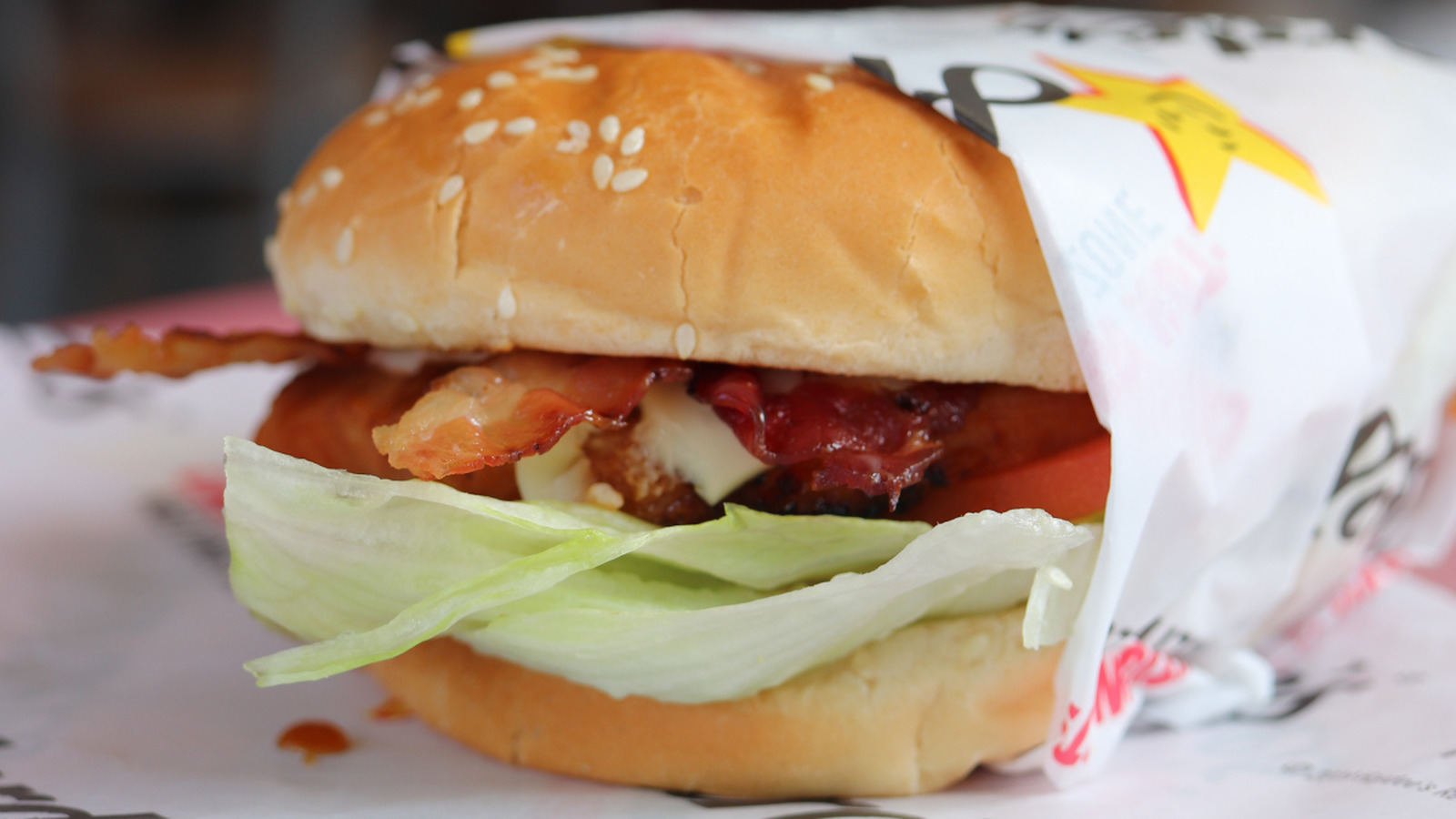
Times are tough for the fast food industry. As chains that were once household names struggle to survive, a classic burger joint from the South is making moves.
Mashed – Fast Food, Celebrity Chefs, Grocery, Reviews

Alaska Air National Guard rescue personnel, assigned conduct a search and rescue mission in support of storm response operations over Western Alaska on Oct. 13, 2025., The villages of Kipnuk and Kwigillingok were evacuated in the aftermath of ex-Typhoon Halong, and other communities suffered damages as well. The region’s residents worry more storms like ex-Typhoon Halong in 2025 and ex-Typhoon Merbok in 2022. (Photo provided by the Alaska AIr National Guard)
A year after a Pacific storm largely destroyed villages in Alaska’s Yukon-Kuskokwim Delta and prompted the biggest air evacuation in state history, people in the region are bracing for repeat occurrences.
Among them is Johnny Andrew Jr. of Kwigillingok, a Yup’ik village of about 400 people, most of whom were evacuated when the storm hit. Calling into a special radio program aired by Bethel-based public broadcasting station KYUK last week, Andrew said in the past, people assumed that massive storms like ex-Typhoon Halong would be rare, separated by several years.
That is no longer a safe assumption, said Andrew, who is one of the small number of residents still in Kwigillingok and trying to clean and restore the village.
“Our world is changing, so not the same as what it used to be back then,” he said in his call to KYUK.
Three years before Kwigillingok, Kipnuk and other Yukon-Kuskokwim villages were wracked by ex-Typhoon Halong, a previous storm, ex-Typhoon Merbok, slammed into Alaska. It affected almost all of Western Alaska, but its track was a little farther north, with particularly dire impacts to the Norton Sound and Bering Strait region,
Monica Price, a member of a Yup’ik dance group that performed at last week’s Indigenous Peoples Day celebration at Alaska Pacific University in Anchorage, said people around the region are worried.
“How do we prepare for something like this? Because if it’s not Kipnuk or Kwig, it’s going to be someplace else,” said Price, who is from Bethel.
The term “ex-typhoon” is specific to a type of Pacific storm. Although the official meteorological name may seem benign, ex-typhoons can be more consequential in certain circumstances than the typhoons that spawn them.
Typhoons are cyclones caused by heat and water evaporation. They become ex-typhoons when they leave the tropics — and when they do so, they expand dramatically.
Typhoons and hurricanes have very strong winds that are concentrated in relatively small geographic areas. Ex-typhoons tend to have winds with peak levels that are not quite as strong, but they are spread over much farther distances. While typhoons draw their energy from warm ocean waters, ex-typhoons get their energy from the differences in air temperatures in the atmospheric layers. The contrast between warm and cold air causes the transition to broad-ranging ex-typhoons.

Whether ex-typhoons will become more frequent or more powerful is a complicated question, said Brian Brettschneider, a climate scientist with the National Weather Service.
Ex-typhoons in the Pacific waters west of Alaska are actually plentiful, though the vast majority do not reach past the Aleutians to the Western Alaska mainland, much less cause damage there. In the last 50 to 75 years, there have probably been 100 former typhoons that have had an impact in Alaska, Brettschneider said.
Just this month, ex-Typhoon Choi-wan prompted an alert about higher winds and water levels in the Bering Strait’s Seward Peninsula.
“The disasters unleashed by ex-Typhoon Merbok in 2022 and ex-Typhoon Halong last year involved “a lot of moving parts,” Brettschneider said.
“You need a confluence of events to happen simultaneously to have a Halong or a Merbok to impact Alaska,” he said.
Those events converged for both of those two ex-typhoons, said Rick Thoman, a scientist with the Alaska Center for Climate Assessment and Preparation at the University of Alaska Fairbanks.
In the case of Merbok, the typhoon formed far east of the normal spot, and was fueled by much-warmer-than-normal waters.
In the case of Halong, the ex-typhoon became especially strong before it slammed into Western Alaska. It took an unusual track, and as it moved, “everywhere was warmer than normal, and that increased the intensity,” Thoman said.
The statistical record does not show a pattern of an increasing number of fall storms or of increasing storm intensity, Thoman and Brettschneider said.
Researchers in the future might be able to look back and see a pattern that hasn’t emerged yet, Thoman said.
“The environment that these storms are occurring in is different,” he said.
Higher North Pacific temperatures that have persisted since about 2020, even discounting effects from El Niño cycles, he said.
Meanwhile, permafrost thaw has softened coasts and riverbanks, making them erode more easily. Permafrost thaw has also caused the ground to sink — at the same time that ocean levels are rising, adding volume to storm surges. Delayed sea ice formation leaves coastal areas more exposed to wave action.

Those climate change effects make Western Alaska, including the Yukon-Kuskokwim region, more vulnerable to fall storm damage, whether from an ex-typhoon or from a more typical Bering Sea storm.
“What really matters is that we’re going to have more events that produce catastrophic damage,” Thoman said.
This year, there is a curveball in the storm picture: an ultra-strong El Niño cycle, with record-high sea surface temperatures in the central Pacific Ocean and associated amplification of tropical Pacific storms.
Both Thoman and Brettschneider have been fielding frequent questions about what to expect this season in Alaska from El Niño.
It is hard to say whether this year’s El Niño will cause ramp up storm damage risks in Western Alaska because the cyclical phenomenon has some contradictory features, the scientists said.
During strong El Niños, tropical cyclones tend to be farther north and east, thus closer to Alaska, Brettschneider said. At the same time, there isn’t as much cold air coming from Siberia during a strong El Niño, meaning a lack of one of the ex-typhoon ingredients. The temperature and density difference between warm tropical air and colder continental air is the factor that will “supercharge” a decaying typhoon into a powerful ex-typhoon, he said.
For Thoman, who recently traveled to Bethel to participate in the KYUK call-in program and make other local presentations — including one specifically about El Niño — said worries about effects in that region are understandable.
“People are very sensitive to big storms,” he said. So when they read or hear about “the super-duper-duper El Niño, it’s perfectly reasonable to be like, ‘Well, how is this going to affect me? Do I have to be worried about yet another terrible storm?’”

Based on past history with strong El Niño cycles, Alaskans across the state can expect a warmer late fall and winter, with precipitation falling as rain rather than snow, according to Brettschneider’s analysis.
Whatever the current season holds, big changes in the landscape in the Yukon-Kuskokwim region are already evident.
Burt Paul, one of the Kipnuk residents who has stayed in the damaged village of about 700 people to help with the cleanup and recovery work, said storm-driven mud and clumps of terrain remain spread widely.
“The surface of the land, it’s like a fresh crust on the land,” he said.
The region’s hydrology had changed, too, Paul said.
Major lakes have drained a lot of their water, leaving them shallow, difficult and probably worse for fish. “All summer, the level is low, like bathwater,” he said.
Chunks of land loosened by the ex-typhoon have also drastically altered river flows, he said. “Some rivers are so clogged with these patches of surface material, they’re unable to receive water,” he said.
For those still in the village, regular routines are now altered, as he described it. People who tried to use the rivers and lakes for traditional subsistence food-gathering ran into problems, he said, and usual practices may have to be adjusted in the future — for example, switching nets for hooks.
“We might have to change some strategies to fish,” he said.

Reading Time: 2 minutes
Nick Reiner had some unexpected company in the courtroom as he went in front of a judge in the case involving the deaths of his famous parents.
The 33-year-old son of filmmaker Rob Reiner and photographer Michele Reiner appeared visibly restless during his latest hearing in Los Angeles on Tuesday.
But he had some surprising support, as at least two female supporters showed up to watch the proceedings.
According to Page Six, the women were seated in the courtroom gallery and did not appear to be immediate members of the Reiner family. Their presence offered a striking contrast to the grim allegations hanging over the case.
Reiner is charged with two counts of first-degree murder in connection with the December 2025 stabbing deaths of his parents at their Brentwood home. He has pleaded not guilty.
Reiner reportedly appeared more anxious and alert than he had during previous court appearances, rocking back and forth in his chair as the hearing unfolded.
He wore handcuffs on both wrists, although they were not connected to each other or attached to his chair. Reiner also sported a new look, having cut his hair and shaved most of his facial hair while keeping prominent sideburns.
Page Six reported that he looked directly at Judge Sam Ohta and his public defender, Kimberly Greene, when responding to questions.
The hearing continued discussions surrounding the grand jury transcripts and exhibits connected to Reiner’s indictment. Ohta again postponed the matter, setting January 13 as the next hearing date.
The judge indicated that the defense deserved additional time to prepare, noting that Reiner had been indicted without his attorney’s knowledge. The question of whether the grand jury materials should be made public remains an important issue in the case.
Reiner faces allegations involving multiple murders, “lying in wait,” and the use of a knife. Prosecutors have already ruled out seeking the death penalty if he is convicted, leaving life in prison without the possibility of parole as the maximum potential sentence.
The case has also raised questions about Reiner’s mental health and history of drug addiction. He was diagnosed with schizophrenia before the killings, according to previous reporting, and has remained jailed without bail since his arrest.
His surviving siblings, Jake and Romy Reiner, have supported keeping the grand jury materials sealed, seeking to limit the public release of sensitive information surrounding their parents’ deaths.
For now, however, the courtroom scene offered another notable detail: While the Reiner family stayed away, two women appeared willing to spend part of their day offering moral support to an accused killer.
We will have further updates on this court case as no details become available.
Nick Reiner Receives Support From ‘Female Fans’ During Court Appearance was originally published on The Hollywood Gossip.
The Hollywood Gossip