Categories
Uncategorized

Are transgender sports bans really about protecting women? Survey data tells a different story

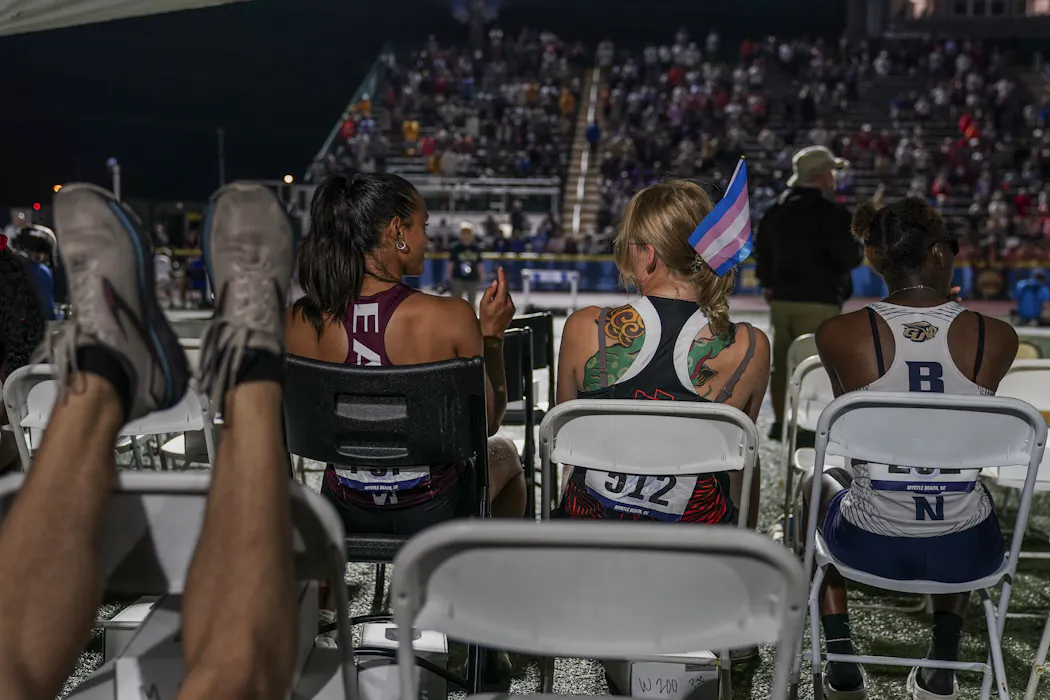
Bans on transgender athletes like sprinter Sadie Schreiner, center, are often framed as protecting women. Photo by Jahi Chikwendiu/The Washington Post via Getty Images

Relatively few transgender athletes participate in high school and collegiate sports. Still, since 2020, 27 states have passed laws banning them from participating in sports based on their gender identity.

Just weeks after his second inauguration in 2025, President Donald Trump signed an executive order prohibiting transgender women and girls from participating in women’s sports in K-12 schools, colleges and universities that receive federal funds. Supporters of these bans often argue that they protect women and girls from unfair or unsafe competition. As Trump said at the signing ceremony: “we will not allow men to beat up, injure and cheat our women and our girls.”

WNBA star Sophie Cunningham offered a similar rationale in a July 2026 ESPN profile: “I want to protect young girls in a locker room, or young girls in sport who shouldn’t have to go against biological men.”

These statements suggest that those in favor of bans are motivated by their admiration for female athletes. But are Americans with more positive views of women and women’s sports more likely to oppose transgender women competing in women’s sports?

We are political scientists who study public opinion toward transgender Americans. To understand how attitudes about gender shape Americans’ views on policies that adversely affect the rights of transgender Americans, we asked 1,000 American adults about their support for restricting the participation of transgender athletes in sports. We also asked about their feelings toward women as a group, their endorsement of sexist stereotypes and their attitudes toward policies that promote gender equity, such as Title IX, the law requiring schools that receive federal funding to provide women and girls with equal opportunities to participate in athletics.

A child in a purple swimsuit, seen from behind, sits at the edge of a pool beside yellow swim fins.
A transgender swimmer in Utah in 2021, before the state banned trans girls from girls teams.
AP Photo/Rick Bowmer

Sexism and support for bans

Our survey found significant public opposition to transgender athletes playing on teams that match their gender identity. When asked whether they “support or oppose a bill that prohibits transgender youth from joining school-sponsored sports teams that match their gender identity,” about half of respondents supported the restriction.

But admiration and support for women do not translate into greater support for excluding transgender people. In fact, individuals with the most negative views of women and gender equality are the most likely to support these bans.

We asked respondents to rate how they feel about women on a scale from 0 to 100. Researchers have used this tool, known as a feeling thermometer, for decades to measure how Americans feel about different groups, including people of color, gay and lesbian people and members of the opposite political party. Among respondents with the most positive views of women, 45% supported restricting transgender sports participation; among those with the most negative views of women, 58% supported restrictions.

We also tested whether more sexist views predicted support for these bans. To measure sexism, we asked respondents how much they agreed or disagreed with three statements about women: “Women seek to gain power by getting control over men,” “Women are too easily offended” and “Women exaggerate problems they have at work.” Social scientists commonly use these questions to measure “hostile sexism,” a set of stereotypes in which women are portrayed as incapable, manipulative and controlling. Among the least sexist respondents, 28% supported banning transgender people from sports matching their gender identity; among the most sexist, 79% did.

If admiration and support for female athletes drive support for prohibiting transgender women from participating in women’s sports, then those who favor Title IX should also favor bans. Instead, 43% of Title IX supporters favored restrictions, compared with 70% of Title IX opponents.

Our findings – that negative attitudes toward women and opposition to Title IX predict support for banning transgender women from sports that match their gender identity – hold even after accounting for other factors like partisanship, ideology and demographic characteristics.
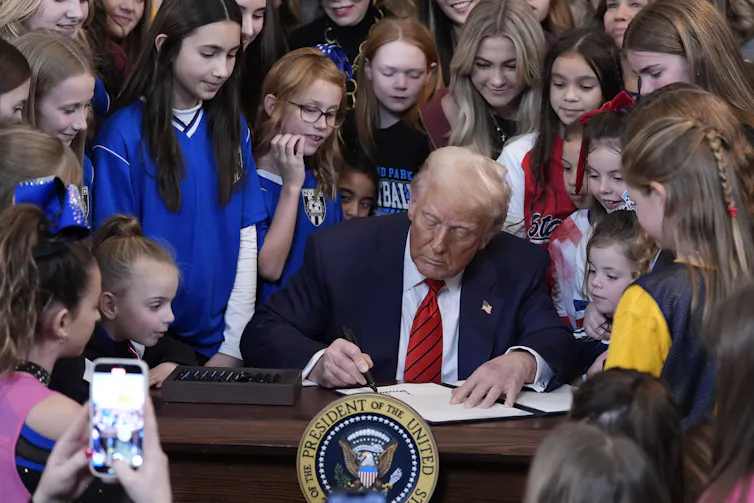
Donald Trump signs a document at a desk bearing the presidential seal, surrounded by girls and young women, some in sports jerseys
President Donald Trump signs an executive order barring transgender female athletes from competing in women’s or girls’ sporting events, on Feb. 5, 2025.
AP Photo/Alex Brandon

The protection argument

The debate over transgender athletes is often framed as a matter of protecting women. Our findings complicate that narrative: People with the most negative attitudes toward women – and toward policies that protect women’s sports – are the most supportive of banning transgender women from women’s sports.

That does not mean that everyone who supports a ban is motivated by hostility toward women. But the consistency of these findings makes it difficult to accept that protecting women is a primary reason why Americans support these restrictions.

The Conversation

Jesse Rhodes has received funding from the National Science Foundation and the Spencer Foundation.

Lane Cuthbert and Tatishe Nteta do not work for, consult, own shares in or receive funding from any company or organization that would benefit from this article, and have disclosed no relevant affiliations beyond their academic appointment.

​Politics + Society – The Conversation

Categories
Entertainment

Convicted Serial Rapist Andrew Luster Out of Prison Despite 124-Year Sentence

Reading Time: 3 minutes

Statistically, the vast majority of rapists do not even get a conviction — let alone a prison sentence.

There are exceptions. Serial rapist Andrew Luster received a conviction and a 124-year sentence.

It has not been 124 years, or even a fifth of that.

Luster is now out of prison. How did this happen?

Convicted serial rapist Andrew Luster.
Convicted serial rapist Andrew Luster is now out on parole, leaving communities asking how this happened. (Photo Credit: State of California Department of Justice)

This infamous case dates back a quarter of a century

In 2000, authorities in LOCATION arrested Luster after a college student reported being drugged and raped at his home.

Investigators who searched his home found that not only had he dosed women with GHB and raped them while they were unable to consent and unlikely to remember the crime, but he had also made video recordings — trophies of his crimes.

Luster’s case gained media attention because of the evidence that he himself had preserved, but also because of his family wealth. He is the great-grandson of cosmetics mogul Max Factor.

When he paid his $1 million bail, he also skipped town instead of showing up to defend himself at trial.

As a result, the court convicted Luster of 86 felony counts en absentia in 2003 while he hid out in Puerto Vallarta, Mexico. His sentences, should he be found and brought into custody, would be consecutive — meaning 124 years behind bars.

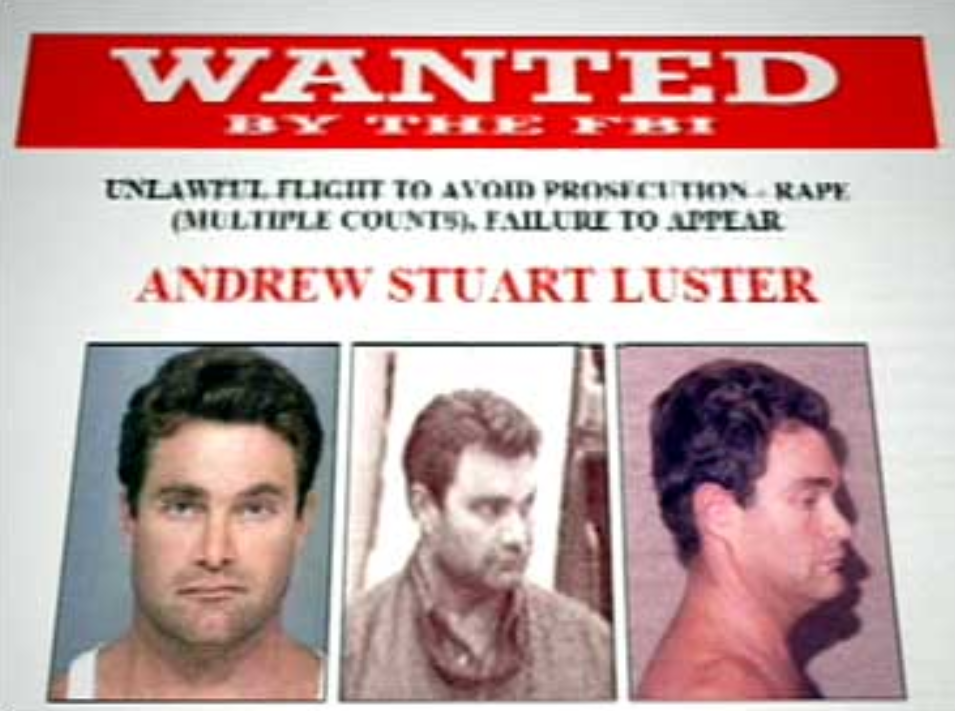
Eventually, due to his flight from justice, the FBI issued a warrant.

It was, oddly enough, Duane “Dog The Bounty Hunter” Chapman who captured him in June 2003.

After both parties were arrested by authorities in Mexico. Luster was transferred to US custody. Chapman ended up fleeing Mexico to the United States.

In March 2013, when Luster had served less than a decade of his richly-deserved sentence, the verdict was set aside on the grounds that the original court had failed to explain why the sentences were to be served consecutively. (That sounds self-explanatory — as Luster had drugged and raped multiple victims, all of whom deserve justice.)

The court rebuffed the rapist’s attempts to overturn his convictions. However, he received a new sentencing hearing. His new sentence was for only 50 years behind bars.

A wanted flier for serial rapist Andrew Luster.
After Andrew Luster fled to Mexico, the FBI issued a warrant for his arrest. (Image Credit: CBS News)

From 124 years to 50 years to about 20, somehow

If you will check your calendars and do some simple calculations, you may find that it has not been even close to 50 years.

Luster was denied parole repeatedly in recent years. Unfortunately, it did not last.

On October 11, 2026, Luster was released

He is now reportedly residing in the area of Glendora, California.

Neighbors are unhappy. The mayor is unhappy. And the people of California are deeply dissatisfied to know that a serial predator who certainly has not become a better person during incarceration is out free after serving less than one-sixth of his original sentence.

Some blame Proposition 57, a 2016 referendum in California that expanded early releases for non-violent offenders.

Luster is a serial rapist and thus a violent offender. Then-governor Jerry Brown specifically highlighted his case to note that he would be ineligible under this law.

A lot of people are simply flabbergasted that the system that should be protecting the American people is incarcerating people who have never harmed anyone while releasing monsters like Luster.

There is a lot of debate over the best way to handle rapists. These predators rely upon people mistakenly believing that they made mistakes or misunderstood. It’s likely that Luster might have received a lighter sentence or no convictions at all if he had not personally recorded his crimes.

Whether someone believes in abolition or expanding the death penalty or anything in between these extremes, we can hopefully all agree that unleashing Luster back into society is simply not the answer.

Convicted Serial Rapist Andrew Luster Out of Prison Despite 124-Year Sentence was originally published on The Hollywood Gossip.

​The Hollywood Gossip

Categories
Entertainment

We Ranked This Classic American Beer Higher Than Miller Lite And Budweiser

Some of the most recognizable domestic beers aren’t exactly the most interesting, which is why we preferred another home-spun classic over bigger brands.

​Mashed – Fast Food, Celebrity Chefs, Grocery, Reviews

Categories
Politics

Democrats’ Musk-ask questions

Democrats’ Musk-ask questions

lead image

​Politics

Categories
Uncategorized

Open Channels FM: More Code, More Problems? What AI-Generated Software Means for Us

AI tools have simplified app creation, enabling rapid prototyping. However, the challenge now lies in discerning which ideas are genuinely valuable to users. As anyone can create apps quickly, the focus should shift from mere production to understanding user needs and ensuring the apps solve real problems to avoid mediocrity.

Categories
Entertainment

Yes, You Can Afford a Vacation Thanks to Hilton

hilton thumbnail.jpgWith skyrocketing prices on everything from groceries to gas, you might think a lavish vacation is out of your budget. The truth is, it isn’t.
Hilton all-inclusive resorts offer excellent value on…
​E! Online (US) – Top Stories

Categories
Entertainment

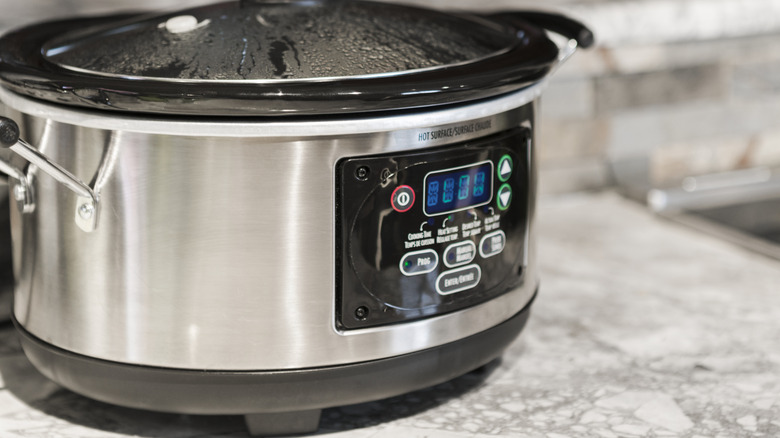
How To Clean Stubborn Grease And Grime Off Your Crock-Pot Heating Base

Cleaning the heating base of your Crock-Pot is an essential part of maintaining the appliance. However, you have to be careful when tackling that task.

​Mashed – Fast Food, Celebrity Chefs, Grocery, Reviews

Categories
Politics

JB Pritzker’s midterm strategy wins the attention of Black and Hispanic Democrats

CHICAGO — JB Pritzker is pouring tens of millions of dollars of his own money into boosting Black and Hispanic candidates this cycle. That could help him win over critical voters in 2028.

The billionaire Illinois governor — who’s also considered a potential presidential contender — is investing at least $38 million in battleground races, according to a person familiar with the governor’s political strategy granted anonymity to discuss details.

Much of that spending has gone to candidates of color, some of whom haven’t drawn much other investment from national Democrats. Pritzker is also investing in races in all six early states on the Democratic presidential nominating calendar, which was rearranged earlier this year to give prize spots to five states with significant Black or Hispanic communities: South Carolina, Nevada, New Mexico, Virginia and Michigan.

Asked by POLITICO about how his midterms spending could lay the groundwork for a presidential campaign, Pritzker said he’s “focused on winning in 2026.”

But some of those receiving major infusions from Pritzker say it should earn him a serious look in 2028.

“Governor Pritzker is playing a very important role” in the party, said Rep. Shomari Figures, a Black Democrat facing an uphill fight in Alabama who has gotten an assist from Pritzker’s newly formed super PAC, Ready for the Fight. “He actually cares and is … willing to invest in districts where minority candidates have a good shot if they have the right type of support. I think that’s an important element of any leadership.”

Pritzker said Ready for the Fight’s strategy focuses on GOP-leaning districts that would normally be “out of sight for Democrats” but have become competitive in a favorable midterm environment. 

Figures is fighting for reelection in a district Republicans redrew to make it harder for a Democrat to win by decreasing the Black population, after the Supreme Court gutted the Voting Rights Act this past spring.

When that court decision came down, Figures said Pritzker was one of the first people to call him to offer help.

“The fact that he reached out and engaged us through that lens with that level of knowledge about what was happening in Alabama meant a lot to us,” Figures said.

Pritzker is spending $1.6 million for Figures, $1.9 million to boost Tennessee state Rep. Justin Pearson, another Black candidate running in a newly gerrymandered district that includes part of Memphis, and has put $1.3 million behind Arkansas Democrat Chris Jones in his race against Rep. French Hill (R-Ark.) in Little Rock, making him the largest Democratic spender besides the Democratic Congressional Campaign Committee in all three districts.

Pritzker is also the largest individual donor to Texas Democrat Gina Hinojosa’s gubernatorial campaign, personally contributing $200,000 before committing another $1 million earlier this month. The latter donation came around the same time the Democratic Governors Association also contributed $1 million. Hispanic officials and lawmakers have been ramping up the pressure on the group’s chair, fellow 2028 hopeful Kentucky Gov. Andy Beshear, to invest more in Texas.

Pritzker called Hinojosa an “outstanding person.”

“The opportunity for her to win and for Democrats to win as a result of her winning is tremendous,” Pritzker told POLITICO at a Thursday press conference. “From my perspective, we all ought to be helping somebody like that to overcome the odds.”

And while he declined to criticize national Democrats’ strategic decisions not to spend for some candidates in tough races facing a deluge of GOP outside money, he made clear he was looking to make up for that lack of funding.

“If I were running in one of those districts, and I’m not getting dollars that I see going to other districts, I would feel frustrated,” Pritzker said. “There’s only so much you can do when you’re being outspent 3 to 1 or 4 to 1 nationally, and so I’m trying to do my best to fill in some of that wherever I can.”

Pritzker is not the only potential 2028er looking to woo politically powerful Black and Hispanic communities, and his day job and his own reelection bid keeps him away from the national trail — unlike some of the other senators and governors who’ve been crisscrossing the country for months. But what he lacks in time, he makes up for in money.

His spending strategy is catching the attention of senior Black Democratic leaders.

“People tend to take notice of the people who take notice of them,” said South Carolina Rep. Jim Clyburn.

Clyburn said he takes Pritzker “seriously” as a potential presidential candidate but cautioned that Black voters and organizers in his home state, where Pritzker recently addressed the state NAACP’s annual convention, likely won’t be swayed by campaign contributions alone.

“We are going to take measure of candidates, not based upon how deep their pockets are, but we’re going to take measure of how deep their commitments are to those things deemed important in the African American community,” he said.

Still, the donations are helping the billionaire longtime Democratic donor and two-term governor forge new allies in key communities that could provide a boost come primary season.

“I appreciate Governor Pritzker’s willingness to invest in places others have written off,” said Jones, who also thanked the DCCC forrecently adding him to their list of targeted races. “Convincing people a race is worth investing in has often been an insurmountable barrier for Black candidates.”

Pritzker’s PAC spent $2.8 million for New Mexico Democratic Rep. Gabe Vasquez, and the governor made a $400,000 personal contribution into a super PAC backing Nevada gubernatorial candidate Aaron Ford, a Black candidate running in a heavily Hispanic early-voting state.

But his biggest investment of the cycle was to boost Illinois Lt. Gov. Juliana Stratton, who he picked as his 2018 running mate when she was a little-known state representative, then invested $10 million to help her win her U.S. Senate primary this spring.

The move created some tensions: Pritzker’s endorsement of Stratton helped lift her 2026 Senate campaign significantly over two other candidates — including Rep. Robin Kelly (D-Ill.), another Black woman who has had a strained relationship with Pritzker over the years. That frustrated several members of the Congressional Black Caucus, though he’s sought to mend fences since. Clyburn, who endorsed and campaigned for Kelly, said that race won’t “dictate future relationships when it comes to putting our party in the best position to win the elections in 2028.”

And ultimately, Stratton’s ascendance is a significant step in Pritzker’s outreach to Black voters nationally. He will be credited with helping send just the sixth Black woman ever to the U.S. Senate after her likely victory in November. She could be a key 2028 surrogate should he run for president.

“He really does have a platform to raise awareness of critical races that people might not otherwise pay attention to,” Stratton said. “I’m really grateful for that.”

CORRECTION: An earlier version of this report misstated the nature of DGA’s donations to the Texas governor’s race; it was made independently from Pritzker’s.

​Politics

Categories
Politics

Retiring Republican Senator warns GOP: Trump’s coalition may not last

Retiring Republican Senator warns GOP: Trump’s coalition may not last

lead image

​Politics

Categories
Sports Fox

NFL Week 6 All-Stars: Welcome Back From The Bye, Kenneth Walker; Hello, Titans!

Our Week 6 All-Stars might be the most random list of players we’ll have in our weekly All-Star series this season. Three pass-catchers made our All-Star team this week despite losing efforts. The AFC South, widely viewed as one of the NFL’s worst divisions, has plenty of representation on this week’s All-Star team as well, with three Tennessee Titans players making the cut following their first win of the season. The battle for the spot at quarterback was also between a pair of AFC South rivals. However, we have one player who has remained a mainstay on this list: Kansas City Chiefs running back Kenneth Walker III. For the fourth time this season, Walker has been named one of our weekly All-Stars as he continues to dominate in his first year in Kansas City. Can he make it onto the roster again when he faces his former team next week? We won’t know that answer until next Tuesday. So, let’s take a deeper dive into our Week 6 All-Stars. The top two choices were both in London, and Jacksonville Jaguars quarterback Trevor Lawrence had four touchdown passes to C.J. Stroud’s three.  But the Houston Texans flew home with the win, so he gets the nod. Stroud threw for 312 yards, including 34 on three passes to newly acquired Marvin Harrison. New England Patriots star Drake Maye threw for three touchdowns, but he earned this spot two weeks in a row, and he was against the New York Jets. Houston, meanwhile, has won two straight after an 0-4 start, so the head-to-head tiebreaker is huge as it tries to catch up to Jacksonville. Kenneth Walker is a regular on here, and he was an easy call, rushing for 128 yards and two scores in the Kansas City Chiefs’ win over the Los Angeles Chargers. He already had his bye week and still leads the NFL in rushing. He’s now on pace for 2,261 yards, putting him on track to set the NFL’s single-season record. We could have gone with Buffalo Bills star James Cook for the second spot, but Chuba Hubbard stepped up for the Carolina Panthers, rushing for 120 yards and a touchdown in their win over the Philadelphia Eagles. Hubbard went all of last year without a 100-yard game, but now has gotten 120-plus in two straight weeks. It was a rough week for wide receivers, with many of the best performances coming in losses and barely any with more than one touchdown. Malik Nabers got most of his yards in that bonkers fourth quarter when J.J. McCarthy threw for 243 yards, but he finished with 12 receptions for 165 yards in a monster game as the New York Giants nearly pulled off a wild comeback against the New Orleans Saints. Seattle Seahawks star Jaxon Smith-Njigba is on here all the time, so 134 yards and zero touchdowns won’t make the cut this week. Instead, we’ll give another losing-effort nod to Tre Tucker, who had 97 yards and two touchdowns as the Las Vegas Raiders tried to rally against Buffalo. I shamelessly crowdsourced this, posting a poll on X with four compelling candidates, and Isaiah Likely’s 99 yards and a touchdown in a loss won handily. This continues to be the Year of the Tight End, so you have two-touchdown days by Carolina’s Tommy Tremble, Atlanta Falcons standout Kyle Pitts and Houston Texans veteran Foster Moreau. We also strongly considered Colston Loveland going for 65 and a score in the Chicago Bears’ win. This is another week where we could do our version of 12 personnel and recognize two tight ends at the expense of a second receiver. A bit of a surprise here, but New Orleans gave up zero sacks and only two tackles for loss in 68 snaps against a vaunted Giants defensive front. The Saints also paved the way for 175 rushing yards on 38 carries, so props to the starting five (l-r) of Asim Richards, David Edwards, Erik McCoy, Cesar Ruiz and Taliese Fuaga. They actually played eight OLs, with rookie Jeremiah Wright playing more snaps than Ruiz (knee injury) and two other backups getting in late. Seven teams gave up no sacks, so tough competition this week. Light week for the defensive front, and really, how often do we get to put the Titans on here? Jeffery Simmons had two sacks, a forced fumble and recovery and six total tackles in the Titans’ win over the Colts. Nick Herbig got his first two sacks of 2026, part of a five-sack day for the Pittsburgh Steelers in their comeback win over the Tampa Bay Buccaneers. Had the Bucs won, we could have gone with defensive lineman A’Shawn Robinson, who has two picks this year after totaling one in his NFL career before this season. The Cleveland Browns are validating themselves with every win, and a division victory over the Baltimore Ravens was very defense-driven. Carson Schwesinger had 13 tackles and a forced fumble, and that forced fumble came off a Derrick Henry carry in the fourth quarter. That set up the tying touchdown. Schwesinger’s top five in the league in tackles in his second season and already a core leader on a Browns’ defense that’s ninth in points allowed. We could have also gone with Denver’s Alex Singleton, at the heart of the Broncos’ big win against the Seahawks. If I were really a company man, I’d have pulled off a rare double with the Bears’ Kyler Gordon and the Steelers’ Jalen Ramsey, then had the graphic show FOX mainstay Gordon Ramsay. I think the different spelling scared me off, though. But Gordon had three sacks and two forced fumbles in 17 snaps, while Ramsey had two sacks, including one on the final play in overtime. However, we’ll give this spot this week to Travis Hunter, who did something that hasn’t been done in a game since 2002. Hunter had an interception and a touchdown catch in the fourth quarter in the Jaguars’ London loss to the Texans, becoming the first player to do that in a game since Hall of Famer Brian Dawkins. Wait, more Titans? I can’t stop watching the blocked punt that keyed the Titans’ first victory of 2026. Chestnut pushed Indianapolis Colts safety Jonathan Owens (that’s Simone Biles’ husband) backwards so completely that Owens blocked the punt by Rigoberto Sanchez, and Oladejo picked up the loose ball and returned it for a touchdown and their first lead in the fourth quarter. Tennessee was down 13-0 at one point and won despite just 186 yards of total offense, the second-fewest in 92 wins across the NFL this season.​Latest Sports News from FOX Sports