After arriving 10 weeks early and spending 5 weeks and 5 days in the NICU, Bond Leo is finally home with his parents — and his grandmother is overjoyed. Continue reading…The Boot – Country Music News, Music Videos and Songs









After arriving 10 weeks early and spending 5 weeks and 5 days in the NICU, Bond Leo is finally home with his parents — and his grandmother is overjoyed. Continue reading…The Boot – Country Music News, Music Videos and Songs

McDonald’s McNuggets are McIconic for a reason, but if you don’t feel like hitting up the drive-thru, stock up on this brand at the grocery store instead.

Food Republic – Restaurants, Reviews, Recipes, Cooking Tips

By: James Brooks, Alaska Beacon

Incorrect information provided by a Google AI overview caused a Kodiak woman to hunt snipe illegally on Sept. 5, according to a citation filed this week at the Kodiak district court.
Writing in an affidavit attached to the citation, Alaska Wildlife Trooper Alex Wick said Weaver called troopers to self-report the violation.
“Christina stated that she Googled ‘Snipe season’ on her phone and that, according to Google, snipe season began on September 1st,” he wrote.
Based on that information, she hunted three snipe but became suspicious after learning that duck season didn’t open until Oct. 8.
Snipe are small game birds common in Alaska, Canada and the northern Lower 48.
“After conducting her own research, she learned that snipes are not legal to take under the general season until October 8th. Christina then contacted dispatch to turn herself in,” Wick wrote.
He said he performed a Google search identical to Weaver’s and received identical incorrect information.
Google did not respond to an email seeking comment on the incorrect information provided by its software. The platform provides an immediate artificial intelligence generated summary of search findings.
“I feel terrible, and I have a lot of shame with it. Obviously, that’s why I immediately self-reported once I got home and dived into the regs,” she said by phone on Friday. “It’s incredibly embarrassing.”
Austin McDaniel, a spokesman for the Alaska Department of Public Safety, said the agency doesn’t keep track of cases involving false information provided by AI software.
“This is the first time that I think we have seen AI cited,” he said.
The one source of truth when it comes to hunts is the Alaska Department of Fish and Game’s regulations and emergency orders, McDaniel said.
“I expect we’ll see more of this type of thing in the future,” he said of AI being at fault.
McDaniel said Weaver acted completely correctly once she learned about the AI-caused mistake. Self-reported hunting violations are punished much less severely than ones uncovered by troopers.
“The potential consequences for self-turning in versus being caught can be pretty dramatic,” he said.
Weaver pleaded no contest to the citation on Friday and was fined $150.
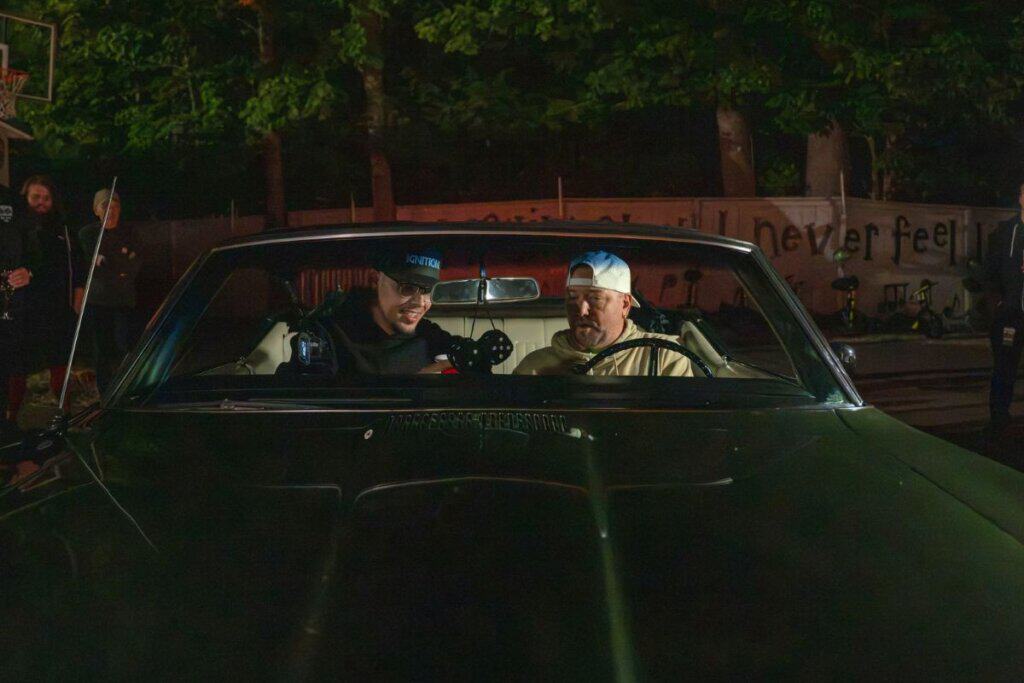
Chase Matthew first fulfilled his dream of joining Jason Aldean on the road back in 2024, marking the first time he had ever toured with a major country act. This year, with a growing fanbase, more music and more success under his belt, he got the opportunity to return as direct support for Aldean on the Songs About Us Tour. To commemorate what those opportunities have meant to him, Matthew presented Aldean with the perfect end-of-tour gift.
Just days after the 22-city trek came to a close, the rising country star took to Instagram to show the world what he picked out for his tourmate as a token of appreciation. Since touring with Aldean meant so much to Matthew, he knew this present had to be special and personal.
“Touring with Jason has been a full-circle thing for me…Getting to come back out this year as direct support made it even more special, so I knew I had to get him an end of tour gift that represented how much it meant to me. What the heck do you get a guy that has everything?” Matthew asked himself.
After “a lot” of thought and brainstorming ideas that didn’t quite work out, he ultimately decided to hunt down a new set of wheels for Aldean that also paid tribute to one of his biggest hits.
“I landed on a vintage hot rod. I knew it had to be a ’68 because of the line in ‘My Kinda Party,’” he explained, referring to the lyrics of the opening verse, “I got the cover off the ’68.”
He continued, “When I found this Pontiac LeMans on Facebook Marketplace (are we surprised?), I knew it was the one. I’ve spent the last couple months getting it dialed in and putting my own touches on it. To me, nothing screams badass country singer and AMERICA quite like a ’68 Pontiac convertible, so here’s to pullin’ the cover of the ’68!”
The “All My Exes” singer ended his caption by expressing his gratitude to Jason Aldean for all the fun, wisdom and valuable experiences he’s shared with him over the years.
“Thank you @jasonaldean for everything you have taught me, and the inspiration you have been to me and my career!”
Chase Matthew’s time on the Songs About Us Tour may have come to a close, but he still has one more show on the calendar with Aldean in 2026. On December 11, he will take the stage at Allegiant Stadium in Las Vegas, where he’ll warm up the crowd ahead of the final stop on Jason Aldean and Luke Bryan’s co-headlining Double Down Tour 2026.
The post Chase Matthew Found Jason Aldean a ’68 Pontiac on Facebook Marketplace as the Perfect End-of-Tour Gift appeared first on Country Now.
Country Now

Reading Time: 2 minutes
It’s generally not a good idea to criticize Taylor Swift.
That’s not because she never deserves it — everyone needs to be taken down a peg now and then — rather, it’s because her legion of rabid fans will stop at nothing to destroy anyone who speaks ill of their queen.
But Todd Rundgren is a member of the Rock and Roll Hall of Fame with an honorary doctorate from the Berklee College of Music, so he has reason to be confident in his opinions.
And the man is not a fan of Taylor’s.
In fact, Rundgren believes that Swift might have single-handedly “ruined music.”
Those are his words, people! Don’t shoot the messengers!
“There’s an argument to be made that she ruined music,” Rundgren told Vulture in a recent interview.
“It’s an understandable phenomenon. It’s just that, to me, Taylor Swift is the apotheosis of mediocrity.”
Rundgren went on to argue that women control the music industry these days because young men spend all their money on video games.
That argument doesn’t make a ton of sense, as no one really buys music these days, but the man was on a roll:
“That left the music market with, ‘Well, where do we go here?’” said Rundgren.
“And they said, ‘Well, there’s all these young girls and they’ve got their allowances, too.’”
He concluded his rant by listing the many ways in which Taylor is not great.
“Taylor Swift doesn’t do anything particularly great except grow hair,” he added.
‘“She’s not a great singer. She’s not a great songwriter. She’s not a great dancer. She’s a role model for what was a very young generation of women, and now for those women’s daughters as well, because it’s mothers and daughters going to Taylor Swift shows.”
Rundgren’s comments come on the heels of four new songs from Taylor that haven’t been terribly well-received.
Even diehard Swfities have been critical or indifferent regarding the tracks on The Life of a Showgirl: Encore.
But that doesn’t mean that they’ll be forgiving of Rundgren’s comments.
In fact, dude might want to enter some sort of protection program before it’s too late.
Taylor Swift ‘Ruined Music,’ Says Rock Legend Todd Rundgren was originally published on The Hollywood Gossip.
The Hollywood Gossip

Students arrive for the first day of school at Harborview Elementary School in Juneau on Aug. 15, 2025 (Photo by Corinne Smith/Alaska Beacon)
This story was originally published by Chalkbeat. Sign up for Chalkbeat’s free weekly newsletter to keep up with how education is changing across the U.S.
Like many parents, Arielle Roth has concerns about her children’s screen time at school. But unlike her peers, she’s in a position to influence the issue at nearly every school in America.
Roth heads an obscure federal agency within the Commerce Department that serves as the president’s top policy adviser on telecommunications issues. In that role, she’s called for more scrutiny of federal policies that support technology in the classroom, convened listening sessions with screen-skeptic parents, and coordinated between federal agencies. She calls the struggle “deeply personal.”
“It’s hard enough to manage at home,” Roth, a mom of six, said at a luncheon last year with a free-market think tank. “But it’s even harder when screens have become inescapable at school.”
Now the Federal Communications Commission — citing Roth’s work and riding a broader backlash to education technology — is conducting a wide-ranging review of federal school internet subsidies that could lead to their elimination, or new requirements for schools to restrict screen time or allow parents to opt out in order to receive the money.
The changes under consideration could be financially devastating and deeply disruptive to classrooms and daily school operations, district leaders and education advocates say.
Paid for through fees on telephone bills, the roughly $3 billion a year E-Rate program covers between 20% and 90% of schools’ internet expenses. The nearly 30-year-old program is the fifth largest source of federal support for schools, according to an analysis by E-Rate advocates.
FCC Chair Brendan Carr asked whether E-Rate has served its purpose. He said the FCC’s review will consider “educational opportunity,” as well as whether “additional safeguards, refinements, or updates are needed to better protect kids online.”
The review comes even as the White House remains an enthusiastic booster of AI in education and as schools are under conflicting pressures to limit screen time and prepare kids for a job market that depends on artificial intelligence.
In an interview, Roth, administrator of the National Telecommunications and Information Administration, said it’s time to ask “what E-Rate has meaningfully accomplished and how it has affected behavior.”
“Subsidies are not neutral,” she said. “Subsidies can encourage greater consumption. Understanding how the program has changed educational practice is really important.”
But E-Rate first and foremost supports schools’ access to a modern utility, said Noelle Ellerson Ng, chief advocacy and governance officer at the School Superintendents Association.
“Screen time is a curriculum and a content question,” she said. “The FCC is not the body to regulate those things.”
When Congress approved E-rate in 1996, just 14% of U.S. schools had internet access. Then-FCC chair Reed Hundt hailed the program as “the biggest single national effort to change education in classrooms K-12 in the history of our country.”
A 2014 overhaul set bandwidth targets and made more money available for WiFi and internal building connections. The hope was that better internet would support more personalized learning — though within five years, school technology directors were warning that schools needed even faster internet to support the expansion of ed tech.
Still, school district leaders say that access really has been transformative.
Thanks to E-Rate, high school students in the Alaska Gateway School District, where many schools can’t be reached by road for most of the school year, can take virtual career-technical courses to prepare for apprenticeships, Superintendent Patrick Mayer said. The internet also allows Indigenous language teachers to tap online Athabaskan language resources.
“Connectivity is very important for us because it is our lifeline to the outside world,” he said.
It’s not just instruction. Schools use the internet for everything from school security and HVAC systems to attendance and payroll.
But has internet access improved student learning? An influential 2006 study found no improvements in California. More recent studies have found mixed results.
Meanwhile, student test scores are at historic lows, and concerns that screens have hurt attention spans and cognition have led schools to bans laptops and YouTube, as well as restrict AI use.
At a listening session Roth’s agency convened this month, parents discussed how dysregulated their children became after hours on tablets, how shallow and rote the learning felt, and how difficult it was to opt out. Their comments will be shared with the FCC, which is accepting public comment on E-Rate through Oct. 13.
“Facilitating screen time is effectively the choice to harm our kids,” said Peter Ryan, a parent activist and co-founder of the Center for Responsible Technology. “To do so is to give them a digital drug.”
That same week, the Education Department hosted a convening called “From Screentime to Screen Value,” put on by an educator group that supports tech in the classroom. The Education Department and the FCC did not respond to questions about its role in the E-Rate review.
Screen time concerns have helped conservatives revive longstanding critiques of E-Rate and other federal affordable-internet programs.
Among the more vocal critics is U.S. Sen. Ted Cruz, a Texas Republican who chairs the Senate Commerce Committee, where Roth previously worked on telecommunications policy. Cruz sponsored legislation that would have conditioned E-Rate on screen-time policies, but it stalled in Congress.
“Good policy occasionally takes the scenic route,” Cruz wrote in a post on the social media site X praising the FCC E-Rate review.
The FCC’s E-Rate review sets the stage for commissioners to vote on major changes to the program. Without published draft rules, advocates are left reading between the lines as to what those might be.
The issues that concern school districts the most are the FCC’s views on whether E-Rate should end, whether E-Rate should be limited to rural communities, and whether schools should have to adopt technology limits and opt-out policies to participate.
Ending E-Rate — a possibility the FCC downplayed this summer and which many advocates don’t believe is within the FCC’s authority — would be catastrophic, district leaders said.
E-Rate provides more than $700,000 a year for Alaska Gateway, about 7% of the district’s budget, Mayer said. In larger districts, it can be worth many millions. Because schools can’t go without internet, they’d have to find that money elsewhere in their budgets.
“The school districts that are more affluent would continue to have modern schools, and those that serve less affluent areas would be the ones making the toughest choices,” said LaTonya Goffney, president of the School Superintendents Association and superintendent of the Aldine Independent School District, a high-poverty district in Houston.
But mandatory opt-out policies would also be disruptive, district leaders said, because they would require teachers to develop alternative lesson plans and potentially single out students with disabilities who rely on technology for accommodations.
Parents know what’s best for their own child, Ellerson Ng said, but “superintendents are responsible for every child in their district and all of their diverse needs.”
Roth, though, said robust opt-out provisions could encourage a bigger conversation about school internet use and would be consistent with the Trump administration’s focus on parental rights.
“The same conditions that give parents an escape valve could also serve as a check on the subsidy to make sure school districts aren’t using more than they need,” she said.
But with E-Rate on the line, even some advocates for stricter screen time limits are nervous.
“All of these questions they’re asking about screen time and the education efficacy of technology and family’s input on what happens in schools are the right questions,” said Haley Hinkle, policy counsel at Fairplay, a group that fights the influence of tech in children’s lives. “We’re concerned about tying these questions to the provision of internet.
“In the modern world, schools need internet, and kids need internet.”
Erica Meltzer is Chalkbeat’s national editor based in Colorado. Contact Erica at emeltzer@chalkbeat.org.
Chalkbeat is a nonprofit news site covering educational change in public schools.
SUBSCRIBE: GET THE MORNING HEADLINES DELIVERED TO YOUR INBOX.

Ella Langley got candid with fans about one of the biggest challenges that has come with living out her dreams during a recent stop on her Dandelion Tour.
The powerhouse singer/songwriter has been making it a habit to open up with fans more before introducing certain songs on the set list of the headline run, and her sold-out show at the Schottenstein Center in Columbus, OH, was no different. During the show, she slowed things down, sat on stool and opened up about the amount of criticism that has come with her massive rise in success over the past year.
“Growing up in a small town, this is saying a lot. I don’t think I’ve ever had more opinions on myself in my life than I have in this last year,” Langley admitted to the packed crowd.
She goes on to say that everything, from the way she looks and speaks to the clothes she wears, the way she moves, and even the way she sings and writes her music has been picked apart by the public.
“At first it bothered me. I won’t even lie. At first I was like, what am I going to do about this? I don’t know, if this is what I’m signing up to do, I don’t know about this. I signed up to sing music and I love to do what I do, but if this is what it’s going to be the whole entire time, I mean, s**t, I don’t know if I’m strong enough for this, Lord. I don’t know.”
When those moments of doubt and fear start to creep in, Langley thinks about her younger self and imagines that those harsh words are being directed to that girl who worked so hard to get her to this point in her life and career. This reminds her just how strong she has been and how far she has come.
“That’s the girl that rode in the 15 passenger van night after night after night. She rode in a Honda Accord night after night after night, chasing her dream, living on bar food, living on tip jar money. She didn’t have anything but a dream and the ability to get up and do it every single day. So I’m going to tell you right now, I am proud of that girl that everybody seems to be picking on a little bit,” Langley stated with confidence as she closed out her moment of reflection.
@camiscam4 LET A QUEEN SPEAK 🙂↕️ #ellalangleymusic #concert ♬ original sound – camiscam
This vulnerability came as the “Be Her” singer continues The Dandelion Tour, which is set to wrap up on October 31 with a final show at Grand Casino Arena in Saint Paul, Minnesota.
Despite any criticism that lies ahead, Ella Langley’s career continues to move forward at a rapid pace. She has plenty to look forward to in the coming months, including her tour, along with the 2026 CMA Awards in November. She is headed into the star-studded night a top-nominee with nine nominations, adding another major milestone to what has already been a massive year for her.
The post Ella Langley Shares How She’s Learned to Handle the Criticism That Comes With Success appeared first on Country Now.
Country Now
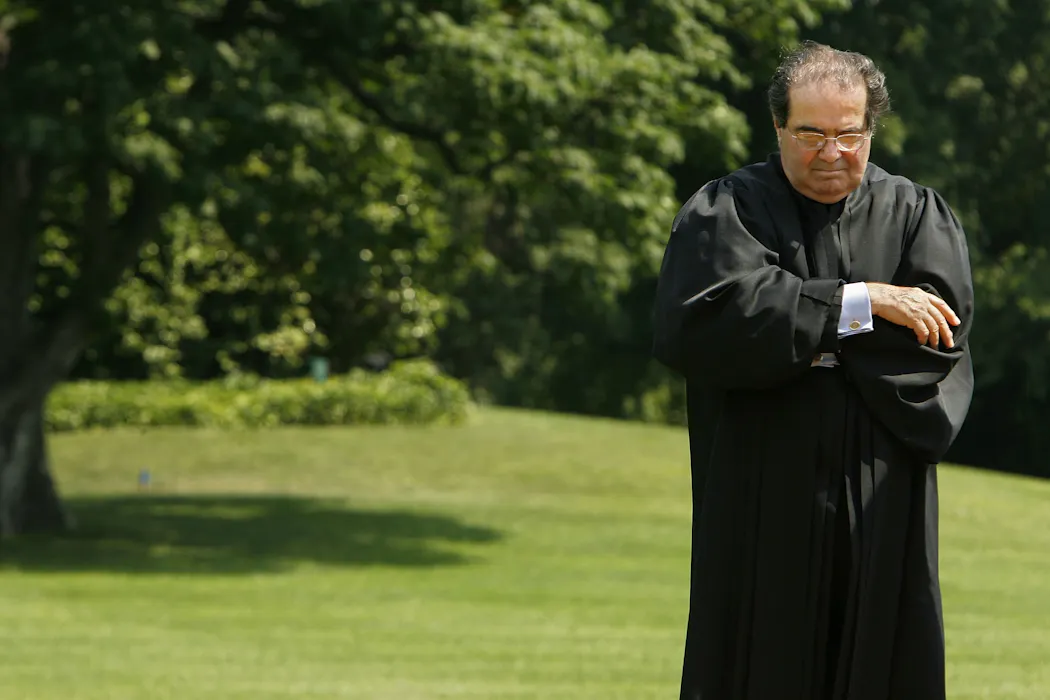
The U.S. Supreme Court returns from summer break Oct. 5, 2026, and begins hearing a new year of cases.
Soon after what’s known as the “first Monday in October” among court watchers, we will start to see stories in the media about something called “originalism.”
Originalism is the judicial philosophy followed by most current Supreme Court justices, but it is not well understood outside legal circles.
I am a law professor who worked for the most famous originalist of them all, Justice Antonin Scalia. He called originalism “the lesser evil.” Let me explain why.
Originalism is a philosophy of interpreting the U.S. Constitution. It holds that the Constitution means whatever people reading it thought it meant when it was written.
The opposing view is known as “living constitutionalism.” It holds that the Constitution’s meaning can be reinterpreted by judges to keep up with the needs of the times.
Originalism has been around since the very beginning of the country. But it fell out of favor during the 20th century, especially after Earl Warren left the governorship of California to become the chief justice of the Supreme Court.
During this time, it became popular to find new rights in the Constitution that no one had previously thought were there.
For example, in 1973 the court first recognized the constitutional right to an abortion. For 200 years, laws prohibiting abortion had coexisted with the Constitution. Yet, in Roe v. Wade the court held that these laws were now invalid.
Things began to change in 1986, when President Ronald Reagan appointed Scalia to the court. He was a uniquely skilled advocate for originalism and changed many minds.
Today, most of the Supreme Court justices follow originalism at least to some extent, including one of Scalia’s former law clerks, Amy Coney Barrett.

Perhaps the most common myth about originalism is that it holds that the Constitution can never change.
For example, some people accuse originalists of “trapping the law in amber.” But originalists think the Constitution can change; they just disagree with who can do the changing.
Originalists think the Constitution can be changed only by the American people through the amendment process. Conversely, living constitutionalists believe it can be changed by judges through reinterpretation of the existing document.
Another common myth is that originalism is just a smoke screen for conservative judges to reach the results they personally prefer. But there are plenty of examples of originalists reaching results that they personally disagreed with.
For example, Scalia famously cast the deciding vote in 1989 to hold unconstitutional a law criminalizing burning the American flag despite being a big patriot and despising such activities.
Clarence Thomas wrote in 2003 that he thought laws criminalizing sodomy were “silly” but could not rule that they were unconstitutional; like abortion, they had coexisted with the Constitution for hundreds of years.
Barrett recently said that she is morally opposed to the death penalty but has no choice but to go along with it: Not only has it been around since the beginning of the country, but the Constitution explicitly says that “life” can be taken.
Yet originalism has many detractors.
Perhaps the most common criticism is that it is often difficult to glean what people thought the Constitution meant when it was written. Most of its provisions were written a long time ago, and the language is often vague.
In order to understand what people thought it meant, judges need to consult history. But judges are not trained as historians, and history is often ambiguous.
For example, sometimes we do not have a tradition of laws back to the founding of the country like we do with abortion, sodomy and the death penalty. Laws prohibiting the possession of assault weapons, for example, are of recent vintage.
How do you know what people hundreds of years ago would have thought about a law they didn’t have? It isn’t easy, and originalists disagree among themselves on how to figure that out.
But originalists say everything is relative: Even if originalism relies on history that will sometimes be ambiguous, what do living constitutionalists rely upon? As originalists see it, living constitutionalists rely on whatever outcome they think is a good idea. But originalists say this is undemocratic because judges are unelected and have life tenure: If the Constitution is to change, we, the people, should decide how. This is why they think history is “the lesser evil.”
Another criticism is that most of the Constitution was written when Black people and women were unable to participate in U.S. democracy. That leads to the question: How can originalists assert it is more democratic to rely on what people long ago thought about a document that is itself undemocratic?
This is probably the criticism of originalism that most resonates with my own students.
One response given by originalists is that we have now expanded the electorate and it has since altered very little of the Constitution. Doesn’t that mean what is left is democratically legitimate?
Not necessarily. Because it takes a supermajority of the electorate to change the Constitution, it is possible that there are still provisions in place that would have never commanded majority support but fall short of supermajority opposition.
Again, however, originalists respond that everything is relative. Even if the Constitution is democratically tainted, what is the alternative? To let nine unelected judges do whatever they think is best? How is that more democratic?
Moreover, originalists say, even if it is possible that there are some provisions still in the Constitution that would have never been adopted with an expanded electorate, what are they? It may be impossible to identify them.
There is little doubt that originalism is on the rise – and not only on the Supreme Court. It is increasingly popular among lower court judges, lawyers and even law professors.
But as more and more people practice originalism, more and more people disagree about how to do it right.
In other words, originalism may be more complicated than Scalia made it sound. Moreover, even Scalia admitted the amendment process is a burdensome way to incorporate change.
But what’s the alternative? Originalism still may be “the lesser evil.”

I was a law clerk to Justice Scalia.
Politics + Society – The Conversation

It’s a well known fact that Olive Garden has some of the best breadsticks of any chain, but you can make them even better with this genius tip.

Food Republic – Restaurants, Reviews, Recipes, Cooking Tips

Ella Langley and Tucker Wetmore are country music’s newest singing couple. What can they learn from these 11 famous relationshps? Continue reading…Country Music News – Taste of Country