Categories
Uncategorized

What happened at the end of the Revolutionary War? Here’s how Americans set up a brand-new country once the fighting ended

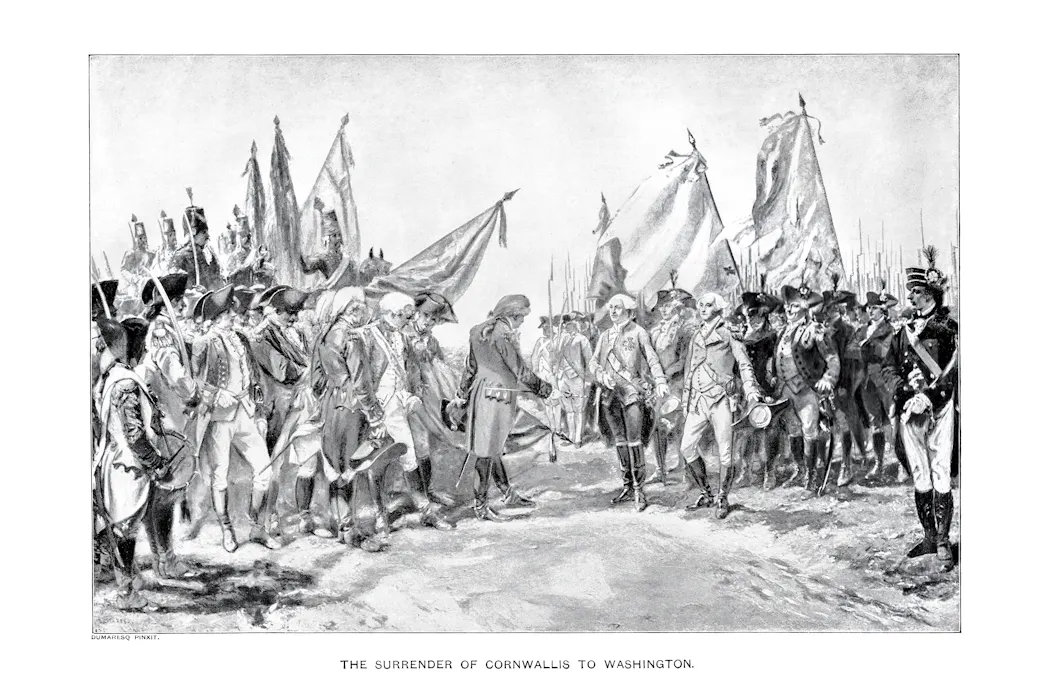
An engraving of the surrender of British forces to George Washington at the Battle of Yorktown in 1781.
Michael Lee/Moment via Getty Images

Curious Kids is a series for children of all ages. If you have a question you’d like an expert to answer, send it to CuriousKidsUS@theconversation.com.


What really happened at the end of the Revolutionary War? – Veda, age 11, Crystal Lake, Illinois


In the autumn of 1781, a tired Continental Army of American and French soldiers pushed the British army through the Carolinas to the coast of Virginia. For three weeks, the Continental Army trapped the British against the sea while the French navy fought the British navy.

Surrounded, the British surrendered on Oct. 19, 1781, at the Battle of Yorktown, the last major military fight of the American Revolution. America had won the war.

No one had expected that a handful of colonies could defeat the mighty British Empire. Once news of the American victory reached London, peace talks began in 1782, with the Treaty of Paris finally signed in 1783.

In the immediate aftermath of the American Revolution, the economy was in shambles, 25,000 Americans had died, and chaos erupted as over 60,000 Loyalists who had stayed devoted to Great Britain and George III, including more than 15,000 formerly enslaved people who had joined the British army, left the United States.

The question then became: “What’s next?” Building a nation was very different from fighting a war. And it didn’t happen overnight.

Setting up a new country

During the Revolutionary War’s six years of fighting, individual states wrote their own constitutions, which set up how their governments would work. Early on, in 1777, the newly named United States embraced the Articles of Confederation and Perpetual Union. These laid out the first system that organized all the states under one umbrella in order to create a unified front of Americans during the Revolution. They were not a constitution because they didn’t create a formal government.

The Articles of Confederation set up a framework that was OK during wartime but too weak for building a new nation. They didn’t call for a president to lead, and they didn’t set up a court system to hear cases when laws were broken. They provided no way to establish foreign policy and didn’t say how states should trade with other countries or how to impose taxes on things Americans bought from abroad.

The new country fell into economic crisis, highlighting the weaknesses of the government. Before the American Revolution, white American colonists enjoyed one of the highest standards of living in the Western world. But war debts, inflation and a temporary stop to profitable trade with the enormous British Empire left Americans scrambling to get by in the 1780s.

painting of dozens of men in 18th century clothing in a fancy room
Attendees at the Constitutional Convention in 1787 drew up the documents that remain the foundation of the U.S. government today.
GraphicaArtis via Getty Images

So, representatives from each state gathered at Independence Hall in Philadelphia during the summer of 1787 to discuss how to improve the national government. They agreed on a government that would rely on checks and balances, with power spread out among different branches.

They called for a legislative branch with two houses – the House of Representatives and the Senate – to make laws. There would also be an executive branch with an elected president and vice president. And there would be a judicial branch with a Supreme Court of nine justices committed to upholding the newly written Constitution.

They laid everything out in the United States Constitution, which went into effect in 1789. Right away, the House of Representatives began drafting amendments outlining individual freedoms and protected rights for citizens, a hearkening back to the Declaration of Independence that had announced the colonies were breaking free of Great Britain back in 1776.

The Bill of Rights was approved in 1791, guaranteeing American citizens free speech, freedom of assembly, freedom of religion, freedom of the press, individual privacy and property, and the right to a public, speedy trial with a jury of peers, among other protections.

These rights are still the law of the land today.

Limitations of liberty

The Constitution called for a president to be elected, but who voted? You could vote in 1789 only if you were male, white, a landowner, over the age of 21, and not a Quaker, Jew or Catholic. These requirements excluded the majority of people in the new United States. The Naturalization Act of 1790 explicitly limited national citizenship to only white people. What about everyone else?

Using the language and promises of the Declaration of Independence, various groups advocated for rights after the American Revolution.

African Americans petitioned for freedom in the northern states, with varying success. States geographically above Maryland began the process of immediately or gradually abolishing slavery, beginning with Vermont in 1777 and culminating with New York, the longest holdout, in 1799.

engraving of Black men in line to vote at a polling place in 1867
Black men were guaranteed the right to vote in 1869 by the 15th Amendment, but in some places it was impossible for them to actually cast their ballots until later in the 20th century.
Universal History Archive/Universal Images Group via Getty Images

It was not until the 13th Amendment to the Constitution was ratified in 1865 that slavery ended, quickly followed by the 14th Amendment in 1868 that gave citizenship to “all people born or naturalized” in the United States. The 15th Amendment in 1870 extended the vote to all American men, regardless of race, but women were still left out.

Women had served in the American Revolution in a variety of ways: nursing, spying, organizing boycotts, following the camps to provide domestic support, as well as staying behind to maintain farms, businesses and homes. Although white women were considered citizens and received expanded educational opportunities after the Revolution, women of color were excluded. Women were not guaranteed the right to vote until 1920 with the 19th Amendment.

Native Americans faced enormous obstacles during and after the American Revolution. The Treaty of Paris in 1783 that formally ended the war extended the boundary of the United States to the Mississippi River and to Canada. That expansion meant Native Americans in those areas quickly lost lands and experienced extreme violence as American settlers flooded into the newly opened areas.

More than a dozen Indigenous people gather on steps for formal black and white photo
Delegations of Native Americans petitioned the federal government in Washington, D.C.
Bettmann via Getty Images

Individual tribes negotiated with the United States with little success. It was not until 1924, with the passage of the Snyder Act, that all Native Americans became recognized citizens of the United States.

Relying on the hopes outlined in the Declaration of Independence, Americans fought and continue to fight for freedom and representation. Promises made in the Declaration of Independence, the Constitution and the Bill of Rights reflect an ever-evolving America, always with the hope of life, liberty and the pursuit of happiness for all.


Hello, curious kids! Do you have a question you’d like an expert to answer? Ask an adult to send your question to CuriousKidsUS@theconversation.com. Please tell us your name, age and the city where you live.

And since curiosity has no age limit – adults, let us know what you’re wondering, too. We won’t be able to answer every question, but we will do our best.

The Conversation

Sandra Slater does not work for, consult, own shares in or receive funding from any company or organization that would benefit from this article, and has disclosed no relevant affiliations beyond their academic appointment.

​Politics + Society – The Conversation

Categories
Entertainment

Inside Presley Gerber’s Last Outings Months Before His Death

Presley Gerber, Kaia Gerber, Cindy Crawford, Rande GerberPresley Gerber’s loved ones were always by his side.

And before the son of Cindy Crawford and Rande Gerber died at the age of 27 inside a rehab facility on Sept. 20, his parents and sister Kaia…
​E! Online (US) – Top Stories

Categories
Entertainment

Chad Gilbert Cause of Death: New Found Glory Guitarist, Ex-Husband of Hayley Williams Was …

Reading Time: 2 minutes

We have tragic news to report from the world of music today.

Chad Gilbert — the musician and producer best known as a founding member of the punk band New Found Glory — has passed away.

He was just 45 years old.

Guitarist Chad Gilbert of New Found Glory performs onstage at the MTV Video Music Awards Kickoff Concert at Battery Park August 29, 2006 in New York City.
Guitarist Chad Gilbert of New Found Glory performs onstage at the MTV Video Music Awards Kickoff Concert at Battery Park August 29, 2006 in New York City. (Photo by Bryan Bedder/Getty Images)

News of Gilbert’s death comes courtesy of an Instagram post shared by his wife

“On the morning of September 20th, Chad Everett Gilbert passed away peacefully in his sleep,” the statement read.

“He left this world surrounded by friends and family and took his final breaths with his wife and mother by his side, just as he wished,” Cimorelli continued, adding:

“We are devastated and shocked by how quickly he left us, yet so grateful for how peacefully and smoothly he went. The amount of visitors that crowded the hospital lobby at a moment’s notice is a testament to how beloved and cherished Chad was, and always will be.

“He was a legendary musician, but his favorite accomplishment was being a husband and father. His biggest dreams came true. He is survived by his wife, Lisa, his daughter, Lily, his mother, Jackie, and his brother, Brian.”

Lisa also included a statement from the band, whose lengthy career included eleven studio albums and numerous side projects.

“Chad’s guitar playing, songwriting, humor, and relentless drive helped shape New Found Glory for nearly three decades,” the surviving members of New Found Glory wrote, adding:

“Through more than a dozen albums, endless tours around the world, and more accolades than we ever could have imagined, Chad challenged all of us to grow as musicians, performers, and human beings.

“While we are devastated to lose him, we are so grateful for the incredible life he lived, the memories we shared, and the brotherhood we had. His influence will always be part of New Found Glory, and his spirit will be felt on every stage we stand on, with every note we play.”

In addition to his pioneering work with NFG, Gilbert was lead vocalist for side-projects International Superheroes of Hardcore and Shai Hulud.

Prior to his marriage to Cimorelli, he was briefly married to Paramore singer Hayley Williams.

Chad had been battling brain cancer for several years. In March of 2026, he underwent emergency brain surgery after three tumors were discovered.

He is survived by his wife and daughter. Our thoughts go out to Gilbert’s loved ones during this enormously difficult time.

Chad Gilbert Cause of Death: New Found Glory Guitarist, Ex-Husband of Hayley Williams Was … was originally published on The Hollywood Gossip.

​The Hollywood Gossip

Categories
Entertainment

Patrick Clancy Gives ’60 Minutes’ Interview About Grief & Forgiveness: …

Reading Time: 3 minutes

In the wake of his ex-wife’s mistrial, Patrick Clancy opened up on 60 Minutes.

The only thing worse than the trial, the deadlock-induced-mistrial, and the surrounding discourse was the original tragedy.

Patrick lost all three of his children, even though he believed at one time that one would pull through.

He’s speaking about mental illness, what he might have done differently, grief, and why he chose to forgive Lindsay.

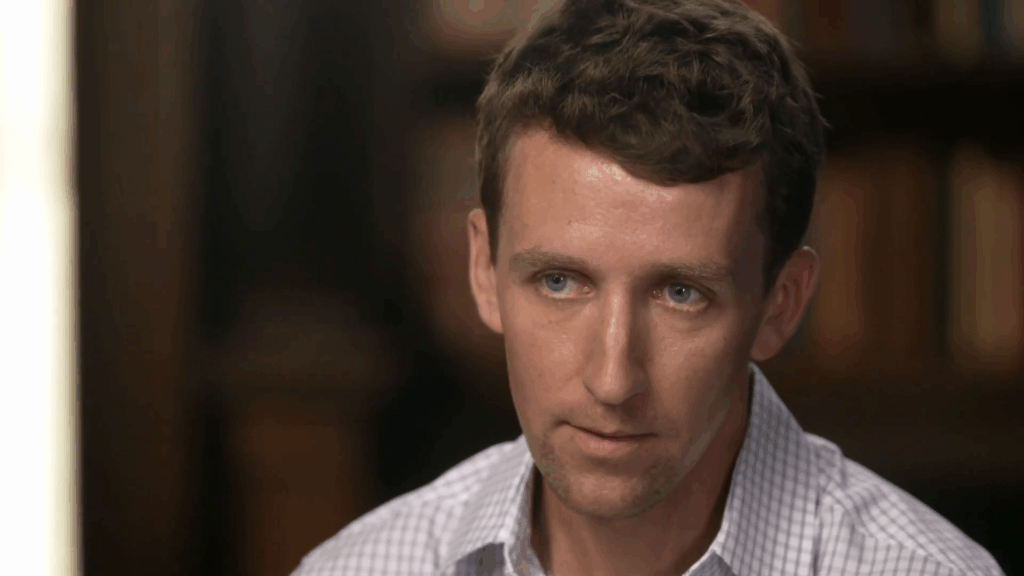
Patrick Clancy on '60 Minutes' in September 2026.
During his ’60 Minutes’ interview, Patrick Clancy delved into the topics of grief and forgiveness in the wake of his ex-wife’s mistrial. (Image Credit: CBS)

Patrick Clancy spoke to ’60 Minutes’

Even though 60 Minutes is a ghoulish shell of what it was before Bari Weiss, the once-lauded CBS News program does still exist.

On Sunday, September 20, Patrick Clancy sat down for a 60 Minutes interview in the wake of his ex-wife’s mistrial.

As with so many of us, one of his biggest concerns is the way that the at times unhinged discourse surrounding this family tragedy distracts from the key issue of perinatal mental health.

“I could piece together what it was like to be really, really anxious or depressed, but I didn’t know how to manage a postpartum illness,” Patrick admitted.

He observed: “I think mental illness has this ability to be tragically deceptive.”

Most postpartum mental health struggles are not deadly. Postpartum depression is not uncommon — in fact, it even has folksy labels such as the “baby blues.”

Few people understand postpartum psychosis, as the (again, often unhinged) discourse surrounding the Lindsay Clancy case has made painfully clear.

As Patrick mourns the deaths of Cora, Dawson, and Callan, he still wrestles with what he might have done differently. But he has found a kind of peace with the past.

“I think I did the best I could with what I had at the time, and I live with the outcome,” he acknowledged.

“I live with it every day,” Patrick added, “but I think I did the best I could.”

8-month-old Callan lived for four days and died in his arms

Patrick Clancy’s youngest child did not die at the scene after Lindsay strangled all three children and then leapt from a window in an attempt to end her own life.

Callan was airlifted to the hospital, where he was kept technically alive for another four days while doctors and nurses fought to save his life.

Patrick described remaining beside the 8-month-old and talking to him.

“I really thought there was a chance that Callan would live,” he recalled.

“I remember just thinking, ‘Just give me one, just give me one kid’ and I would raise him as best I could,” Patrick shared, “and I would give him the best life I possibly could.”

Patrick, who has remarried, also spoke about his ex-wife and how she spoke after the tragedy.

Lindsay, he shared, told him that the horrible killing “felt like a dream.”

She never asked Patrick for forgiveness. He told 60 Minutes that he gave it to her anyway.

“I think when it comes to forgiveness, I also felt that if I didn’t get there, I would be eaten up inside forever,” he reasoned.

Our hearts continue to go out to this broken family in the wake of this horrible tragedy. The trial and the online discourse, especially with political malefactors trying to exploit this as a “culture war” flashpoint, have all made this even harder than it already was.

Patrick Clancy Gives ’60 Minutes’ Interview About Grief & Forgiveness: … was originally published on The Hollywood Gossip.

​The Hollywood Gossip

Categories
Entertainment

Who Makes Costco’s Kirkland Signature Barolo Wine?

Costco’s Kirkland Signature Barolo wine is a fan-favorite red, but where does it come from? Hailing all the way from Italy, this vino is nothing to sneeze at.

​Mashed – Fast Food, Celebrity Chefs, Grocery, Reviews

Categories
Entertainment

These Secrets About The Voice Will Have You Singing Out Loud

The Voice, Season 30, Kelly Clarkson, Riley Green, Queen Latifah, Adam LevineCan you hear how The Voice has changed in time for a major milestone?
When the reality competition returns for its 30th season Sept. 21 on NBC, newcomers Queen Latifah and Riley Green will be…
​E! Online (US) – Top Stories

Categories
Uncategorized

Open Channels FM: AI for the Rest of Us, Beyond the Bubble

Bob Dunn talks about breaking out of AI echo chambers to gain new insights

Categories
Entertainment

4 Underappreciated Meat Cuts Anthony Bourdain Wanted Americans To Embrace

Anthony Bourdain was a culinary adventurer, enjoying various worldly cuisines, including nose-to-tail eating, which included cuts most Americans don’t dare try.

​Mashed – Fast Food, Celebrity Chefs, Grocery, Reviews

Categories
Politics

Everyone’s talking about ‘electability.’ Our poll shows where voters stand.

Voters are perfectly fine supporting candidates who aren’t white men.

But they do show small preferences for candidates who are younger and Christian, according to new results from The POLITICO Poll. And voters were most likely to penalize transgender candidates in hypothetical matchups, though Democrats were more likely to support them than GOP voters were.

The results cast a new light on a simmering, yearslong public conversation within both parties about what it means to be electable and whether putting forward candidates of varying backgrounds is too politically risky in a close election environment. It’s a debate that defined the last open Democratic presidential primary in 2020 and is poised to play a role in 2028 too.

Democrats have largely focused their debates on whether voters would accept a person of color or a woman, particularly after President Donald Trump defeated Hillary Clinton in 2016 and Kamala Harris in 2024 — while losing to Joe Biden in 2020. But the poll results suggest the characteristics voters care most about are different, shaped by frustrations over aging politicians and both new and old culture wars.

“The American people, I believe, think about identity way less than the average political consultant does,” said Mike Nellis, a longtime Democratic digital strategist who advised Harris’ 2020 presidential campaign. “Obviously there are factors in society that make it harder for women and people of color to get elected, but there are plenty of incredibly talented people out there who are capable of getting over the hump on that.”

To test whether demographic characteristics make a candidate more or less electable, POLITICO’s polling partner, Public First, showed thousands of respondents a series of head-to-head matchups. In each case, respondents were given basic information about the candidate’s demographics, such as their race, age and gender; their career, with titles such as doctor, attorney general or CEO; and a single-sentence description of their political alignment, either as a progressive or moderate Democratic, independent, or moderate or MAGA Republican.

Respondents then picked which candidate they would prefer, and the results overwhelmingly showed voters cared the most about a candidate’s political ideology. But respondents also revealed more subtle patterns in their preferences.

Voters across both parties were more likely to reject older candidates in favor of younger ones. Republicans in particular favored candidates who were described as Christian or regular churchgoers, even when controlling for the candidates’ politics. GOP respondents picked candidates described as regularly attending a church just under 9% more often than candidates who did not have any faith.

That means that even though Republican respondents usually picked the GOP candidate in head-to-head matchups, for example, they were more likely to cross over and support an independent or Democratic candidate when that candidate was described as Christian.

The results on sexual orientation were more complicated: When candidates were described as “gay,” they were picked about 10% less often across all voters. But when the candidate descriptions describe the candidate as a man married to his husband — without a label for sexual orientation — respondents did not pick them less often in a statistically significant manner.

Voters were less likely to pick transgender candidates, with Democratic voters about 5% less likely while GOP voters were 17% less likely, all else held equal.

The age results were a strong signal that voters want a new generation of candidates after the last presidential cycle was driven by concerns about Biden’s age, fueling a slew of intergenerational primary contests this year and leading major Democratic voices to publicly call for a younger candidate for 2028. Trump is now 80, and Republicans have faced their own conversations about aging politicians, as Sen. Mitch McConnell (R-Ky.) faced serious health challenges earlier this year.

Amanda Litman, co-founder of Run For Something, which recruits candidates under the age of 40, said when the group started its work nearly a decade ago, younger people were often seen as “risky bets” electorally.

“Now I think people are starting to see that that is not true. Voters will judge people one by one,” Litman said. “They’re also really hungry for change and really hungry for someone who didn’t get us into this mess.”

The poll found candidates over the age of 70 were nearly 10% less likely to be picked than candidates under the age of 50, with Democrats slightly more likely than Republicans to disfavor a candidate due to age.

Notably, The POLITICO Poll didn’t find differences based on a candidate’s race or gender overall, outside of gender identity. That has long been a topic of debate among Democrats thinking about winning the presidency.

When Harris replaced Biden on the top of Democrats’ ticket in 2024, few questioned that she would choose a white man as her running mate. Since her loss, some Democrats have argued that a white male candidate might be the best path forward for the party in 2028.

Harris also wrote in her memoir about the campaign that she thought picking former Transportation Secretary Pete Buttigieg as her running mate would have been “too risky” because he is gay, and that he otherwise would have been her ideal partner.

But Buttigieg, who is contemplating running for president in 2028, recently argued that the country is ready for a gay president, saying he wouldn’t have launched a bid in 2020 otherwise.

“What’s on people’s minds isn’t about you, your identity as a candidate,” he told NBC News last weekend. “It’s about them. It’s about their lives.”

​Politics