Categories
Uncategorized

Is it illegal for the president to spend ‘patriotic’ donations on a White House ballroom or anything else?

Construction of a White House ballroom continues on Aug. 18, 2026, three days before a court-ordered deadline to halt construction unless Congress authorizes it. Win McNamee/Getty Images

The fate of President Donald Trump’s estimated US$400 million White House ballroom may hinge on the little-known and somewhat surprising rules as to when the federal government and its agencies can accept privately donated funds.

That’s because Trump’s is using the fact that he’s been accepting private donations to pay for at least some of the project’s cost as a justification for not needing Congress’ explicit authorization.

A federal appeals court on Aug. 7, 2026, disagreed and left in place a lower court’s injunction that’s slated to halt construction on Aug. 21, barring Supreme Court intervention.

As a scholar of nonprofit and tax-exempt law who has studied for decades how the law governs deductible charitable contributions, including those to the government, I find that this appeals court decision calls for an explanation of the role that such private donations may play in any federal government project or activity. An intricate statutory dance is required for taxpayers to make donations to particular government agencies or for particular government purposes.

Giving to the government

You may not realize that you can make potentially tax-deductible contributions to the federal government itself. An official website lists almost two dozen programs, including the National Endowment for for the Humanities, the National Arboretum and AmeriCorps, to which U.S. citizens can donate.

But such donations are allowed to government agencies only if Congress has granted the agency statutory authority to receive those funds.

In this context, according to the reasoning of the majority in the appeals court case, that means spending donated funds to preserve the East Wing would have been automatically allowed because it stood on a national park and the National Parks Service is an agency that individuals can donate to; spending those funds to build something new to replace that structure would not be allowed unless Congress had authorized the project.

But the Trump administration has failed so far to obtain congressional authorization and appropriations for the ballroom.

The federal government has accepted donations voluntarily made by Americans since its founding.

What’s more, the Bureau of Fiscal Services – the central bank account and financial manager for the federal government – explains that it “may accept gifts donated to the United States Government” and that the account for such gifts, which dates back to 1843, was established “to accept gifts, such as bequests, from individuals wishing to express their patriotism to the United States.” Such gifts, however, are subject to restrictions.

A big machine clears rubble next to the White House.
An excavator clears rubble after the East Wing of the White House was demolished on Oct. 23, 2025.
Eric Lee/Getty Images

Statutory restrictions

Since 1982, a provision of the United States Code, the official codification of all the nation’s general and permanent federal statutes, has required that these “patriotic” donations be devoted exclusively to reducing the national debt.

By law, federal agencies cannot augment congressional appropriations. The Miscellaneous Receipts Act requires that “an official or agent of the Government receiving money for the Government from any source shall deposit the money in the Treasury as soon as practicable without deduction for any charge or claim.”

Despite this seemingly absolute language, government agencies are permitted to accept gifts of money or other property when – and to the extent – they are given explicit statutory authority.

Agencies with the authority to accept gifts include the Justice Department, the State Department and the Library of Congress.

But this money must be spent only as Congress directed in establishing the mission of the National Park Service, which is the conservation and preservation of the land and structures under its jurisdiction.

In contrast, the White House does not have this authority. Its own website states that it “is unable to accept cash, checks, bonds … or other monetary equivalents” as gifts from private citizens.

Donald Trump speaks to people in a ballroom with gold-framed paintings.
President Donald Trump speaks during a dinner with ballroom donors in the East Room of the White House on Oct. 15, 2025.
Andrew Caballero-Reynolds/AFP via Getty Images

‘No instance in American history’

That’s in part why the U.S. Court of Appeals for the District of Columbia Circuit held on Aug. 7 that Trump could not build the ballroom on the site of the former East Wing building.

The two judges in the majority concluded that neither the National Park Service, which is the steward for the national park on which the White House stands, nor Trump himself had satisfied all the statutory requirements needed to undertake building of the above-ground ballroom. It did not block work on an underground military bunker the Trump administration began renovating after it demolished the East Wing in October 2025.

That some, most or even all the funding comes from private donations does not protect the administration’s right to proceed with construction of the 90,000 square-foot (8,361 square-meter) ballroom because it has failed so far to obtain congressional authorization and appropriations for this project, the majority explained.

Crucial to this conclusion was a statute declaring, “A building or structure shall not be erected on any reservation, park, or public grounds of the Federal Government in the District of Columbia without express authority of Congress.”

“We are aware of no instance in American history in which a President unilaterally and using privately collected funds demolished substantial portions of the White House that Congress authorized to be built and American taxpayers paid
for,” the majority opinion says. “Until now.”

Satisfying 2 statutes

The Trump administration has pointed to two possible statutes it says provides the necessary authority to do that.

One involves the purposes for which the National Park Service can spend its funds, including privately donated funds. The other grants the president the ability to spend funds for, among other items, “the care, maintenance, repair, alteration, refurnishing, [and] improvement” of the executive residence at the White House – funds that “are authorized to be appropriated each fiscal year.”

The majority explained that authority for the president to construct the ballroom requires satisfying both of those statutes; neither alone suffices.

And it rejected the reliance on the National Park Service provision alone. That statute limits use of the service’s funds, in the words of the majority, to “the identified purposes of conservation and preservation.”

In particular, the majority ruled, the provision does not authorize the construction of a new building. Further, it held, the National Park Service provision cannot authorize the president to lead the project; only the provision related to the executive residence can do that.

As to the executive residence provision, the majority opinion explains that it “does not expressly grant the President any independent authority.”

Instead, the majority held, the president must rely on “an accompanying appropriation.” The court found no such accompanying appropriation.

The Conversation

Ellen P. Aprill does not work for, consult, own shares in or receive funding from any company or organization that would benefit from this article, and has disclosed no relevant affiliations beyond their academic appointment.

​Politics + Society – The Conversation

Categories
Entertainment

What’s The Difference Between Irish Whiskey And Scotch?

You might think whiskey is whiskey, but is it? There may be many similarities across types, but there’s a big difference in distillation, grains, and barrels.

​Mashed – Fast Food, Celebrity Chefs, Grocery, Reviews

Categories
Music

Hayden Panettiere’s Boyfriend Breaks His Silence After Her Death

The short message reminds people that police saw no signs of foul play. Continue reading…​Country Music News – Taste of Country

Categories
Music

Hayden Panettiere’s Boyfriend Breaks His Silence After Her Death

The short message reminds people that police saw no signs of foul play. Continue reading…​The Boot – Country Music News, Music Videos and Songs

Categories
Alaska News

Of wilderness, springtails and Donald Trump

Bill Sherwonit’s tent near Summit Lake in Alaska’s Brooks Range. (Photo courtesy of Bill Sherwonit)

Like many modern humans, especially those of us who are regularly bombarded by various technologies, I spend way too much time being distracted by “stuff” that doesn’t really matter, from news feeds to emails and text messages and what we’ve come to call social and streaming media—not to mention more traditional forms of the entertainment industry.

Fed by all these distractions, along with the details and concerns of busy lives, our minds are often filled with internal chatter that disconnects us from the real world we inhabit.

Long ago, I discovered that trips into “the wild” help to take me out of my head and ground me in the present moment; to be more mindful, more aware of my surroundings, my relationships with place and people and the other life forms with whom I share the world. At the same time, I become more attuned to what my physical senses and emotional body are experiencing.

This can be true even on short walks into the “nearby wild,” for instance local parklands. But the effect is deepened by longer stays in more remote wilderness, particularly on solitary sojourns.

I was recently reminded of all this during a 10-day solo adventure in Alaska’s Brooks Range wilderness, within Gates of the Arctic National Park.

Dropped off by floatplane at a place called Summit Lake, I chose to explore the Arctic landscape in modest fashion. Instead of backpacking or river-running many miles, I set up a base camp and did day hikes in assorted directions.

With an aging body and arthritic shoulders, this approach made sense. It also allowed me to move more slowly across the tundra and pay closer attention to my immediate surroundings and the multitude of life forms with whom I shared my temporary home.

Several days into my adventure, one experience in particular helped me to realize just how deeply I’d moved into a different—and I would say healthier—state of being.

It began with tiny creatures that are commonly called “springtails.” In certain circumstances, notably northern winters when the ground is covered by snow, these relatives of insects are also known as “snow fleas.”

There’s good reason for that: dark in color, and not much bigger than grains of ground pepper—small enough to fit on the head of a pin—springtails from a distance resemble fleas. And, like fleas, they hop around, though the mechanism of their movement differs.

I should also mention that while fleas have flattened and hard-shell bodies, springtails have more rounded, softer bodies that are easily crushed. And they don’t bite.

There’s considerably more to be shared about the nature of springtails, but for now I’ll end with this: when threatened, springtails jump away from the perceived danger by using a rigid, forked tail that folds under their body like a jackknife blade. A catch that normally holds the tail in place is released, allowing the springtail to propel itself into the air, out of harm’s way. Thus, springtail.

To see springtails leaping about the snow is an amazing—and to me, delightful—sight to behold, and this ability has contributed to my fascination with the species. But because they are dark and tiny and blend well with ground not covered by snow, I’d never noticed them in summer. Until my recent trip to the Brooks Range.

The springtails appeared following a stormy night in the mountains. Presumably seeking shelter from that storm, large numbers of them had begun crawling—or springing—from the soaked tundra onto my tent. And, eventually, into it, through a tiny slit that serves as an air vent along the tent’s bottom.

Hundreds, if not thousands, of them eventually infiltrated the tent and I wondered what the heck they could be, until I saw some of the dark forms jumping about.

Though I knew they wouldn’t bite or sting or otherwise harm me, I didn’t fancy the idea of them crawling all over my gear, not to mention my body. Softly blowing on them, I managed to keep most in the back of the tent. But some inevitably spread elsewhere.

Springtails gather in the corner of Bill Sherwonit’s tent in Alaska’s Brooks Range. (Photo courtesy of Bill Sherwonit)

One morning I simply sat in the tent awhile, observing the springtails and contemplating the remarkable nature of those miniscule beings, which move about the world largely ignored or unrecognized by our kind.

Eventually my thoughts turned toward the notion that all life forms have value in and of themselves, irrespective of their relationship to humans, an idea and attitude that I embrace.

I further reflected that, as far as I can tell, only one species inhabiting the Earth considers itself more important than all the rest. And as I considered the egocentric nature of Homo sapiens, Donald Trump slipped into my thoughts, he being the epitome of human narcissism, in my opinion.

And in that moment I realized I’d gone more than a week without Trump entering my thoughts. That, like the springtails occupying my tent, seemed a rather astounding—and wonderful—thing, considering his overwhelming presence in the “normal” world of American culture that I’d temporarily left behind.

I encountered many other wonders during my days in that Arctic wilderness, but the juxtaposition of springtails and Trump—or more accurately, “no Trump”—reveal, as much as anything I experienced, the marvelous nature of the real world we humans inhabit and are truly part of: the wild, wild Earth.

SUBSCRIBE: GET THE MORNING HEADLINES DELIVERED TO YOUR INBOX.

Categories
Music

Garth Brooks Reveals the Big Reason He’s Returning to Arenas

Garth Brooks is done checking the weather from his hotel room and hoping for the best. Arenas give him something stadiums never could. Continue reading…​Country Music News – Taste of Country

Categories
Music

Garth Brooks Reveals the Big Reason He’s Returning to Arenas

Garth Brooks is done checking the weather from his hotel room and hoping for the best. Arenas give him something stadiums never could. Continue reading…​The Boot – Country Music News, Music Videos and Songs

Categories
Alaska News

Finalist for Haines police position withdraws application

Updated at 8:40 p.m. on Aug. 20

Haines borough deputy clerk Kiersten Rowley said Thursday that Hubbard withdrew his application for the position.

Original story

The Haines Borough may soon have a new police officer patrolling the Chilkat Valley, pending a background check.

Caleb Hubbard applied for the police officer position at the end of April.

According to his application, Hubbard attended Juneau Douglas High School in Juneau and currently works for Southeast Alaska Regional Health…

Continue reading — subscribe to unlock the full article.

Categories
Sports Fox

5 Of The Biggest Obstacles To A Dodgers Three-Peat

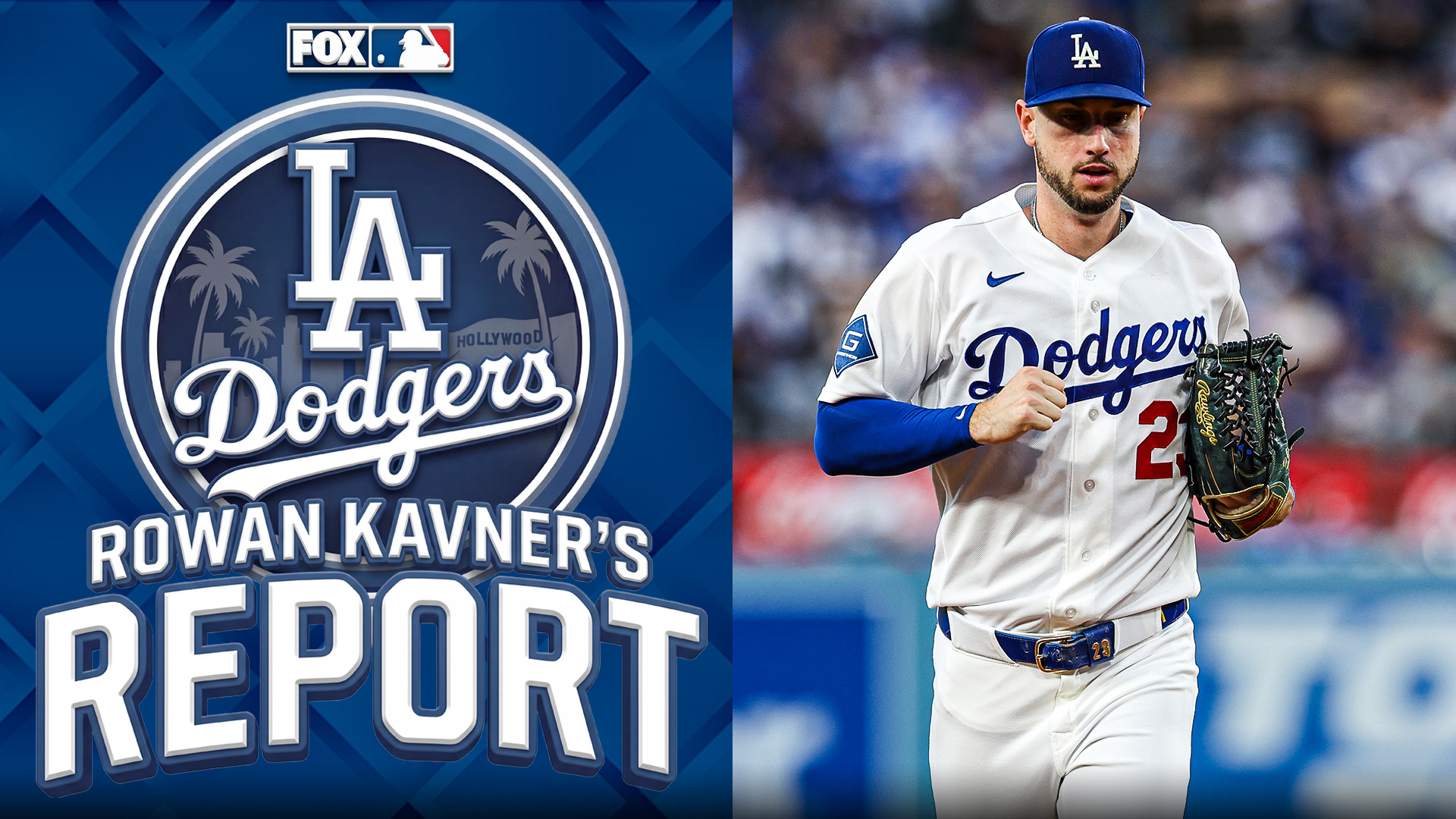
Last December at the winter meetings, Dodgers manager Dave Roberts expressed his confidence in the composition of his roster. There was “really no big splash,” he claimed, that needed to be made. Nonetheless, a few days later, the Dodgers gave Edwin Díaz the highest average annual salary ever for a reliever when they signed him to a three-year, $69 million deal. One month after that, they signed Kyle Tucker for four years and a staggering $240 million, a deal that set a record for present-day average annual value. The moves for the best closer and player on the market felt superfluous, but at the very least, both players figured to be additive to the Dodgers’ roster and their quest to win a third straight World Series title. Now, those two massive signings could be their undoing. Tucker, whose home struggles in particular seem to be getting to him, has been a replacement-level player and is offering little at the plate or in the field. Díaz has been even worse, with an ERA of 11.85 through 16 appearances, and is back on the injured list for the second time this year. The Dodgers’ elite rotation, star-studded lineup and October pedigree, of course, could make up for their blemishes elsewhere. But as it stands now, these are the five biggest threats to a Dodgers three-peat: 1. Kyle Tucker’s Disaster Season On the road this year, Tucker has an .820 OPS, a respectable tally in line with his career norms. At Dodger Stadium, however, he has been one of the worst players in baseball. Tucker has the lowest home OPS (.558) among all qualified hitters in the sport. At some point during the Dodgers’ last homestand, where Tucker went 0-for-19, Roberts could tell the frustration was getting to his right fielder. He could see from Tucker’s reactions to at-bats. It got to the point where Roberts gave Tucker a Saturday off against NL Cy Young favorite Jacob Misiorowski to try to clear his head. It did not appear to work. The next day, Tucker returned to the lineup and went 0-for-3, dropped a fly ball at the wall and leisurely jogged over to retrieve it in front of a booing home crowd. One game later, he dropped another fly ball. He is not making up for his struggles at the plate with sharp defense or good baserunning, and is in fact also having the worst defensive season of his career by outs above average. The poor play looks worse when the effort also appears unenthusiastic, nonchalant or apathetic, all criticisms of Tucker at past stops. This year, however, is unlike any before it. Over the past seven seasons, Tucker never had an OPS under .800. This year, it is under .700. For the first time since his rookie year as a 21-year-old, he is a below-league-average hitter. While the struggles are much more evident at home, he’s also chasing more overall than he had in any of his last three seasons, whiffing more than he had in any of his last five seasons and struggling to access his pull-side power. His hard-hit rate and average exit velocity are the lowest of his career, and his bat speed has slowed compared to recent years. “I don’t know the answer,” Roberts said. “We are digging.” 2. An Aging, Injured (And Maybe Fatigued) Roster One of the reasons the Dodgers added Tucker, 29, was to inject some youth into the oldest position player group in the sport. Tucker and All-Star center fielder Andy Pages are the only starting position players on the team under the age of 30, and that age and declining athleticism might finally be showing. One example? The Dodgers rank 23rd in sprint speed and 28th in stolen bases and have grounded into the most double plays in the sport. The only player with a bolt — defined by Statcast as any run in which a player’s sprint speed is at least 30 feet per second — is Hernández. He has one on the season, but he is also enduring the worst offensive year of his career. Mookie Betts is also having the worst offensive season of his career, though he has shown signs of life over the last two weeks. “He’s crucial,” Roberts said of Betts. “He’s going to be in the middle of things. He’s got the experience, the talent. He’s an emotional guy, and I say that in the sense of when he’s going well, guys feed off that energy. And when he’s not, you’re sort of trying to find it in him and get it in him.” Freddie Freeman is having another terrific year, but his slugging numbers are way down in the second half. Will Smith hasn’t played since June due to a neck issue and was having his worst offensive season prior to being sidelined. His expected return before season’s end will be crucial, especially with backup catcher Dalton Rushing also sidelined. Some of the Dodgers’ most trusted bullpen arms are also hurt or regressing, perhaps wearing down after two straight trips to the World Series. In addition, the Dodgers’ defense — a surprising hallmark of the club in the first half — has declined considerably since the break. 3. Edwin Díaz And The Scuffling Bullpen A year ago, the Dodgers signed reliever Tanner Scott for four years and $72 million and watched him struggle enough that he ultimately did not appear in a playoff game. To remedy their ninth-inning concern, they signed Diaz this offseason to be their shutdown closer. It has, again, not gone to plan. Nine months later, they’re right back where they started. Díaz missed three months after undergoing surgery to remove loose bodies in his elbow. He returned in late July and proceeded to allow runs in six of nine appearances before going back on the IL, this time with neck inflammation. He allowed at least one baserunner in all but one of those nine outings. Opponents are hitting .441 against his four-seamer and .323 against his slider. His strikeout rate is the lowest of his career. His walk rate is the highest of his career. In addition, his arm slot continues to drop, perhaps a subconscious reaction to his physical ailments. Díaz was working to remedy that issue as well as his posture on the mound in an effort to get less rotational and more direct to home plate when he allowed another three runs Monday in Colorado. The Dodgers remain hopeful they can get him right before October, but time is running short. And he’s not the only reason the Dodgers’ bullpen ranks 23rd in ERA since the start of July. Coincidentally, Scott — who is 18-for-20 in save opportunities this year — has emerged as one of the Dodgers’ only reliable high-leverage options of late. Blake Treinen and Will Klein are on the IL. Alex Vesia has an ERA over 6.00 in August, while hard-throwing Edgardo Henriquez has an ERA over 6.00 over his last 12 appearances. Evan Phillips has an ERA over 5.00 since returning from Tommy John surgery. A particularly grueling stretch of games — Thursday is just the Dodgers’ second off day this month — plus a shorter bullpen with Shohei Ohtani no longer pitching in the Dodgers’ six-man rotation haven’t helped matters, either. The Dodgers will likely shift some of their starters to the bullpen in October again, but their relief pitching still looks like one of their top concerns. 4. They Haven’t Looked Great In Nearly Two Months Sandwiched between sweeps of the last-place Royals and the last-place Rockies, the Dodgers lost three of four games to the first-place Brewers last week. The Dodgers have a .500 record against teams that are .500 or better (33-33) and have a .500 record overall since the start of July (21-21). Over that time, their offense ranks 18th in OPS and they’ve been swept by the Diamondbacks, Red Sox and Cubs. Asked if he’s concerned that this is just who the Dodgers are now, Roberts pushed back. “I don’t think that’s who we are,” Roberts said. “I think we’ve done it long enough, individually, collectively. But I do think that just saying you’re going to come out of it is not the right way to look at it.” It’s worth pointing out that last year’s world champion Dodgers went 10-14 in July and 25-27 combined in July and August (and the 2024 champion Dodgers went 11-13 in July), so they can clearly work their way out of a second-half funk. Still, prior to sweeping the Rockies this week in Colorado, Roberts expressed concerns about the consistency of the offense as a whole, the plan of attack at the plate and the lack of urgency on a pitch-to-pitch basis. “This has been four, five, six weeks of below-average production from our offense,” Roberts said during the home series loss to the Brewers. “Our pedigree, what we typically do, is control the zone, grind at-bats, create stress. We’re not doing that.” 5. The National League Is Better And Deeper This Year This might be a good time for a reminder about the randomness of postseason baseball. In 2024, the Dodgers needed to win two straight elimination games, including a bullpen game, to get past San Diego in the NLDS. In 2025, the Blue Jays came two outs — and one foot — away from winning the World Series. Anything can happen in October. But even beyond the postseason’s unpredictability, the road ahead is more treacherous. The Dodgers got to face the 83-79 Reds in last year’s wild-card series after the Mets’ late-season collapse. That two-game sweep felt more like an exhibition. This year, as the NL West rival Padres and Diamondbacks vie for the final playoff spot, every potential NL playoff matchup offers danger. That’s one reason a first-round bye is so important this year and why the Dodgers were frustrated last Sunday about losing the series and, in conjunction, the season series to the Brewers. They’d still have a bye if the season ended today, but the Braves will be pushing the Brewers and Dodgers for one of the top two NL seeds until the end. Rowan Kavner is an MLB writer for FOX Sports. He previously covered the L.A. Dodgers, LA Clippers and Dallas Cowboys. An LSU grad, Rowan was born in California, grew up in Texas, then moved back to the West Coast in 2014. Follow him on X at @RowanKavner.​Latest Sports News from FOX Sports

Categories
Politics

Republican Mike Rogers backs Michigan data center moratorium

Republican Mike Rogers expressed support Thursday for a “pause” on data center construction as he runs against a progressive Democrat for Michigan’s open Senate seat.

Michigan is one of the top Senate battlegrounds this cycle, with Democrats hoping to hold on to the seat being vacated by retiring Sen. Gary Peters.

Asked during a news conference about his “policy on data centers,” Rogers said, “I think we need to take a pause, probably, and make sure that we’re answering all the questions that people have.”

Rogers specified to the Detroit News that he supports a one-year moratorium on data centers in Michigan — a proposal state policymakers would approve — not a national ban.

“While I don’t support a federal ban, Michigan needs stronger guardrails to protect community control, prevent utility price hikes, protect our water and stop pay-to-play schemes,” Rogers told the News.

“That is why I am calling for a one-year moratorium on new data centers until we establish a fair, transparent approval process that puts local communities first.”

The position is a massive shift for the former congressman and separates him from most of the Republican Party and even many Democrats. Rogers’ campaign did not immediately respond to POLITICO’s requests for comment or clarification.

Rogers’ opponent, Democrat Abdul El-Sayed, has called for strict new standards to prevent data center impacts on the electric grid, water and local communities, but has not called for a large-scale moratorium, as other progressives have.

Data centers have become a pivotal issue in numerous midterm campaign as voters grow increasingly weary of the facilities and blame them for electricity costs and other impacts. The Data Center Coalition has said the facilities alone are not to blame for higher utility rates.

Data centers are also defining another major Senate campaign this year — the Ohio contest between Republican Sen. Jon Husted and former Democratic Sen. Sherrod Brown, who has accused Husted of being too tight with data centers.

This week, the National Republican Senatorial Committee sent a memo to the technology sector warning that data centers are proving toxic in the midterms, especially in the fight between Husted and Brown.

On Capitol Hill, House lawmakers are moving forward with legislation called the Ratepayer Protection Act, H.R. 9340, to shield Americans from the impact of data centers. Husted is sponsoring the Senate companion, S. 5028.

In the past, Rogers has been generally supportive of the data center build-out. In a July interview with ABC affiliate WXYZ, he said there should be electric grid and environmental rules for data centers, but communities that want them should be able to allow their construction.

“If the people are willing to put up with one of these things in their community, they ought to have direct benefit,” he said. “I think that’s a better way to get the community involved in the decision.”

El-Sayed, who focused a large portion of his primary campaign against Rep. Haley Stevens, seemed skeptical of Rogers’ change. He responded to the news on X with an emoji with its eyebrow raised.

“People really effing hate data centers,” the Democrat said in one campaign event.

Rep. Nancy Mace (R-S.C.) called for a state data center moratorium during her race for governor. She lost the primary.

​Politics