Categories
Uncategorized

Michigan’s local election officials are confident in voting integrity ahead of November’s midterm election

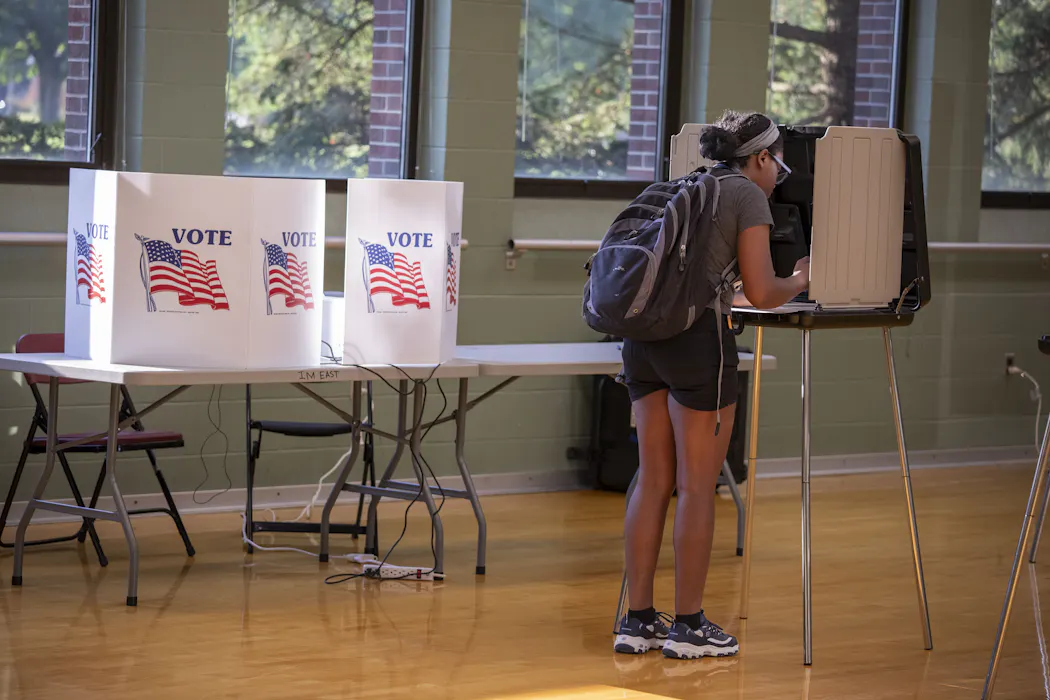
Some officials say disinformation among voters could still be a problem. Bill Pugliano/Getty Images

Local officials across Michigan are highly confident in their ability to administer an accurate election this November, according to a report on election integrity my team published on Aug. 12, 2026. They also voiced concerns about rising disinformation and costs.

“We work very hard at our elections and resent all the negative comments about insecure or fraudulent elections,” one local official said in the report, which details findings from a survey of local officials and clerks who administer elections in Michigan. The officials responding to our survey were granted confidentiality.

Michigan voters will elect a new governor, a U.S. senator, several representatives in Congress and lawmakers in the state Legislature in November 2026.

Public confidence in elections and secure and accessible voting are the bedrock of a healthy democracy. Because U.S. elections are run by local governments, collecting data on local officials’ on-the-ground experiences and perspectives is one of the most valuable ways researchers can gauge local governments’ preparedness to run the upcoming election with integrity.

Local confidence in election integrity is high

At the University of Michigan Center for Local, State, and Urban Policy, where I am the director, we have been tracking how local officials feel about local election administration, democratic functioning, fiscal health and a wide range of other local issues since 2009.

Our Michigan Public Policy Survey consistently gets responses from local officials in over 70% of Michigan’s 1,856 cities, villages, townships and counties. This makes us confident that our results reflect the full range of communities, from small rural townships to large cities.

In spring 2026, we asked local officials how they are feeling about administering the 2026 November general election. We revisited questions we previously asked them in 2017, 2020 and 2022.

Local clerks and municipal employees are responsible for the day-to-day work of administering elections. They register voters, maintain voter lists, distribute and collect absentee ballots, run polling locations on Election Day, distribute “I voted” stickers, and tabulate and report election results.

We found that this year 95% of city and township clerks are “very confident” in their ability to administer an accurate election this November. This is a slight increase compared to surveys in 2020 and 2022. The high level of confidence holds across communities large and small, urban and rural, and deep red and deep blue.

Local officials want the public to know just how seriously they take their responsibility for election security.

“(We) are very protective of our election process. Our clerk is constantly updated on elections and changes that occur,” one official told us. “We have a secure room for our election equipment and are very proud of how our elections are handled.”
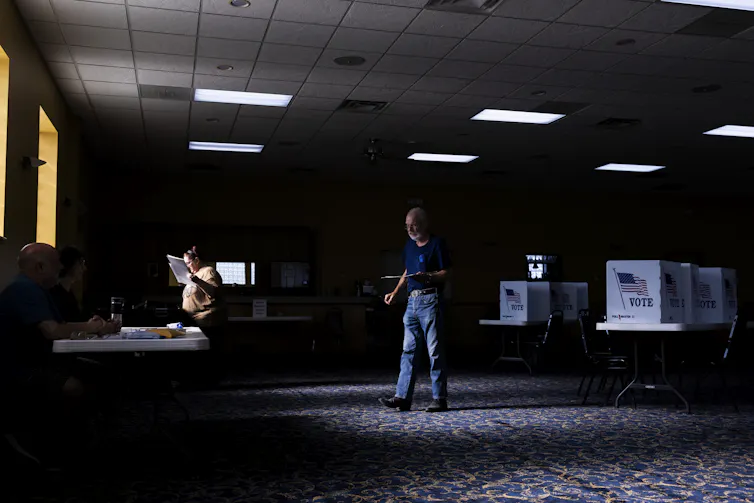
Man stands holding paper
Local officials are confident in administering fair and accurate elections across Michigan’s communities.
Finn Gomez/Getty Images

What keeps election clerks up at night

Despite their high confidence overall, some clerks shared key concerns.

Almost half – 49% of surveyed officials – worried about the cost of running elections. This was the largest concern by far. Running elections requires hiring staff, buying equipment, investing in security upgrades, and, in Michigan and many other states, opening polling locations and staffing offices for between three and 46 days of early voting.

Michigan voters approved election reforms in 2022, including adding nine days of early voting. Many clerks say this has added significant cost, especially in smaller communities.

Elections are run by local governments. That means the costs of election equipment upgrades and wages for poll workers must compete for budget dollars with police officers, potholes and trash pickup, among many other local services.

As one Michigan township official explained, “Spending so much money on elections is taking away from other programs and causes that the money went to before.”

Besides costs, some officials worried about technical problems. Eight percent of officials reported concerns about equipment failures, 5% about long wait times and about inaccurate voter registration lists. These problems may cause delays while election workers troubleshoot or switch to more manual methods of counting votes, but they are unlikely to result in fraud.

Looming threats of disinformation

About 1 in 5 local officials expect problems with their voters being targeted with disinformation about elections or voting procedures, and about 8% expect disturbances at polling locations, our survey found.

Zooming in on the largest communities, these numbers increase. In communities with over 30,000 residents, over 40% of local leaders expect problems with disinformation, and 26% expect problems with disturbances.

“The aggressiveness by which some try to force their way into working elections for the purposes of disruption is increasing,” a local official explained.

Another official said their community is having difficulty finding polling locations because local schools and churches are increasingly worried about security.

“The rise of election misinformation and the resulting distrust in democratic systems have fundamentally shifted the landscape for municipal clerks and election officials,” one survey respondent explained. “What was once a largely administrative, behind-the-scenes role has become a high-stakes, public-facing position that requires navigating a ‘hyper-partisan’ environment.”

Partisan mistrust

Despite high confidence in their own communities, some local officials voiced concerns about their peers.

When asked how confident they are in other communities’ ability to administer accurate elections, 37% say they are “very” confident and another 37% say they are “somewhat” confident, with the remaining 26% expressing more doubt or saying they don’t know.

These levels of doubt about elections vary widely by political party. Among Democrat respondents, 94% report being “very” or “somewhat” confident in other communities’ ability to administer elections. Among Republican respondents, however, the percentage falls to 68%, and 25% of Republican respondents say they are “not very” or “not at all” confident. This is compared to just 1% of Democrat respondents.

Strength of local election control

Compared to other countries, elections in the U.S. are highly decentralized. There are over 10,000 local jurisdictions that administer elections and more than 1,600 in Michigan alone.

This decentralization means Americans often have to wait longer for local election workers to tabulate votes, compile results and declare winners. But keeping election administration local is also a strength. It means that the local officials and clerks who count our votes are members of our communities, not appointees chosen by partisans in state capitals or Washington, D.C.

Right now, election officials and clerks are telling us to worry less about whether they can do their jobs and more about those who may be spreading lies and disinformation ahead of the November election.

The Conversation

Stephanie Leiser does not work for, consult, own shares in or receive funding from any company or organization that would benefit from this article, and has disclosed no relevant affiliations beyond their academic appointment.

​Politics + Society – The Conversation

Categories
Entertainment

Karoline Leavitt QUITS White House Press Secretary Job In Stunning Development

Reading Time: 2 minutes

Karoline Leavitt is saying goodbye to the White House.

President Donald Trump announced Wednesday that his press secretary will leave her position at the end of August, bringing an abrupt end to Leavitt’s tenure as one of the most visible members of his administration.

Trump shared the news on social media, praising Leavitt as one of his “most trusted aides” and making clear that her departure will not be the end of her political career.

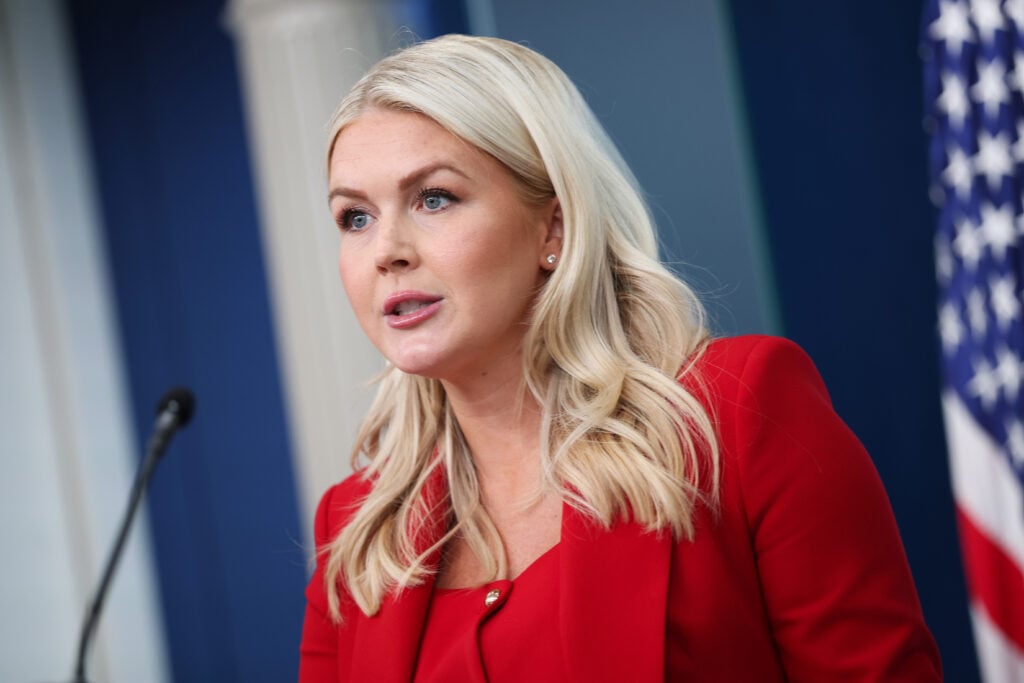
White House Press Secretary Karoline Leavitt delivers remarks during a news briefing in the Brady Press Briefing Room at the White House on July 23, 2026 in Washington, DC.
White House Press Secretary Karoline Leavitt delivers remarks during a news briefing in the Brady Press Briefing Room at the White House on July 23, 2026 in Washington, DC. (Photo by Kevin Dietsch/Getty Images)

According to the President, Leavitt is stepping down so she can spend more time with her family.

The 28-year-old recently returned to work following maternity leave after giving birth to her second child, a daughter, in May. She and husband Nicholas Riccio, 60, also share a two-year-old son.

Leavitt’s departure is one of many recent personnel shakeups in the Trump administration.

In March, Kristi Noem was fired from her post as secretary of the Department of Homeland Security. Just weeks later, Attorney General Pam Bondi was also terminated.

And in May, Tulsi Gabbard announced her resignation as U.S. Director of National Intelligence, also citing a desire to spend more time with family.

Leavitt addressed her decision in a statement of her own, describing it as a “bittersweet” choice.

“The truth is since returning to the White House after the birth of my daughter, I have felt in my heart that I cannot be the best mom my two young children deserve while devoting the constant time, energy, and attention required of the White House Press Secretary,” she said.

“And that is why I have ultimately made the bittersweet decision to depart the White House and embark on a new chapter in my life.”

Leavitt has served as Trump’s press secretary since he returned to the White House in January 2025.

She previously worked as a press aide during his first administration and later became a prominent member of his 2024 campaign.

She made history as the youngest person ever to serve as White House press secretary.

Her departure comes at a particularly important time for the Trump administration, with the 2026 midterm elections approaching.

Still, Trump indicated that Leavitt won’t be disappearing from the political scene.

He said she will remain one of his top outside advisers and continue to be an “influential voice” within the Republican Party as the administration works toward the midterms.

For now, however, Leavitt appears ready to trade the White House briefing room for more time with her family.

We will have further updates on this developing story as new information becomes available.

Karoline Leavitt QUITS White House Press Secretary Job In Stunning Development was originally published on The Hollywood Gossip.

​The Hollywood Gossip

Categories
Music

The Band Perry Family Drama: Neil Perry Sounds Off On Sister

Original the Band Perry member Neil Perry says he was “terminated” from the group, indicating he did not support his brother-in-law joining. Continue reading…​Country Music News – Taste of Country

Categories
Music

The Band Perry Family Drama: Neil Perry Sounds Off On Sister

Original the Band Perry member Neil Perry says he was “terminated” from the group, indicating he did not support his brother-in-law joining. Continue reading…​The Boot – Country Music News, Music Videos and Songs

Categories
Music

WATCH: Megan Moroney Welcomes Kameron Marlowe for Surprise ‘Fix You Too’ Duet in Arizona

Megan Moroney surprised fans at her Cloud 9 Tour stop in Arizona this week when Kameron Marlowe made an unexpected appearance onstage for a special performance of their collaboration, “Fix You Too.”

The country sensation set the moment up by reflecting on the song’s history before inviting him to join her onstage at the Desert Diamond Arena. She told the packed room of fans that when she first wrote “Fix You Too” with Becca Rae Greene and Adam Wheeler for her debut EP, Pistol Made of Roses, they had penned several different versions.

When it came time to select tracks for the deluxe version of her 2023 record Lucky, she opted to bring that song to life in a new way with the addition of Marlowe’s vocals and perspective.

Kameron Marlowe, Megan Moroney; Photo Courtesy of TikTok

As Marlowe made his way to the stage, Moroney went on to express her longtime admiration for his voice.

“I’m sure y’all are already very familiar with him but I’ve said for the past however many years he has one of the best voices in Nashville and as most of you know this song came out on my debut EP but when we wrote it we wrote like several versions,” she stated. “The only voice I heard on it was Kameron’s and he was nice enough to sing it.”

She explained how rare it is for artists to find themselves in the same place at the same time, so when she heard Marlowe was nearby, she told him he had to make a surprise appearance to deliver the track.

@angelg1214 Megan Moroney x Kameron Marlowe Fix you too 8/11 Glendale Az @Megan Moroney @MoroneyHQ @Kameron Marlowe #meganmoroney #f #concert #cloud9 #foryoupage ♬ original sound – Angel1214

Moroney kicked off the performance by taking the first verse while dressed in a sparkling pink ballgown and playing a matching guitar that reflected off the stage lights. Marlowe then joined her for the chorus with the two voices blending beautifully on the emotional track that centers around two people who are clearly drawn to each other but recognize that neither of them is quite ready to take on the responsibilities of a relationship.

Using the idea of a “fixer-upper” as a metaphor, the pair of artists come compare their emotional baggage and personal struggles to things around a house that need repairing, noting how they have enough on their hands and can’t handle having to fix each other too. So, they take the mature route and realize they need to go their separate ways for the time being.

They sing, “Maybe we could be somethin’, somewhere down the road/ And I know that a younger me couldn’t sit here now and tell those green eyes no/ But you’re a fixer-upper if there ever was/ And I need some work mysеlf to tell you the truth/ I don’t wanna have to fix you too.”

The crowd erupted when Marlowe took over the second verse, giving fans a chance to hear the powerhouse vocalist bring his own talent to the song. After the performance, Moroney encouraged the crowd to show Marlowe some love before she swapped out guitars and continued on with the show.

“Please make some noise for Kameron Marlowe,” she stated, causing another roar of cheers to erupt in the venue.

The memorable crowd-pleasing moment took place during Megan Moroney’s first-ever arena run. The Cloud 9 Continues this week with a sold-out show in Dallas, TX on August 14, followed by performances in Oklahoma and Missouri to cap off the weelend.

The post WATCH: Megan Moroney Welcomes Kameron Marlowe for Surprise ‘Fix You Too’ Duet in Arizona appeared first on Country Now.

​Country Now

Categories
Music

Tucker Wetmore Celebrates Third No. 1 With ‘Brunette’ and Praises the Songwriters Behind the Hit

Tucker Wetmore celebrated his third consecutive chart-topping single, “Brunette,” on Tuesday afternoon in Nashville, surrounded by the songwriters behind the hit.

Written by Chase McGill, Josh Miller, Blake Pendergrass and Chris LaCorte, who also produced the track, “Brunette” marks Wetmore’s third No. 1 at country radio, following “Wind Up Missin’ You” and “3,2,1.” LaCorte was unable to make it back to Nashville for the celebration due to travel issues, but he was there in spirit. 

Ahead of the No. 1 celebration at BMI’s Nashville office, Wetmore opened up about his first reaction to “Brunette,” while the songwriters reflected on the track’s creation and how it ultimately made its way to Wetmore.

Photo Back Row L-R: MCA’s Damon Moberly, BMI’s Leslie Roberts, UMPG’s Missy Roberts, Hang Your Hat’s Jake Gear, Studio Bank’s Kari Barnhart, Back Blocks Music’s Rakiyah Marshall, Concord’s Matt Turner; Front Row L-R: Chase McGill (BMI), Josh Miller (BMI), Tucker Wetmore (BMI), Blake Pendergrass (BMI);
Photo Credit Katie Mathis for BMI
Photo Back Row L-R: MCA’s Damon Moberly, BMI’s Leslie Roberts, UMPG’s Missy Roberts, Hang Your Hat’s Jake Gear, Studio Bank’s Kari Barnhart, Back Blocks Music’s Rakiyah Marshall, Concord’s Matt Turner; Front Row L-R: Chase McGill (BMI), Josh Miller (BMI), Tucker Wetmore (BMI), Blake Pendergrass (BMI);
Photo Credit Katie Mathis for BMI

“I love this song because it was weird, honestly. It was different. I’ve never heard anything like it. And right off the bat, I was like immediately I have to have this,” Wetmore shared.

“And I mean, I relate to it in a sense of the hair color thing,” he added with a laugh, “but I’ll let them talk about the creation process and where their minds were.”

McGill, Miller and Pendergrass explained that “Brunette” was born out of their desire to break the rules and experiment with something they hadn’t tried before. They challenged themselves to see if they could create a hit around a 220 BPM bluegrass-inspired sound, cycling through dozens of ideas before returning to the “Brunette” title. The song began to take shape when McGill played the distinctive riff that became a defining element of the track.

From there, the writers said the song came together quickly, becoming the fastest song they had ever written. While they had no idea what would ultimately happen with the song when they wrote it, they were thrilled to see it land with Wetmore.

As members of their teams, publishers, Wetmore’s record label, friends and family gathered inside for the official celebration and No.1 presentation, Wemore reflected on his journey in Nashville and thanked everyone for being with him on this ride. 

“Music is a weird thing. It’s a crazy thing. It’s a beautiful thing,” he stated. “I think there should be no rules behind what we are able to create or what we think is good when we’re alone in our truck or what we get excited to share with our buddies. There should be no parameters on music. And I think this song is a huge testament of that exactly.” 

Tucker Wetmore; Photo by Chase Foster

Addressing the songwriters, Wetmore continued, “Y’all are so good. Some of the best in Nashville. I moved here in 2020. I didn’t know anybody. I didn’t know anything. And the fact that I’m sitting on the stage with this amount of talent… it’s just a blessing. You guys, not only are just good songwriters, great songwriters, but you guys are better humans…Thank you for trusting me with this song.”

Wetmore is in the midst of his Brunette World Tour and will return to the road on Aug. 13.

The post Tucker Wetmore Celebrates Third No. 1 With ‘Brunette’ and Praises the Songwriters Behind the Hit appeared first on Country Now.

​Country Now

Categories
Alaska News

Why super PACs are suddenly spending big on Alaska’s US Senate underdogs

In the days leading up to Alaska’s primary election, two super PACs have poured nearly $2 million into the U.S. Senate race.

The twist: Alaska’s unusual election format is likely to negate the spending campaigns’ efforts to tear support away from the front-runners.

With Republican incumbent Dan Sullivan and Democratic former Rep. Mary Peltola comfortably leading in both fundraising and polls ahead of the Aug. 18 primary, outside groups are directing much of their cash toward secondary candidates in an apparent attempt to manipulate Alaska’s top-four ranked-choice system before the general election in November.

“People are kind of trying to pull the wool over their eyes,” said Deb Otis, the senior director of research and policy at FairVote, a nonprofit that advocates for ranked-choice voting and proportional representation.

Outside groups have become “pretty sophisticated” in the level of “gamesmanship” they deploy, she said. While those tactics often work in states with conventional election formats, Alaska’s system is built differently and may be harder to exploit.

“In most elections around the country, it really is effective,” Otis told OpenSecrets. “If you can prop up a lesser known candidate, they really can take away votes and deny the election to a front-runner. But with ranked-choice voting, when voters get a backup choice, the possibility to alter the outcomes is much narrower, so I think they’ll be disappointed with the impact here.”

All of the spending by the two super PACs took place in July and August, after the Federal Election Commission’s pre-primary reporting cutoff. And because Alaska’s anti-dark-money law doesn’t apply to federal races, voters won’t learn the original sources of most of that money until well after ballots are cast – if ever.

Fair Deal Alaska formed July 28 and within days began spending, dumping more than $768,000 into the race through Aug. 8. Most was spent in support of two frequent candidates from out of state: the Green Party’s Richard Grayson – who told OpenSecrets that running for public office is merely a “hobby” – and Democrat Carol Hafner.

Another super PAC, Right For Alaska, poured $1.2 million into the race between July 30 and Aug. 7, with much of it backing two other minor candidates.

“I think it’s a waste of money,” said Grayson, the beneficiary of more than $300,000 in outside spending by Fair Deal Alaska. Citing rules that prevent super PACs and candidates from coordinating, he added, “I can’t call them and tell them to stop it.”

In a clear sign of their broader strategic motives, Fair Deal Alaska also spent nearly $152,000 on negative ads opposing Peltola while Right For Alaska spent nearly $574,000 to oppose Sullivan. The race, which Democrats view as central to their aim of claiming control of the Senate, is rated as a toss-up by the Cook Political Report.

“I wonder if these tactics are just being carried over from organizations that have worked in other states, where this is a more well-established tactic,” Otis said.

None of the candidates supported by those super PACs reported any significant fundraising activity to the FEC. That leaves the money race dominated by the two heavyweights: Peltola raised $18.5 million and held $4.6 million in cash on hand, while Sullivan took in $11.7 million with a war chest of nearly $7.3 million, according to pre-primary filings through July 29.

How top-four voting complicates super PAC strategy

Alaska operates under a nonpartisan top-four system, placing all primary candidates on a single ballot regardless of party affiliation. The top four advance to the general election, which uses ranked-choice voting. In that system, voters rank candidates by preference. If no candidate earns an immediate majority, the lowest-performing candidate is eliminated and that person’s votes are redistributed to the voters’ next choice until a candidate clears the majority threshold.

The super PAC surge is intended to foster strategic vote-splitting. The more candidates on the ballot who appeal to the same ideological base, the greater the potential to dilute a front-runner’s support.

“The Republicans – I don’t guess, I know – they would like to see Sen. Sullivan on the ballot with Mary Peltola and two Democrats or two liberals,” Grayson said.

Such a maneuver typically doesn’t work as well in a ranked-choice system, Otis said.

“If one of these lesser-known candidates makes it into the top-four candidates and goes on to the general election, it looks like the hope here is that those lesser-known candidates will siphon votes away from one of the front-runners,” she said.

But, Otis continued, voters who place an underdog No. 1 on their ballots tend to favor a more prominent candidate as a second or third choice.

“Even if you do get your candidate into the general election, and you get some substantial share of voters to vote for them, most of those voters will rank a front-runner as a backup choice,” she added. “You’re not taking votes away in the same way that gamers can do in other states.”

Late spending keeps donors hidden

That hasn’t stopped the super PACs from pouring in big bucks in a relatively short period of time: During the 10-day window between July 30 and Aug. 8, Fair Deal Alaska and Right For Alaska combined to spend nearly $2 million.

Fair Deal Alaska began its spending spree two days after it formed as a quarterly filer with the Federal Election Commission. That timeline matters. Under FEC rules, quarterly filers must submit a pre-primary report covering spending through the 20th day before the primary that wasn’t included in the previous quarterly report.

For the Aug. 18 Alaska primary, the 20-day cutoff was July 29 – the day before the group’s first expenditure. While the super PAC must file 24-hour reports for its independent expenditures that aggregate $1,000 or more after that day, it will not have to identify its funders until well after the election.

And while state law requires disclosure of the “true source” of contributions greater than $2,000 within 24 hours, that requirement does not apply to federal races, which operate under FEC rules.

“It certainly is [timed] so they don’t have to release their donors ahead of the election,” Otis said.

Fair Deal Alaska is headquartered in a Wasilla office building that also houses a gun shop and two medical training facilities. A sign in a window visible on Google Street View advertises virtual office and mail services. OpenSecrets reached out to the super PAC’s treasurer and custodian of records, Sam Praytor, but did not immediately receive a response.

A bit more information exists about the money behind the other super PAC spending heavily on the race’s underdogs: Right For Alaska formed March 23 and is based in Hudson, Wisconsin. Its only disclosed contribution so far is a $100,000 donation on March 30 from William Harris, a retiree in Lexington, Mass. The address Harris listed in FEC records matches one used by the William H. Harris Foundation, a 501(c)(3) nonprofit that supports higher education and medical research and disbursed $3.6 million in 2024, IRS filings show. OpenSecrets reached out to the super PAC’s treasurer, Thomas Datwyler, and to the email address listed in the foundation’s IRS filing for comment but did not immediately receive responses from either. Datwyler has served in a similar role for numerous other political entities, has been fined thousands of dollars for breaking FEC rules and was accused of being the “shadow treasurer” for the re-election bid for former Rep. George Santos (R-N.Y.). FEC records also show a Thomas Datwyler of Hudson, Wisconsin, as a frequent donor to Republican-aligned groups.

Of Right For Alaska’s $1.2 million in spending through Aug. 7, nearly $574,000 went to oppose Sullivan with $410,000 backing Republican Gerald Heikes and nearly $219,000 to support Earl “Skip” Southworth of the Alaskan Party – the successor to the right-leaning Alaskan Independence Party. An Earl Southworth of Dutch Harbor, Alaska, donated to Democratic nominee Kamala Harris’ presidential campaign in 2024 and to Democratic state Sen. Forrest Dunbar a decade earlier, FEC records show. OpenSecrets reached out to Heikes and Southworth but did not immediately receive responses from either.

Fair Deal Alaska started spending on July 30, pouring roughly $17,000 into mailers supporting Grayson and Hafner along with $34,000 into those opposing Peltola. Its largest expenditures came the next day: a $275,000 investment in media placement and production that consisted of $137,500 to back both Grayson and Hafner. In a statement to OpenSecrets, Hafner said she was “totally unaware” of any super PAC interest in her candidacy prior to the spending, adding that she has no involvement in its messaging, which she hypothesized was taken from her website without her knowledge.

Grayson said he has fielded calls from residents blaming him for mailers sent by Fair Deal Alaska, with one leaving a voicemail demanding removal from his mailing list “because my postcard has lies in it.”

He also shared a video ad to YouTube produced by the group that includes an image of him with Reps. Alexandria Ocasio-Cortez (D-N.Y.) and Bernie Sanders (I-Vt.) alongside text saying he “will stand with Bernie and AOC” followed by an image of a red X covering President Donald Trump’s face. He characterized it as a “bizarre AI video ad” from a “mysterious” super PAC.

“There’s no false claims in it,” Grayson said. “The ad was not false advertising. I guess it’s the kind of advertising I would put if I were a serious candidate and had money.”

This article was originally published by OpenSecrets, a nonpartisan, nonprofit organization that tracks money in politics. View the original article.

The post Why super PACs are suddenly spending big on Alaska’s US Senate underdogs appeared first on Chilkat Valley News.

Categories
Food

How To Cook Salmon For Maximum Nutritional Value

Salmon is one of the healthiest types of seafood around. However, the way you cook your fiosh determines how much nutrition you actually absorb.

​Food Republic – Restaurants, Reviews, Recipes, Cooking Tips

Categories
Alaska News

Why super PACs are suddenly spending big on Alaska’s US Senate underdogs

Mailers from Fair Deal Alaska, a PAC that is spending to promote U.S. Senate candidate Carol Hafner over former congresswoman Mary Peltola, are showing up in Alaskans’ mailboxes in August 2026. (Photo by Claire Stremple/Alaska Beacon)

In the days leading up to Alaska’s primary election, two super PACs have poured nearly $2 million into the U.S. Senate race.

The twist: Alaska’s unusual election format is likely to negate the spending campaigns’ efforts to tear support away from the front-runners.

With Republican incumbent Dan Sullivan and Democratic former Rep. Mary Peltola comfortably leading in both fundraising and polls ahead of the Aug. 18 primary, outside groups are directing much of their cash toward secondary candidates in an apparent attempt to manipulate Alaska’s top-four ranked-choice system before the general election in November.

“People are kind of trying to pull the wool over their eyes,” said Deb Otis, the senior director of research and policy at FairVote, a nonprofit that advocates for ranked-choice voting and proportional representation.

Outside groups have become “pretty sophisticated” in the level of “gamesmanship” they deploy, she said. While those tactics often work in states with conventional election formats, Alaska’s system is built differently and may be harder to exploit.

“In most elections around the country, it really is effective,” Otis told OpenSecrets. “If you can prop up a lesser known candidate, they really can take away votes and deny the election to a front-runner. But with ranked-choice voting, when voters get a backup choice, the possibility to alter the outcomes is much narrower, so I think they’ll be disappointed with the impact here.”

All of the spending by the two super PACs took place in July and August, after the Federal Election Commission’s pre-primary reporting cutoff. And because Alaska’s anti-dark-money law doesn’t apply to federal races, voters won’t learn the original sources of most of that money until well after ballots are cast – if ever.

Fair Deal Alaska formed July 28 and within days began spending, dumping more than $768,000 into the race through Aug. 8. Most was spent in support of two frequent candidates from out of state: the Green Party’s Richard Grayson – who told OpenSecrets that running for public office is merely a “hobby” – and Democrat Carol Hafner.

Another super PAC, Right For Alaska, poured $1.2 million into the race between July 30 and Aug. 7, with much of it backing two other minor candidates.

“I think it’s a waste of money,” said Grayson, the beneficiary of more than $300,000 in outside spending by Fair Deal Alaska. Citing rules that prevent super PACs and candidates from coordinating, he added, “I can’t call them and tell them to stop it.”

In a clear sign of their broader strategic motives, Fair Deal Alaska also spent nearly $152,000 on negative ads opposing Peltola while Right For Alaska spent nearly $574,000 to oppose Sullivan. The race, which Democrats view as central to their aim of claiming control of the Senate, is rated as a toss-up by the Cook Political Report.

“I wonder if these tactics are just being carried over from organizations that have worked in other states, where this is a more well-established tactic,” Otis said.

None of the candidates supported by those super PACs reported any significant fundraising activity to the FEC. That leaves the money race dominated by the two heavyweights: Peltola raised $18.5 million and held $4.6 million in cash on hand, while Sullivan took in $11.7 million with a war chest of nearly $7.3 million, according to pre-primary filings through July 29.

How top-four voting complicates super PAC strategy

Alaska operates under a nonpartisan top-four system, placing all primary candidates on a single ballot regardless of party affiliation. The top four advance to the general election, which uses ranked-choice voting. In that system, voters rank candidates by preference. If no candidate earns an immediate majority, the lowest-performing candidate is eliminated and that person’s votes are redistributed to the voters’ next choice until a candidate clears the majority threshold.

The super PAC surge is intended to foster strategic vote-splitting. The more candidates on the ballot who appeal to the same ideological base, the greater the potential to dilute a front-runner’s support.

“The Republicans – I don’t guess, I know – they would like to see Sen. Sullivan on the ballot with Mary Peltola and two Democrats or two liberals,” Grayson said.

Such a maneuver typically doesn’t work as well in a ranked-choice system, Otis said.

“If one of these lesser-known candidates makes it into the top-four candidates and goes on to the general election, it looks like the hope here is that those lesser-known candidates will siphon votes away from one of the front-runners,” she said.

But, Otis continued, voters who place an underdog No. 1 on their ballots tend to favor a more prominent candidate as a second or third choice.

“Even if you do get your candidate into the general election, and you get some substantial share of voters to vote for them, most of those voters will rank a front-runner as a backup choice,” she added. “You’re not taking votes away in the same way that gamers can do in other states.”

Late spending keeps donors hidden

That hasn’t stopped the super PACs from pouring in big bucks in a relatively short period of time: During the 10-day window between July 30 and Aug. 8, Fair Deal Alaska and Right For Alaska combined to spend nearly $2 million.

Fair Deal Alaska began its spending spree two days after it formed as a quarterly filer with the Federal Election Commission. That timeline matters. Under FEC rules, quarterly filers must submit a pre-primary report covering spending through the 20th day before the primary that wasn’t included in the previous quarterly report.

For the Aug. 18 Alaska primary, the 20-day cutoff was July 29 – the day before the group’s first expenditure. While the super PAC must file 24-hour reports for its independent expenditures that aggregate $1,000 or more after that day, it will not have to identify its funders until well after the election.

And while state law requires disclosure of the “true source” of contributions greater than $2,000 within 24 hours, that requirement does not apply to federal races, which operate under FEC rules.

“It certainly is [timed] so they don’t have to release their donors ahead of the election,” Otis said.

Fair Deal Alaska is headquartered in a Wasilla office building that also houses a gun shop and two medical training facilities. A sign in a window visible on Google Street View advertises virtual office and mail services. OpenSecrets reached out to the super PAC’s treasurer and custodian of records, Sam Praytor, but did not immediately receive a response.

A bit more information exists about the money behind the other super PAC spending heavily on the race’s underdogs: Right For Alaska formed March 23 and is based in Hudson, Wisconsin. Its only disclosed contribution so far is a $100,000 donation on March 30 from William Harris, a retiree in Lexington, Mass. The address Harris listed in FEC records matches one used by the William H. Harris Foundation, a 501(c)(3) nonprofit that supports higher education and medical research and disbursed $3.6 million in 2024, IRS filings show. OpenSecrets reached out to the super PAC’s treasurer, Thomas Datwyler, and to the email address listed in the foundation’s IRS filing for comment but did not immediately receive responses from either. Datwyler has served in a similar role for numerous other political entities, has been fined thousands of dollars for breaking FEC rules and was accused of being the “shadow treasurer” for the re-election bid for former Rep. George Santos (R-N.Y.). FEC records also show a Thomas Datwyler of Hudson, Wisconsin, as a frequent donor to Republican-aligned groups.

Of Right For Alaska’s $1.2 million in spending through Aug. 7, nearly $574,000 went to oppose Sullivan with $410,000 backing Republican Gerald Heikes and nearly $219,000 to support Earl “Skip” Southworth of the Alaskan Party – the successor to the right-leaning Alaskan Independence Party. An Earl Southworth of Dutch Harbor, Alaska, donated to Democratic nominee Kamala Harris’ presidential campaign in 2024 and to Democratic state Sen. Forrest Dunbar a decade earlier, FEC records show. OpenSecrets reached out to Heikes and Southworth but did not immediately receive responses from either.

Fair Deal Alaska started spending on July 30, pouring roughly $17,000 into mailers supporting Grayson and Hafner along with $34,000 into those opposing Peltola. Its largest expenditures came the next day: a $275,000 investment in media placement and production that consisted of $137,500 to back both Grayson and Hafner. In a statement to OpenSecrets, Hafner said she was “totally unaware” of any super PAC interest in her candidacy prior to the spending, adding that she has no involvement in its messaging, which she hypothesized was taken from her website without her knowledge.

Grayson said he has fielded calls from residents blaming him for mailers sent by Fair Deal Alaska, with one leaving a voicemail demanding removal from his mailing list “because my postcard has lies in it.”

He also shared a video ad to YouTube produced by the group that includes an image of him with Reps. Alexandria Ocasio-Cortez (D-N.Y.) and Bernie Sanders (I-Vt.) alongside text saying he “will stand with Bernie and AOC” followed by an image of a red X covering President Donald Trump’s face. He characterized it as a “bizarre AI video ad” from a “mysterious” super PAC.

“There’s no false claims in it,” Grayson said. “The ad was not false advertising. I guess it’s the kind of advertising I would put if I were a serious candidate and had money.”

Categories
Music

Jason Aldean’s Wife Brittany Shares Emotional Family Update: ‘Tears Were Flowing’

Jason Aldean’s wife, Brittany Aldean, called it an “emotional Tuesday” as the couple experienced several major family milestones all in the same day.

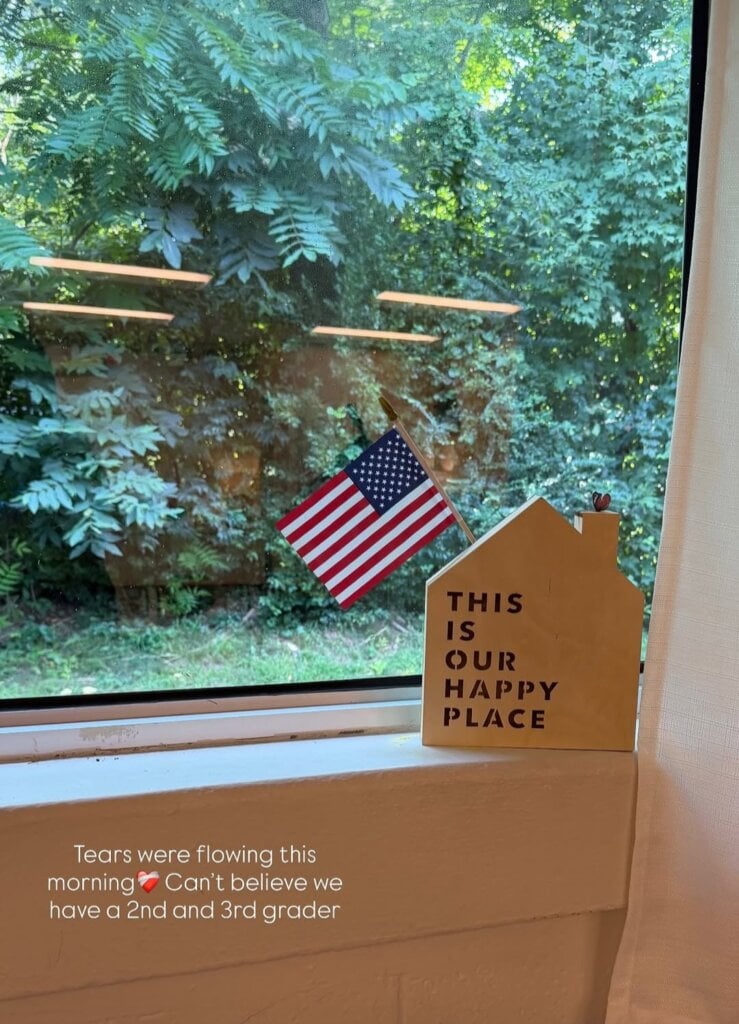
In an Instagram post shared early Wednesday, Brittany recapped the eventful day with her followers, revealing that their children, Memphis and Navy, headed back to school. Photos showed the siblings dressed in their school uniforms and posing for pictures before starting second and third grade.

“Tears were flowing this morning,” Brittany wrote. “Can’t believe we have a 2nd and 3rd grader.”

Brittany Aldean, Instagram Story

The emotions continued as Brittany revealed they also “sent one off to college,” referring to Jason’s second-oldest daughter, Kendyl. She shared a photo of Kendyl driving away, along with a sweet moment that showed Navy running down the driveway after her older sister and photos capturing their final hugs before Kendyl began her college journey.

But the big moments didn’t stop there. Brittany and Jason also “checked on the new house,” sharing a glimpse of the property, which appeared to be an active construction site with dirt covering the land.

They wrapped up the busy day with a “brunch date,” where Brittany jokingly pointed out that Jason chose biscuits and gravy “over everything.”

Comments poured in on the post, with followers offering words of encouragement and support as Brittany navigates those bittersweet moments of watching her children grow up right before her eyes.

After the emotional day, things will quickly get back to business for the Aldean family, with Jason Aldean’s Songs About Us Tour resuming on August 14 in Wheatland, California. The platinum-selling star will then head to Fresno on August 15 before joining Luke Bryan for a show on their Double Down Tour in San Diego on August 16.

Jason Aldean; Photo by Spidey Smith

On the music front, Aldean recently followed his 32nd No. 1 at country radio with “Anytime Soon,” the latest single from his album Songs About Us. The song made an immediate impact at country radio, earning the most adds last week. 

Additionally, Aldean is celebrating a new wave of RIAA certifications, including the 6X Platinum certification of his My Kinda Party album, further cementing his status as one of country music’s best-selling artists. The newly certified releases include My Kinda Party (6X Platinum), “My Kinda Party” (5X Platinum), “Fly Over States” (4X Platinum), “Any Ol’ Barstool” (3X Platinum), “Amarillo Sky” (3X Platinum), “Don’t You Wanna Stay” with Kelly Clarkson (2X Platinum), “Tattoos On This Town” (2X Platinum), “Hicktown” (2X Platinum), “Why” (2X Platinum), “Lights Come On” (2X Platinum), “Little More Summertime” (Platinum) and They Don’t Know (Platinum).

The post Jason Aldean’s Wife Brittany Shares Emotional Family Update: ‘Tears Were Flowing’ appeared first on Country Now.

​Country Now