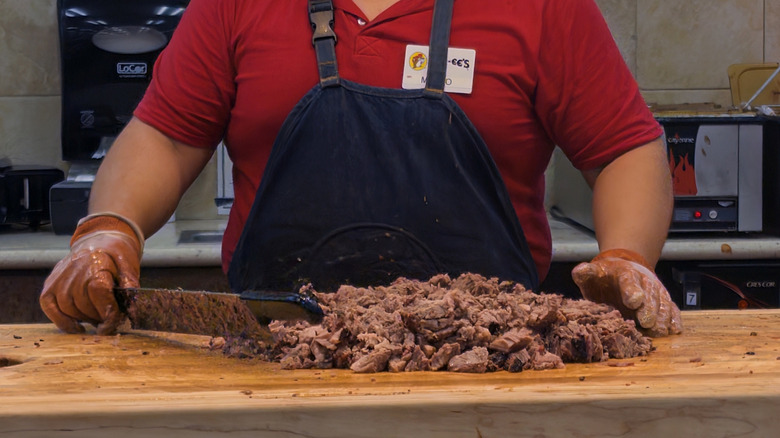
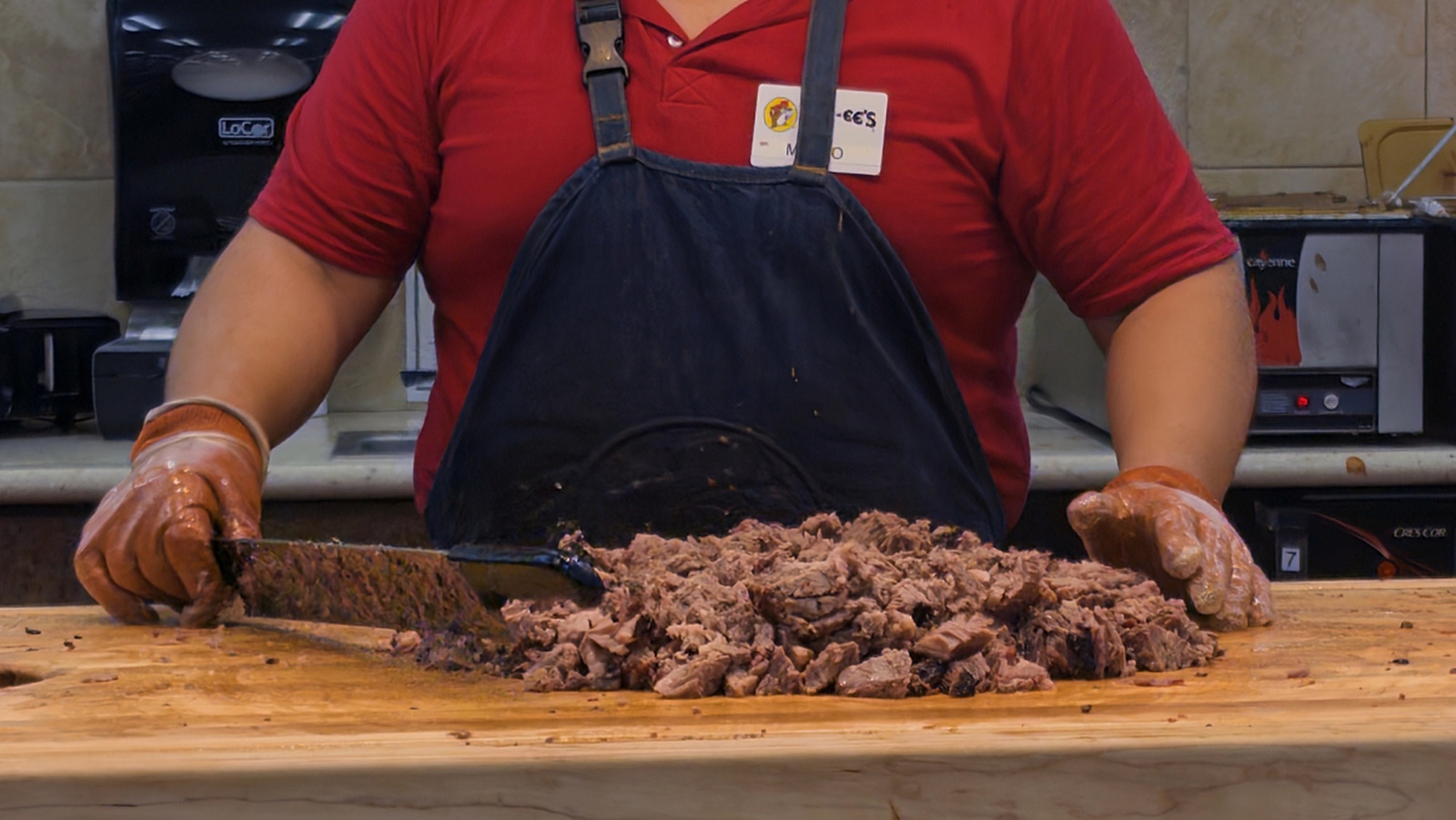
Buc-ee’s brisket doesn’t just come in sandwich form. In fact, customers who are in an especially meaty mood can request this option instead.
Mashed – Fast Food, Celebrity Chefs, Grocery, Reviews








Buc-ee’s brisket doesn’t just come in sandwich form. In fact, customers who are in an especially meaty mood can request this option instead.
Mashed – Fast Food, Celebrity Chefs, Grocery, Reviews

The Associated Press has had its say. The coaches have had their say. Now it’s time for me to chime in on the 2026 preseason top 10. Last year matters no more. New players. New rosters. New season. If you’re putting Indiana at No. 1 because the Hoosiers won the title last year, you’re doing this all wrong. If you’re putting the Hoosiers at No. 1 because you think IU is the best team in the country in 2026, then that’s fine. There’s definitely a stratum for the upcoming season. The top seven seem pretty clear, and one could make the case for any of the top seven to be slotted in any of the seven spots. You wouldn’t get an argument from me. Then again, last year at this time, I said Penn State to make the CFP was the safest bet there was, and then by mid-October, James Franklin was fired. So clearly my crystal ball at this time of the season is spot on. Anyway, here’s how I see it going into the year. We’ll see what changes we get from one week to the next. And trust me, we’ll get them. This page may contain affiliate links to legal sports betting partners. If you sign up or place a wager, FOX Sports may be compensated. Read more about Sports Betting on FOX Sports. To Make CFP: +200Title Odds: +3000 Obviously, coaching staff turnover is a big deal, as Charlie Weis Jr. is no longer in Oxford calling the plays. But with Trinidad Chambliss at QB and Kewan Lacy at RB, the Rebels have a chance against anyone. To Make CFP: +160Title Odds: +1700 Could swap in a few different teams here, but the talent level at LSU appears to be top 10. I don’t know how it will all work out against this schedule, but at least to start, we’ll slot them here. To Make CFP: +210Title Odds: +3000 The Sooners are this year’s prime candidate as the most likely team where the power rating doesn’t align with the W-L record. The defense should be exceptional, but I still have questions about the offense. The OL and RB need to be better, especially against the ridiculously tough slate of opponents the Sooners have lined up. To Make CFP: -240Title Odds: +850 The run of SEC teams begins here. Georgia is the only SEC team I am confident will win 10 games. The defense should be much improved, the schedule is as favorable as it comes in SEC world and talk is the offense should have some game-breakers at WR. Are the Dawgs national champ quality? Yes. But I still think they are behind a few teams in the pecking order. To Make CFP: -350Title Odds: +900 OK, just hear me out for a second. The Hoosiers did a helluva job reloading in the portal while making their title run last season. They also got a boon in recent weeks with the return of Stephan Daley and Kellan Wyatt per a court ruling. They clearly have one of the top rosters in the country, but here are the questions I would ask: Can every high-leverage play go IU’s way again this year? Literally every play they needed to go their way last year did just that. Will the loss of the JMU vets have a bigger impact than maybe we are expecting? Can Josh Hoover eliminate the turnovers and make the plays Mendoza did? Cignetti has said all the right things about Hoover having a defense and a running game to fall back on, but you just never know. To Make CFP: -280Title Odds: +1000 Two things can be true: Miami is potentially more talented than the team that came up just short last year in the national title game and Miami also might have trouble replacing the guts of the team in leaders like Keionte Scott, CJ Daniels, Keelan Marion, Francis Mauigoa and Rueben Bain. After the late-season drive and coming so close last year, will there be complacency or even more motivation? The Canes are as big of a favorite as there is to win a league. And remember, Miami has never won the ACC. If Miami’s talent and leadership come together, this is a national title contender. But if the LBs struggle or the lethal combo of Bain and Mesidor can’t be replaced or depth behind Mark Fletcher doesn’t perform to expectations, then a season which falls short of expectations could be in the cards. Still, I’d expect a return CFP trip. To Make CFP: -200Title Odds: +650 Few teams have been as overrated in the preseason poll lately as Texas. Maybe I’m falling victim to the hype again, but this roster is loaded outside of potential concerns at OL. Although it appears the Longhorns avoided serious injury with Trevor Goosby, they could really use him back for the Ohio State game. The Longhorns added elite players at LB, RB and WR in the portal, and Arch Manning’s growth throughout the 2025 season will serve him and his team well this season. I’m not trying to project a W-L record here, but the Texas schedule is no joke. And I’m curious to see how many losses (if any) the Longhorns find this season and how the CFP will rank them. But it might be fair to ask — if not now, then when for one of CFB’s highest-paid rosters? To Make CFP: -360Title Odds: +600 The writers and coaches have the Buckeyes at No. 1, but I’m going to slot Ohio State here instead. Look, Ohio State recruits as well as anyone, but the Buckeyes’ final two games of last season have me slightly concerned. The offensive line was over-matched by two great defensive fronts and QB Julian Sayin did not look good. How will new OC Arthur Smith fit in? What about the massive losses on the defensive side of the ball? Nobody is — or should be — crying for Ohio State and its problems entering the season, but I don’t think the Buckeyes are a CFP cinch as they’ve been the last two years. To Make CFP: -320Title Odds: +750 The Ducks probably have as few questions as anyone entering the season, but a couple of camp injuries might cloud things just a bit early on. Those close to Oregon have been touting 2026 as the year the Ducks finally break down the door of the national title club. It’s hard to argue with that thought process, as Dante Moore returns with a dangerous WR corps and a dominant defensive front. Oregon’s season has ended in ugly fashion each of the last three years and there’s every reason to believe that will not be the case in 2026. To Make CFP: -800Title Odds: +600 One could nitpick about replacing Jeremiyah Love and Jadarian Price, or who will be the deep threat at WR, but this Irish team is loaded. Residing in South Bend is one of the best — if not the best — defenses in the country, along with one of the top QBs in the country in CJ Carr. The Irish missed the Playoff last year in a season where they were power rated as a playoff team. Now, the hunger, drive and motivation to get back to the national title game, as they did in 2024 (and win it), is evident. The Irish are No. 1 until they show me they aren’t.Latest Sports News from FOX Sports

Disappearing foods may sound dire, but at least you can prepare yourself for some of the culinary changes that might be coming our way, and maybe pretty soon.

Mashed – Fast Food, Celebrity Chefs, Grocery, Reviews

To ensure your slow cooker barbecue chicken is as flavorful and delicious as possible, be sure to add a can of your favorite cola to the mix.

Food Republic – Restaurants, Reviews, Recipes, Cooking Tips

WASHINGTON — There’s something about Washington that breeds bureaucracy. Just to create a 1.7-mile racetrack, Penske Corporation needed 1,350 pages of permits. Compare that to 200 or so for a similar-sized course in Detroit. And there in Detroit, the organizers would work with local and state police with a little bit of help from the FBI. Maybe 200 officers in total. Washington? More than 500 National Guard will work the event, in addition to 1,300 Metro Police Department personnel, Alcohol Tobacco and Firearms personnel, FBI, Capitol Police, U.S. Parks Police and the Secret Service. Penske Corporation President Bud Denker, who has spent most of the last seven months living in Washington D.C., said he expects 140,000 people each day on Saturday and Sunday. What has been the biggest challenge since President Donald Trump signed the executive order in late January to make the event possible? “Complexity in a compression of time,” Denker told me as he drove me around in a parade car on the nearly completed course Wednesday morning. Such is the challenge for what INDYCAR hopes will be an epic event on Sunday — 147 laps (250 miles) on a course that includes Pennsylvania, Constitution and Independence Avenues. “The places that we’re racing on [are] the three most important streets in our country,” Denker said. In order to have a 40-foot-wide racetrack and a pit road (with a 17-foot-wide pit box and two 11-foot-wide driving lanes) and the walls, they need a 91-foot-wide ride. Pennsylvania Avenue is 92 feet wide. They had 288,000 requests for tickets, the bulk of which were free and will either be inside the track perimeter or in the National Mall area outside the perimeter. There will be approximately 70,000 fans on each side, and their tickets likely won’t let them go both inside and outside the track perimeter. Denker estimates that 40 percent of the fans will come from outside the metro area, with many from the East Coast, where INDYCAR doesn’t have many races. While all street races disrupt local life, the fact that Congress is not in session and school is starting across America, means this is not as busy a time for hotels and restaurants, according to Denker. The concrete barriers for the course were built in Fredericksburg, Virginia. There were 1,800 of them. The pit road walls, which were not as big, came from Chicago. More than 200 manhole covers had to be welded and several had to be covered with a temporary surface because they were recessed into the street. There was also one area from Independence to Maryland Avenue where they had to remove part of a median and take out a traffic light. Rarely would that be done at other tracks, Denker said. Adding to the complexity was the ownership of land that is part of the footprint, which includes various federal properties (such as the Smithsonian, federal office buildings, the National Mall) and city properties. There are reports that Penske has spent $35 million on this race. Denker indicated it was more than that. They have massive three-story temporary suites that should rake in millions to help offset the costs, but they also spent a pretty penny on them. Typically, the temporary suites wouldn’t have restrooms built into them and they would be at the bottom of the structure. But these have them on each floor, at a cost of $1 million, according to Denker. They brought in viewing platforms from the Long Beach Grand Prix (also a Penske race) for those with general admission tickets. The race also has attracted sponsors such as Starlink and Boeing, companies that typically aren’t active in motorsports but whose government business is precious. Penske Corporation only had 13 full-time staff come in from Detroit to do much of the pre-event work. Monumental Sports — which owns the NBA Washington Wizards and the NHL Washington Capitals — handled the suite sales. Harbinger Events, another local company, is handling much of the interior fencing and logistics. The transit authority has been helping get the word out about the traffic disruptions as well as trying to get the word out for people coming to the track on the best way to get there and the entry points. “The INDYCAR Series, Penske Entertainment, they’re working on the event as a whole and making it pretty incredible for everybody that’s going to tune in and we’ll be a part of that,” two-time series champion Josef Newgarden told me on Monday. “I more so want to focus on what the track’s going to be like and what do we need to be doing to win the race?” The first thing he’ll have to do is manage the unique start. Assuming Trump waves the green flag, he most likely can’t be in the flagstand. He would do it from the bulletproof-glass-encased suite in Turn 1. So drivers will take the green just after coming off a turn, which could be an adventure in and of itself. That probably isn’t going to be the easiest way to start a race, but it’s part of the challenge in putting on this spectacle. As workers continued construction of that area, it was pretty easy to see that security measures were being put in place. It is a lot for what will likely be a one-time effort. This was such a big lift, but Denker feels he could do it again. “I could race this course again,” Denker said. “Everybody’s been that cooperative. That’s not the issue. The issue is you only have one 250th anniversary.”Latest Sports News from FOX Sports

South Carolina Sen. Darline Graham has given opponents fresh ammunition to attack her on her biggest vulnerability: her inexperience.
She revealed a major blindspot in her understanding of a critical foreign policy issue, U.S.-Taiwan relations, during Tuesday’s debate for the Aug. 25 snap Senate primary runoff to replace her late brother Lindsey Graham. Her response spread like wildfire on social media, with critics saying it proves she is “unprepared” to take office.
Asked whether Taiwan and the South China Sea are relevant national security priorities, Graham responded: “I’m just going to be honest here … I’m not that informed on national security, so.” She added that “national security is not my thing, not my area of expertise, but I do support the military.”
It was a notable acknowledgement from a sitting senator, as tensions rise between China and Taiwan — and as the U.S. preoccupation with the Iran war calls into question how reliable a supporter it might be amid fears of a possible future invasion of Taiwan.
The gaffe exposed the exact weakness that her runoff opponent, GOP Rep. Ralph Norman, has been eager to highlight: the senator’s lack of tenure.
His allies immediately piled on.
Norman supporter and former U.N. Ambassador Nikki Haley wrote in a post on X that foreign policy experience is “not something you inherit” — a swipe at Graham’s appointment to fulfill her brother’s current term. Ken Cuccinelli, a former Trump administration official, expressed support for Norman, writing that Graham has “worked hard to hide any firm positions, and here she is at least being honest.”
“It very much confirmed many of our suspicions that while she might be a very nice lady, she is woefully underprepared or unprepared to be one of the 100 U.S. Senators in the Senate,” state Rep. Jordan Pace, who is supporting Norman in the runoff, said in an interview.
Norman said in a statement that South Carolinians deserve a senator with “know-how” on foreign policy: “Whether it’s spy balloons flying overhead or buying up land near South Carolina military bases, China continues to prove that it is a threat to the United States.”
Graham’s campaign, asked to clarify her response on U.S.-Taiwanese relations and her critics’ attacks over her misstep, pointed toward comments she made in the spin room after the debate: “What’s important are the people of South Carolina. They’re worried about their pocketbooks more than they’re worried about the South China Sea, quite honestly.”
Graham’s answer is also raising eyebrows among some of her own allies, with less than a week before next Tuesday’s election. And it increases the pressure on President Donald Trump, who had championed Graham’s appointment in July, encouraged her to run for a full term and is even planning to rally with her on Friday to boost her election chances.
“[Darline] just doesn’t have the experience of executing, you have to be able to deliver a story about herself and right now her story is that she’s Lindsey Graham’s sister,” said a former Trump administration official, granted anonymity to speak openly about private conversations.
The White House is still backing Graham, this person said, because the president had a close relationship with the late senator but also sees her as a better alternative to Norman, who endorsed Haley over Trump in the 2024 Republican presidential primary.
A second person familiar with the White House’s thinking, granted anonymity to speak candidly, said, “POTUS is still all in on the endorsement.”
The White House declined to comment on Trump’s support for Graham.
Still, the flub highlighted the danger for Trump, as he seeks to propel a political novice into a six-year term in the Senate and avoid yet another stain on his endorsement record. His high-profile rally for Graham in Myrtle Beach later this week is a particularly notable step in a year otherwise marked by a decrease in his explicit campaign travel.
Norman, for his part, said during the debate that Taiwan is a “definite ally” and that Trump is right to enable them to “defend themselves against China.” He declined to take a swipe at Graham over her comment in real time, but that hasn’t stopped his supporters from hammering the newcomer for the embarrassing misstep.
Graham’s stumble was a far cry from her late brother’s hawkish defenses of Taiwan, in which Lindsey Graham had openly criticized the expansionist aims of Chinese President Xi Jinping, called allies of China “dirtbags” and stressed the need to maintain the status quo between Beijing and Taipei to protect U.S. national security interests.
“Anyone running for a seat in Congress should be able to explain to the American people why Taiwan is important to American interests. Taiwan is a vibrant democracy of 23 million people and the source of over 90 percent of the world’s advanced semiconductors,” said Bonnie Glaser, managing director of the German Marshall Fund’s Indo-Pacific program. “A Chinese takeover by force would shatter U.S. credibility with its allies across the Indo-Pacific.”
American intelligence has long suggested that China’s People’s Liberation Army will be sufficiently capable of seizing the island starting in 2027.
Trump in June said he was open to speaking with Taiwan’s President Lai Ching-te, despite China’s warnings against doing so, in what would be the first direct dialogue between American and Taiwanese leaders in decades.
But the U.S.’ war with Iran is casting doubt on how effective an ally the Trump administration will be if China does invade Taiwan. Extended naval deployments to support airstrikes against Iran and a corresponding blockade of its ports have left the U.S. without a deployed aircraft carrier in the Indo-Pacific, as the USS George Washington steams toward the Middle East to relieve the extended Abraham Lincoln carrier, for instance.
The heightened risks and the rapid race to replace Lindsey Graham have left some in South Carolina’s GOP circles feeling less than optimistic about the choice they have to make to select a key proxy in Washington.
“It was shocking how we’re gonna give someone who was on stage last night six years in the U.S. Senate, and I think that’s the overall impression people are having today” said one South Carolina-based Republican operative who has stayed neutral in the Senate race and was granted anonymity to speak candidly. “One of these two is gonna get six years in the Senate? Like, big hanging question mark.”
Politics

Reading Time: 2 minutes
In the wake of Hayden Panettiere’s death, her mother, Lindsey Vogel, made some surprising remarks.
Specifically, Lesley blasted Hayden’s boyfriend, Brian Hickerson, saying that the family had been “trying to get rid of” him.
Now, Gayle King is calling out Vogel for using a family tragedy as an opportunity to toss out insensitive remarks that should have remained private.
During Wednesday’s episode of CBS Mornings, King and her co-hosts discussed Vogel’s public statement about her daughter.
In addition to her comments about Hickerson, Vogel described Hayden as talented but said she had “lost her way” and wished she had “stayed true to herself.”
For King, the comments were difficult to hear.
“You know, guys, you read this and all I can think is, ‘Thanks, Mom, for nothing,’” King said.
The veteran journalist had interviewed Panettiere earlier this year, when the actress was promoting her memoir, This Is Me: A Reckoning. Panettiere had been candid about her struggles and her complicated relationship with her mother.
King pointed out that Panettiere had already spent years publicly acknowledging her mistakes and personal battles.
“You hear stuff like that,” King said of Vogel’s comments, “and you realize that it was still very much in progress.”
King was referring to Panettiere’s description of her relationship with her mother as “very complicated” and a “work in progress.”
Co-host Vladimir Duthiers was similarly critical of Vogel’s decision to focus on her daughter’s struggles so soon after her death.
“Hayden Panettiere spent years publicly acknowledging her own failures, her own struggles,” Duthiers told King.
“She cannot respond now, and for her mother to use these days after Hayden’s death to just remind the world just how much trauma she caused, it’s unseemly.”
Kelly O’Grady also weighed in, noting that Vogel’s statement would have been received very differently if she had stopped with praise for her daughter.
“If it stopped at ‘She’s amazing and she’s talented,’” O’Grady said, “we would all agree.”
Instead, Vogel also took aim at Hickerson, who was with the actress when she died.
The complicated family dynamic has received renewed attention following Panettiere’s death. In her memoir and subsequent interviews, the actress spoke openly about her strained relationship with Vogel and the difficulty of separating their roles as mother and manager.
King ultimately expressed sadness over what she viewed as a missed opportunity to simply honor Panettiere.
“It makes me so sad of the opportunity that you have after your daughter’s death that that’s what you choose to leave us with,” King said.
Panettiere’s father, Skip Panettiere, took a markedly different approach in his tribute to his daughter, calling her “an incredible light and a force of nature who brought immeasurable love and joy to all who knew her.”
The actress’ official cause of death has not yet been confirmed. An autopsy reportedly found no signs of trauma, with toxicology results still pending.
We will have further updates on this developing story as new information becomes available.
Gayle King Blasts Hayden Panettiere’s Mom For Insensitive Comments In Wake of … was originally published on The Hollywood Gossip.
The Hollywood Gossip

High water laps at the Kivalina shoreline in 2012. The Inupiat community on the Chukchi Sea coast is battered by erosion, storm surges and other effects of climate change. A relocation plan is in the works. (Photo provided by Alaska Division of Community and Regional Affairs)
Two-thirds of Americans are worried about climate change, but many don’t realize how they can play a significant role in climate action — at least, not yet.
Deadly wildfires regularly scorch California. Last winter, much of the Rockies received record-low snow, signaling water woes for millions. Then a spring heat wave hit the West, decimating what little snowpack remained. Many people understand that scientists attribute the intensity of such events to the climate crisis, but it’s not always clear how that knowledge can translate into action. Atmospheric scientist Katharine Hayhoe has a suggestion for where to start: Talk about it.
Hayhoe, a professor at Texas Tech University, is known for both her research and her outreach, including her Talking Climate newsletter. She has a knack for connecting with people and meeting them where they are while also keeping the big picture in mind. High Country News recently caught up with her to discuss why it’s important to talk about climate, and how to do so.
Through her writing and public events, Hayhoe emphatically makes the case for hope amid a world of climate despair, doom and denialism. Perhaps the 2030s will bring a new mass movement, calling for bold climate action and transforming society for the better. If so, Hayhoe shows how that future may have humble beginnings, arising from numerous chats with neighbors and classmates, at bus stops and barber shops, in everyday life.
This conversation has been edited for length and clarity.
High Country News: You’ve argued that we can solve climate change by talking with others about it.
Katharine Hayhoe: I’ve argued that the first step is to have a conversation. What people don’t understand is that talking catalyzes action. If we want to catalyze action in any sector, whether it’s in electricity, transportation, food, resilience or anything, talking is the first step.
HCN: How does talking catalyze action?
KH: First, if you look at the data, the majority of people are worried about climate change. In the U.S., that’s about two-thirds; in other countries, it’s more. Yet less than half of them hear someone talk about climate change even once in a while. If we don’t talk about something, why would we care? If we don’t care, why would we do anything?
We need three things: “head, heart and hands.” The head is understanding that this thing is real and it’s happening, and that’s where a lot of people already are right now. But sometimes when you ask people who are worried about it, “Do you think it will affect you?” a lot of people say, “No.” But it’s already affecting you; you just haven’t connected the dots. So, we need to connect the head to the heart.
Then we need to connect the heart to the hands. What do real solutions look like that are already being implemented and can be scaled and can make our life better? That’s what I’m talking about talking about.
HCN: I’m calling you from my home in California, where we’ve got increasingly intense wildfires, heat waves, sea-level rise, droughts and occasionally floods. How do you see lived experiences like these driving — or not — calls for systemic change to address the climate crisis?
KH: I live in Texas, which is similar to California: We have every type of disaster you can imagine.
For years, I’ve been asking people: Do you feel like the weather is getting weirder? I haven’t had a single person tell me they didn’t think so. Most people have tons of stories to tell me. Then I just help them connect the dots. I say, “That’s exactly what’s happening here, and it’s happening all over the U.S. and all around the world. This is the number-one way that climate change is affecting us.” Then we’ve closed the head-to-heart gap, just like that — and they did it themselves.
Quotation “What people don’t understand is talking catalyzes action.”
– Katharine Hayhoe
HCN: What do you think about systemic change at this time when it seems like even modest climate-related policies are being dismantled by the Trump administration?
KH: There’s no question that the current administration is doing its best to alter the slope down which the giant boulder of climate action is rolling. That’s the way I think about it. That giant boulder is already rolling down the hill, and it already has millions of hands on it — and federal policy can change the slope, making it easier or harder for that boulder to roll downhill.
When you look around at individuals, and cities and companies and states in the U.S., action is still happening, even though it’s the federal government that dominates headlines. That boulder is rolling down the hill. You cannot stop clean energy.
HCN: Lately, we’ve seen a “climate hushing” phenomenon: a reluctance to discuss the subject, seemingly because of today’s political atmosphere. How have you seen that play out?
KH: I think that it is primarily occurring in response to the U.S. federal government. I have noticed a decrease in the number of people and organizations who want to talk about climate change, especially organizations concerned about the potential for reprisals from the federal government.
HCN: What do you think is the best way to combat climate hushing?
KH: If you really understand (the benefits of climate action) and you understand what’s at risk if we don’t act, then we can talk about these actions in ways that do appeal to people.
Years ago, I was starting to realize that climate change is a hot-button phrase. I was asked to speak to our water managers in Texas, who are very focused on data, long-term trends and droughts. The two people speaking before me at the conference were a state representative and a state senator who explicitly rejected the reality of climate change — so I thought to myself, why don’t I try something different?
I’ll talk about all the same things: I’ll talk about climate variability, historical data, future projections and climate resilience. But I’ll never say the words “climate change.” So I did that, and everybody liked it, and there were lots of positive comments and feedback. The funniest moment was when one woman ran up to me afterwards and grabbed my hand and shook it up and down. She said, “That was fantastic. Everything you say makes sense.” And then she said, “Those people who talk about global warming, I don’t agree with them at all. But I agree with everything you said!” That showed me that it’s more what we talk about than how we talk about it.
“It’s more what we talk about than how we talk about it.”
– Katharine Hayhoe
HCN: A lot of people are feeling despair about climate change. But as Rebecca Solnit and others have said, it’s not too late to make the future less bad. Do you have thoughts on how to encourage people to channel that despair into motivation and climate action?
KH: People who feel despair are 100% there in the head; they get it. Many of them have also made the head-to-heart connection. They understand that it’s about their future, and the people and places they love. But they have not made the heart-to-hand connection. They think there’s nothing that can be done.
What’s partly at fault here is our very Western focus on individual action, like eating plant-based, what we drive, how we travel, how we live. As Bill McKibben says, the most important thing an individual can do right now when it comes to climate action is not be such an individual.
Work together with others. That’s how social change has happened in the past. It didn’t happen because of people taking action in their personal life; it happened because of people using their voices to advocate for change. We know some of their names, like Martin Luther King Jr. There were thousands of other people who marched with him and advocated with him. Those people are us, and that is how we can change the world.
We welcome reader letters. Email High Country News at editor@hcn.org or submit a letter to the editor. See our letters to the editor policy.
This article appeared in the August 2026 print edition of the magazine with the headline “Why climate conversations matter.”
This article first appeared on High Country News and is republished here under a Creative Commons Attribution-NonCommercial-NoDerivatives 4.0 International License.
SUBSCRIBE: GET THE MORNING HEADLINES DELIVERED TO YOUR INBOX.

When you think Azerbaijani cuisine, you must include the pomegranate. Not only is it an important part of its culture, but its cuisine relies on it too.

Food Republic – Restaurants, Reviews, Recipes, Cooking Tips
![<a href="https://tasteofcountry.com/pat-mcafee-country-album-the-diary-of-a-polarizing-figure-review/" target="_blank">Pat McAfee’s Country Album Has a Fundamental Problem: [REVIEW]</a>](https://townsquare.media/site/204/files/2026/08/attachment-pat-mcafee-country-album.jpg?format=natural)
Pat McAfee wrote 14 songs on his new country album, ‘The Diary of a Polarizing Figure.’ Continue reading…Country Music News – Taste of Country