Philadelphia police revoked the carry licenses of five members of the Black Lion Party for International Solidarity, citing ‘good cause.’ Is that constitutional?









Philadelphia police revoked the carry licenses of five members of the Black Lion Party for International Solidarity, citing ‘good cause.’ Is that constitutional?
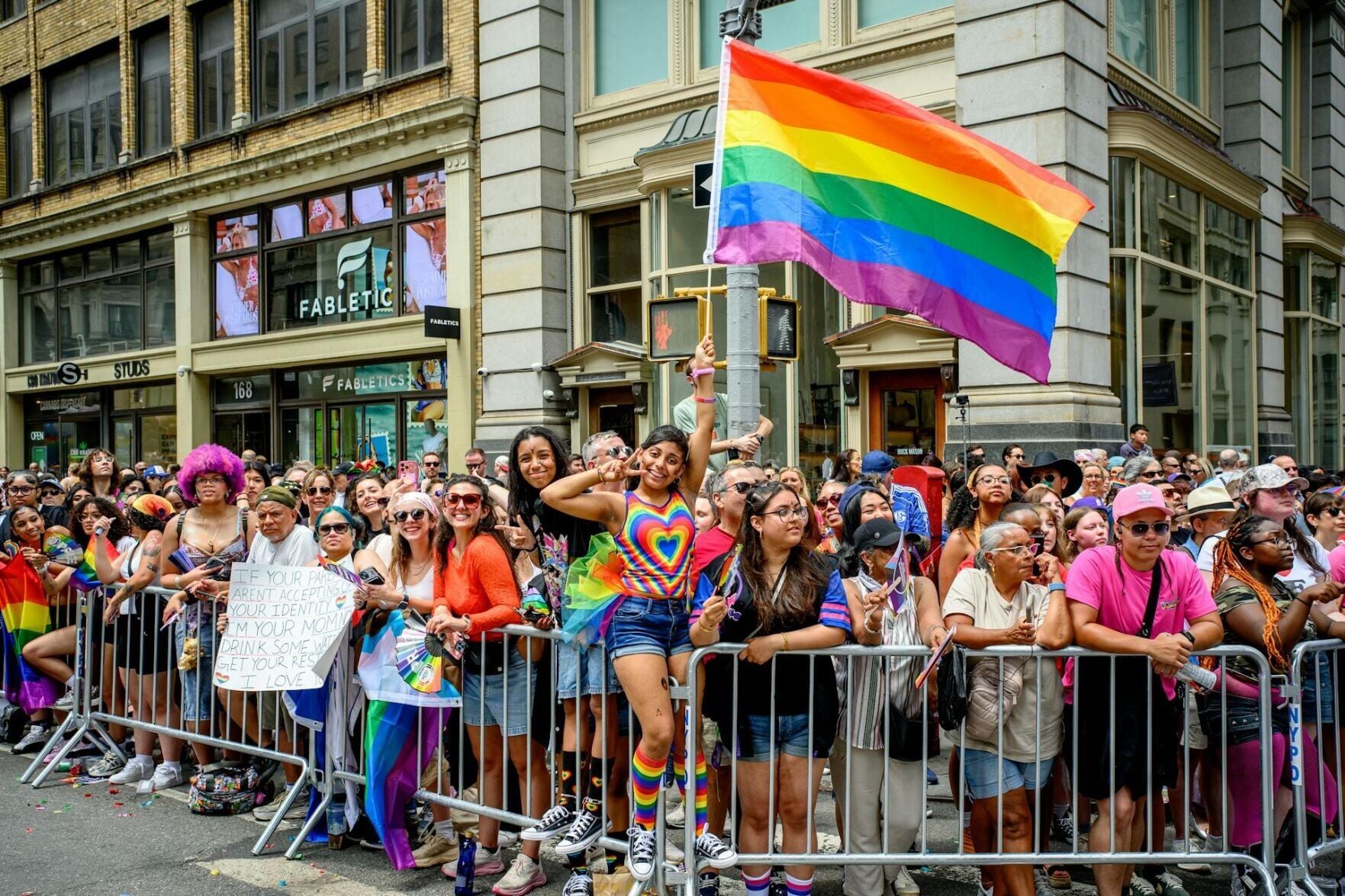
The boundaries of heterosexuality are bending for women but not for men, who appear to have less room to explore and are bound to a more rigid, traditional concept of masculinity.
Post Content

 It was rare, but Robert Pattinson couldn’t be there.
After Taylor Swift and Travis Kelce tied the knot in a star-studded Madison Square Garden ceremony July 3, the Twilight alum detailed why he…
E! Online (US) – Top Stories
Garth Brooks is planning a major arena tour for fall 2026. It’ll be a callback to one of his biggest tours ever, which launched 30 years ago in 1996. Continue reading…Country Music News – Taste of Country
Garth Brooks is planning a major arena tour for fall 2026. It’ll be a callback to one of his biggest tours ever, which launched 30 years ago in 1996. Continue reading…The Boot – Country Music News, Music Videos and Songs
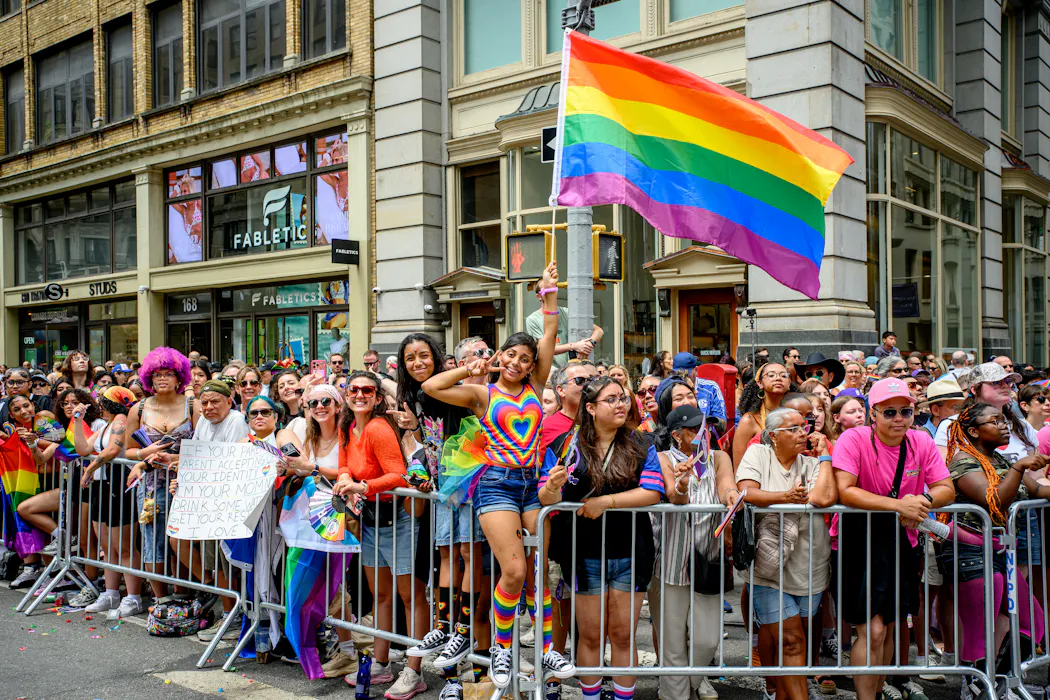
Young women are moving away from exclusive heterosexuality faster than young men.
In a recent poll, Gallup found that LGBTQ+ identification has more than doubled since 2012, with especially high rates among Gen Z women, or those born between 1997 and 2012. In 2023, 28.5% of Gen Z women identified as LGBTQ+, compared with 10.6% of Gen Z men.
As researchers who study sexuality, gender and young adulthood, we, along with our former colleague Sarah R. Young, have tracked these patterns in our Human Sexualities Research Lab since 2011. The national trend matches what our interdisciplinary team – spanning psychology, social work and gender studies – has documented over a decade.
Our most recent study asked whether young women and men are changing in similar ways across three measures of sexual orientation: sexual attraction, or who someone sees as a sexual partner; sexual behavior, or who their sexual contacts or partners actually are; and self-identification, or how they label their sexuality. Our findings suggest they are not. In our analysis, this gender gap is not only about who claims an LGBTQ+ identity; it is also about how the boundaries of heterosexuality are changing.
Identity is only one part of sexual orientation. People also differ in who they are attracted to and who they have sex with.
In a study now under review, our team examined 15 years of responses from more than 10,000 public university undergraduates in New York state between 2011 and 2026. We also analyzed more than 700 open-ended responses from 2024 and 2025 in which the same student population explained why they chose their particular sexual identities.
Our research found that, across 15 years, young women have steadily become less likely to report being exclusively attracted to the other sex. In 2011, about 22% of female students reported attraction that was not exclusively to men; by 2026, that had increased to close to 50%. Similar movement appeared across sexual behavior and identity: The share of women who reported not having exclusively male sexual partners increased from 8% to 35%, while the share identifying as something other than exclusively heterosexual increased from 18% to 44%. These trends were broadly consistent across racial groups.
In our survey, students rated sexual attraction on a scale from exclusively other-sex attraction (women attracted only to men; men attracted only to women) to exclusively same-sex attraction (women attracted only to women; men attracted only to men). For young women, the shift was not mainly from exclusive attraction to men to exclusive attraction to women. Instead, women’s responses spread across the scale, from mostly attracted to men to mostly attracted to women. The largest change was a decline in exclusive attraction to men.
Young men showed no comparable long-term shift and instead remained concentrated in exclusive heterosexuality; any movement away from that was limited and less sustained. The share of male students reporting attraction that was not exclusively to women remained nearly unchanged: about 14% in 2011 and 13% in 2026. This lack of movement was also seen in behavior and identity.
Among students who identified as something other than exclusively straight, male students were more likely to report exclusively gay identities than female students were to report exclusively lesbian identities. This is consistent with gender norms that leave men less room for sexual ambiguity and sort male desire into either entirely straight or entirely gay.
Researchers and journalists have suggested Covid-era lockdowns changed conditions for exploring sexuality and gender: Social life moved online, dating was interrupted, and some people had more time for reflection, online connection and experimentation away from peer scrutiny.
Our research does show a pandemic-era shift. Around 2020, more women reported being attracted to people other than just men, a change that leveled off somewhat after 2023. But COVID-19 lockdowns did not create the broader trend. Among women, movement away from exclusive heterosexuality was already visible before 2020 and has since continued along the same general path.
In contrast, there was no steady, long-term movement among men away from exclusive heterosexuality. The changes we observed were smaller and more concentrated around the pandemic and the years that immediately followed.
To understand why these changes matter, consider what feminist writer Adrienne Rich argued more than four decades ago: Heterosexuality has never simply described who someone desires. As a social expectation, it has helped define women and men as complementary but unequal. It gives men greater authority and social status, encourages women to organize their attention, care and futures around men, and makes that arrangement appear normal, natural and even romantic. As the norm, it also stigmatizes those who do not conform.
Over the past century, feminist movements expanded women’s access to education, paid work, political rights, contraception, divorce and other legal protections. Those changes made adult life outside of heterosexual marriage easier to imagine and, for some, easier to pursue. Although scholars argue this progress has been uneven and, in some areas, has stalled, women today encounter a wider range of possible futures – professional, partnered, child-free, queer, bisexual, activist, caregiver or combinations of these.
At the same time, LGBTQ+ visibility, same-sex marriage, online queer communities, expanding language for sexuality and gender, and the #MeToo movement have challenged the idea that heterosexual partnership should be the unquestioned center of women’s lives.
Similar efforts to reimagine masculinity have existed for decades, but they have had less cultural reach and have not loosened masculinity’s reliance on heterosexuality to the same extent. For many, masculinity is still tied to heterosexual dominance, sexual confidence with women and distance from anything seen as gay or feminine.
Heterosexuality also still offers men advantages in relationships, including authority, sexual entitlement and unequal freedom from domestic labor.
Feminist progress loosened assumptions that men and women naturally complete one another through heterosexual relationships. As gender becomes less tightly bound to heterosexuality, marriage and family, some people have found room for exploration. Others have responded by trying to restore more traditional views of masculinity, femininity and heterosexual roles.
That may explain why public arguments about what young adults should want – in dating, sex, marriage, family and identity – so often circle back to gender.
Whereas some young adults embrace queer, pansexual, nonbinary or fluid self-descriptions, others turn to ideals that restore traditional roles: “trad wife” femininity, which casts homemaking and deference as aspirational; “feminine energy” dating advice that prizes softness, receptivity and letting one’s partner lead; male dominance promoted across the manosphere; or claims that men and women are naturally suited to opposite roles. These attempts to restore traditional gender roles offer certainty as expectations linking gender, sexuality, relationships and adulthood weaken.
Our findings don’t just tell the story of young people becoming less heterosexual or young women becoming more queer. Instead, we believe they support the idea that heterosexuality may no longer organize gender in quite the same way for women and men. For young women, its boundaries appear more permeable. For young men, heterosexuality remains bound to masculinity, status and social recognition.
Our research examined young adults at a pivotal life stage, as they begin figuring out who they are and what they want. But those identities form within a changing social world, shaped by rising LGBTQ+ identification, political backlash over LGBTQ+ rights and shifting expectations for dating and family life.
The larger question is what happens as these young adults carry different relationships with gender and heterosexuality beyond college. Those relationships will shape, and be shaped by, dating, families, workplaces, politics and law. They will also face expectations about what women and men should want, with all the pressures, backlash, policing and resistance that come with them.
In our analysis, the gap between women and men may persist unless masculinity itself becomes less dependent on dominance, control and compulsory heterosexuality.

The authors do not work for, consult, own shares in or receive funding from any company or organization that would benefit from this article, and have disclosed no relevant affiliations beyond their academic appointment.
Politics + Society – The Conversation

Paul Birdsong leads the Black Lion Party for International Solidarity, an armed, Black Panthers-inspired mutual aid group in Philadelphia.
Until February, the 39-year-old carried a firearm during the group’s neighborhood patrols to increase neighborhood safety. Then the police revoked his carry license. Four other Black Lion members lost their licenses the same week.
The city’s revocation letters, by published accounts, explained little. They cited “good cause” and Birdsong’s “character and reputation.”
They also pointed to a tense January 2026 encounter between a group of Black Lion members carrying rifles and a group of officers. The argument at a snowy intersection at 23rd and Diamond streets in North Philadelphia ended in hard words – but no arrests, citations or violence.
On June 9, 2026, the U.S. Department of Justice opened a civil rights investigation into the Philadelphia Police Department’s licensing practices.
Assistant Attorney General Harmeet Dhillon wrote to Philadelphia Mayor Cherelle Parker that her office would examine whether the Philadelphia police can use a “vague ‘good cause’ standard” to cancel permits.
The Justice Department’s press release stated the rule directly: “It is a violation of the Second Amendment for government officials to use vague, personal discretion when determining whether to issue or revoke permits to carry firearms.”
The prevalence of guns in Philadelphia has real public safety stakes. Gun violence in Philadelphia has fallen from its COVID-19 pandemic-era peak, when there were 562 gun homicides in 2021, but the problem remains serious.
As of late June 2026, city data shows 330 people were shot in Philadelphia so far this year, 71 of them fatally. Parker has made violence reduction central to her agenda. That context helps explain why officials may seek aggressive tools, even as the U.S. Constitution limits their discretion.
We are scholars of gun laws and the Second Amendment. One of us is a law professor at the University of Wyoming, co-author of “Firearms Law and the Second Amendment: Regulation, Rights, and Policy” and an unpaid trustee of the National Rifle Association’s Civil Rights Defense Fund. The other is a law lecturer at the University of Pennsylvania who has taught firearms law across the state and country and is a board member of the National Rifle Association, and who has also represented the organization on a variety of matters prior to becoming a board member.
Philadelphia has long been the outlier in Pennsylvania when it comes to public carry. Public carry refers to legally carrying a firearm in public places, whether openly, where the gun is visible, or concealed, where the gun is hidden from public view. Pennsylvania adults may lawfully carry firearms openly without a license everywhere but in the city of Philadelphia. Statewide, a license is always required to carry concealed.
In Philadelphia, however, gun owners need a license to carry openly too. This exception is rooted in the Pennsylvania legislature’s public policy choices made decades ago.
But this Philadelphia-only firearms rule is under constitutional pressure. In 2025, in Commonwealth v. Sumpter, the Superior Court of Pennsylvania held it unconstitutional as applied. The state Supreme Court is now weighing the question.
Yet, for now, the statute remains on the books and still lets a license be revoked for “good cause” or because an official deems the holder’s “character and reputation” dangerous.
The Department of Justice says that’s a problem.
To understand the Department of Justice’s case against Philadelphia, it’s helpful to look back to 2022, when the U.S. Supreme Court decided New York State Rifle & Pistol Association v. Bruen.
In its 6-3 ruling along what are considered typical conservative-liberal lines, the court struck down a New York law that issued carry licenses only to applicants who showed special “proper cause.”
The court drew a clear line. A government may screen permit holders with “narrow, objective, and definite standards” – a background check, a safety course, fixed criteria an honest applicant can know and meet. What the government may not do, the justices ruled, is hinge the right on “the appraisal of facts, the exercise of judgment, and the formation of an opinion.”
The majority added in its ruling, “We know of no other constitutional right that an individual may exercise only after demonstrating to government officers some special need.”
Justice Brett Kavanaugh condemned “open-ended” and “unchanneled discretion for licensing officials.”
The dissent saw it differently. Justice Stephen Breyer, joined by Justices Sonia Sotomayor and Elena Kagan, argued the court should have considered “the State’s compelling interest in preventing gun violence and protecting the safety of its citizens.” In that view, dense urban risks justify more room for local judgment.
But Bruen rejected that approach and ruled that the government’s interest in preventing violence cannot justify vague or open-ended discretion over who may exercise a constitutional right.
If someone in Philadelphia wants to carry a gun, they must obtain a license to carry through the Philadelphia Police Department’s gun permit unit. But without an objective yardstick, two police officers can review the same file and make opposite decisions about the granting of a license.
With a subjective standard, an applicant who is quiet, polished and familiar to the licensing office may pass this test, while another who is equally law-abiding but perhaps less polished or more socially awkward may fail.
One officer might treat a passionate social media post as proof of instability; another might treat it as protected speech.
A rule-bound system asks whether the applicant is legally disqualified. A discretionary one asks whether the official is comfortable with the applicant.
That is how a constitutional right impermissibly becomes a discretionary privilege.
Suppose you could vote only if a clerk judged an applicant’s “character and reputation” sound. Suppose a parade permit could be revoked whenever the marchers’ conduct “troubled” police. That would be intolerable in any other setting – not because every voter or marcher is admirable, but because constitutional rights are not based on a government employee’s benevolent opinion.
Whether someone supports the Black Lions or finds their armed patrols unsettling is beside the point. When the test for stripping a right is “good cause” – words that mean whatever the person holding the stamp wants them to mean – the test itself violates the Constitution.
Other cities, including New York City and Boston, also administer gun-licensing systems with subjective moral-character or suitability standards. However, Pennsylvania’s “character and reputation” language is among the most open-ended, particularly as it relates to the revocation of licenses.
Whatever happened at 23rd and Diamond streets, the dispute is relevant to every gun permit holder in the city: May one of the largest police forces in the country switch a constitutional right on and off according to its own read of a person’s perceived suitability or reputation?
Read more of our stories about Philadelphia and Pennsylvania, or sign up for our Philadelphia newsletter on Substack.

Jonathan S. Goldstein, Esq. is a member of the board of directors of the National Rifle Association. He writes here in his individual capacity.
George A. Mocsary receives funding from the U.S. Department of Education to work at the Firearms Research Center at the University of Wyoming. He is also a volunteer Trustee of the Civil Rights Defense Fund.
Politics + Society – The Conversation
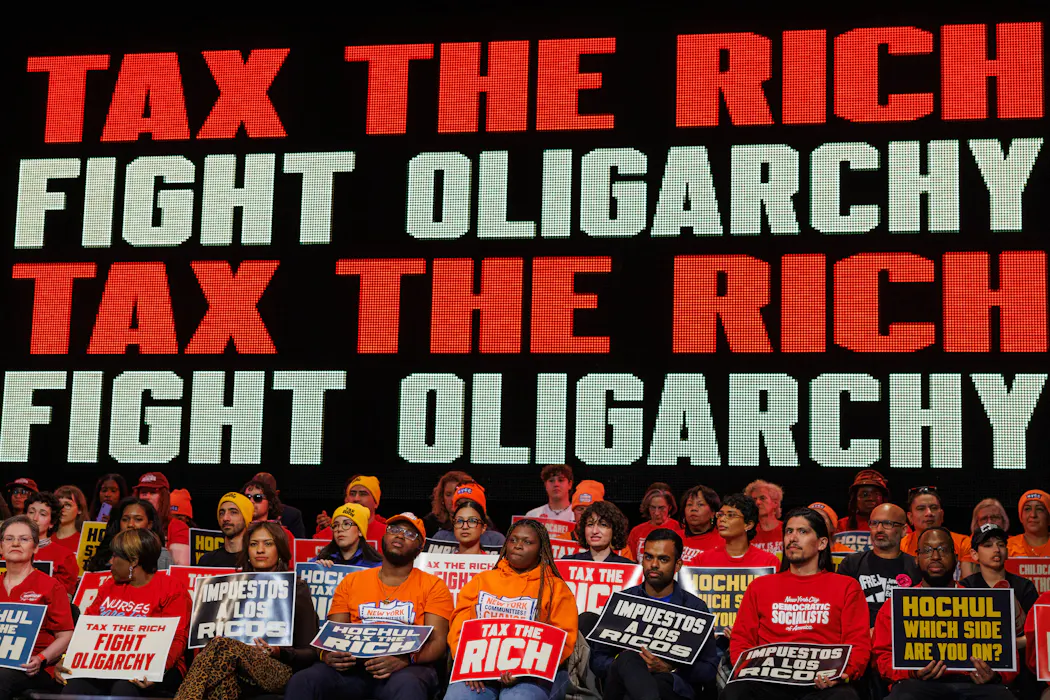
A number of recent high-profile congressional primaries in the Democratic Party have resulted in the nomination of unexpected candidates. Many of these winning candidates have unseated entrenched incumbents, as 29-year-old Colorado attorney Melat Kiros did to U.S. Rep. Diana DeGette, who has been serving in the House for three decades.
Some of these candidates are explicitly running under the banner of the Democratic Socialists of America, known as the “DSA,” a far-left organization known for standard-bearers such as U.S. Sen. Bernie Sanders of Vermont, and U.S. Rep. Alexandria Ocasio-Cortez of New York. New York City’s charismatic mayor, Zohran Mamdani, won his election as a DSA member in 2025 and has since marshaled political support for fellow progressives running for other offices in the city he runs.
Mamdani loaned his star power to three New York progressives, two of them DSA members, in an ad featuring promises to “abolish ICE” and “end corporate greed.” All three went on win their congressional primaries in June 2026.
There is no doubt that the DSA is having a moment within the Democratic Party. And since their candidates in the midterm races are all but guaranteed to win their safely Democratic districts, I believe their influence is likely to be a major factor on Capitol Hill in the next Congress.
That’s especially the case if the Democrats win the House with a narrow margin. The cooperation and votes of a handful of DSA members could be crucial to Democrats’ ability to act effectively as a majority – or not.
That’s because the DSA’s far-left positions on issues such as healthcare in the form of Medicare for All, defunding the police and taxing the ultrawealthy are likely to divide the Democrats, many of whom are more moderate and/or represent conservative districts.
But as a political scientist who studies the many methods politicians have available to represent their constituents, I’m seeing a story that’s more complex than many inside or outside the Democratic Party convey.
Affiliation with the DSA, or even just a far-left ideology, explains only some of the insurgent wins seen in the primaries. In reality, the Democrats’ reckoning is more complicated.

Ascertaining the influence of the DSA in the Democratic Party, or in American politics as a whole, means understanding its membership among both elites and its voters.
Sanders, Ocasio-Cortez and Mamdani are all well known, charismatic and proficient fundraisers on the left, as is Rashida Tlaib of Michigan, a second DSA member of the House. And come January 2027, when a new Congress is seated, at least three more – the aforementioned Kiros of Colorado, along with Darializa Avila Chevalier and Claire Valdez, who won primaries in two heavily Democratic seats in New York in June – will almost certainly be added to their ranks. These figures have all won their nomination contests within the Democratic Party but describe themselves as, and received official endorsements from, the DSA.
Meanwhile, the number of voters who officially affiliate as dues-paying members of the DSA is also on the upswing, nearly doubling since Mamdani began his viral mayoral campaign in 2025. Like their candidates, these voters largely participate in Democratic primaries rather than hold their own third-party contests.
But the DSA’s total official membership remains at around 100,000: formidable, but a minuscule percentage of the population compared to the two major parties. And even among this year’s crop of insurgent Democratic candidates, most do not affiliate with the DSA, including a number of ideological progressives.
For example, Graham Platner, the Democrats’ embattled U.S. Senate nominee in Maine, is an economic progressive who boasts an early endorsement from Sanders. But in an interview late last year, Platner declined to be identified as a democratic socialist, saying, “It’s not my politics.”
Brad Lander, New York City’s former comptroller and city councilman who recently won the Democratic primary against incumbent U.S. Rep. Dan Goldman, is also widely recognized as a progressive – and was backed by Mamdani – but does not currently affiliate with the DSA.

Even among this cycle’s insurgent progressives, political ideology is not the only differentiating element that seems to matter to Democratic primary voters.
And the democratic socialists’ far-right 2010s counterpart, the tea party, can help shed light on these nonideological factors.
The tea party emerged during Barack Obama’s presidency as a far-right ideological movement with an ostensible focus on fiscal conservatism. And in my own research with Stella Rouse and Kristen Essel, we found that tea party-affiliated state legislators were more ideologically conservative in their voting records.
These legislators were also more likely to be white, to have served in the military and to be religiously observant. Other research has identified the tea party movement driven just as much by Obama-era racial backlash as it was by the movement’s stated fiscal concerns.
Most importantly, we found that tea party-affiliated lawmakers in state legislatures shared a number of anti-establishment tendencies and characteristics. They were less likely to have held previous elected office, to have sought party leadership positions or to have worked with the party before holding office.
Many of these same differentiating elements, such as racial and ethnic identity or a distaste for the established way of conducting politics, are clearly factors among insurgent Democrats this cycle, DSA or not.
Many, for example, would add to the ranks of nonwhite members of Congress if elected in November; and nearly all have either questioned or explicitly dismissed the idea of retaining Sen. Chuck Schumer and Rep. Hakeem Jeffries – both New York Democrats – as the party’s congressional leaders.
Age is a related emerging factor in Democratic primaries, which are producing many young nominees.
Kiros, Chevalier and Valdez are 29, 32 and 36, respectively. In the Democratic primary, Platner, 41, beat back Maine’s governor, Janet Mills, who is 78.
And in New York’s 12th District, two comparatively young Democrats, Micah Lasher and Alex Bores, were the top two vote-getters in the race to succeed U.S. Rep. Jerry Nadler, 79, who finally relented to calls for his retirement due to his advanced age. Lasher won the primary and is nearly assured of a win in the heavily Democratic district.
In still other cases, insurgent candidates – DSA or not – have adopted positions on specific issues that mark them as a new generation of Democrats. Most prominent, and controversial, among these is their backlash against Israel, which has propelled an increasing number of pro-Palestine candidates to nomination, often over long-serving incumbents.
For example, the recently defeated Goldman in New York had continued to stake out pro-Israel positions, even as the Democratic Party has increasingly soured on that nation’s actions in Gaza. Goldman’s victorious opponent, Lander, made these positions a relentless focus of his campaign.
It is all but guaranteed that next year’s Congress will feature more democratic socialists than this one. But it is also clear that not all of this cycle’s insurgent Democrats share that label, and that they differ from longer-serving Democrats in more ways than one.
In our research, we found that the tea party was best understood as a “factional group” rather than a separate party, and that its goal was to transform the Republican Party “in ways that go beyond ideology.” Given the U.S.’s entrenched two-party system, this may be the most accurate way to understand the new roster of insurgent Democrats, whether they identify as democratic socialists or not.
Regardless of these candidates’ motivations or DSA affiliations, the Democratic Party will need to reckon with their divergent ways of representing their constituents, particularly if the party retakes one or both chambers of Congress next year. If the factionalism tearing through the current Republican majority is any indication, the Democrats should probably prepare for some new and sharper divisions in their own ranks.

Charlie Hunt does not work for, consult, own shares in or receive funding from any company or organization that would benefit from this article, and has disclosed no relevant affiliations beyond their academic appointment.
Politics + Society – The Conversation

If you’re new to the world of grilling, you might think you can use the same technique on a gas grill that you can on one with charcoal. This isn’t the case.

Food Republic – Restaurants, Reviews, Recipes, Cooking Tips