Categories
Alaska News

Celebration draws thousands to Juneau to uplift Alaska Native culture and heritage

Tlingit dancers with the Kuteeyaa dance group from the Pacific Northwest joined more than 1,800 dancers in the Grand Entrance of Celebration on June 3, 2026. (Photo by Corinne Smith/Alaska Beacon)

Tlingit dancers with the Kuteeyaa dance group from the Pacific Northwest joined more than 1,800 dancers in the Grand Entrance of Celebration on June 3, 2026. (Photo by Corinne Smith/Alaska Beacon)

Early summer sun beamed down on the opening of Celebration, a festival that honors Southeast Alaska Indigenous cultures. The Grand Entrance drew thousands of dancers, families and supporters for the biennial tradition in Juneau. 

This year, an estimated 1,800 dancers of all ages gathered on Wednesday from Indigenous communities from across Alaska, the Great Plains and the Hawaiian Islands, to kick off four days of celebrating Native culture and heritage. 

“It feels so good, it makes my heart feel whole again, to be able to dance with a lot of my relatives again,” said Thomas Yellowhorse Davis who is Oglala Lakota and Tlingit from Hoonah, and dancing with the Mt. Fairweather dance group. He wore striking traditional regalia with an eagle feather headdress and bustle that he made in the Plains-style tradition from Pine Ridge, South Dakota, he said, but was dancing Tlingit warrior dances with the dance group from Hoonah. 

“It’s so powerful, you know. I love to be able to dance with them so much, and it just warms my heart to be able to be here every time the Celebration comes,” he said. 

Thomas Yellowhorse Davis who is Oglala Lakota and Tlingit from Hoonah, and dancing with the Mt. Fairweather dance group from Hoonah on the main stage of Centennial Hall during the Grand Entrance of Celebration on June 3, 2026. (Photo by Corinne Smith/Alaska Beacon)
Thomas Yellowhorse Davis who is Oglala Lakota and Tlingit from Hoonah dances with the Mt. Fairweather dance group from Hoonah on the main stage of Centennial Hall during the Grand Entrance of Celebration on June 3, 2026. (Photo by Corinne Smith/Alaska Beacon)

Beside him, Kimberly Dominguez-Davis, of the Yaqui tribe located in Tucson, Arizona, wore a traditional jingle dress, regalia that has metal cones sewn to create a rhythmic sound when dancers move. “This dress is a healing dress for whoever feels sick or cannot walk. We dance for them to heal, and this jingle dress, it represents the rain and the thunder,” she said.

Kimberly Dominguez Davis and Thomas Yellowhorse Davis wear traditional

The Davises, who are married, said they were both glad to see so many families, especially with young children, attend Celebration and express their culture and Native heritage. 

“Because all over the world, and especially with the nations here in Turtle Island, we have some of these tribes that have lost their languages,” said Dominguez-Davis. “And some have gone extinct, but here it’s so strong. They’re keeping their culture alive and strong, and the children they’re making sure the children learn their languages and their songs and they’re dancing here, and that’s really special to me.”

Thirty four dance groups participated in the Grand Entrance, where groups processed in a two-hour event along Willoughby Avenue in downtown Juneau and through Centennial Hall’s main stage before a packed audience, singing, drumming and dancing.

Celebration began in 1982 as a dance and culture festival to celebrate Tlingit, Haida and Tsimshian cultures of Southeast Alaska, according to its organizer, the non-profit Sealaska Heritage Institute, in Juneau. Over four and a half decades, it’s grown to celebrate, embrace and connect Native cultures from across the globe. This year, the theme is “enduring strength.”

The event typically draws thousands to Juneau, as well as thousands of viewers online through a livestream of dozens of events each day by the local public media station, KTOO.

Ricardo Worl, who is Tlingit from Juneau and dances with the Chilkat Thunderbird & Sockeye Clans dance group, wore a traditional Chilkat robe newly woven by a family member, a Navajo weaver. 

“We have lots to celebrate. I think the Tlingit people are setting a good example based on our traditional values of how we interact with the land, and also how we interact with each other. We have responsibilities to each other, especially to members of our opposite clans,” he said. 

Ricardo Worl with the Chilkat Thunderbird & Sockeye Clans dance groups drums during the procession to the Grand Entrance, part of the opening of Celebration in Juneau on June 3, 2026. (Photo by Corinne Smith/Alaska Beacon)
Ricardo Worl with the Chilkat Thunderbird & Sockeye Clans dance group drums during the procession to the Grand Entrance, part of the opening of Celebration in Juneau on June 3, 2026. (Photo by Corinne Smith/Alaska Beacon)

“I think it’s just a good example, and probably a highlight when we think about what’s happening in our country today,” he added. “This whole next four days is going to be a really inspirational example of what our country could be like.” 

On the main stage in Centennial Hall, Rosita Ḵaaháni Worl, president of Sealaska Heritage Institute and Ricardo Worl’s mother, addressed the crowd following the Grand Entrance. She said the theme “enduring strength” was chosen to reaffirm the will and determination Tlingit, Haida and Tshimshian people have cultivated to overcome adversity over the last 12,000 years.

“Enduring strength is also a statement that we can overcome the challenges that we are now facing with national political forces that seek to undermine our culture, diminish our basic civil rights and human rights, and to subjugate the people of color,” she said.

Dancers are seen parading across the main stage of Centennial Hall during the Grand Entrance of Celebration on June 3, 2026. (Photo by Corinne Smith/Alaska Beacon)
Dancers parade across the main stage of Centennial Hall during the Grand Entrance of Celebration on June 3, 2026. (Photo by Corinne Smith/Alaska Beacon)

“We stand here proud and strong, and knowing that our core cultural values will guide us through these challenging times,” she said.

Worl also acknowledged those who are grieving lost loved ones: “To those who are experiencing this sorrow, know that you have a tribe standing behind you, and that the spirit of our clans have come forth to strengthen you and your families. I know that we have the strength of the of our ancestors and of our spirits to live another 12,000 years on this land,” she said, then called out to the crowd. “Whose land is this?” 

“Our land!” The crowd chanted back. 

On Wednesday, more than 100 people arrived by traditional canoe, called a yaakw in Tlingit, from communities across Southeast Alaska and First Nations of Canada, including paddlers from Yakutat, Haines, Kake, Hoonah, Angoon, Wrangell and Petersburg. The group from Petersburg was paddling the first canoe to be built locally in over a century

The four days of Celebration includes events and activities celebrating traditional song, dance, Native languages, food, classes and art including a toddler regalia review and an Indigenous fashion show.

SUPPORT: YOU MAKE OUR WORK POSSIBLE

Categories
Featured Juneau News juneau Juneau Local Juneau Local News Feeds

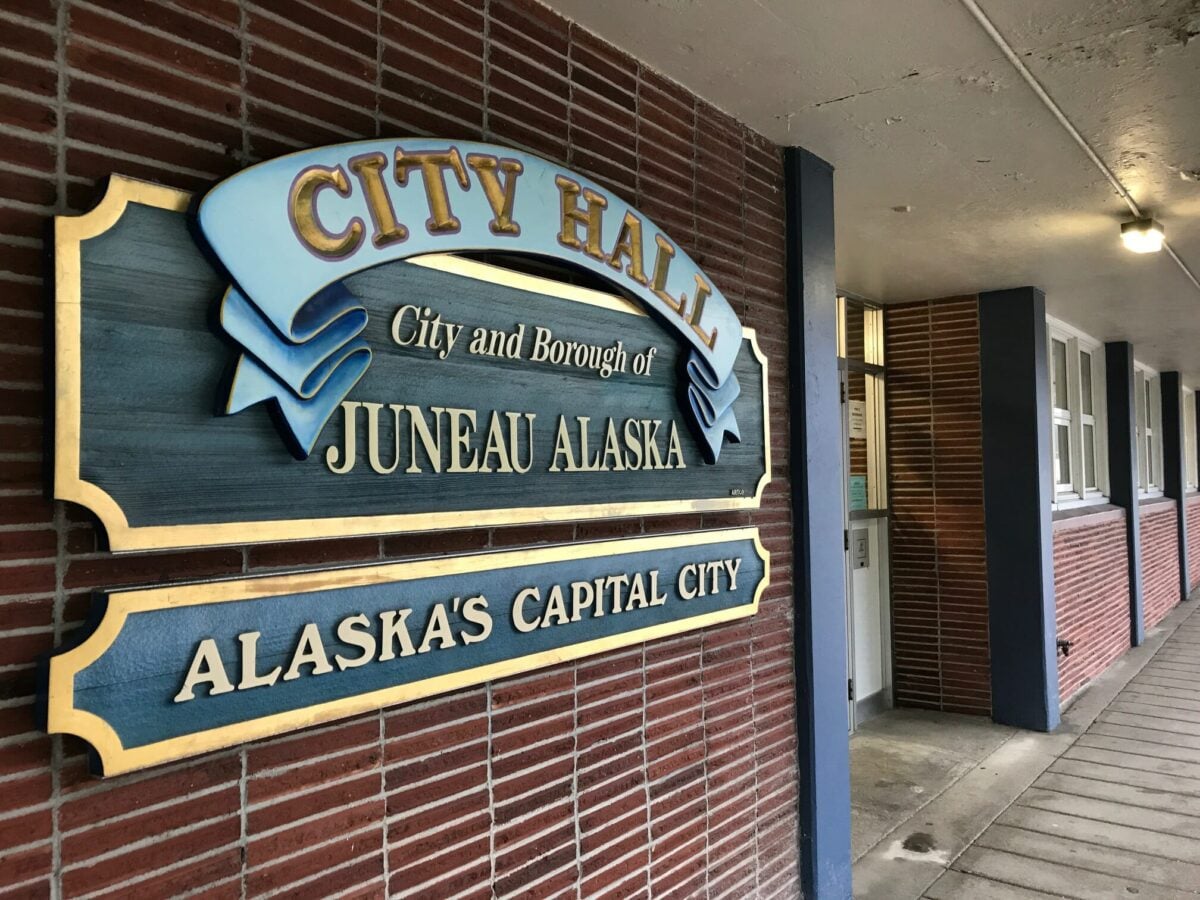
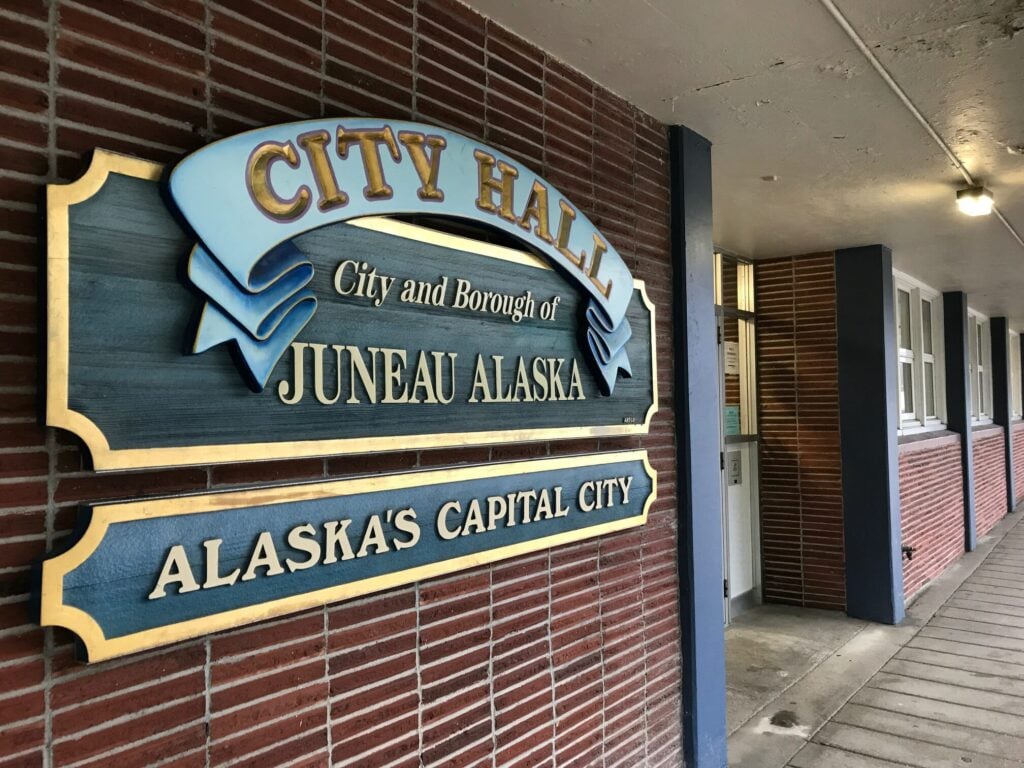
City budget will draw heavily on city savings, bond proposals discussed for ballot

NOTN- The city is weighing two proposed bonds and finalizing a budget that city leaders say will draw down nearly all available savings as they prepare for a difficult fiscal year.

Christine Woll, chair of the finance committee, said that the assembly has discussed placing two questions on the October ballot: a just under $10 million bond to bolster water and wastewater infrastructure and about a  $16 million bond to fund roof and heating system repairs at several schools.

“We have, as a community, not been keeping up with with the long-term maintenance needs of our water and wastewater infrastructure, and so this would give that fund a bit of a boost so we can do some projects there, and ideally keep rates for utilities lower as a result.” Woll said, “Then the second bond we’re looking at would help make some needed repairs to some of our school infrastructure.”

The assembly has a short period of time to decide whether to present the measures to voters.

“We have about a month to finalize whether we’re going to put that on the ballot.” Woll said.

The final vote on the fiscal 2027 budget, which begins July 1, is scheduled for Monday night, which will also be the final opportunity for public testimony.

The draft budget already includes significant cuts and is expected to draw substantial community participation.

“The draft budget that we put together for this year does have some significant cuts, but it draws pretty much all of the money left in the city savings out to fund the next year.” Woll said, “So if things continue the way they are, we will be back here in about a year talking about even more cuts. Monday is a big milestone for getting this year’s budget done, but this conversation is going to have to continue if we want to balance the budget moving forward.”

The assembly’s decision will determine whether voters will be asked to fund the proposed bonds in October, and the outcome of Monday’s meeting will finalize next year’s fiscal path.

Categories
Sports Fox

What’s Next For Aaron Judge, The Yankees And The AL MVP Race

NEW YORK – Aaron Judge’s pursuit of another historic season, and the Yankees’ hopes of dominating the American League, took a major hit late Thursday night when the superstar slugger was diagnosed with a stress fracture of the first rib on his right side – an injury expected to sideline him for two to three months. Few teams are built to withstand the loss of a three-time MVP for half a season. Fewer, still, can absorb the absence of a player who touches nearly every aspect of the game and clubhouse the way Judge does. The Yankee captain’s stress fracture, though not the worst-case scenario, comes at a pivotal point in the season for New York, which entered the weekend with the most wins (37) and the best offense (114 wRC+) in the AL. What’s next for the Yankees without their most feared hitter? What’s next for Judge’s recovery? How does his injury impact the rest of the league? Let’s dive in. What’s Next For Judge The 34-year-old right fielder will be re-imaged in approximately four to six weeks to determine the level of healing on his rib. Until then, he’ll rest and engage in limited activity. Learning the injury is a stress fracture – something Judge has actually dealt with earlier in his career – was a bit of good news for the Yankees after all the alarming testing and imaging he underwent this week. Judge isn’t sure when the injury occurred, according to Yankees skipper Aaron Boone, but he’d felt it for a couple of weeks and flagged it with the team sometime after the Yankees’ series finale against the Athletics last Sunday. Then, over the span of four days, multiple specialists across different states looked at his MRI, CT scan and X-rays. On Thursday, Dr. Gregory Pearl, a Dallas, Texas-based vascular surgeon who specializes in thoracic outlet syndrome (TOS), examined Judge’s images. In some cases, TOS can be career-ending; Judge’s diagnosis of a stress fracture is comparatively a positive. In Sept. 2019, Judge sustained a stress fracture of his first right rib and a partially collapsed lung while attempting a diving catch in a game. He played through the injury into the 2019 postseason, but he would have been on the injured list until June 2020 had the pandemic-shortened season started on time. Judge hasn’t spoken to reporters since last weekend, during New York’s trip to West Sacramento, so it’s unclear if his current stress fracture feels more or less manageable than the last time he dealt with it. Judge’s performance started to dip around the middle of May. He batted .267 with a 1.043 OPS and 16 home runs through his first 41 games of the season. Since May 11, Judge has batted .206 with a .613 OPS and one home run in his last 18 games before landing on the IL. The last time Judge played fewer than 150 games was in 2023, when he missed two months with a fractured toe after crashing into the Dodger Stadium wall on a running catch. In a best-case scenario, Judge and the Yankees will receive the green light sometime in July for the slugger to resume baseball activities. It seems likely that the team will have to navigate the season without Judge at least until August, if not longer. What’s Next For The Yankees For the past two years, the Yankees survived injuries, slumps and roster questions because Aaron Judge remained Aaron Judge. Now — in what will be the biggest test of their season — they’ll have to find out who they are without him. We got a glimpse of what their life will look like this week, as the Yankees dropped two out of three games to the Guardians, their only win coming in a tight, 2-1 victory in the series finale on Thursday. Without Judge, the Yankees lineup combined to bat just .193 in three games against Cleveland. Top outfield prospect Spencer Jones is being called up by the Yankees on Friday, according to a person familiar with their plans. Jones was promoted to the big leagues in May after outfielder Jasson Dominguez went down with injury, but he struggled at the plate, hitting .167 (4-for-24) with 12 strikeouts in 10 games, before the Yankees sent him back down to Triple-A. It would help, of course, if Jones has improved in his return to the majors, but at least some reinforcements are on the way. Slugger Giancarlo Stanton, who has been out since April 24 with a right calf strain, is making strides in his recovery. New York’s designated hitter has started to take reps in live batting practice while continuing to ramp up his running program. The Yankees expect Stanton to bypass a rehab assignment, but there’s no date for his return just yet. Perhaps Judge’s injury and absence will change his timeline. Dominguez, who has been out since May 7 after crashing into the Yankee Stadium wall and sustaining a left AC joint sprain, is scheduled to play in minor-league rehab games this weekend. It’s possible he could join the team during its series in Toronto next weekend, if not during New York’s next homestand on June 16. Beyond the immediate loss of Judge’s bat, his absence raises questions about the Yankees’ ability to maintain their position atop the AL. While New York has received significant contributions from breakout player Ben Rice, who has crushed 17 home runs and boasts a 1.030 OPS that’s ranked second-best in the major leagues, no player on the roster can replicate Judge’s combination of power, on-base ability and presence in the heart of the lineup. It helps the Yankees that the AL features a weak and largely mediocre field this year. But it will still take everyone, and then some, for the Yankees to stay afloat until he returns. What’s Next For The AL MVP Race Suddenly, the AL MVP race is wide open after Judge has all but closed the door on the possibility of a three-peat this year. Judge wasn’t having the kind of overwhelming and commanding season he had in 2024-25 before he hit the IL, and if he returns without any setbacks, he’s lucky to land in the neighborhood of 90–110 games played for the season, depending on his recovery. That doesn’t automatically disqualify him from the race, but it would require an absurdly dominant final two months and an extraordinary comeback to overcome the missed time. Even though Judge is known to separate himself from mere mortals, it would be surprising if the Yankees pushed him in the stretch run. The team is more likely to be cautious with the face of its franchise and take its time with his recovery. Now, the biggest beneficiaries of Judge’s injury and the favorites to win the AL MVP award include Royals shortstop Bobby Witt Jr., Astros slugger Yordan Alvarez, Athletics first baseman Nick Kurtz, and even his own Yankees teammate, the slugging Ben Rice. The Yankees first baseman has struggled to get pitches to hit in Judge’s absence, as Rice is used to hitting in front of Judge in the lineup, but he remains a dark-horse candidate if he can sustain his production for four months. If Witt can keep up his strong start to the season, this might finally be his year to win the MVP. The shortstop challenged Judge for the award in 2024, when Witt finished second in AL MVP voting after hitting .332 and winning the batting title. This year, Witt leads the majors with a 3.8 fWAR through 63 games. He’s hitting .281 with a .818 OPS, and he’s likely to have a huge advantage in games played compared to other MVP favorites. The combination of Witt’s offense, defense at a premium position and durability makes him the newest frontrunner for the award.​Latest Sports News from FOX Sports

Categories
Food

6 Best Grocery Store Coleslaws For Your BBQ, According To Customers

No barbecue is complete without coleslaw, and customers say that these pre-made grocery store options are the best out there for your get-togethers.

​Food Republic – Restaurants, Reviews, Recipes, Cooking Tips

Categories
Music

Kyle Busch’s Wife Samantha Breaks Her Silence On His Death

Samantha thanked fans for their love and compassion during this time. Continue reading…​The Boot – Country Music News, Music Videos and Songs

Categories
Music

Kyle Busch’s Wife Samantha Breaks Her Silence On His Death

Samantha thanked fans for their love and compassion during this time. Continue reading…​Country Music News – Taste of Country

Categories
Sports Fox

Why Crutches Don’t Stop Injured INDYCAR Drivers From Racing At 200 MPH

In Driver’s Eye with James Hinchcliffe, the six-time INDYCAR winner will bring you inside the mind of a racer while breaking down the nuts and bolts of the sport for fans. Racing is risky. There are no two ways about it. From the sport’s inception, there has been an inherent danger. That said, drivers today are incredibly lucky to race in the era they do. Safety is something INDYCAR, the tracks and the partners — not to mention the drivers! — take very seriously. Something is learned from every accident, and pushing safety forward is a never-ending endeavor. This is without doubt the safest era to be a professional racing driver. But at the end of the day, we are still driving faster than 200 miles an hour beside concrete walls, and it will never be 100 percent safe. Unfortunately, that was confirmed at the Indianapolis 500 when both Alexander Rossi and Josef Newgarden suffered separate crashes that left them with minor injuries. And crutches. Yet both drivers competed the following week in Detroit. While the specifics of each injury haven’t been shared, they seem to be similar in nature, yet completely different in the challenges they presented each driver. Rossi’s issue was with his right ankle, which is the throttle foot. At the Indy 500 — where he also competed with the injury after crashing in practice and undergoing minor surgery — the track is smooth. So the typical amount of throttle modulation over a lap is quite a bit less than the twisty street circuit in Detroit. Trying to carefully accelerate on a dirty, bumpy street circuit with 750-ish horsepower at your disposal requires a delicate finesse with that right foot. Much harder when your foot isn’t at 100 percent. Add into it the bumpy nature of the track, and the floor of the car regularly and violently bottoms out over bumps, sending shock waves through every inch of your body, including your injured foot. A challenging proposition, to say the least. Newgarden also had an issue with his foot, but it was his left foot. The braking foot. This is where the challenge is completely different. For all the finesse required for your throttle foot, you need brute force in the braking foot. INDYCAR drivers hit the brake pedal as hard as they physically can on the initial hit of a big brake zone, like Turn 3 at Detroit. Several hundred pounds of pressure on the pedal translates to several thousand pounds of pressure through the brake system. And while that strength is key, arguably more important is how you control the brake release — coming off the brake pedal as the speed bleeds off so you get closer to the corner. This technique is what drivers spend their whole career refining. It’s one of the main areas that separates a professional from an amateur: The ability to feel the grip in the tires and constantly modulate the brake pressure to maximize brake efficiency without locking up a tire. If you are battling an injury to the brake foot, it can completely change the muscle memory that comes from decades of racing with a healthy left leg. Trying to retrain your brain to undo what is essentially second nature can be massively difficult. When you consider these challenges, it makes it all the more impressive that Rossi was in podium contention until an ill-timed full-course caution, and Newgarden battled back from a poor starting spot to be the biggest mover of the race and secure a top-10 finish. Walking on crutches but piloting a race car at 200 miles an hour is a wild juxtaposition. But it’s important to remember that while these are impressive feats, safety is never compromised. And the decision of whether drivers are cleared to race isn’t up to them — and for good reason. As much as we drivers take safety seriously, leaving that decision up to someone who straps into a ground-based rocket ship for a living might give skewed results! That’s why medical teams utilize comprehensive tests drivers must pass before they can get back behind the wheel. Somewhat like other sports — football and hockey come to mind — if there is no risk to others and low risk of long-term damage to themselves, athletes are often willing to fight through a bit of discomfort to play the game. At the end of the day, the passion for the sport burns hotter than any pain in the body while they compete. THE GOOD, THE BAD AND THE FAST: WWT RACEWAY Back to the ovals! This weekend, we are at World Wide Technology Raceway in Madison, Illinois, near St. Louis, for a race under the lights. Prime time. Sunday night. And you might be thinking everyone should be pretty up to speed turning left, considering we just spent two weeks driving around an oval at Indianapolis Motor Speedway. But you’d be wrong. Though both ovals, the similarities between these two tracks end there. We talk about Indy’s four identical corners that you have to drive through differently in subtle but important ways. But St. Louis’ 1.25-mile track has two ends that are completely different! Turns 1 and 2 are tight radius and high-banked. Turns 3 and 4? Much flatter and a more open radius. The difference, end to end, presents some pretty big challenges for teams and drivers. As a driver, you have to approach these corners very differently. In Turns 1 and 2, you will bleed off almost 40 miles an hour of speed through lifting — and sometimes even a bit of braking in the race. Turns 3 and 4 are ideally flat-out in qualifying, so it’s all about limiting scrub, meaning grinding the front tires by turning the steering wheel too much. From a setup standpoint, it’s very difficult to navigate and all about compromise. The ideal setup at one end won’t feel good at the other. The biggest mistake drivers make here is trying to chase the perfect balance the whole way around. Even trying to get one end to feel really good, knowing it will make the other end trickier, rarely works. The key to this race track is getting comfortable being uncomfortable. It will never feel perfect at either end, so finding the most OK-ish balance at both ends usually yields good results. For me, Turns 1 and 2 are the best part of this track. You approach Turn 1 at nearly 200 miles per hour, and the banking is so steep it looks like you’re staring at a wall. You head into that turn at speed the first few times and think to yourself, “There is no way I am making it around this corner.” Between the banking helping you turn and the incredible capabilities of an Indy car, it all works out! And there is a lot you can do as a driver on that end of the track in the race. You can go in deep to try and make a pass, you can ease up the entry and focus on a mega run out to set up a pass for Turn 3. You can get creative with lines quite a bit more than in Turns 3-4, which is why we see so much action there in the race. SOUND LIKE AN INDYCAR EXPERT The fast, frantic nature of short-track racing in INDYCAR highlights something else that I think is pretty impressive about what these drivers are doing on track. Surely, if you’ve been watching our races on FOX, you’ve seen the Driver’s Eye camera that gives the most realistic sense of what it’s like inside the car. It also gives you a glimpse into how much information the drivers are digesting from the dash on the steering wheel. The wheel is really the brain of the race car. On the back, the driver has paddles to control up shifts and down shifts and the clutch for leaving pit lane, as well as hybrid controls. The front has a litany of buttons and knobs used to do everything from talk to the crew, take a drink of water, control the speed in pit lane or even change the handling of the car. The dash itself looks like a losing level of Tetris with all these different colored boxes stacked together, displaying different types of info to the driver. Things like lap time, lap count, distance to cars in front and behind, tire temps, brake temps, balance settings, engine settings… I could go on! At a track like St. Louis, where a lap time is something in the low 20-second range, you spend more than half your lap cornering. That means you have a little less than 10 seconds per lap — split between the frontstraight and backstraight — to look down, absorb and digest certain info off the dash and then make a decision based on what you saw. And, again, all while racing wheel-to-wheel with 24 other cars at crazy speeds! Needless to say, these drivers will be earning their money on Sunday night, and based on what we’ve seen of the short oval package that INDYCAR has developed, it should be a heck of a race! MORE DRIVER’S EYE:​Latest Sports News from FOX Sports

Categories
Music

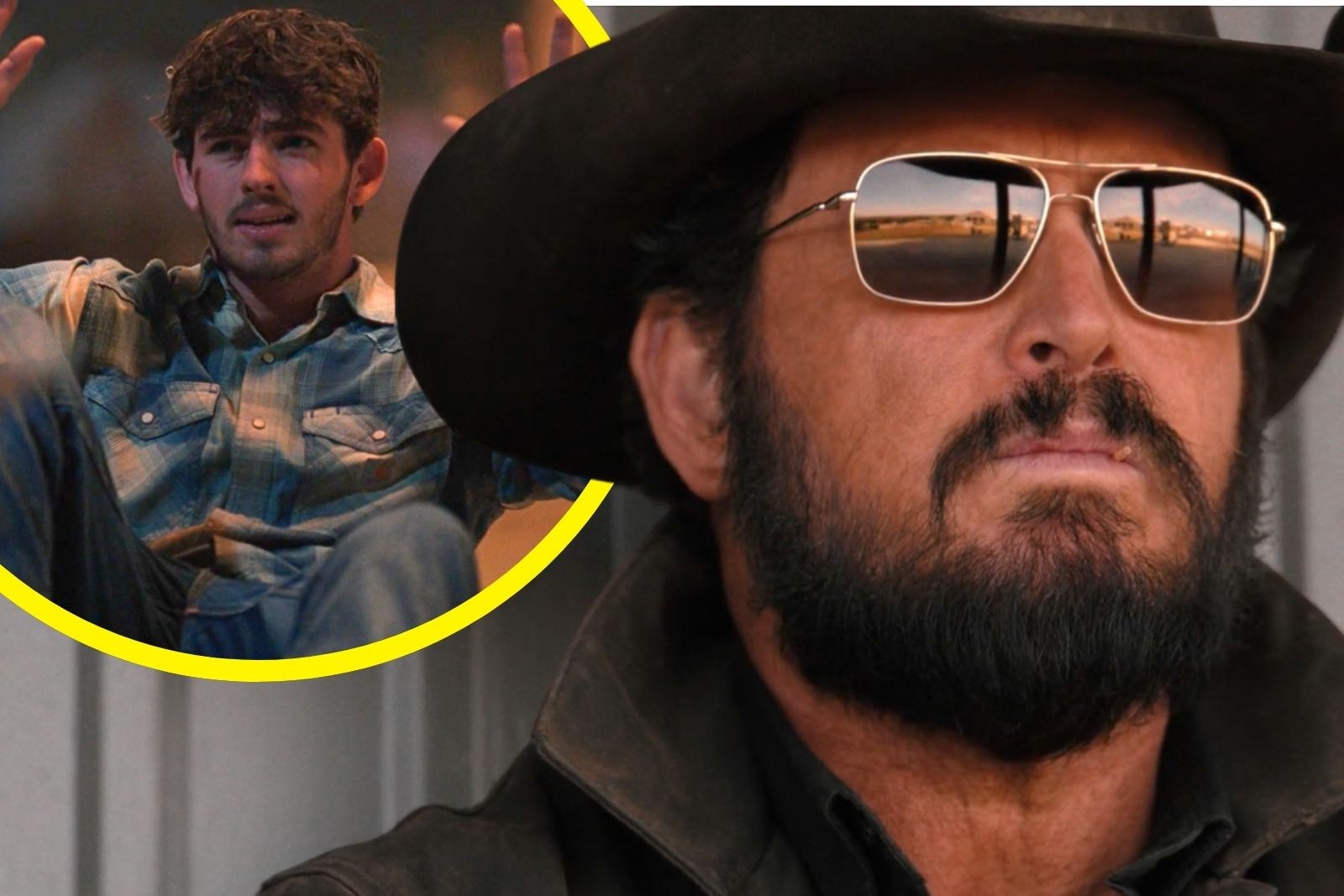
Dutton Ranch Stunner: Did He Need To Die? Ep. 5 Ending Explained

Episode 5 of ‘Dutton Ranch’ including a death that nobody really saw coming. Continue reading…​The Boot – Country Music News, Music Videos and Songs

Categories
Music

Dutton Ranch Stunner: Did He Need To Die? Ep. 5 Ending Explained

Episode 5 of ‘Dutton Ranch’ including a death that nobody really saw coming. Continue reading…​Country Music News – Taste of Country

Categories
Entertainment

The 9 Best New Frozen Items At Aldi So Far In 2026

Convenient, affordable, and full of crowd-pleasers, Aldi’s selection of frozen foods is nothing to sneeze at. Here are nine of our top picks from 2026.

​Mashed – Fast Food, Celebrity Chefs, Grocery, Reviews