Categories
Alaska News

Alaska lawmakers raise concerns with Dunleavy’s attorney general pick ahead of confirmation vote

Alaska Attorney General Stephen Cox, with Goov. Mike Dunleavy, speaks at a Feb. 12, 2026, news conference in Anchorage about drug enforcement. (Photo by Yereth Rosen/Alaska Beacon)

State lawmakers raised concerns in a series of legislative hearings while they considered the confirmation of Gov. Mike Dunleavy’s attorney general designee Stephen Cox. At issue were controversial legal actions Cox took in his first eight months in office.

Attorney General designee Stephen Cox appears before the Senate Judiciary Committee for a confirmation hearing on May 1, 2026. (Photo by Corinne Smith/Alaska Beacon)

Cox is an attorney and has served in various roles in federal law enforcement, including as U.S. Attorney for the Eastern District of Texas and other roles in the U.S. Departments of Justice and Homeland Security, as well as in private industry in Texas and Alaska, according to his resume. Cox is a member of the Federalist Society, a national conservative and libertarian legal organization. Prior to being appointed, he worked as legal counsel for Bristol Bay Industrial, LLC, a holding company and investment subsidiary of the Bristol Bay Native Corporation, since 2021. 

Dunleavy appointed Cox to the Attorney General’s office in August, after Treg Taylor resigned to run for governor. Cox appeared before lawmakers in Senate and House confirmation committees ahead of a joint session to vote on his appointment next week. 

While in Alaska’s top legal post, Cox has taken several controversial actions lawmakers questioned. He defended handing over Alaska’s private voter information at the request of the U.S. Department of Justice, which has prompted a lawsuit by civil rights groups. Cox and the Alaska Department of Law also joined over 110 amicus briefs, or “friends of the court briefs” on a wide variety of federal and state cases, including U.S. Supreme Court cases.

Attorney General designee Stephen Cox answers questions from the Senate Judiciary Committee during a confirmation hearing on May 1, 2026. (Photo by Corinne Smith/Alaska Beacon)

Some lawmakers raised concerns that Cox has taken legal positions with amicus briefs that were highly politicized, aligned with the Trump administration and in some cases contrary to Alaska law and unrelated to Alaskans interests.

That included joining Alaska in cases opposing birthright citizenship, supporting a Christian baker declining to bake a cake for a same-sex wedding, and supporting the most recent case where the U.S. Supreme Court ruled that Louisiana’s congressional maps cannot be drawn based on race — a decision critics say effectively limits the Voting Rights Act.

Senate President Gary Stevens, R-Kodiak, asked why Cox had signed Alaska on to challenge birthright citizenship, which the U.S. Supreme Court is scheduled to decide in June. Stevens became emotional, saying it was a fundamental value to provide refuge to people fleeing war and poverty, or seeking better opportunities — like his own ancestors who escaped the Irish famine. 

“It just baffles me. How can you or your department or anyone in the administration argue against birthright citizenship? It’s in our Constitution. It’s a moral issue,” Stevens said.

Senate President Gary Stevens, R-Kodiak, and Sen. Löki Tobin, D-Anchorage listen to Attorney General designee Stephen Cox at a confirmation hearing on May 1, 2026. (Photo by Corinne Smith/Alaska Beacon)

Cox said he believes that birthright citizenship should not be granted for children of those visiting or temporarily in the United States, but only for those who intend to stay. 

“My view of the Constitution under the 14th Amendment is that it is not simply birth on the territory, that you also have to be not subject to the foreign jurisdiction, and that there has to be some kind of allegiance,” Cox replied.

“But I also recognize, like everything, I could be wrong,” he added. “But again, we will hear what the US Supreme Court decides on that issue.” 

Lawmakers in the Senate Judiciary and State Affairs Committees pressed Cox on his reason for signing on to cases that they said would be contrary to Alaskan’s interests.

Sen. Matt Claman, D-Anchorage, asked if Cox would sign on to cases challenging abortion rights in another state, while Alaska’s Constitution protects the right to abortion within the right to privacy. 

“What is your perspective with respect to filing amicus briefs and requests for amicus briefs regarding the right to abortion, that the courts have found is specifically protected in Alaska?” Claman asked.

After several minutes of back and forth, Cox finally said he would have to consider the specific case and consult with the governor.

“I would look hard at the law. I would consult the experts within the Department of Law. I would get their expertise. If I felt that the state of Alaska did not have an interest, I wouldn’t bring it,” he said. “If I thought that there was an interest in that the state of Alaska did have, notwithstanding what the Alaska Supreme Court has ruled in in its prior cases, I would have a conversation with the governor.”

Sen. Bill Wielechowski, D-Anchorage, questioned Cox on why he didn’t oppose a lawsuit before the U.S. Supreme Court that would require mail-in ballots to be received by Election Day, which would be a challenge for many rural Alaska precincts. Alaska law currently allows ballots to be received within 10 days, or 15 days if mailed overseas.

Sen. Bill Wielechowski, D-Anchorage, questions Alaska Attorney General designee Stephen Cox during his first legislative confirmation hearing before the Senate State Affairs Committee on Apr. 30, 2026. (Photo by Corinne Smith/Alaska Beacon)

“Why didn’t you stand up for Alaska and say to the court: this is a bad law for Alaska. We want you to strike this down. We want you to say no to this,” Wielechowski said. 

Cox defended the decision to submit an amicus brief declaring no support for either party as a “strategic choice.” 

“I actually like briefs in support of neither party that are very fact-based. And I think, and again, I realize people might disagree, but I think sometimes they get noticed the most, but that was a strategic choice,” he said.

Lawmakers also questioned the time and resources expended by the Alaska Department of Law on amicus briefs, versus prosecutions and law enforcement in Alaska. “Why would we spend that money when we have this crisis on domestic violence and sexual assault, when that money is better spent on prosecution in state?” Claman asked. 

Cox defended the initiative, and the creation of a new Alaska State Solicitor General role focused on multistate litigation in October. He said his goal in office is to pursue more amicus briefs. 

“Going forward, I’d like Alaska to take more of a leadership role, offering more of our own briefs, and shaping the arguments directly, as opposed to just being a joiner,” he told lawmakers.  

Senators question Cox on sharing confidential voter information

Several senators questioned Cox on his role in the Dunleavy’s administration’s decision to share confidential voter information at the request of the U.S. Department of Justice last year. Critics and plaintiffs in new lawsuit against the state say the sharing of voter information — including full name, birth dates and partial social security numbers — was a violation of voters’ privacy. The state also signed an agreement to remove voters the DOJ flags as ineligible.

Alaska Attorney General designee Stephen Cox is questioned by Sen. Bill Wielechowski, D-Anchorage, during his first legislative confirmation hearing before the Senate State Affairs Committee on Apr. 30, 2026. (Photo by Corinne Smith/Alaska Beacon)

Cox said he believed the request was lawful, and noted the federal government had threatened to sue. 

“One, was there a statute that authorized disclosure of confidential information? There was, for lawful government purposes,” Cox said. “And two, we took the posture of cooperation. Alaska has a long standing history of cooperating with the U.S. Department (of Justice) Civil Rights Division.”

“And I will be candid with you,” he added. “I have a disposition of cooperating with law enforcement.”

Sen. Scott Kawasaki, D-Fairbanks, pressed Cox on the decision to share the voter information, which he and other lawmakers stressed is protected by Alaska’s Constitution.

Sen. Scott Kawasaki, D-Fairbanks, questions Alaska Attorney General designee Stephen Cox during his first legislative confirmation hearing before the Senate State Affairs Committee on Apr. 30, 2026. (Photo by Corinne Smith/Alaska Beacon)

“The state also has a constitutional right of privacy. It’s one of the, I think, bedrocks and one of the most important things I think some people recognize in the state constitution,” Kawasaki said. “Why was that not your first thought, is that Alaska has got a constitutional right to privacy. Let’s take a pause before we do anything more that the Department of Justice has requested?”

Cox defended the decision as lawful: “I will concede I am learning about the right to privacy. And the Legislature has far better expertise on the right to privacy,” Cox said. “And the law department’s position is that that statute is a valid statute and that it is not unconstitutional.”

Sen. Jesse Bjorkman, R-Kenai, also questioned the purpose of sharing Alaska’s voter information, which Cox defended as under “lawful government purpose” in the agreement. But Bjorkman raised doubts that the reasons the federal government may deem voters to be ineligible is clear. 

“If we are releasing the data for a lawful purpose, but we can’t positively identify what the purpose is, and then judge that according to whether or not it is indeed lawful,” Bjorkman said. “I have a concern about that.”

Cox outlines AG office priorities

Cox told lawmakers that while in the Attorney General’s office his priorities include a new “quality of life” initiative working with the municipality of Anchorage to prosecute retail theft and public disorder infractions. 

“We’ve cross-designated prosecutors so that state and municipal attorneys can use each other’s authorities. We’re looking at civil tools like abatement actions to go after drug houses or even using data from retailers to identify patterns and repeat offenders,” he said.

Cox said prosecuting violent crime like domestic violence and sexual assault is always the No. 1 priority of the office, and added he’s focused on resource development and consumer protection as well. 

“Alaska has some of the strongest consumer protection laws in the country, and I think we can be enforcing them more aggressively,” he said. 

“At bottom, this job is about the rule of law, what the law requires, how it is applied and how we exercise the state’s power within those limits. I’ve spent much of my career in law enforcement settings where the stakes are real. Decisions affect liberty, public safety and public trust. That experience shapes how I approach this office,” he said.

Cox is scheduled to appear before the House Judiciary Committee on Monday. A joint session on state appointments was scheduled for May 7 but was postponed and likely will be set for early next week. 

SUPPORT: YOU MAKE OUR WORK POSSIBLE

Categories
Food

The Costco Kirkland Frozen Dessert That Leaves A Lot To Be Desired

Costco also has a variety of frozen desserts to choose from, but one of its selections unfortunately leaves a lot to be desired – namely, any pizzazz.

​Food Republic – Restaurants, Reviews, Recipes, Cooking Tips

Categories
Entertainment

Andrew Zimmern Swears By This Brisket Tip For More Flavor

Here’s the scoop on this famous TV personality’s pro tip from his grandmother that keeps his brisket extra juicy and flavorful from the barbecue to the plate.

​Mashed – Fast Food, Celebrity Chefs, Grocery, Reviews

Categories
Music

Why Jason Aldean’s ‘Big Green Tractor’ Had Luke Bryan Heartbroken

Imagine the moment when a hit song slips through your fingers — that’s how Luke Bryan felt about Jason Aldean’s ‘Big Green Tractor.’ Continue reading…​The Boot – Country Music News, Music Videos and Songs

Categories
Music

Why Jason Aldean’s ‘Big Green Tractor’ Had Luke Bryan Heartbroken

Imagine the moment when a hit song slips through your fingers — that’s how Luke Bryan felt about Jason Aldean’s ‘Big Green Tractor.’ Continue reading…​Country Music News – Taste of Country

Categories
Politics

Republicans’ youth voter problem

Two years after young voters swung to the right in 2024, helping return Republicans to unified control of Washington, economic concerns are pushing 18- to 34-year-olds back to the left for the midterms, according to a new national survey of more than 1,000 young Americans.

The poll from nonpartisan outfit Generation Lab, shared exclusively with POLITICO, amounts to a flashing warning sign for Republicans. It shows young Americans planning to vote Democratic in November by a margin of 52 percent to 19 percent. Broken down by party, the data indicates that the GOP has a significant base problem: Just 58 percent of young Republicans say they’ll vote GOP — with nearly a third selecting “neither” or “won’t vote.” By contrast, 85 percent of young Democrats intend to show up for their party at the ballot box.

Just as in 2024, deep discontent with the state of the economy is driving anger at the party in power. Now, 81 percent of young Americans rate U.S. economic conditions as bad or terrible — including 68 percent of Republicans. The younger the age bracket, the more optimism diminishes.

President Donald Trump shoulders most of the blame among respondents, with 41 percent who rate the economy negatively naming him as the top culprit, plus 9 percent who select congressional Republicans. But it’s not just the GOP: Another 31 percent finger corporate greed/large companies. Just 6 percent blame Joe Biden or congressional Democrats.

In many ways, the polling looks like an inverse of Democrats’ struggles in the 2024 cycle, when surveys showed that voters didn’t personally experience the positive economic image projected by the Biden administration.

“We tie this really closely to what people can see and feel and touch in terms of their own personal economic situation,” Cyrus Beschloss, Generation Lab’s founder and CEO, told POLITICO. “Saying that affordability is a ‘line of bullshit’ is definitely not helping — to the extent that young people are clued into that.”

But a caveat remains. “Young people are voting at just obscenely low rates,” Beschloss said. Insofar as this demographic might swing to or from Republicans, “their power’s a lot more concentrated in social force” — as cultural barometers and pace-setters — “than it is electoral force.”

Young people’s social force on GOP politics looks highly negative right now, and not just over concerns about inflation, housing, jobs and gas prices. The survey also finds mass blowback to the U.S.-Israel war with Iran: Seventy-seven percent of young Americans say the U.S. made the wrong decision in striking Iran, and 75 percent say they disapprove or strongly disapprove of Trump’s handling of the military action.

Republicans are keenly aware of voters’ cost-of-living and economic concerns — but they argue that they’re positioned to sway Americans here with a message focused on lower government spending, new tax breaks and blaming Democrats.

The GOP is also addressing bad economic feelings head on by telling voters that they’re cleaning up messes created by Democrats. And following on Trump’s 2024 strategy, Republicans have doubled down on TikTok and other social-media content/branding that reaches young people where they are. Candidates speaking to voters directly works well, the party has found, as does pro-America content that can go viral organically — think Artemis II or the semiquincentennial.

“After years of skyrocketing costs and economic uncertainty under Joe Biden and Democrats, combined with the left’s alienating, out-of-touch rhetoric, young Americans are fed up with empty promises,” said RNC national press secretary Kiersten Pels. “They want real results, and Republicans are speaking directly to them in a way that resonates.”

The strong GOP push could yet pay dividends. “I really … would not discount how much the Republican world has been focused on running a really tight operation in terms of not only getting more young men into their camp but keeping them there,” Beschloss said.

But Democrats have built out their own infrastructure to compete, including creator networks for candidates to work with and new resources devoted to communicating via YouTube, podcasts, social media, influencers and Substacks.

And the economic concerns are a lay-up for Democrats’ midterms messaging writ large, they say, which puts affordability front and center — the kind of laser-focused approach that scored the party big wins in 2025. “Young voters’ top concern is affordability, and we’ve been beating the drum on that issue all cycle,” said DCCC spokesperson Aidan Johnson. “Many don’t think they will ever be able to buy a home, or are graduating out of high school and college with not nearly the same kind of opportunities that their parents had.”

Looking beyond the midterms: The Generation Lab also asked young Americans about the 2028 presidential race — and at this early stage, name recognition seems to be paramount.

Democrats like Kamala Harris and Rep. Alexandria Ocasio-Cortez (D-N.Y.) best, at 31 and 23 percent respectively. Republicans pick Vice President JD Vance (25 percent) and then HHS Secretary Robert F. Kennedy Jr. (13 percent). And tied for seventh overall, at 4 percent each among all young Americans: Jon Stewart, Mark Cuban and Tucker Carlson.

Like this content? Consider signing up for POLITICO’s Playbook PM newsletter.

​Politics

Categories
Sports Fox

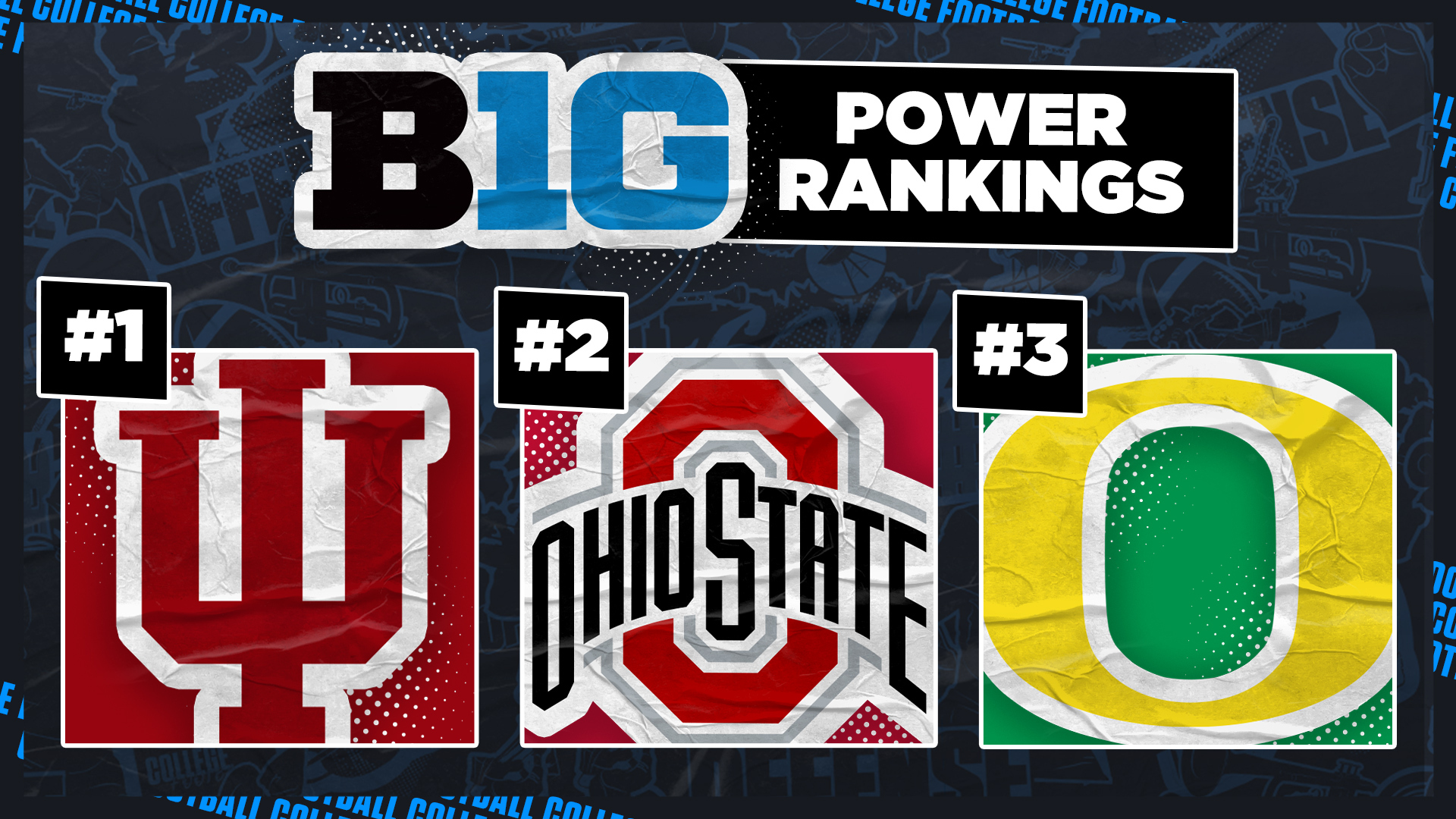
Big Ten Power Rankings: Indiana Leads the Pack, Ohio State and Oregon Close Behind

Spring football felt much quieter this time around, considering players and coaches weren’t busy pulling double duty by preparing for an impending transfer portal window while also trying to improve on the field. Think of it as a much-needed reprieve, if only momentarily, for a sport that has moved at warp speed the last handful of years. With the last smattering of power conference programs holding spring games over the weekend, the dust is finally beginning to settle. Early enrollees have settled in, transfers are acclimated to their new environments, the coaching carousel has stopped and depth charts are taking shape ahead of fall camp. That means it’s a good time for a team-by-team breakdown of where things stand in the Big Ten following spring practice. So here’s an offseason batch of Big Ten Power Rankings: The Rest For the second consecutive season — albeit with a different leader at the helm this time — the Boilermakers finished winless in Big Ten play, mired at the bottom of an increasingly top-heavy conference. Head coach Barry Odom, formerly of UNLV, hired Kevin Kane to be Purdue’s new defensive coordinator following one season as the outside linebackers coach at Minnesota. Kane will aim to improve a group that finished tied for 117th in scoring (31.8 points per game) and 120th overall (423.5 yards per game). The Boilermakers added 29 new players via the transfer portal in a group that ranked 39th nationally, according to 247Sports. But Odom’s 55th-ranked high school recruiting class, which does not include a single four- or five-star prospect, remains an obvious weakness. After three years away from football, former Northwestern head coach Pat Fitzgerald takes over a Michigan State program desperate to regain its footing following two failed hires in Mel Tucker (2020-23) and Jonathan Smith (2024-25). Fitzgerald retained defensive coordinator Joe Rossi and tabbed promising youngster Nick Sheridan, the former co-offensive coordinator and quarterbacks coach at Alabama, to lead the other side of the ball. The Spartans added 29 new players via the transfer portal, including 13 from power-conference programs, but none of them are viewed as four- or five-star prospects. Fitzgerald’s early team-building efforts were more successful at the high school level, with his first recruiting class housing five blue-chip prospects. The headliner is four-star offensive tackle Collin Campbell (No. 196 overall, No. 20 OT) from Arizona. Drastically different conference and college football backdrops have made it significantly tougher for head coach Greg Schiano to find his footing amid this second stint with the Scarlet Knights. Back-to-back winning seasons in 2023 and 2024 largely papered over the fact that Rutgers, which joined the Big Ten more than a decade ago, still hasn’t produced a winning record in league play. Schiano’s player-acquisition efforts ahead of the 2026 campaign are rather fascinating: His transfer portal class ranks last in the conference and 71st nationally, sandwiched between San Diego State and James Madison. But the Scarlet Knights’ incoming high school class cracked the top 40 overall and features more blue-chip recruits (four) than programs like Arizona State, TCU, Arkansas, Louisville, NC State and Kentucky. Two bowl victories in three seasons represents a great start for head coach David Braun, whose team began the 2026 campaign 5-2 overall before stumbling a bit down the stretch. Since then, Braun has revamped his staff by hiring six new coaches and promoting another from within to give the Wildcats a new feel entering the fall. The biggest swing was Braun’s high-profile addition of Chip Kelly as offensive coordinator. Though Kelly flamed out in less than one season with the Las Vegas Raiders, he’s still regarded as one of the sharper offensive minds in the sport and helped lead Ohio State to a national championship two years ago. Kelly is now tasked with mentoring transfer quarterback Aidan Chiles, formerly of Michigan State, to improve an offense that ranked 108th nationally in passing yards per game. Few coaches from the power conferences, if any, will enter the season with a hotter seat than Luke Fickell, whose three years with the Badgers have produced just 16 victories and a disastrous 10-17 record in conference play. Fickell needed a public vote of confidence from athletic director Chris McIntosh last fall amid widespread speculation about his job security, and now McIntosh has exited Wisconsin for a job in the Big Ten office. That leaves Fickell in a precarious position. Once again, the Badgers swung big in the transfer portal by adding 33 players this winter, though the class only ranks 49th nationally because it lacks a single blue-chip prospect. Wisconsin struggled even more with high school recruiting: Fickell’s class ranks No. 72 overall and No. 17 in the Big Ten. Mike Locksley is another Big Ten coach who survived the 2025 campaign by the skin of his teeth, finishing 1-8 in conference play for the second straight year and below .500 in the league for a seventh consecutive season. But high-level player acquisition, particularly from the high school ranks, has afforded Locksley another chance this fall. Maryland’s recruiting class is headlined by five-star edge rusher Zion Elee (No. 5 overall, No. 1 edge rusher) from powerhouse St. Frances Academy in nearby Baltimore. Elee represents the third five-star recruit to join the Terrapins since Locksley took over ahead of the 2019 season. A strong debut from former blue-chip quarterback Malik Washington offers another reason for optimism. Washington, who was the No. 10 quarterback in the 2025 class, ranked sixth nationally among freshmen with 2,963 passing yards last fall. Can Matt Rhule finally turn the tide at Nebraska? The Cornhuskers received widespread praise when they hired Rhule ahead of the 2023 season, snatching up a hot commodity after his stint with the Carolina Panthers went south. But the exponential growth that Rhule’s teams showed during his successful runs at Temple (2013-16) and Baylor (2017-19) still hasn’t resurfaced at Nebraska, where he is now 0-9 against ranked opponents. The Cornhuskers finished below .500 in Big Ten play during each of Rhule’s first three seasons, and now they enter the 2026 campaign with a high school recruiting class that ranks 106th nationally and dead last in the conference. Losing starting quarterback Dylan Raiola, a former five-star prospect, to the transfer portal represented another major blow. In an era when programs can be turned around with remarkable swiftness, Rhule needs to demonstrate legitimate progress this fall. Even though UCLA dropped five consecutive games to end the 2025 season with a thud, there is plenty of optimism surrounding the Bruins. UCLA landed one of the hottest names in coaching when it lured Bob Chesney, 48, away from James Madison, a program he led to the College Football Playoff last fall. Chesney posted an impressive 21-6 record with the Dukes after taking over for Curt Cignetti, who is now the head coach at Indiana. Those two winning seasons pushed Chesney’s streak to seven straight years above .500 overall and 15 out of 16 dating to his previous stints at Salve Regina, Assumption and Holy Cross. Now, Chesney is working in the power conferences for the first time, taking over a program that is not without some talent. Former five-star quarterback Nico Iamaleava, a transfer from Tennessee, is back for another season in Westwood. Chesney added 41 new players via the transfer portal — including 10 from James Madison — to secure the Big Ten’s largest incoming class. The two highest-profile additions are former Oklahoma linebacker Sammy Omosigho (No. 115 transfer, No. 3 LB) and former Florida wide receiver Aidan Mizell (No. 143 transfer, No. 38 WR). The Top 10 Minnesota entered its offseason on the upswing after defeating New Mexico in the Rate Bowl, handing head coach P.J. Fleck his seventh consecutive bowl victory. The win also gave Fleck a fifth season with eight or more wins in the last seven campaigns, evidence of an impressive coaching job at a school not known for its football prowess. Such momentum manifested in the form of a high school recruiting class that finished No. 28 nationally and No. 8 in the Big Ten. By signing six blue-chip prospects, five of whom landed among the top 400 players nationally, Fleck laid the groundwork for the Gophers to secure their first top-30 recruiting class since 2008. The highest-rated player in the bunch is edge rusher Aaden Aytch (No. 181 overall, No. 22 edge), an Indiana native who chose Minnesota over additional scholarship offers from Iowa, Michigan State, Purdue and Kentucky, among others. Now that Iowa has set a program record for most players selected in a single NFL Draft with seven, it’s worth reassessing just how good the Hawkeyes really were in 2025. Sure, head coach Kirk Ferentz’s team finished sixth in the Big Ten standings, sandwiched between Michigan and Washington, but its three conference losses came by just 12 combined points against three ranked opponents — one of which was eventual national champion Indiana. The Hawkeyes were a touchdown or two away from potentially reaching the College Football Playoff. To replenish his roster, Ferentz assembled one of Iowa’s strongest high school recruiting classes in recent memory, a group that is ranked No. 26 nationally and includes eight four-star prospects. The name to remember might be four-star quarterback Tradon Bessinger, a Utah native who is the No. 11 signal-caller in the class. He is the second-best quarterback prospect to sign with Iowa in the recruiting rankings era, according to 247Sports, trailing only Jake Christensen in 2005. One of the ways to gauge Illinois’ impressive trajectory under head coach Bret Bielema is through the recruiting rankings, where the Illini are surging into rarefied air. In 2020, the year before Bielema took over, Illinois’ high school recruiting class ranked 82nd nationally. Since then, Bielema has strung together the following finishes: 73rd in 2021; 46th in 2022; 37th in 2023; 49th in 2024; 46th in 2025 and 24th in 2026. This marks the program’s first foray into the top 30, where its only two spots behind Ole Miss and four spots behind Clemson, in 18 years. To get there, Bielema landed five of the top 18 players from Illinois and supplemented them with blue-chip players from Florida, New Jersey and Missouri. The biggest question moving forward is whether quarterback Katin Houser, a transfer from East Carolina by way of Michigan State, can operate the offense as efficiently as predecessor Luke Altmyer did the past three seasons. The stunning decision to fire head coach James Franklin last October gave way to a lengthy hiring process from athletic director Pat Kraft to identify the right successor. Ultimately, the Nittany Lions landed on a proven winner in Matt Campbell, 46, who oversaw eight winning seasons at Iowa State and another four at Toledo before that. In an effort to turn over his new roster quickly, Campbell invested heavily in the transfer portal. His final tally of 38 signees was seventh-most in the country, according to 247Sports, and featured a number of familiar faces. Twenty-four former Iowa State players followed Campbell to Penn State, including veteran quarterback Rocco Becht, the No. 34 overall transfer and No. 10 signal-caller in the portal. Such aggressiveness was necessary in part because the Nittany Lions’ high school recruiting class splintered once Franklin was fired, with many of those players ultimately following him to Virginia Tech. Campbell is seeking to offset those losses by betting big on experience. There’s no chance the Huskies would rank this highly had star quarterback Demond Williams Jr., a potential Heisman Trophy candidate for the 2026 campaign, gone through with his decision to transfer over the winter. Williams, who threw for more than 3,000 yards and ran for more than 600 as a first-year starter last fall, announced his intention to enter the transfer portal in January but then reversed course two days later — after reports surfaced that Washington was prepared to take legal action to enforce his signed NIL agreement. Ultimately, head coach Jedd Fisch welcomed Williams back into the fold, setting the stage for what could be a special season. Thanks to some exemplary player-acquisition efforts from Fisch and the Huskies’ staff, Williams will have more talent around him than ever before. Washington’s high school recruiting class finished 13th in the national rankings to set a new program record for the modern era. The Huskies signed 10 players rated among the top 300 overall prospects, headlined by five-star offensive tackle Kodi Greene (No. 25 overall, No. 3 OT) from powerhouse Mater Dei High School in California. Surely this will be the year when head coach Lincoln Riley finally puts things together and takes USC to the College Football Playoff for the first time in school history, right? Riley has one of the country’s best returning quarterbacks in former UNLV transfer Jayden Maiava, now entering his second full season as the Trojans’ starter. He has what should be one of the league’s stronger running back tandems in Waymond Jordan (576 yards, 5 TDs) and King Miller (972 yards, 8 TDs). He has a flashy new defensive coordinator in former TCU head coach Gary Patterson, who guided the Horned Frogs to 181 wins from 2000-21. He has the No. 1 high school recruiting class in the country that features 14 signees rated among the top 200 players nationally. He has the No. 26 transfer portal class. He has a brand new, state-of-the-art practice facility slated to open this summer. What more could a coach want in the modern era? The pressure is on Riley to get USC over the hump. Messy and unsavory divorces from former coaches Jim Harbaugh and Sherrone Moore have given way to what the Wolverines hope will be a more controlled culture under Kyle Whittingham, the highly successful head coach from Utah. Whittingham posted eight 10-win seasons with the Utes between 2008-25, morphing the program into a model of consistency and respectability across multiple conferences. Now, Whittingham is working at one of college football’s blue bloods for the first time in his career, as the head coach or otherwise, and observers of the sport have wondered for years how his methods would fare in such an environment. The primary order of business for Whittingham and offensive coordinator Jason Beck, who followed him from Utah, is to maximize the potential of former five-star quarterback Bryce Underwood following an inconsistent freshman campaign. If Underwood can raise his level of play — Michigan finished 107th nationally in passing offense last season — the Wolverines have enough talent to contend for the College Football Playoff. With head coach Dan Lanning at the helm, Oregon has ascended to the sport’s upper echelon after winning 48 games over the last four seasons and reaching the College Football Playoff in consecutive years. Still, back-to-back landslide losses to eventual national champions Ohio State (41-21 in 2024) and Indiana (56-22 in 2025) began to sour an otherwise intoxicating blend. The narrative that the Ducks crumble when it matters most is something Lanning and his players must contend with until they dispel that notion on the field. Even though Oregon lost both of its coordinators to head-coaching positions last winter — Will Stein to Kentucky; Tosh Lupoi to Cal — there is still plenty to like about the Ducks in 2026. They have a legitimate Heisman Trophy candidate in quarterback Dante Moore and one of the most explosive wide receiver corps in the country following the healthy return of Evan Stewart. The Ducks also have a defensive line that is loaded with NFL-caliber talent. Anything less than another CFP appearance will feel like unrealized potential. Last year: 12-2 overall, 9-0 Big Ten Postseason: 24-14 loss to No. 10 Miami in the CFP quarterfinals More than a few eyebrows were raised when Ohio State head coach Ryan Day, fresh off winning the national championship, selected failed Detroit Lions head coach Matt Patricia as the replacement for defensive coordinator Jim Knowles. All Patricia did was organize one of the most statistically dominant defenses in recent memory as the Buckeyes finished atop the national rankings in scoring defense (9.3 points per game), total defense (219.1 yards per game) and opponent red zone scoring rate (66.7%). So perhaps it should have been rather unsurprising when Day, whose offensive coordinator and longtime wide receivers coach, Brian Hartline, left to become the head coach at USF, turned his attention to another NFL name. Enter Arthur Smith, the former offensive coordinator of the Pittsburgh Steelers (2024-25) and former head coach of the Atlanta Falcons (2021-23). It falls on Smith to unlock the full potential of an offense that stumbled in its biggest moments against Indiana and Miami last season. Time and again throughout Indiana’s fairytale run to the national title, head coach Curt Cignetti cited the continuity on his staff as one of the driving factors behind the program’s unparalleled turnaround the last two seasons. That is why, even after so many of the Hoosiers’ core players are now gone, including a school-record eight selections in the NFL Draft, so many people are still high on Indiana entering the 2026 campaign. Cignetti managed to keep both offensive coordinator Mike Shanahan and defensive coordinator Bryant Haines, which represented a massive coup, even if that meant giving both coaches considerable raises amid widespread outside interest. The system they built across years of working together is what propelled the Hoosiers to previously unimaginable heights. So while the faces on the field will be different in 2026, the unimpeachable culture and schematics remain the same. For now, that’s enough to keep Indiana atop the Big Ten pecking order.​Latest Sports News from FOX Sports

Categories
Music

Dolly Parton Responding To Treatment, Vegas Residency Canceled

Dolly Parton says doctors have given her a good prognosis. Continue reading…​The Boot – Country Music News, Music Videos and Songs

Categories
Music

Dolly Parton Responding To Treatment, Vegas Residency Canceled

Dolly Parton says doctors have given her a good prognosis. Continue reading…​Country Music News – Taste of Country

Categories
Sports Fox

4 Takeaways From Week 6 of the 2026 UFL Season

Playing against the team that traded him for the first time since the transaction two weeks ago, Birmingham Stallions quarterback Dorian Thompson-Robinson got some get back. The UCLA product threw for 271 yards and a touchdown, as the Stallions held off the Orlando Storm 20-17 in the final game of the 2026 UFL Week 6 season on Sunday. Birmingham snapped a four-game losing streak and improved to 2-4 with the victory, as head coach A.J. McCarron avenged a shutout against his old coach, Anthony Becht, two weeks earlier. The Storm dropped to 4-2. “You should have kept me,” a jubilant Thompson-Robinson said to the Orlando sideline after the Stallions sealed the victory with a Snoop Conner 7-yard run that converted a first down with just over a minute remaining in the game. Conner led the Stallions with 61 rushing yards and a score. Thompson-Robinson lost a tight competition for the starting quarterback job with Jack Plummer in Orlando. Rather than watch one of the most talented quarterbacks in the UFL hold a clipboard as the backup, Becht traded him to the Stallions for quarterback Matt Corral and defensive end Amani Bledsoe. “I appreciate those guys for obviously giving me an opportunity,” Thompson-Robinson said after the game. “They didn’t have to. Jack [Plummer] is a phenomenal player, and he earned that right there. I’m just extremely grateful and happy that they were able to see that in me. And then A.J. [McCarron] coming in and taking a chance on me.” Elsewhere, the St. Louis Battlehawks upped their record to 4-2 with a 16-3 victory over the Louisville Kings (2-4), while the Columbus Aviators (2-4) held on for a 24-17 win over the Houston Gamblers (2-4). And the defending champion D.C. Defenders kept rolling, making quick work of the scuffling Dallas Renegades, 24-6. After starting the year on a three-game winning streak, Dallas (3-3) has lost three in a row. Here are my takeaways from Week 6 of the UFL: Orlando had just two turnovers entering Sunday’s game against the Stallions, but coughed up three times with lost fumbles on offense that Birmingham turned into 10 points. Two of those fumbles were in the red zone on quarterback-center exchanges between center Cole Schneider and Plummer. The turnovers could have been worse, as the Stallions dropped at least two potential interceptions. Other than the takeaways, Plummer had a good day, posting 324 yards and two scores. “The little mistakes just cost us all day long,” Becht said. “We died of a thousand knife cuts. Every time we got something cooking, we just shot ourselves in the foot.” Becht said the focus at practice this week will be getting back to playing clean football. “With two straight losses, our backs are against the wall, and that’s all great,” Becht said. “We’re in a good position to finish out the last four games, but we have to make a hard choice about what we want to be as a football team.” Since a season-opening loss on the road against the Battlehawks, D.C. has won five games in a row by an average margin of 20 points per game. Quarterback Jordan Ta’amu has been the catalyst for the Defenders. In D.C.’s latest victory over the Renegades, Ta’amu completed 20-of-28 passes for 227 yards and three touchdowns, with one interception. For the season, Ta’amu is tops in the UFL in passer rating (99.1), second in passing yards (1,100) and second in passing touchdowns (11). The Defenders have scored touchdowns on the opening drives of all six games this season. However, head coach Shannon Harris isn’t looking for big plays all the time – he’ll take a methodical drive by steadily moving the chains. “It’s not the home run derby,” Harris said. “We just want to hit some singles every once in a while, and then put the ball in [the end zone]. …  We’ve just got to understand that every play isn’t going to go for 80 every snap.” St. Louis had another strong performance defensively, posting six sacks and holding Louisville to just three points for the Battlehawks third win in their last four games. During that four-game stretch, St. Louis has held teams to 19.5 points per game. The Battlehawks are second in the UFL with eight turnovers forced through six games. St. Louis is tied for the league lead in sacks with 18. Defensive tackle Carlos Davis leads the Battlehawks with 4.5 sacks, while safety Jordan Mosley is tops in tackles with 32. “To me, it’s the best defense in the league,” Battlehawks head coach Ricky Proehl said. The Battlehawks play three of their last four games at home to finish the season. Speaking of the Aviators, head coach Ted Ginn Jr. got his second victory of the season at home, with Columbus hosting Jim Tressel Bobblehead night to honor the former Ohio State standout receiver’s head coach while he played for the Buckeyes. However, the former NFL receiver leaned on running the football to earn the victory. The Aviators finished with 179 rushing yards, led by Jon Lovett’s 63 rushing yards and a score. The Aviators had good balance on offense, as Jalan McClendon completed 20-of-26 passes for 187 yards and a score. McClendon’s favorite target was Tay Martin, who totaled six catches for 103 yards. Week 7 starts in St. Louis on Friday, with the Battlehawks hosting Columbus. That matchup is followed by two games on Saturday. The Defenders start things off by hosting the Kings, followed by the Renegades traveling to Birmingham to face the Stallions. The Gamblers close things on Sunday by taking on the Storm in Houston.​Latest Sports News from FOX Sports