Categories
Sports Fox

Sound Smart: 5 Observations on the Biggest Post-Draft Storylines

The NFL offseason — which is basically a whole season unto itself — is about to come to a screeching halt. Free agency has come and mostly gone. The draft is complete. And now, teams will likely wait until June 1 before making any more moves, because of the salary-cap and compensatory-pick considerations. (That’s when we’ll no doubt see the Philadelphia Eagles trade disgruntled receiver A.J. Brown.) But there is always something to discuss in the NFL offseason. Always. This is “Sound Smart,” where I try to spin forward, dive deeper and think outside the box. If I do my job, you’ll have a better understanding of what really happened over the past week of the NFL offseason. 1. IF THERE’S ONE THING YOU SHOULD KNOW, IT’S… George Pickens’ contract situation says one thing about the Dallas Cowboys — and another about the NFL. When it comes to extending the All-Pro receiver, the Cowboys aren’t going to change the way they do business — not even after the Micah Parsons situation blew up last year. You know the story: Dallas and Parsons never agreed on a contract and negotiations went forgotten-milk sour. Parsons is now a Green Bay Packer. The Cowboys have players and picks to show for the trade. A new-look defense is under construction after last year’s version was putrid without All-Pro edge Parsons. And you’d think maybe the Cowboys might be more generous with their players, perhaps to earn more goodwill — or perhaps to avoid fallout with another mercurial star. You’d think wrong. At the NFL owners meetings in March, Cowboys owner Jerry Jones set the table for how negotiations would go with Pickens, calling the franchise tag “an integral part of our strategy over the next two or three years as we look to keep our best players.” And ahead of the draft, executive vice president and director of player personnel Stephen Jones doubled down. “We’ve made a decision that we’re gonna have George play under the franchise tag, which won’t be a first for us,” Jones said. “There won’t be negotiations on a long-term deal. That’s certainly not a first for this organization and won’t be a first in the league.” Pickens signed his franchise tag on April 30. On the Cowboys’ end, this is a shrewd decision for roster management. It’s what’s best for the organization, forcing the receiver — who could likely have made $40 million per year (and probably on a three- or four-year deal) on the open market — to play for a one-year, $27.3 million deal. And with Pickens, it’s important to note how he’s not like CeeDee Lamb or Ja’Marr Chase, veteran receivers who repeatedly proved themselves on and off the field before signing huge deals. No, Pickens is more of a wild-card, whose play had been spotty at times until he arrived in Dallas last season. And he only landed with the Cowboys because the Pittsburgh Steelers were fed up with him, shipping him off for a third-round pick. That isn’t to say that Dallas’ decision is fair. But it is analytical and calculated. The Cowboys aren’t changing. Not for Parsons. Not for Pickens. Now for the NFL, it’s yet another reminder of how little power the players have. At the owners meetings, Jerry Jones mentioned that Pickens entered the league under the collective bargaining agreement, which players negotiated. And so Pickens must follow the NFL and NFLPA’s agreed-upon contract rules, which include the franchise tag. In other words, Jones is saying: Don’t hold out, don’t hold in, don’t fight this franchise tag. But of course, Pickens doesn’t have much of an alternative. When he entered the draft in 2022, the NIL era was not fully launched in college football — not like the raging business it is now. Nowadays, star players can stay in college and make plenty of money. As we saw in this year’s draft, many do. But when it comes to going pro in football, the NFL has no competitor. And the league’s contract system is extremely team-friendly. It prevented Pickens from cashing in and securing the long-term financial deal that he could absolutely demand, if not for the franchise tag. Because of that, Pickens has no real recourse — except to demand a trade and/or to stage a holdout or hold-in. That doesn’t seem to be on the table. Instead, he’ll work to change the narrative that he’s difficult to work with. He’ll play on an improperly valued contract. And in 2027, if all goes well, he’ll cash in big. 2. MONDAY MORNING CONTROVERSY Where in the world is Shedeur Sanders? Deshaun Watson is in pole position to start at quarterback for the Cleveland Browns in 2026, per Cleveland.com’s Mary Kay Cabot. And … my goodness, why and how? Where is Shedeur Sanders? This is one of the more promising Browns teams we’ve seen in quite some time, which — I know, I know — might not be saying much. But I genuinely believe that Cleveland is agonizingly close to pulling itself out of the basement and away from the purgatory of rebuilding, year after year. But the Browns are not going to be competitive if they play Watson, one of the worst QBs in recent NFL history. I’m not even being hyperbolic. Consider this telling statistic from ESPN’s Benjamin Solak: Over the past 26 years, we’ve seen 907 seasons of quarterbacks with 200 passing attempts or more. In 2024, Watson’s season ranked 902nd in yards per dropback. And of course, the QB tore his Achilles twice since that season. That’s your guy, Cleveland? So I’ll ask again: Where is Sanders? I get it. In all likelihood, Cleveland will draft its guy in 2027 — and that will be the year the Browns can legitimately turn this around. Maybe it’s as simple as: The Browns want to lose a lot of games in 2026 — to rise to the top of the 2027 draft (aka tanking). But that would surprise me. The Browns can’t really afford to tank, not with GM Andrew Berry and head coach Todd Monken on hot seats. Yeah, that’s right, they could both get fired. Monken hasn’t coached a single down yet, but the Browns struggled to attract a top candidate in the 2026 hiring cycle, mainly because of the team’s salary cap issues and quarterback issues — which all tie back to Watson. If they have a strong, young team with a high draft pick in a QB-rich 2027 draft, the Browns could hire a big-name coach or hot coordinator prospect. (Monken joined Cleveland after getting fired from his OC gig with the Baltimore Ravens.) Think about how the Chicago Bears attracted Ben Johnson with a well-timed hire a year after selecting QB Caleb Williams with the No. 1 overall pick in the 2024 draft. It’s starting to feel clear that Sanders is not a part of the Browns’ plan, that I’m inserting him into the conversation — because he is not inserting or asserting himself as QB1. Time is running out. Now would be a great time for Sanders to step up. To prove he’s “LEGENDARY.” 3. PEELING BACK THE CURTAIN Eric DeCosta did a brilliant job of defusing tension between NFL teams and the Consensus Draft Board. There has been an ongoing discussion in the NFL about the “Consensus Board,” an aggregation of media-based big boards ranking the top draft prospects. It’s an effort to use the immense draft data to set the averages. The discussion is often contentious after a team veers from the consensus ranking. But finally, the discussion took a more productive turn this week. And that was when Ravens GM Eric Decosta took the time to explain what he’s seeing when he works with his team’s board — and compares it to the consensus. “Over the last three years or so, more teams seem to be drafting the same as the Ravens,” DeCosta said on “The Lounge” podcast. “There seems to be an alignment in some ways of boards. And some of that might be based on modeling and analytics and more data being used, some of that data which is industry data and various things. I’m not sure if that’s good or not.” He said there are draft prospects he calls “outlier players” who he might rank, for example, as first- or second-round picks but who the consensus boards show as fourth- or fifth-round picks. “That was concerning except that, in most of those cases, those players were drafted closer to where we had them by other teams,” DeCosta said. “Meaning, they weren’t falling [toward their consensus value]. … We see those guys getting drafted closer to 35 than 105. So what that tells me — and again, I think we’re just scratching the surface on this — but it tells me that there are players that teams like that the consensus boards haven’t heard about, valued properly or latched onto.” He added: “There are these outlier prospects that the teams know about that the consensus boards haven’t caught up to.” DeCosta felt like the open access to data and analytics has helped the media’s consensus board align more closely with teams’ boards — particularly as the years go on. But they don’t match universally. The entire discussion started with the examination of the San Francisco 49ers’ draft class, which included a handful of “reaches,” when using the consensus board. In this year’s class, 49ers receiver De’Zhaun Stribling might be the best example of an “outlier player.” The 49ers took him at 33rd overall — despite him sitting at 85th on the consensus board — because San Francisco feared he’d get drafted soon after their slot. Reports indicate that the 49ers were right — multiple teams had Stribling circled for Round 2. And all it takes is one other team. If the 49ers wanted Stribling, they probably needed to take him at No. 33. And it’s now upon them to make sure he delivers upon that draft status. San Francisco GM John Lynch and coach Kyle Shanahan were not as open as DeCosta to talk about the process and the way the consensus board does (and does not) steer their line of thinking. They were more defensive and flippant, with Lynch saying, “We’ve got consensus in this building. That’s the consensus that I care about.” So I appreciate that DeCosta took the time to reach the draft community with a more generous spirit. 4. RANDOM RANKINGS Here are six sleeper rookies that I love for fantasy football. I’ll do three for dynasty and three for redraft. Ted Hurst, WR, Tampa Bay Buccaneers (Dynasty) The Bucs’ offense came down to earth last year, which is why they pivoted from OC Josh Grizzard to Zac Robinson, an apple that fell off the Sean McVay tree. You can bet that GM Jason Licht drafted Hurst with Robinson’s offense in mind, and the rookie wideout will join a unit that has some uncertainty at the receiver spots beyond Emeka Egbuka. Jalen McMillan has yet to take a full-time starting role and Chris Godwin is aging and oft-injured. Hurst is a developmental prospect out of Georgia State but has incredible physical abilities and was dominant at the FCS level. Maybe he breaks out in 2027. Mike Washington, RB, Las Vegas Raiders (Dynasty) New Raiders head coach Klint Kubiak ran a two-back backfield in Seattle. Now, Kubiak didn’t have Ashton Jeanty last year, and it’s likely the 2025 first-round pick gets a massive share of the touches. But there is a chance that Washington has a bigger role than expected, particularly given how ideally he fits Kubiak’s system. He will be a really good handcuff in Vegas. Chris Bell, WR, Miami Dolphins (Dynasty) Bell is the ultimate high-risk, high-upside play. He was an outstanding player at Louisville, where he would have likely earned his way into the top 50 picks in the NFL Draft. But he tore his ACL, which landed him in Round 4 and on a Dolphins team devoid of receivers. Can he earn a sizable role while overcoming the knee injury? Draft him if you want to be along for that journey. Ja’Kobi Lane, WR, Baltimore Ravens (Redraft): If you want a late-round flier with high upside, Lane could be among the best options. Baltimore has long needed an explosive, outside option with good hands. That’s Lane. He should supplant veteran receiver Rashod Bateman for playing time, and the question will simply be whether Lane can convert his snaps in a more efficient way than Bateman has. Justin Joly, TE, Denver Broncos (Redraft): The Broncos have been looking for a tight end who fits Sean Payton’s sensibilities. (He wants another Jimmy Graham, but of course, those guys don’t grow on trees.) It doesn’t seem like Evan Engram or Adam Trautman have quite gotten it done in Denver. So Joly is a compelling guy, particularly if we see him running with the first-team in training camp. Jonah Coleman, RB, Denver Broncos (Redraft) I’ll say it: I don’t think second-round pick RJ Harvey was very impressive last year as a rookie. Not in fantasy. Not in reality. He’s not so impressive that a guy like Coleman can’t vulture carries. And that’s even more true of J.K. Dobbins, who will likely be Coleman’s more direct competition. So if Coleman can steal Dobbins’ job and eat into Harvey’s touches, the rookie will be a really good fantasy option. But for now, that’s a big if. 5. HE SAID WHAT?! *Silence* Normally, this is the space where I explore a controversial statement — or an exciting quote. But I want to explore an unusual silence that surrounded QB Fernando Mendoza, the draft’s No. 1 overall pick. No one is talking about him. No one has really discussed him since the combine, when it became clear that he was the sure-thing at first overall. There’s nothing controversial about the squeaky-clean Mendoza. From my vantage point, it has been intentional. Mendoza has made appearances here and there. He has let his aw-shucks persona shine. He has embraced his cultural achievements as one of the NFL’s few Latino quarterbacks. And he has used his spotlight for good, raising funds for the National MS Society in honor of his mother. But he has not generated a compelling headline since winning the national championship. That’s authentic to Mendoza, for sure. But it has all been in the name of securing the No. 1 overall pick. That didn’t help draft ratings. That thrust undersized and inexperienced Alabama QB Ty Simpson into the pre-draft discussion as a sacrificial lamb in the embrace-debate TV world. But it was all to benefit Mendoza, who has made the leap to the NFL as quietly as any first-overall pick in recent memory. That includes understated personalities like Cam Ward and Bryce Young going to understated teams like the Titans and Panthers. Despite the lack of fanfare for Mendoza, you can count me as someone who believes in his prospects. Give him some time. He’ll grow on people, both on and off the field. He may very well be a superstar in 2027.​Latest Sports News from FOX Sports
Categories
Hip Hop

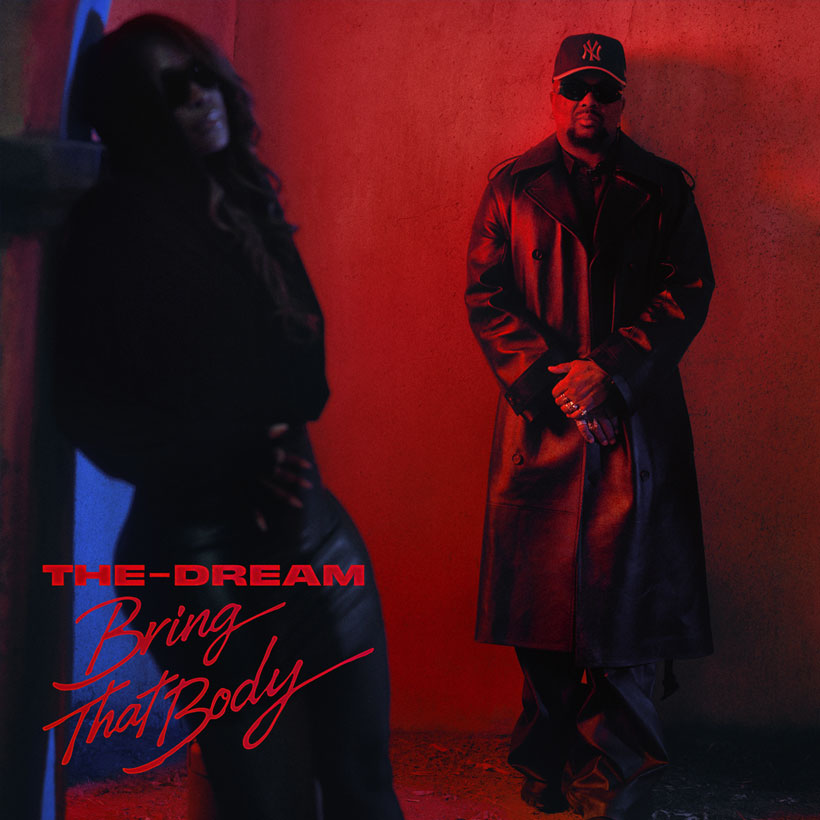
The-Dream Returns With ‘Bring That Body’ Single

The-Dream Bring That Body

The-Dream has released “Bring That Body,” his first official solo single in more than a decade. The track, out now via RadioKilla Records and Republic Records, also serves as the first preview of Love Hate II, the sequel to his 2007 debut Love Hate.

YouTube Video
Click to load video

The new single opens with The-Dream’s “Radio Killa” tag and centers on his call, “Bring that body over here.” The release marks the beginning of a new chapter for the nine-time Grammy Award-winning singer, songwriter, and producer, who has written or produced records for Beyoncé, Rihanna, Mariah Carey, Kanye West, and Justin Bieber.

The-Dream said Love Hate II explores relationships and romance in the present day. “I want to make a record about where love is now,” he said. “Relationships became cheapened. People used to fight for their love.” Variety previously reported that the project is expected to include contributions from T.I., Rick Ross, Usher, Pharrell Williams, Mike Dean, Swizz Beatz, and additional artists.

The single follows recent recognition from The New York Times, which named The-Dream one of “The 30 Greatest Living American Songwriters.” The publication cited his work on Rihanna’s “Umbrella,” Beyoncé’s “Single Ladies (Put a Ring on It),” Mariah Carey’s “Touch My Body,” and Justin Bieber’s “Baby.” In 2025, The-Dream won the Grammy Award for Album of the Year for his contributions to Beyoncé’s Cowboy Carter. The announcement also follows recent credits on Clipse’s “All Things Considered,” Rosalía’s “Sauvignon Blanc,” and Summer Walker’s “Allegedly.”

Listen to “Bring That Body” here.

​Discover more about the world’s greatest R&B artists | uDiscover Music

Categories
Hip Hop

Jessie Reyez Enlists Muni Long For ‘Ain’t U Tired?’

Jessie Reyez Ain't You Tired

Jessie Reyez has released “Ain’t U Tired?,” a new single featuring Muni Long, via FMLY/Island Records. The Grammy-nominated, six-time Juno-winning singer-songwriter also shared an official visualizer for the collaboration, which is out now.

“Ain’t U Tired?” brings Reyez and Long together on a love song built around direct, emotional vocals and piano. The accompanying visualizer places the two artists in a tropical setting with palm trees, sandy swings, and a camper van in the background. The video was released alongside the single, giving the track a visual counterpart on the day of release.

The new song follows Reyez’s April single “N.Y.F.F.,” a rap-sung track about ending a relationship with an unfaithful ex. In March, Reyez released $TILL PAID, a five-track EP marking one year since her 2025 album PAID IN MEMORIES. The EP included a remix with British rapper Stormzy and arrived after Reyez completed her sold-out PAID IN MEMORIES headline world tour in 2025.

YouTube Video
Click to load video

PAID IN MEMORIES featured more than 20 tracks and collaborations with Ari Lennox, Big Sean, Miguel, Lil Yachty, 6LACK, Lil Wayne, and Deyaz. The album included “GOLIATH,” “NYB,” “PSILOCYBIN & DAISIES,” and “COULDN’T B ME.” In 2024, Reyez received Billboard Canada’s Women in Music Trailblazer Award and was recognized as a TikTok Visionary Voice for Latin Heritage Month. Also in 2024, she performed at Lollapalooza in Brazil, Argentina, and Chile, played Corona Capital in Mexico City, and joined U.S. arena dates on Jhené Aiko’s The Magic Hour Tour. Her song “Imported” featuring 6LACK recently reached RIAA 2x Platinum certification, while “Figures” is also certified 2x Platinum by the RIAA.

Listen to “AIN’T U TIRED?” here.

​Discover more about the world’s greatest R&B artists | uDiscover Music

Categories
Hip Hop

Toosii Releases New Single ‘Proud Of Me’

Toosii Proud Of Me cover

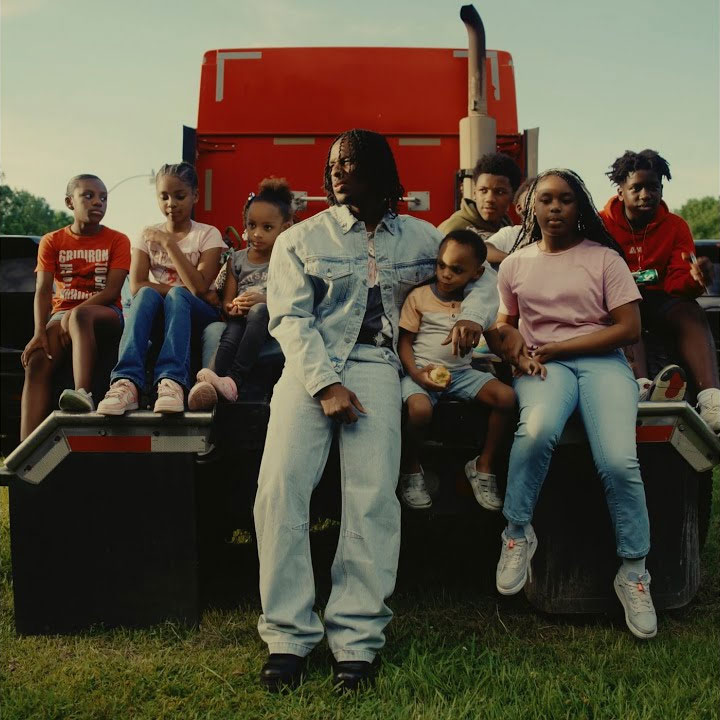
Toosii has released his new single “Proud of Me” and its music video via South Coast Music Group/Capitol Records. The song arrived May 1, 2026, as the multi-platinum artist prepares to enroll at Louisiana State University and join the school’s football program.

The “Proud of Me” video was directed by City James and shot in Baton Rouge, where Toosii’s next chapter is set to begin. The clip places the song in the city that now connects his music, education, and football ambitions. Toosii will also donate a percentage of proceeds from “Proud of Me” to youth organizations in Baton Rouge.

YouTube Video
Click to load video

The song follows weeks of fan anticipation online and centers on Toosii’s path from early doubts to the next stage of his career. Its autobiographical theme matches the timing of his LSU move, which brings him back to football after years focused on recording and touring. Toosii played wide receiver in high school before his music career became his primary focus.

The release follows JADED, the project Toosii issued on October 4, 2024, featuring Gunna, Kehlani, and Muni Long. The 2024 project included “Fuk U Mean” and “Champs Élysées,” a Gunna collaboration. In October 2024, Toosii joined Rod Wave’s Last Lap Tour as a special guest, with Moneybagg Yo, Lil Poppa, and Dess Dior also on the bill. In 2025, Toosii released “Even Then” and joined YoungBoy Never Broke Again on “Please Don’t Go.” In 2025, Toosii also supported YoungBoy Never Broke Again on the MASA Tour, which grossed more than $75 million. Toosii’s 2023 album NAUJOUR included “Favorite Song,” which reached No. 5 on the Billboard Hot 100. The 2023 single was one of Toosii’s defining crossover moments before he began publicly pursuing a return to college football.

Listen to “Proud Of Me” here.

​Discover more about the world’s greatest R&B artists | uDiscover Music

Categories
Uncategorized

Is it wrong to pay incarcerated people in jail? This Pennsylvania county says no

Unlike prison, jail confinement is primarily about custody and court processing, not punishment for convicted criminals. The Washington Post/The Washington Post Collection via Getty

Allegheny County, Pennsylvania, is experimenting with a policy that has drawn national attention and local skepticism: providing cash compensation to people confined in the Allegheny County Jail in the city of Pittsburgh. The funds include monthly disbursements to all those incarcerated and additional pay tied to work assignments and participation in educational programming.

At first glance, the policy may sound counterintuitive. Why pay people who are in jail, especially when many law‑abiding residents are struggling to afford housing, food and transportation? That reaction is understandable. But it often reflects a misunderstanding about who is held in the Allegheny County Jail, the amount of the disbursements and what the county is trying to accomplish.

An outdoor shot of a building with bars on the windows.
Allegheny County Jail is experimenting with a new policy that compensates incarcerated people.
AP Photo/Gene J. Puskar

Over the course of two decades, I have partnered with Allegheny County on policy relevant to justice research and served on the advisory board of the Allegheny County Jail Collaborative, a nationally recognized initiative launched in 2000 to better coordinate jail, health and community-based services. Long before many places began using data to rethink criminal justice, Allegheny County was already analyzing data from multiple sources to develop and test new approaches. With that history in mind, this policy may come as less of a surprise – though it still deserves scrutiny.

Most people in jail haven’t been convicted

Understanding the county’s rationale for compensating people in jail begins with understanding the jail population itself. Jail confinement is primarily about custody and court processing, not punishment after being convicted of wrongdoing.

According to county data, only about 8% of people housed in the jail have been convicted and sentenced to jail time. These individuals are serving a maximum incarceration term of less than two years for misdemeanor or lower-level felony convictions. Roughly half of those incarcerated at the Allegheny County Jail, or 46%, are awaiting trial and have not been convicted of a crime. Another 36% are detained based on an alleged probation violation. The remaining 10% are either on a legal hold placed by an outside agency – such as federal authorities or a correctional facility in another state – are awaiting transfer to a different facility or are ordered to be incarcerated for allegedly violating family court orders.

While jails provide food, clothing and basic hygiene items, those provisions often fall short of what people actually need. Commissary purchases make up the gap, yet many people in jail have little to no money. When even basic necessities, such as ramen noodles, toothpaste and tampons, become scarce, bartering can take place. Commissary items become currency. Debt, theft, intimidation and power imbalances emerge, leading to conflicts that can cause serious or fatal injury. Staff must manage these threats, sometimes at risk to their personal safety.

Incarcerated person mopping a jail floor.
The compensation is for labor, education and vocational training.
Boston Globe/Boston Globe Collection via Getty Images

The county’s compensation policy addresses this reality in concrete ways. Since 2022, the Allegheny County Jail Oversight Board has approved monthly payments of about US$100 to every person housed in the jail through the Incarcerated Individuals Welfare Fund. The fund is financed by proceeds from jail commissary, phone and tablet contracts. These funds can be used for commissary items, phone access, fees, or to accrue savings for post-release needs.

$5 a day – and the research behind it

In addition, in March 2026 the county began compensating people confined in jail approximately $5 per day for voluntary work assignments, as well as for participation in some types of vocational and educational programming. Some of this compensated work is labor that keeps the jail running – including cooking, cleaning and maintenance – and benefits the institution directly. Some of it includes education and vocational training. Paying for it signals some level of fairness and respect. It is also pragmatic: When people perceive systems as legitimate, they are more likely to follow rules and less likely to engage in misconduct.

Offering compensation for education may also boost enrollment, much like how earned credits toward early release encourage participation in federal programs through the First Step Act. This may better prepare them for reentry into society while also reducing idle time, which is linked to misconduct.

Man in orange jumpsuit sits inside a cell behind bars.
The financial incentives may not meaningfully change behavior for everyone.
fpphotobank/iStock via Getty Images Plus

Another reason for compensation comes at the point of release. People often leave jail with no cash and limited access to transportation. Providing even limited financial resources can help people make better choices during a well-documented critical transition period that can make or break successful reentry intro society.

Still experimenting

None of this means the policy will work as intended. Increased access to resources could shift, rather than eliminate, forms of conflict among those incarcerated. And the financial incentives may not meaningfully change behavior for everyone.

This makes rigorous, transparent evaluation essential. Research should measure both intended and unintended effects of this policy, including on institutional safety, program participation, reentry outcomes and overall cost effectiveness.

Paying people in jail is not about rewarding crime. In Allegheny County, it is a pragmatic experiment grounded in local data, institutional realities and a clear-eyed commitment to public safety. Whether it ultimately improves safety inside the jail or stability after release remains to be seen. But asking the question and measuring the answer is exactly what evidence-based justice policy should look like.

The Conversation

Nancy La Vigne does not work for, consult, own shares in or receive funding from any company or organization that would benefit from this article, and has disclosed no relevant affiliations beyond their academic appointment.

​Politics + Society – The Conversation

Categories
Uncategorized

A democracy or a republic? History shows that some Americans are asking the wrong question

A Harper’s Weekly image of the first reading of the Declaration of Independence outside Independence Hall in Philadelphia on July 8, 1776. MPI/Getty Images

As the nation observes its 250th birthday, historians can help settle one present-day dispute: Is the United States a democracy or a republic?

For years, advocates have argued the point.

Yet the question itself is misleading. It assumes that the categories constructed by political theorists neatly describe actual practice.

As a historian of early America, I know this nation has always been unwieldy, its institutions hammered out from conflicting ideals and the pragmatic lessons of lived experience. Just as Britain today is both a monarchy and a democracy, so the U.S. has always been a hybrid.

Ideals of both republicanism and democracy have shaped the nation. To understand how requires a history lesson.

No purity

A yellowed page from a 1787 newspaper, covered in small print.
James Madison’s essay, known as Federalist X, was published under the pseudonym ‘Publius’ in the New York Daily Advertiser on Nov. 22, 1787.
Library of Congress

Let’s start with a famous definition. Here is the often-quoted “Father of the Constitution,” James Madison, urging Americans to ratify the new frame of government proposed by the Constitutional Convention in 1787.

In Federalist essay No. 10, Madison distinguished two sorts of governments for his readers.

One was a “pure democracy,” which he described as “a society consisting of a small number of citizens, who assemble and administer the government in person.” A New England town meeting might qualify for this definition, where voters assembled to choose town officers and approve local bylaws.

The other type of government was a “republic,” defined as “a government in which the scheme of representation takes place
– meaning where the people’s chosen representatives made governing decisions for them.

That seems cut and dried. Surely no one thought the entire population of 13 states could work like a town meeting.

But Madison here was saying only that the possibility of a “pure” democracy was impractical. He was by no means banishing all democratic ideas and institutions.

As the French theorist Montesquieu had noted, republics were of varying sorts. Some republics were aristocratic, controlled by a relative few who were set above the rest. Other republics were democratic, engaging many more in the ongoing affairs of government.

What was at stake in the U.S. in 1787 wasn’t a “pure” democracy nor a “pure” republic. The issue was how aristocratic – and how democratic – the American scheme of representation would be.

Who would be represented – the many or the few?

‘Actual’ representation

America had never been the home of an aristocracy in the British sense. Besides, the Revolution had discredited the very idea of hereditary power. There would be no House of Lords, filled with titled men born into political power and a special set of legal privileges denied to ordinary people. The people alone would be sovereign, and all authority to govern derived, directly or indirectly, from them.

Even so, the problem of aristocracy remained. After all, it had been the lower house of Parliament – the House of Commons, not of Lords – that had sparked the imperial debate when it tried to tax and legislate for the Colonists.

Not nobility, members of the Commons still formed a remote and ambitious elite. None was elected by American voters or even necessarily informed about the Colonists’ lives. Apologists for Parliament claimed that the Commons “virtually” represented the Colonies anyway.

But the Colonists watched the Commons ignore American grievances while favoring private interests – East India Company shareholders, for example – that served wealthy British gentlemen such as themselves.

Many concluded that the members of the House of Commons did not “actually” represent either the poor of Britain or the growing population of the continental Colonies.

In contrast, “patriot” Americans pointed to the legislative assemblies established in each colony soon after its founding.

Needing to attract British settlers, and following the British model, each colony established an elected house of the legislature to provide a check to governors and upper houses that were appointed by the king or a wealthy Colonial proprietor.

Law and custom required that delegates to these assemblies live among their constituents. Although they were men of some fortune and standing in their districts, assemblymen might plausibly “actually represent” their lesser neighbors.

In the lead-up to the Revolution, patriots used new measures to ensure their representatives’ fidelity: They called for vigilant popular oversight of government decision, publicized those decisions in the press, wrote constituent instructions for legislators and winnowed out noncompliant officeholders at election time.

Individual and collective liberties

With independence, Americans created a patchwork of new, representative state governments. South Carolina empowered its wealthy planter elite by setting a high property-holding requirement for voters and a higher one for officeholders. Pennsylvania and Vermont adopted unprecedentedly democratic systems that allowed a large proportion of the white male population to participate in government.

By 1787, some Americans thought there was too much popular democracy – too much power given to nonelite members of society, especially within state governments.

The Constitution adopted restraints on democracy – a Senate appointed by state legislatures, an electoral college that put the choice of president at a remove from the people, a supremacy clause that allowed national laws to supersede, or contravene, state laws.

At the same time, a commitment to democracy was also evident in the U.S. frame of government.

A man with rosy skin and curled white hair looks off to the distance against a dark curtain.
Founder James Madison, frustrated when pushed to define the U.S. government, said the ordinary ‘political vocabulary’ fell short.
Painting by Gilbert Stuart, National Gallery

The Constitution set no property requirements for federal officeholders. It left suffrage requirements up to individual states, some of which already extended the vote to all male taxpayers.

Equally important, the ratification process produced a consensus that a bill of rights was necessary to protect ordinary people’s rights and liberties from government overreach.

These first 10 amendments would defend individual rights but also collective rights of the people, such as their right to assemble, to petition the government or even to change it.

The Bill of Rights also protected a free press. It ensured that ordinary free men would still serve in armed militias when their state needed protection. And they would still sit on grand and petit juries to enforce the law or prevent its overreach.

These were the sorts of institutions that the lawyer John Adams called “democratical.”

More and better democracy

Within a few decades, the common phrase for the American system became “democracy.”

Madison had been inconsistent in how he used the term. In the 1790s and 1800s he called himself a “Democratic Republican,” in opposition to the allegedly aristocratic party, the Federalists.
Decades later, Madison was frustrated when pushed to define the U.S. government more precisely. Ordinary “political vocabulary” fell short, he wrote. The American system was “so unexampled in its origin, so complex in its structure, and so peculiar in some of its features” that it was best understood as something new.

How aristocratic? How democratic? The question of 1787 has returned repeatedly to face Americans.

Elites with aristocratic aspirations have repeatedly tried to build permanent governing hierarchies. American history is partly the story of these contests – Free-Soilers against a slaveholding elite, reformers against wealthy “barons” of the Gilded Age, critics of inequality against billionaires who shape government policies today. In such cases, Americans have often turned to more and better democracy, their necessary resource for pressing their political leaders to actually represent the people.

Following Madison’s advice, Americans today can refuse to be misled into describing the U.S. in a single, inadequate term.

They might prize both of these historic commitments: to a republic that insists on the people’s right to be represented rather than ruled, and to a democracy that ensures that ordinary people might collectively make it so.

The Conversation

Barbara Clark Smith does not work for, consult, own shares in or receive funding from any company or organization that would benefit from this article, and has disclosed no relevant affiliations beyond their academic appointment.

​Politics + Society – The Conversation

Categories
Music

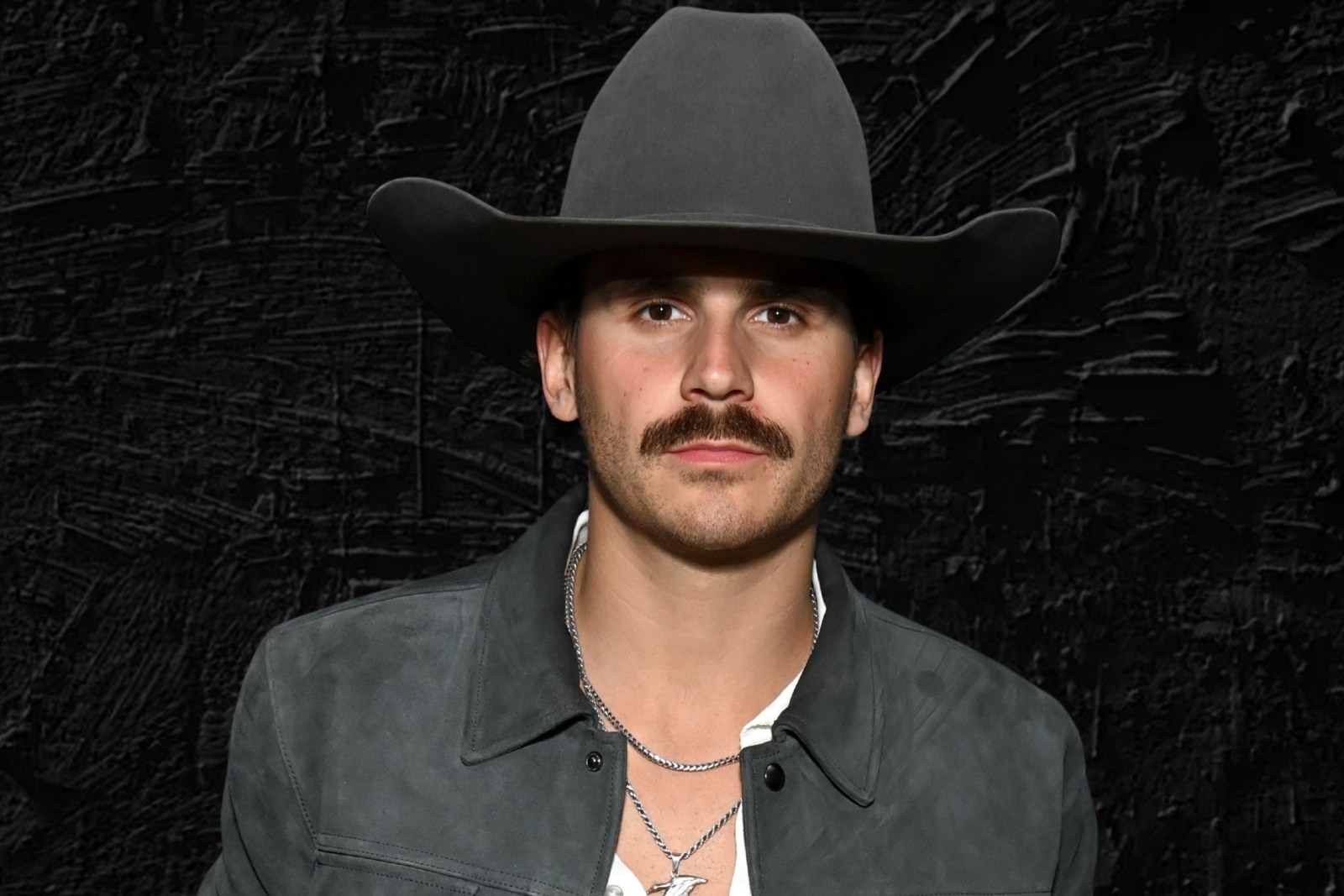
Tucker Wetmore on Overseas Concerts: ‘They’re Super Respectful’

UK fans are a whole different kind of experience, Wetmore says. Continue reading…​The Boot – Country Music News, Music Videos and Songs

Categories
Music

Tucker Wetmore on Overseas Concerts: ‘They’re Super Respectful’

UK fans are a whole different kind of experience, Wetmore says. Continue reading…​Country Music News – Taste of Country

Categories
Food

Did Colgate Really Sell Frozen Lasagna In The ’60s?

There are many discontinued frozen entrees we’ll likely never taste again – but did anybody ever get to try the alleged Colgate Beef Lasagna?

​Food Republic – Restaurants, Reviews, Recipes, Cooking Tips

Categories
Music

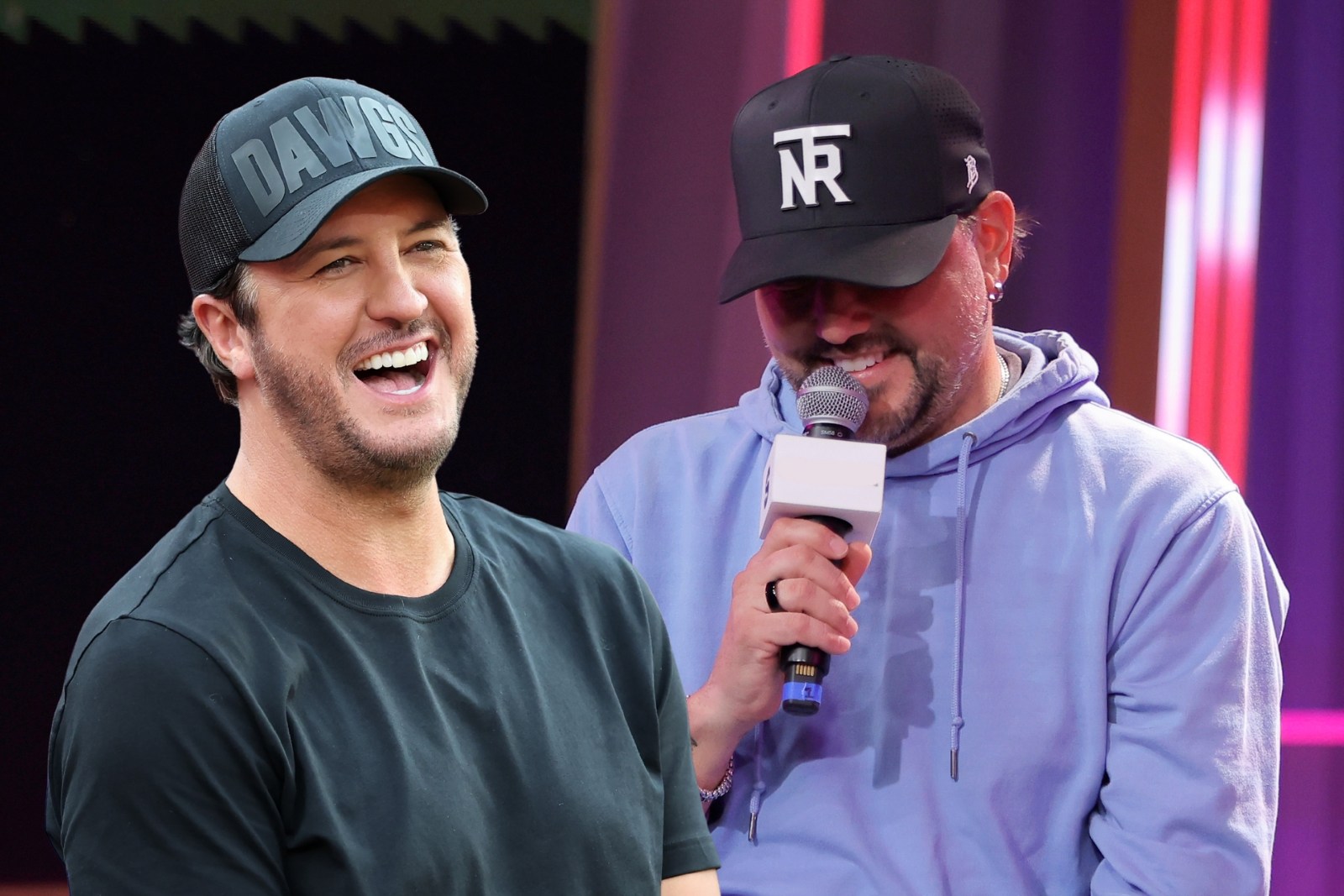
Luke Bryan Playfully Calls Out Jason Aldean’s Golf Skills

Luke Bryan and Jason Aldean are not just making music; they’re bringing their friendship to the stage with a tour that promises plenty of laughs. Continue reading…​Country Music News – Taste of Country